Guacamole
Ripe Avocado: How to Tell, How to Ripen It and Why It Turns Bitter
Updated Nov 17, 2026
You can tell a ripe avocado by feel: cradled in your palm, it gives slightly when you squeeze it gently but doesn't dent, and it's green under the stem. Skin color is a reliable clue only for the Hass variety. Here's how to ripen an avocado at home, what to do with one that's rock-hard or overripe, whether you can freeze it, and why it sometimes tastes bitter.
You can tell a ripe avocado by three signs: it gives slightly under the pressure of your palm, it's green under the stem, and a Hass has dark skin. Feel is what counts; color comes second.
Feel: take the avocado in your whole palm and squeeze gently. A ripe one gives about like a ripe peach and then springs back. According to the California Avocado Commission, a ripe fruit is "firm but yields to gentle pressure." Don't press one spot with your thumb: you'll bruise it, and you'll find that bruise inside as a brown spot.
Stem: try flicking off the little stem cap with your fingernail. Green underneath means ripe. Brown means overripe, so expect dark fibers inside. If the cap won't budge at all, the avocado isn't ripe yet.
Skin color: Hass (the one with bumpy skin) darkens as it ripens, from green to dark green or even black. Smooth green varieties such as Fuerte or Ettinger stay green even when ripe, so go by feel and the stem alone.
What not to buy: a soft, sunken spot, skin that has separated from the flesh (it slides around when you press), or a sour smell near the stem. An avocado like that is overripe.
If you want to eat it today, pick one that gives. For the day after tomorrow, buy a firm one and let it ripen at home.
Seasonal baking plans, tested recipes and kitchen tricks that save you time. Unsubscribe in one click.
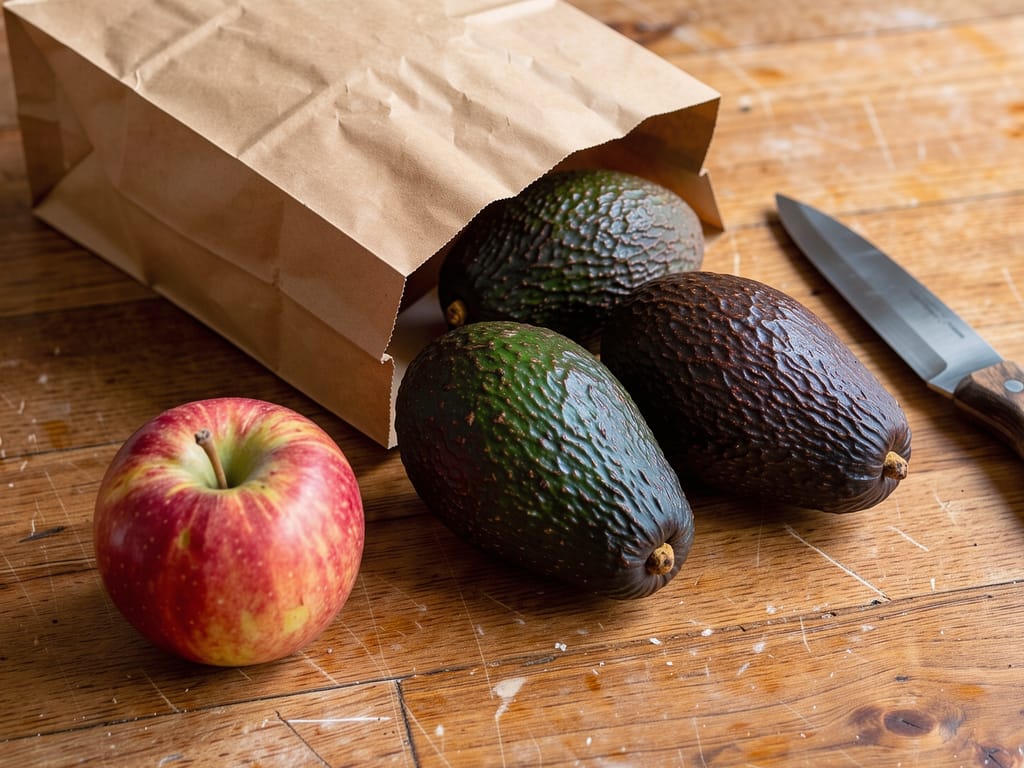
A hard avocado ripens at room temperature in a paper bag, fastest with an apple or banana. The California Avocado Commission gives room temperature and usually a few days, depending on how hard it was to begin with.
Why the bag works: as it ripens, an avocado gives off ethylene, a gaseous plant hormone that speeds up ripening. A paper bag keeps it close to the fruit while letting moisture escape, so the avocado doesn't steam.
Why an apple or banana: both give off ethylene too. An apple or banana in the bag speeds ripening up even more.
Check it daily with your palm. As soon as it gives, stop the ripening by moving it to the fridge.
Don't rush it in the oven or microwave. The avocado will soften but not ripen. It stays bland, and the heat makes it bitter (more on that below). The California Avocado Commission doesn't recommend the microwave either.
Ripe goes in the fridge, hard doesn't. According to the California Avocado Commission, a ripe, uncut avocado keeps 2–3 days in the fridge. Don't refrigerate a hard avocado: the cold halts ripening, and the fruit often ripens unevenly, with gray, stringy flesh. The same commission advises letting it ripen at room temperature first and chilling it only afterward.
A hard avocado that's already been cut won't properly ripen anymore. Treat it as an ingredient for a different use, not as an avocado that will soften. An overripe one is salvageable if it's merely soft and doesn't smell off.
The best use for a hard cut avocado is raw in a salad, where the firm flesh holds its shape.
If you've only cut it in half, brush the cut surface with lemon or lime juice, put the half with the pit back, wrap it tightly in plastic wrap and refrigerate. It will soften a little, but it won't turn creamy. The California Avocado Commission recommends this method with acid, wrap and fridge for any cut avocado.
The best solution is to use it firm: slice it thinly or dice it into a salad with citrus, cucumber and chile. Acid and salt supply the flavor an unripe fruit lacks.
Don't blend it into a spread; it will be grainy and bland.
You can use an overripe avocado as long as it's only soft, has a few brown spots and doesn't smell rancid.
Cut out a few brown spots or dark fibers and the rest is fine. Soft, overripe avocado suits sauces, spreads and sweet dishes where shape doesn't matter: for example vegan avocado chocolate mousse or a smoothie, where cocoa or fruit overpowers the stronger flavor.
Throw it out if it smells sour or rancid like old oil, if the flesh is brown all the way through, or if there's mold on it. That can't be saved.
If your cut avocado is browning on the surface, that's a different problem from ripeness. What really works against it is covered in our article on avocado spread that doesn't turn brown.
An avocado turns bitter mainly for three reasons: heating, being unripe, or chilling injury. Heat is the most common.
Heat. Avocado contains fats and their derivatives, which form bitter compounds when heated. Researchers at the Technical University of Munich (Degenhardt and Hofmann, 2010) described ten of them in heat-treated avocado and confirmed through taste tests that they cause the bitter aftertaste. That's why avocado baked in the oven, simmered for a long time in a sauce or "ripened" in the microwave tastes bitter. The fix: add avocado to hot dishes only at the plate, on top of the finished soup, on a tortilla, on eggs. A quick sear on the grill or in a pan, cut side down, is borderline; keep it to 1–2 minutes, and the shorter the better.
Unripeness. An unripe avocado tastes grassy, sour and astringent; the full buttery flavor develops only as it ripens. The fix: let it ripen (see above). If it's already cut, rescue it with acid and salt.
Chilling injury. A hard avocado that's been kept in the fridge often ripens unevenly, with grayish flesh and a bland to slightly bitter taste. You can't reverse that; you prevent it only by not refrigerating hard avocados.
The skin can also bring bitterness: if you scrape too close to it with the spoon, you pick up dark bits of skin, which are astringent. The thin dark green layer right under the skin is fine; it's the most colorful part of the flesh.
If your avocado doesn't taste bitter but rancid or sour, it's none of the above. It's spoiled and belongs in the trash.
You can freeze avocado whole and unpeeled or mashed with lemon juice, but once thawed it's only good where a soft texture doesn't matter. You won't be able to slice it onto toast anymore.
The California Avocado Commission says:
Whole, unpeeled avocado goes into the freezer as it is. It keeps 2 weeks to a month.
Mashed avocado: mix it with lemon juice (according to University of California Master Food Preserver advisors, 1 tablespoon of juice per 2 avocados), put it in a bag in the freezer, press out the air and lay it flat. It also keeps 2 weeks to a month.
Halves: it doesn't recommend freezing them unless you have a vacuum sealer. Air browns and dries them out.
How to thaw it: according to the same commission, let it thaw completely and use it right away. Once thawed and left standing, it browns and softens quickly. For a spread or guacamole, thaw it in the fridge so it doesn't sit at room temperature while it defrosts. For a smoothie, add it straight from frozen; there's no need to thaw it, and the drink will be thicker and colder.
It's worth noting that freezing avocado on its own hurts the texture. So the freezer is a fallback for when you have a ripe avocado left over, not a way to stock up.
Avocado mainly needs salt and acid. Without them it tastes bland; with them it's buttery and full. Beyond that, it's up to you:
The basics: flaky salt, lime or lemon juice, a drop of olive oil.
Heat: chile flakes, fresh chile, sriracha, a dash of Tabasco.
Crunch: toasted sesame, pumpkin or sunflower seeds, crispy fried onions.
Asian-style: soy sauce, sesame oil, scallions, a little wasabi. Try the oyster mushroom sandwich with BBQ sauce, avocado and wasabi.
Fresh: cilantro, mint or chives, pickled red onion, tomatoes.
Rich: a fried or poached egg, smoked salmon, feta, Balkan-style cheese.
For a quick breakfast idea, see avocado for breakfast with flavoring tips. For a party, avocado canapés with smoked salmon fit the bill. The classic where you'll learn avocado seasoning best is guacamole: salt, lime, onion, cilantro and chile in balance.
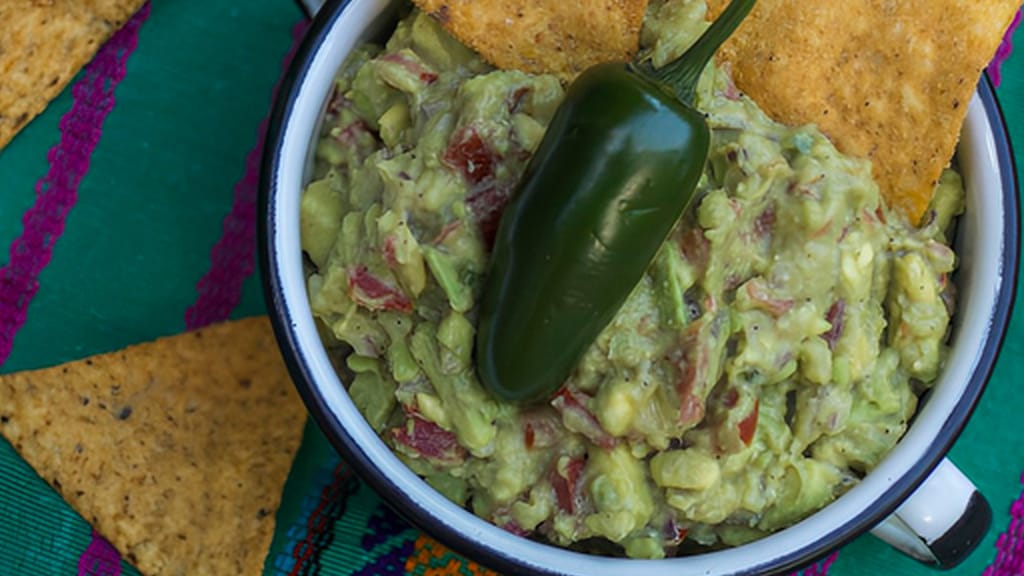
Guacamole
Guacamole: the classic that teaches you how to season a ripe avocado
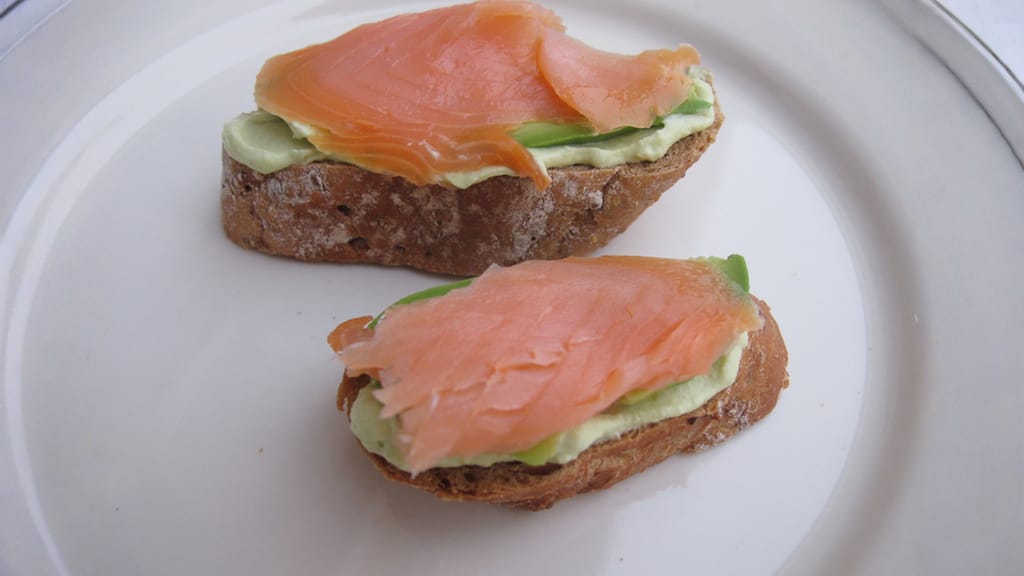
Avocado canapés with smoked salmon
Avocado canapés with smoked salmon for a party
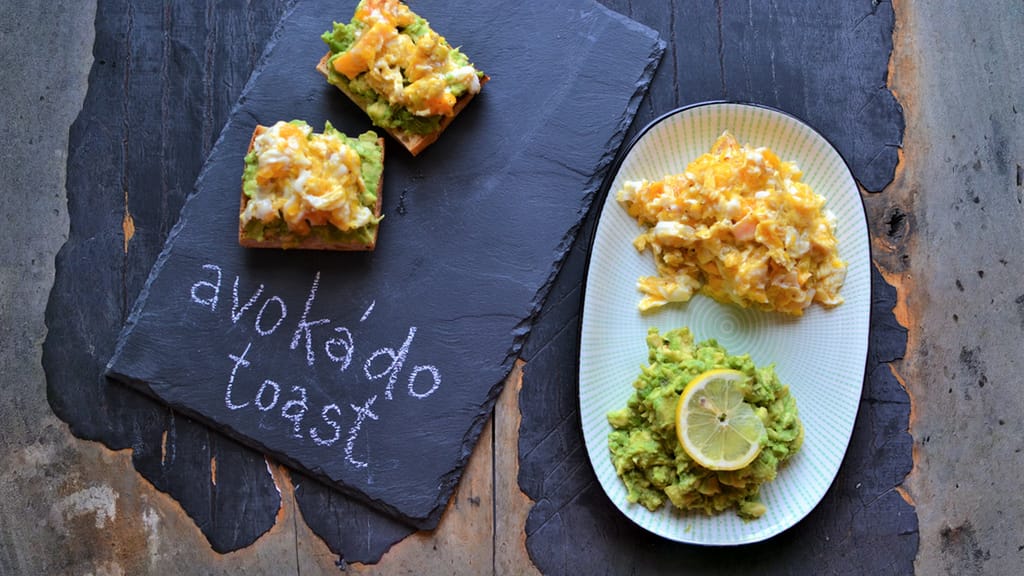
Avocado toast with scrambled eggs
Avocado for breakfast: tips for flavoring a ripe avocado
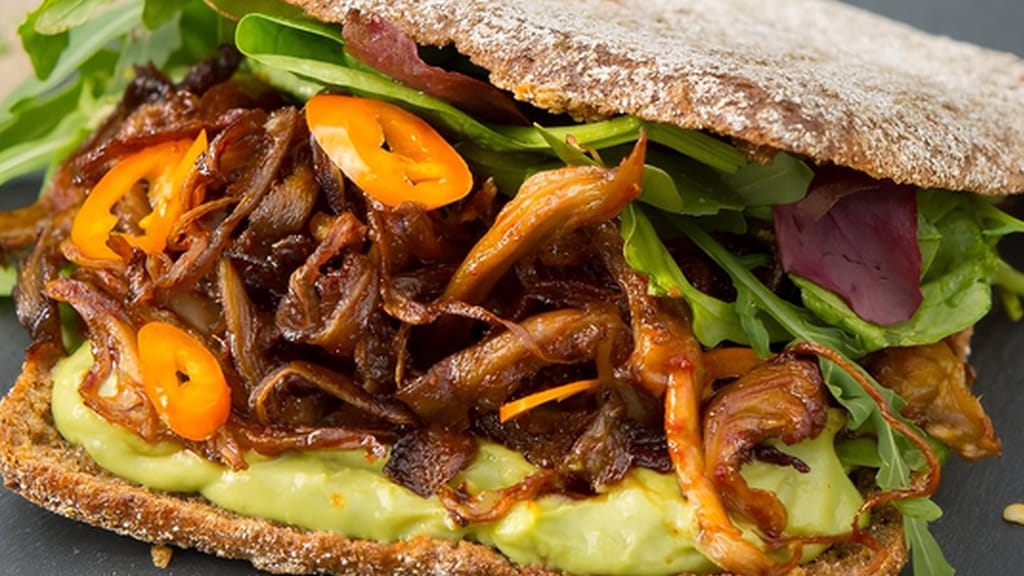
Oyster mushroom sandwich with bbq sauce, avocado and wasabi
Oyster mushroom sandwich with BBQ sauce, avocado and wasabi
You tell a ripe mango the same way as an avocado, by feel: it gives slightly under gentle pressure and smells sweet and fruity near the stem. Color says little about ripeness.
According to the US National Mango Board, a ripe mango gives slightly, a medium-ripe one is still firm, and an unripe one is hard.
A red blush only shows the fruit got sun. A green mango can be ripe.
Let a hard mango ripen at room temperature in a paper bag. The National Mango Board speaks of several days; in practice it usually softens in 2–5 days. Put a ripe one in the fridge. The National Mango Board says it keeps there for up to 5 days.
An avocado that stays hard after a week was most likely kept in the cold or picked too underripe. Cold in the store or the fridge halts ripening, so the fruit then ripens slowly and unevenly. Put it in a paper bag with an apple or banana at room temperature and check it daily with your palm. If it still doesn't give, cut it open and use it firm in a salad with citrus and salt.
Brown spots in an avocado are most often bruises from being pressed with a finger, either in the store or at home while testing for ripeness. An overripe avocado can also have dark fibers and brown spots. Cut out a few such spots and eat the rest; if the flesh is brown all the way through or smells rancid, throw it out.
The strings in an avocado are thickened vascular bundles that carried water and nutrients into the fruit, and they're harmless. According to the California Avocado Commission, they appear mainly in fruit from young trees or after poor storage, typically when a hard avocado has sat in the cold. Some varieties are naturally more fibrous. Go ahead and eat stringy flesh, ideally mashed or pressed through a sieve into a spread.
An avocado that turned bitter from heating or because it wasn't ripe is fine to eat. Bitterness is a flaw in flavor, not a sign of spoilage. It's different with an avocado that tastes or smells rancid or sour, is brown all the way through, or is moldy. That one is spoiled and belongs in the trash.
No, the brown layer on the surface of a cut avocado is oxidation from the air, not spoilage. Scrape the thin brown layer off with a spoon; the flesh underneath is fine. Next time, brush the cut surface with lemon juice, wrap it tightly and refrigerate it.
One recipe worth heating the oven for, one tip, and one deal from the shop. Nothing else.