Goulash: Beef and Pork Recipe Step by Step, Meat, Onions and Sides
How to Roast Venison So It Isn't Dry: Deer, Wild Boar and Hare
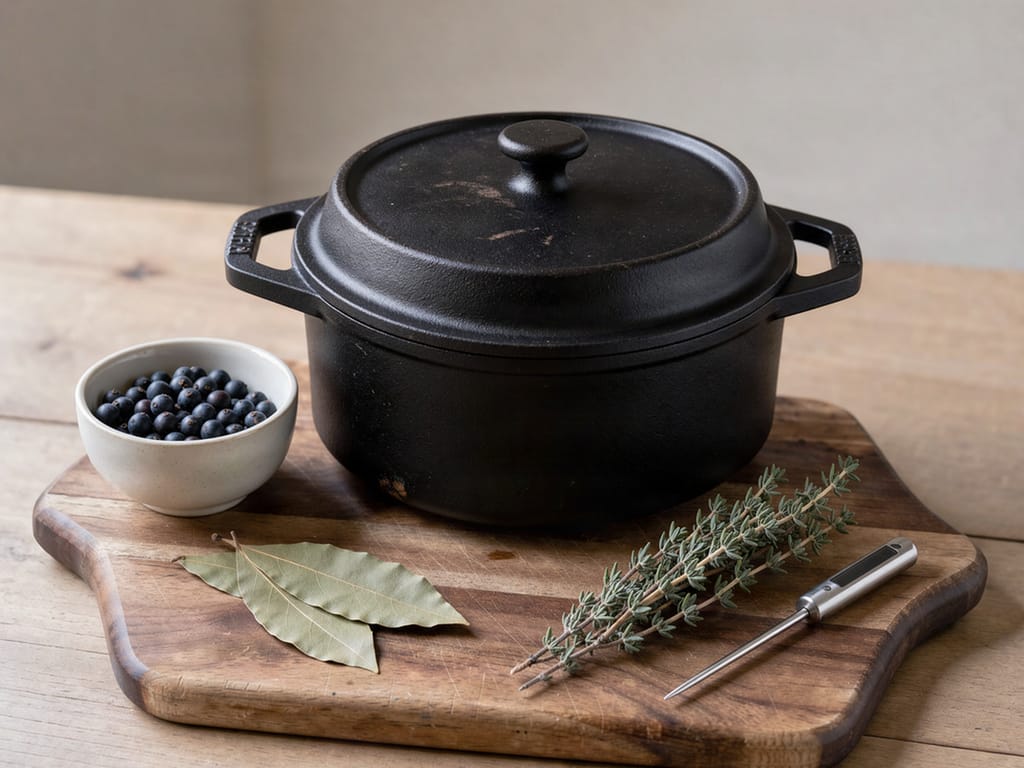
Updated Nov 17, 2026
Game roasts up juicy when you add the fat it lacks and match the cooking method, quick or long, to the cut. Lean loin belongs in an oven heated to 200–220°C (390–430°F) for a short time, uncovered and ideally wrapped in bacon. Leg, shoulder, ribs, hare legs and wild boar are braised covered with liquid at 165–170°C (330–340°F), usually 2–3.5 hours, until tender. Check the center with a thermometer: the US agency USDA/FSIS recommends at least 71°C (160°F) for game (the American CDC even recommends 74°C/165°F for wild game because of trichinella), and for wild boar the Czech National Institute of Public Health (SZÚ) explicitly recommends 71°C because of trichinella.
Game dries out because it has very little fat. Deer, hare and wild duck move around all their lives, so their meat is lean and firm. The fat that bastes a pork roast from the inside as it cooks is almost absent here.
Three rules follow from this, and everything else builds on them:
Add fat from the outside. Bacon, butter or lard, either worked into the meat or wrapped around it.
Match the cooking to the cut. Tender cuts (bone-in loin and boneless loin) are roasted briefly at 200–220°C (390–430°F). Tough cuts (leg, shoulder, ribs, hare) are braised for 2–3 hours under a lid at 165–170°C (330–340°F).
Measure, don't guess. Internal temperature is the only reliable sign the meat is done. A thermometer is worth more than any trick. To check that your oven really heats to the temperature it displays, see the article on the oven thermometer and your oven's real temperature.
If your meat has already dried out, the article how to rescue dried-out meat from the oven can help. Here, we're talking about how to prevent it.
Seasonal baking plans, tested recipes and kitchen tricks that save you time. Unsubscribe in one click.
Roast game in an oven set to at least 163°C (325°F) until the center reaches at least 71°C (160°F), or 74°C (165°F) for game birds. Measure in the thickest part of the meat, away from the bone:
Venison, elk, fallow deer (whole cuts): at least 71°C according to USDA/FSIS. The American CDC even recommends 74°C for meat from wild game because of trichinella.
Wild boar: at least 71°C in all parts of the meat, as the Czech National Institute of Public Health (SZÚ) recommends because of trichinella. There's no compromise here.
Hare: at least 71°C, the same as for rabbit according to USDA/FSIS.
Wild duck and other game birds: at least 74°C according to USDA/FSIS (the same figure as for poultry).
Oven temperature:
Loin and wild duck: 200–220°C (390–430°F), so the meat browns quickly and doesn't dry out inside.
Tough cuts: 165–170°C (330–340°F) in a covered roasting pan with liquid, so moist heat surrounds the meat. Per USDA/FSIS, don't cook meat below 163°C (325°F).
For tough cuts, 71°C is only the safety minimum, not the point where the meat is done. A leg or hare passes that temperature early, but it only turns tender once the connective tissue dissolves into gelatin. So braise it until the meat pierces easily with a fork. Here the thermometer simply confirms safety.
Marinade adds flavor to game and bacon adds fat, and with lean game both are worth doing. You have four options: pickling (soaking in a pickling marinade), larding with bacon, barding (wrapping in bacon) and a quick oil marinade.
Pickling marinade (game marinade): red wine or buttermilk, root vegetables, onion, juniper, allspice, bay leaf, thyme. It suits tough cuts (leg, shoulder, hare, wild boar), which you leave in it in the fridge for 1–3 days. Neither acid nor buttermilk softens meat deeply, though. Only long braising does that.
Larding: thread thin strips of chilled bacon through the meat with a larding needle or a sharp knife, ideally along the grain. The fat melts inside the cut as it cooks. It suits leg and larger cuts of wild boar.
Barding (wrapping in bacon): lay slices of bacon over the meat. The fat runs down the surface and protects it. It's the best protection for loin and wild duck, where larding needlessly tears the delicate meat.
Quick oil marinade: oil, garlic, thyme or rosemary, crushed juniper. Loin needs only 2–12 hours, because there's nothing in it to tenderize.
Always marinate in the fridge, never at room temperature (USDA/FSIS). For how long marinated meat keeps there, see the article how long marinated meat keeps in the fridge. Thaw frozen game in the fridge too; the method is in the article frozen meat: how long it keeps and how to thaw it.
One more thing makes a big difference: remove the membranes and sinews. The silvery membrane on the loin and leg shrinks as it cooks, curls the meat and leaves it tough. Cut it off with a thin knife before you start marinating.
Roast tender cuts uncovered and tough cuts covered. Under a lid, steam builds up and the meat braises in it. That's what leg, ribs or hare need, because their connective tissue softens only with moisture and time. Loin would turn gray and boil dry in the same conditions.
Uncovered (200–220°C / 390–430°F): venison loin, bone-in or boneless, wild duck breasts.
Covered with liquid (165–170°C / 330–340°F): venison leg and shoulder, venison ribs, hare, wild boar, wild duck legs.
Combination: braise tough cuts covered first, and once they're tender, take off the lid and let the surface brown for the last 15–20 minutes.
Before you braise tough cuts, sear them in a pan until deep brown. It doesn't "seal in" the juices, but it creates roasted flavors that give the sauce depth. Why that works is explained in the article why meat is seared before braising.
Sear the venison loin in a pan, wrap it in bacon and finish it briefly uncovered at 200–220°C (390–430°F). It's the most tender cut of game and needs quick roasting in high heat, not braising. It's usually roasted either boneless or whole on the bone.
Remove the membrane, pat the meat dry and let it sit out of the fridge for 20–30 minutes so it cooks evenly.
Rub it with oil, season with salt and pepper and add crushed juniper and thyme.
Sear it on all sides in a hot pan, finishing with a knob of butter.
Wrap it in bacon slices and finish it uncovered in an oven heated to 200–220°C (390–430°F). A boneless loin (about 400–600 g) needs roughly 10–20 minutes, a bone-in loin 25–40 minutes. Insert the thermometer into the thickest part.
As soon as the center reaches 71°C (160°F) (USDA/FSIS), take the meat out, cover it with aluminum foil and let it rest for 10 minutes before slicing.
Loin dries out mainly by being roasted longer than necessary. So take it out as soon as the center hits 71°C and don't leave it in the oven "just to be safe". Deglaze the pan juices with a little red wine or stock and stir in a spoonful of lingonberries. The sauce is done.
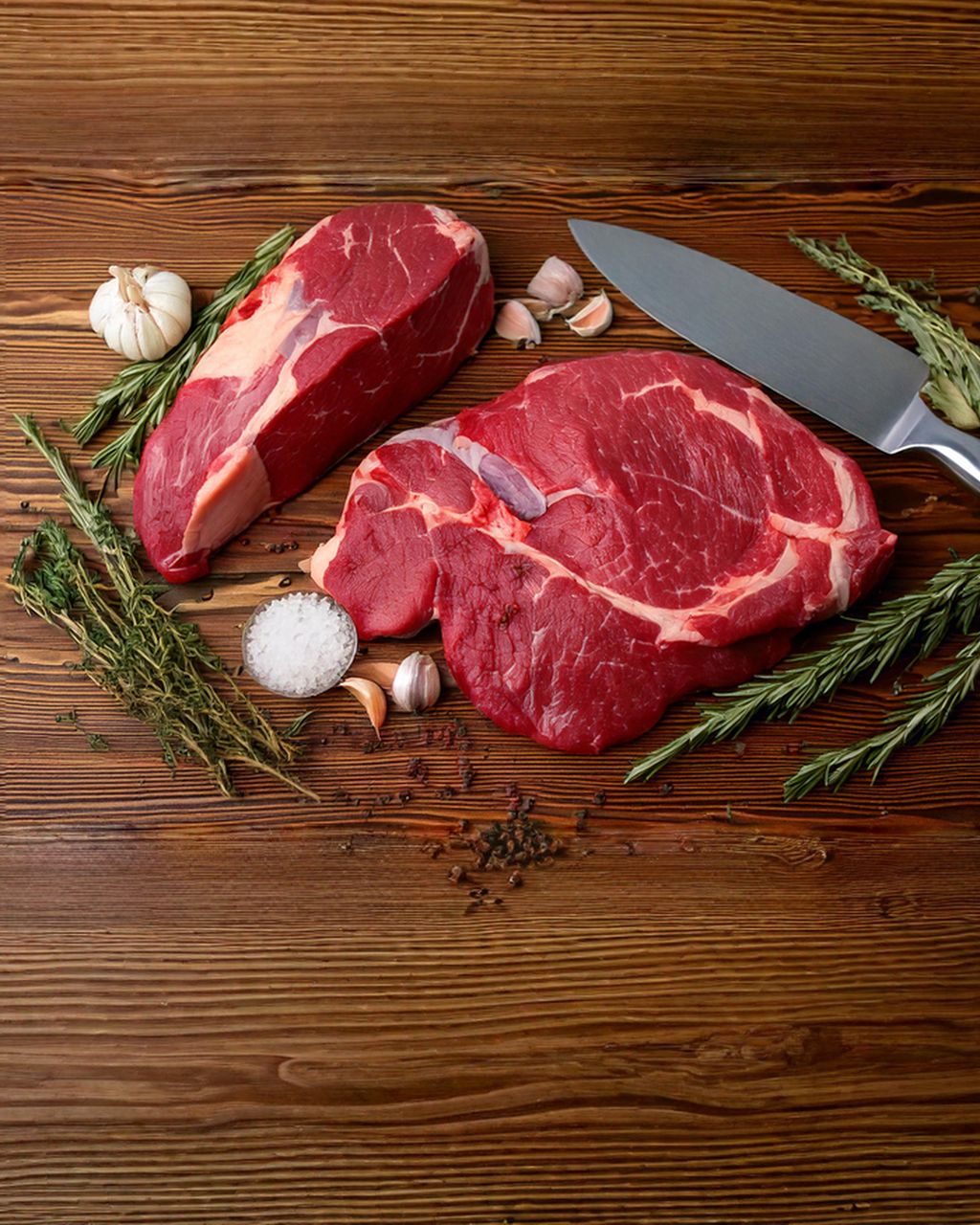
Marinate the venison leg, lard it with bacon and braise it slowly under a lid until tender. It's very muscular, so only time and moisture will help. Czech classic cooking turns it into zvěřina na smetaně (game in cream sauce).
Trim the membranes off the leg, marinate it with vegetables and spices and leave it in the fridge for 1–3 days.
Take it out, pat it dry and lard it with strips of bacon.
Sear it until deep brown and put it in a roasting pan on the marinade vegetables. Add part of the marinade and some stock.
Cook covered at 165–170°C (330–340°F), basting regularly. A leg weighing 1.5–2 kg needs roughly 2–3 hours, so count on about an hour and a half per kilo. It's done when a fork slides through the meat without resistance.
Finally, take off the lid and let the surface brown for 15–20 minutes.
Blend the vegetables with the pan juices and finish with cream, lemon, sugar and mustard. You get a sauce of the same type as in the perfect homemade svíčková in cream sauce, only with juniper and the spicier flavor of game. You can prepare venison shoulder the same way.
Braise venison ribs until tender first, and only then roast them until crisp. They have a lot of bone and connective tissue and little meat, so if you simply roasted them dry, they'd be tough.
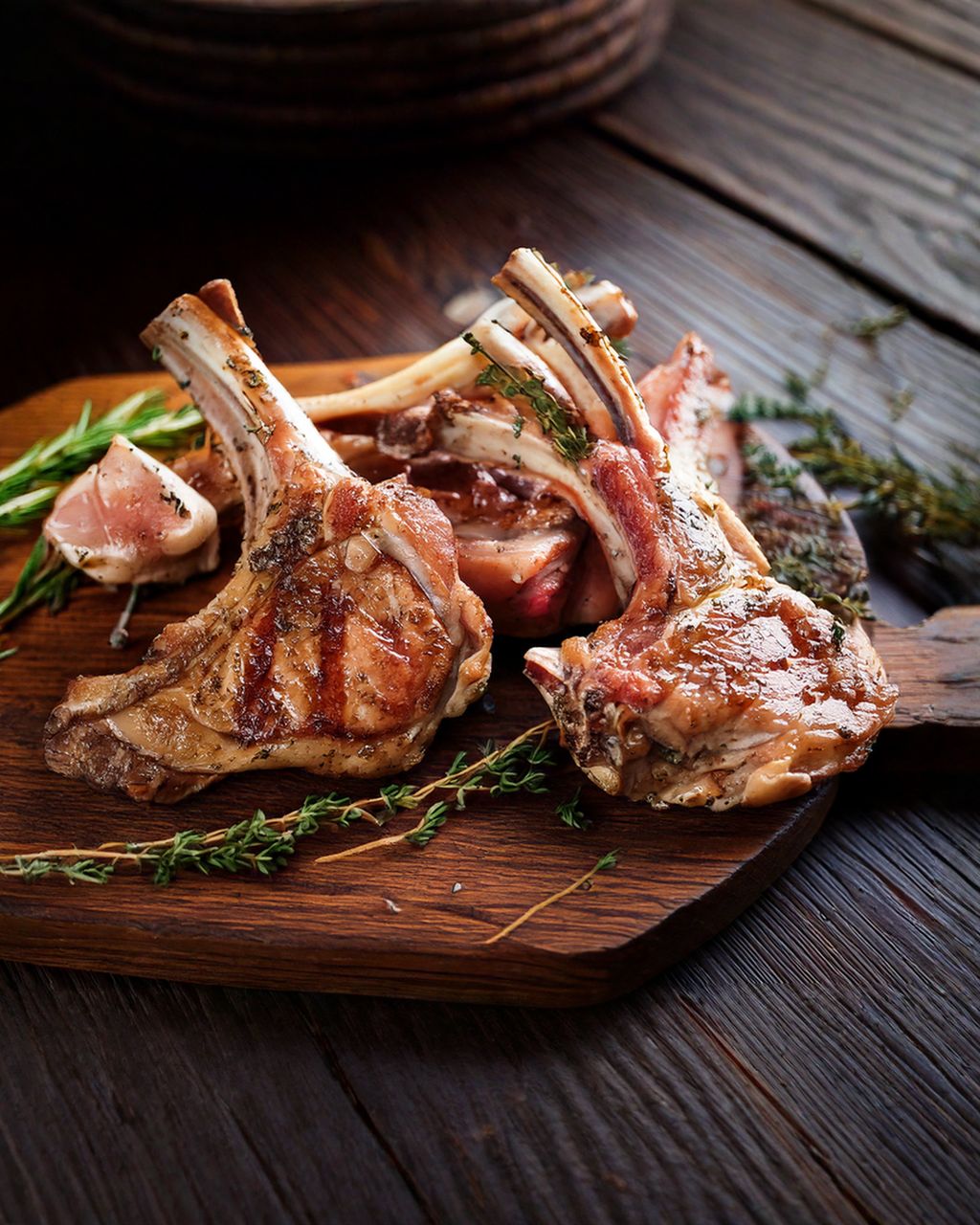
Cut the ribs into pieces of two to three bones and marinate them for 4–12 hours in a marinade of garlic, juniper and a little honey.
Braise them covered in a roasting pan with a little stock or beer at 165–170°C (330–340°F) for roughly 1.5–2.5 hours, until the meat starts to come away from the bone.
Uncover them, brush with pan juices mixed with honey or lingonberry jam and finish at 200–220°C (390–430°F) until golden, about 15–20 minutes.
A little extra fat (a spoonful of lard in the pan or a few slices of bacon over the ribs) makes a big difference here too.
Roast wild boar in an oven set to at least 163°C (325°F) (USDA/FSIS) until all the meat has at least 71°C (160°F) in the center, as the National Institute of Public Health recommends. Unlike venison, there's no "pink" here. Wild boar meat can contain trichinella, so cooking is a safety step, not just a matter of taste.
Wild boar leg, shoulder and neck are tough and strongly flavored, so braise them the same way as venison leg: with a marinade, bacon and under a lid at 165–170°C (330–340°F). A wild boar leg weighing 1.5–2 kg needs roughly 2.5–3.5 hours. A young animal (lončák) is more tender and also suits a classic roast. An older boar will need a longer marinade (2–3 days) and longer braising.
According to SZÚ, meat is cooked through when all its parts have reached at least 71°C, or when its color has changed everywhere from pink to gray. A thermometer is more reliable, though: insert it in several places, especially right next to the bone.
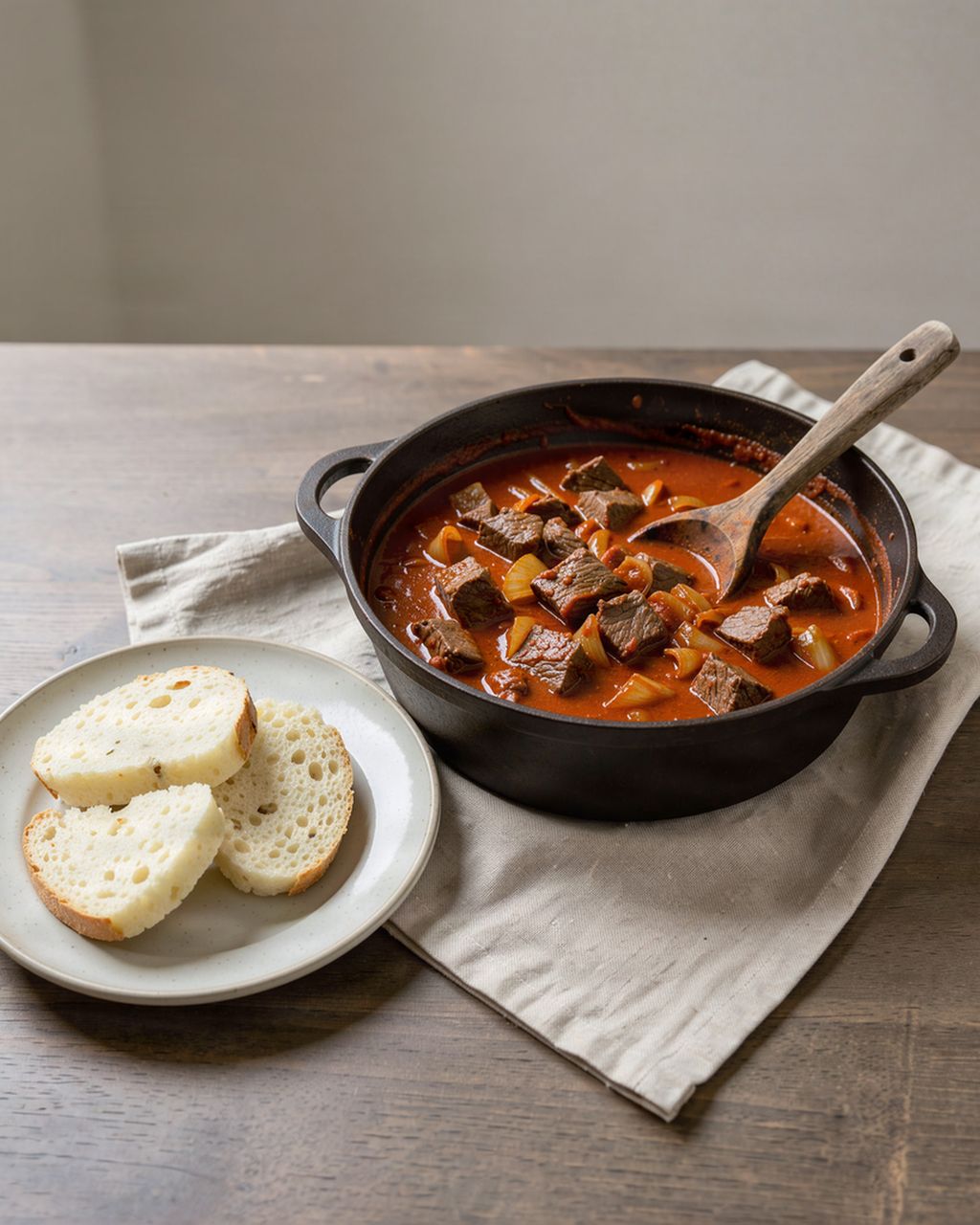
Wild boar goulash is made the same way as beef goulash: lots of onion, paprika, caraway, marjoram and slow braising, usually 2–3 hours, until the meat is tender. Shoulder or leg works best, because meat from the loin would fall apart into strands in a goulash and dry out.
Make a few changes compared with beef:
Leave the meat in the fridge for 12–24 hours in a marinade of red wine with juniper and bay leaf. It mellows the strong flavor of game.
Soften the onion in lard and add a piece of smoked bacon at the start. The goulash gets the fat that wild boar lacks.
Add juniper and a little allspice to the seasoning, as they go well with game. A piece of dark chocolate (10–20 g per kilo of meat) at the end softens the acidity of the wine.
Cook until the meat is tender, even long after it has reached 71°C. Wild boar softens more slowly than beef. If your meat still won't soften, see the article why goulash is tough.
Take the basic method from the recipe for classic beef goulash with bread dumplings and just swap the meat. If your goulash comes out thin, the article how to thicken goulash will help.
Roast hare in parts, and cook each part differently. The loin is tender and needs only brief roasting, while the hind and front legs are tough and need long braising. If you roast the whole hare at once, the loin dries out before the legs soften.
Cut the hare into loin, hind legs and front legs, trim off the membranes and marinate it for 12–24 hours in a pickling marinade or in buttermilk in the fridge.
Lard the legs with bacon, sear them and braise them covered on vegetables with stock and marinade at 165–170°C (330–340°F) for roughly 2–2.5 hours, until the meat comes away from the bone.
Wrap the loin in bacon and add it to the pan uncovered for the last 20–30 minutes.
Blend the pan juices with the vegetables and finish with cream. You get the classic zajíc na smetaně (hare in cream sauce).
Hare isn't rabbit: it has darker, stronger and drier meat. If you have rabbit or lamb at home instead, you'll find tips for exactly those in the article how to cook tender lamb and rabbit.
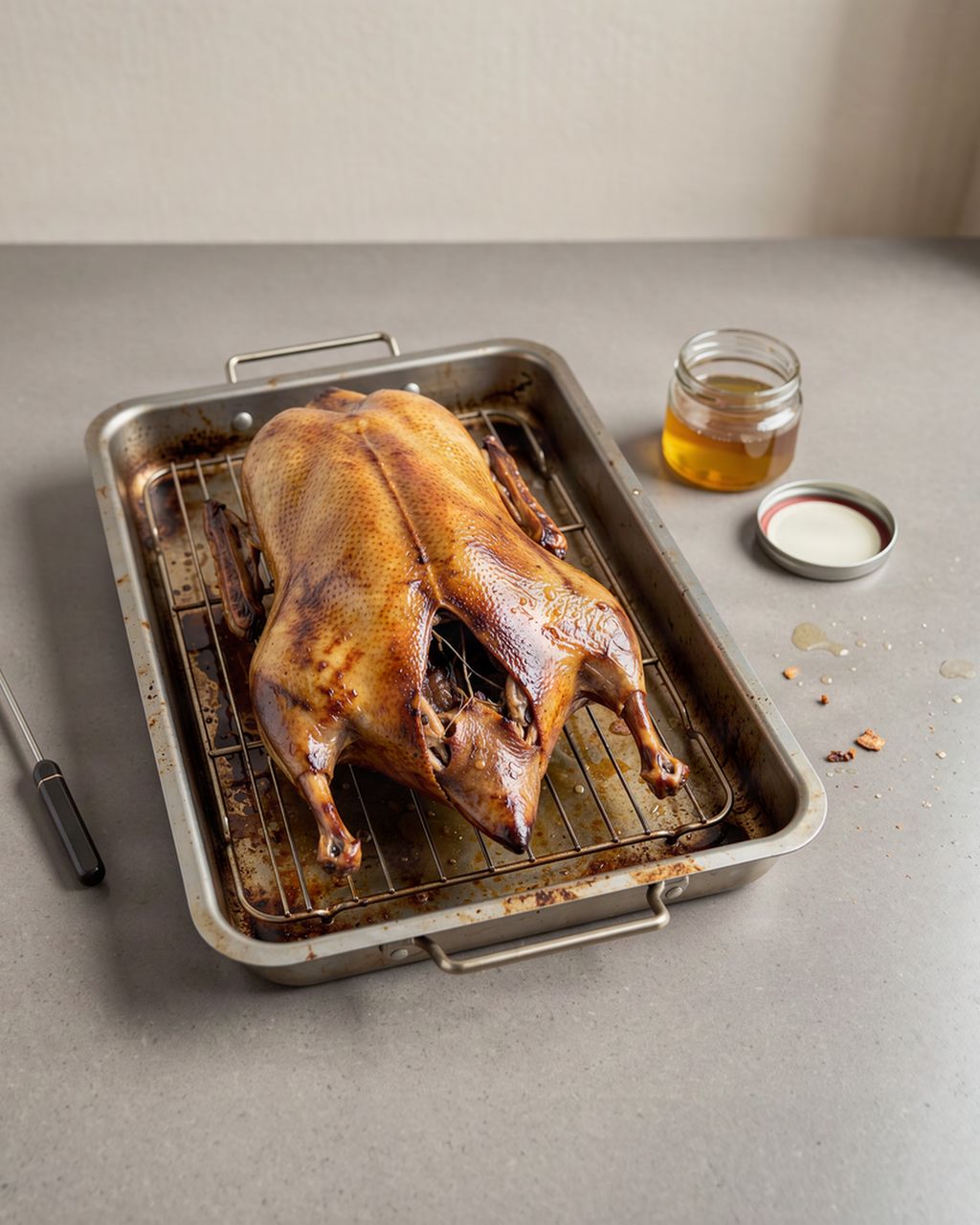
Roast wild duck briefly and uncovered at 200–220°C (390–430°F), wrapped in bacon, or split it up and cook the breasts and legs separately. It's smaller and much leaner than a farmed duck, so don't roast it as long as a farmed duck with cabbage. It would cook down to just skin and bone.
Whole: put an apple, an onion and a few juniper berries inside, wrap the breasts in bacon and roast uncovered at 200–220°C (390–430°F). A duck of about 1–1.2 kg needs roughly 40–60 minutes. Baste with the pan juices and butter. Insert the thermometer into the thigh, away from the bone. For safety it needs at least 74°C (165°F) (USDA/FSIS).
In parts: sear the breasts skin side down in a pan over medium heat for roughly 6–8 minutes, turn them and finish for 3–5 minutes, until the center is at least 74°C (USDA/FSIS). Slowly braise the legs covered in wine with onion at 165–170°C (330–340°F) for roughly 1.5–2 hours, until tender.
Wild duck is often skinned rather than plucked, so the skin comes off with the feathers. If yours is skinned, bacon is a must, because it has no skin to protect it. To compare flavors and methods with farmed duck, see slow cooker duck breast with oranges. The orange sauce suits wild duck too.
Authorities recommend cooking venison loin to a safe internal temperature too (USDA/FSIS 71°C, and the American CDC even 74°C for wild game because of trichinella), so serving the loin pink is your own choice and risk. Chefs often serve it pink because deer, unlike wild boar, doesn't usually carry trichinella. But undercooked meat from wild animals can carry other parasites and bacteria, so don't serve it pink to higher-risk groups (pregnant women, children, seniors). If you do decide on a pink loin, use only meat from a trusted supplier, with a veterinary inspection, and fresh. For wild boar, hare and wild duck, never make an exception.
No. According to the National Institute of Public Health, freezing game is neither effective enough nor safe, because some species of trichinella survive freezing. Likewise, drying, fermenting or smoking won't reliably destroy the larvae in uninspected meat. The only solution is meat that has been tested for trichinella (by the State Veterinary Administration, SVS ČR) and cooked so that every part reaches at least 71°C.
The strong "gamey" flavor is mellowed mainly by carefully trimming off membranes, sinews and bloody spots, then soaking the meat in buttermilk or milk in the fridge for 12–24 hours. A strong taste usually doesn't mean the meat has gone off. It's mostly an older cut, or an animal that wasn't field-dressed and chilled quickly after the hunt. Juniper, bay leaf and red wine then fine-tune the flavor rather than mask it.
Tough hare was usually roasted uncovered and dry, so the meat dried out before the connective tissue had time to soften. The legs need a lid, liquid and 2–2.5 hours of braising at 165–170°C (330–340°F), until the meat comes away from the bone. Another common cause is an older animal. If the meat is still tough even though it braised under a lid, add more liquid and keep braising.
Game is most often served with bread dumplings or Karlovy Vary dumplings (houskový or karlovarský knedlík) and a cream sauce, while roast loin and duck go better with potatoes and a fruit sauce. Tart and sweet flavors balance the strong taste of the meat: lingonberries, rose hips, currants, roasted apple or orange. Braised red cabbage and mushrooms go well too.
One recipe worth heating the oven for, one tip, and one deal from the shop. Nothing else.