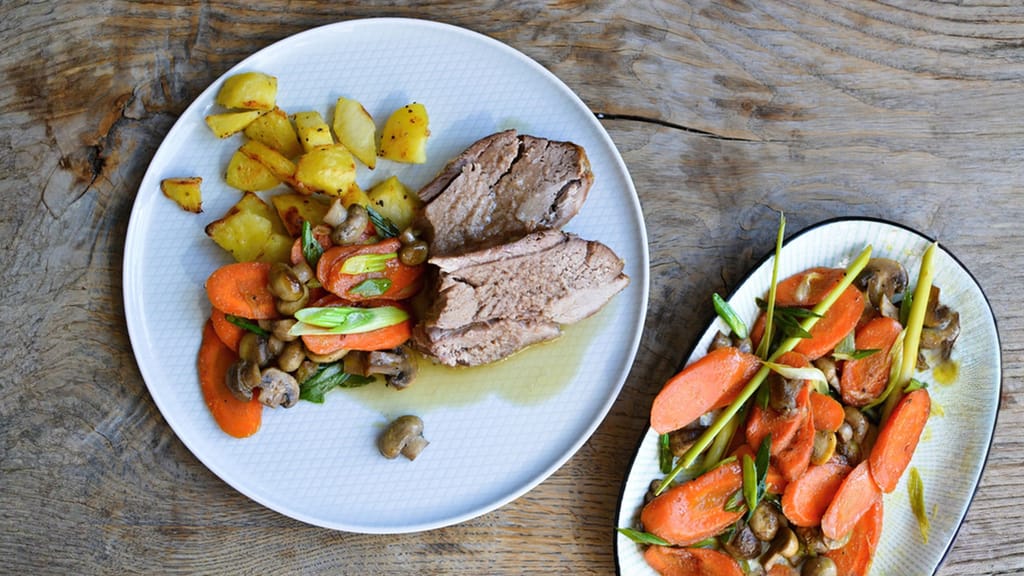
Slow-roasted leg of lamb with mushrooms and vegetables

Updated Jul 19, 2026
Lamb and rabbit stay tender when you cook them slowly, watch the internal temperature, and pick the right cut for the right method. Both meats are lean and full of flavour, so they really only turn tough for one reason — rushing and overheating. This guide is about avoiding exactly that: when to leave the meat pink and when to let it cook low and slow for hours, which marinade actually makes sense, which spices work, and what to use instead of lamb if you need a swap.
Lamb and rabbit toughen up for two completely different reasons, and each one needs the opposite fix. Lean cuts— lamb loin and chops, rabbit saddle and legs — turn tough from drying out: they carry little fat, so high heat quickly cooks the moisture away and leaves them rubbery. Sinewy cuts— lamb shoulder, shank, neck — are tough until you cook them long enough, because the collagen in the connective tissue needs slow, gentle heat to break down into soft gelatine.
Which gives you one simple rule to remember: cook lean cuts fast and keep them pink; cook sinewy cuts long and slow.The most common mistake is doing exactly the opposite — overcooking a chop until it's rubbery, or pulling a shoulder out too early while it's still tough.
A few other basics around the meat itself also affect how tender it ends up:
Quality and freshness.Fresh meat from a trustworthy butcher has a firmer structure and holds onto its juices better. Lamb should be light to deep pink with firm white fat; rabbit should be pale and odour-free.
Proper storage.Meat that dries out or sweats in the fridge will turn tough no matter how well you cook it. Keep it in the coldest part of the fridge — we cover exactly where in our article on where to store food in the fridge.
A long enough marinade.A few minutes won't do anything. Give lean meat at least a few hours, ideally overnight.
Resting after cooking.Meat sliced straight off the heat loses its juices onto the board. Ten minutes of resting lets them soak back into the fibres.
Tender lamb comes down to two things: choosing the right cut for your chosen method, and watching internal temperature rather than the clock. Cook loin, chops and leg faster and leave them pink (55–60°C internal), while shoulder and shank need long, slow cooking until the connective tissue fully softens.
Look for lamb with a light pink colour, firm white fat, and a mild smell. Pat the meat thoroughly dry with paper towel — a dry surface sears and caramelises beautifully in the pan, while a wet one just steams (only rinse if truly necessary, then dry again). Let the meat come to room temperature for 30–60 minutes before cooking so it cooks evenly and the centre isn't still cold.
A classic lamb marinade is olive oil, crushed garlic, rosemary and lemon juice with zest. The oil carries the herb flavours into the meat, while the mild acidity softens the surface. Marinate in the fridge for at least 2 hours, ideally overnight. Add salt either right at the start, where it acts as a quick brine and helps the meat hold onto its juices, or just before cooking — just avoid adding it only a few minutes ahead, when it only draws moisture out of the surface.
Lamb is about temperature, not time — which is exactly why a probe thermometer is worth using. Target internal temperatures (after resting):
Rare:52–54°C (126–129°F)
Medium rare:55–57°C (131–135°F) — the favourite for loin and chops
Medium:60–63°C (140–145°F)
Well done and sinewy cuts:68°C (154°F) and up; shoulder and shank can go as high as 88–92°C (190–198°F), where the meat falls apart with a fork
Pull the meat off the heat about 2–3°C before your target — the internal temperature will keep climbing slightly during resting.
For quick-cooking cuts, plan on roughly 20–25 minutes per 500g at 180°C (356°F) as a rough guide, but a thermometer always beats the clock. Leg and shoulder, on the other hand, want low and slow — 140–160°C (284–320°F) covered for 3–4 hours — so the collagen melts and the meat turns fall-apart tender. On the grill, lamb chops love high heat: sear hard on both sides to lock in the char and smoky flavour, then finish over indirect heat so the inside doesn't burn.
Slow-roasted leg of lamb with mushrooms and vegetables
Slow-roasted leg of lamb with mushrooms — a guide to perfectly tender lamb
Rabbit is extremely lean, so the key is moist, slow heat — braising or covered roasting. Dry, fast methods will dry it out; cooked in a little liquid at 150–160°C (302–320°F), it stays soft and juicy. Because rabbit has so little fat of its own, it's worth protecting it with bacon, butter or a sauce.
Braising is the most reliable way to get rabbit really tender. Cut it into portions, pat dry, and brown it in oil until golden — this searing step builds the base flavour of the whole dish. Then add carrot, celery and onion, pour in stock or white wine (which brings a gentle acidity), cover and let it simmer gently for 1–1.5 hours, until the meat pulls away from the bone easily. White wine, thyme and a spoonful of mustard are a classic rabbit combination that never disappoints.
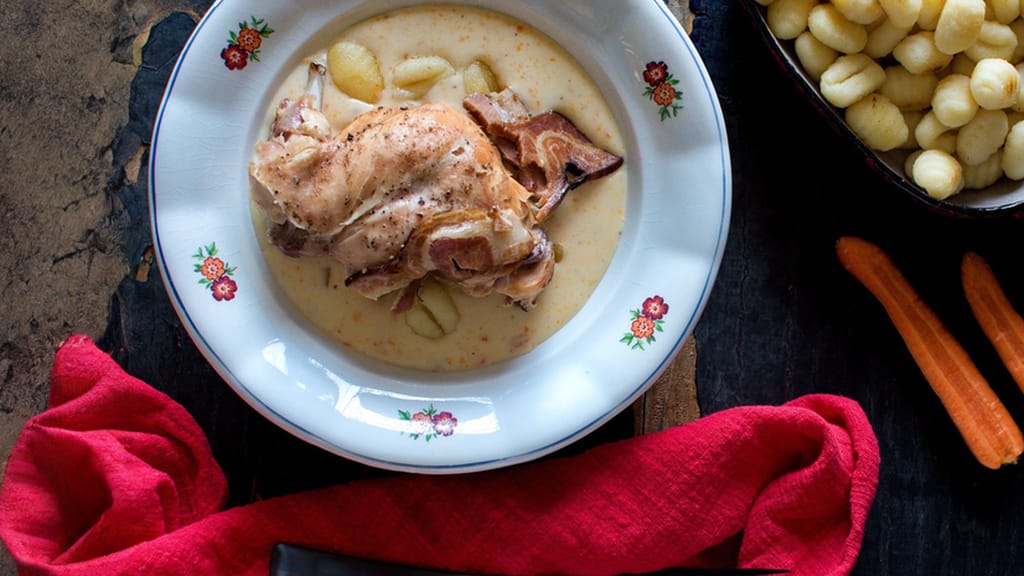
Slow cooker rabbit in creamy sauce
Slow cooker rabbit in creamy sauce — braising that leaves the meat buttery-soft
For roasting, keep the temperature low, around 150°C (302°F), and marinate the rabbit in olive oil and herbs for at least an hour beforehand. Roast it covered for roughly 90 minutes to 2 hours, basting regularly so it doesn't dry out. Uncover for the last few minutes so the surface can turn golden. Wrapping it in bacon or adding a few spoonfuls of butter on top reliably protects the lean meat from drying out.
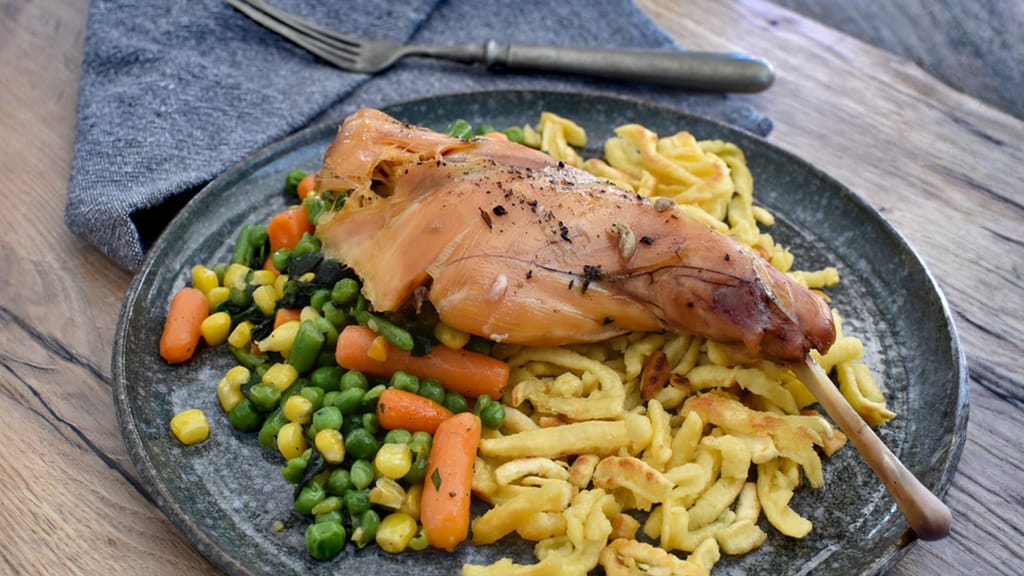
Roast rabbit with buttered vegetables and spaetzle
Roast rabbit with buttered vegetables and spaetzle — slow roasting, step by step
The most important thing is not letting the liquid boil away and not overcooking the meat. Keep an eye on the liquid level and top up with stock or water as soon as it starts reducing quickly. Once cooked, let the meat rest for 10 minutes under foil — the juices redistribute evenly instead of running out the moment you cut into it.
Rosemary, garlic, mint, thyme and fenugreek all suit lamb; thyme, sage, juniper, bay leaf and mustard suit rabbit. The difference is in intensity: lamb can handle bold herbs, while rabbit needs a lighter touch so its delicate flavour doesn't get overpowered.
Rosemary is the classic pairing for lamb — its intense aroma matches the meat's strong flavour step for step. Garlic adds a punch, mint brings a fresh counterpoint (hence the traditional English mint sauce served with lamb), and fenugreek takes lamb in a more Middle Eastern direction. Cumin, oregano and lemon zest also work well.
Thyme is the ideal match for rabbit — it highlights the meat's delicacy without overwhelming it. Sage adds a spicy, slightly bitter note, and juniper brings a woodsy aroma that pairs beautifully with white wine and bacon. Try mustard stirred into the sauce, bay leaf during braising, or a sprig of lavender for an unexpected, subtly floral touch. The one rule: any new flavour should support the meat, not drown it out.
Goat is the closest substitute for lamb, followed by beef or pork from fattier, more sinewy cuts. Choose a cut suited to the same cooking method and adjust your seasoning — lamb has such a distinctive flavour that no substitute will match it exactly without a little help.
Beef is the most accessible substitute, with a similar structure. For slow roasting and ragù, go for shoulder, neck or cheek — the fat and connective tissue bring the same juiciness and richness you'd expect from lamb. Swap it in roughly 1:1, but add a bit more garlic and herbs, since beef is earthier and less aromatic than lamb.
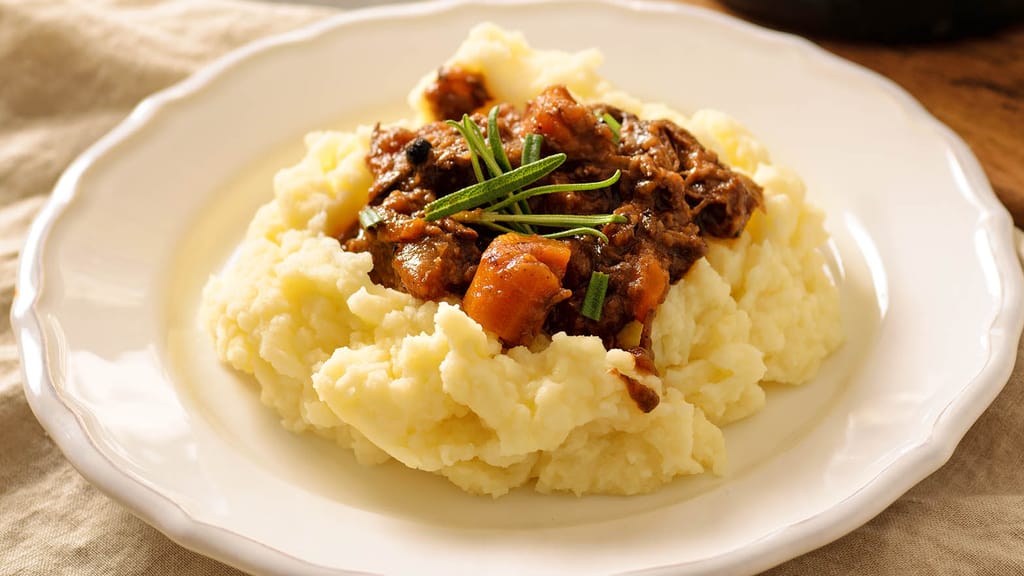
Oven-braised beef in red wine with vegetables
Oven-braised beef with wine and vegetables — a slow roast that stands in for lamb
Pork is a versatile, mild-flavoured substitute. Reach for shoulder or neck, which have enough fat to handle slow cooking without drying out. It generally cooks faster than beef, so keep an eye on it. A marinade with soy sauce or honey gives it the depth that pork otherwise lacks compared to lamb.
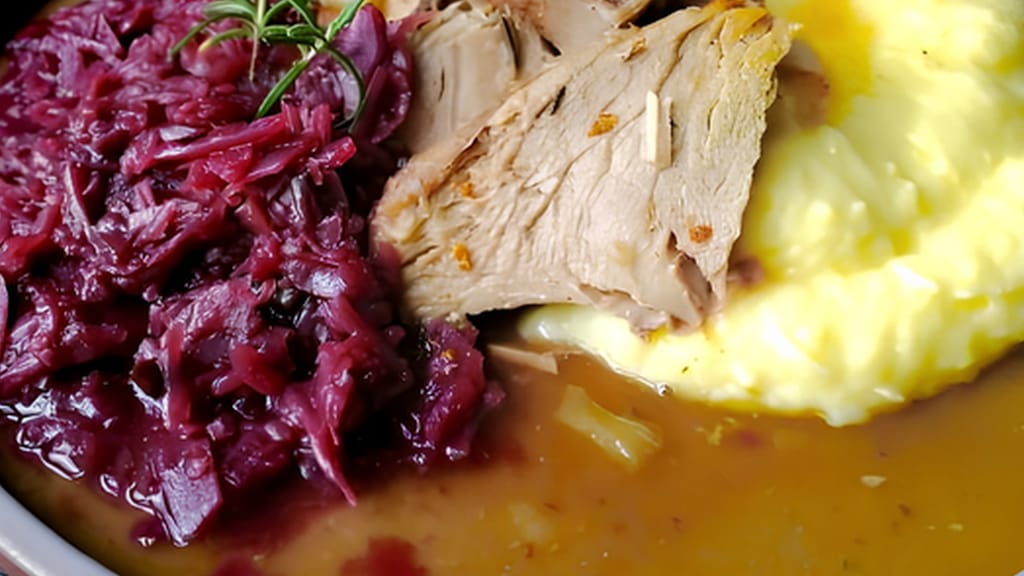
Slow-roasted pork with red cabbage
Slow-roasted pork with red cabbage — a crowd-pleasing stand-in for roast lamb
Both are nutritionally valuable sources of protein. Rabbit is one of the leanest meats around — nutritional databases put it at roughly 8g of fat and over 28g of protein per 100g, meaning less fat than chicken or beef. Lamb is fattier (roughly 15–20g of fat per 100g depending on the cut), but rich in iron, zinc and vitamin B12. If you want a lighter take on lamb, choose lean cuts and trim off any visible fat before cooking.
No — rabbit should always be cooked through to an internal temperature of 70–74°C (158–165°F), never pink or rare. Raw or undercooked rabbit (and hare) meat can carry tularaemia. Lamb is different: a whole muscle cut with a well-seared crust can safely stay pink in the middle.
An acidic marinade and herbs are your best bet for taming lamb's bold flavour — think lemon juice, yoghurt or white wine with garlic, rosemary and mint. Trimming off excess fat helps too, since that's where most of the strong aroma sits. Young lamb also has a milder flavour than older mutton.
Fresh lamb and rabbit keep for about 2–3 days in the coldest part of the fridge, while minced/ground meat only lasts about 1 day. Both freeze well for several months — wrap tightly to keep air out and thaw slowly in the fridge, not at room temperature. Never refreeze meat once it's been thawed.
For larger cuts of both lamb and rabbit, yes — it's worth it. Leave them out of the fridge for 30–60 minutes so they cook evenly and the centre doesn't stay raw while the outside dries out. Just don't leave meat out longer than an hour. For thin chops or small portions, it matters much less.
For lean lamb cuts, press the meat with a finger — springy with a bit of give usually means it's just right, soft and jelly-like means it's underdone, firm and unyielding means it's overcooked. For braised rabbit and sinewy cuts, it's simpler: they're done when the meat pulls easily off the bone and a fork slides in with no resistance. That said, a probe thermometer is always more reliable — and essential for rabbit, since it must reach 70–74°C (158–165°F) at the centre.
One recipe worth heating the oven for, one tip, and one deal from the shop. Nothing else.