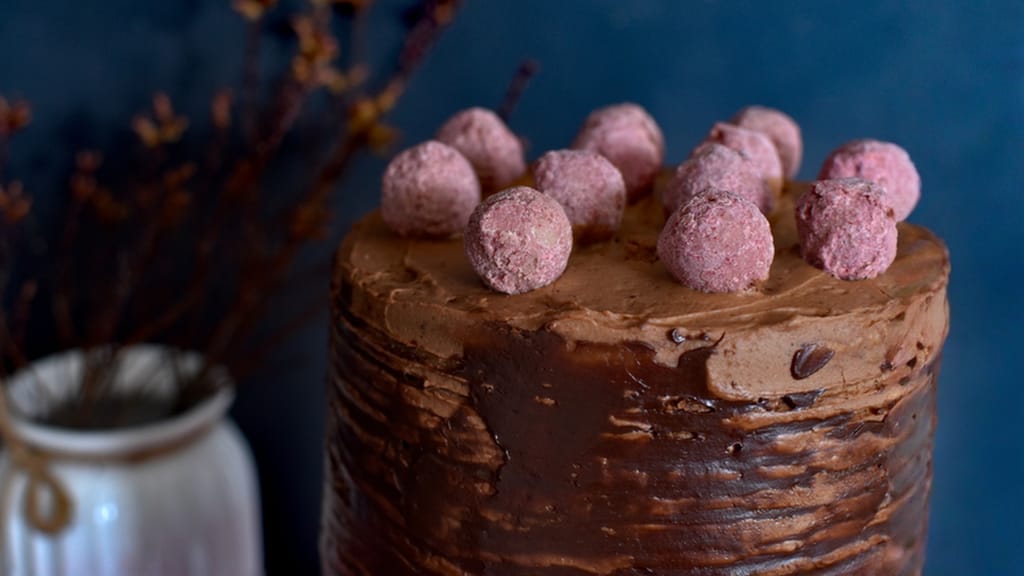
Chocolate cake with chocolate and raspberry pralines
Chocolate Ganache: Ratios, Temperatures, Method and Dessert Uses

Updated Oct 25, 2026
Chocolate ganache is an emulsion of chocolate and cream, and the ratio decides everything. With dark chocolate, 1:1 gives a glossy glaze and 2:1 gives a thick filling or truffle base. Milk and white chocolate have less cocoa solids, so they need more chocolate: 2:1 to 4:1. In this guide you'll find ratios in grams for each use and type of chocolate, the right cream temperature (185–195 °F / 85–90 °C) and drip temperature (86–90 °F / 30–32 °C), how long ganache takes to set, how to flavor it with raspberries, pistachios or coffee, how to store it, and how to rescue it if it splits.
Chocolate ganache is an emulsion of chocolate and cream, nothing more. The ratio of the two decides the final consistency: the more chocolate, the thicker the mixture. With dark chocolate:
Glaze – a 1:1 ratio (chocolate to cream) stays glossy once set and pours over a cake.
Cake and praline filling – a 2:1 ratio in favor of chocolate, creamy yet firm once cooled.
The type of chocolate changes both the flavor and the amount of cream you need. Dark ganache has intense cocoa notes, milk ganache is sweeter and creamier, and white is the most delicate, with a hint of vanilla. Because white and milk chocolate contain more sugar and milk solids and fewer cocoa solids (white has only cocoa butter and no non-fat cocoa solids at all), they need less cream; for white, a 3:1 ratio is perfectly normal. If you're not sure which to pick, read up on the differences between dark, milk and white chocolate.
The origin of ganache is usually told as a happy accident. According to the story, around 1850 in the Parisian pastry shop Siraudin, an apprentice splashed hot cream over chopped chocolate by mistake, and his master called him a ganache (French for "fool" or "simpleton"). The taste of the result outdid any insult, and the name stuck.
For every 100 g of chocolate, use 25–100 g of whipping cream (33–35% fat): the most for dark chocolate, the least for white. Cocoa solids firm up ganache, so milk and white chocolate need more chocolate to reach the same thickness. The starting values follow standard pastry practice (dark 1:1 for thin / 2:1 for thick, milk 2:1 / 3:1, white 3:1 / 4:1). All the figures below are grams of cream per 100 g of chocolate.
Dark chocolate ganache needs 50–100 g of cream per 100 g of chocolate: 1:1 for glaze, 2:1 for filling and coating.
Glaze and drip: 100 g cream (1:1)
Cake and macaron filling: 50–70 g (2:1 to 1.5:1)
Cake coating under fondant: 50 g (2:1)
Truffles: 50 g (2:1)
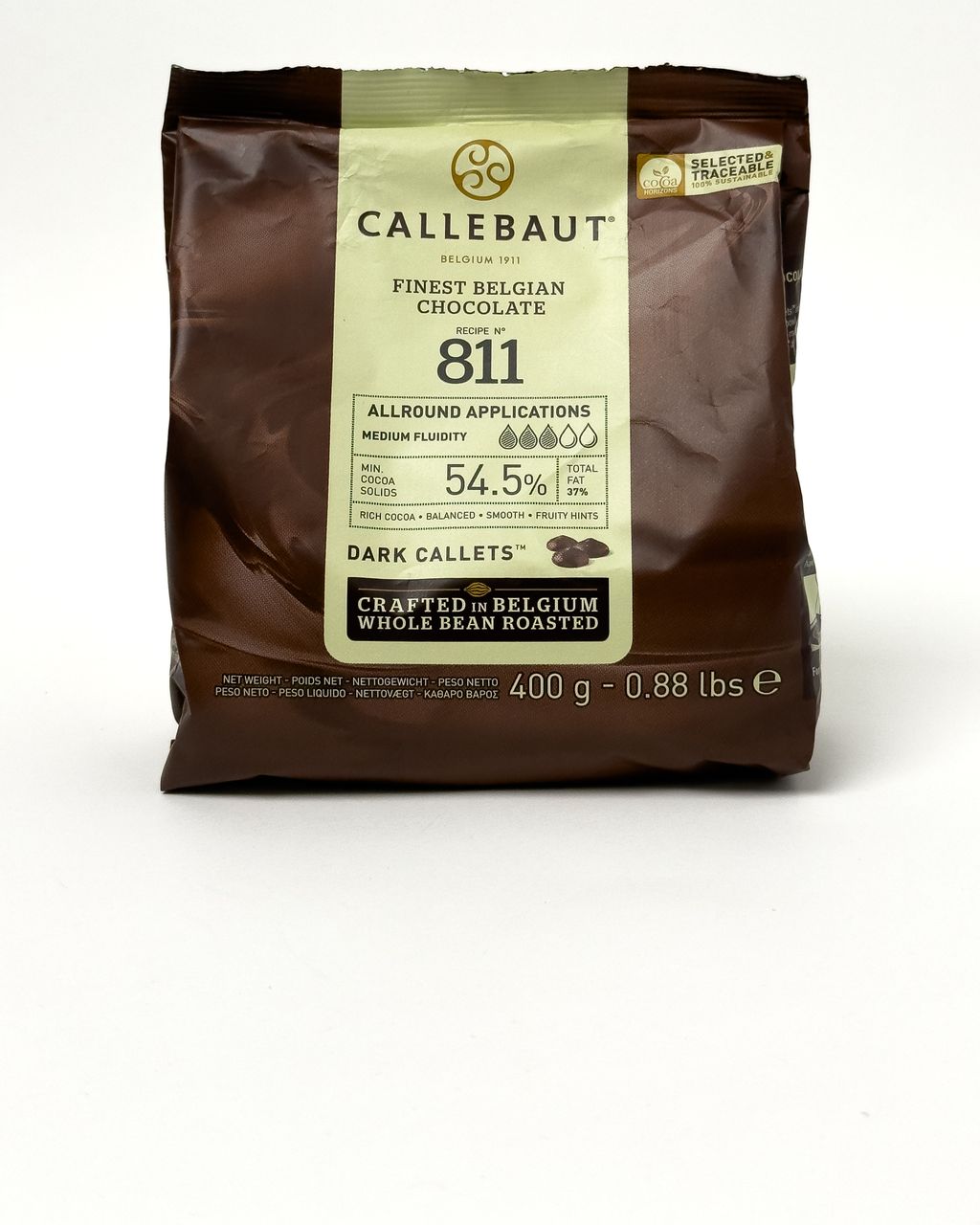
Whipped ganache: 100 g (1:1), which is also how Callebaut makes it in its recipe with 811 chocolate
With chocolate above 70% cocoa, add 10–20 g more cream, otherwise the ganache will be stiff and may split.
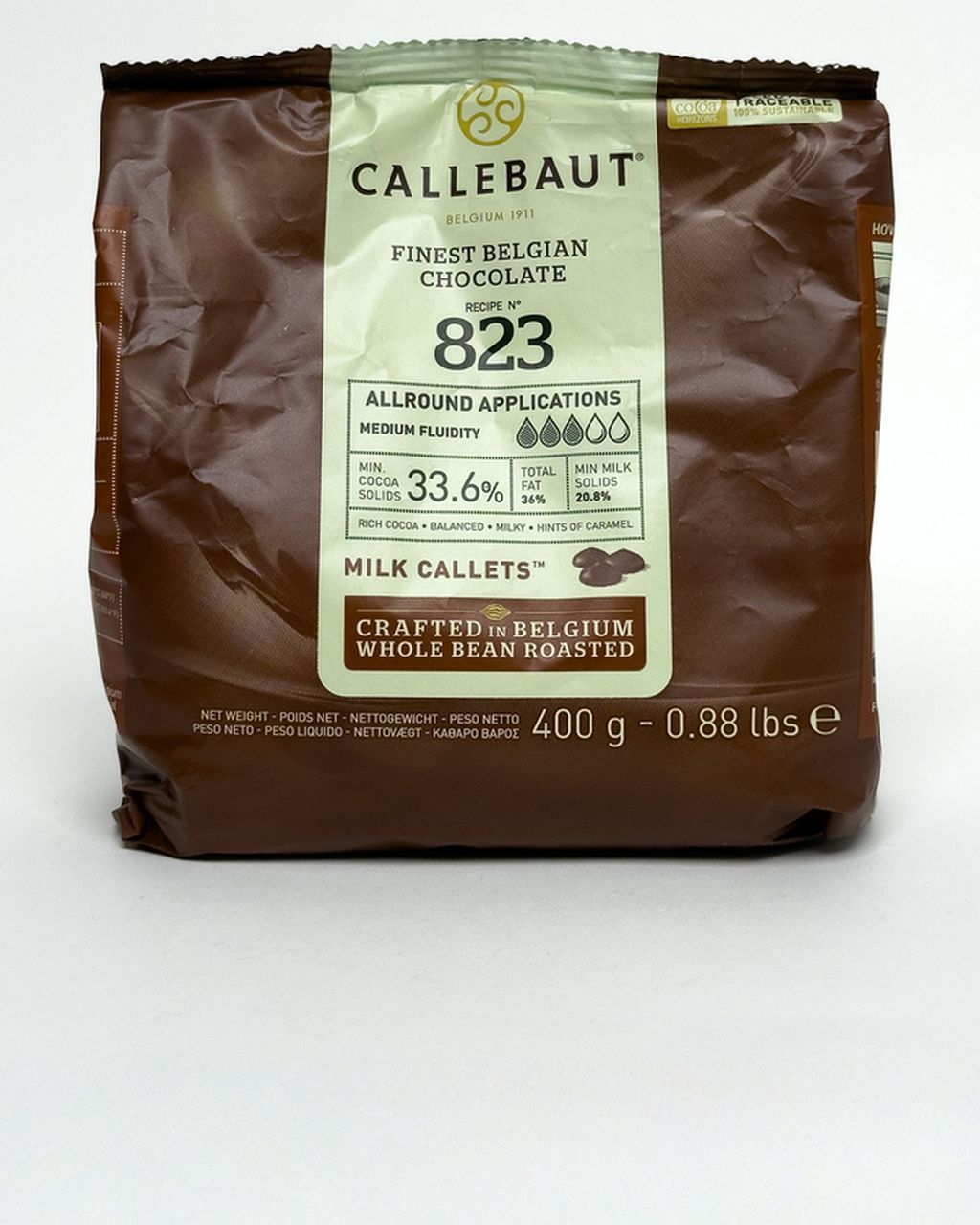
Milk chocolate ganache needs 33–50 g of cream per 100 g of chocolate, or 2:1 to 3:1; the only exception is whipped ganache at 1:1.
Glaze and drip: 50 g cream (2:1)
Cake and macaron filling: 40 g (2.5:1)
Cake coating under fondant: 33 g (3:1)
Truffles: 33–40 g (3:1 to 2.5:1)
Whipped ganache: 100 g (1:1), chilled overnight
Milk ganache stays softer than dark, so allow longer chilling time.
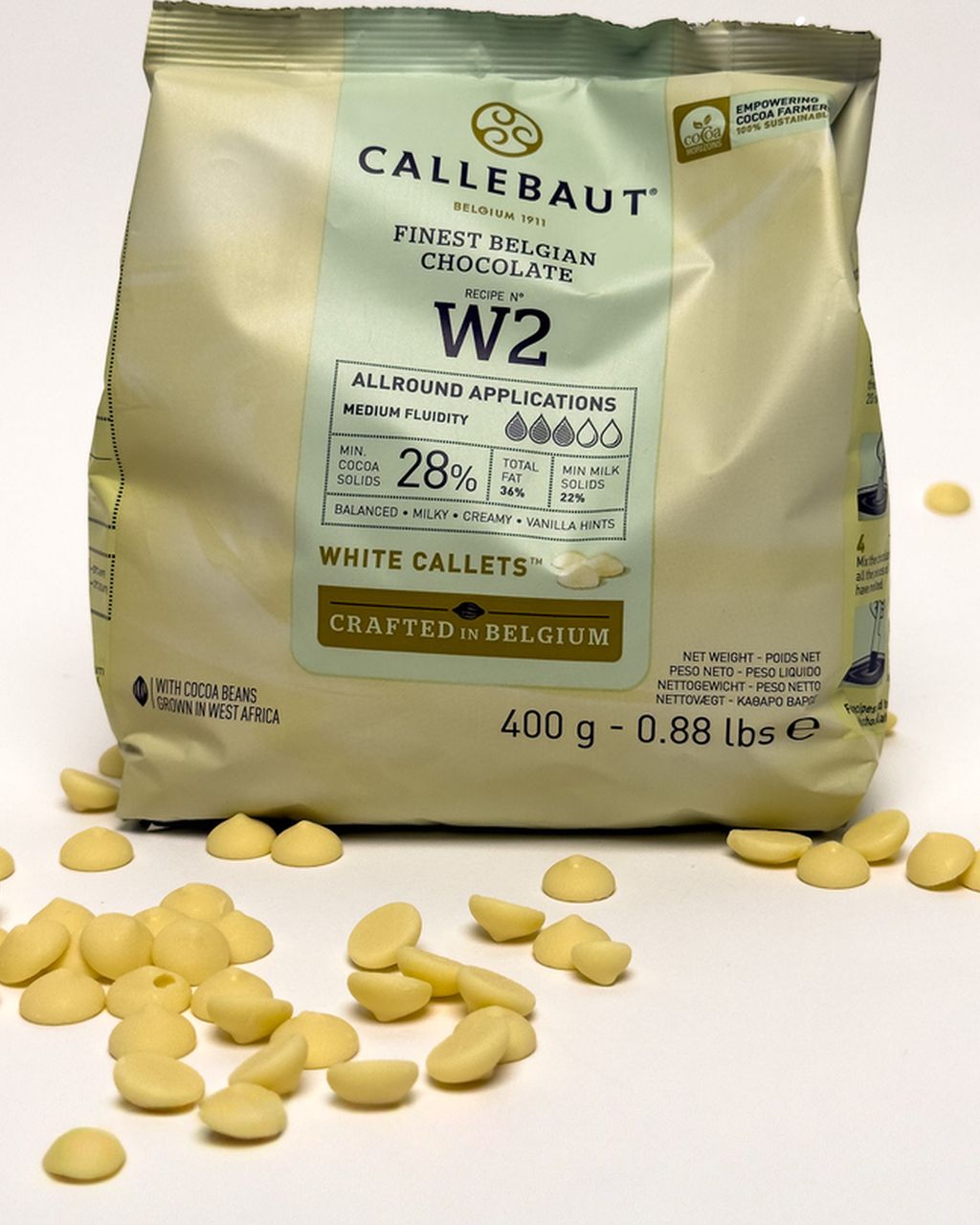
White chocolate ganache needs 25–33 g of cream per 100 g of chocolate, or 3:1 to 4:1; the only exception is whipped ganache at 1:1.
Glaze and drip: 33 g cream (3:1)
Cake and macaron filling: 33 g (3:1)
Cake coating under fondant: 25 g (4:1)
Truffles: 25–33 g (4:1 to 3:1)
Whipped ganache: 100 g (1:1), chilled overnight
White ganache also stays softer than dark, so allow longer chilling time and keep it away from heat.
Perfect ganache comes down to two things: the right ratio and cream heated to just below boiling (185–195 °F / 85–90 °C). You can do it in five steps:
Chop the chocolate finely and put it in a bowl. Smaller pieces (or chocolate callets) melt evenly, while big chunks stay cold in the middle.
Heat the whipping cream (at least 30%, ideally 33–35% fat) until the first bubbles appear at the edge of the pan, at roughly 185–195 °F / 85–90 °C. Don't let it boil.
Pour the hot cream over the chocolate so that it covers it completely.
Let the mixture sit for 1–2 minutes without stirring, so the chocolate warms through and starts to melt on its own.
Stir from the center outward until the mixture is smooth, glossy and uniform. For the finest emulsion, blend it with an immersion blender for 20–30 seconds, keeping the blender submerged so it doesn't draw in air. For extra shine and silkiness, stir in a tablespoon (about 15 g) of softened butter at 95–105 °F / 35–40 °C.
Glossy ganache comes from cream heated to 185–195 °F / 85–90 °C, and after stirring it sits at around 105–113 °F / 40–45 °C; below 86 °F / 30 °C it starts to set. Cream that is too hot (boiling) breaks the emulsion, so the fat separates from the cocoa mass and the surface turns dull. Cream that is too cold won't melt the chocolate, and lumps stay in the mixture.
So heat the cream only until the first bubbles appear, and after pouring it over the chocolate, give the mixture a minute to rest before you start stirring. Stir slowly and as little as possible, because unnecessary whisking works air and bubbles into the ganache.
Depending on ratio and temperature, ganache sets in anything from 15 minutes (drip in the fridge) to 8–12 hours (coating at room temperature). Approximate times:
Drip and glaze (1:1): let it cool to 86–90 °F / 30–32 °C (about 20–40 minutes at room temperature); on the cake it sets in the fridge in 15–30 minutes.
Coating under fondant or for sharp edges (2:1 and above): overnight at 64–68 °F / 18–20 °C, 8–12 hours, until it reaches a peanut-butter consistency. In the fridge it firms up in 1–2 hours, but unevenly, so let it soften for 30–60 minutes before coating.
Whipped ganache: leave milk and white in the fridge for at least 6 hours, ideally overnight, so it's chilled all the way through (around 41 °F / 5 °C). The exception is dark 1:1: according to Callebaut's recipe with 811 chocolate, it can be whipped once it has cooled to roughly 86 °F / 30 °C.
Truffles (2:1, white 3:1): 2–3 hours in the fridge before they can be shaped.
Setting overnight outside the fridge is standard pastry practice for thick ganache with a high proportion of chocolate. However, USDA FSIS generally advises against leaving foods containing cream between 40 and 140 °F (4–60 °C) for more than 2 hours. If you want to play it safe, let the ganache set in the fridge and just bring it to room temperature before working with it.
You control the consistency of ganache with the ratio: with dark chocolate, 1:1 for glaze and 2:1 for filling. The same base can therefore cover a cake, fill macarons or form the center of a praline. Only the ratio and the temperature at which you work with the ganache change.
For a glossy glaze, use a 1:1 ratio (with dark chocolate) and let the ganache cool to 86–90 °F / 30–32 °C before pouring. A good glaze is fluid but thick enough to hold its shape once set and to run down the sides in smooth, continuous waves. Work quickly and smooth the top with an offset spatula or by tilting the cake. The less you fiddle with the glaze, the smoother it stays.
Chocolate cake with chocolate and raspberry pralines
Chocolate cake with raspberry pralines: ganache glaze in action
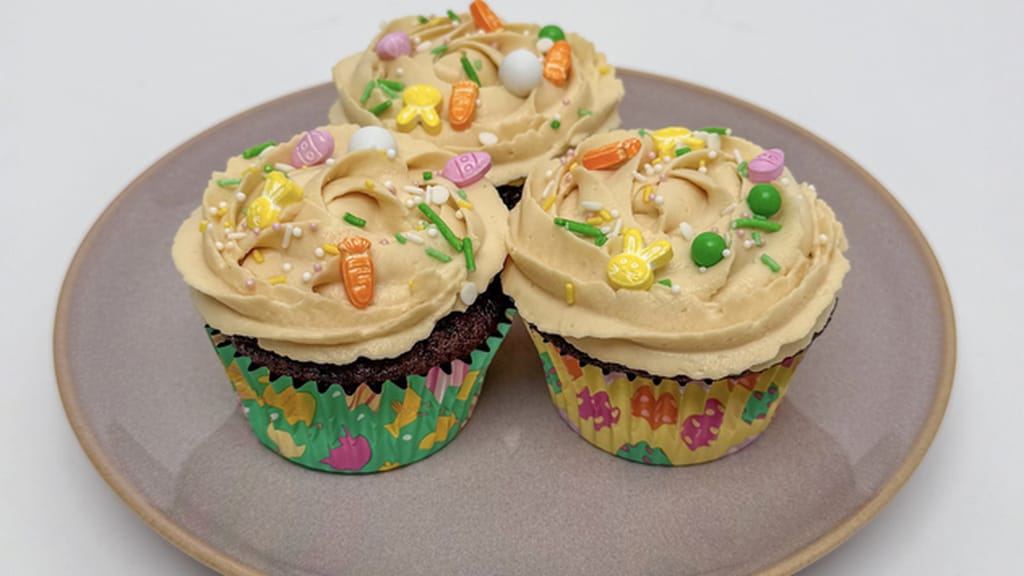
Chocolate cupcakes with salted caramel cream
Chocolate cupcakes with caramel cream
For a filling, choose a 2:1 ratio in favor of chocolate (2.5:1 for milk, 3:1 for white). Once chilled it will be firm, yet still creamy when you bite into it. Pipe it into macarons only after it has cooled, so it holds its shape between the shells and doesn't soak into them; you'll find more on ratios and maturing in our article on macaron fillings. For pralines and truffles, let the ganache set in the fridge and then roll it into balls. Planning them as Christmas gifts? Our guide to chocolate ganache truffles explains how to coat them and how long they keep.
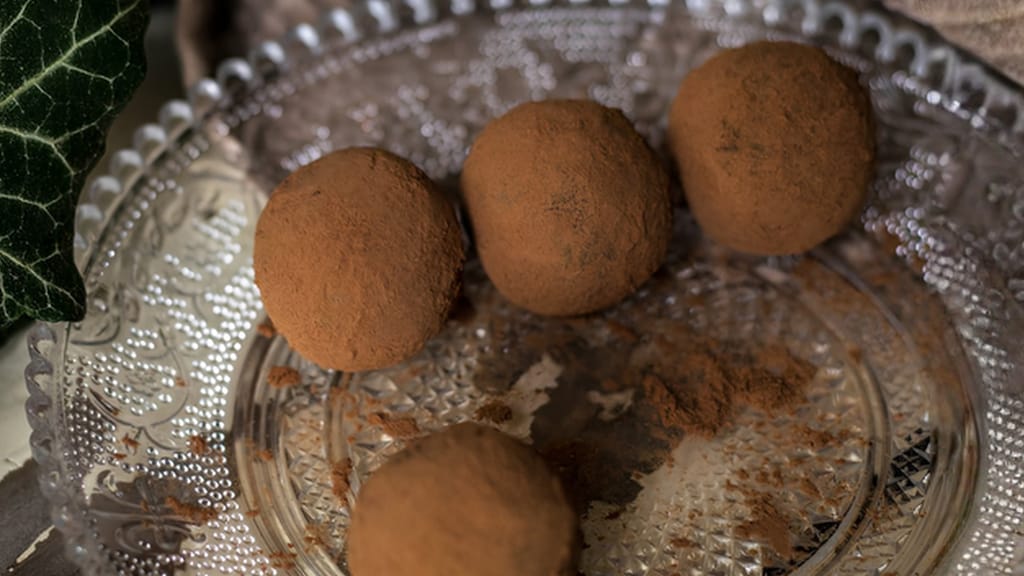
Chocolate peanut butter truffles
Chocolate ganache truffles with peanut butter
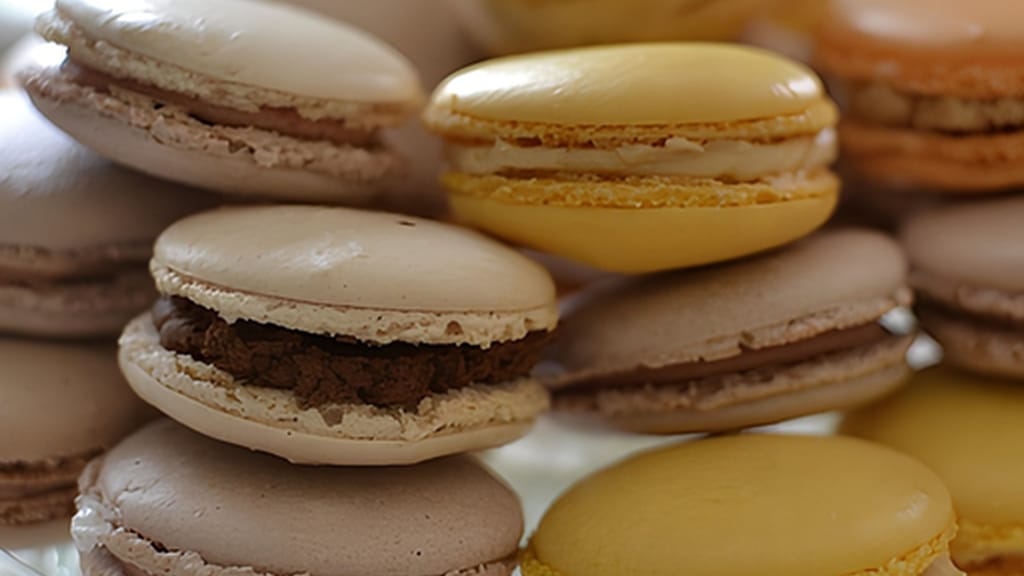
White chocolate and coffee cream - great in macarons and beyond
White chocolate and coffee cream: a delicate alternative macaron filling
For a cake you need two different ganaches: a thinner 1:1 for the drip, and a thick 2:1 for coating under fondant or for sharp edges. Both only work on a chilled cake.
Drip: put the cake in the fridge for at least 30 minutes. Let 1:1 dark ganache (milk 2:1, white 3:1) cool to 86–90 °F / 30–32 °C, so it feels lukewarm to the touch. First try one test drip on the side: if it runs all the way down to the board, the ganache is too warm; if it stops after a centimeter, it's too cold, and you can warm it in the microwave in 5-second bursts. Then pour over the top and smooth it.
Coating under fondant: thick 2:1 ganache (milk 3:1, white 4:1) makes a firm shell that evens out imperfections and, unlike buttercream, doesn't sweat under fondant. Spread it once it reaches a peanut-butter consistency.
Sharp edges: apply the coating in two layers: a thin first layer (the crumb coat), 15 minutes in the fridge, then smooth the final layer with a straight scraper with a warmed edge.
For a step-by-step with tricks for straight sides, see our guide on how to coat a cake with ganache for sharp edges.
Whipped ganache is made from 1:1 ganache that you chill thoroughly and whip into a lighter, fluffy cream. Whip at medium speed for just 1–3 minutes, to soft peaks, because over-whipped ganache turns grainy and releases fat. According to Callebaut's recipe, dark ganache made with 811 chocolate can be whipped once it has cooled to roughly 86 °F / 30 °C, while milk and white should stay in the fridge for at least 6 hours, ideally overnight. White is the trickiest; why it splits and how to chill it properly is covered in our article on whipped white chocolate ganache.
Flavored ganache works when you subtract a liquid flavoring from the cream: the total amount of liquid has to stay the same, or the ganache will turn thin. Fats and pastes, on the other hand, soften the ganache, so you reduce the cream by a little less. The four most common variations:
Raspberry ganache (fruit purée): replace 30–50% of the cream with purée. Purée is about 85–88% water with almost no fat, so combine it with white or milk chocolate and watch the ratio, for example 100 g white chocolate, 20 g cream and 20 g raspberry purée. Heat the purée separately to 140–158 °F / 60–70 °C and stir it into the finished ganache; cooked together with the cream, it can split the ganache. To keep the fruit flavor without the cream weeping water, see our article on fruit cream for cakes.
Pistachio ganache: pistachio paste isn't a liquid but a fat. Add 15–25 g per 100 g of white chocolate and reduce the cream by only 5–10 g. Stir it into warm ganache (95–105 °F / 35–40 °C). A paste made from 100% pistachios gives a strong flavor and color; more in our article on pistachio cream for cakes.
Coffee ganache: infusing gives the cleanest flavor: 2 tablespoons (about 10 g) of coarsely ground coffee per 200 g of cream, covered, for 15–30 minutes, then strain and top the cream back up to its original weight. A quicker route: 1–2 g of instant coffee per 100 g of chocolate, dissolved in the hot cream. Espresso replaces cream 1:1.
Boozy: 5–10% of the ganache's weight (15–30 g for 300 g of ganache), such as Grand Marnier, rum or Baileys, and reduce the cream by the same amount. Add it only once the ganache is below 104 °F / 40 °C, so the aroma doesn't evaporate.
For any fruit or alcohol ganache, 5–10% glucose syrup helps keep the emulsion smooth and glossy. Why it works, and when to use invert sugar instead, is explained in our article on glucose in ganache.
Fine-tune the flavor with a pinch of salt (about 0.5 g per 300 g of ganache) to bring out the chocolate, or with vanilla extract for a softer aroma. You can also infuse the warm cream with orange zest, cinnamon or a vanilla pod (10–15 minutes, covered) and strain it before pouring it over the chocolate; top up any cream that evaporated to its original weight.
Chocolate ganache is both filling and glaze for classic desserts: thicker 2:1 is poured into tartlets, and éclairs are filled with thick or whipped ganache. Small touches shift the flavor: stir a little orange zest or a pinch of chili into the warm mixture, sprinkle it with flaky salt to bring out the cocoa, or top the finished dessert with toasted hazelnuts and pistachios for textural contrast.
Pour thicker ganache (2:1, at 95 °F / 35 °C, when it still levels out by itself) into a crisp pastry shell, chill it for 1–2 hours to set, and decorate with seasonal fruit. Raspberries or blueberries cut through the sweetness of the chocolate with their tartness. Here the ganache works as a smooth, sliceable filling that holds its shape even after cutting.
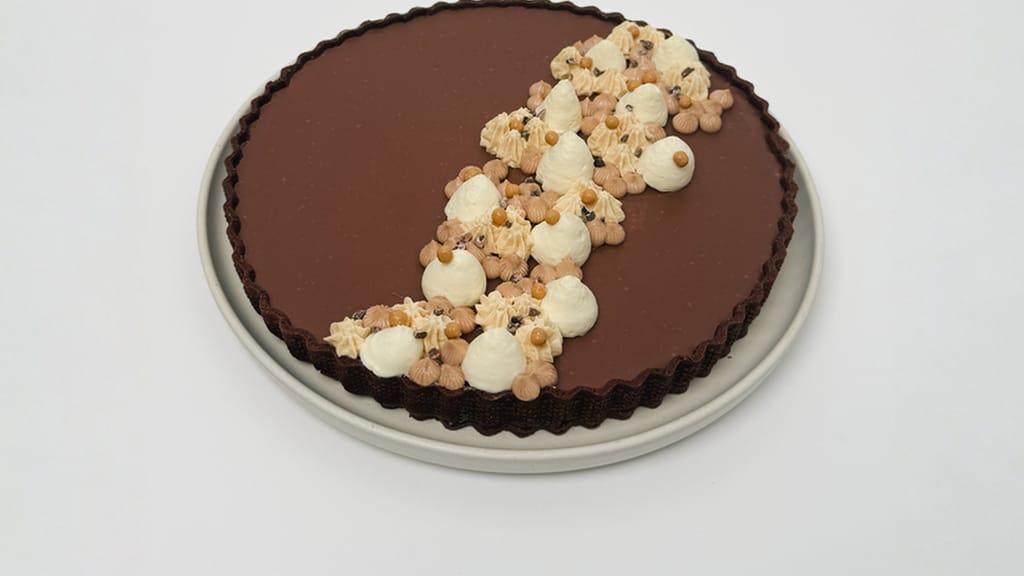
Chocolate tart with salted caramel
Chocolate tart with salted caramel
Fill éclairs with thick chocolate ganache (2:1) or whipped ganache instead of classic vanilla cream, and pour white chocolate over the top for a contrast in both looks and flavor. A pinch of flaky sea salt on top brings out the cocoa.
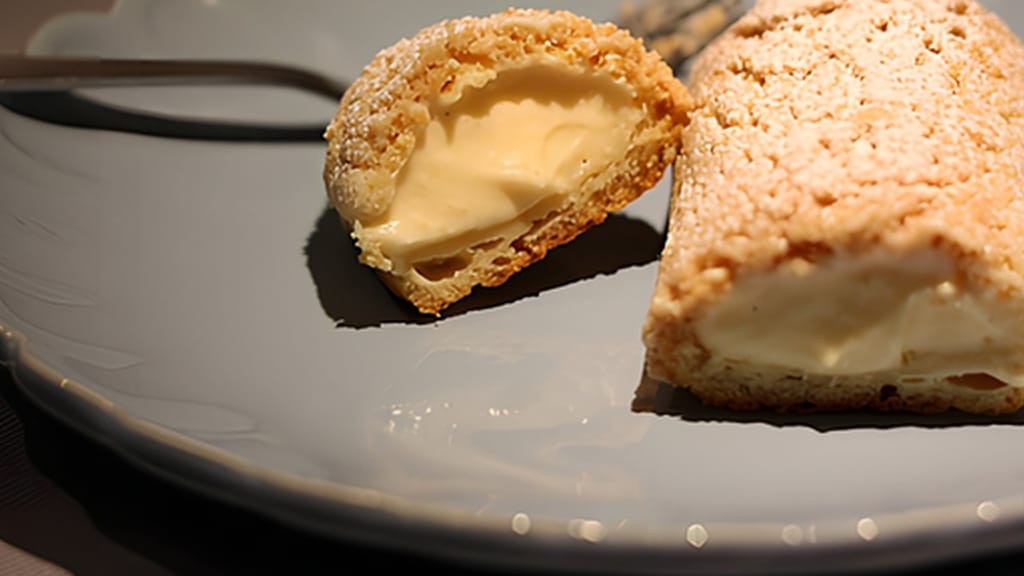
Eclairs à la ladurée – irresistibly delicious pastries
Ladurée-style éclairs: a base that ganache simply elevates
Most ganache mishaps have a simple fix: it split because of temperature or ratio, you can adjust the thickness with chocolate or cream, and with proper storage it keeps for days to months. The most common situations:
Split (greasy, grainy): it was too hot, too cold, or doesn't have enough liquid. Rescue it with warm cream and an immersion blender (see the box above). All the causes are covered in our article on why ganache splits and how to save it.
Dull: the cream was boiled, or air got mixed in. 5–10% glucose syrup and a submerged blender will help.
Won't set: not enough chocolate for the type; milk and white need 2–4 times more chocolate than cream.
Stiff and crumbly: the chocolate is too dark (above 70%) or it has been in the fridge too long. Warm it in a water bath to 86 °F / 30 °C and stir.
Change the thickness through the ratio of ingredients: if the ganache is too thin, add more melted chocolate (about 20 g for every 100 g of ganache); if it's too stiff, stir in 10–20 g of warm cream. Always add a little at a time and let the mixture rest for a moment. Ganache keeps thickening as it cools, so when warm it looks thinner than it will end up.
Ganache made with fresh cream is a perishable food: use it within 3–4 days in the fridge, and it keeps its quality in the freezer for about 3 months. No authority sets a specific limit for homemade ganache, so stick to the general USDA FSIS rules for foods containing cream:
Room temperature: no more than 2 hours between 40 and 140 °F (4–60 °C), and only 1 hour when it's above 90 °F (32 °C). So put a cake with ganache back in the fridge after serving.
Fridge: at 40 °F (4 °C) or below in an airtight container, 3–4 days, which is the same timeframe FSIS gives for cooked leftovers. Never longer than the use-by date of the cream you made it with.
Freezer: at 0 °F (−18 °C), according to FSIS, food stays safe indefinitely, but quality suffers over time; it's best within 3 months. Freeze it in a thin layer in a bag with the air pressed out.
Thaw frozen ganache slowly in the fridge (overnight) so the emulsion doesn't break. Before using it again, let it soften at room temperature, or warm it gently in a water bath to 86–95 °F / 30–35 °C and stir until smooth. Truffles, with their high proportion of chocolate, sugar and alcohol, have their own timelines; for how long they keep and how to store them, see our guide to chocolate ganache truffles and their shelf life.
Use whipping or heavy cream with at least 30% fat, ideally 33–35%. A higher fat content gives a smoother, more stable emulsion. Low-fat cream splits more easily, and the ganache tends to be thinner and less glossy.
Yes, but milk has only about 3.5% fat, so the ganache will be thinner and less creamy. Use roughly a quarter more chocolate and add 5–10% glucose syrup to help the emulsion hold. That's fine for a glaze or sauce, but for covering a cake or making truffles, stick with cream.
To cover a 20 cm (8 in) cake, plan on about 400–500 g of ganache. At a 1:1 ratio that's roughly 250 g dark chocolate and 250 g cream; for a coat under fondant, use closer to 330 g chocolate and 165 g cream. Pouring over the top alone takes about half that, and for filling between the layers, add another 200 g.
Yes. Replace the cream 1:1 with full-fat coconut milk for a dairy-free ganache with a subtle coconut note. Use the thick part from a can of coconut milk, the portion with a high fat content, or the mixture will be too thin.
Yes. Heat the chocolate and cream at 50–60% power in 20–30 second bursts, stirring between each round until smooth. Watch the edges so nothing scorches, because overheated chocolate thickens and the ganache will split.
Color white ganache with a fat-soluble colorant, meaning oil-based chocolate coloring or powdered color, and add it to warm ganache a few drops at a time. Ordinary water-based gel coloring can thicken or split the ganache.
One recipe worth heating the oven for, one tip, and one deal from the shop. Nothing else.