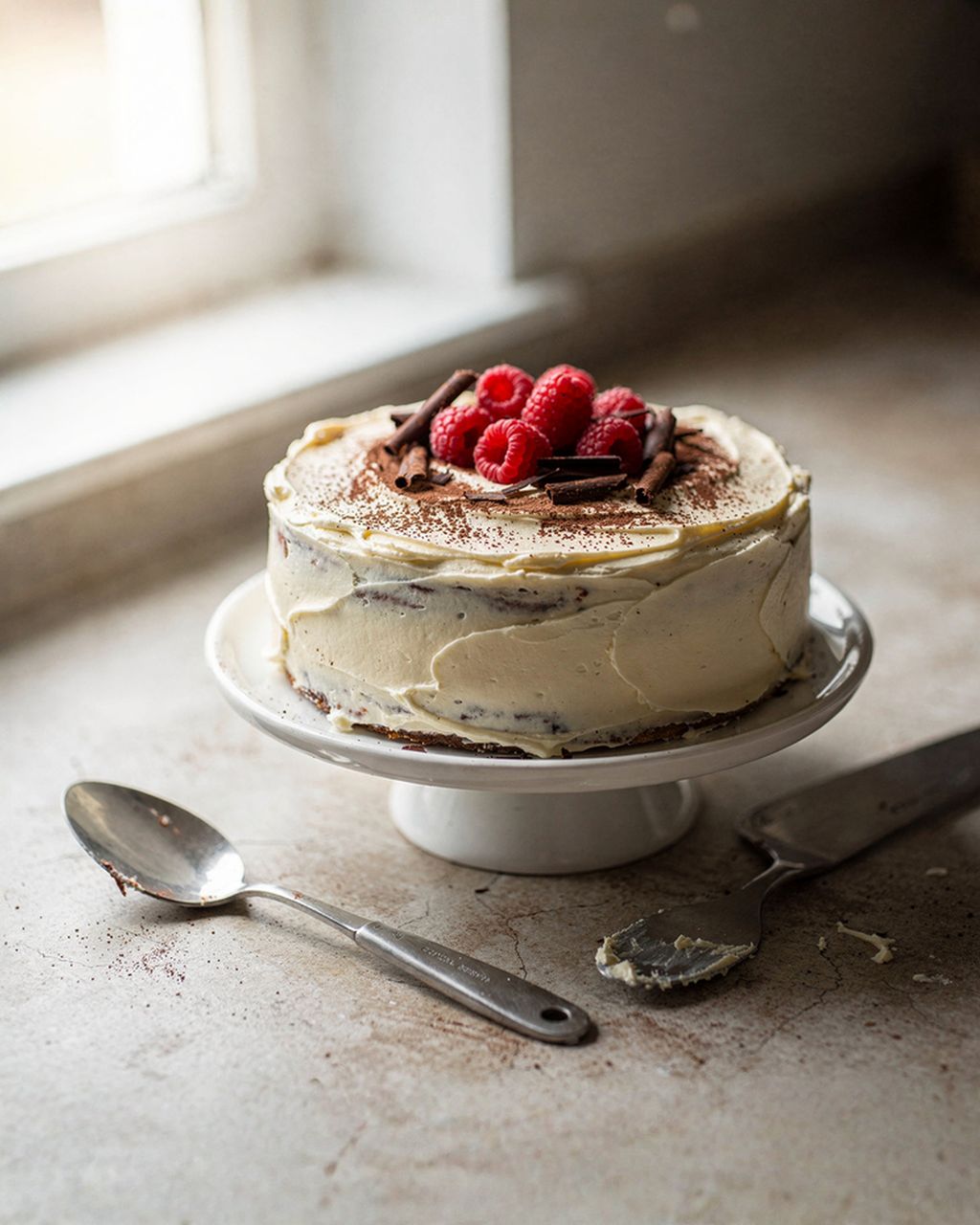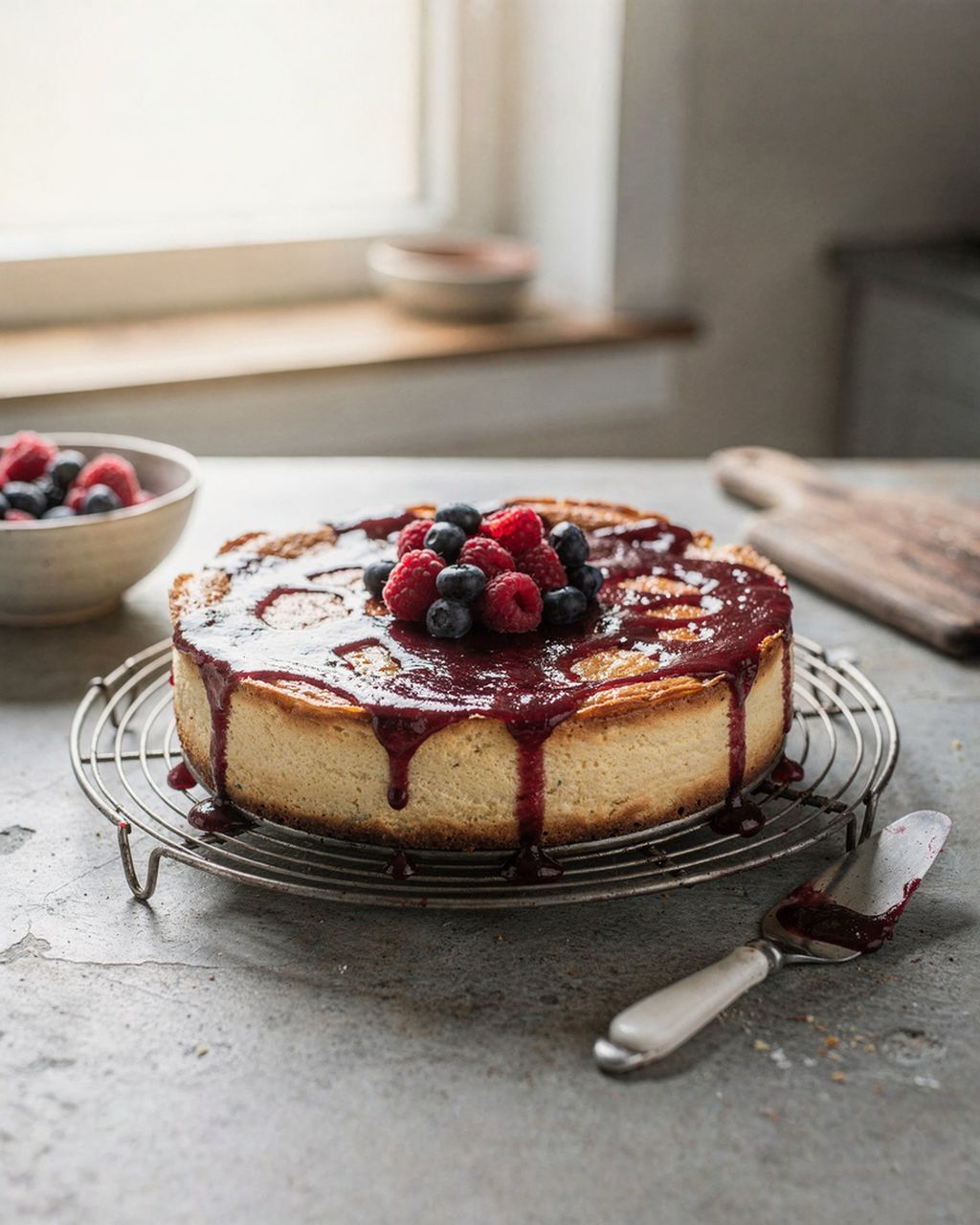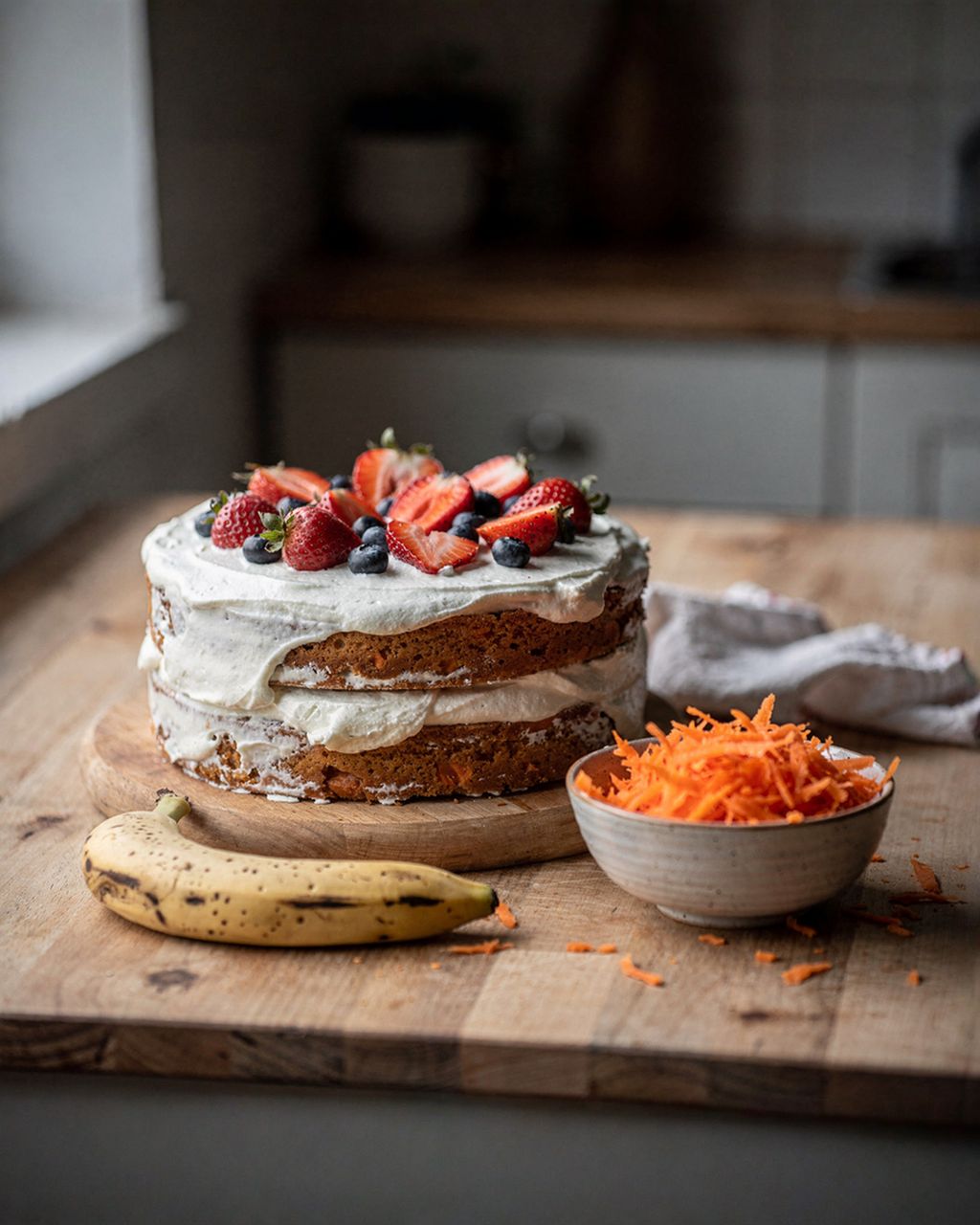
Summer fruit bubblanina with crunchy crumble
How to Decorate Muffins: From Crumb Topping to Icing to Ganache
Updated Sep 18, 2026
There are two ways to decorate muffins: before baking (crumb topping, nuts, coarse sugar, chocolate chunks) or once they've cooled completely (sugar icing, ganache, frosting, fresh fruit). Which one is right for you comes down to texture — do you want crunchy or creamy? Below you'll find exact ratios for each option, ways to decorate without a piping tip, and what actually holds up until the next day.
There are nine ways to decorate muffins: crumb topping, nuts, coarse sugar, chocolate chunks, sugar icing, ganache, buttercream, mascarpone frosting, and fresh fruit. Every one of them works on any basic muffin batter:
Crumb topping – 2 parts flour : 1 part sugar : 1 part cold butter, sprinkled on before baking.
Flaked almonds or chopped nuts – before baking, pressed lightly into the batter.
Coarse cane or granulated sugar – a teaspoon per muffin gives a crunchy crust.
Chocolate chunks – a few pieces on top, right before the tray goes into the oven.
Sugar icing – 120g icing sugar to 1–2 tablespoons of liquid.
Chocolate ganache – 2:1 for piping, 1:1 for a pour-over glaze.
Buttercream – holds its shape best of all the frostings; pipe it with a bag and tip.
Mascarpone or curd cheese frosting – a lighter flavour, but it needs to stay chilled.
Fresh fruit, sugar sprinkles, dried edible flowers – added right at the very end.
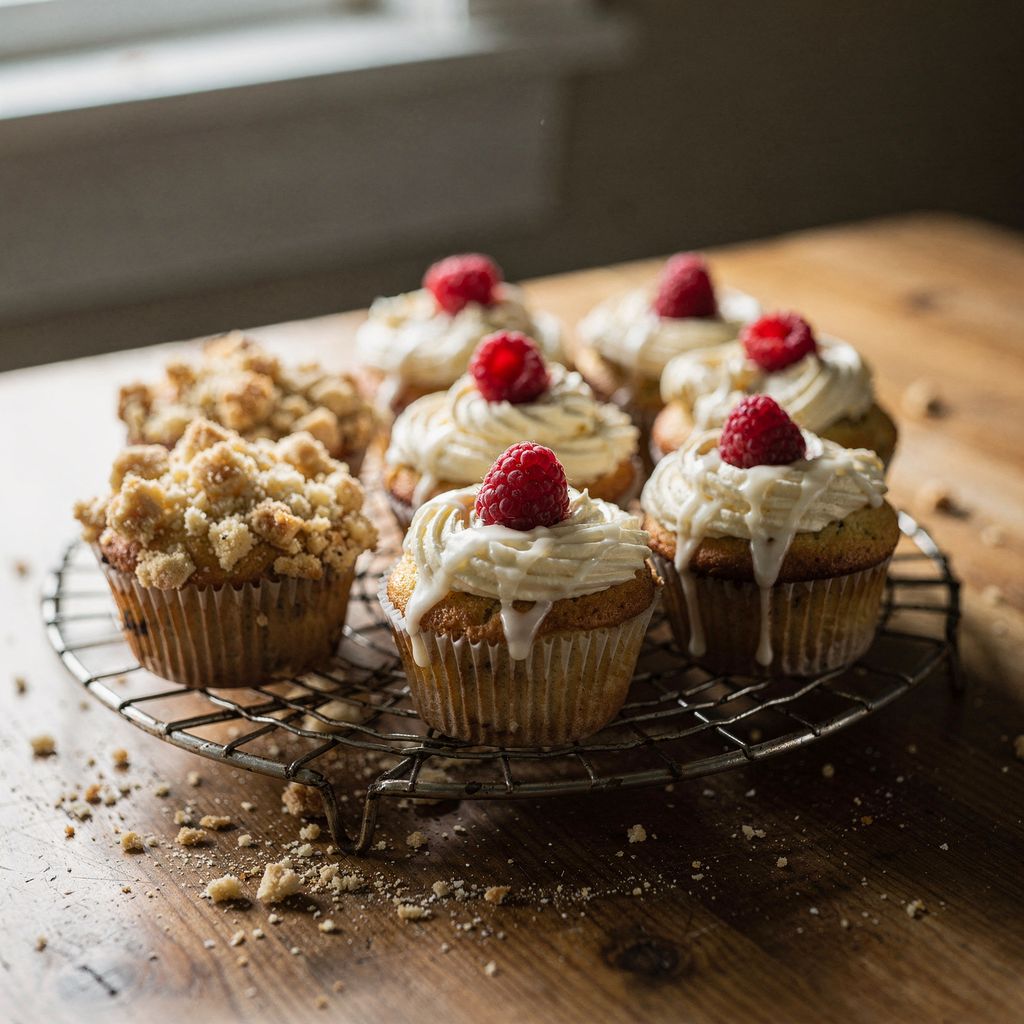
Decorate before baking when you want crunch with no extra effort. Decorate after cooling when you want height and visual impact. You can combine both — a crumb topping under a thin drizzle of icing is a classic that works.
Before baking, anything that can survive 180°C (350°F) without burning belongs on muffins: crumb topping, flaked almonds, seeds, coarse sugar, and chocolate chunks.
Sprinkle onto the raw batter right before it goes into the oven. On batter that's already sat for ten minutes and started to set, the topping won't stick and will slide toward the edges as it bakes.
Flaked almonds and chopped nuts should be pressed in gently with a fingertip — otherwise the risen top will shrug them off. Aim for roughly a tablespoon per muffin.
Coarse cane sugar (demerara) or granulated sugar stays grainy and crunchy after baking. Icing sugar just melts and disappears, so save that for after baking.
Chocolate chunks should go on top only, not mixed into the batter — inside the batter, they'll sink to the bottom. Dark chocolate with a higher cocoa content burns less easily than milk chocolate.
Seeds (pumpkin, sunflower, poppy) work even in sweet muffins and stay put better than nuts.
A classic crumb topping is 2 parts plain flour, 1 part sugar, and 1 part cold butter by weight — so, say, 100g flour, 50g sugar, and 50g butter, which is enough for 12 muffins.
The butter needs to be cold, straight from the fridge. Rub it into the flour and sugar with your fingers until it looks like coarse sand with pea-sized lumps. Melted butter will give you a solid clump, not a crumble.
For extra crunch: swap 20g of the flour for ground almonds, oats, or crushed nuts.
For flavour: a pinch of salt and half a teaspoon of cinnamon do more than an extra 20g of sugar ever could.
Pop the crumb topping in the freezer for 10 minutes before sprinkling it on. Cold butter melts more slowly in the oven, so the lumps stay lumpy.
Be generous — about a tablespoon per muffin. Skimping on the topping just looks like a mistake.
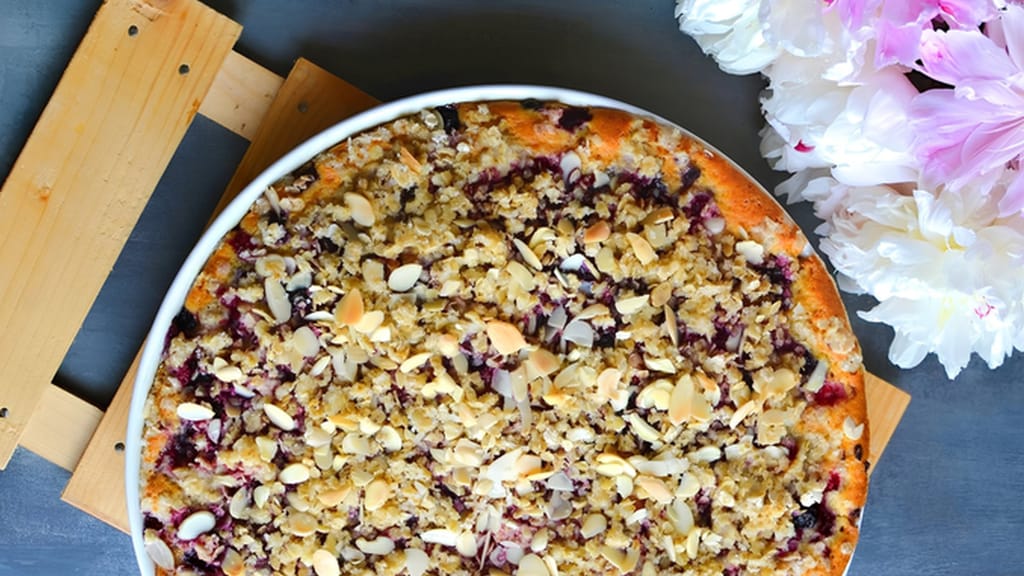
Summer fruit bubblanina with crunchy crumble
Crunchy crumb topping in action: summer fruit crumble cake
A basic sugar icing is 120g icing sugar to 1–2 tablespoons of liquid — roughly 4:1 to 8:1 by weight. Two tablespoons gives you a runny drizzle for pouring; one tablespoon makes a thick white cap.
The consistency test: a ribbon drizzled from a spoon should settle back into a smooth surface within 10–15 seconds. If it holds like a ridge, the icing's too thick; if it vanishes instantly, it's too thin.
Add liquid half a teaspoon at a time. Thickening up icing that's gone too runny costs you another 50g of sugar, and suddenly you've got double the batch.
The liquid you choose changes both flavour and colour: milk or cream gives a creamy white, mellow icing; lemon or orange juice gives a sharper, more translucent one; milk with a teaspoon of instant coffee gives a brown icing with a bitter edge.
Pour it onto the centre of the domed top and let the icing spread on its own. Icing that's been smoothed out with a spoon or knife looks smeared.
It takes 20–30 minutes to set to the touch at room temperature. Add any sugar sprinkles within two minutes of icing, or they won't stick once it starts to set.
For a ganache that holds its shape and can be piped, use twice as much dark chocolate as cream — for example, 200g chocolate to 100ml whipping cream (at least 30% fat). For a runny glaze to pour over the top, go 1:1 instead.
The ratio shifts depending on the chocolate — milk and white chocolate contain more sugar and milk solids and less cocoa solid, so they set softer and need more chocolate for the same amount of cream:
Dark chocolate: 2:1 for piping, 1:1 for pouring.
Milk chocolate: 2.5:1 to 3:1 for piping.
White chocolate: 3:1 — less cream keeps it firm enough to hold its shape.
A method that won't let you down:
Chop the chocolate finely, or use chocolate chips (they melt evenly).
Heat the cream just below boiling point — small bubbles should just start forming at the edge. Boiling cream will scorch the chocolate.
Pour it over the chocolate and let it sit for 2 minutes without stirring.
Stir with a spatula from the centre outward in small circles, until the emulsion comes together into a glossy, smooth mixture.
Leave it at room temperature for about 2 hours to firm up to a pipeable consistency. If it firms up too much, warm it briefly in the microwave.
If the ganache splits and turns grainy or greasy-looking, add a tablespoon of warm cream and blend with a stick blender at the bottom of the bowl. In most cases, the emulsion comes back together.
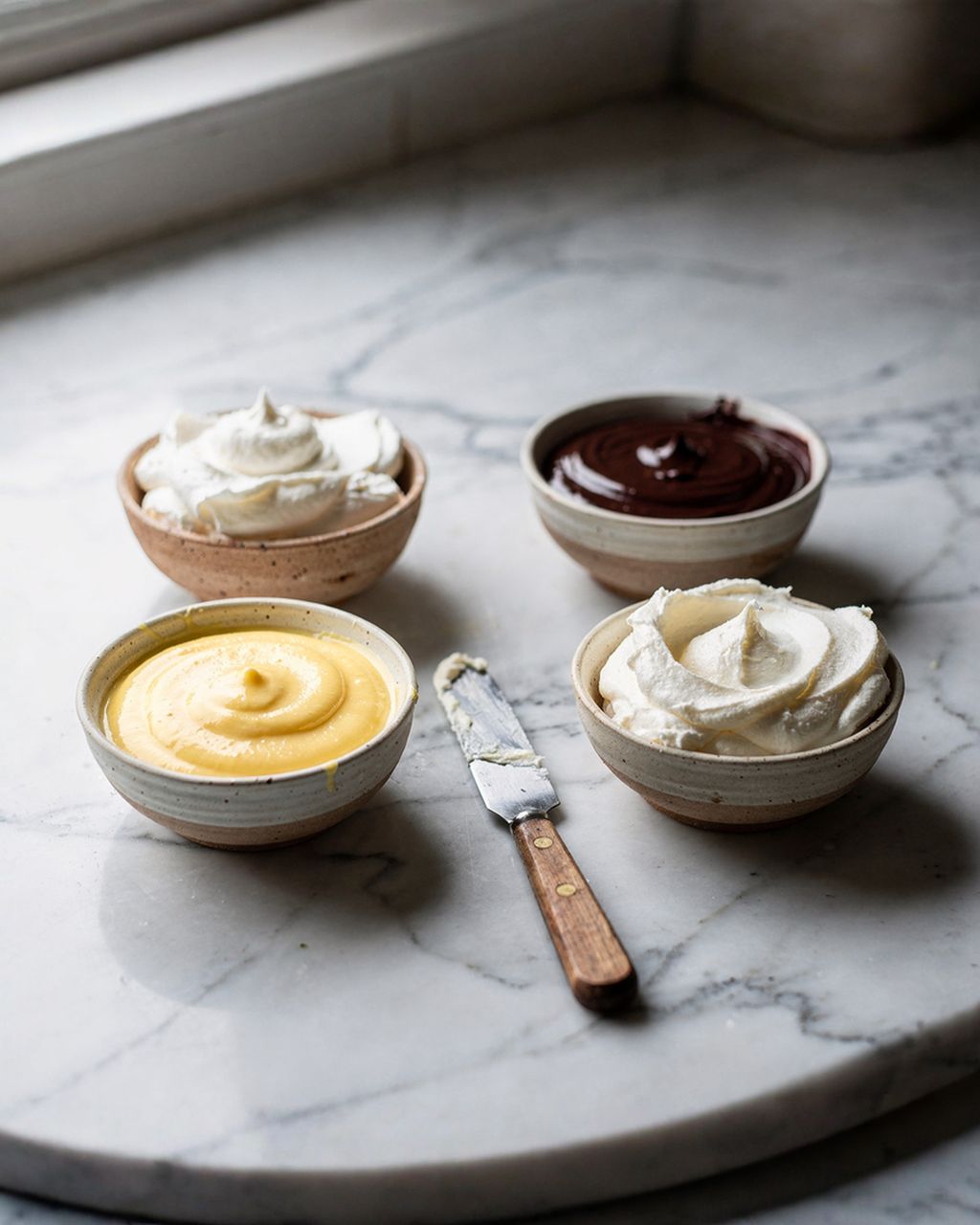
Buttercream holds its shape best of all; plain whipped cream holds it worst. In between sit mascarpone and curd cheese frostings, which look fantastic but need to stay cold.
Buttercream – whip butter at around 20°C (68°F) with icing sugar in a ratio of roughly 1:1.5 by weight. The butter's temperature is what matters most: at 20°C it whips up smooth, above 23°C it goes runny, below 16°C it stays lumpy. It holds up at room temperature for several hours, making it the go-to choice for parties.
Mascarpone frosting – whip mascarpone briefly with cream and icing sugar. Whip only until it thickens; over-whipped mascarpone curdles and there's no fixing it. Keep decorated muffins in the fridge.
Curd cheese frosting – lighter and less sweet, but curd cheese releases whey. Let it drain in a sieve for a few hours first, or the frosting will turn watery within the hour.
Whipped cream – on its own, it barely holds its shape for an hour. Either stabilise it or swap it for a mascarpone frosting — only reach for plain whipped cream if you're serving the muffins right away.
One rule applies to every frosting: fill the piping bag no more than two-thirds full. An overfilled bag bursts open at the top and the frosting ends up running down your hand — which, with its warmth, softens the frosting even further.
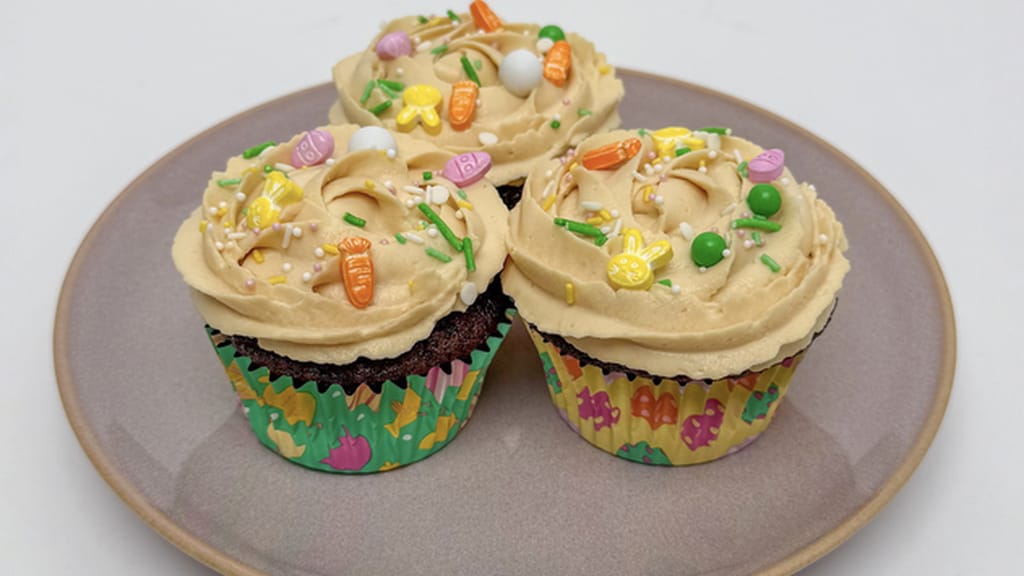
Chocolate cupcakes with salted caramel cream
Caramel frosting piped onto muffins: chocolate cupcakes with caramel frosting

Pistachio cupcakes with lemon curd and mascarpone cream
Mascarpone frosting on muffins: pistachio cupcakes with lemon curd
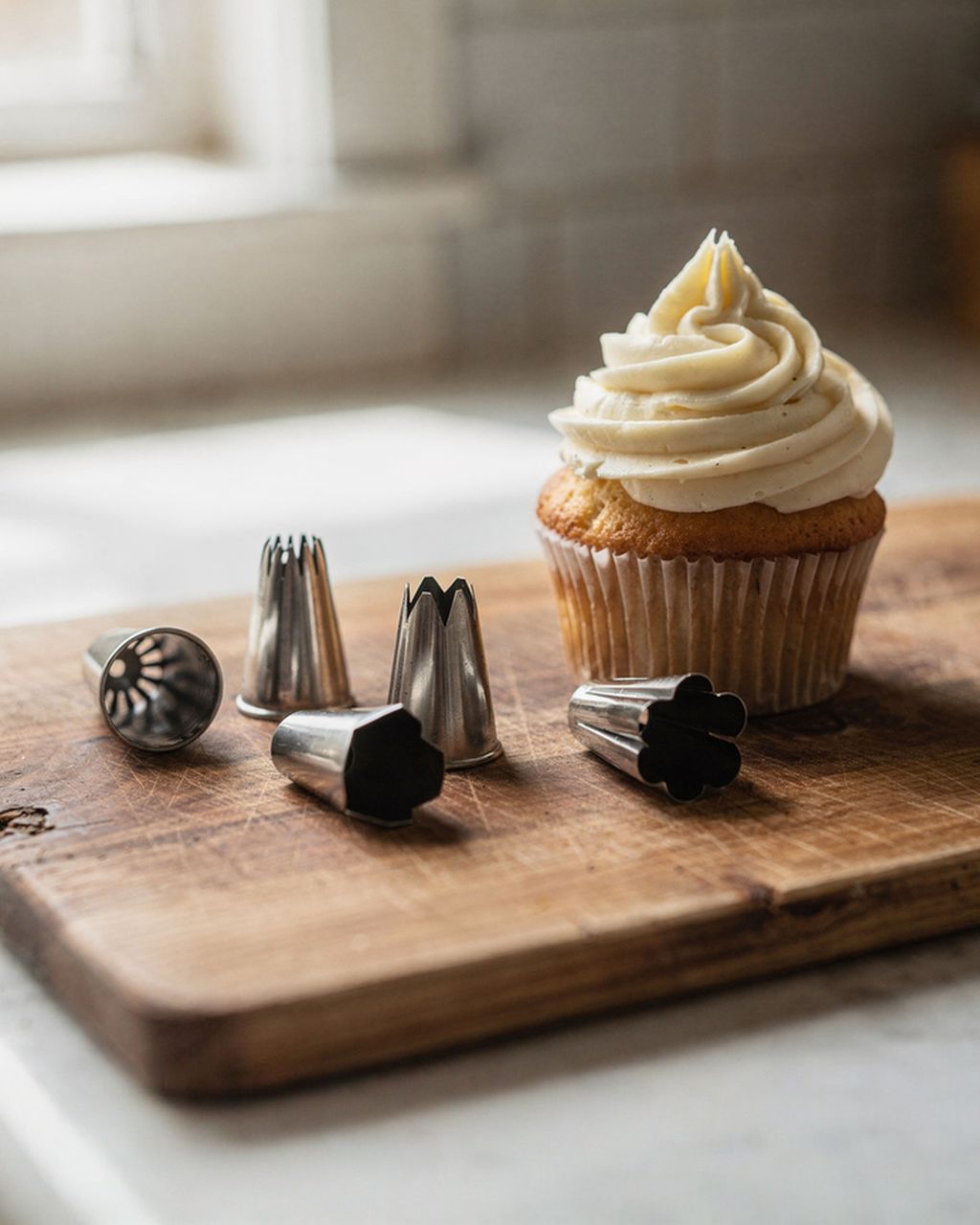
Without a tip, four techniques will get you there: a bag with the corner snipped off, a spoon, a fork, and dipping the tops into icing or ganache — you can nail all four on your first try.
A bag with the corner snipped off. Snip the corner to about 1–1.5cm across and pipe the frosting in a spiral from the edge toward the centre. You'll get a smooth swirl that looks intentional.
A spoon and its back. Pile on a mound of frosting, press the back of the spoon into the centre, and turn the muffin a full 360°. It creates a swirl just like a soft-serve cone.
A fork. Spread the frosting flat and drag the tines through it in parallel waves or a circular pattern. Quick and clean.
Dipping. Turn the muffin upside down, dip the top about 1cm deep into ganache or icing, lift it out, let it drip, then flip it back over. The fastest way to decorate a dozen muffins in three minutes flat.
Two colours in one bag: spoon them side by side into the bag with a flat spatula and pipe as normal — the two frostings will swirl together into a two-tone spiral.
Dry decorations last for several days; add fresh fruit to muffins only right before serving.
Holds up best: raspberries, blueberries, and redcurrants with their firm skins can sit on frosting for several hours without weeping juice.
Weeps juice: sliced strawberries, kiwi, peaches, and melon start bleeding into the frosting within an hour, leaving coloured streaks.
Browns quickly: banana browns within minutes; apple takes anywhere from half an hour to an hour, depending on the variety. Brush them with lemon juice, or leave them off entirely.
Sugar sprinkles need to go on within two minutes of applying icing or frosting, while the surface is still tacky. They won't stick to icing that's already set.
Chocolate shavings are easiest made with a potato peeler on a block of chocolate at room temperature — cold chocolate just shatters, while chocolate that's too warm smears.
Dried edible flowers (like cornflower) go on right at the very end, and just a few at a time. They work as a finishing touch, not a topping.
For a toasty-tasting finish: toast a tablespoon of chopped almonds or coconut in a dry pan for 2–3 minutes and let it cool before sprinkling it onto the frosting.
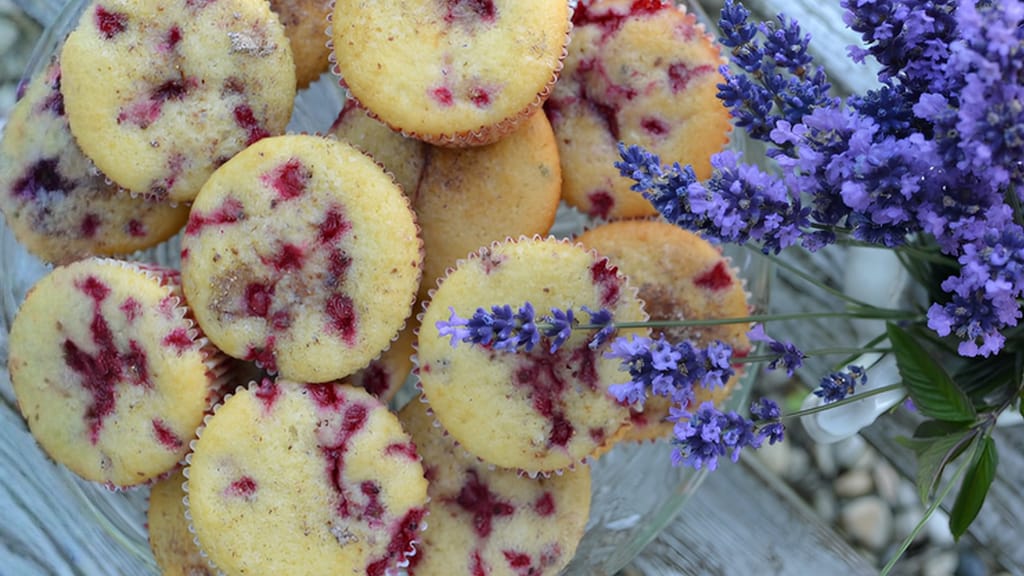
Easy redcurrant yogurt muffins
A fruity base that pairs well with both crumb topping and icing: easy redcurrant yogurt muffins
Savoury muffins get decorated with grated hard cheese, seeds, and herbs — but each one goes on at a different moment.
Grated cheese (Parmesan, Gouda, Cheddar) — sprinkle about a tablespoon per muffin, but only in the last 10 minutes of baking. Added from the start, it would go dark and bitter.
Seeds (pumpkin, sunflower, sesame, flax) should go on right at the start — they can handle the full bake and come out beautifully toasted.
Fresh herbs — chives, parsley, dill — should be chopped and sprinkled on only after baking. In the oven, they'd blacken and lose their flavour.
Before serving, add a dollop of soured cream or cream cheese and half a cherry tomato, a slice of radish, or a piece of sun-dried tomato. On a warm muffin, the cheese dollop will melt, so wait until it's cooled.
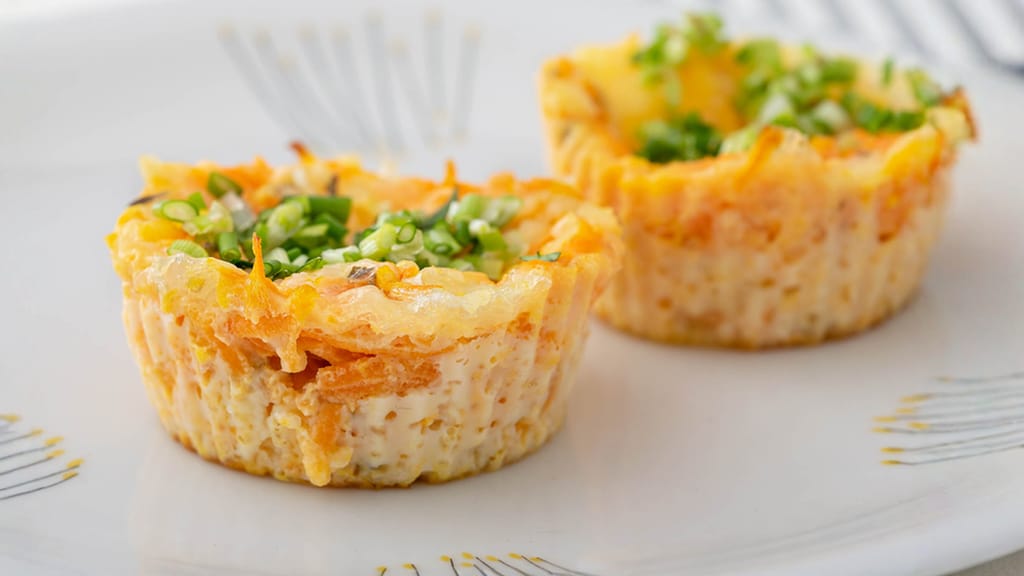
Veggie & cheese muffins
A savoury base under a cheesy crust: vegetable and cheese muffins
Muffins with a crumb topping or sugar icing keep for 2–3 days in a sealed container at room temperature. Muffins topped with mascarpone, curd cheese, or whipped cream frosting belong in the fridge and should be eaten within 2 days. Line the bottom of the container with a paper towel — it soaks up moisture so the tops don't turn soggy. Muffins with buttercream or ganache can happily sit out, just keep them out of direct sun and below 24°C (75°F).
For 12 muffins, plan on 600–700g of frosting if you're piping tall swirls, or roughly 350g if you're just spreading it on. For buttercream, that works out to about 260g of butter and 390g of icing sugar. Make a bit more than you think you'll need — whipping up extra frosting halfway through means starting over, and the colours will never quite match.
Muffins topped with buttercream or ganache freeze well, but not those with sugar icing or fresh fruit. Leave the muffins uncovered in the freezer for an hour first so the frosting firms up, then wrap them individually in foil or film — they'll keep for 2–3 months. Thaw overnight in the fridge, then let them sit at room temperature for an hour. Sugar icing turns damp and runny after freezing, so add it only after thawing.
Icing soaks in when the muffins were still warm or when the icing was too thin. A warm, porous muffin top literally drinks up the sugar, and within half an hour there's nothing left to see. Let the muffins cool for at least 45 minutes on a wire rack, and thicken the icing so a ribbon drizzled from a spoon holds its shape for a moment before settling. A second thin coat, applied once the first has dried, reliably fixes the problem.
Decorate with buttercream, ganache, or a crumb topping a day ahead; leave icing, fresh fruit, and sugar sprinkles until the last minute. Sprinkles left overnight will bleed colour into the frosting and blur into blotches, and fruit will weep juice. The best approach for a party: bake and frost the night before, keep the container somewhere cool, and add the fruit and sprinkles just before serving.
One recipe worth heating the oven for, one tip, and one deal from the shop. Nothing else.