Veggie & cheese muffins
How Long to Bake Muffins: Timing & Temperature for Mini, Classic & Jumbo
Updated Oct 6, 2026
How long should you bake muffins? Classic muffins need 18–24 minutes at 350–375°F (180–190°C) with conventional top-and-bottom heat, mini muffins take 10–14 minutes, and jumbo muffins need 25–35 minutes at 345–350°F (175–180°C). But these times are only a guide — what really matters is the size of the liner, the material of the tin, the filling, and just how much your oven's thermostat is lying to you. That's why this guide focuses on what matters most: how to actually tell when your muffins are done.
Mini muffins take 10–14 minutes, classic ones 18–24 minutes, and jumbo muffins 25–35 minutes. All these times assume conventional top-and-bottom heat, an oven preheated for at least 15 minutes, and the tin on the middle rack:
Mini muffins (tin 4–5 cm/1.5–2 in, about 15–20 g batter): 350°F (180°C), 10–14 minutes
Classic muffins (tin 7 cm/2.75 in, about 60–80 g batter): 350–375°F (180–190°C), 18–24 minutes
Jumbo muffins (tin 9–10 cm/3.5–4 in, about 130–170 g batter): 345–350°F (175–180°C), 25–35 minutes
The bigger the muffin, the lower the temperature and the longer the baking time it needs. Heat has to reach the centre before the top and edges turn too dark, so for jumbo muffins dial the temperature down rather than up. Always check at the lower end of the time range first — you can always bake a bit longer, but you can't undo overbaking.
Bake muffins at 350–375°F (180–190°C) with conventional top-and-bottom heat, or at 320–340°F (160–170°C) with a fan/convection setting. Fan ovens bake more intensely, so drop the temperature by roughly 30–35°F (15–20°C) and start checking 2–3 minutes earlier.
A lower temperature (under 340°F/170°C) gives you flat muffins with a pale crust, because the batter spreads outward before the top has a chance to set. A temperature that's too high (above 400°F/200°C the whole time) will scorch the edges while the centre is still raw.
To get a tall dome on your muffins, bake them at 410–430°F (210–220°C) for the first 5 minutes, then — without opening the oven — turn it down to 350°F (180°C). The total baking time doesn't change: just subtract a full 5 minutes for the hot start from the usual time and bake the rest at 350°F (180°C). For classic muffins, that means 5 minutes at 410–430°F (210–220°C) followed by 13–19 minutes at 350°F (180°C). Since ovens cool down gradually, the muffins keep baking at full strength while the temperature drops.
Why it works: the fierce initial blast of heat kick-starts the raising agent and the steam in the batter, so the centre shoots upward before the top sets, then finishes baking gently at the lower temperature. This works best with thicker batters and generously filled cases. If your muffins still won't rise, take a look at our article on why muffins don't rise or get a dome.
You can tell muffins are done using four tests: a skewer in the centre, the finger-poke test, checking the edges, and a thermometer (centre should read 199–205°F/93–96°C). For a reliable result, combine at least two of them:
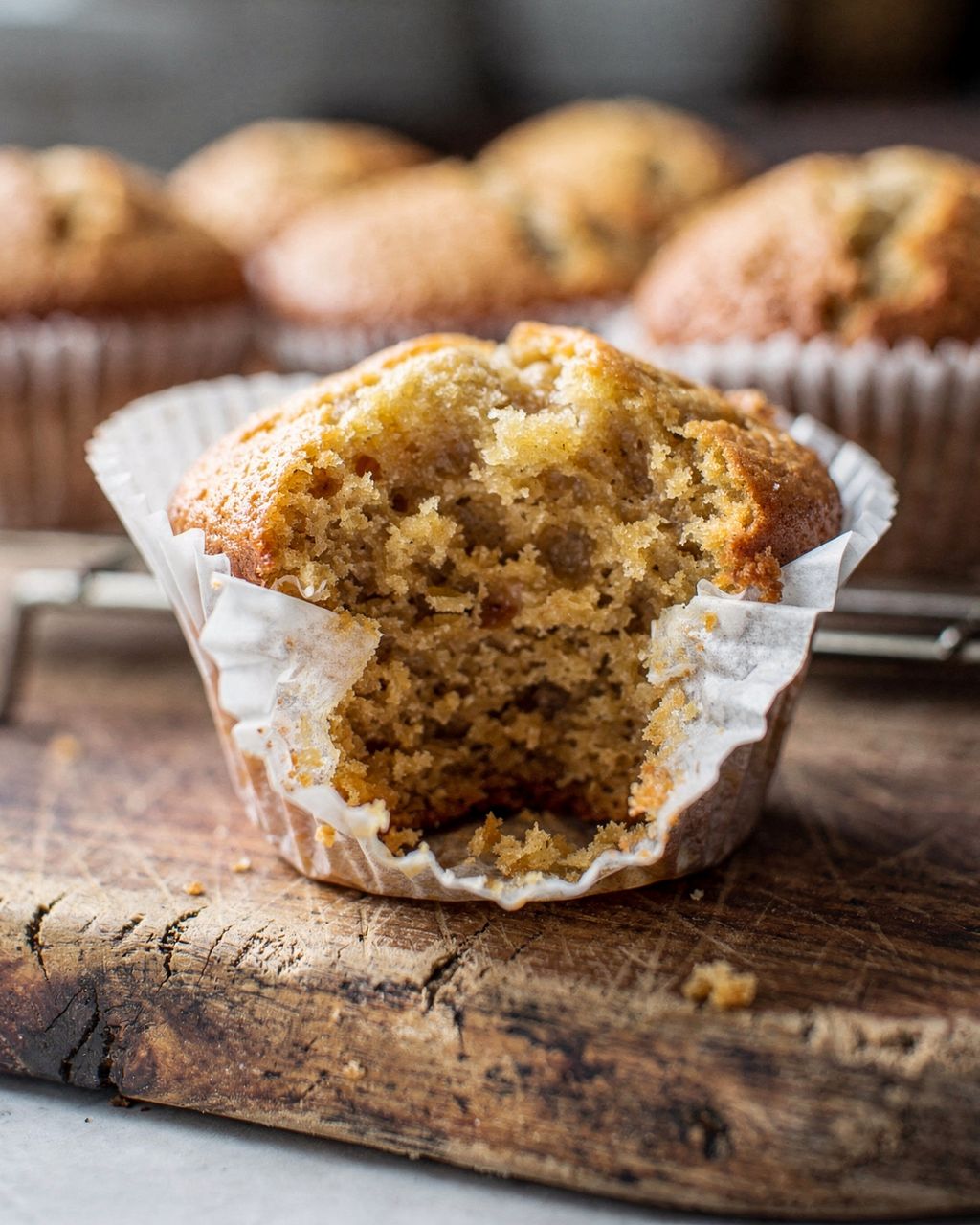
Skewer in the centre – insert it into the highest point, all the way to the bottom. Clean, or with just a few crumbs clinging to it = done. Shiny, wet batter = give it another 2–3 minutes.
Finger-poke test – press lightly on the top. A baked muffin springs straight back; an underbaked one stays dented.
Edges – the batter pulls away slightly from the sides of the liner, and the edges are a shade darker than the centre.
Thermometer – according to baking references, the centre of a baked muffin reaches 199–205°F (93–96°C). This is the most reliable test, especially for jumbo muffins, where a skewer can be misleading.
Colour alone isn't enough to go by. Cocoa and whole-grain muffins are dark from the start, and the top can turn golden before the centre is actually done.
The skewer test can be misleading with chocolate chunks, fruit, and very moist batters. Here's what to do in each case:
Chocolate chunks – melted chocolate on the skewer can look like raw batter. Try a different spot, or pinch a crumb between your fingers: chocolate is smooth and glossy, raw batter is sticky and dull.
Fruit – hitting a blueberry or redcurrant will smear the skewer with purple juice. Try a different spot.
Very moist batters (yoghurt, banana, grated carrot or zucchini) – these stay moist even when fully baked, so a few damp crumbs are perfectly fine. The finger-poke test and a thermometer work best here.
Baking time for muffins is affected most by the tin, the filling, and the temperature of the batter. Keep in mind that:
Silicone moulds bake more slowly than metal tins: add 2–5 minutes; the base tends to stay paler.
Dark metal tins bake faster than light-coloured ones: check 2–3 minutes earlier, or lower the temperature by 20°F (10°C).
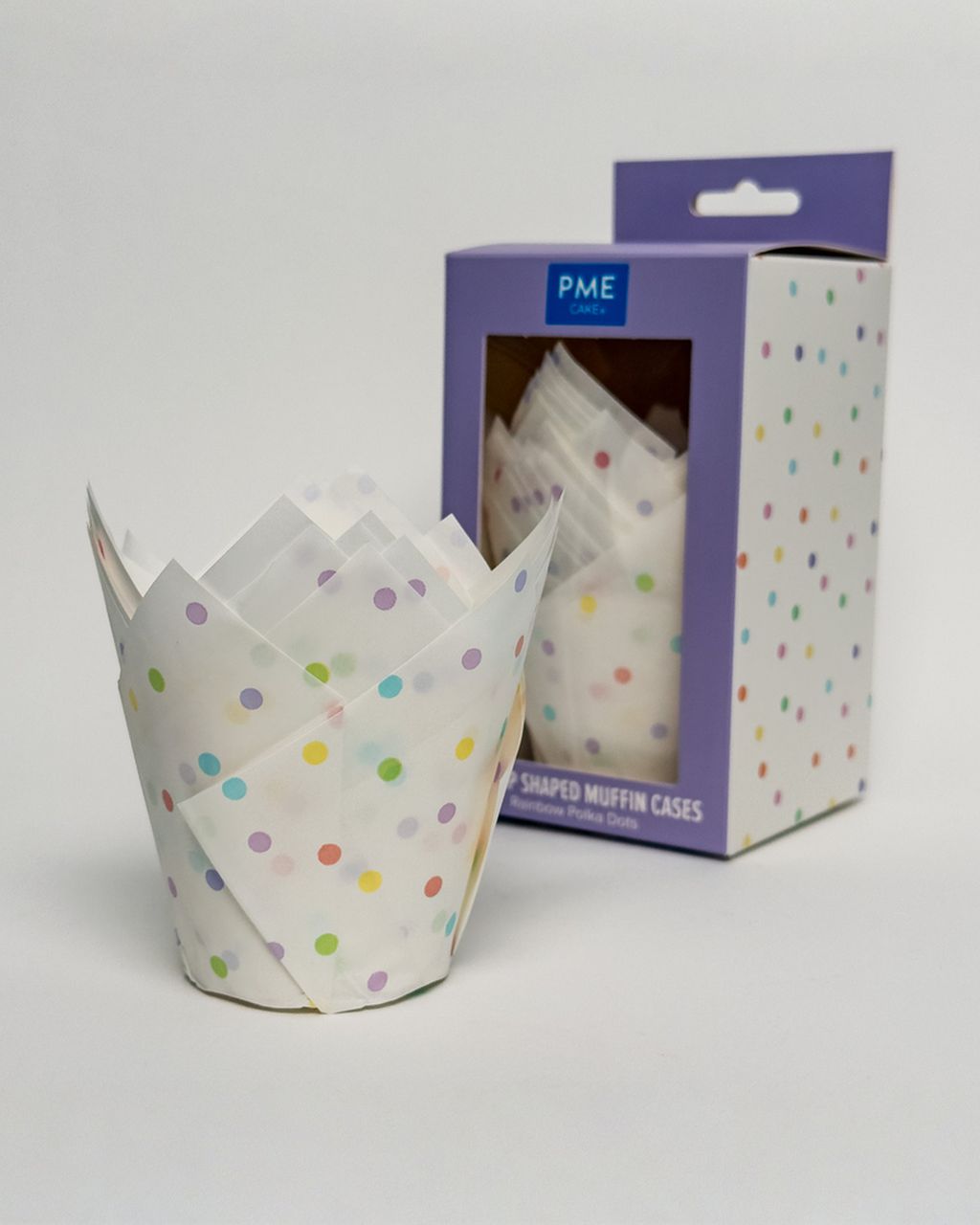
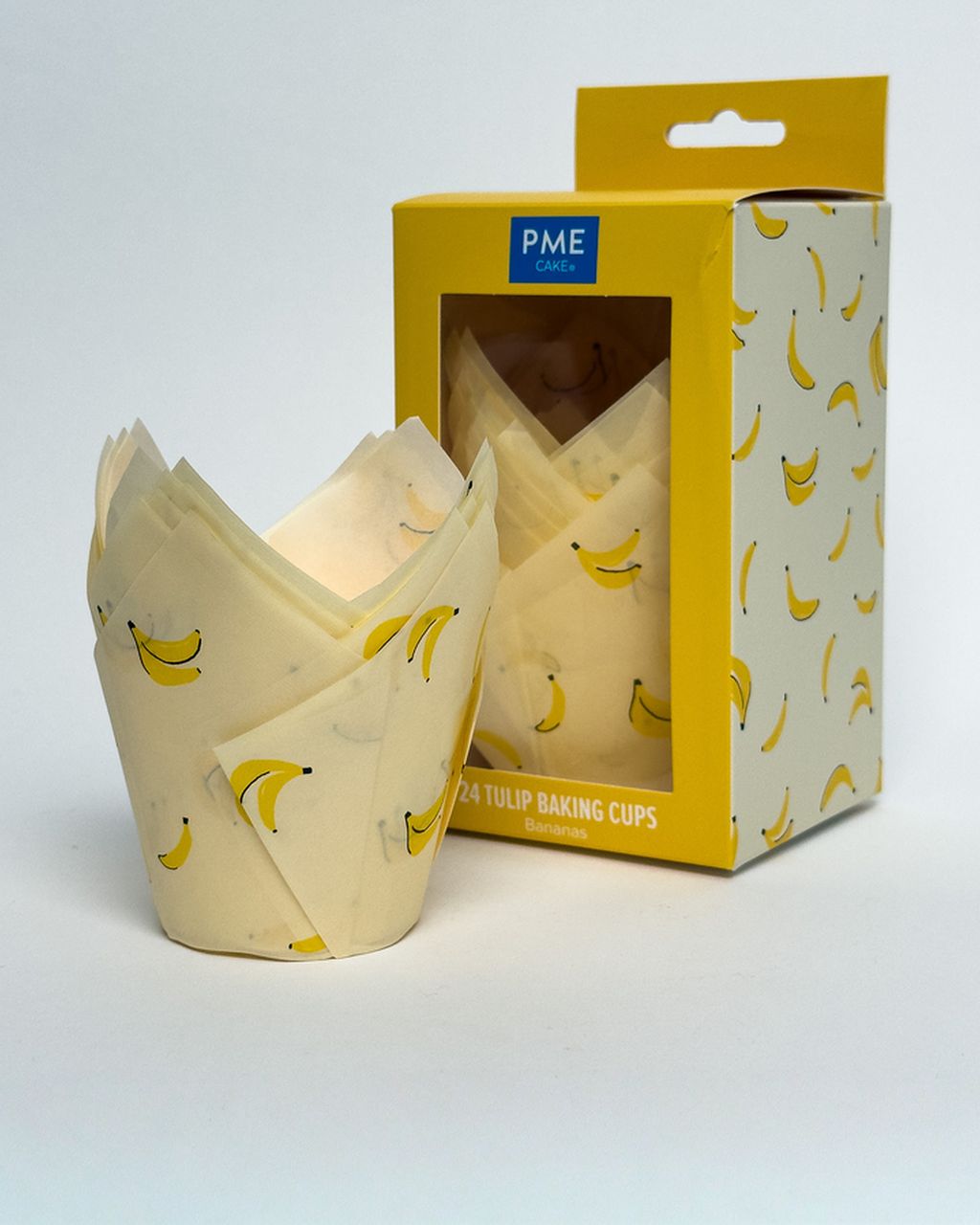
Tall tulip liners hold more batter than standard paper cases – filled right to the top, they bake more like jumbo muffins, so allow 25–30 minutes at 350°F (180°C). If you still need some, you'll find tulip muffin liners in our shop.
Frozen fruit in the batter cools it down: +3–5 minutes.
Batter straight from the fridge (made ahead): +2–4 minutes.
Savoury muffins with cheese and vegetables hold more moisture, so they tend to need the upper end of the time range – like these cheese and vegetable muffins.
Two trays at once with a fan oven: swap their positions halfway through, otherwise the top one will brown faster.
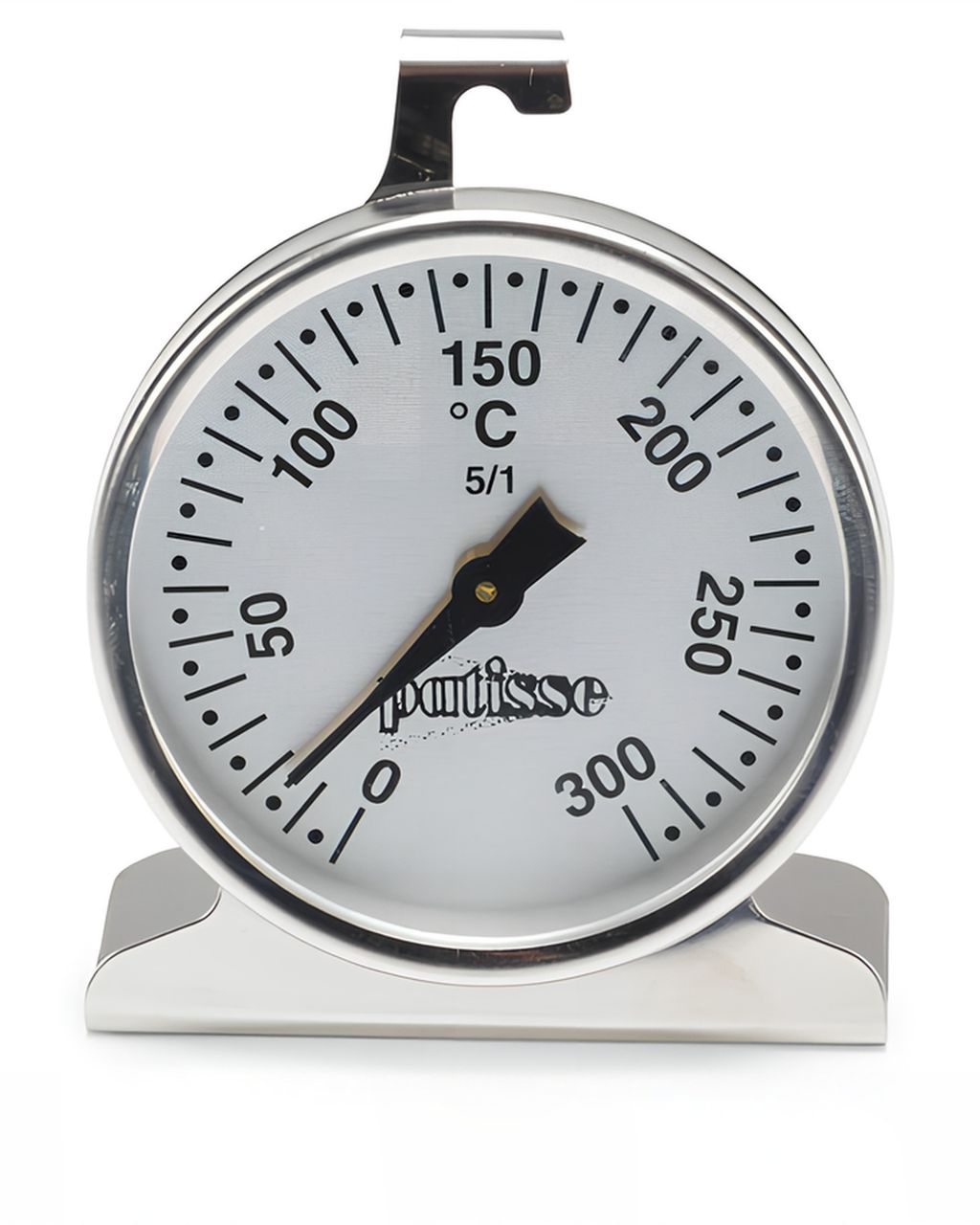
Home ovens commonly run 20–35°F (10–20°C) off their set temperature. If muffins keep coming out raw or dry even though you're following the recipe, the recipe probably isn't the problem. A cheap oven thermometer hung on the middle rack will tell you the real temperature inside — and from then on, the times in every recipe will actually line up.
Veggie & cheese muffins
Savoury cheese and vegetable muffins — bake towards the longer end of the time range
A raw centre means putting the muffins back in the oven; a top that's getting too dark means covering it with foil. Specifically:
Centre raw, top looks fine → put them back in for 3–5 minutes and test again. This works even if they've already been out for a few minutes, as long as they haven't cooled down.
Top getting dark, centre not yet done → loosely cover with foil and lower the temperature by 20–25°F (10–15°C). Next time, try a lower temperature and a longer bake.
Edges dry, centre just right → the liners were underfilled, or your oven runs hotter than it says. Fill liners to two-thirds to three-quarters full.
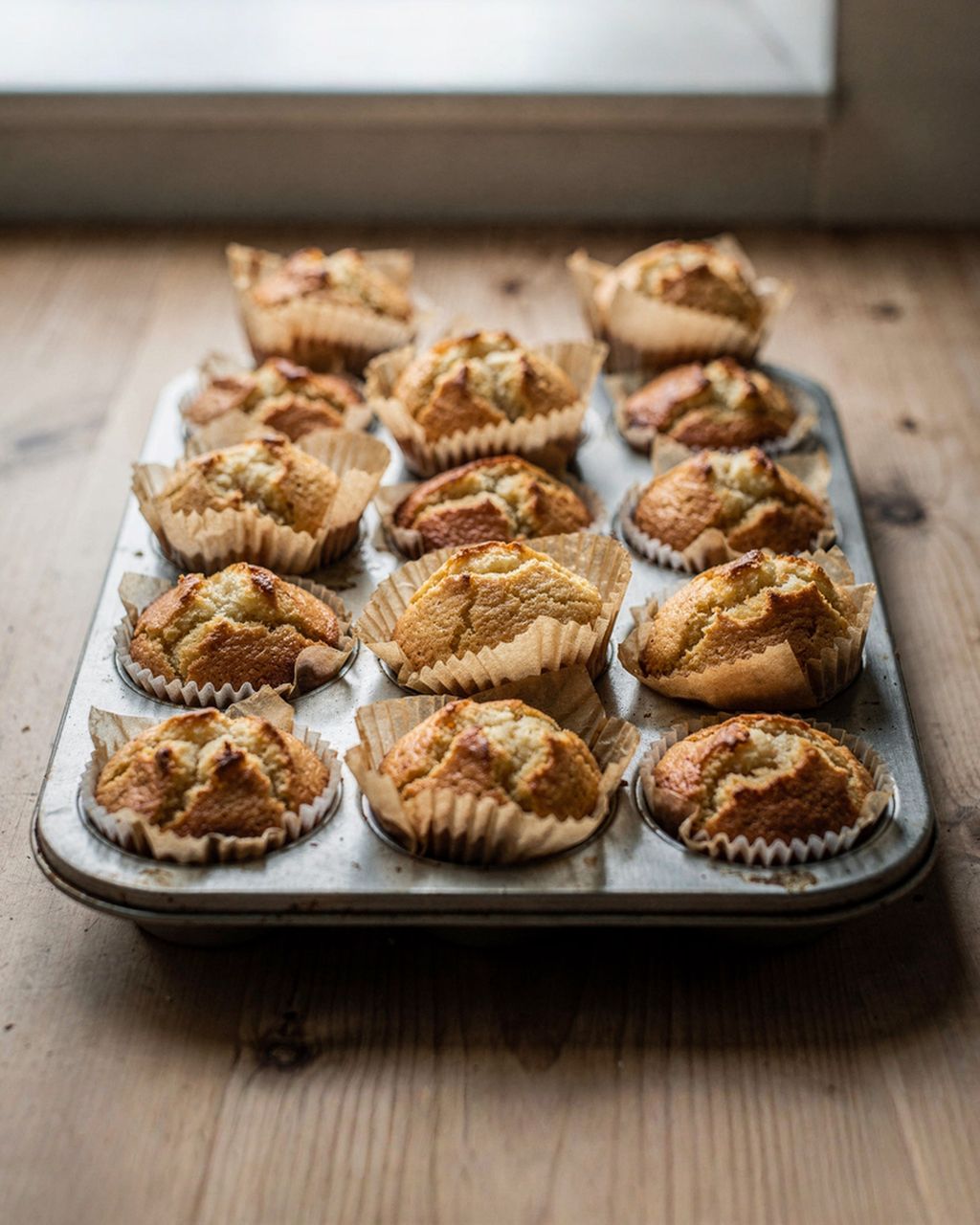
Once baked, let the muffins sit in the tin for 5 minutes, then move them to a wire rack. Left in the tin, the base would turn soggy from trapped steam; taken out too soon, they tear easily — especially if they're sticking to the liners.

Easy redcurrant yogurt muffins
Put the timings into practice: easy redcurrant yoghurt muffins
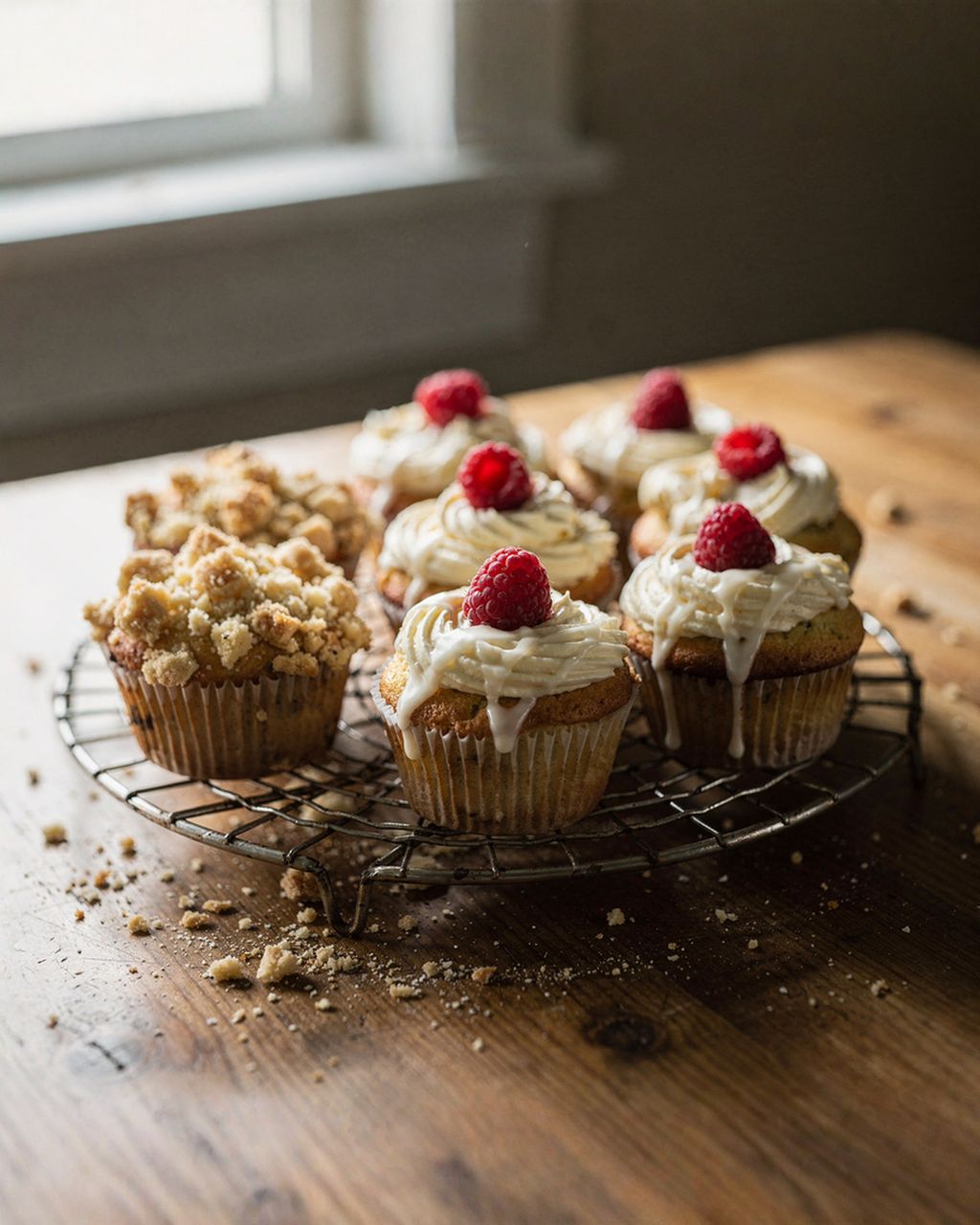
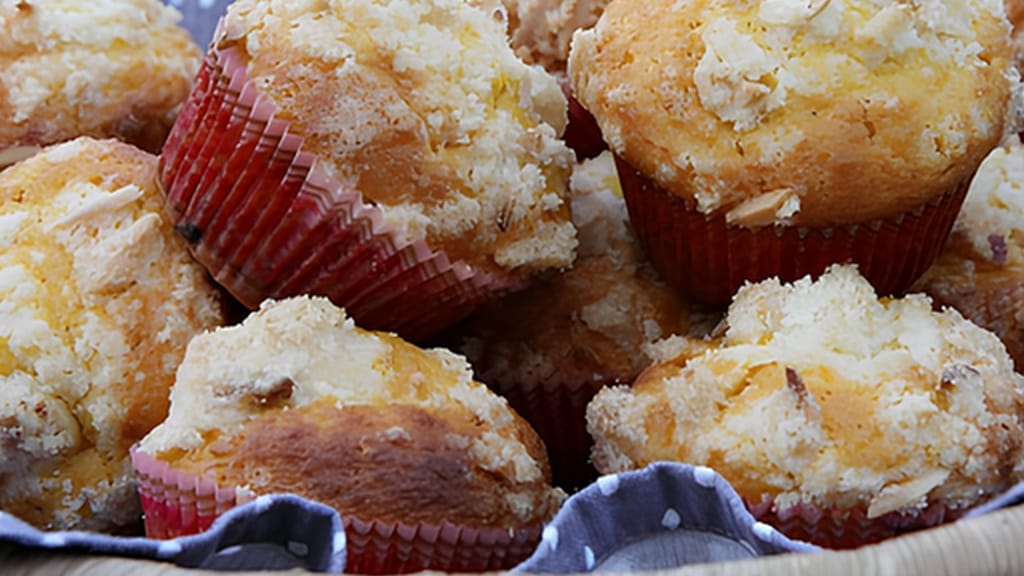
Decorate muffins according to what you're adding: put crumble or streusel topping on the batter before baking, but wait until the muffins are completely cool before adding icing or frosting — on warm muffins, it will just melt and run. For ideas, see our article on what to top muffins with — from crumble to icing to ganache. For a moist, sweet version to practise your timing and decorating on, try the recipe for carrot muffins with a hint of orange.
Carrot muffins with a hint of orange
Carrot muffins with a hint of orange
You can only bake muffins without a tin if you use sturdy liners — tulip-style or double-layered paper ones. A standard thin liner will spread out sideways under the batter and the muffin will end up flat. Stand the liners close together on a baking tray so they support each other, and expect roughly the same baking time as in a tin, maybe 1–2 minutes shorter.
Bake classic muffins in an air fryer for 12–15 minutes at 320°F (160°C). Air fryers blast hot air intensely and at close range, so a higher temperature would burn the tops before the centre finishes baking. Use silicone or sturdy tulip liners, and do your first check after 10 minutes.
Muffin batter baked in a single loaf tin or a round cake tin (8–9.5 in/20–24 cm) needs 40–55 minutes at 340–345°F (170–175°C). A larger volume of batter heats through more slowly, which is why the temperature is lower; check it's done with a skewer in the centre or a thermometer (199–205°F/93–96°C).
Muffin batter will keep covered in the fridge overnight, so you can mix it in the evening and bake in the morning. Standard baking powder reacts partly as soon as it's mixed and partly later from the heat of the oven, so the muffins will still rise the next day — just slightly less than if baked fresh. Bake them straight from the fridge and add 2–4 minutes to the usual time. This doesn't apply to batters leavened only with baking soda: that reacts with an acid (such as buttermilk or yoghurt) almost immediately, so that kind of batter needs to go in the oven right away.
One recipe worth heating the oven for, one tip, and one deal from the shop. Nothing else.