Beef bourguignon (beef burgundy)
French Recipes: Boeuf Bourguignon, French Onion Soup, Croque Monsieur and Crêpes Suzette
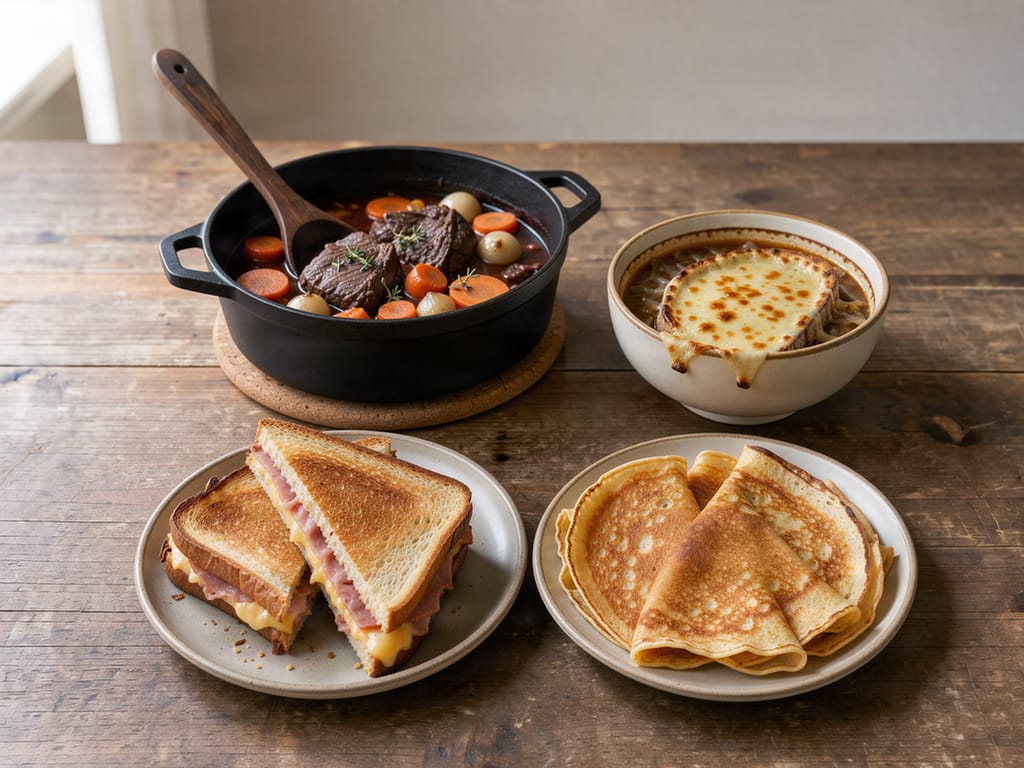
Updated Nov 20, 2026
The French dishes you can make at home without culinary school are mainly beef bourguignon, French onion soup, croque monsieur, salmon en papillote and crêpes Suzette, plus tarte au citron, madeleines and pain au lait, soft milk rolls. None of them needs expensive ingredients. They rely on butter, onions, wine, good cheese and patience: the meat braises slowly, the onions caramelize for a long time and the dough rests in the fridge. Below you'll find twelve classics, each with a short description, the timing and the trick the whole dish depends on. Full recipes are always one link away.
Twelve French classics work best at home. There are three main dishes (beef bourguignon, coq au vin, salmon en papillote), three bistro dishes (French onion soup, croque monsieur, salade lyonnaise) and six desserts and bakes (crêpes Suzette, tarte au citron, madeleines, pain au lait, chocolate mousse and croquembouche).
So you can choose by time, here are the total times from our recipes:
Salade lyonnaise: about 25 minutes
Croque monsieur: about 30 minutes
Salmon en papillote: about 35 minutes
Croquembouche: about 1 hour
Crêpes Suzette: about 1½ hours, of which the batter rests for 1 hour
Tarte au citron: about 1 hour 40 minutes
Chocolate mousse: about 2 hours 20 minutes, chilling for almost all of it
Madeleines: about 2½ hours, of which the batter spends 2 hours in the fridge
Pain au lait: just under 3 hours including rising
French onion soup: about 3 hours, mostly just gentle simmering
Beef bourguignon: about 3 hours 15 minutes
Coq au vin: about 3½ hours
Notice how much of that is waiting. French home cooking isn't demanding in work, but in time. You can plan for that: braise on a Saturday afternoon and make the dough the evening before.
Seasonal baking plans, tested recipes and kitchen tricks that save you time. Unsubscribe in one click.
The French main courses most likely to succeed at home are meat slowly braised in wine and fish baked in its own steam. Both are forgiving: braised meat can't be overcooked if you keep it at a gentle heat, and salmon en papillote won't dry out because it bakes in a sealed wrapper.
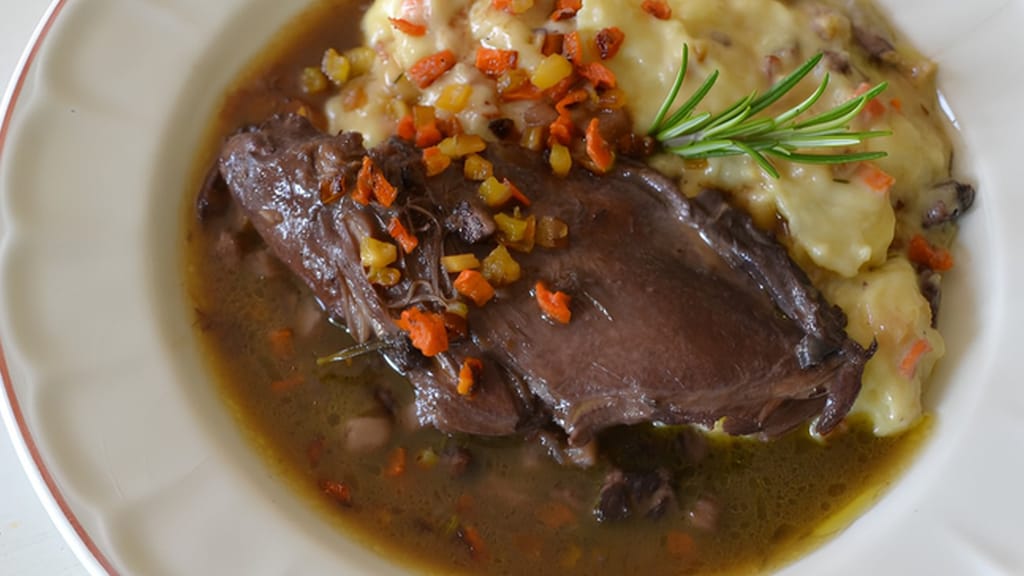
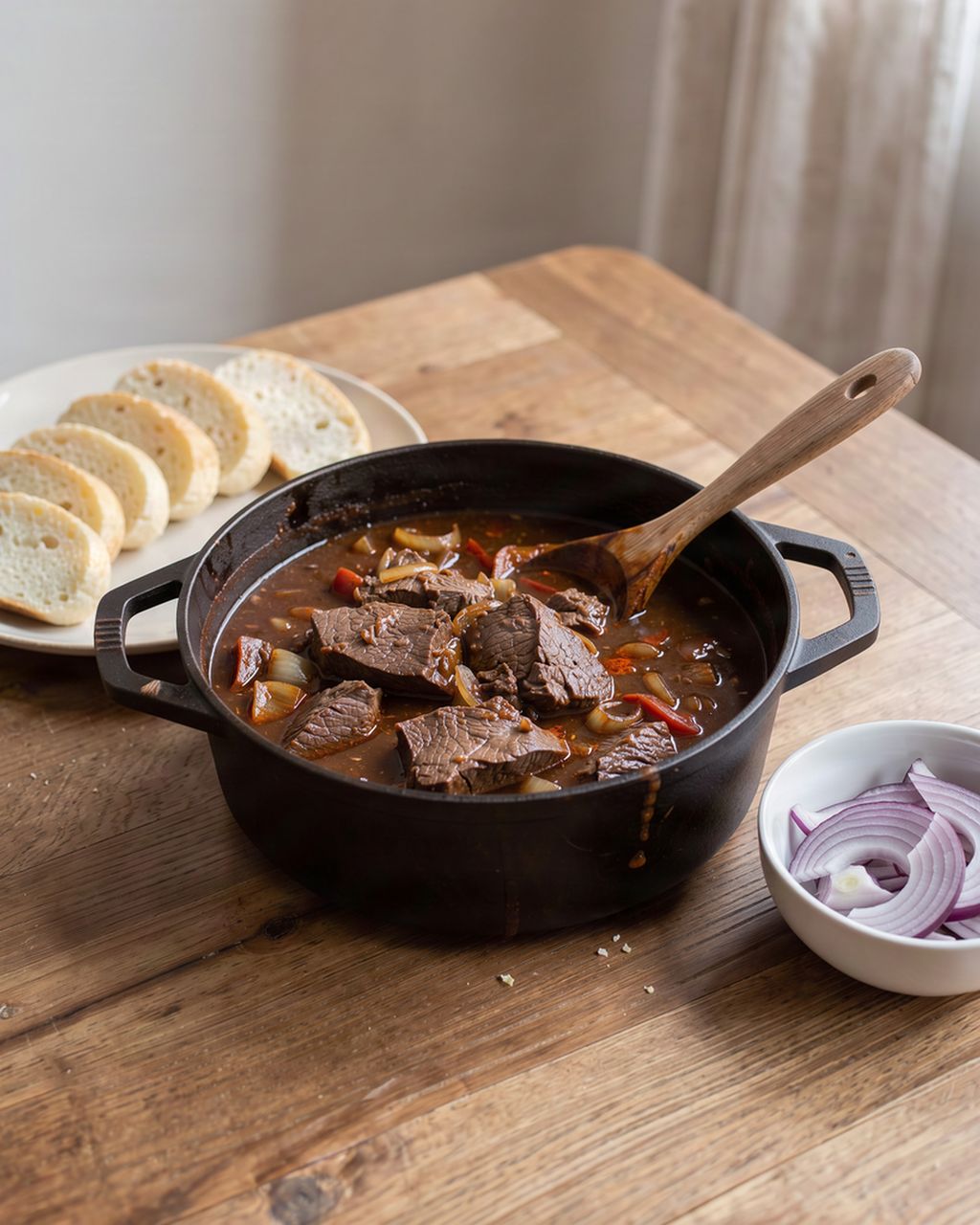
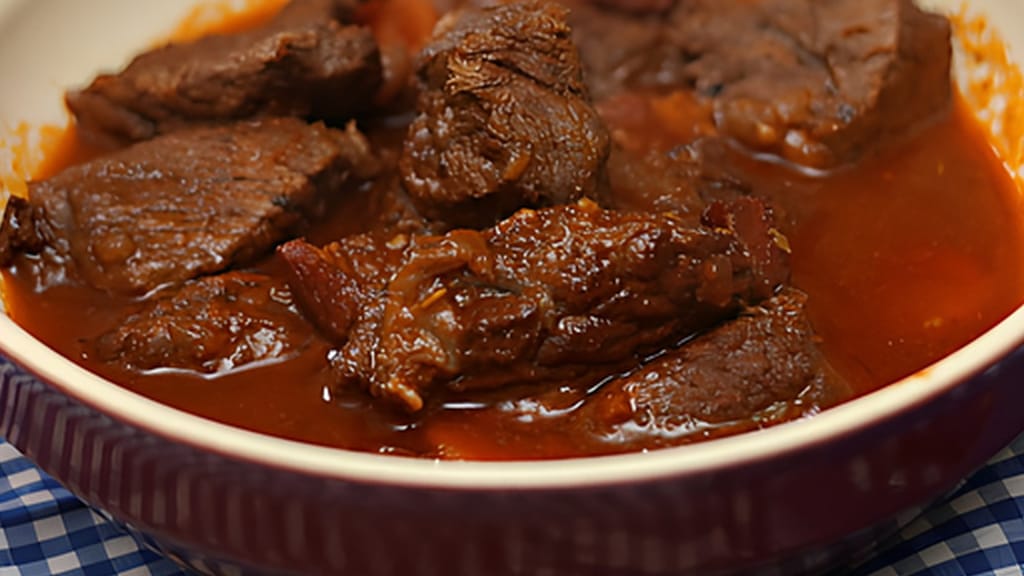
Beef bourguignon is beef braised in red wine with bacon, onions, carrots and herbs. It comes from Burgundy, a wine region where the local wine went into the pot. Our beef bourguignon recipe uses beef sirloin, English-style bacon, red wine and port, serves 4 and is ready in about 3 hours 15 minutes.
The trick is in the browning: cut the meat into large cubes, pat each one dry and brown it in a single layer only. Wet or crowded meat releases juice and starts to boil instead of sear. Then no brown crust forms and the sauce lacks depth. The recipe suggests serving it with fresh baguette or good bread. You'll find more slow winter dishes in our article on one-pot meals.
Coq au vin is rooster braised for a long time in red wine, finished with browned bacon and root vegetables. The coq au vin recipe calls for a whole rooster, red wine, English-style bacon and butter; allow about 3½ hours in total.
A gentle heat is what matters: the meat should barely bubble under the lid for 2½ hours, because a hard boil would dry it out. A spoonful of red currant jam in the sauce balances the acidity of the wine, and butter at the end softens it. It's done when the meat falls off the bone by itself. The recipe suggests serving it with rustic bread or mashed potatoes seasoned with scallions.
Papillote means cooking in a sealed paper packet: the fish steams in its own juices and doesn't dry out. Salmon en papillote with rosemary, cherry tomatoes and red bell pepper is ready in about 35 minutes and bakes at 200°C (400°F).
The packet must be tightly sealed, or the steam escapes and the fish dries out as if it were on a baking sheet. Thin fillets will be done sooner than thick pieces, so carefully open one packet and check: the salmon is done when it reaches 63°C (145°F) at the thickest point, or when it's opaque and flakes easily with a fork. The filling can be varied: the recipe offers zucchini with bell pepper and a spoonful of béchamel, or slices of camembert with scallions.
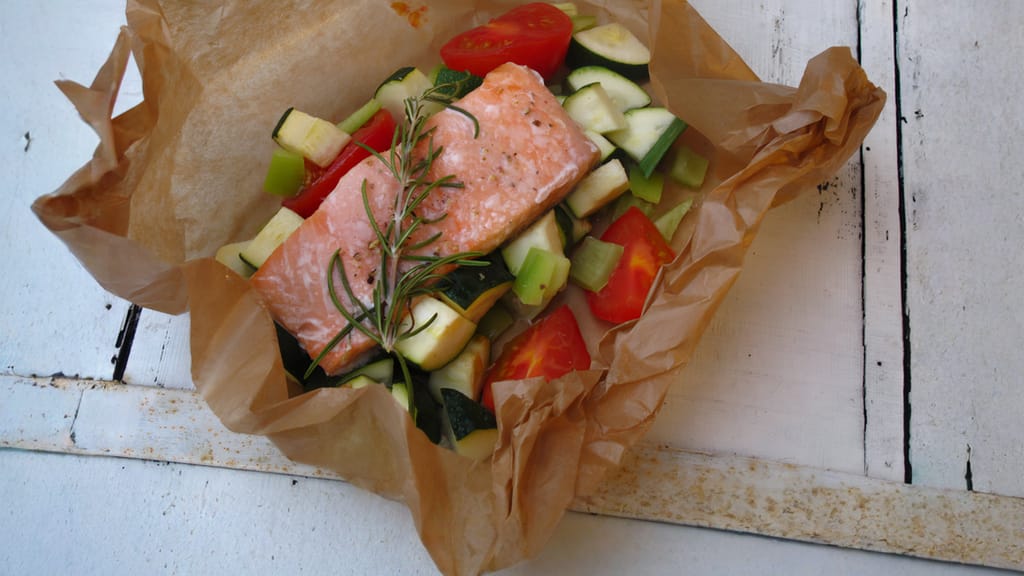
Saumon au papillote, or salmon baked in a parcel
Salmon en papillote with rosemary and cherry tomatoes
Classic French bistro dishes are cheap, quick to serve and built on just a few ingredients: onions, bread, cheese, bacon and eggs. That's exactly why they cook so well at home. Technique matters more than shopping here.
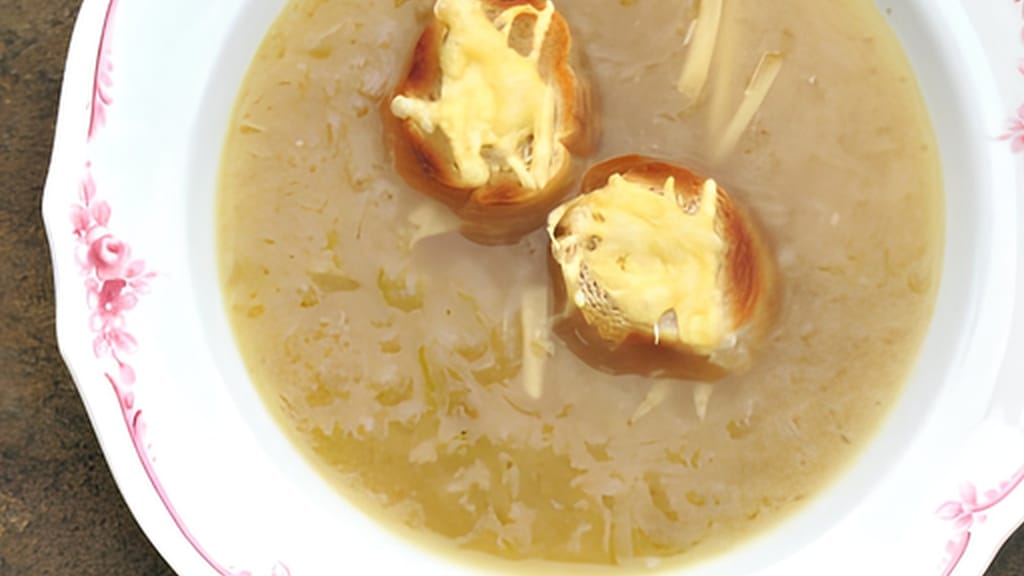
French onion soup is a broth made from slowly caramelized onions, baked in a bowl with croutons and cheese. Our French onion soup recipe uses yellow onions, beef stock, dry white wine and gruyère. It takes about 3 hours in total, but very little of that is active work.
The recipe is written for a multifunction cooker with heating, but the principle holds in a pot on the stove: low heat and time. Yellow onions are high in sugar, which caramelizes as they cook slowly. That creates the sweet, deep flavor the soup is made for. Add salt only at the end, since the stock is usually salty already. You can make the croutons yourself; for ideas, see our article on what to make with stale bread.
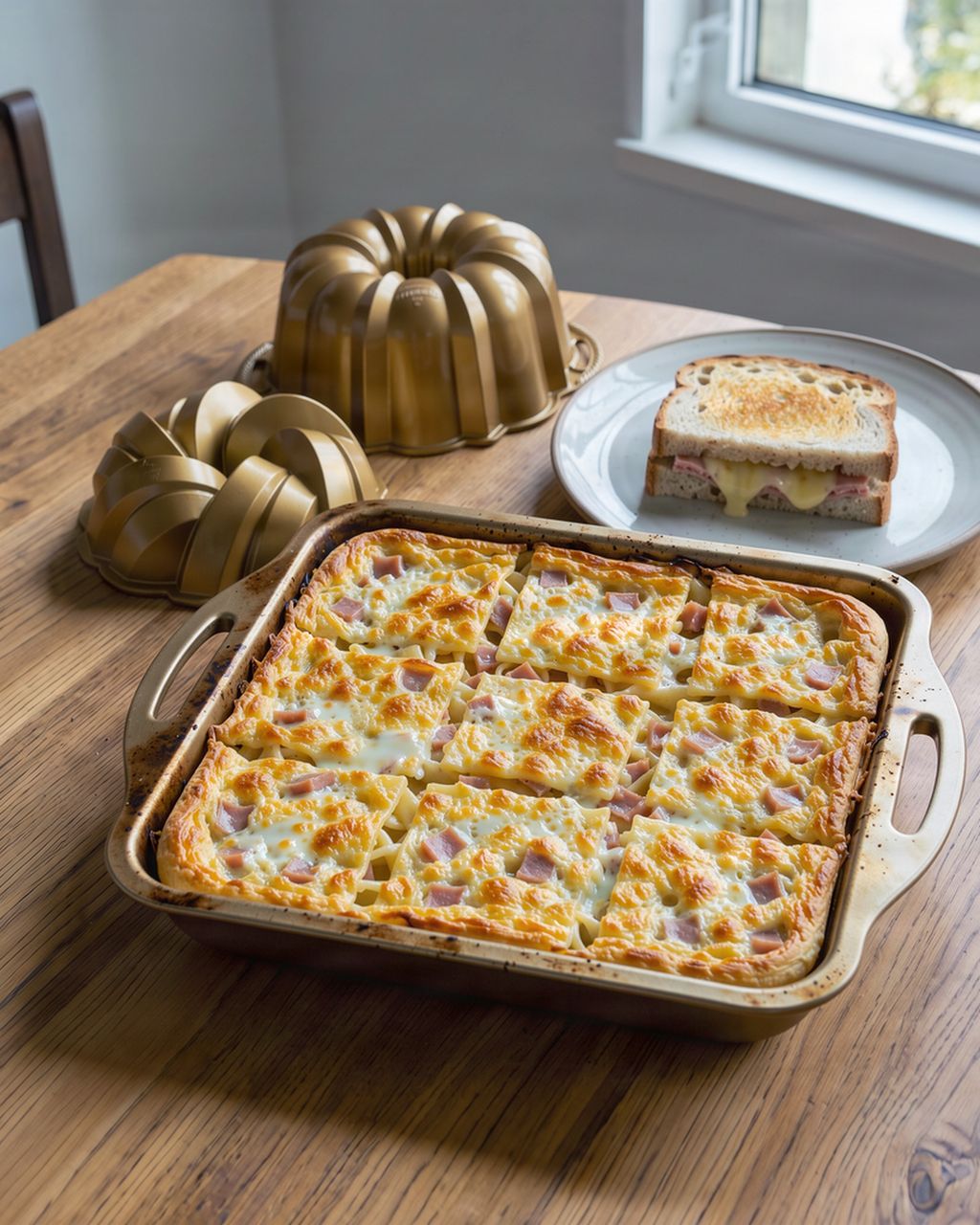
Croque monsieur is a baked toasted sandwich with ham, cheese and béchamel. According to surviving records, it appeared on Parisian café menus around 1910. Our croque monsieur recipe serves 2, is ready in about 30 minutes and uses sandwich bread, bone-in ham, gruyère and Dijon mustard.
The béchamel holds the whole dish together. Whisk it and add the milk gradually to avoid lumps. If you don't have gruyère, Emmental works well: it also melts nicely and gets stretchy, with a flavor that's only slightly milder. For more ham ideas, see what to cook with ham.
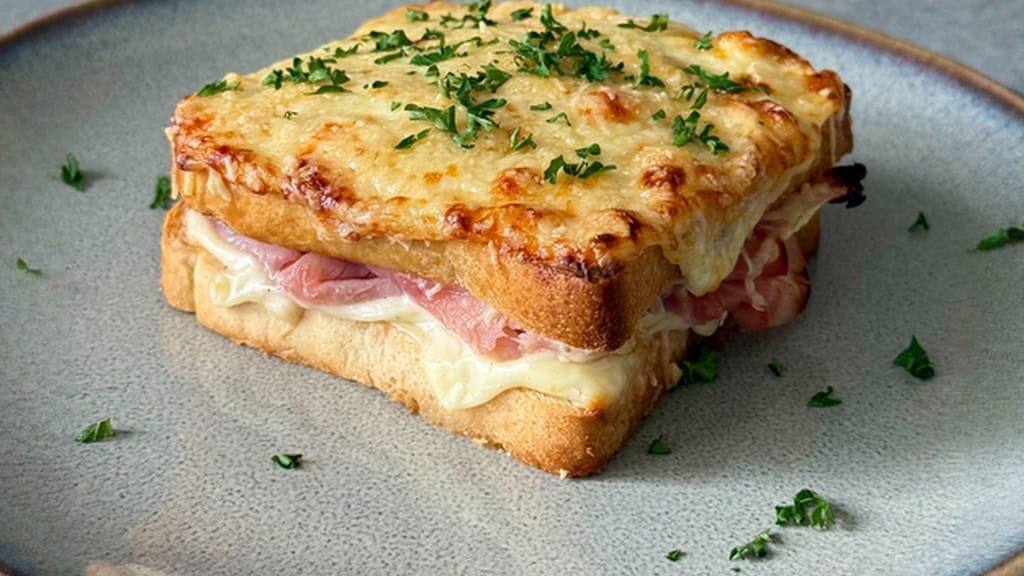
Croque monsieur: toasted ham and cheese sandwich
Croque monsieur, a baked toasted sandwich with ham, gruyère and béchamel
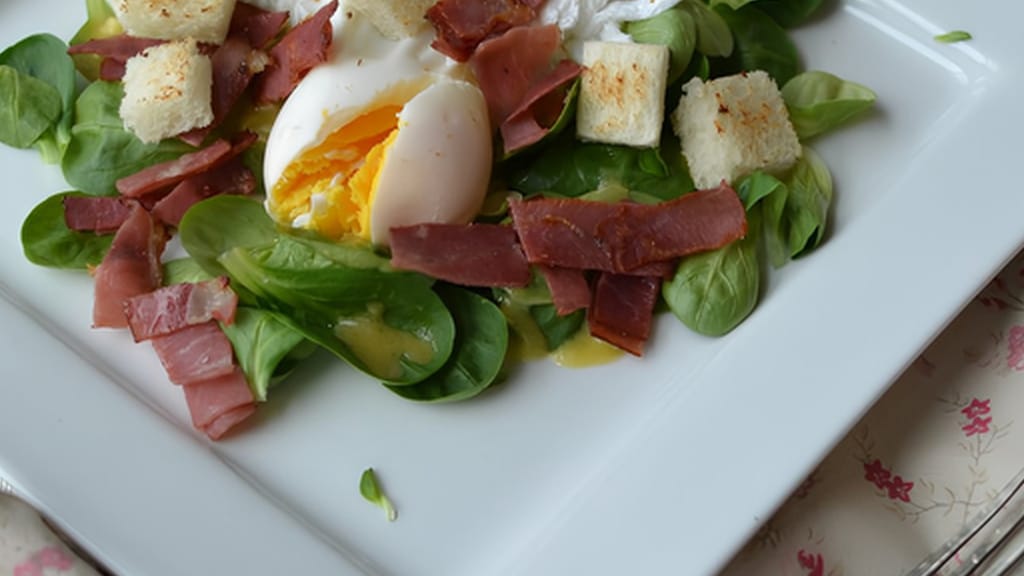
Salade lyonnaise is salad greens with crisp bacon, croutons, a poached egg and a garlicky Dijon mustard dressing. Our spring salade lyonnaise is ready in about 25 minutes, making it the quickest dish in this roundup.
It all depends on the yolk running and mixing with the dressing. Poach the egg in water with a little vinegar that is barely simmering, and add it to the salad at the last moment. Cook the bacon and croutons in a dry nonstick pan; you don't need any extra fat.
Traditional French desserts rely on butter, eggs and precise technique: thin batter, caramel, choux pastry, short bakes at high heat. According to our data, all six of the following recipes are vegetarian.
Crêpes Suzette are thin pancakes warmed in a caramel sauce of butter, orange juice and liqueur, then flambéed. The crêpes Suzette recipe takes about 1½ hours, of which the batter rests in the fridge for 1 hour. For the sauce, use unsalted butter.
Don't skip that hour in the fridge. The flour absorbs the liquid, and the crêpes turn out elastic, so they don't tear when you flip them. Be careful with the caramel: when you pour orange juice into it, the hot caramel spatters.
To flambé, turn off the range hood, warm the cognac briefly in a ladle, pour it over the crêpes in the pan and light it with a long match, always angled away from you. Let the flame burn out on its own.
The origin of the name is uncertain. The best-known legend credits a young waiter at a Monte Carlo café at the end of the 19th century, but French culinary reference books themselves cast doubt on it.
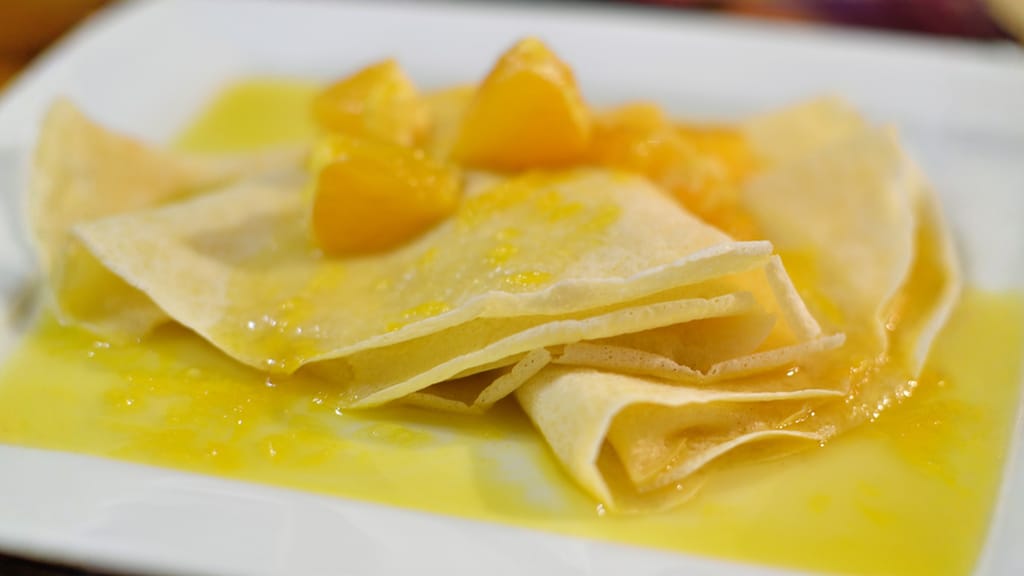
Crêpes suzette with orange sauce
Crêpes Suzette in orange caramel
Tarte au citron is a tart made of buttery shortcrust pastry with a lemon filling. Our tarte au citron, a French lemon tart also gets a cap of baked meringue. It's ready in about 1 hour 40 minutes, makes 8 servings and is baked in a 30 cm (12 in) pan.
Cold butter in the dough is the reason the crust is crisp. So bring the dough together quickly, ideally in a food processor, and chill it for half an hour. If you warm the butter with your hands, the dough shrinks and turns tough. The filling is done when the center stops rippling when you shake the pan.
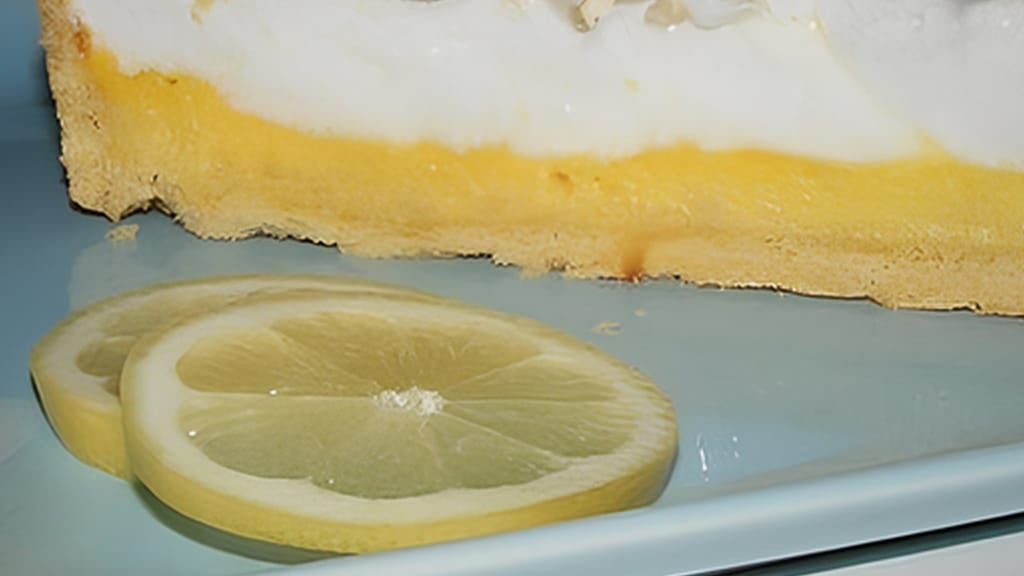
Tarte au citron – french lemon tart
Tarte au citron, a French lemon tart with a meringue cap
Madeleines are small buttery sponge cakes shaped like a shell, with a characteristic bump on the back. Our madeleines, fragrant French cookies are scented with lemon zest and orange blossom water. They take about 2½ hours in total, but for two of those hours the batter rests in the fridge.
The bump comes from thermal shock: chilled batter sets quickly at the edges in a hot oven, and the center pushes upward. That's why you shouldn't skip the fridge, and why you should start baking briefly at 200°C (400°F). If you don't have a madeleine pan, pracny tins (Czech shell-shaped tins) will do.
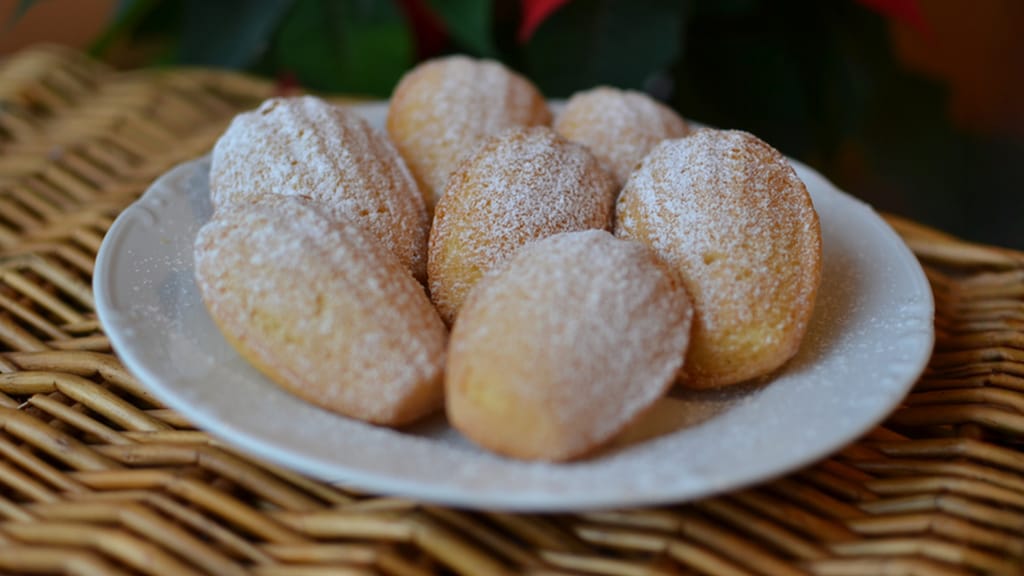
Madeleines - fragrant french sweets
Madeleines with lemon zest and orange blossom water
Pain au lait are soft, sweet rolls made from an enriched milk dough with butter and eggs. The recipe for pain au lait, French milk rolls makes 20 in just under 3 hours, most of it rising time. You can also knead the dough in a bread machine.
The base is a yeast sponge of milk, honey, flour and yeast, which you leave for an hour until it bubbles. The finished rolls should stay pale, and you should let them cool completely on a rack, because the crumb is still setting while they're warm. For more ideas for a sweet morning, see sweet breakfast.
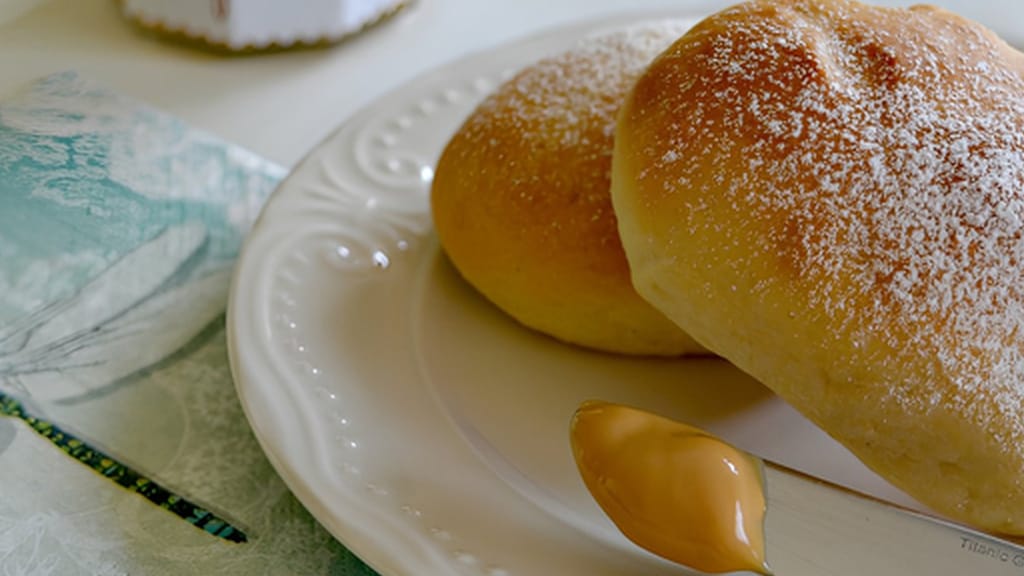
Pain au lait – french milk buns
Pain au lait, French milk rolls
Chocolate mousse is an airy chilled cream made from dark chocolate and whipped cream. Our chocolate mousse needs just two ingredients: 60% dark chocolate and 33% whipping cream. It's ready in about 2 hours 20 minutes, with almost all of that spent chilling.
Temperature is everything here. Fold the whipped cream into the chocolate mixture once it has cooled to about 40°C (104°F). In hot chocolate the cream would melt and the mousse would collapse; in cold chocolate, the chocolate would seize into lumps.
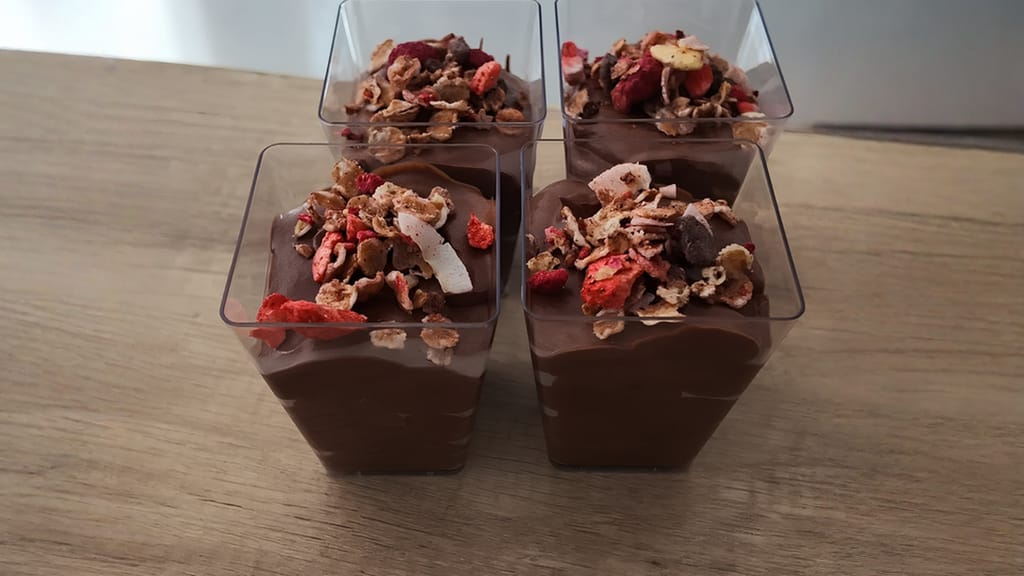
Chocolate mousse
Chocolate mousse made with dark chocolate and cream
Croquembouche is a celebration tower of small choux puffs filled with cream. In France it belongs mainly at weddings and christenings. You can make croquembouche with vanilla cream in about an hour, not counting decorating, and it's the most demanding dessert in this roundup.
The first few minutes of baking are key: don't open the oven, because cold air would make the puffs collapse. Finished puffs are deep golden and light, and sound hollow when tapped. Traditionally, a veil of thin caramel threads holds them together and decorates the tower.
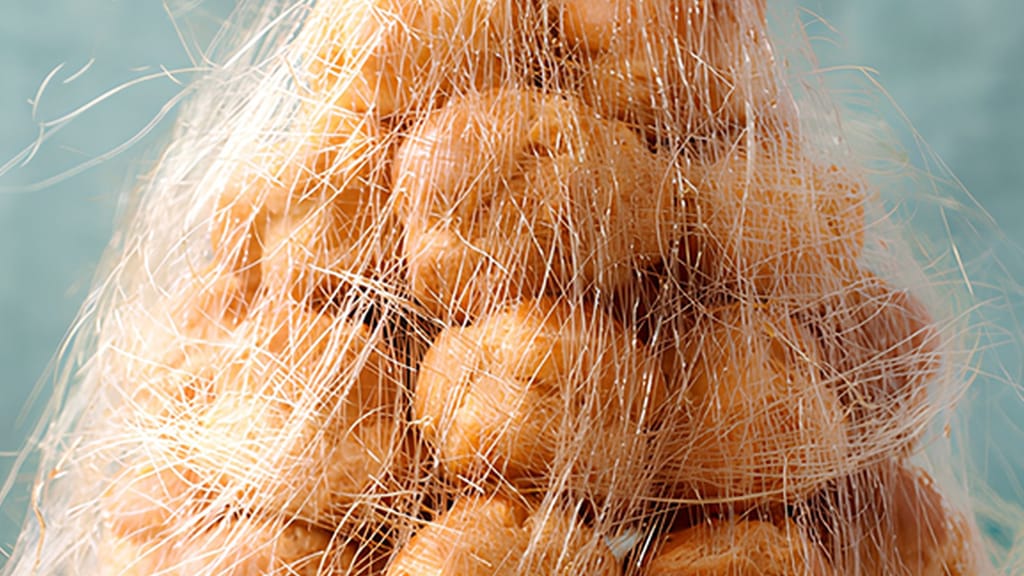
Croquembouche
Croquembouche, a tower of choux puffs with vanilla cream
Typical French dishes aren't just restaurant specialties but, above all, home and bistro classics: meat braised in wine, soups, baked toasted sandwiches, salads with bacon and egg, crêpes, tarts and sweet pastries for breakfast. The way of eating is typical too. In 2010, UNESCO inscribed the French gastronomic meal on its list of the Intangible Cultural Heritage of Humanity. Together with Mexican cuisine and the Mediterranean diet, it was among the first gastronomic entries on that list.
According to the UNESCO description, a French celebratory meal has a fixed rhythm: an aperitif at the start, then at least four courses, and liqueurs at the end.
aperitif to start
starter
fish or meat with vegetables
cheeses
dessert
liqueurs to finish
An everyday dinner is of course simpler. But even at home, people eat in courses, at the table and without hurrying. If you want a French evening, try it the same way: salade lyonnaise as a starter, beef bourguignon with a baguette as the main course, then a few pieces of cheese and finally chocolate mousse made the day before.
The best-known French dishes almost always have a clear home: beef bourguignon comes from Burgundy, salade lyonnaise from Lyon and croque monsieur from Parisian cafés. The origin of crêpes Suzette is disputed; you'll find that higher up, with the recipe. That home often explains what goes into the dish.
Beef bourguignon and coq au vin are traditionally associated with turning tough meat or an old rooster into a tender dish. Long braising in wine breaks down tough connective tissue, and the wine becomes the sauce.
The name croque monsieur combines croquer (to crunch) and monsieur (mister). It's a hand-held food, not something for a festive table.
Madeleines and pain au lait are part of everyday French baking. They're eaten with coffee, at breakfast and as a snack.
The practical point for you: when you cook a dish from a wine region, use a wine you'd also drink. The sauce takes on its flavor, flaws included.
French cooking rests on a few recurring basics: butter, slowly sautéed onions, wine, béchamel and time to rest. Once you've mastered these, you can handle most of the dishes in this article.
Butter. For dough, sauces and caramel, use unsalted butter and add salt yourself in the exact amount. It matters most for the caramel in crêpes Suzette and the shortcrust for tarte au citron.
Onions. Yellow onions are the base of French onion soup, beef bourguignon and coq au vin. Slowly sautéed, they turn sweet and give the sauce body; quickly sautéed, they stay sharp.
Wine. Red for braised meat, dry white for onion soup. In our recipes we let it simmer for a while so it loses its sharpness and leaves its flavor behind.
Béchamel. Butter, flour, milk and nutmeg. For croque monsieur you need it as a full layer; for salmon en papillote, a spoonful is enough.
Cheese. Croque monsieur and onion soup both use gruyère. Emmental is a good substitute, as it also melts and bakes to golden brown.
Resting. An hour for crêpe batter, two hours for madeleines, half an hour for shortcrust. Anyone who skips the fridge will see it in the result.
The best order to start in runs from quick dishes through slow ones to baking: croque monsieur, salmon en papillote and salade lyonnaise, then beef bourguignon and French onion soup, then crêpes Suzette, madeleines, tarte au citron and pain au lait, and finally croquembouche.
Croque monsieur, if you want a quick lunch and to learn béchamel.
Salmon en papillote, if you want a dinner with no dishes to wash and nothing to watch.
Salade lyonnaise, if you want to try poaching an egg.
Beef bourguignon, if you have a free afternoon and want a dish that tastes even better the next day.
French onion soup, if you want to understand what time does to an onion.
Crêpes Suzette, if you want a dessert that's finished at the table.
Madeleines, tarte au citron and pain au lait, if you want to bake.
Croquembouche, once you have choux pastry under your belt and an appetite for a grand finale.
The order isn't random. Each dish builds on what you learned from the one before: from sauce through slow braising to doughs that need precise temperatures.
Braised French dishes such as beef bourguignon, coq au vin or onion soup can be cooked a day ahead and simply reheated the next day. The flavors meld overnight and the sauce thickens. By contrast, croque monsieur, salade lyonnaise, salmon en papillote and crêpes Suzette are best right away.
The US food safety agency USDA recommends refrigerating cooked food within 2 hours of cooking. According to it, food is safe in the fridge for 3 to 4 days. In the freezer (−18°C or below) it stays safe indefinitely, but keeps its best quality for 3 to 4 months. Divide a large pot into smaller containers so it cools faster.
Of the desserts, chocolate mousse is the best to make ahead, because chilling is part of the recipe. Madeleines are best on the day you bake them, because the buttery sponge batter dries out quickly. You can mix the crêpe batter the evening before and just cook them in the morning.
Emmental is the best substitute for gruyère in both croque monsieur and French onion soup, because it melts just as well and bakes to a golden top. Its flavor is only slightly milder and less nutty. Any other hard aged cheese that melts without the fat separating will also work.
You can, but it will be a different dish, because the wine forms the base of the sauce in beef bourguignon. Use a strong beef stock instead and add a little tomato paste to give the sauce depth. You won't fully replace the acidity and fruitiness of the wine, though.
According to our recipes, crêpes Suzette, tarte au citron, madeleines, pain au lait, chocolate mousse and croquembouche are all vegetarian. They contain no meat or gelatin, but all of them contain dairy and most contain eggs, so they are not vegan.
No, the French onion soup in our recipe is not vegetarian, because it's made with beef stock. It also contains butter and gruyère. The classic version relies on beef stock, which together with the caramelized onions gives the soup its full flavor.
Beef bourguignon and coq au vin are most often served with fresh baguette or good bread for mopping up the sauce. The coq au vin recipe also suggests mashed potatoes seasoned with scallions. Salmon en papillote needs no heavy side, because the vegetables bake right in the packet with the fish.
When flambéing crêpes Suzette, turn off the range hood so it doesn't draw in the flame, and don't lean over the pan. Keep a lid nearby to cover the pan if needed. Let the alcohol burn only briefly, until the flame goes out on its own.