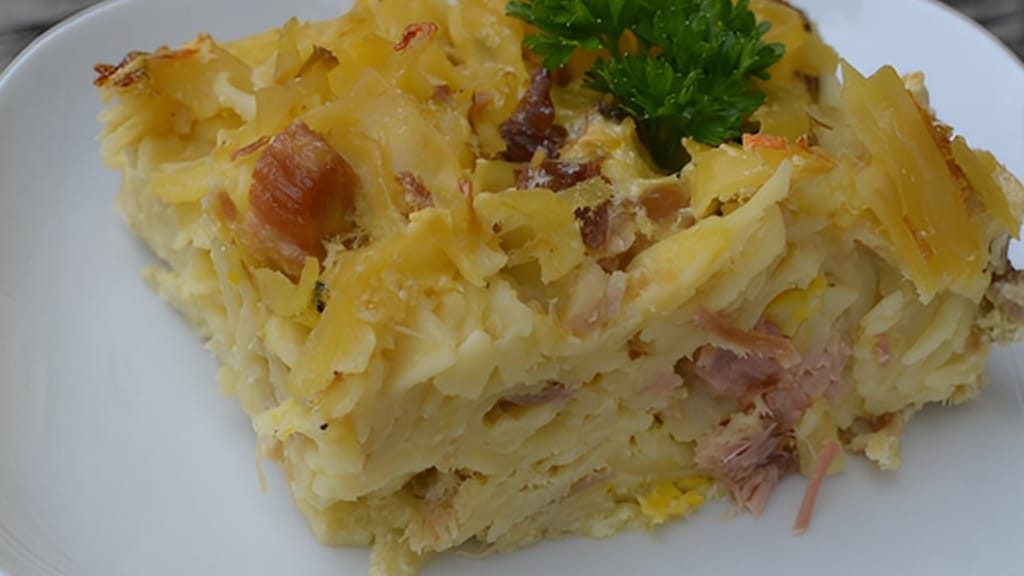
Šunkofleky (ham and pasta bake)
What to Make with Ham: Šunkofleky, Baked Toasties, Gnocchi and a Savory Bundt
Updated Nov 20, 2026
What can you make with ham when you have more in the fridge than you can eat on bread? Best bets: šunkofleky, baked croque monsieur, gnocchi in cream, a breakfast tortilla with eggs, or a savory yeast bundt cake. Classic cooked ham is already cooked meat, so in the kitchen you only need to warm it through, sear it or bake it, and in no time you have a meal that tastes like you stood over it for an hour. Below you'll find eight dishes made with cooked ham with the method in brief, then separate ideas for dry-cured ham, and at the end how to store ham so it lasts.
These are the eight quickest things to make with ham:
šunkofleky (Czech baked pasta with ham) baked with eggs and cream,
šunkofleky with sauerkraut-style cabbage and peas,
croque monsieur, a baked ham and béchamel toastie,
croque madame, the same with a fried egg on top,
gnocchi with ham, cream and wild garlic,
a breakfast tortilla with scrambled eggs and ham,
a savory yeast bundt cake with ham and cheese,
Prague ham with a warm lentil salad.
They have one thing in common: the ham doesn't have to prove anything. Just warm it through and let the edges turn lightly golden in the pan. That wakes up the smoky flavor and the salt, which then seasons the whole dish. So go easy with salt in ham dishes and taste at the end.
For leftover carp, potato salad or Christmas cookies we have a separate guide to Christmas leftovers. There's no ham in it, so here is its share.
Bone-in ham is best for baking and toasties, top-grade ham for quick pan dishes, and smoked meat is perfectly good for šunkofleky. Each behaves a little differently:
Bone-in ham has a coarser grain and a stronger flavor, and it holds its shape even in the oven. It belongs in croque monsieur, in the savory bundt and with the lentil salad, where you cut it into thicker slices and sear them.
Top-grade pork ham is delicate and juicy. Under the Czech regulation on meat products, the producer may not add starch, fiber or plant or other foreign proteins to it, and it must contain at least 16% pure muscle protein, so it doesn't fall apart in the pan or release as much water. Ideal for gnocchi or eggs.
Smoked meat or smoked pork leg gives a smoky, saltier flavor. For šunkofleky it's the traditional choice.
Cheaper standard-grade ham (it's labeled that way on the package) works in baked dishes too, but expect it to release more water. Cut it into cubes and first sear it briefly in a dry pan.
Cut to suit the dish: about 1 cm cubes for šunkofleky and gnocchi, thin slices up to 3 mm for toasties and tortillas, and slices of about half a centimeter for searing to go with lentils. A rule for holiday-table leftovers: nice slices for toasties, trimmings and thick pieces diced for baked dishes.
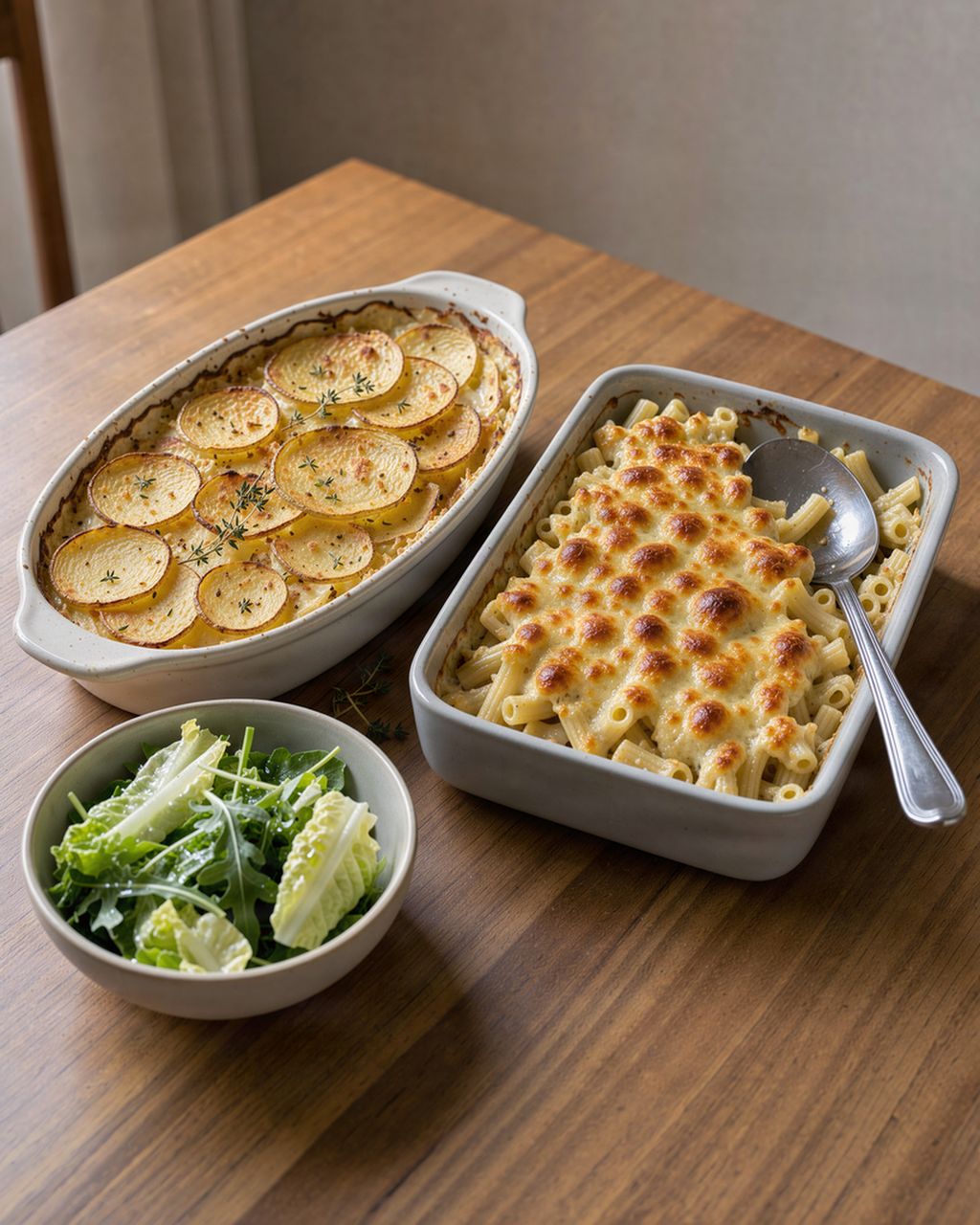
Šunkofleky are a baked pasta dish with meat, eggs and cream, and for many families the best thing you can make with ham. Our recipe for šunkofleky with smoked meat is built on Moravian smoked pork: first you cook the meat, then cook the pasta in the same broth, so it soaks up the smoky flavor and you don't need to salt the water. Egg yolks, meat, whipping cream and finally whipped egg whites go into the pasta.
The whipped whites are the whole trick. Fold them in gently at the end and the baked dish won't be a dense brick but a light, fluffy bake. Cook the pasta only until just tender, not soft, because in the oven it will absorb more cream and egg.
Have ready-cooked ham instead of smoked meat? Skip cooking the meat, boil the pasta in salted water and add the diced ham straight to the yolks. The whites and cream stay.
Šunkofleky (ham and pasta bake)
Šunkofleky with smoked meat, baked with eggs, cream and whipped egg whites
Šunkofleky with cabbage are a quicker, more vegetable-packed version: you have the whole meal for two in 32 minutes. In the recipe for šunkofleky with cabbage and peas you sauté onion with white cabbage, smoked pork leg and mushrooms, season with caraway, garlic and peas, stir in the cooked pasta and bake it under eggs with milk and Edam.
Cabbage with caraway gives the dish a slightly sweet, mildly sour aroma and balances the saltiness of the smoked meat. Add the garlic only briefly so it doesn't turn bitter. For more people, use a wider dish, not a deeper one: in a shallow layer the egg sets before the edges dry out.
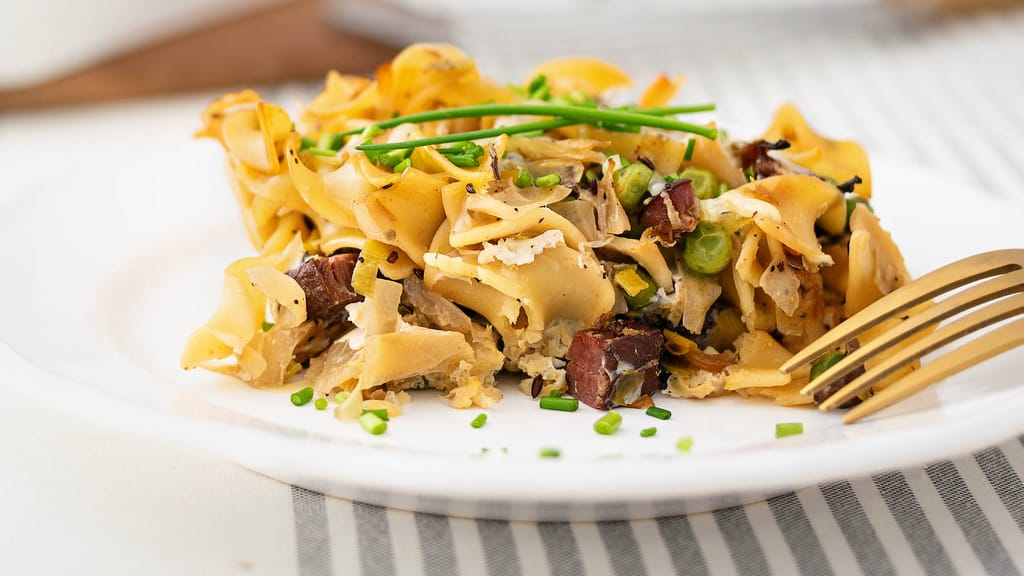
Ham and cabbage flecky pasta bake
Šunkofleky with cabbage, peas and smoked pork leg, baked under eggs and Edam
Croque monsieur is a French baked toastie with ham, cheese and béchamel, and it turns an ordinary sandwich into a hot dinner in half an hour. The recipe for croque monsieur with bone-in ham and Gruyère is built on pre-toasted sandwich bread, béchamel with nutmeg, bone-in ham, Gruyère and Dijon mustard. It's all baked in the oven until the cheese turns golden.
Why it works: toasted bread doesn't soak up the sauce and stays crisp, the béchamel keeps the juices inside, and the mustard cuts through the rich cheese. So don't build the toasties on untoasted bread, even when you're in a hurry.
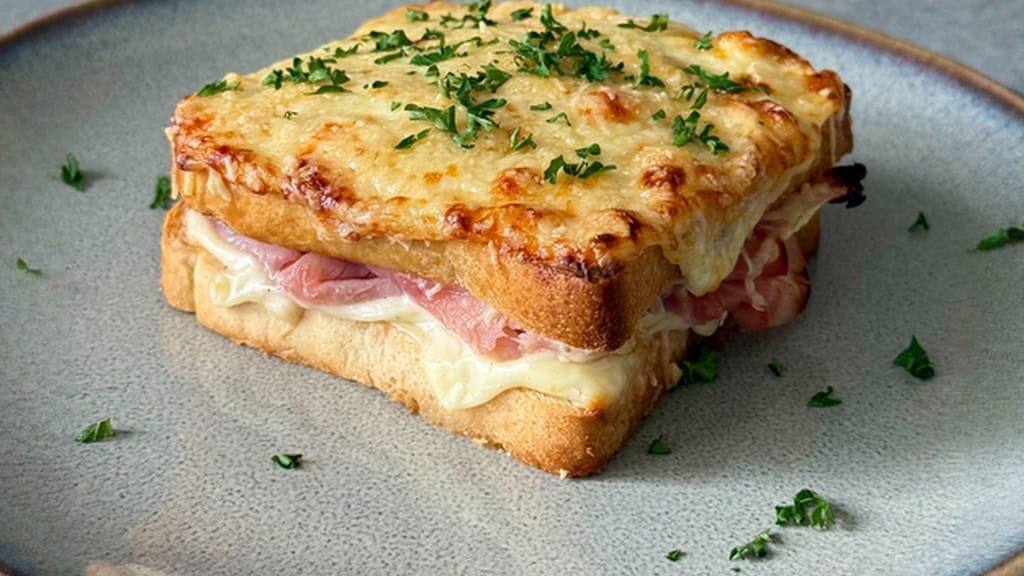
Croque monsieur: toasted ham and cheese sandwich
Croque monsieur: baked toastie with bone-in ham, Gruyère and béchamel
Croque madame is croque monsieur with a fried egg on top, and it's the runny yolk that makes it a hearty breakfast or brunch. The recipe for croque madame with ham, cheese and egg follows the same path: toasted bread, béchamel, bone-in ham, Gruyère and Dijon mustard. In addition, you fry eggs in butter and lay them on the hot toasties only after they come out of the oven. It's ready in about 40 minutes.
Fry the eggs over gentle heat so the white sets and the yolk stays runny. When you cut into it, the yolk runs into the béchamel and makes a second, even richer sauce.
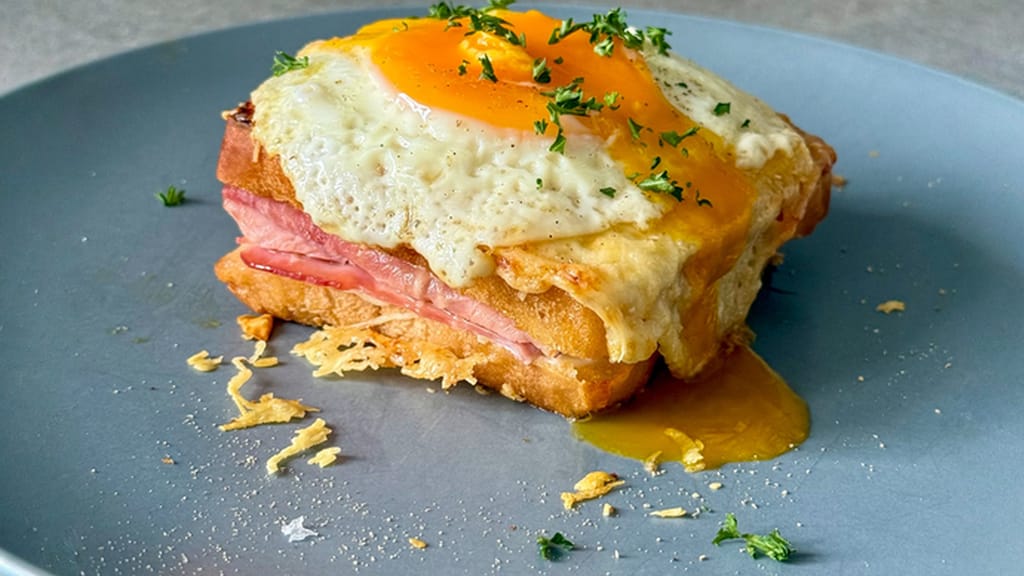
Croque madame: toasted ham and cheese sandwich with a fried egg
Croque madame: baked toastie with ham, cheese and a fried egg
Gnocchi with ham and cream are one of the quickest hot dishes in this roundup: ready in 14 minutes in one pan. In the recipe for gnocchi with wild garlic and ham you fry shallot and top-grade ham in butter, add potato gnocchi, pour in whipping cream and finally stir in wild garlic and Parmesan.
Two things make the difference. Sear the gnocchi first until part of the surface turns golden, and don't toss them too often. The crisp surface holds the sauce and the insides stay soft, whereas gnocchi merely warmed through in cream turn soggy. And add the wild garlic only after you turn off the heat: residual heat just wilts it, so it stays green and fragrant. Out of wild garlic season, replace it with chives, also at the end.
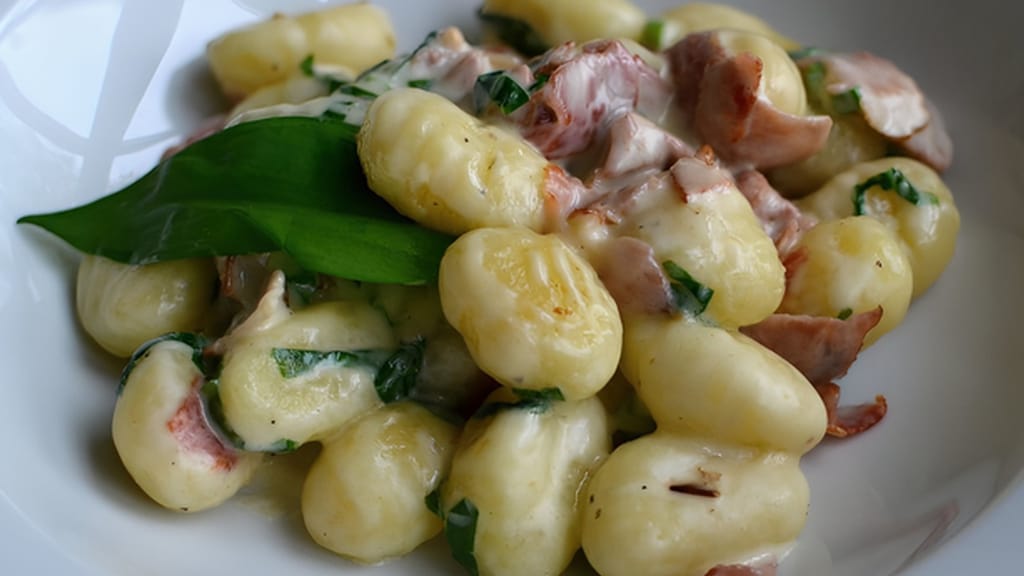
Gnocchi with wild garlic and ham
Gnocchi with ham, cream and wild garlic in 14 minutes
A breakfast tortilla with scrambled eggs and ham is a handheld meal for four in 13 minutes. In the recipe for a breakfast tortilla with scrambled eggs and ham you sauté scallions with ham in butter, add eggs, stir them into soft curds and fill warmed tortillas with them.
Take the pan off the heat while the eggs are still glossy. They'll finish cooking in the residual heat and won't dry out. Warm the tortillas just enough to soften them so they don't crack when rolled. Two eggs per tortilla make it a hearty breakfast, not a snack.
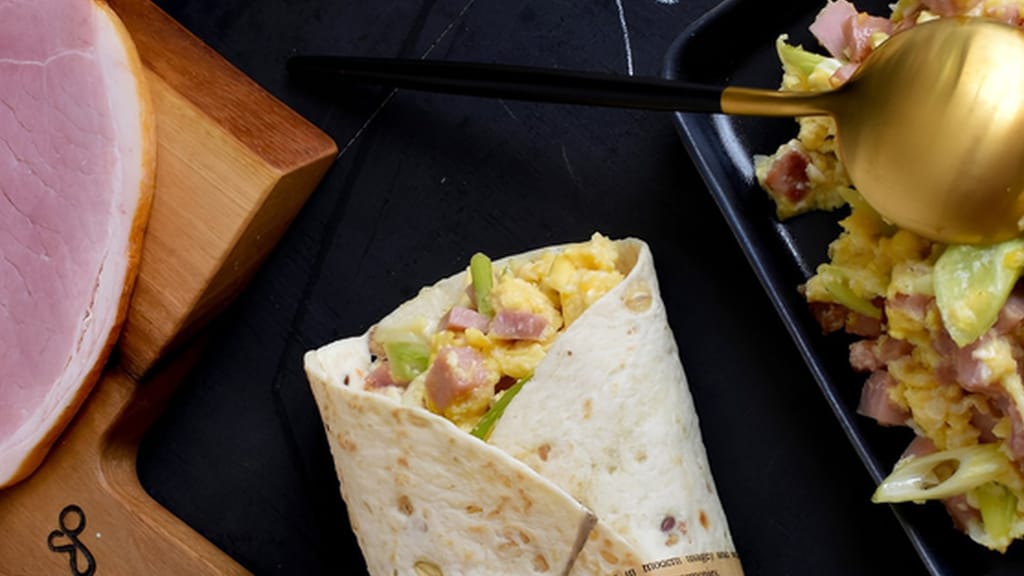
Breakfast tortilla with scrambled eggs and ham
Breakfast tortilla with scrambled eggs, ham and scallions
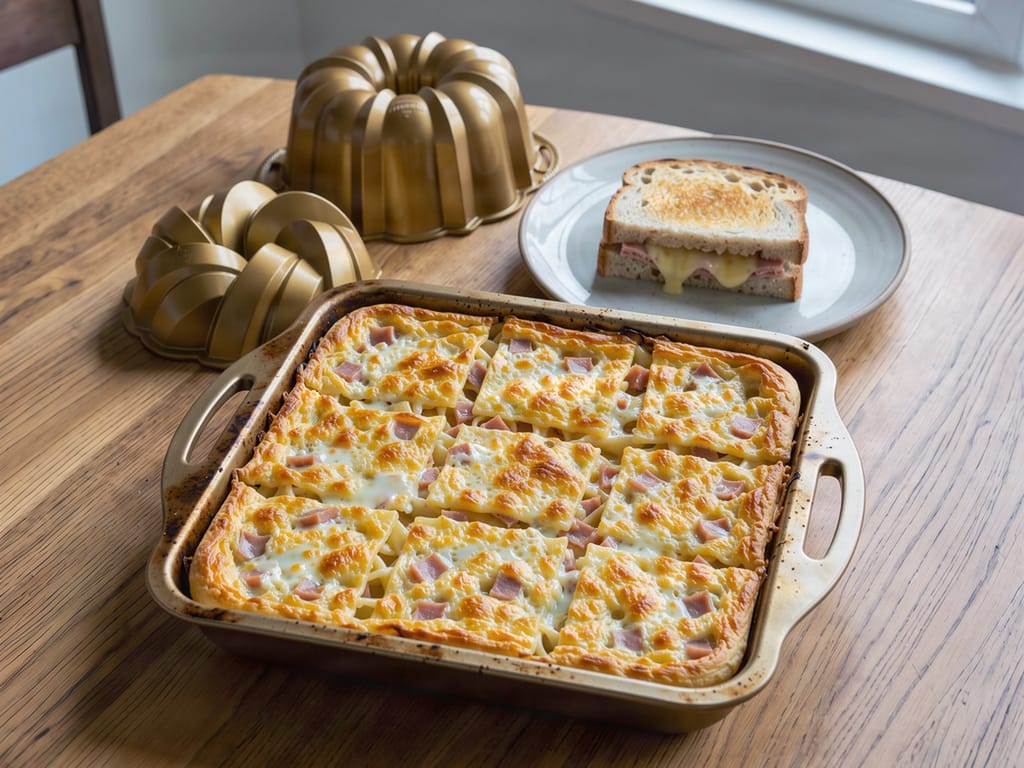
A savory bundt with ham and cheese is a yeast bake made of five rolled-up flatbreads that fuse into one ring in the oven. It suits a celebration, a picnic or a New Year's Eve table, and uses up 300 g of bone-in ham at once. In the recipe for a savory yeast bundt cake with ham and cheese you divide the risen dough into five rounds, spread each with a traditional pomazánkové máslo (a Czech soft dairy spread, not butter), top with ham, English bacon and Gouda, roll them up and arrange the rolls in the pan.
Press the rolls lightly together so they join as they bake. Grease the pan well and dust it with flour; how to do that so nothing sticks is covered in the article on what to dust a bundt pan with. After turning out the baked bundt, let it cool for half an hour: the melted cheese sets and the cake won't crumble when sliced.
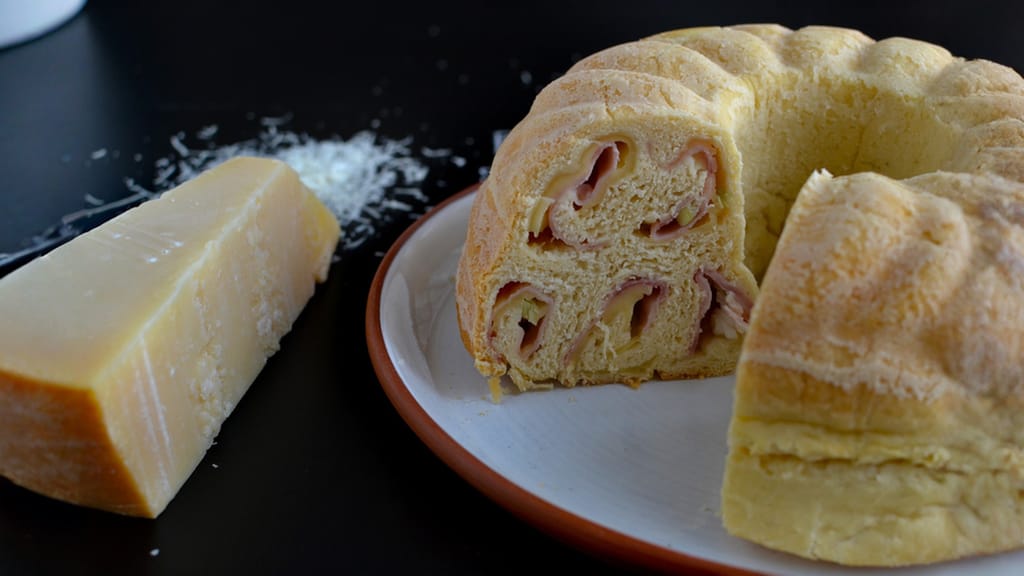
Savory yeasted bundt cake with ham and cheese
Savory yeast bundt cake with bone-in ham, bacon and Gouda
Nordic Ware
Bundt Pan - BraidedNordic Ware
Bundt Pan - TraditionPrague ham with a warm lentil salad is a filling meal where the ham plays the lead instead of a supporting role. In the recipe for Prague ham with a warm lentil salad you cook soaked brown lentils, toss them with golden-fried onion, cherry tomatoes and garlic, and serve with seared slices of bone-in ham.
Soak the lentils the day before, or at least for a few hours, and cook them only until they hold their shape. Sear the ham briefly in a hot pan: it's already cooked, so you only need to heat it through and brown the edges. For more ideas with brown, green and red lentils, see the article what to make with lentils.
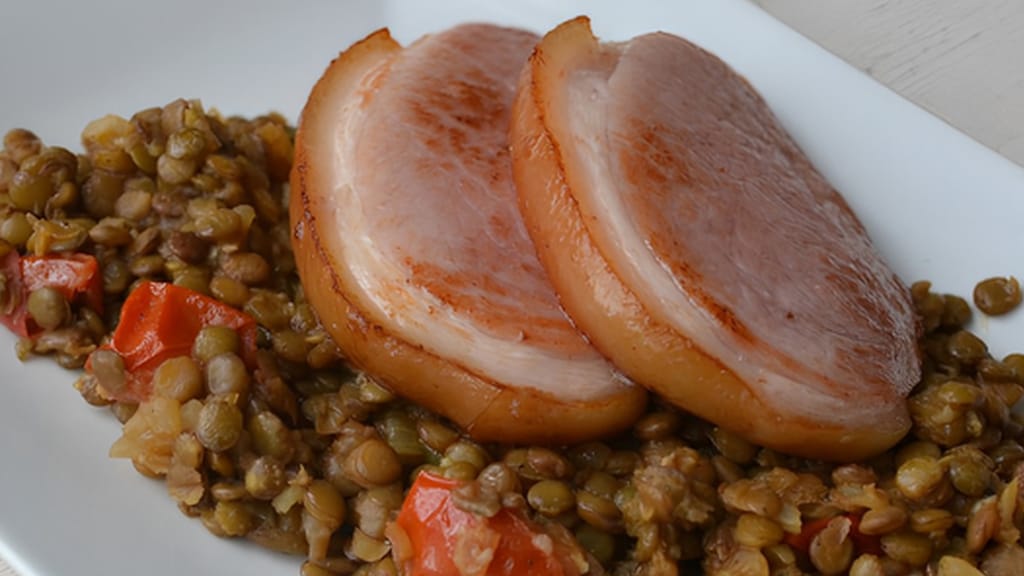
Prague ham with warm lentil salad
Prague bone-in ham with a warm lentil salad and cherry tomatoes
The most common mistake is oversalting, followed closely by drying the ham out. What to watch for:
Salt at the end. Ham, smoked meat, bacon and cheese all carry their own salt, so taste a baked dish before baking and add salt only if it's really missing.
Don't sear ham for long. Two or three minutes in the pan is enough to turn the edges golden. Longer and delicate meat becomes a tough shoe sole.
Sear watery ham dry first. Cheaper ham releases water, which would make the béchamel or egg mixture soggy.
Take eggs off the heat in time. Scrambled eggs finish in the residual heat; if you pull them only when completely dry, they'll be rubbery.
Give baked dishes a moment to rest. The savory bundt slices cleanly after half an hour of cooling, and šunkofleky are likewise easier to serve after standing a little.
For the last handful of ham, two dishes without a recipe are enough: pasta with ham and peas in cream, and ham spread.
Pasta with ham and peas: Cook the pasta in salted water and set aside a cup of the cooking water. Sear diced ham in butter, add a handful of frozen peas and pour in whipping cream. Stir in the pasta, add cooking water as needed so the sauce coats every piece, season with pepper and sprinkle with grated cheese.
Ham spread: Chop the ham finely with a knife, not in a blender, so the spread has texture. Mix it with traditional pomazánkové máslo (a Czech soft dairy spread, not butter) or soft quark (tvaroh, a Czech fresh curd cheese), a dab of mustard and chopped chives, and let it rest in the fridge for half an hour.
We send seasonal cooking and baking plans and recipes made from everyday ingredients. Unsubscribe in one click.
With dry-cured ham, the best things to make are saltimbocca, beet gnocchi with crispy ham, pasta with dry-cured ham, or a simple starter with melon or figs. Unlike cooked ham, dry-cured ham is raw, but salt and long curing make it edible without cooking, so you handle it differently: either serve it cold in thin slices, or sear it briefly over high heat until crisp. Long cooking ruins it: it dries out and turns too salty.
In the store you'll find Italian and Spanish ham, as well as Black Forest ham, which is also smoked. For cooking, the difference is mainly in strength: smoked Black Forest ham is more pronounced and stands up better in the pan, while the milder Italian shines cold or stirred in at the last moment.
One rule applies: less is more. Dry-cured ham has a concentrated flavor, a few slices are enough for a whole pan, and the dish rarely needs extra salt.
Saltimbocca is an Italian dish of veal, dry-cured ham and sage, and the ham in it works as both seasoning and protective layer. In the recipe for veal saltimbocca with dry-cured ham and sage you top slices of veal shoulder with ham and sage, roll them up, dredge them in flour, sear them in olive oil with butter and braise them with white wine.
Roll them tightly and secure with a toothpick so they don't unroll during braising. Let the wine bubble until the sharp smell of alcohol disappears, and only then add water and cover.
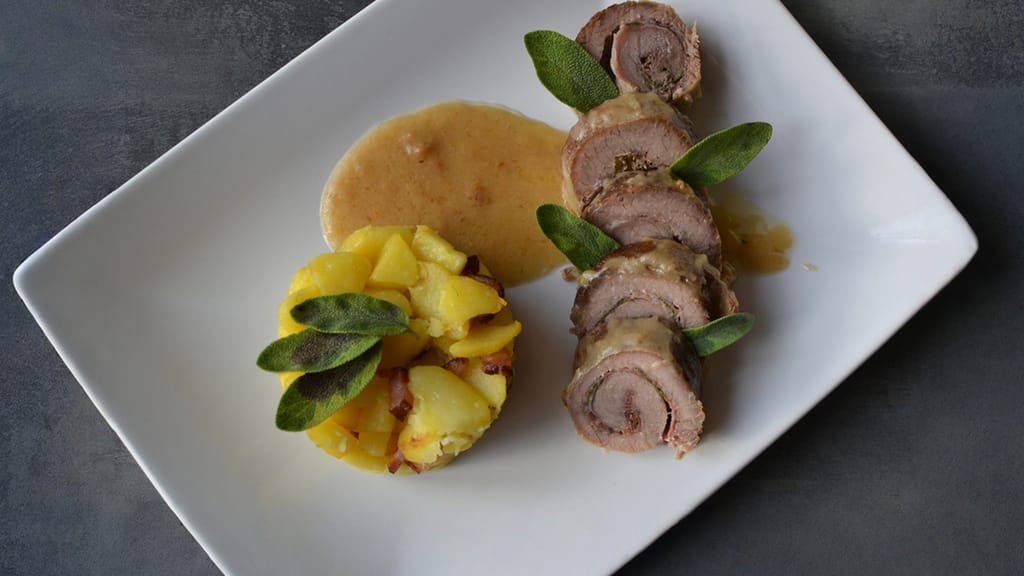
Veal saltimbocca – roll-ups with prosciutto and sage
Saltimbocca: veal rolls with dry-cured ham and sage in wine
Beet gnocchi with crispy ham show what dry-cured ham does best: give a dish a salty, crunchy contrast. In the recipe for beet gnocchi in an arugula salad you make a dough from beet purée, flour, egg and nutmeg, boil the gnocchi and serve them with arugula, blue cheese, walnuts and Black Forest ham fried until crisp.
The dough will be soft, but don't add flour, or the gnocchi won't be tender. They're done as soon as they float. Sweet beet, salty ham and sharp blue cheese then complement each other in every bite.
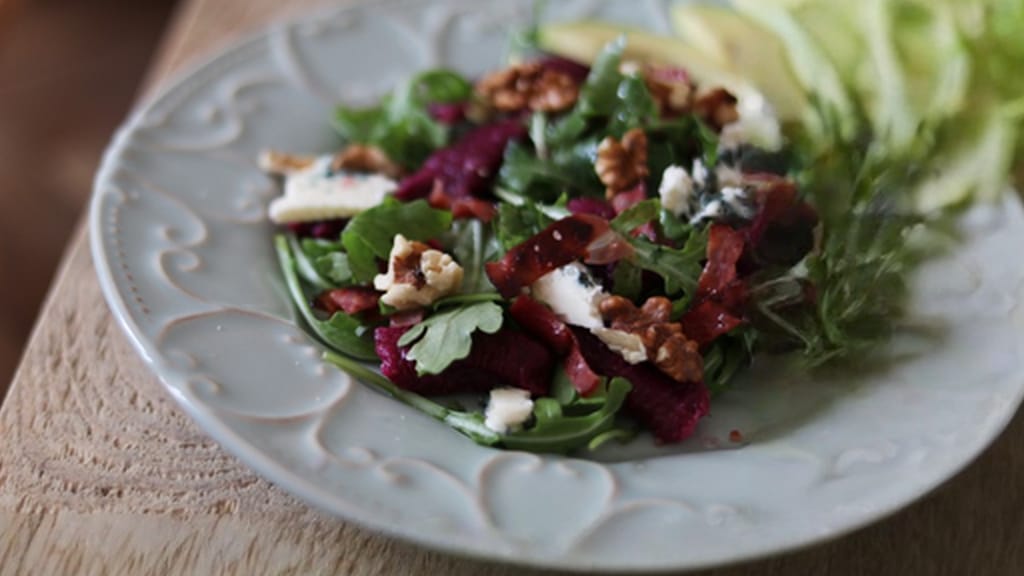
Beetroot gnocchi with light arugula salad
Beet gnocchi with arugula, blue cheese and crispy dry-cured ham
Add dry-cured ham to pasta at the end, not the beginning. Cook the pasta, heat butter or olive oil in a pan, toss in a handful of peas, then the pasta with a little cooking water. Tear the dry-cured ham into strips and stir it in only after taking the pan off the heat, so it just warms through and stays delicate. Sprinkle with Parmesan and pepper.
You make a crispy dry-cured ham topping in the oven. Lay the slices in a single layer on a baking sheet lined with parchment paper and bake at 180°C (350°F) until they turn brittle and stop bubbling with fat; once cooled, they snap like chips. Crumble them over a creamy soup, a salad, risotto or eggs.
Dry-cured ham with melon is a starter that needs no stove, just ripe fruit. Peel a cantaloupe, cut it into wedges and wrap each in a thin slice of dry-cured ham; the sweet, juicy flesh balances the salt. Out of melon season, fresh figs cut into quarters or a ripe pear will do. Serve right after assembling, while the fruit is chilled and the ham hasn't gone damp.
Use sliced or opened cooked ham within 3–4 days, a whole ham in its store packaging within 7 days, and keep it in the freezer for at most 1–2 months, according to US Department of Agriculture (USDA) guidance. The date on the package always takes priority, and if the manufacturer gives a shorter period, follow it.
Fridge: keep ham wrapped, in plastic wrap or a sealed container, so it doesn't dry out or absorb odors. It belongs in the coldest part of the fridge, not the door.
Freezer: count on 1–2 months for quality. After thawing, ham releases a little water and is softer, so it suits šunkofleky, savory bundt or gnocchi better than sandwiches.
Cubes in portions: dice the ham before freezing and divide it into bags in portions you'll use at once. Thaw it in the fridge and don't refreeze it.
Large bone-in piece: whatever you won't eat within 3–4 days, freeze right away, not on the last day.
Cooked ham doesn't need to be. It's already cooked, so in a dish you only need to heat it through or sear it briefly. A quick sear in a pan is still worth it for flavor: the edges turn golden and the ham won't release water into the dish. Dry-cured ham is eaten without cooking and goes into hot dishes only at the end.
Yes. Bake the šunkofleky a day ahead, refrigerate them within 2 hours of baking, and next day reheat them in the oven covered with aluminum foil until hot all the way through (at least 70°C / 158°F). Don't prepare the raw mixture with the egg whites in advance: the whipped whites would deflate by the next day and the šunkofleky wouldn't be fluffy.
The best substitute for Gruyère in a ham croque monsieur is Emmental or Comté, another hard cheese that melts well and turns golden. Gouda works too, though the flavor will be milder and less nutty.
The best substitute for dry-cured ham is bacon or smoked ham cut into strips and fried until crisp. They give a similar salty, smoky flavor, but they are fattier and less delicate. The substitute doesn't suit saltimbocca or a melon starter, where the delicacy of dry-cured ham is the whole point.
From a large bone-in ham, first cut off nice slices for croque monsieur and for the warm lentil salad, then dice the trimmings for šunkofleky or gnocchi. Chop the last scraps into a ham spread.
One recipe worth heating the oven for, one tip, and one deal from the shop. Nothing else.