Pumpkin cream soup with garlic toasts
What to Make with Stale Bread: Panzanella, Croutons, Garlic Toasts and French Toast
Updated Nov 20, 2026
What can you make with stale bread? The quickest options are croutons for soup or salad, garlic toasts, Italian panzanella and French toast, and if the bread is rock hard, homemade bread crumbs. A hard heel of bread isn't waste. It's an ingredient with qualities fresh bread doesn't have: it soaks up dressing without falling apart, crisps in the oven instead of steaming, and absorbs an egg mixture without turning soggy. Below you'll find what to make depending on how hard the bread is, what to cook with it for lunch, and how to store bread so the leftovers stay usable.
The best things to make with stale bread are croutons, garlic toasts, panzanella, French toast, baked toasts, homemade bread crumbs and little cubes for dumpling dough. These are all dishes that count on hard bread, not emergency fixes.
Croutons: cubes baked until crisp, for soups, salads and casseroles.
Garlic toasts: slices of bread browned in a pan or the oven and rubbed with garlic.
Panzanella: an Italian salad in which toasted bread soaks up the juice of tomatoes.
French toast: slices dipped in egg and pan-fried, sweet or savory.
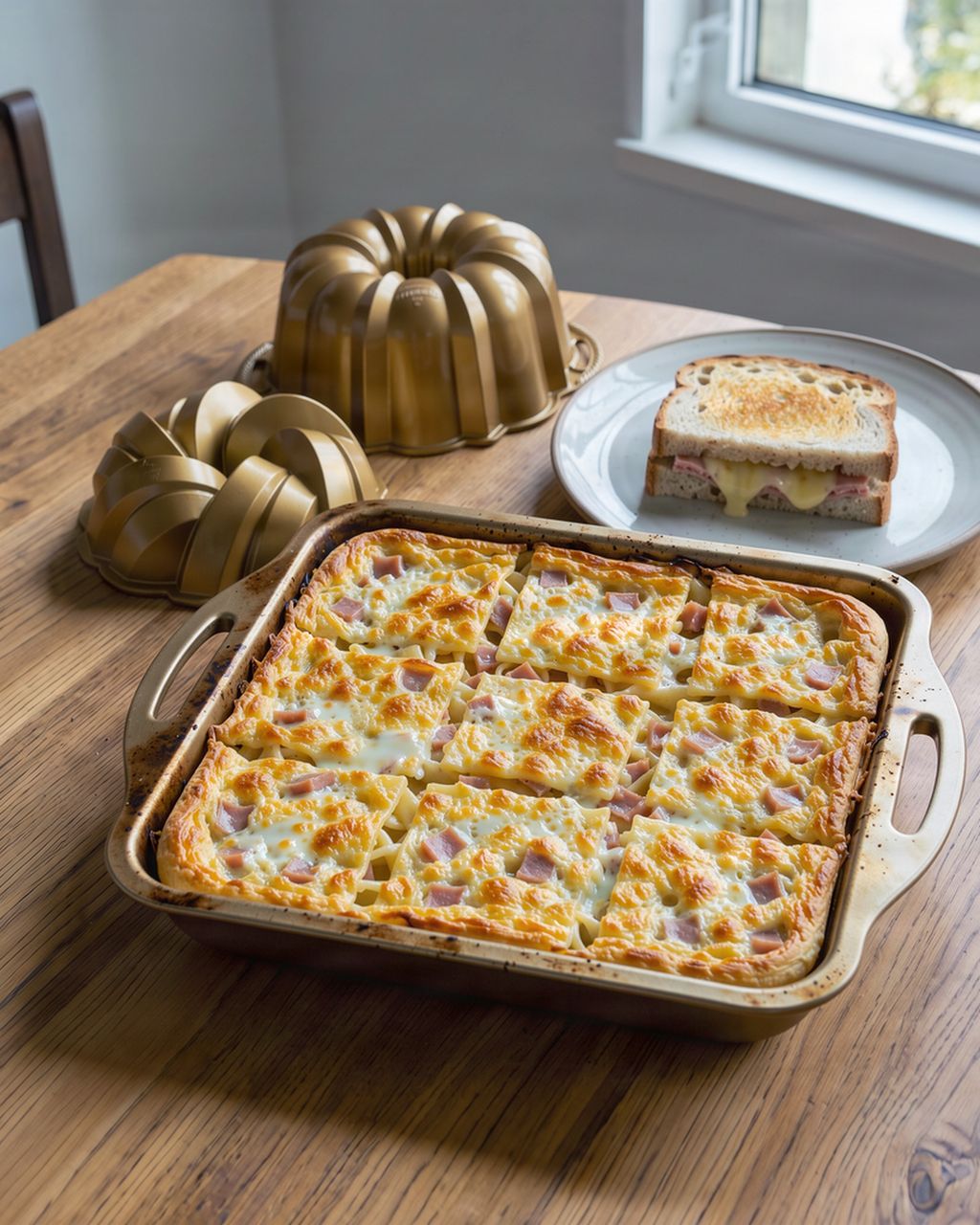
Baked toasts: sandwich bread from the oven with béchamel, ham and cheese.
Bread crumbs: completely dry bread ground for breading and topping.
Cubes for dumplings and toppings for soup: toasted pieces that add crunch or structure.
Which one to choose depends mostly on how hard the bread is. Bread that is only slightly dry, with a crumb that still gives under your finger, is ideal for French toast and garlic toasts, because it soaks up liquid and fat evenly. Firm bread that crumbles as you slice it is best for croutons and panzanella: it holds its shape and won't turn mushy in a salad. And bread your knife can barely get through shouldn't be sliced at all. Turn it straight into bread crumbs.
One rule applies to everything: stale bread is fine, moldy bread is not. The next section explains the difference.
Stale bread that is hard, dry and crumbly but smells normal and has no spots or fuzz on it is fine to eat, so go ahead and use it. Going hard isn't spoilage. Food scientists describe it as starch retrogradation: the starch that bound water and softened during baking slowly recrystallizes as it cools, firms up and pushes the water out. That's why bread goes hard even when it's wrapped and barely drying out.
There's a practical upside you'll use in several recipes below: heat reverses this process for a short while. If you warm a stale slice, the starch softens again and the bread is almost like fresh for a few minutes. Once it cools, though, it hardens again, usually faster, so eat warmed bread right away.
What you shouldn't eat is bread with colored spots, fuzz or a musty, cellar-like smell. Cutting off the bad part doesn't work here.
You can make six basic things from stale bread, and they in turn become the building blocks for other dishes: croutons, garlic toasts, panzanella, French toast, baked toast and bread crumbs. For each you'll find the method, what matters, and where possible a link to a finished recipe from Yumsto.
To make croutons, cut stale bread into cubes, toss them with a little oil and salt, and bake in the oven or brown in a pan until crisp. It's the most versatile way to use up leftovers, and the base for half the other ideas in this article.
Cut cubes about bite-sized, roughly 1.5–2 cm (about ½–¾ inch). Smaller ones burn before they dry out, larger ones stay rubbery inside.
Spread them on a baking sheet in a single layer. If they're piled up, they steam in their own moisture and won't crisp.
Go easy on the oil: the cubes should look glossy, not soaked. A tablespoon is enough for a big handful.
Bake at 180–200°C (350–400°F), tossing halfway. They're done when golden on all sides and don't give when you squeeze one between your fingers.
In a pan it's quicker, but it needs your attention. Heat the pan over medium heat, turn the cubes often, and as soon as they turn golden, tip them onto a paper towel, because they'd keep darkening on the hot pan bottom. Save the seasoning for the end: dried herbs, smoked paprika or grated hard cheese stick to the hot bread and won't burn.
Garlic goes with croutons almost every time, just don't put it in the oven. Stir pressed garlic into the cubes only after they come out, while they're still hot. The heat mellows it and the aroma gets into the bread, whereas in the oven garlic would turn bitter before the bread crisped. This is exactly how the panzanella a little further down is made.
Store cooled croutons in a dry, well-sealed container so they don't absorb moisture. If they soften a little, a few minutes in the oven will crisp them up again.
Topinky (Czech garlic toasts) are slices of stale bread browned until golden and rubbed with garlic right away, and older bread suits them better than fresh because it doesn't soak up as much fat. A classic Czech topinka is fried in a pan on both sides in oil or lard until the surface is deep golden and crisp, then, still hot, rubbed with a cut clove of garlic and salted. The rough toasted surface works like a fine grater: the garlic rubs into it, and the hot bread soaks it up.
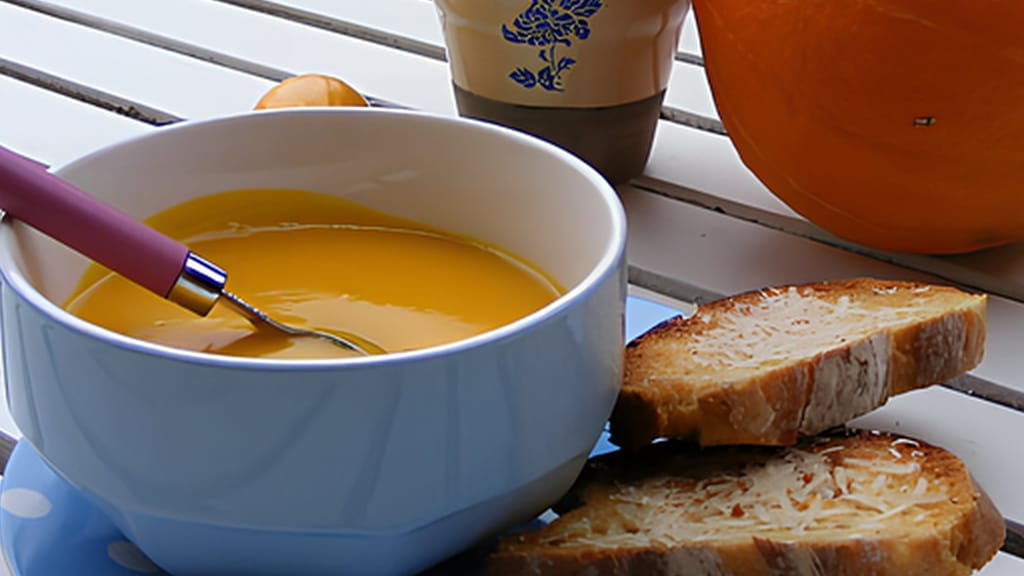
Without fat in the pan, you can make toasts in a toaster or the oven. Toasts like that, made from ciabatta or other white bread, go with pumpkin cream soup with garlic toasts: a velvety soup and a crisp garlic-rubbed slice complement each other.
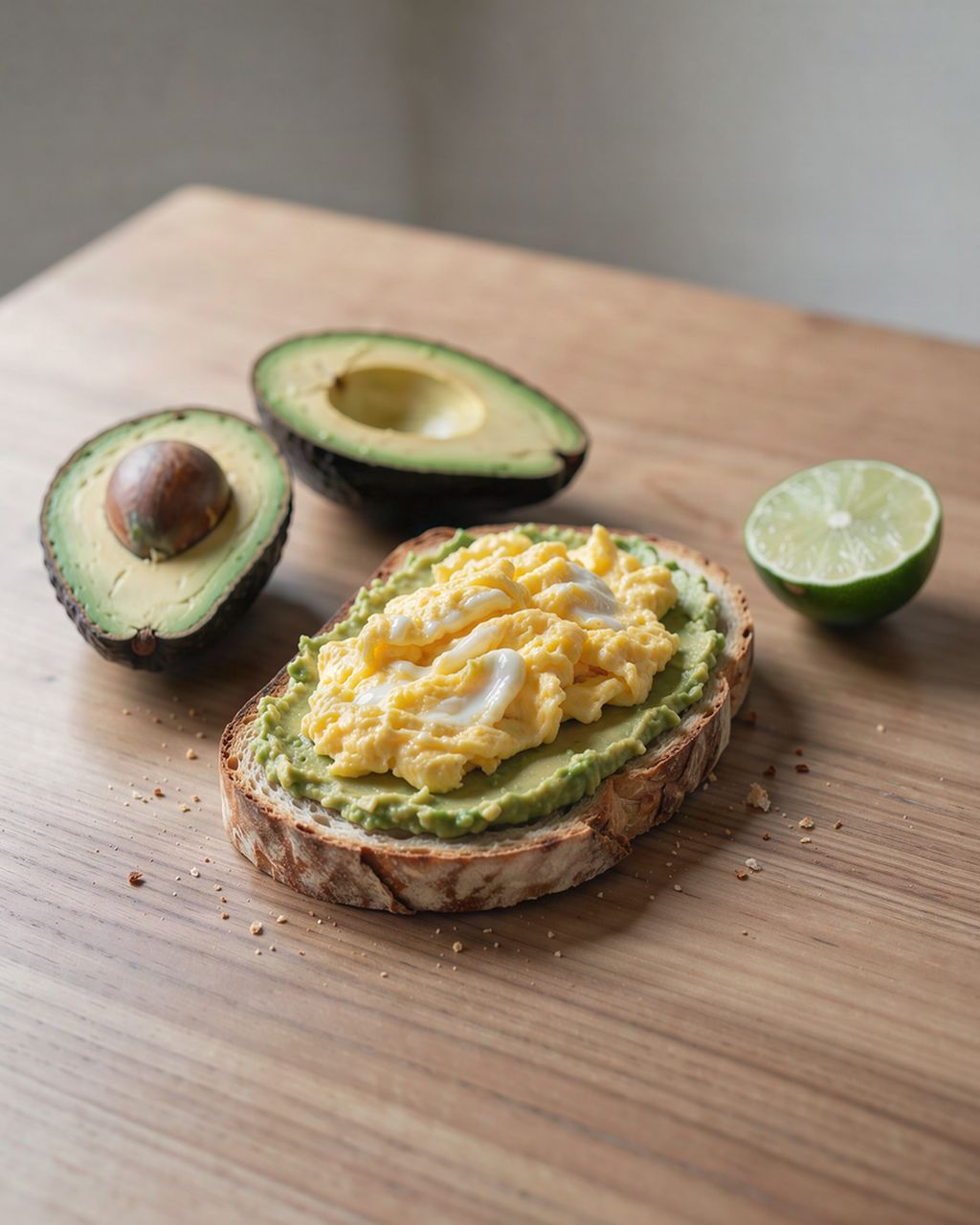
A topinka doesn't have to stop at garlic. Spread a toasted slice with a spread, such as an egg spread that isn't gluey, and a quick snack becomes dinner. A tip on thickness: cut slices about a centimeter (½ inch) thick. Thinner ones burn quickly in the pan, thicker ones stay hard in the middle and are unpleasant to chew.
Pumpkin cream soup with garlic toasts
Pumpkin cream soup with ciabatta garlic toasts
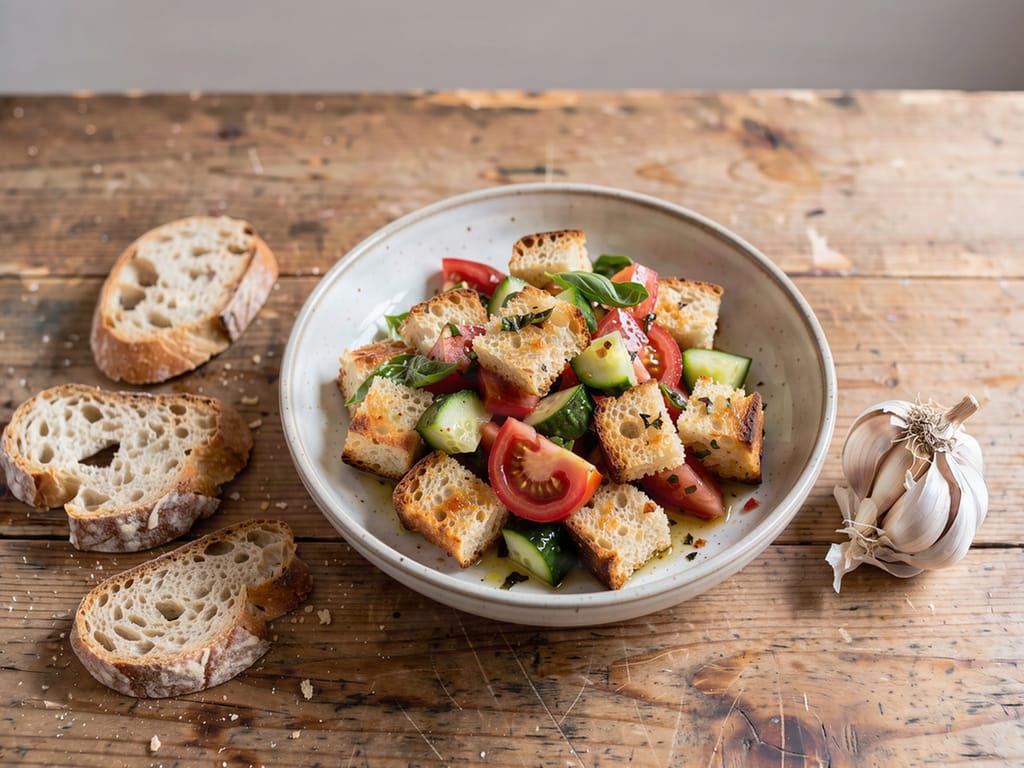
Panzanella is a Tuscan salad in which stale bread is the main ingredient: toasted cubes soak up tomato juice and olive oil while staying firm. It only works with bread that is truly hard. Fresh bread would collapse into mush in the tomatoes.
Panzanella, an Italian bread salad is ready in 30 minutes and serves three. The cubes of bread, even older sandwich bread, are toasted in the oven and tossed with garlic while still hot. Then they have to cool, because warm bread would quickly go soft in the salad and the basil would turn black.
What panzanella depends on:
The ratio. The recipe uses 250 g of bread to 500 g of tomatoes, so roughly two parts tomatoes to one part bread. Fewer tomatoes means a dry salad.
Ripe tomatoes. Their juice is effectively the dressing. Feel free to salt the cut tomatoes a few minutes ahead, and they'll release more juice.
Time. Let the mixed panzanella rest a little so the bread soaks up the juices, but not so long that it goes completely soft. A cube should have a tender surface and still a bit of resistance inside.
The same principle, but heartier and more of a lunch, applies to panzanella salad with croutons. Broken-up knäckebrot (crispbread) plays the role of the croutons, and it's stirred in just before serving so it stays crisp.
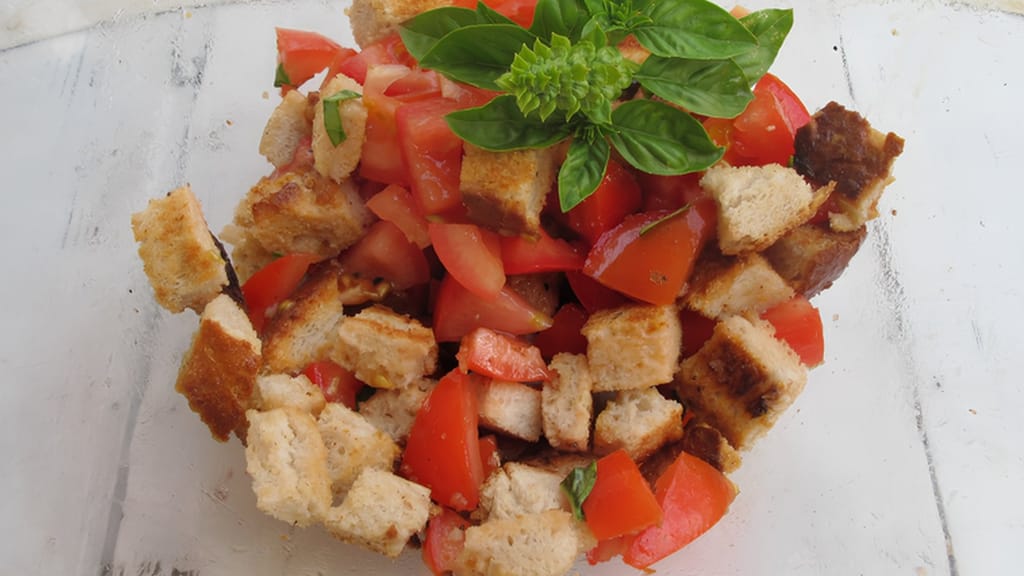
Panzanella – italian bread salad
Panzanella, an Italian salad made with stale bread, tomatoes and basil
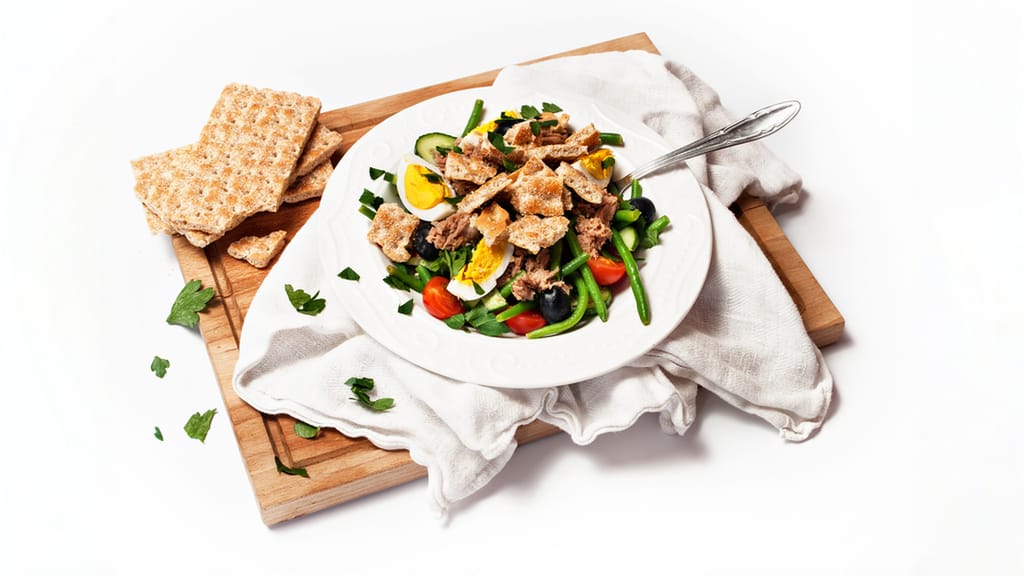
Panzanella salad with croutons
Panzanella salad with knäckebrot croutons, egg and tuna
French toast is slices of stale bread dipped in beaten egg and pan-fried until golden. The French call it "lost bread" (pain perdu) because it's made from leftovers that would otherwise go to waste: a slightly dry slice soaks up the egg mixture without turning soggy, whereas a fresh one would fall apart in it.
French toast with skyr and mixed berries is a breakfast for one in 15 minutes: sandwich bread in egg with cinnamon or vanilla, browned and served with skyr, strawberries, blackberries and almonds.
A few things decide whether the toast turns out tender or rubbery:
Soak briefly. For a slightly dry slice, turning it once in the egg mixture is enough; leave a harder one in the egg a moment longer. A slice that drips after you lift it out is oversoaked.
Medium heat. On high heat the surface burns and the egg inside stays raw; on low heat the toast dries out.
Thicker slices. Slices about 1.5 cm (½ inch) thick hold their shape and stay creamy inside.
And if you have a hard vánočka (Czech braided Christmas bread) left after the holidays, you'll find ideas in a separate article on what to do with hard vánočka.
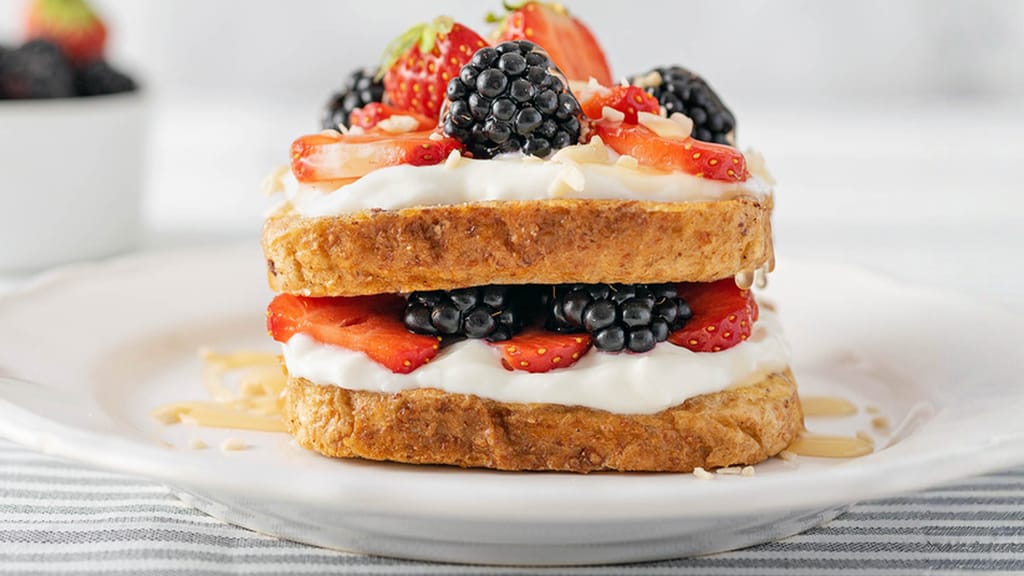
French toast with skyr and berries
French toast with skyr and mixed berries
A baked toast is the quickest hot dinner from stale sandwich bread: you brown the slices first so they don't get soggy, then top them and bake with cheese. Pre-toasting is exactly the step that makes older bread better than fresh, because it stays firm under the sauce.
The star of the lot is croque madame, a baked toast with ham, cheese and egg: pre-toasted sandwich bread with béchamel, ham and Gruyère, crowned with a fried egg. For two, it's ready in 39 minutes.
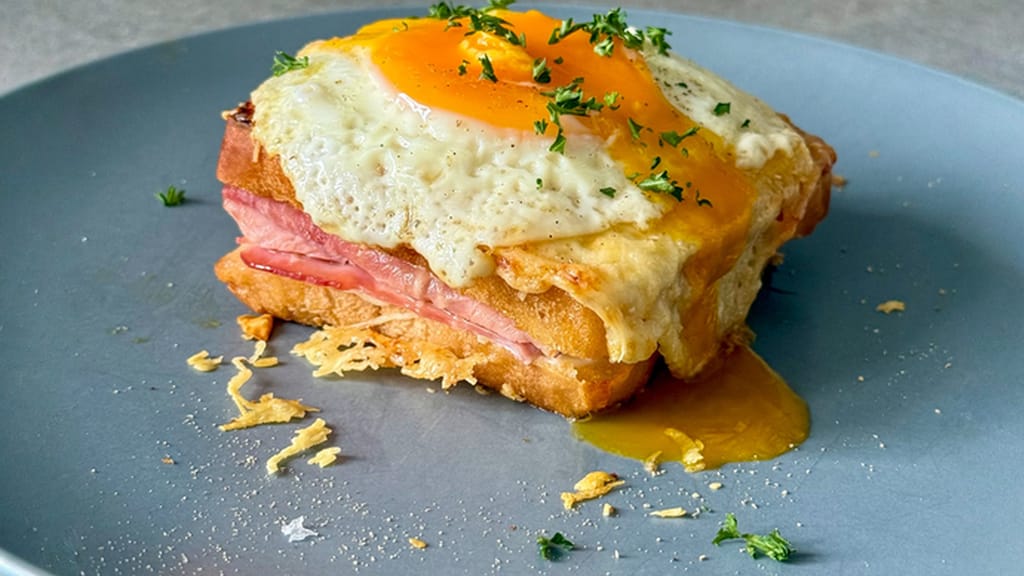
Croque madame: toasted ham and cheese sandwich with a fried egg
Croque madame, a baked toast with ham, cheese and egg
You make bread crumbs from bread so hard it can no longer be sliced: break it up, dry it further in the oven and grind it in a blender or grate it. It's the last stop for any leftover, but a full-fledged one.
Break the bread into smaller pieces and spread them on a baking sheet. Put them in the oven on a low temperature, around 100°C (210°F), and let them dry until they're dry all the way through; they don't need to turn golden. Grind the cooled pieces in a blender or grate them on a coarse grater and sift, then grind the coarser bits again. What matters is that the bread is truly dry: a piece that is damp inside will clump together in the jar and the crumbs will spoil.
Homemade bread crumbs are coarser and more uneven than store-bought, which gives a coating more crunch. You can mix them straight away with herbs and cheese, as in crispy zucchini fries with a Parmesan crust, which are baked in the oven instead of deep-fried.
Crumbs from wheat-rye bread are darker and stronger in flavor. They're great for schnitzel, but don't use them for sweet dishes. Crumbs from white bread belong there.
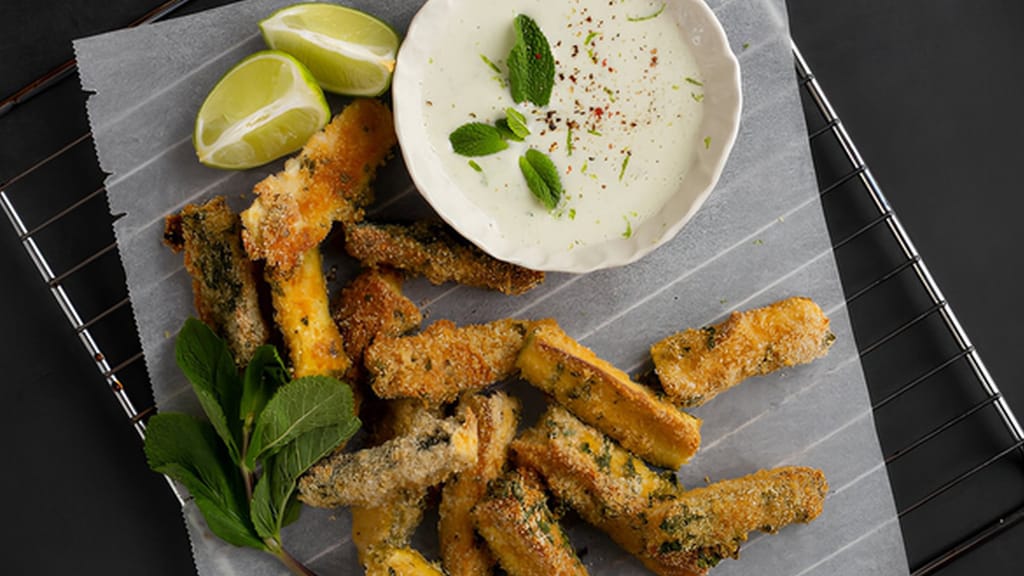
Crispy zucchini fries with parmesan crust
Crispy zucchini fries with a Parmesan bread-crumb crust
With stale bread you mostly cook soups, whether you add it as croutons and toasts or use it to thicken the soup itself, and also bread dumplings and meatloaf, where soaked bread has always been added. Czech cooking counts on hard bread: caraway soup with fried cubes, mushroom soup with toasted bread rolls, or a dumpling with cubes of rolls are classics that make no sense without leftover bread.
Always add croutons and toasts to soup at the table, just before eating. In the pot they soak up liquid and nothing is left of the crunch they're there for.
Caraway soup with croutons is the cheapest and fastest way to turn bread into a hot lunch. Caraway soup with croutons is ready in 35 minutes for four, and toasted cubes of ciabatta are sprinkled in at the table. Feel free to replace them with cubes from any stale bread; the method is the same as for the croutons above.
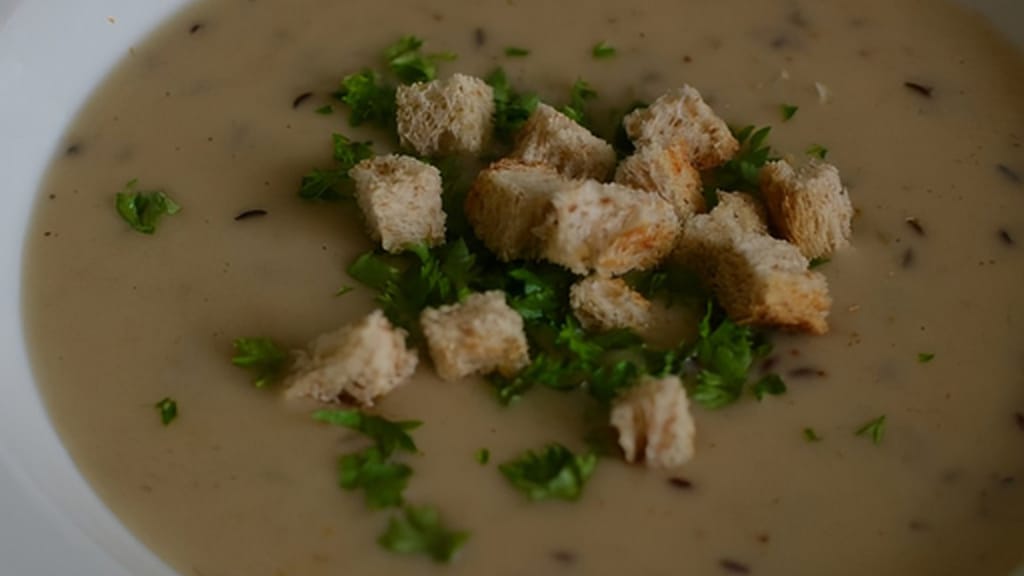
Caraway soup with croutons
Grandma Maruška's caraway soup with croutons
A smooth cream soup and crisp croutons is a combination that works through contrast: the smoother the cream, the more the crunch of the bread stands out. That's why stale bread, toasted until crisp, suits cream soups so well. You'll find more cream soups that croutons go with in the article on cream soups.
A delicate cream of zucchini soup with crispy croutons takes 26 minutes, and you garnish it on the plate with toasted baguette slices or croutons.
A thick cream of roasted carrot soup is a weekend version that takes about an hour and a half, with cubes of sandwich bread browned in butter until crisp. Older sandwich bread is ideal for this, because it absorbs the butter from the pan only on the surface.
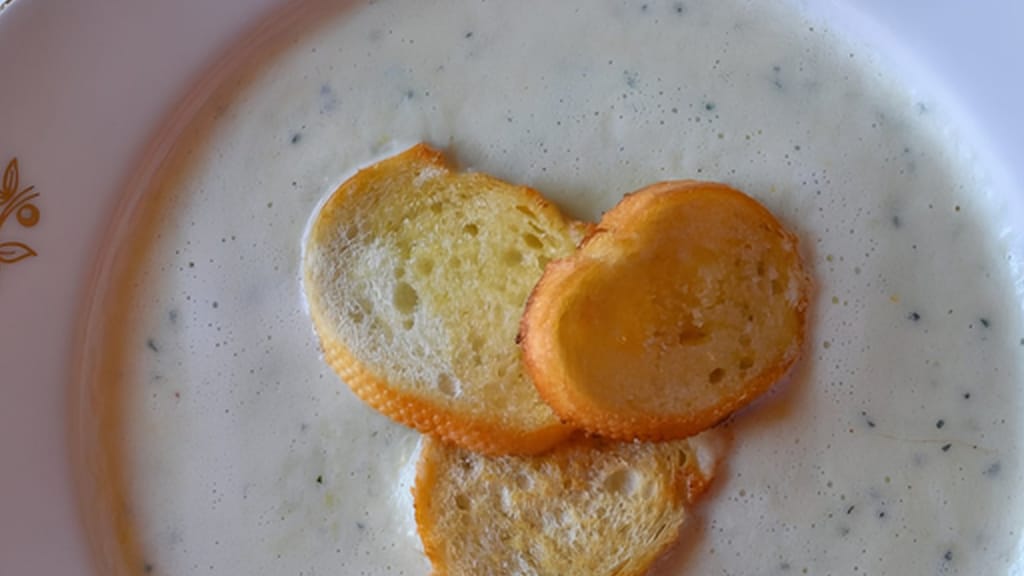
Creamy zucchini soup with crunchy croutons
Delicate cream of zucchini soup with crispy croutons
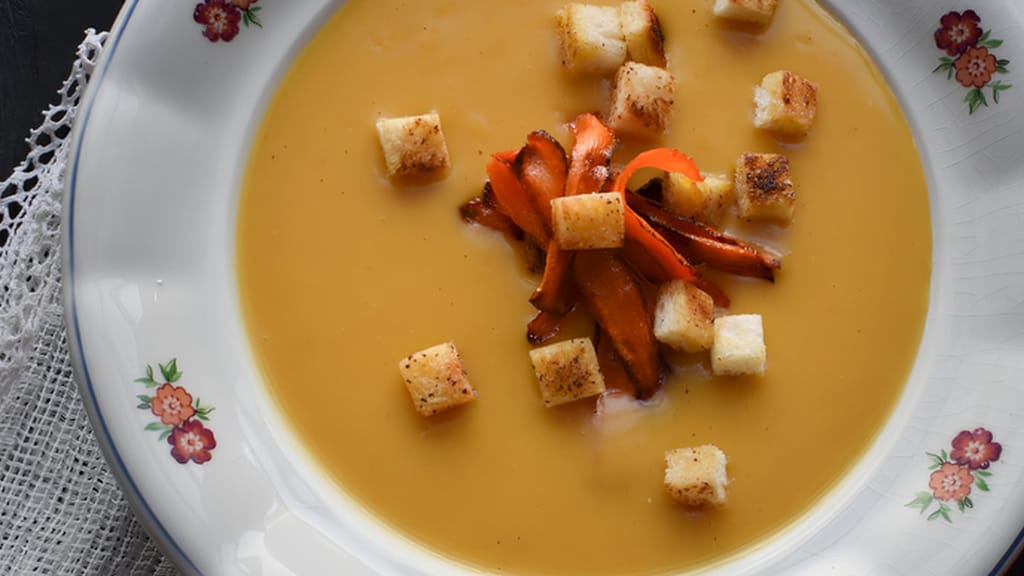
Thick and creamy roasted carrot soup
Thick cream of roasted carrot soup with sandwich-bread croutons
The toasted roll in mushroom soup shows that croutons don't need fat. In mushroom soup, housky (Czech white bread rolls) are cut into small cubes and toasted in a dry pan until golden, turning often so they don't scorch, and sprinkled into the bowls just before eating. Instead of housky, any stale white bread will do: rohlíky (Czech crescent rolls) or a piece of baguette.
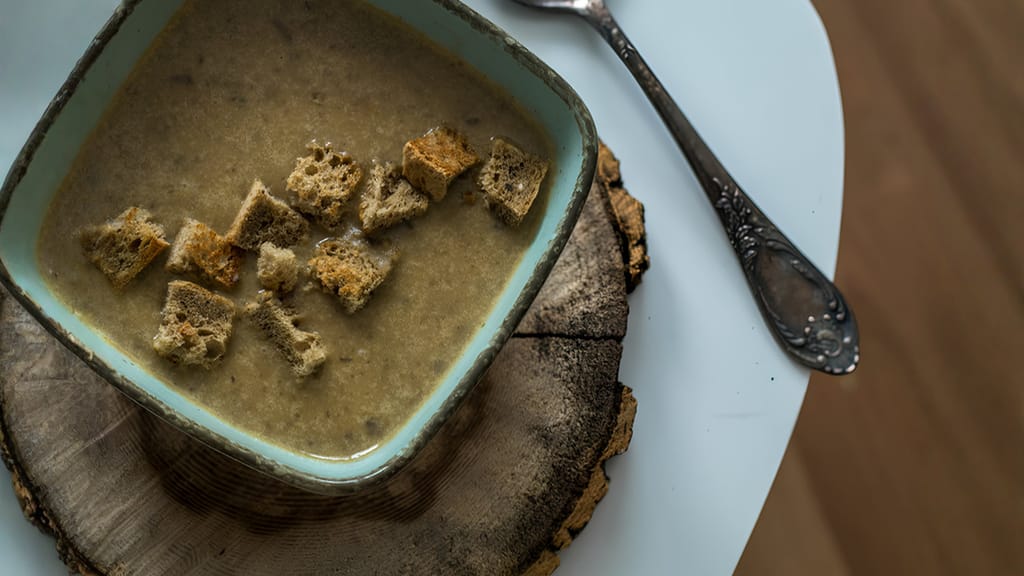
Mushroom soup
Mushroom soup with housky toasted in a dry pan
French onion soup stands on a layer of cheesy croutons baked right on top of the soup. In French onion soup, baguette croutons with Gruyère are laid on the soup in ovenproof bowls and briefly baked under the broiler. Croutons from stale bread have a clear advantage here: they're dry enough to carry the cheese and won't sink straight into the soup.
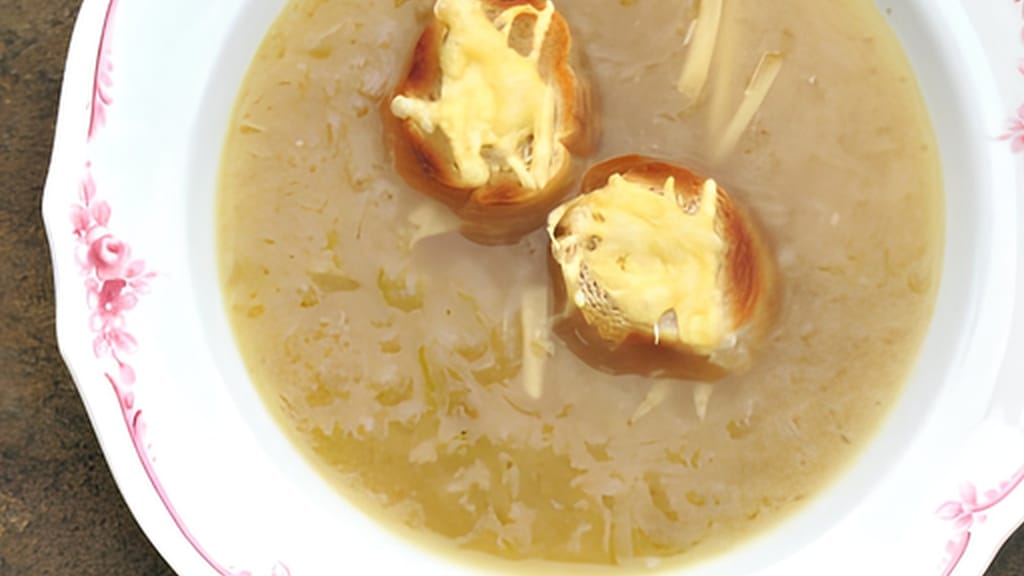
Almost-effortless french onion soup
French onion soup with baked baguette croutons and Gruyère
Houskový knedlík (Czech bread dumpling) is a dish where a stale roll belongs right in the recipe: cubes of bread in the dough give the dumpling its typical structure and soak up the sauce. This is exactly how the recipe for beef goulash with chili and a bread dumpling does it, with cubes of an older roll, crust included, gently worked into a yeast dough.
The roll must be truly stale. Fresh bread would absorb moisture in the dough and the dumpling would turn gluey. If you cook extra dumplings, you'll find how to freeze them in the article how to freeze dumplings.
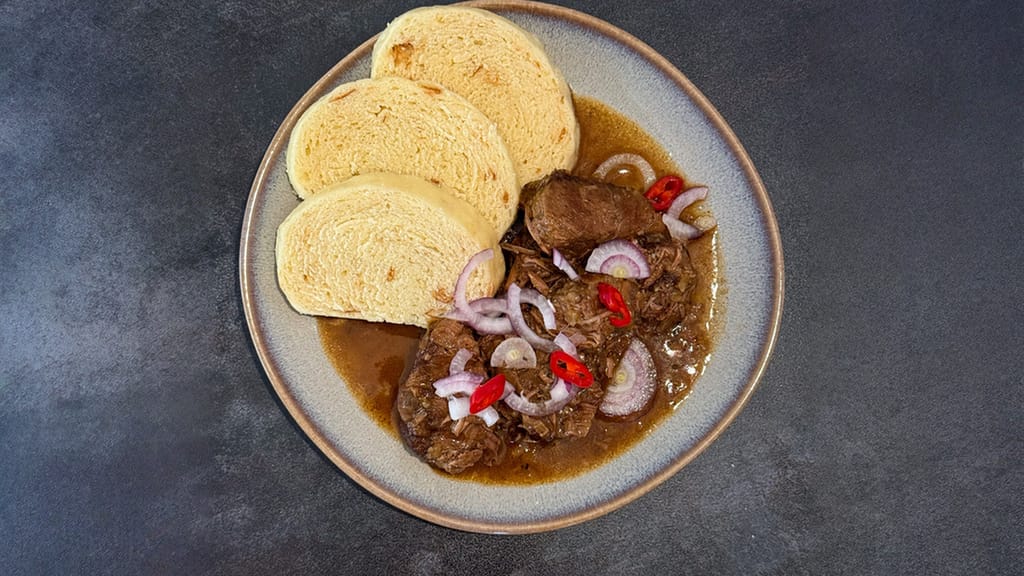
Classic czech beef goulash with chilli and bread dumplings
Beef goulash with chili and a bread dumpling made with a stale roll
Stale bread can also do invisible work in a dish: it thickens soup and keeps ground meat juicy. These are the two oldest uses of leftover bread there are.
Bread soup starts with briefly sautéing cubes of stale bread with onion and garlic, covering them with broth and letting them simmer until the bread falls apart and thickens the soup. Caraway or marjoram gives it aroma, and you fine-tune the thickness with more broth.
For meatloaf and meat patties, use a stale roll soaked in milk and squeezed out well. The roll holds the juices in the meat, so the loaf stays tender and doesn't fall apart. Here older bread is actually better than fresh, because it absorbs the milk evenly and doesn't smear into the meat.
Recipe of the week, one tip that saves you time and one deal from the shop. Unsubscribe in one click.
The next issue goes out on Thursday, November 26.
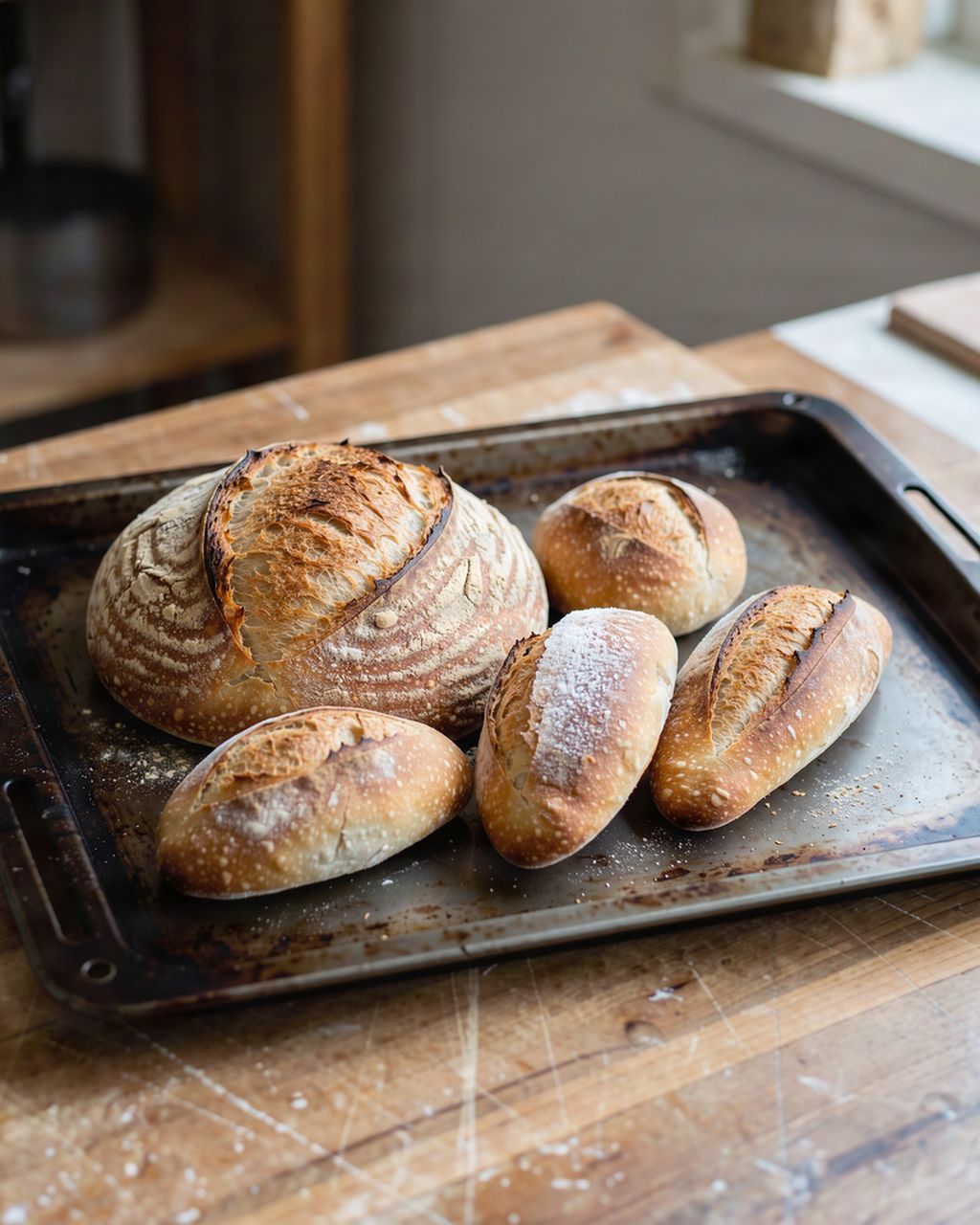
Wheat-rye bread with a firm crumb works best for croutons and garlic toasts, and white bread such as a baguette or sandwich bread for French toast and sweet bread crumbs. Each type behaves differently, and once you know how, you won't throw out even the crust.
Wheat-rye bread, our everyday staple, is the workhorse. It has a firm crumb and a pronounced crust, so it makes the best garlic toasts, croutons for soup and a more rustic panzanella. It goes hard more slowly than white bread.
Baguette and other white breads have a fine, airy crumb that quickly soaks up liquid. Ideal for French toast, croutons for salads and bread crumbs that can also be used for breading sweet dishes. It goes hard quickly, so you usually have more leftovers.
Sandwich bread is soft and nearly crustless. It suits French toast, baked toasts and panzanella, as the recipes above show, but croutons made from it tend to be more delicate and darken faster.
Ciabatta and baguette have big holes and a thin, crisp crust. They make the prettiest croutons for soups and toasts, as in the caraway soup or the pumpkin cream soup.
Rye and sourdough bread is dense and tangier. Croutons from it are hard and assertive, great in a cream soup, and French toast made from it is better savory.
Feel free to combine different kinds of bread. For croutons or bread crumbs you can mix leftovers of anything, just cut them into equal-sized pieces so they brown evenly.
Store bread at room temperature in a bread box or cloth bag, and freeze whatever you won't manage to eat. Don't put it in the fridge: the fridge slows mold but speeds up going hard. According to the UK's Quadram Institute and a study published in 2017 in the journal Food Chemistry, fridge temperatures speed up starch crystallization more than room temperature or the freezer, so bread in the fridge goes hard sooner than on the counter.
The freezer, by contrast, slows hardening considerably. Freeze bread sliced, so you can take it out slice by slice, and well wrapped, so it doesn't absorb odors or dry out. How to handle it afterward so it's like fresh again, you'll find in the article how to thaw bread and baked goods.
You save the most work if you decide ahead of time. If you can see you won't finish a loaf, cut the rest straight into cubes and freeze them in a bag. You can tip the frozen cubes straight onto a baking sheet and bake croutons without thawing, just give them a few extra minutes in the oven. And bread that has already gone hard but is otherwise fine can simply be left out in the open air to dry out completely. For bread crumbs, that's exactly what you need.
Yes, but only for a short while: sprinkle a slice or a whole loaf lightly with water and put it in a hot oven for a few minutes. The heat softens the firmed-up starch again, and the bread is almost like fresh for a little while. Once it cools, though, it hardens again, usually faster, so eat it right away.
Yes, stale rolls make excellent croutons. They're just airier and more delicate than bread, so they darken faster. Cut them into cubes of about 2 cm (¾ inch) so they don't burn before they dry out, and bake them in a single layer at 180°C (350°F) for about 8–10 minutes, tossing halfway. They're done when golden on all sides and don't give when you squeeze one between your fingers.
Yes, you can freeze hard stale bread, but the freezer won't soften it: it freezes exactly as it is. It's worth doing if you want to use it later for croutons, bread crumbs or soup, where hardness doesn't matter. Freeze it already cut into cubes or slices in a well-sealed bag, so you can take out only as much as you need.
One recipe worth heating the oven for, one tip, and one deal from the shop. Nothing else.