Czech Sauces: Tomato, Dill, Mushroom and Svíčková Recipes, Plus How to Make the Base
Czech Sauces Explained: Dill, Tomato, Svíčková and Mushroom Sauce
Updated Nov 20, 2026
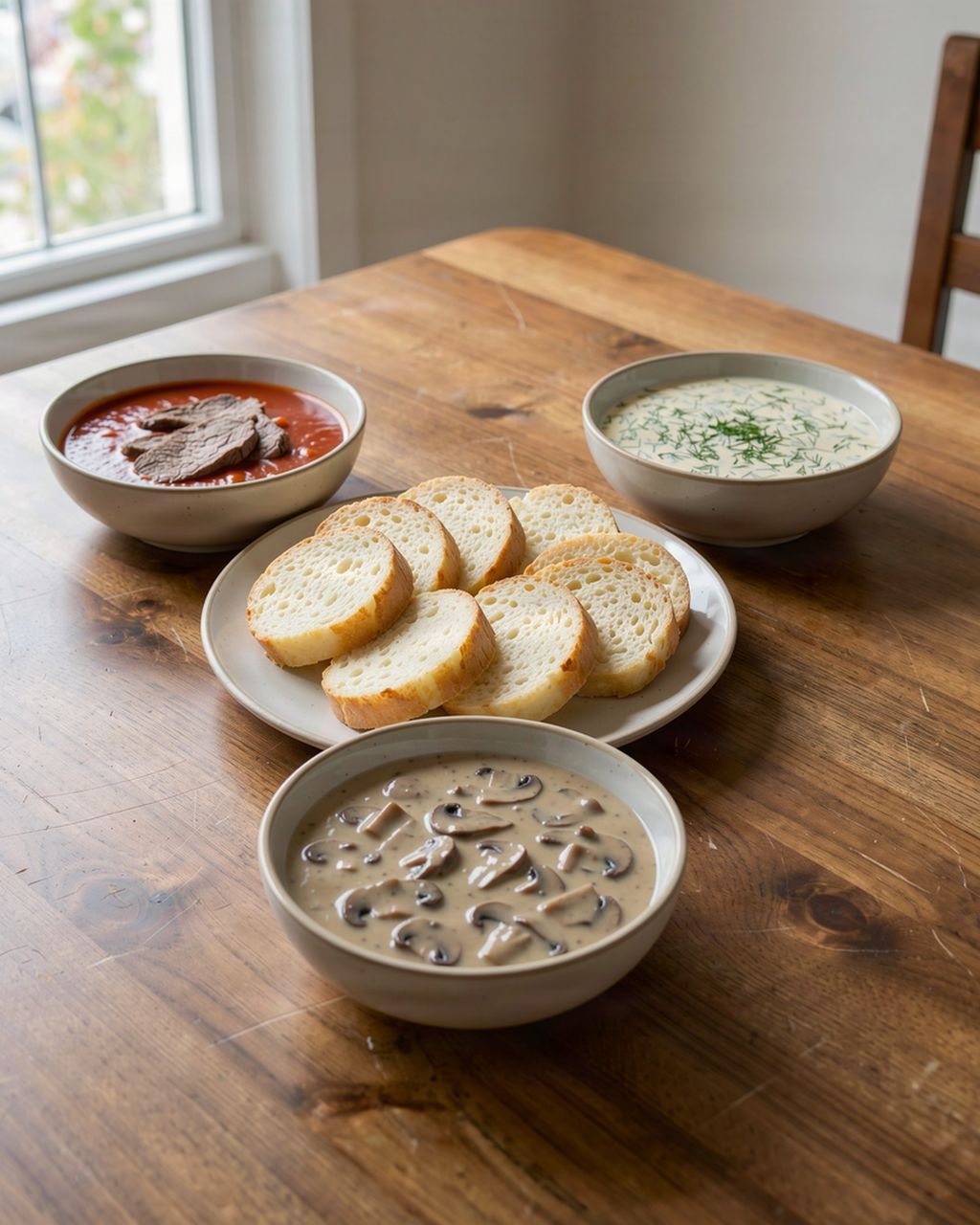
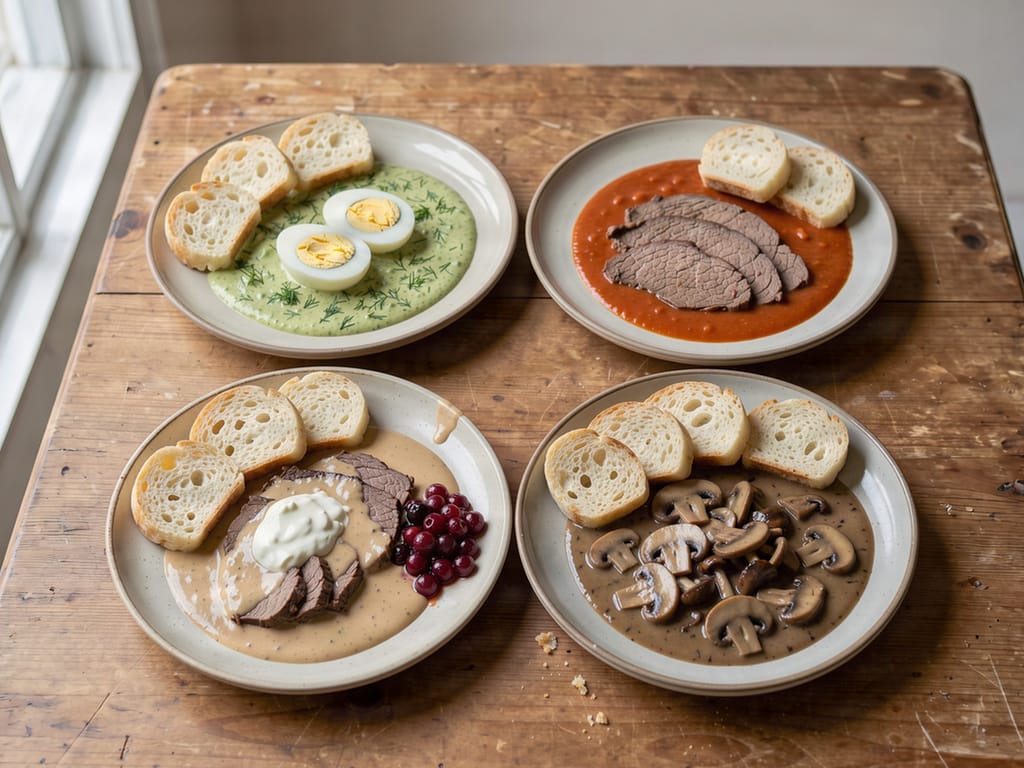
The four Czech sauces you will meet most often are koprová (creamy dill sauce), rajská (sweet tomato sauce), svíčková (a root-vegetable cream sauce) and houbová (mushroom sauce), and almost all of them come with sliced bread dumplings. Each is thick, generous and meant to be mopped up. Here is what each one tastes like, what goes with it, and why Czechs call a whole category of lunches simply sauce with dumplings.
Ask a Czech what a proper lunch looks like and there is a good chance the answer involves omáčka (sauce) and knedlíky (dumplings). Czech home cooking has a whole family of thick, creamy sauces, and they are rarely served with a dry side. The default partner is the sliced bread dumpling, houskový knedlík, which works like a sponge.
The sauce is the main event. A plate typically holds a slice or two of meat, a generous ladle of sauce over and around it, and four to six slices of dumpling. You eat by dragging each dumpling slice through the sauce, so a good Czech sauce is thick enough to cling and plentiful enough to last until the last slice.
This is everyday food, not only restaurant food. School canteens, workplace cafeterias and pub lunch menus (polední menu) rotate through the same few sauces every week, which is why almost every Czech adult has strong opinions about at least one of them. Our overview of traditional Czech cuisine shows where these sauces sit among the other classics.
Recipe of the week, one tip that saves you time and one deal from the shop. Unsubscribe in one click.
The next issue goes out on Thursday, November 26.
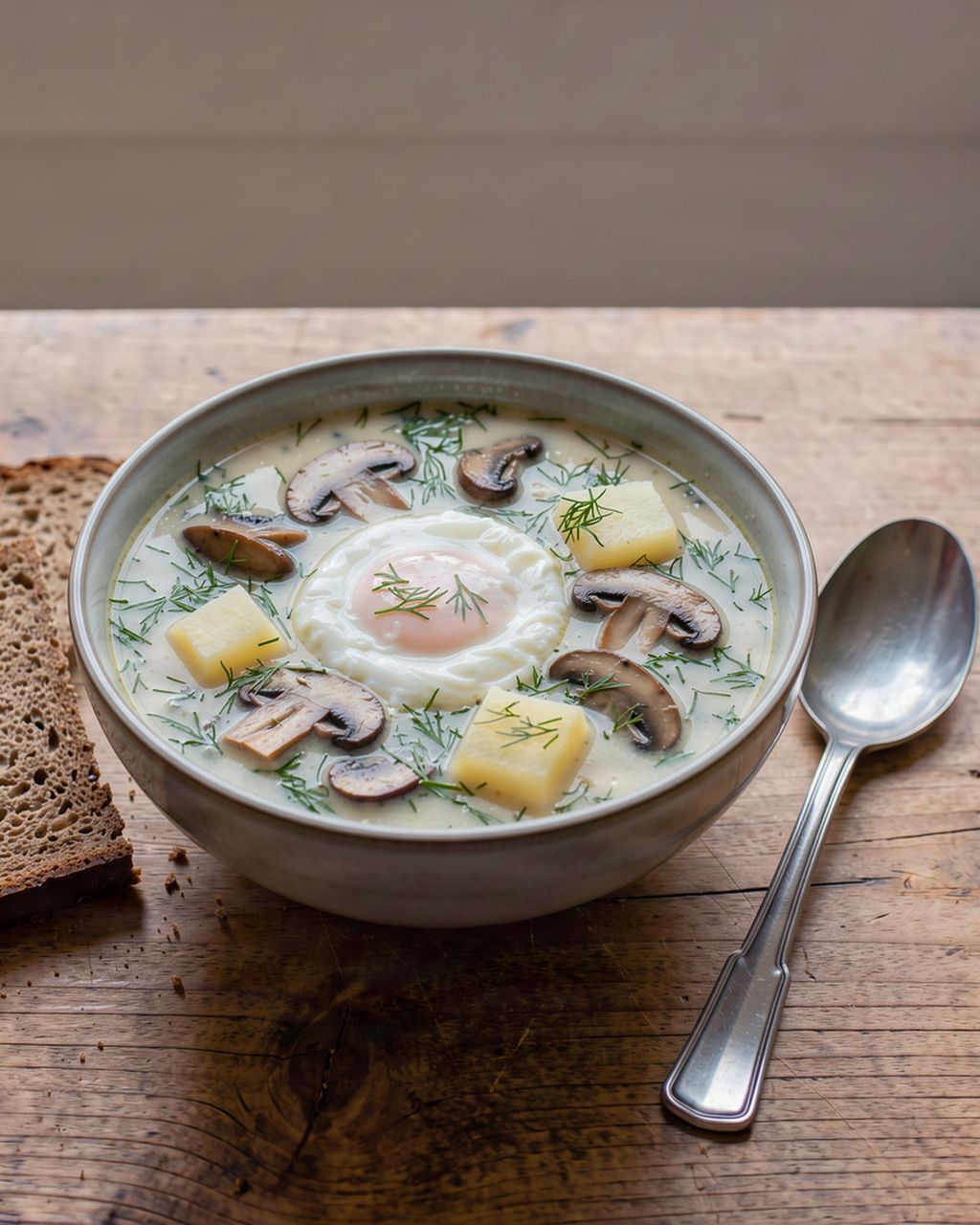
Koprová omáčka, often shortened to koprovka, is a pale, creamy sauce flavored with a lot of chopped dill. The base is usually a light roux of butter and flour, thinned with beef or vegetable stock (or the cooking liquid from the beef), then finished with cream or sour cream. Many cooks season it at the end with a little sugar and vinegar or lemon juice, so it tastes gently sweet-sour rather than flat.
It is served in two classic ways:
With boiled beef and bread dumplings. The beef is simmered first, and its stock goes into the sauce.
Meatless, with boiled potatoes and an egg. A hard-boiled egg, halved, or a poached egg sits on top. This version is a common Friday or canteen lunch.
Koprovka is famously divisive. Many Czechs remember it from school lunches, and it is one of those dishes people either ask for on their birthday or refuse to eat at all.
If you are cooking it, fresh dill makes the biggest difference. Dried dill gives color but much less aroma. As a rough guide for the thickness, a medium sauce uses about 30 g of butter and 30 g of flour (about 4 level tablespoons) per 500 ml of liquid.
Rajská omáčka (often just rajská) is a smooth, orange-red sauce that surprises most visitors because it is clearly sweet. It is not a pasta sauce. The base is beef stock and tomato paste (not fresh tomatoes, which give a paler color), thickened with a roux and simmered with whole spices. Recipes commonly use allspice and bay leaf, and many add cloves and a piece of cinnamon. Sugar goes in to balance the acidity of the paste, and some cooks finish it with a little cream.
What it is served with:
Boiled beef and bread dumplings, the classic pairing.
Meatballs (masové kuličky), which are simmered in the sauce. This is a family and canteen favorite.
Pasta, mainly in canteens and in a hurry, though for many Czechs it is still second best to dumplings.
The flavor sits somewhere between a mild ketchup and a spiced stew. If you grew up with Italian tomato sauces, think of rajská as its own thing rather than a variation.
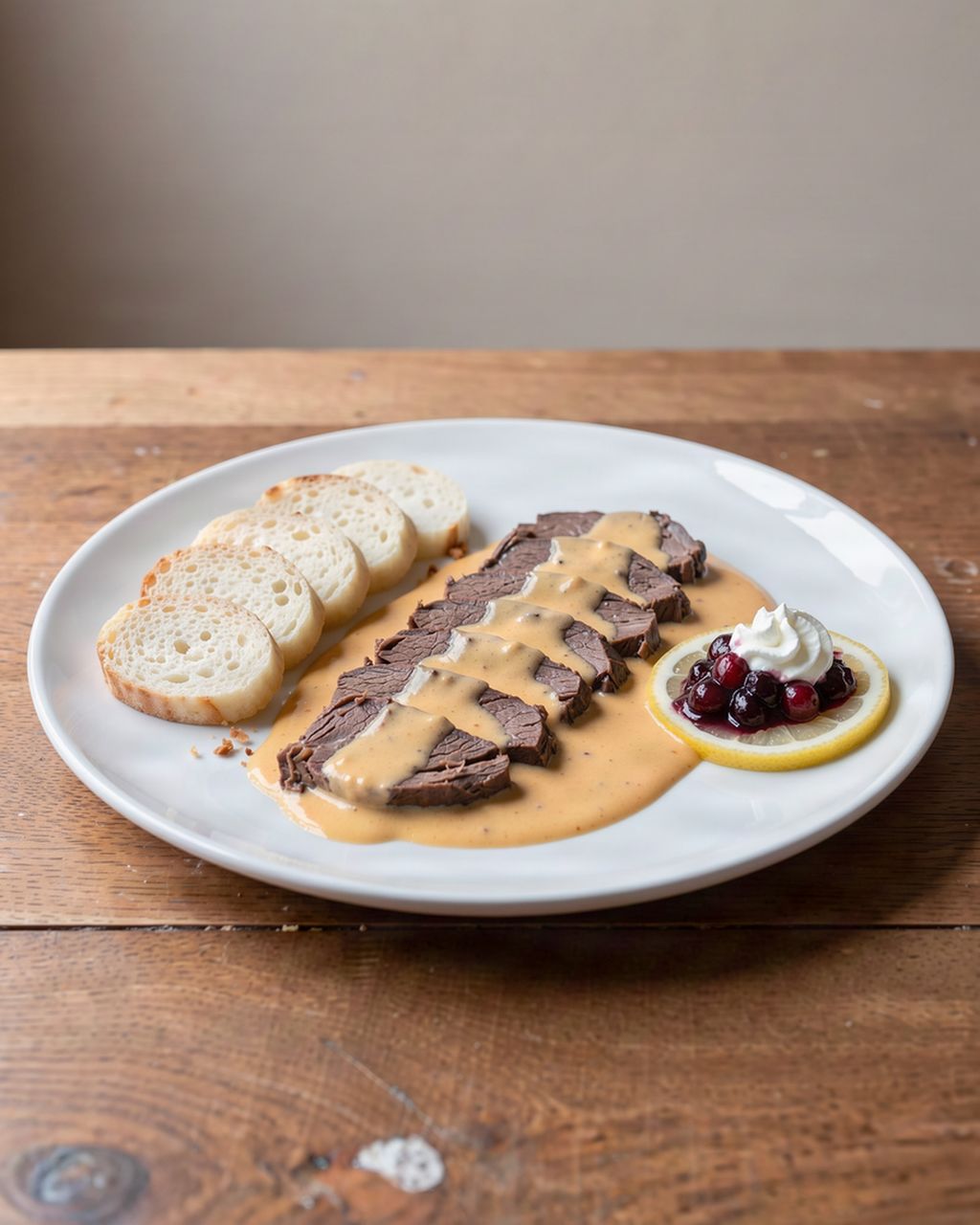
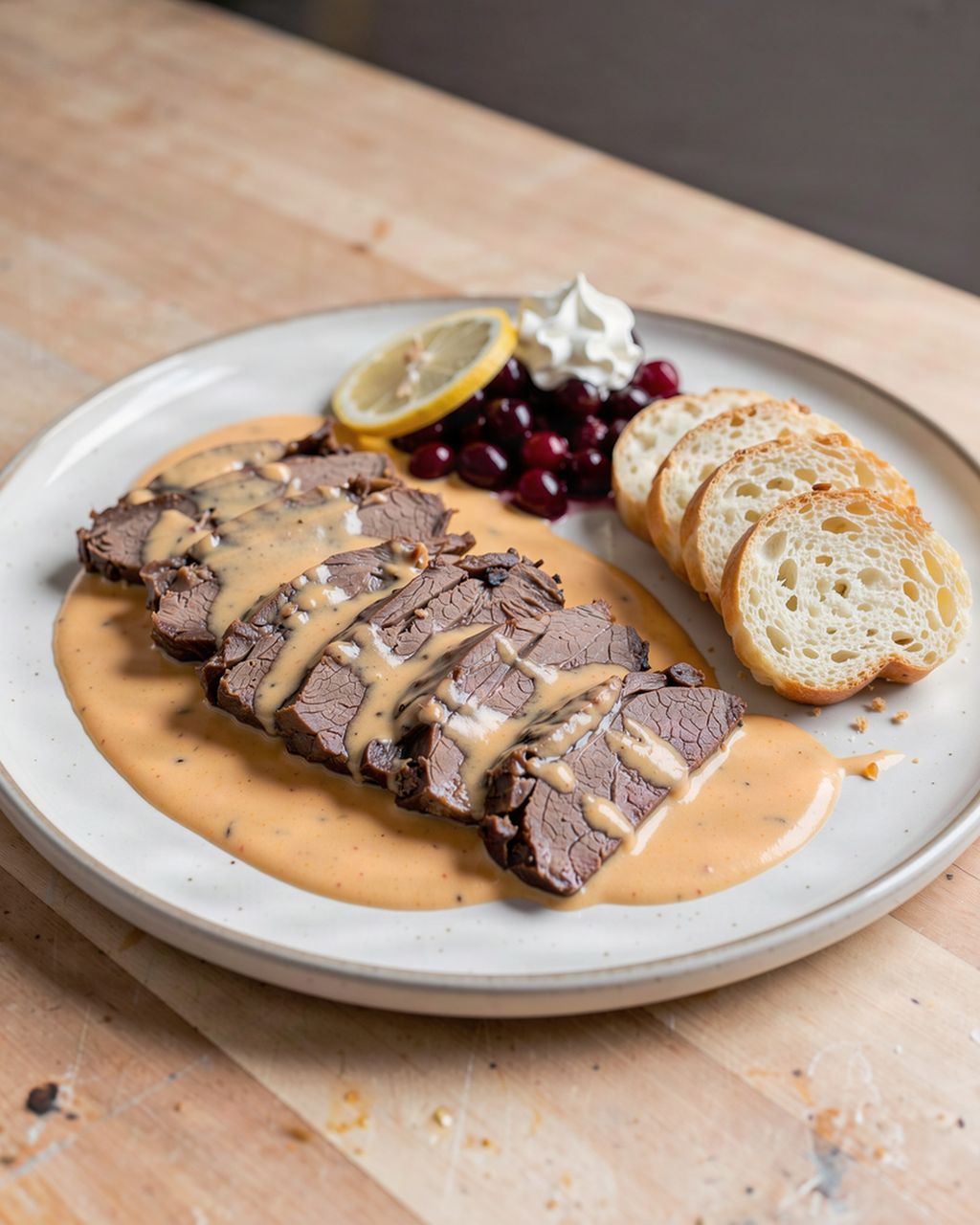
Svíčková na smetaně (beef in cream sauce) is the dish most Czechs would put at the top of the list. The beef, traditionally a lean cut (the name refers to the tenderloin, though many home cooks use a cheaper lean cut such as round), is marinated (covered, in the fridge) and roasted with root vegetables: carrot, parsley root and celeriac, with onion and whole spices. The vegetables are then blended with the cooking juices and cream into a smooth, pale orange sauce.
It tastes creamy, slightly sweet from the roots and slightly tangy from vinegar or lemon. On the plate it comes with bread dumplings, a spoonful of whipped cream, cranberry sauce and a slice of lemon. That combination of sweet, sour and savory is what makes it unlike any other sauce in this list.
It is also the most demanding of the four. If your sauce ends up too sharp, our guide on why svíčková sauce tastes sour explains how to balance it, and svíčková without roux covers thickening it with the vegetables alone.
Houbová omáčka is a creamy mushroom sauce, and in Czech kitchens it often starts with wild mushrooms. Foraging is a national hobby, so many households have a jar of dried mushrooms in the pantry, and a small handful of dried porcini gives the sauce a deep, earthy flavor that button mushrooms alone cannot. If you do not forage with someone experienced, use shop-bought dried porcini, and never cook a wild mushroom you have not positively identified.
The usual method is onion softened in butter, sliced fresh mushrooms (and soaked dried ones with their strained soaking liquid), a light roux, stock, and cream at the end. Caraway seeds are a common Czech touch.
It is served with bread dumplings, either on its own as a meatless lunch or with beef or pork. If you have a glut of mushrooms, our guide to drying mushrooms at home shows how Czech cooks put them away for sauces like this one.
The four above are the core, but a Czech lunch menu often lists a few more:
Křenová omáčka: a creamy horseradish sauce, usually with boiled beef.
Znojemská: beef in a brown sauce with chopped pickled gherkins, named after the town of Znojmo, which is known for its gherkins.
Cibulová: an onion sauce, often with beef or sausages.
UHO: short for univerzální hnědá omáčka (universal brown sauce), the joke name for the all-purpose canteen gravy that turns up under everything.
Almost all of them follow the same pattern: a roux, a stock, cream or sour cream, and dumplings on the side.
You can cook all of these with supermarket ingredients in the US, UK, Canada or Australia. A few notes:
Flour: plain flour (UK, AU) or all-purpose flour (US) works for the roux.
Cream: Czech recipes often say smetana na vaření (cooking cream, around 12%) or smetana ke šlehání (whipping cream, at least 30%, usually 30–33%). Half-and-half (US, 10.5–18%) or half cream (UK, 12%) is closest to the first; light or single cream (18% and up) also works but is a little richer. Heavy cream (US, 36% and up) or double cream (UK, 48% and up) is richer than the second, so you may want less.
Sour cream: use full-fat. Lower-fat versions split more easily when heated.
Stock: beef stock is the default for dill, tomato and svíčková sauces.
If a cream sauce turns grainy, the cause is usually heat or acid. Our guide to curdled cream sauce explains how to rescue it.
Svíčková is the best-known Czech sauce and the one most Czechs name as a favorite, though dill sauce and sweet tomato sauce are everyday staples. All three are traditionally served with sliced bread dumplings.
Czech dill sauce (koprová omáčka) is served with boiled beef and bread dumplings, or in a meatless version with boiled potatoes and a hard-boiled or poached egg. It is creamy, mildly sour and very dill-forward.
No, Czech rajská is a different sauce from Italian tomato sauce. It is built on tomato paste and beef stock, thickened with a roux, sweetened noticeably and spiced with whole spices such as allspice and bay leaf, then served with beef and dumplings rather than pasta.
UHO stands for univerzální hnědá omáčka, the universal brown sauce of Czech school and workplace canteens. It is a running joke about a plain gravy that seems to go with everything.
Czech sauces are served with dumplings because sliced bread dumplings soak up thick sauce better than almost any other side. A Czech sauce lunch is built around that pairing, with the meat almost secondary.
One recipe worth heating the oven for, one tip, and one deal from the shop. Nothing else.