Svíčková na smetaně (Czech Beef in Cream Sauce): Step-by-Step Recipe, Plus a Pork Tenderloin Version
What Is Svíčková? The Czech Beef in Cream Sauce, Explained
Updated Nov 18, 2026
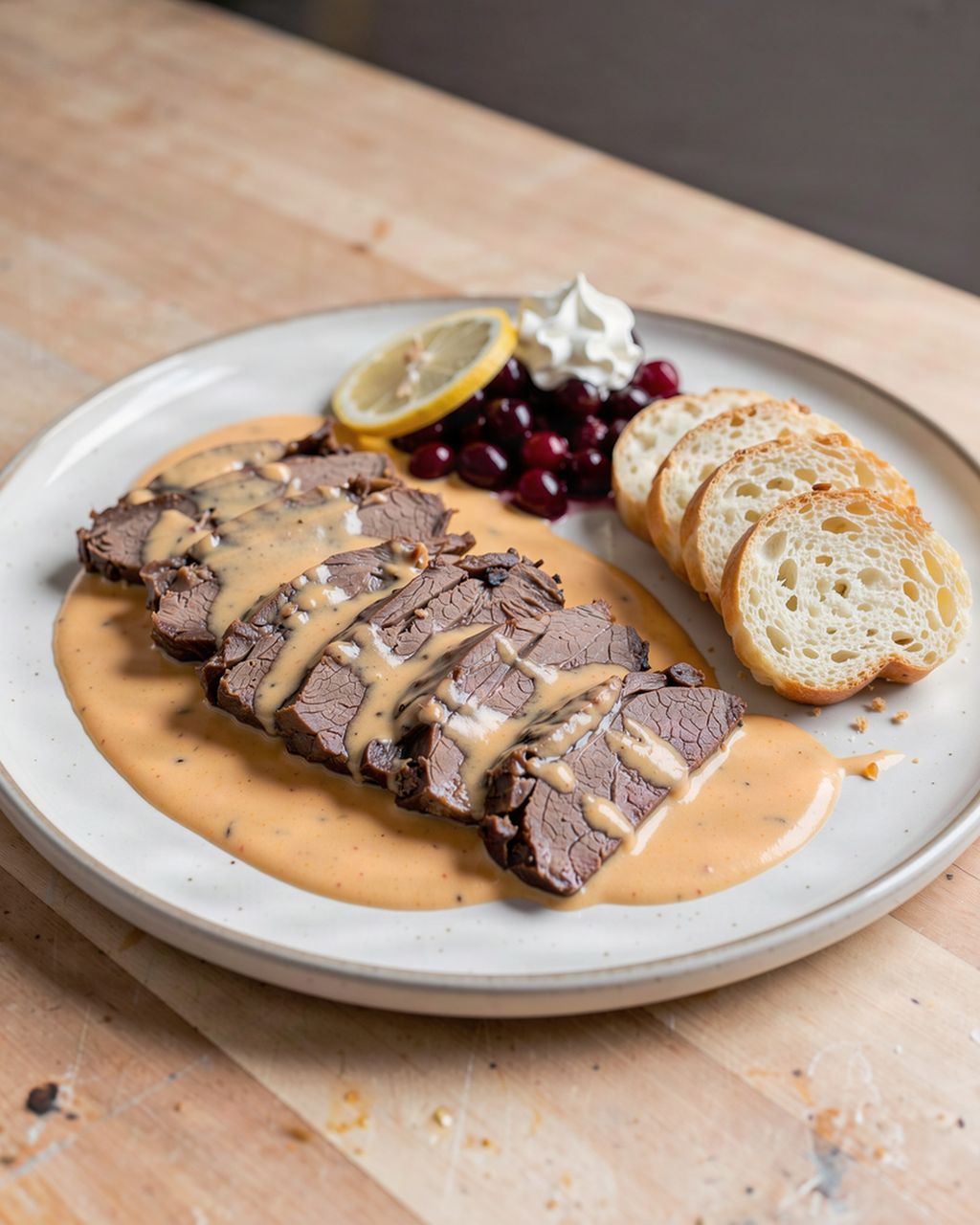
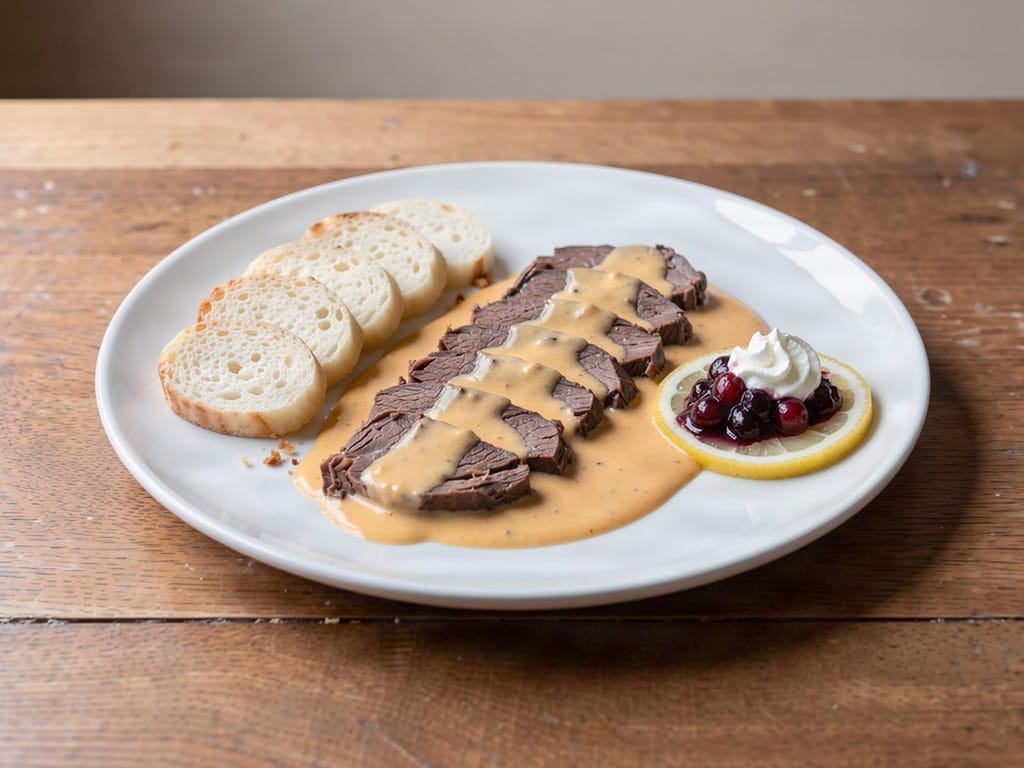
Svíčková is a Czech dish of marinated, braised beef in a creamy, sweet-sour sauce made from root vegetables, served with bread dumplings, cranberries, lemon and whipped cream. It is the classic Czech Sunday and wedding lunch. Here is what goes into it, which cut of beef to buy, what it tastes like and how it differs from German sauerbraten.
Svíčková na smetaně (beef in root-vegetable cream sauce, usually just called svíčková) is built from four things that arrive on the plate together:
Beef. A lean piece of beef, marinated with vegetables and spices, then braised slowly until it slices cleanly.
The sauce. The vegetables the beef cooked with are blended with the cooking juices and cream into a smooth, pale orange sauce, seasoned sweet and sour.
Bread dumplings. Houskové knedlíky (steamed or boiled bread dumplings, cut into slices) are the standard side. They are there to soak up the sauce.
The garnish. A slice of lemon, a spoon of cranberry or lingonberry sauce, and a swirl of lightly sweetened whipped cream sit on top of the meat.
The vegetables are the root vegetables Czech kitchens use for nearly every sauce and soup: carrot, parsley root, celeriac (celery root) and onion. The spices are quiet ones: bay leaf, allspice, black peppercorns, sometimes thyme. Vinegar or lemon juice brings the sourness, sugar balances it, and some families add a little mustard.
The plate looks busy to people seeing it for the first time. In Czech homes the garnish is not decoration: every forkful is meant to pick up a bit of beef, sauce, dumpling and a touch of the cranberry and cream.
Recipe of the week, one tip that saves you time and one deal from the shop. Unsubscribe in one click.
The next issue goes out on Thursday, November 26.
The name comes from the cut. In Czech butchery, svíčková is the beef tenderloin, the long, narrow muscle that English-language menus in Prague often mistranslate as "sirloin" (in UK terms it is the fillet). The word literally suggests a candle (svíčka), after the cut's long, even shape.
In practice, many Czech households do not use tenderloin. It is the most expensive cut, and a long braise wastes what makes it special. Plenty of cooks use a lean piece from the hindquarter instead, the cut Czech butchers call zadní (round). A shoulder cut sold as falešná svíčková ("false tenderloin") is another common choice. Restaurant versions vary too.
If you are shopping outside Czechia:
US: top round or eye of round works well; tenderloin if you want the original cut.
UK: topside or silverside; fillet for the splurge version.
Any country: pick a lean, compact piece with little connective tissue, so it slices neatly.
Because these cuts are lean, the traditional method larded the meat: thin strips of bacon pushed into it with a larding needle (špikování in Czech), so it stays juicy. Many cooks today lay the bacon on top instead. Our guide to beef round cuts covers which part of the round to ask for.
Svíčková is not difficult, but it is slow. The method in outline:
Marinate. The beef goes into a dish with sliced root vegetables, onion, spices and a sour element (vinegar, or vinegar with water). Many families do this the day before, covered, in the fridge. For how long marinated beef keeps in the fridge, see our article on marinated meat.
Brown and braise. The vegetables are softened in butter or fat, the meat is browned, then everything goes into a covered pan with a little liquid and cooks slowly in the oven until the meat is tender.
Make the sauce. The meat comes out to rest. The vegetables and juices are blended (or pushed through a sieve, in older kitchens), cream is stirred in, and the sauce is simmered until velvety. Some cooks thicken it with a light roux; others rely on the vegetables alone.
Season. This is where svíčková is made or lost: sugar, vinegar or lemon juice, and salt are added in small amounts, tasting each time, until the sauce is gently sweet and gently sour at once.
If the sauce comes out too sharp, our article on why svíčková sauce turns sour explains how to bring it back. If you want it without flour, see svíčková without roux.
Svíčková tastes creamy, mildly sweet and mildly sour, with a deep vegetable flavor underneath. If you have never had it, imagine a smooth carrot and celery-root purée enriched with cream, sharpened like a sweet-and-sour sauce, and scented with bay and allspice.
The beef itself is mild: braised lean beef, sliced thin. The sauce carries the dish. The dumplings are soft and neutral, close to the inside of a white bread roll. The garnish adds the high notes: tart, fruity cranberry, the cool sweetness of whipped cream, and a squeeze of lemon if you use the slice.
People who grew up with it describe it as comfort food. People trying it for the first time are often surprised by the sweetness. That balance is deliberate, and no two Czech families agree on exactly where it should land.
Svíčková is Czech. It is one of the best-known dishes of Czech cooking and is just as familiar in Slovakia, which shared a country and a kitchen with the Czech lands for most of the 20th century.
Its exact origin is unclear. Cream-sauced roast meats were common in Central European cooking long before the dish took its present form, and Czech food writers do not agree on when the root-vegetable cream sauce became standard. We have not found a reliable first recipe, so we will not pretend to give you one.
What is not in doubt is its place at the table. Svíčková is the classic Sunday lunch, a dish for family celebrations, and a long-standing choice for Czech wedding lunches. It is also on the menu of nearly every traditional Czech pub (hospoda), usually served with a generous stack of sliced dumplings.
Both dishes start with beef marinated in something sour, so they get compared often. The plates turn out quite different.
Svíčková (Czech): the marinade is mostly root vegetables, spices and a moderate amount of vinegar. The sauce is a blended vegetable sauce finished with cream. It is served with bread dumplings, lemon, cranberries and whipped cream.
Sauerbraten (German): the meat sits for several days in a sharper marinade of vinegar, often with wine. In the Rhineland style, the dark sauce is thickened with crushed gingerbread or gingersnaps and often sweetened with raisins. Cream is not the point. It is usually served with potato dumplings, red cabbage or noodles.
In short: sauerbraten is dark, spiced and tangy; svíčková is pale, creamy and sweet-sour. If you like one, the other is worth trying, but do not substitute one recipe for the other.
Bread dumplings are the standard, and most Czechs would not serve svíčková any other way. A few notes for cooking it outside Czechia:
Dumplings. Czech bread dumplings are sold ready-made in Czech and Polish shops abroad. If you make them yourself, they freeze well: see how to freeze bread dumplings.
Cranberries. Czech cooks use brusinky, which are lingonberries, not American cranberries. Either works. Lingonberry jam is easy to find in Scandinavian shops; whole-berry cranberry sauce is the closest US supermarket swap.
Whipped cream. Use whipping cream or double cream, whipped with a little sugar until it just holds its shape. It should be soft, not stiff.
Drinks. A Czech pale lager is the usual pairing in a pub.
Potatoes or rice turn up in some canteens, but they do not soak up the sauce the way sliced dumplings do.
Svíčková is a Czech dish of braised marinated beef served in a creamy, sweet-sour root-vegetable sauce with bread dumplings. It is usually topped with a slice of lemon, cranberry or lingonberry sauce and a spoon of whipped cream.
Svíčková is named after the beef tenderloin, but most Czech home cooks use a cheaper lean cut from the round. In the US, top round or eye of round works well; in the UK, topside or silverside.
Svíčková tastes creamy and gently sweet-sour, with a strong carrot and celery-root flavor and hints of bay leaf and allspice. Cranberries and whipped cream on top add tart and sweet notes.
Svíčková is Czech, and it is also common in Slovakia. Its German cousin is sauerbraten, which uses a sharper marinade and a dark sauce thickened with gingerbread rather than cream.
The whipped cream and cranberries balance the sauce: the cranberries add tartness and the cream adds a cool sweetness. In Czech homes you take a little of each with every forkful.
Svíčková sauce is made of carrot, parsley root, celeriac and onion braised with the beef, then blended with the cooking juices and cream. It is seasoned with sugar, vinegar or lemon juice, and spices such as bay leaf and allspice.
One recipe worth heating the oven for, one tip, and one deal from the shop. Nothing else.