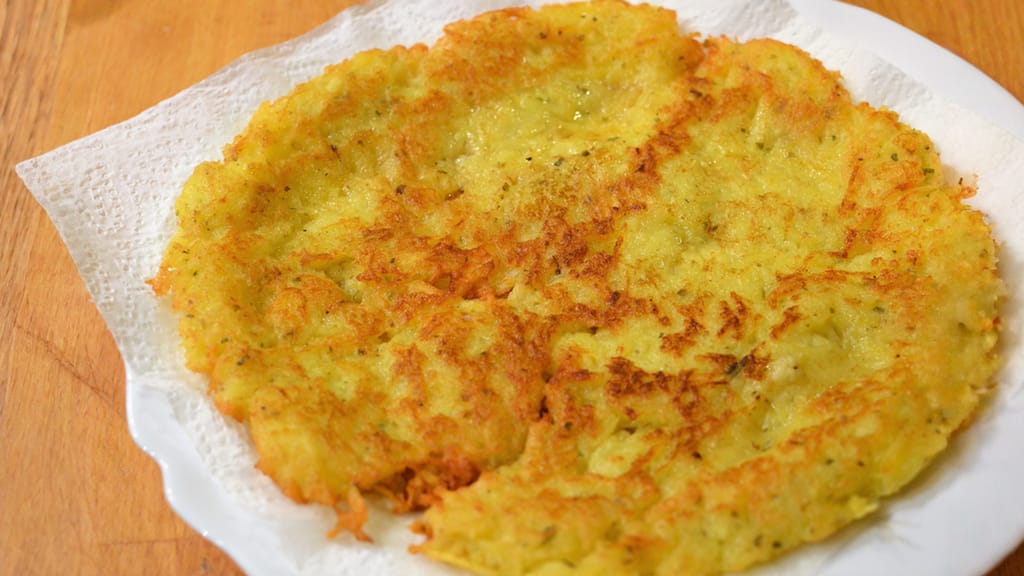
Traditional crispy garlic potato pancakes
Traditional Czech Cuisine: Classic Dishes and How to Cook Them

Updated Jul 19, 2026
Traditional Czech cooking rests on a handful of pillars: honest, slow-cooked meat, rich thick sauces, a dumpling that soaks up every drop of gravy, and a soup that no proper lunch would dare skip. In this guide we'll walk through the classics you can make at home — svíčková (beef in cream sauce), goulash, schnitzel with potato salad, dumplings, soups, and a sweet finish. For each dish, you'll get the technique it all hinges on, the most common mistakes to avoid, and a link to a tried-and-tested recipe to cook it by.
Traditional Czech cuisine grew out of a blend of Central European influences — German, Austrian and Hungarian — layered onto a base of pork, beef, cabbage, potatoes and grain. It's not a fixed canon but a living cuisine that has borrowed and reworked ideas for centuries.
In the medieval and early modern periods it was shaped mostly by German and Austrian cooking traditions: an emphasis on pork and beef, braised cabbage, and dumplings as a filling side that soaks up the gravy. Many of these dishes are still with us today.
In the 19th century came Hungarian influence, and with it, paprika. According to food historians, paprika only reached Hungary in the 16th century via the Ottomans, and it arrived in the Czech lands together with goulash around 1805, under Austria-Hungary. Paprika, onion and marjoram have been staples of Czech cooking ever since.
Regional differences persist to this day. In Moravia, wine is more commonly drunk with meals than beer, and that shows in the cooking too — paired with cured meats and sauerkraut. In Bohemia, potatoes reign supreme in every form, from potato dumplings to crispy potato pancakes.
Traditional crispy garlic potato pancakes
Traditional crispy potato pancakes – a Czech classic made from potatoes
Seasonal baking plans, tested recipes and kitchen tricks that save you time. Unsubscribe in one click.
Svíčková na smetaně is braised beef in a creamy root-vegetable sauce, traditionally served with bread dumplings, cranberry sauce and a slice of lemon. It's the most famous Czech sauce — and a real test of patience, since there's no rushing it.
According to available sources, it was first recorded in a cookbook by Magdalena Dobromila Rettigová in 1826, and its roots go back to aristocratic cuisine inspired by French cooking. The name apparently refers to the shape of the cut of meat, sometimes called the "false sirloin."
The base is beef — proper sirloin, or the cheaper but equally satisfying top or bottom round (sometimes called "false sirloin"). The sauce gets its character from root vegetables in roughly a 2:1:1 ratio (carrot, celeriac, parsley root); it's blending these smooth that gives the sauce its body, not flour. Cream for smoothing it out goes in right at the end.
Let the meat marinate 12–24 hours in the fridge. The marinade should include vinegar or lemon juice (the acid tenderises the meat), bay leaf, allspice, whole peppercorns and a little oil. The longer it marinates, the fuller and more balanced the final sauce will be.
First sear the meat hard on all sides, remove it, and in the same fat, fry the root vegetables until deep golden-brown — that caramelisation is half the flavour right there. Return the meat to the pot, pour in stock (the marinade too, if you like), and braise for 2–3 hours until tender. Then take the meat out, blend the vegetables and pan juices until smooth, simmer briefly and finish with cream. Season with lemon and a pinch of sugar so the flavour holds together.
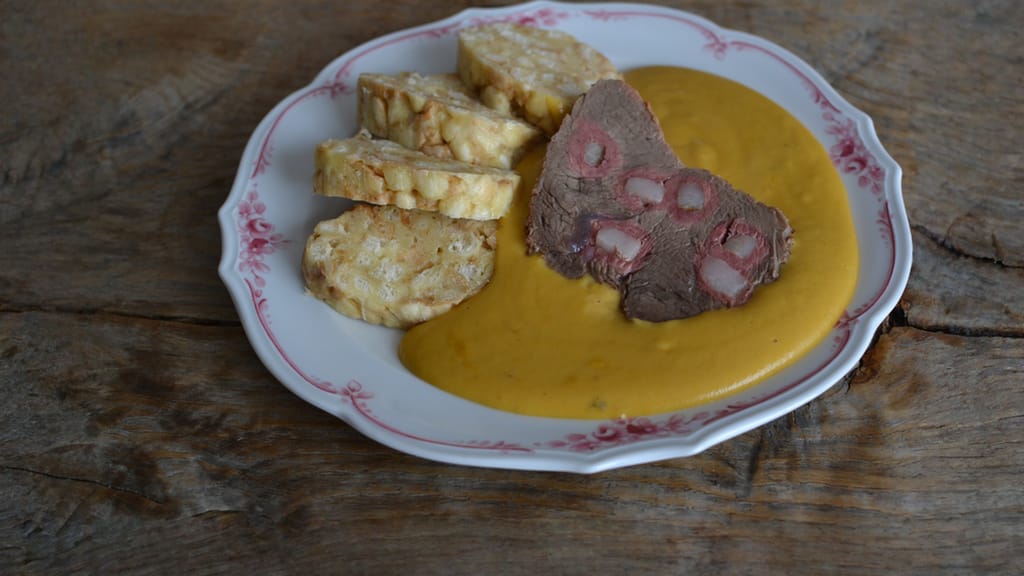
Sunday lunch: perfect homemade beef sirloin in cream sauce
Perfect homemade svíčková na smetaně – a Sunday lunch, step by step
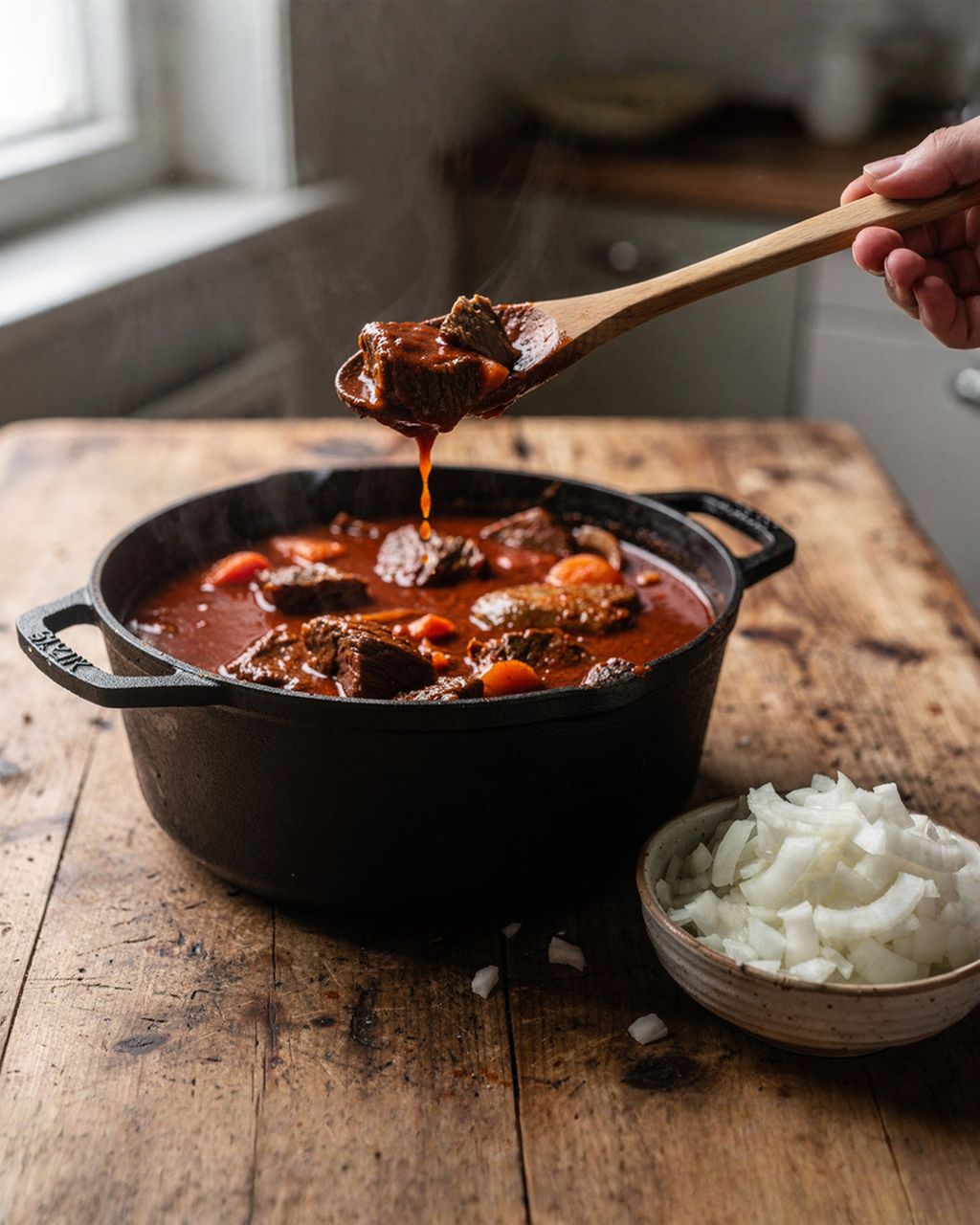
Goulash is beef braised with onions and paprika — and it exists in two main forms: Czech goulash is thick, well-reduced, and served with a dumpling, while Hungarian "gulyás" is more of a spicy soup eaten with white bread.
Goulash originated in Hungary, and its name comes from the word gulya — meaning a herd of cattle. According to food historians, it began as a simple dish cooked by herdsmen in a kettle over an open fire: filling, nourishing and easy to carry along. Paprika, which now defines the dish, didn't reach Hungary until the 16th century. Goulash arrived in the Czech lands in the early 19th century under Austria-Hungary and quickly became a national favourite.
Hungarian goulash is thinner and more soup-like, built around tomatoes and paprika, often with carrots too; it's served with bread.
Czech goulash is thick like a sauce, built on beef, onion and marjoram; it's often further thickened.
The key to Czech goulash is roughly a 1:1 ratio of onion to meat — enough onion breaks down and thickens the goulash on its own, no flour needed. Fry the onion until golden, sear the meat, and — crucially — add the paprika right at the end of frying, off the heat. Then pour in stock and braise for 2–3 hours until tender. Add the marjoram and crushed garlic only in the final minutes so they keep their aroma. We're still working on a tried-and-tested recipe for Czech beef goulash for you.
Schnitzel is a pounded-thin slice of pork leg, pork chop or chicken breast, coated in the classic three-step breading — flour, egg, breadcrumbs — and fried until golden. Served with potato salad, it's a Christmas Eve and Sunday classic loved across generations.
Pound the meat to about 0.5 cm (¼ inch) thick, then season with salt and pepper. Set up three plates: plain flour, beaten egg, breadcrumbs. Coat in that order, and don't press the breadcrumbs on — they should just cling lightly.
Fry in plenty of fat at 160–170°C (320–340°F) so the schnitzel floats and absorbs as little fat as possible. Don't cover it, and gently shake the pan while frying — this lets the breadcrumb coating puff up into a crisp, airy crust. Fry for roughly 3–4 minutes per side until golden, then drain on paper towel.
The base is waxy (type A) potatoes, boiled in their skins, ideally the day before — cold potatoes hold their shape better, so the salad won't turn watery. Dice them and add cooked root vegetables (carrot, celeriac, parsley root), pickles, onion and peas. The dressing is mayonnaise with mustard, a pinch of sugar and a little pickle brine for tang.
Let the salad rest in the fridge overnight — the flavours will meld — and only then season with salt and pepper to taste. Dutch-style schnitzel stuffed with ham and cheese is a heartier take for anyone who wants the classic turned up a notch.
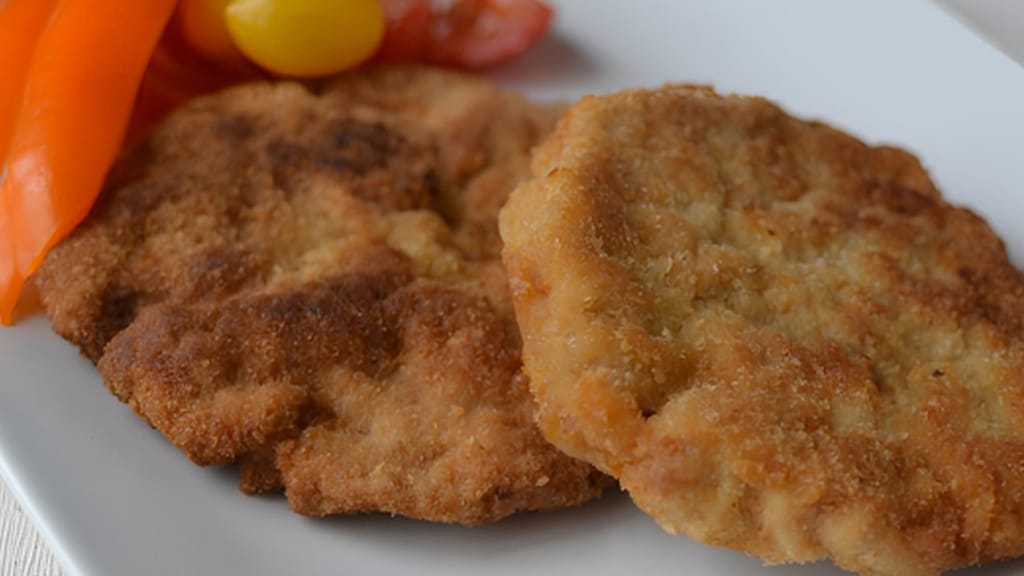
Dutch-style pork schnitzel
Dutch-style schnitzel stuffed with ham and cheese – a richer take on the classic
Three basic Czech dumplings go with svíčková, goulash and roast meats alike: bread dumplings, potato dumplings and Karlsbad dumplings. Each has a different texture and role on the plate — and all of them are sliced with thread, never a knife, so they don't get squashed. We're working on tried-and-tested recipes for these savoury dumplings for you.
Bread dumplings are boiled dumplings made from stale bread rolls cut into cubes and mixed with milk, egg, a pinch of salt and plain flour — and of all the Czech dumplings, they soak up gravy the best. There's both a yeasted and a straight boiled version. Let the dough rest a while, shape it into logs, and boil in salted water or steam it. Prick them as soon as they're cooked so they don't collapse.
Potato dumplings are made from cooked potatoes, coarse flour, semolina and egg — they're heartier and slightly denser at the bottom. Grate the cooked potatoes (again, ideally cooked the day before) finely and mix with coarse flour, semolina and egg. Work the dough quickly and as little as possible — overworked dough develops gluten, turns rubbery, and falls apart while cooking.
Karlsbad dumplings are light, airy dumplings made from a dough with whipped egg whites folded in and cubes of pan-fried bread. You can spot them by their fine, honeycombed texture with cubes of fried bread and parsley running through it. The secret is whipped egg whites, folded gently into the dough, and cooking it wrapped in a cloth or foil so the dumpling holds its shape.
Soup opens a traditional Czech lunch — most often garlic soup, kulajda, or, depending on the season, potato soup or mushroom soup. It's also a practical way to use up stock and whatever's on hand.
A simple garlic soup that needs just a handful of ingredients. The base is stock seasoned with crushed garlic, marjoram and pepper, served with fried bread or grated cheese. Add a clove of raw garlic right at the end, straight into the finished soup — long boiling kills its aroma.
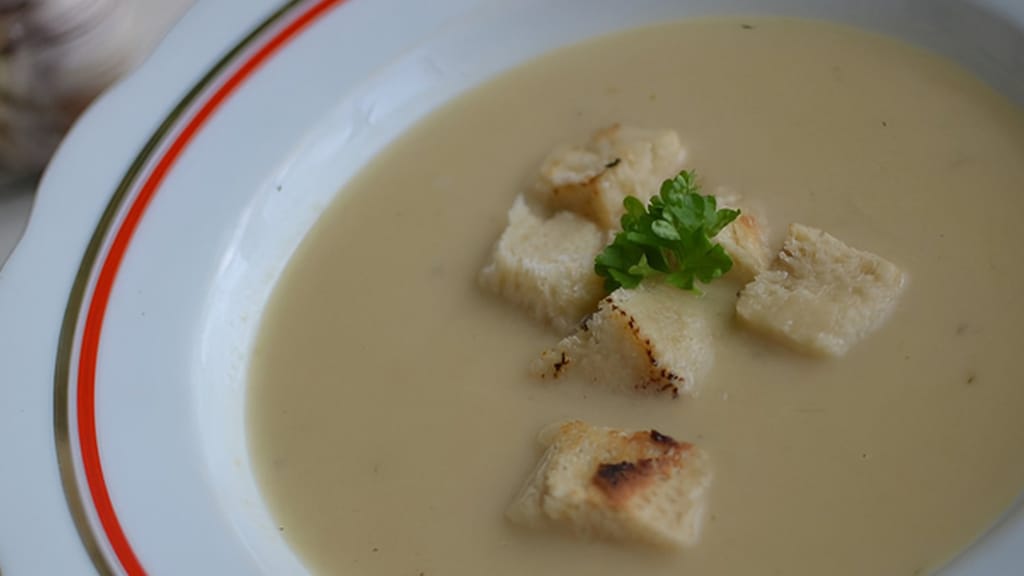
Creamy garlic soup – it'll get you back on your feet
Creamy garlic soup – stock, garlic and marjoram, done right
A creamy soup from South Bohemia with mushrooms and dill, thickened with cream and given a touch of vinegar, traditionally topped with a poached egg. The tang and the dill are what make it — add the vinegar gradually and taste as you go. Depending on the season, use fresh mushrooms in autumn or dried ones in winter.
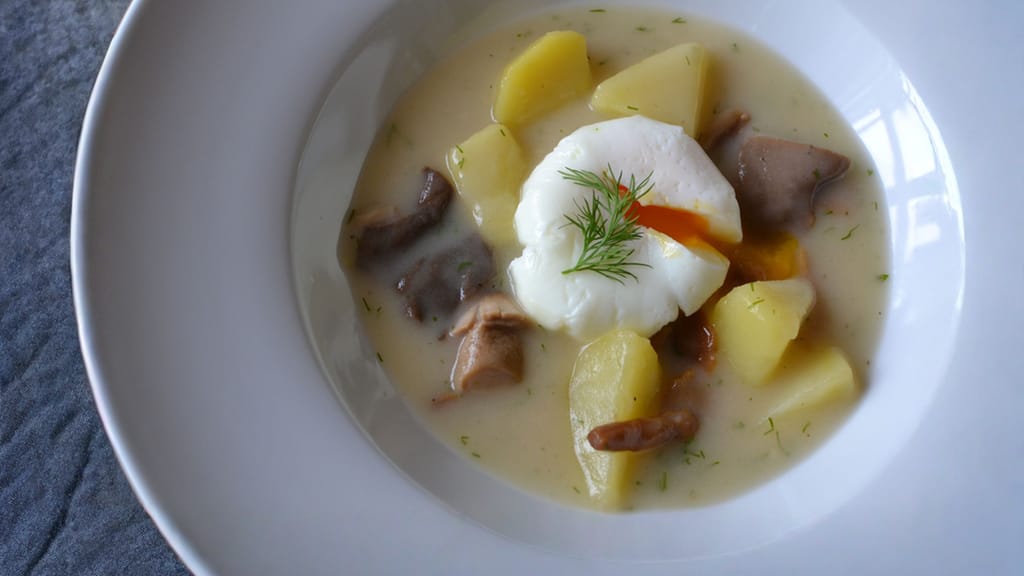
Kulajda – the best creamy mushroom soup
Kulajda with mushrooms and dill – the best South Bohemian soup there is
Seasonal Czech soups shift with the calendar: light vegetable soups in spring, cold cream soups in summer, pumpkin and mushroom in autumn, and a strong stock with little dumplings in winter. That adaptability is the real charm of soup:
Spring: light vegetable soups with peas, spinach or young carrots.
Summer: cold soups, like a chilled cucumber cream.
Autumn: rich pumpkin and mushroom soups.
Winter: a strong stock with liver dumplings or noodles.
Mushroom soup and potato soup work well pretty much all year round — only the ratio of fresh to dried mushrooms shifts with the season.
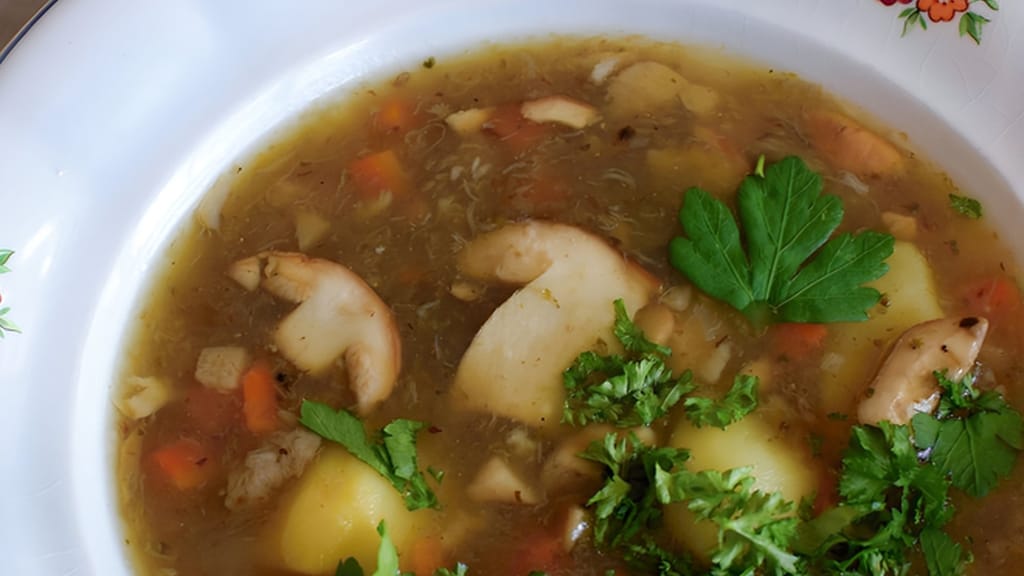
Czech classic: potato soup with mushrooms
Czech potato soup with mushrooms – a hearty soup for any time of year
Czech desserts reach their peak with yeasted koláče and apple strudel. Both can be made the traditional way or in a quicker modern version — without sacrificing flavour.
Koláče are built on a yeasted dough of yeast, milk, sugar and egg yolks. Once risen, the dough is divided into small portions, filled with curd cheese, poppy seed or plum jam, and topped with a crumble. If you don't have time to wait for the dough to rise, there's a quicker version made with puff pastry or curd-cheese dough — the flavour holds up, and there's a lot less work.
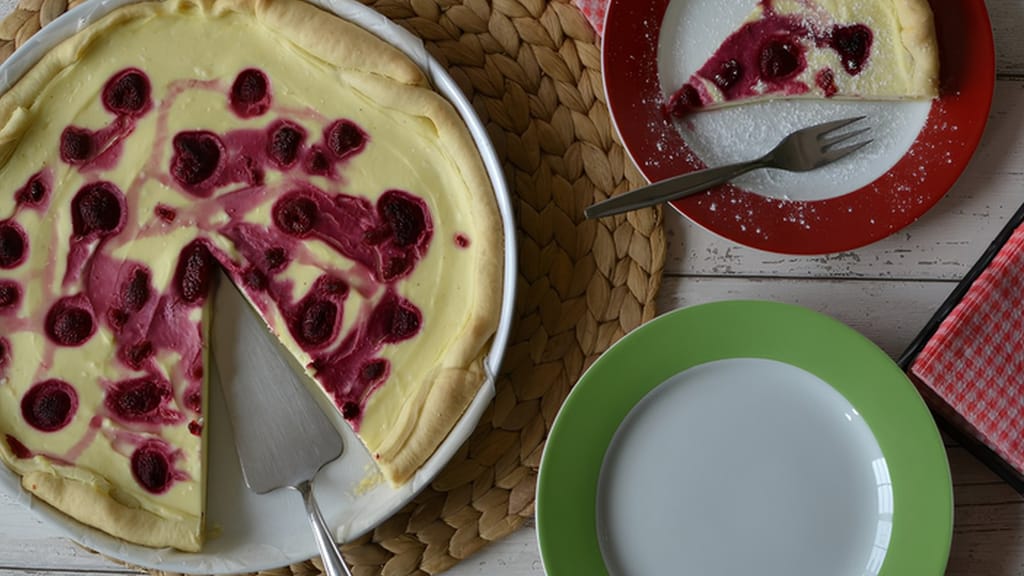
Easy & quick raspberry cheesecake tart
Quick curd-cheese koláč with raspberries – a modern shortcut to the classic
Apple strudel is a strudel — or puff pastry — parcel filled with apples, raisins, cinnamon and breadcrumbs. Traditionally it's made with stretched strudel dough pulled so thin you can read a newspaper through it. Breadcrumbs soak up the juices so the pastry doesn't turn soggy. Puff pastry is the quicker shortcut if you don't want to stretch the dough yourself.
If you're still perfecting your dough, take a look at how to make perfect stretched strudel dough, step by step and 5 tips for what to brush on strudel for the best flavour and looks.
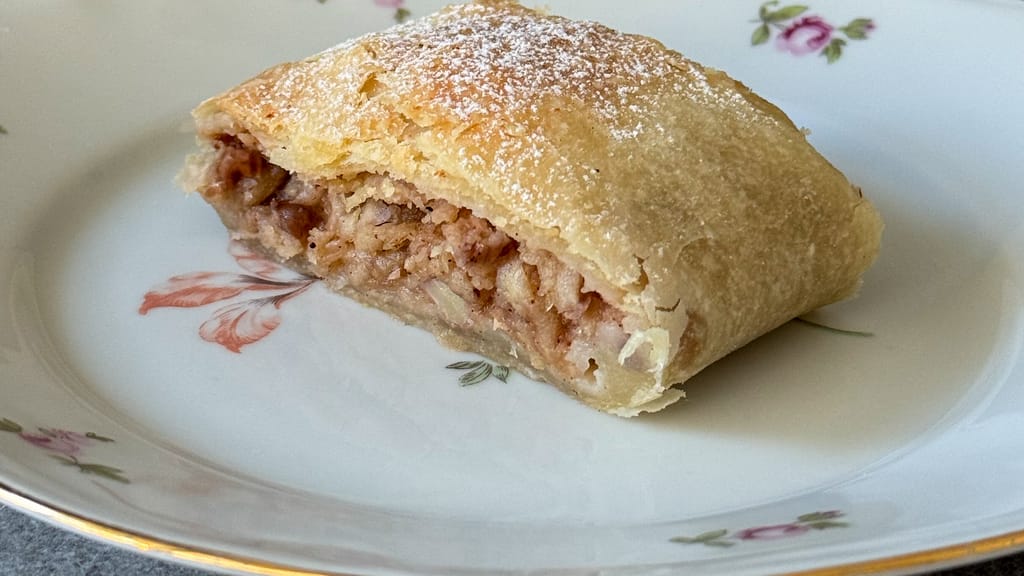
Apple strudel with homemade stretched pastry
Apple strudel made with homemade stretched dough – the traditional recipe
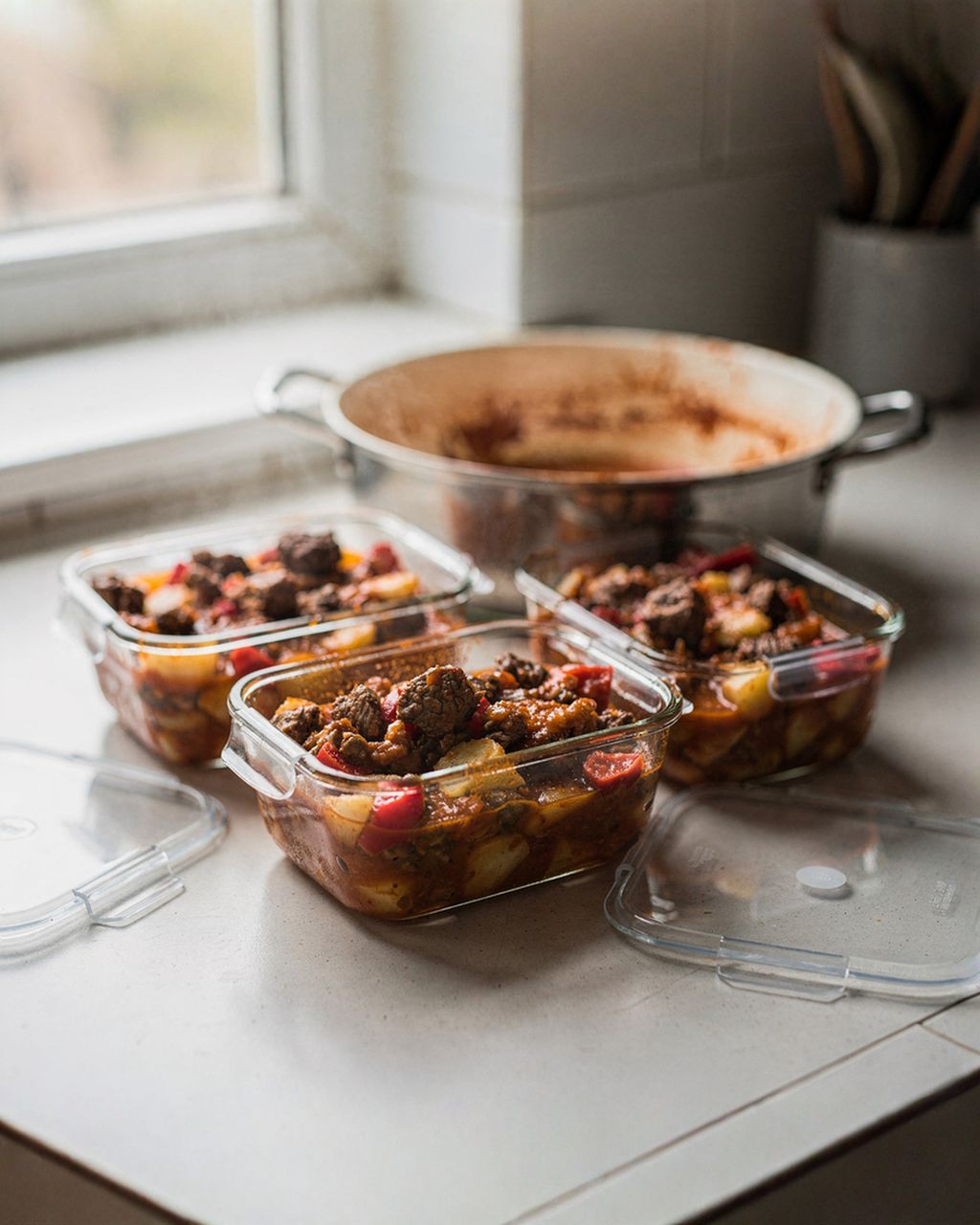
If you want to dive into Czech classics, make svíčková or goulash some weekend. Both dishes forgive small mistakes, don't rush you, and actually taste even better the next day once they've had time to rest — so feel free to cook a batch ahead. Add a good honest bread dumpling, and you've got a lunch on the table that never gets old.
Cream curdles when it's added to a sauce that's boiling hard or too acidic. Take the base off the heat first, warm the cream gently or temper it with a few spoonfuls of the warm sauce, then stir it into the pot and only let it simmer very gently afterwards. Using a richer cream (31–33% fat) also helps, since it holds up to heat better.
The best way is to let the onions do the thickening — use roughly a 1:1 ratio of onion to meat, fry it until soft, and it will break down into a thick sauce during the long braise. If you need it thicker still, blend a ladleful of the goulash and stir it back in, or add some grated raw potato and simmer for a few more minutes.
Potato salad made with mayonnaise keeps for about 2–3 days in the fridge at or below 5°C (41°F). It's best made a day ahead so the flavours can settle, but don't leave the mayonnaise dressing out at room temperature for long — it spoils quickly because of the eggs.
Yes, you can boil bread dumplings a day in advance and let them cool. The best way to reheat them is over steam above boiling water, or briefly in the microwave covered with a damp cloth; dried-off slices can also be pan-fried in butter. To stop them going soggy in the first place, prick them right after cooking and let the steam escape.
In svíčková, soured cream or crème fraîche works well for that creamy body, or a plant-based cooking cream made from oats or soy. In kulajda, you want to keep that tangy edge, so soured cream or thick natural yoghurt is the best fit — just temper it and don't let it boil hard, or it will curdle.
One recipe worth heating the oven for, one tip, and one deal from the shop. Nothing else.