Soft honey gingerbread cookies that never go hard
Christmas Cookie Advent Calendar: How to Make One, What to Bake, and When to Start
Updated Oct 4, 2026
A Christmas cookie advent calendar is 24 portions of long-lasting homemade cookies, split into numbered cups, bags or compartments, which you open one by one from December 1st to the 24th. It only works if you pick cookies that can survive four weeks and bake them with enough lead time. Here's what to put in it, how to put it together, and where to keep it so even the last window still has a bit of crunch.
Making a Christmas cookie advent calendar comes down to five steps: pick cookies that keep well, bake them before the end of November, split them into 24 portions, number each one, and store the calendar somewhere cool. That's really all there is to it — the only tricky parts are choosing the right cookies and timing it right.
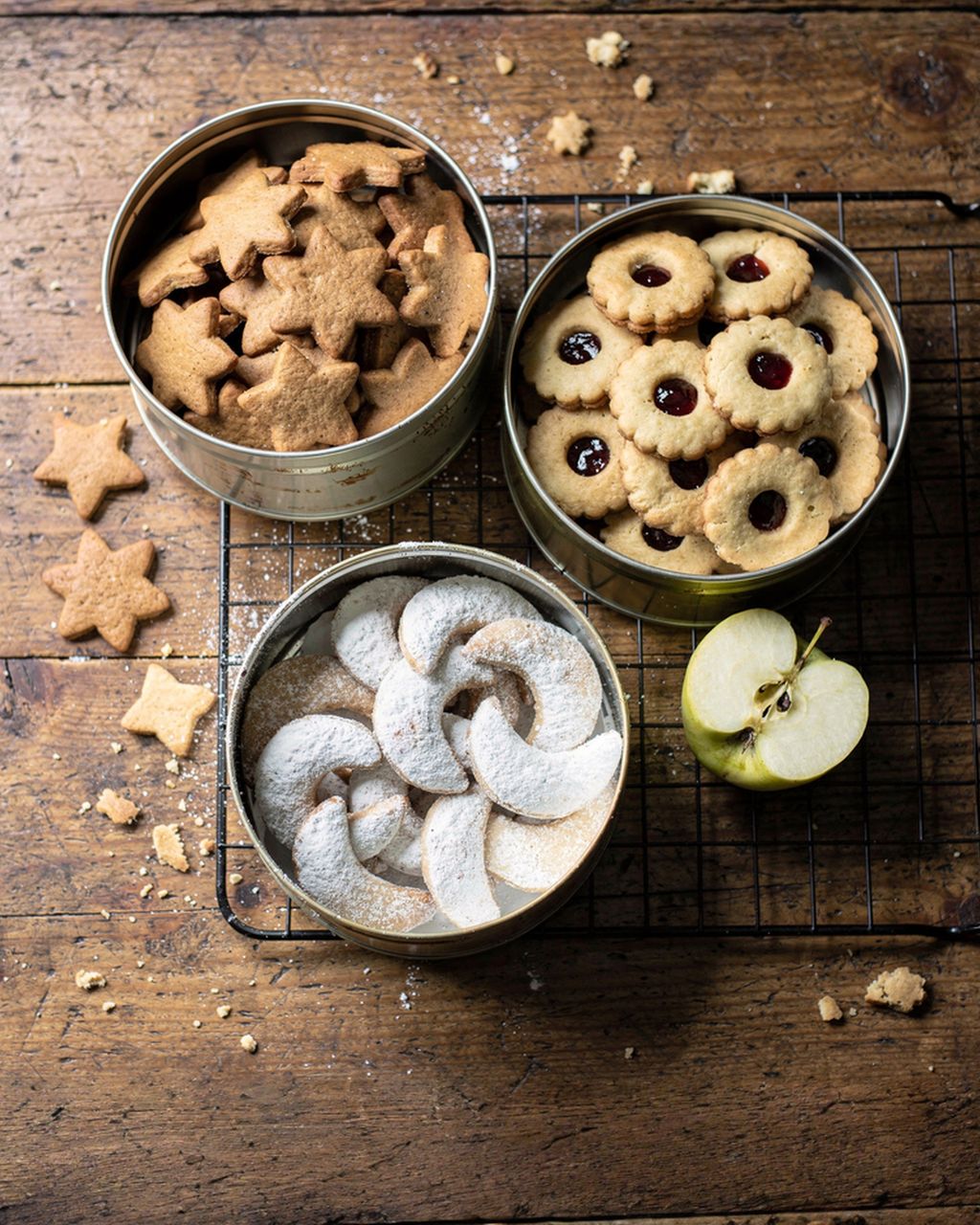
Choose 3–5 varieties that will last until Christmas. Think dry, non-cream cookies: gingerbread, vanilla crescents, unfilled linzer cookies, butter cookies.
Bake them with enough lead time. Gingerbread 1–3 weeks before December 1st, so it has time to soften. Vanilla crescents, linzer cookies and butter cookies 3–7 days before December 1st.
Work out your portions. 24 windows × 2–3 pieces means 48–72 cookies total — that's 3–5 smaller batches of 15–25 pieces each.
Number every window. Pipe a number in icing straight onto the gingerbread, add a numbered label to the bag, or write the number on the cup itself.
Keep the calendar in a cool room, away from both the radiator and the kitchen, where cooking adds moisture to the air.
Variety is what makes the calendar fun: if a different type of cookie comes up each day, nobody feels like they're opening the same thing over and over.
Seasonal baking plans, tested recipes and kitchen tricks that save you time. Unsubscribe in one click.
An advent calendar calls for dry, baked cookies with no cream filling. They need to keep for at least four weeks at room temperature, since window number 24 opens almost a month after baking.
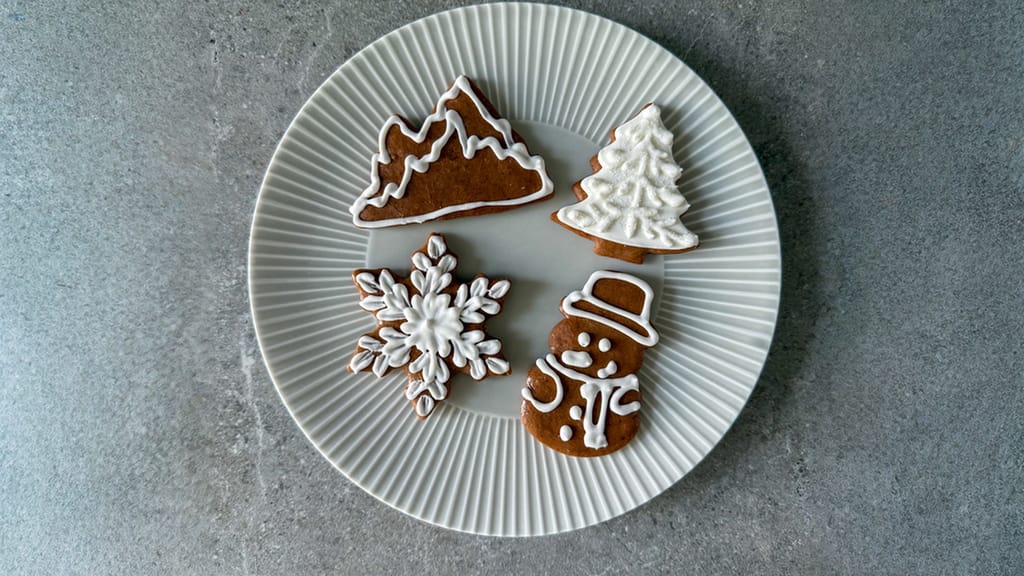
Gingerbread cookies are the top choice. They don't go stale with time — if anything, they soften — and they're the perfect blank canvas for an iced number. Try our soft honey gingerbread that never goes hard or extra-soft gingerbread cookies.
Vanilla crescents keep well in a cool spot and look lovely in a little bag. Bake them using our recipe for the best vanilla crescents — just handle them gently, as they're quite delicate.
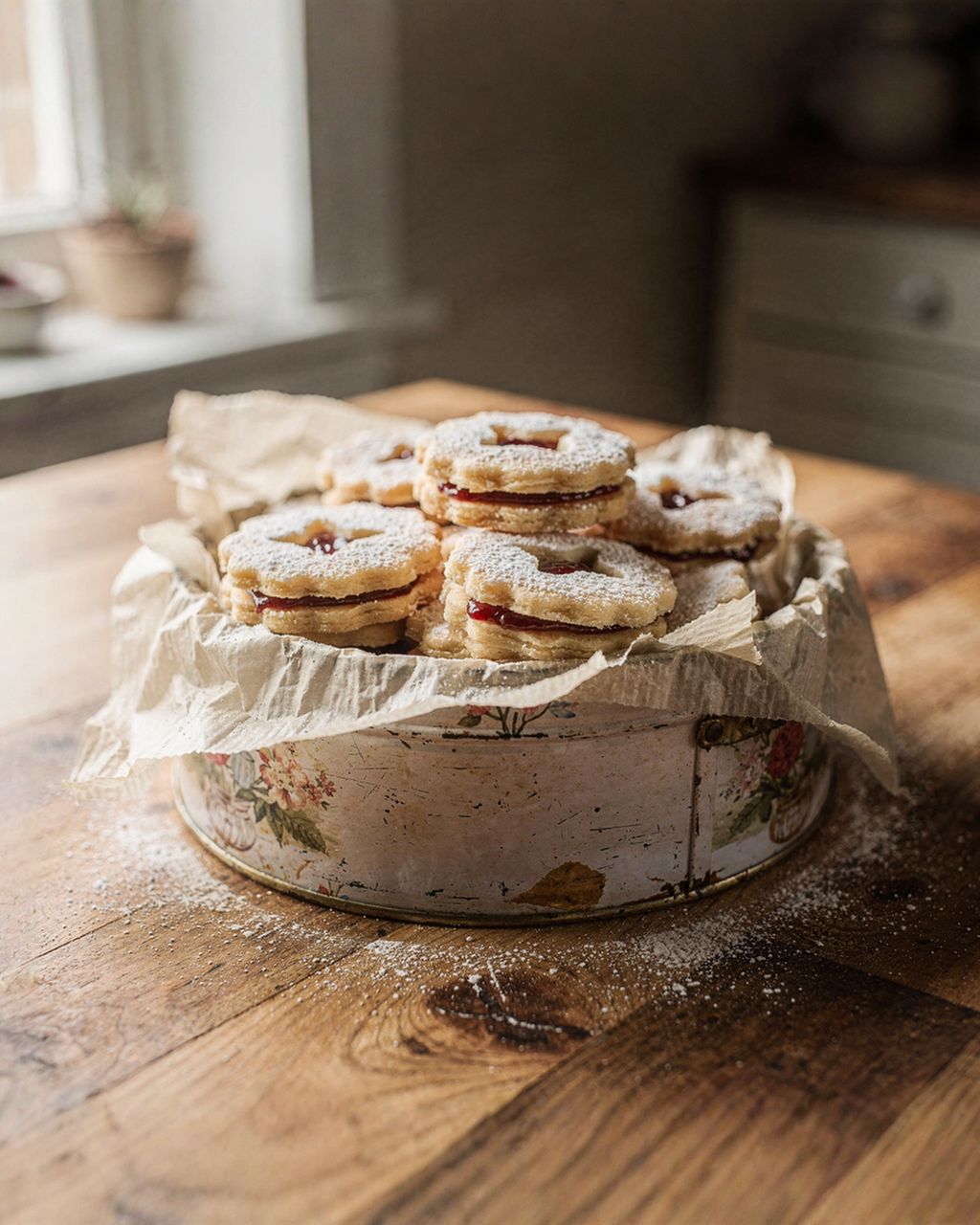
Unfilled linzer cookies — just the plain rounds or stars, without the jam. Classic linzer cookies sandwiched with jam start turning soft and damp within a few days, so for the calendar, stick to the unfilled version.
Butter cookies and cut-out shapes, like sugar Christmas cookies or mocha rounds.
For exactly how long each type keeps, check our cookie shelf-life guide by type. For linzer cookies specifically, there's also a more detailed article on how long linzer cookies last and when they taste best.
Soft honey gingerbread cookies that never go hard
Soft honey gingerbread that never goes hard: the perfect base for a cookie advent calendar
Bake your advent calendar cookies ahead of time: gingerbread 1–3 weeks before December 1st, everything else 3–7 days ahead. Since the calendar needs to be ready by December 1st, your whole Christmas baking schedule shifts a few weeks earlier.
Gingerbread: 1–3 weeks before December 1st. It needs time to soften — bake it the day before and the first few windows will be rock hard.
Vanilla crescents, linzer cookies, butter cookies: 3–7 days before December 1st. Don't bake them earlier than that, or they'll lose freshness before December is even over.
Decorating and numbering: 1–2 days ahead, so the icing has fully dried before you package everything up.
To keep your whole Christmas baking from piling up at once, see our Christmas cookie baking calendar by type. If you'd rather get everything done well in advance, cookies and dough can both be frozen and thawed without going soggy.
A homemade edible advent calendar typically takes one of four forms: cupcake liners in a box, numbered gingerbread tags on a string, bags hung on a branch, or a tin with numbered packets. Pick whichever suits the space you have and how long the calendar needs to last.
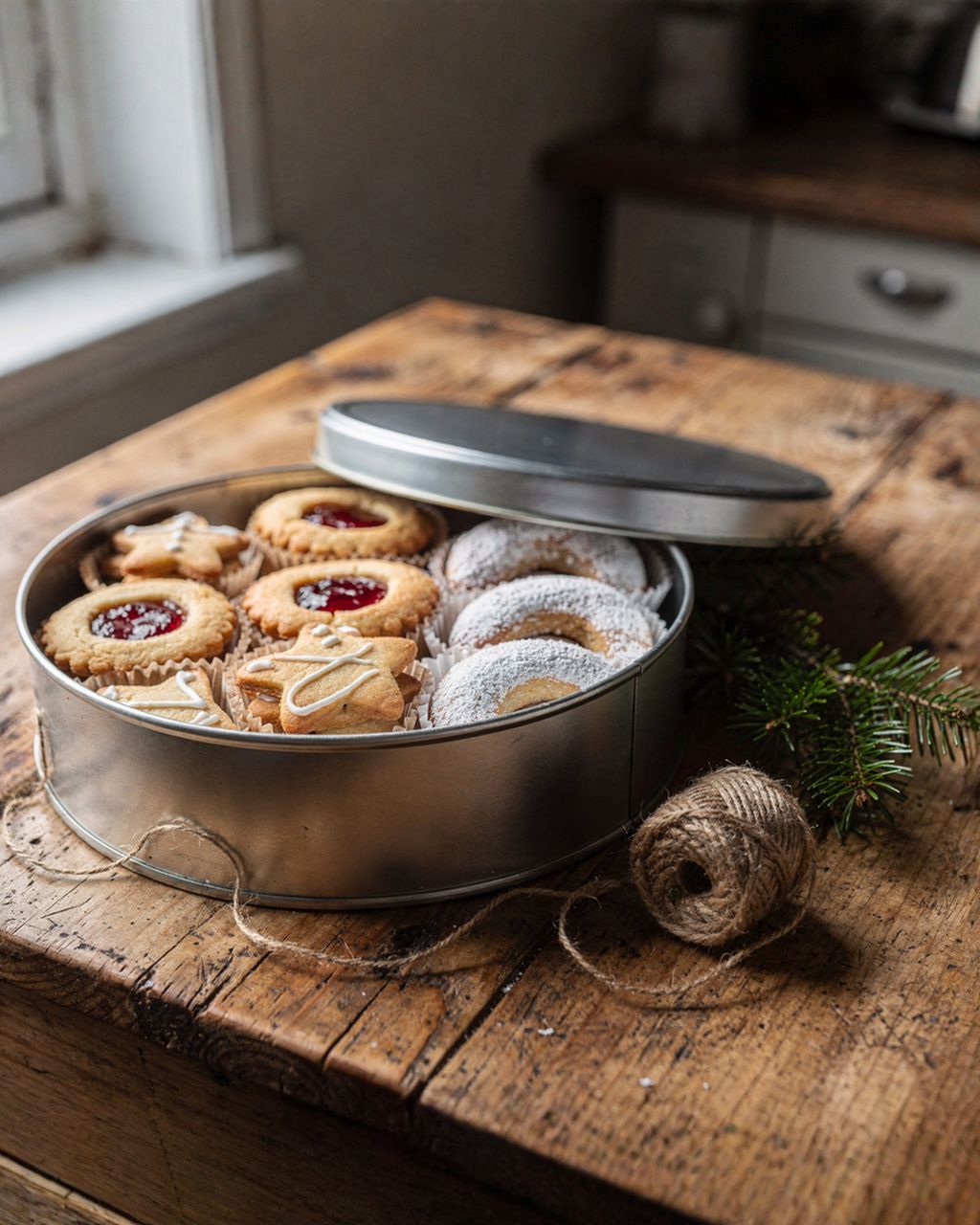
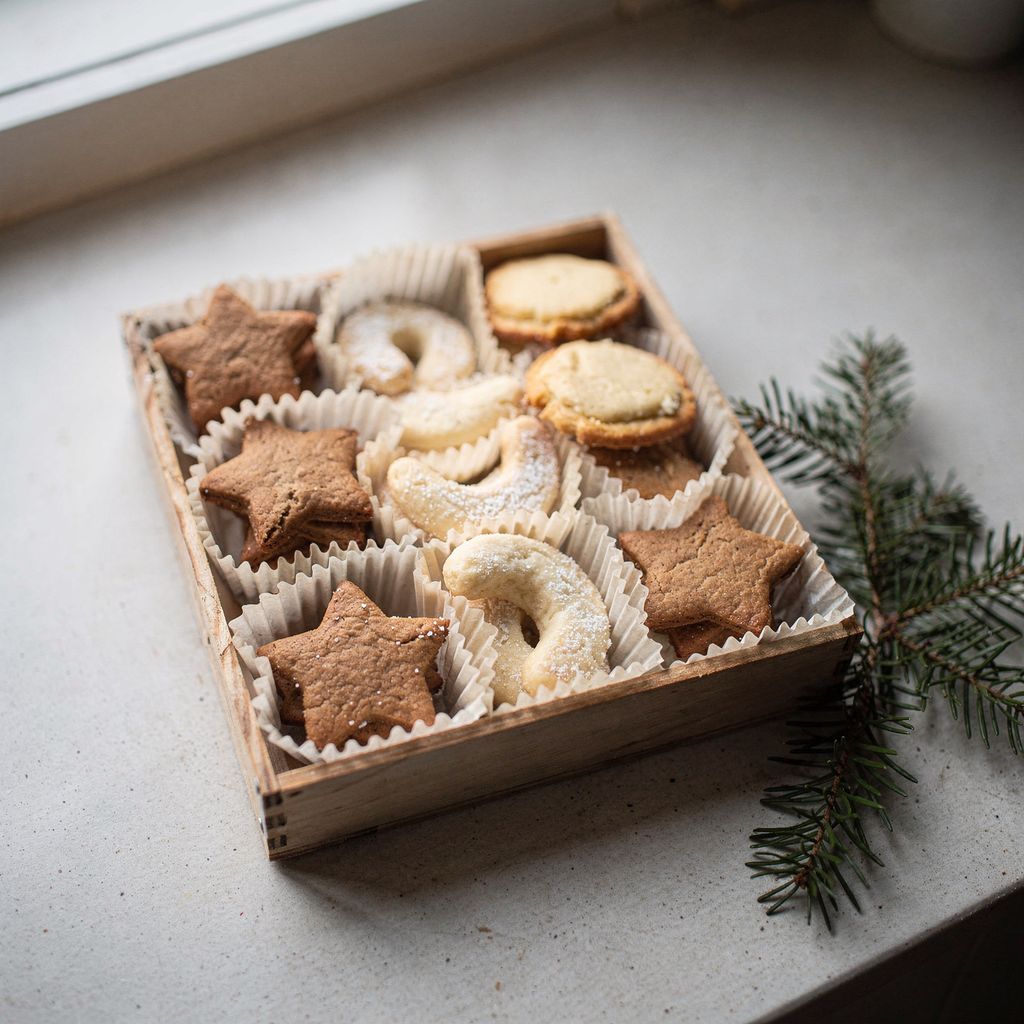
A cookie advent calendar in paper cups is the quickest option: a flat box or drawer divided into compartments, with one cup holding two or three cookies in each. Write the number on the base or rim of the cup with a marker. Regular paper cupcake liners work well, as they're sturdy enough to hold their shape and big enough for a couple of crescents. The cookies won't slide around in the cup, and the whole thing looks like a little box of chocolates.
Cover the box with a lid or a sheet of baking paper. Leave it open in a warm living room and the cookies will have gone soft by the middle of Advent.
A gingerbread advent calendar on a string is made of 24 gingerbread cookies, each with a hole and a number piped on in royal icing, threaded onto a ribbon. Cut out 24 shapes (rounds, stars, trees), poke a hole in each with a straw before baking, then thread them onto a ribbon or string once baked. Pipe the number straight onto the gingerbread with royal icing.
Two things tend to go wrong here:
The hole shrinks during baking. The dough puffs up in the oven and the hole closes in. Make the hole at least 5–6 mm wide and 6–8 mm from the edge, then poke it again with the straw as soon as it comes out of the oven, while it's still soft.
Hung gingerbread dries out faster than cookies kept in a box. That's fine on a string since it's already softened beforehand — just don't hang the calendar above a radiator.
For tips on icing, piping bags and clean numbers, see our step-by-step guide to gingerbread icing and decorating. And to make sure your shapes hold up and have room for the numbers, read why gingerbread spreads during baking.
A branch-hung advent calendar is made of 24 numbered cellophane bags, each with a portion of cookies, hung from a dry branch or a string. Pack each portion into a cellophane or paper bag, tie it with a ribbon, and hang it from a dry branch, a hook, or a string stretched along the wall. Stick the number onto the bag. This version looks the most festive and works even for cookies that are a bit more delicate.
Cellophane protects well against moisture in the air, while paper doesn't do nearly as good a job. So anything that needs to stay crisp or soft — cookies, crescents, linzer cookies, gingerbread — should go in cellophane. Paper bags are fine only for short display periods, or if you wrap the portion inside in cellophane or baking paper first.
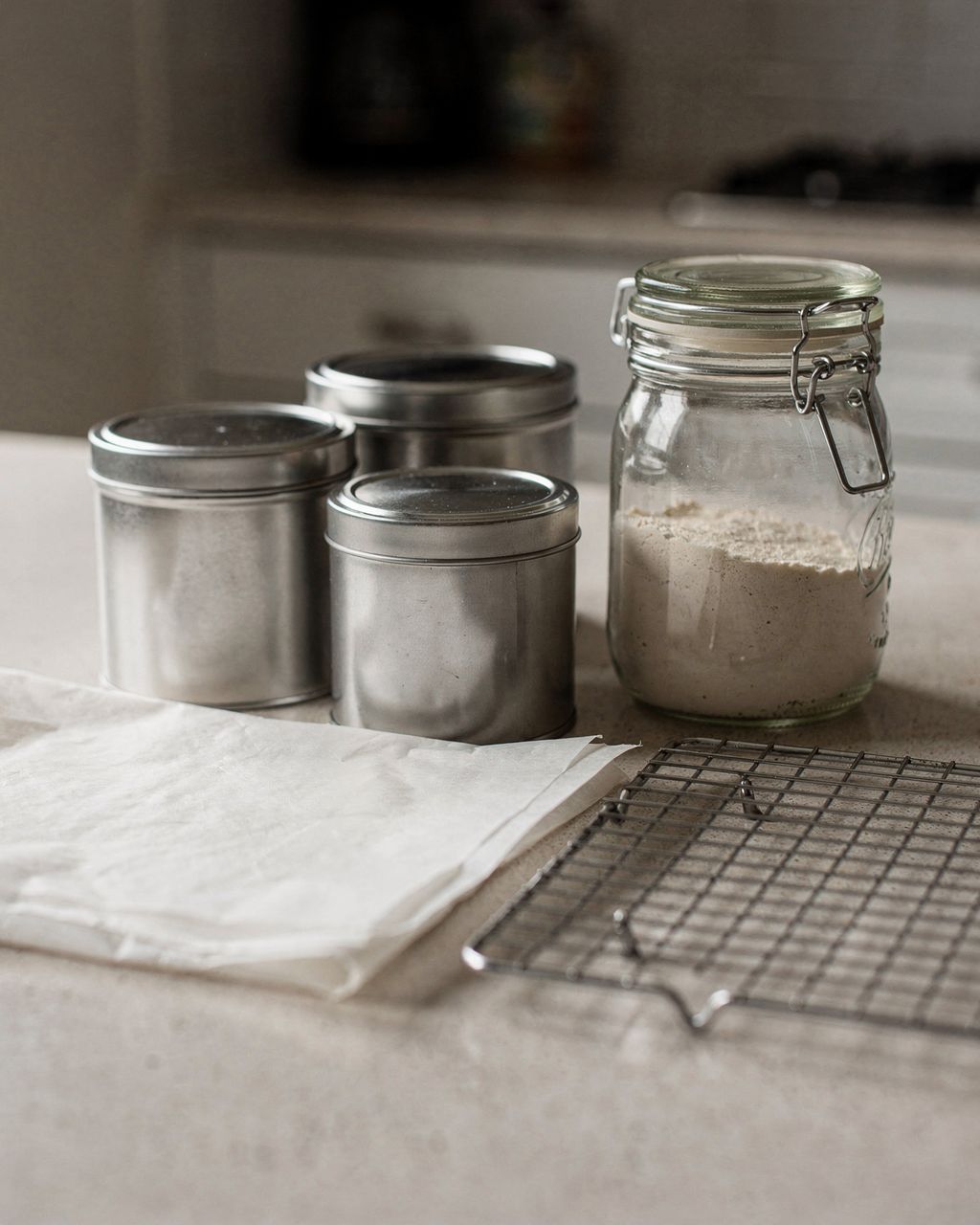
A cookie advent calendar in a tin is the longest-lasting option: 24 numbered packets wrapped in baking paper, all kept in one large tin. The cookies stay dry and in the dark, just like the rest of your Christmas baking stash. It's not as much of a showpiece as a box on a shelf, but window number 24 will taste just as good as window number 1.
Keep a cookie advent calendar in a cool, dry room, ideally around 15–18°C (59–64°F), away from the kitchen and well clear of any radiator. A hallway, entryway or bedroom works well. In the kitchen, cookies pick up moisture from cooking, while near a radiator they dry out fast and the butter in them can turn rancid.
Don't put it on a windowsill — the glass stays cold while the radiator below keeps it warm, and that swing isn't good for cookies.
Don't mix gingerbread with delicate cookies in one sealed bag. Gingerbread releases moisture, and it will soften anything crisp stored alongside it.
If you notice the cookies softening partway through Advent, move the remaining windows into a tin and leave just the numbers in the calendar itself.
For general rules on storing cookies so they stay crisp, see our guide to storing Christmas cookies. And if they've already gone soft, we'll show you how to rescue soft cookies.
The most reliable fix is to put the advent calendar somewhere kids can't reach on their own, and open each window together as a little ritual. A tin with numbered packets also helps — you keep it with you and only hand over one number a day. When opening the window becomes a shared daily moment rather than something sitting freely on a shelf, it's much less tempting to peek ahead.
You can mail a cookie advent calendar as long as you stick to sturdy cookies like gingerbread and butter cookies, and wrap each portion separately. Vanilla crescents and thin linzer cookies will break in transit. Pack the portions into a tin or sturdy box, fill any gaps with baking paper so nothing shifts around, and send it off by the end of November so it arrives in time.
For an adults' cookie advent calendar, go for less sweet, more boldly spiced cookies, and add small extras like coffee or tea alongside the portions. Spiced gingerbread, mocha rounds, [pistachio crescents](/en/recipes/pistachio-crescents) or [crisp almond cookies](/en/recipes/crisp-almond-cookies) all work well, and you can tuck a sachet of coffee, tea, or a note inviting them to bake together into a few of the windows.
Don't throw out leftover cookies from an advent calendar — add them to the rest of your Christmas baking tin, or crush them up. Crushed gingerbread and cookies make a great cheesecake base, a dessert topping, or no-bake truffle filling. For more ideas, see our article on [what to do with leftover Christmas baking](/en/articles/leftover-christmas-baking).
One recipe worth heating the oven for, one tip, and one deal from the shop. Nothing else.