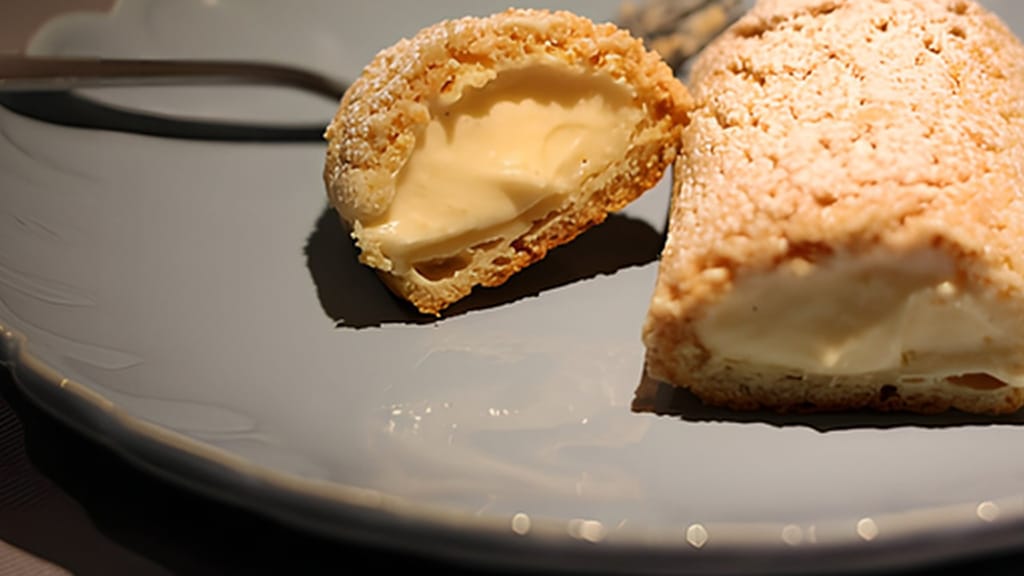
Éclairs à la ladurée – irresistibly delicious pastries
Choux au Craquelin Step by Step: Dough, Craquelin, and Fillings

Updated Jul 19, 2026
Choux au craquelin is choux pastry (pâte à choux) topped with a thin layer of crisp sugar dough that cracks into a golden crust as it bakes. The result is a puff that's hollow and airy inside, delicately crisp and beautifully round on top. In this guide, I'll walk you through the dough, the craquelin, shaping, baking, and fillings step by step — and, more importantly, explain why things work the way they do and where most people go wrong.
Choux au craquelin is choux pastry (pâte à choux) topped with a thin disc of sweet dough made from butter, sugar, and flour, which cracks into a crisp crust as it bakes. Inside, the puff stays hollow and airy; on top, it's delicate and beautifully round — exactly the combination of textures that's won pastry chefs over worldwide.
"Craquelin" is French for cracked, and that's exactly what it does: it turns the smooth surface of classic choux into a golden, crackled mosaic. What sets choux au craquelin apart from the plain choux pastry used for éclairs or profiteroles is precisely that top layer — it helps the puff rise more evenly and means you don't need to decorate it afterwards, since the crisp crust is already baked right in.
The base, though, is exactly the same as for any other choux pastry: master choux and you've mastered chouquettes, profiteroles, and even a full croquembouche.
Éclairs à la ladurée – irresistibly delicious pastries
Classic choux pastry éclairs from Ladurée
Craquelin acts like a firm little cap that holds the rising dough together, so the puff grows evenly and keeps its round shape. Choux pastry puffs up in the oven thanks to steam: the water in the dough boils, turns to steam, and pushes the dough upward, while the starch and egg proteins firm up the structure. Without anything on top, choux often puffs up lopsided.
The thin craquelin layer prevents that — according to food-science analyses, the dough underneath behaves like a balloon: no single part can bulge out more than another, because the crust holds it back evenly. Meanwhile, the butter and sugar in the craquelin caramelise to a crisp finish as they bake and crack into that signature mosaic pattern.
For it all to work, two things matter: the craquelin needs to be thin (around 2mm), so it softens quickly in the oven and moulds itself around the puff, and it needs to be well chilled before baking, so it holds its shape and cracks rather than melting and spreading.
Choux au craquelin calls for two doughs: a runny choux pastry for the puffs and a firmer craquelin for the crust. The ingredients are cheap and everyday — the magic is all in the technique, not exotic ingredients.
For the choux pastry (about 20–24 puffs):
125ml water and 125ml whole milk (a 1:1 ratio — water gives lightness, milk gives creaminess and a nicer colour)
100g unsalted butter (unsalted so you stay in control of the saltiness)
a pinch of salt and 1 teaspoon sugar
150g plain flour, sifted
4 medium eggs (add gradually, judging the last one by the dough's consistency)
Craquelin is simple: roughly equal parts butter, sugar, and flour.
100g softened butter
120g icing sugar (or fine cane sugar for a more caramel-like note)
120g plain flour
A few tips for the best results: choose a high-fat butter and use fresh eggs (how to tell if eggs are fresh) — older eggs have weaker proteins, which means the puffs won't rise as much. Always sift the flour so there are no lumps in the dough.

Making choux pastry comes down to four steps: bring the water, milk, and butter to a boil, stir in the flour all at once and cook off the excess moisture, then whisk in the eggs once cooled. The whole process takes about 15 minutes.
Bring the base to a boil. In a saucepan, bring the water, milk, butter, salt, and sugar to a boil. The butter needs to be fully melted before the mixture starts boiling.
Cook in the flour. Take the pan off the heat, tip in all the flour at once, and stir briskly with a wooden spoon. Return to low heat and cook for 1–2 minutes, until the dough comes together into a smooth ball and a thin film forms on the bottom of the pan.
Let it cool. Transfer the dough to a bowl and let it cool for 5 minutes until just warm, so the eggs don't curdle when added.
Whisk in the eggs. Add the beaten eggs gradually, in small amounts, working each addition in thoroughly before adding more. Add the last egg carefully — you may not need all of it.
The right consistency is smooth and glossy: lift some dough with the wooden spoon and it should fall in a continuous ribbon, breaking into a V shape. If the dough's too thick, the puffs won't rise properly; if it's too thin, they'll spread into flat puddles.
To make craquelin, mix butter, sugar, and flour into a smooth dough, roll it out to 2mm between two sheets of paper, and freeze it. Then cut out discs and place them on the puffs just before baking.
Make the dough. Cream the softened butter with the sugar until smooth, add the flour, and bring together into a dough. Don't overwork it, or it'll turn tough.
Roll it thin. Sandwich the dough between two sheets of baking paper and roll out to an even 2mm. Evenness is key — an uneven sheet will crack unevenly.
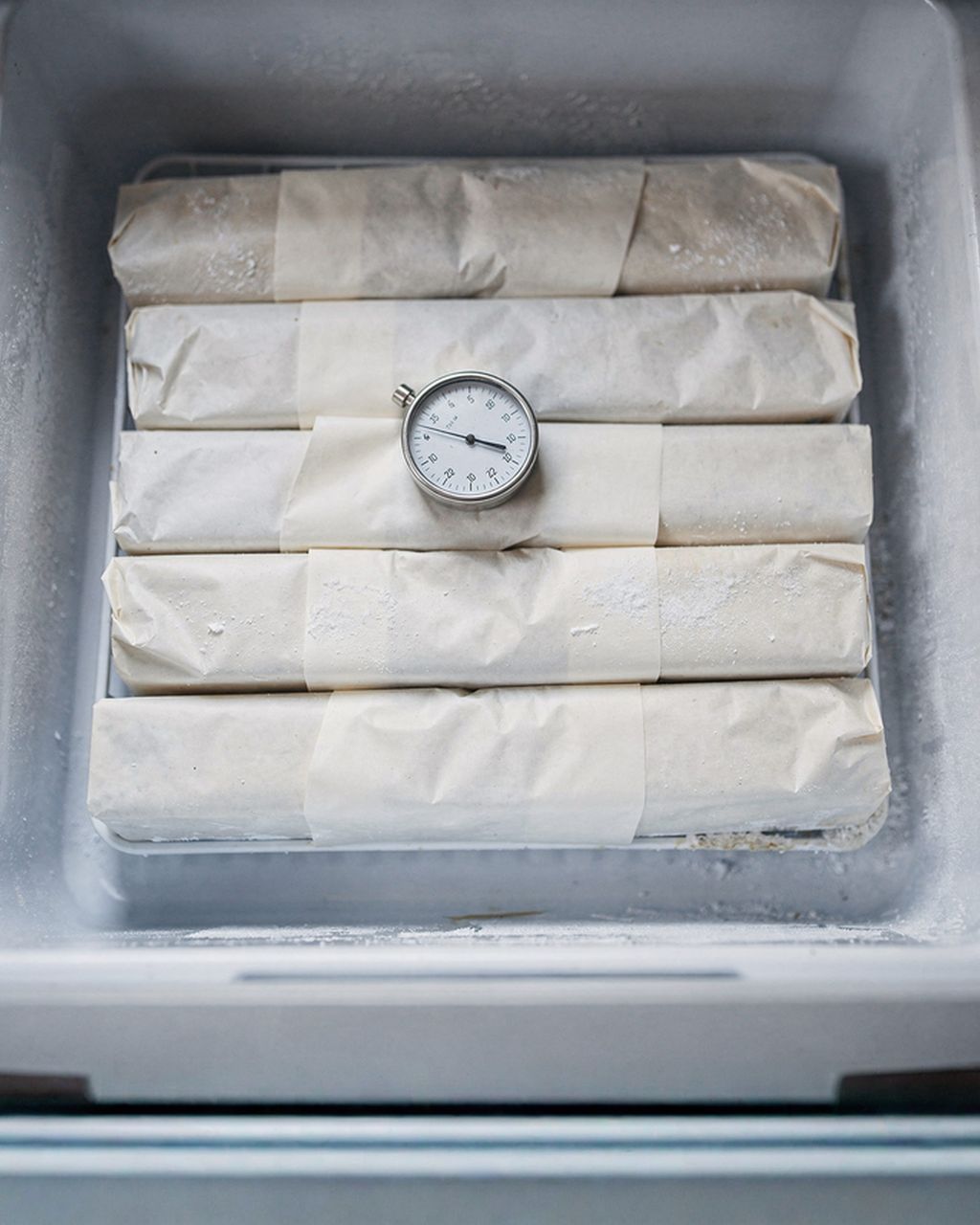
Freeze it. Freeze for at least 30 minutes, until firm enough to work with.
Cut and place. Using a cutter the same diameter as your puffs, cut out discs and place one on top of each puff just before baking.
Want to experiment? Work a teaspoon of cocoa or a pinch of cinnamon into the dough, a drop of food colouring for effect, or some finely chopped nuts for extra texture.

Pipe the choux dough into walnut-sized mounds, top each with a craquelin disc, and bake at 200°C/180°C fan (400°F/350°F fan) for 20–25 minutes until golden. Don't open the oven door while baking.
Pipe. Using a piping bag fitted with a round tip (about 1cm), pipe mounds onto baking paper, leaving space between them — they'll expand in the oven. Press down any peaks with a damp finger so they don't stick up and burn.
Top with craquelin. Place a frozen disc on top of each mound.
Bake without peeking. Don't open the oven for the first 20 minutes — letting steam escape will cause the puffs to collapse. Bake until golden and firm to the touch.
Dry out and cool. For the last 5–10 minutes, you can prop the door slightly ajar (wedge it with a wooden spoon) to let steam escape and properly dry out the crust. Let the puffs cool in the slightly open oven so they don't collapse.
Once you've mastered choux, a whole world of French pastry opens up — from filled profiteroles to a showstopping croquembouche tower and classic English-style cream puffs.
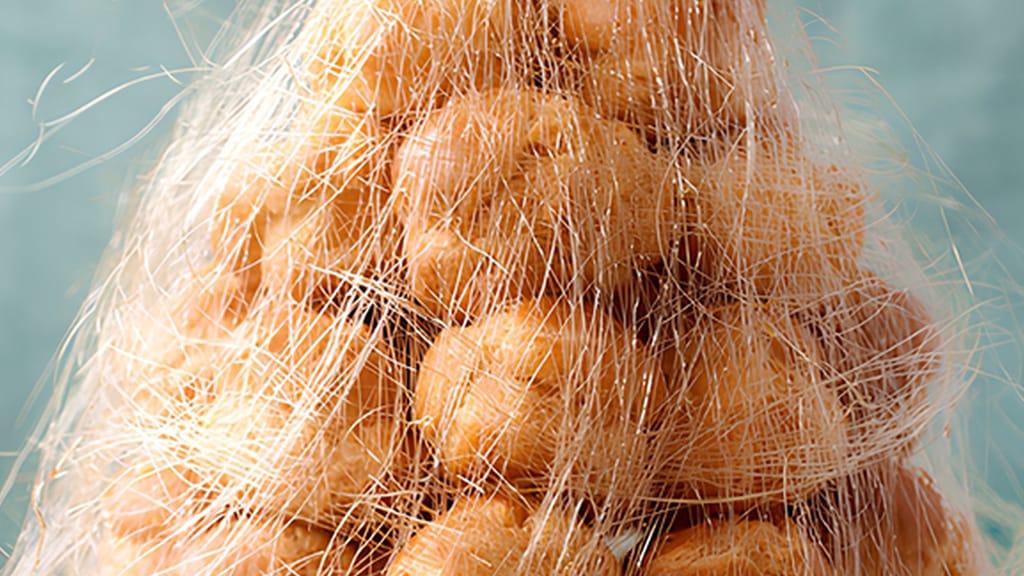
Croquembouche
Croquembouche: a showstopping tower of filled choux buns held together with caramel
There are four classic fillings for choux: pastry cream (crème pâtissière), whipped cream, fruit purée, and chocolate ganache. Fill from underneath or the side using a piping bag, ideally just before serving, so the crust stays crisp.
Pastry cream (crème pâtissière) — a thick vanilla custard made from milk, egg yolks, sugar, and vanilla; the classic filling for profiteroles and éclairs alike. Easy to flavour with coffee or chocolate.
Whipped cream — a lighter, less sweet option, wonderful with fresh strawberries or raspberries, or a splash of Amaretto.
Fruit purée — mango or raspberry, for example, either on its own or folded into the cream for a fresh summer twist.
Chocolate ganache — good-quality chocolate melted into hot cream; once cooled, it becomes a thick, intense filling for chocolate lovers.
You can flavour to match the season too: cinnamon or nutmeg in the cream for winter, lemon zest in the purée for spring, a pinch of lavender in the whipped cream for summer, and pear purée with cardamom for autumn.
There are three usual culprits: dough that's too thin, opening the oven mid-bake, and underbaking.
Collapses after coming out of the oven — the choux is underbaked. Bake longer, until firm and well-coloured; better a few minutes too long than too short.
Didn't rise — the dough was too thin (too many eggs or too much liquid), or the oven wasn't hot enough. Go by consistency, not egg count.
Comes out chewy and soft instead of crisp — steam got trapped inside. For the last 5–10 minutes, prop the door open to let the puffs dry out, and only fill them right before serving.
Craquelin didn't crack — the disc was too thick, or it went into the oven soft rather than frozen. Roll to 2mm and place it on frozen.
Choux au craquelin is best on the day it's baked, when the crust is at its crispiest. Unfilled shells will keep for 1–2 days in an airtight container — just pop them back in the oven at 160°C (320°F) for a few minutes to re-crisp them. Filled ones belong in the fridge and should be eaten within a few hours, before the filling softens the crust.
Yes, both freeze well. Store the cut-out craquelin discs in the freezer layered between sheets of paper, and place them straight onto the dough while still frozen. Baked, unfilled shells can also be frozen — just refresh them in the oven for a few minutes before filling.
It's possible, but trickier. Swap the plain flour for a gluten-free blend with xanthan gum; the choux dough will need a bit longer on the heat, and the puffs tend to come out more delicate and less airy than with wheat flour.
Not strictly, though a piping bag gives you the neatest, most even puffs. Without one, you can spoon the dough into mounds using two spoons, or snip the corner off a sturdy zip-top bag as a makeshift piping bag.
Milk gives the dough a softer crumb, a creamier flavor, and a deeper golden colour, since the milk sugars caramelise. Water, on the other hand, helps the dough rise higher and stay light — which is why a 1:1 ratio works so well for choux au craquelin, giving you both crispness and a nicely puffed, hollow centre.
One recipe worth heating the oven for, one tip, and one deal from the shop. Nothing else.