Croquembouche

Updated Jul 19, 2026
Profiteroles and éclairs both start life as the same choux pastry (pâte à choux) — the difference lies in what you do with it. Profiteroles are small, round puffs filled with whipped cream or pastry cream and coated in chocolate; éclairs are elongated, filled with cream, and glazed on top. Below you'll find exactly how they differ, how to master choux pastry without it collapsing, and when to serve which dessert.
The main differences are shape, filling, and glaze — the pastry itself is identical. In short:
Pastry: both are made from choux pastry (pâte à choux). Same base, different shaping.
Shape and size: profiteroles are round, 3–5 cm in diameter; éclairs are elongated, 10–14 cm long.
Filling: profiteroles are filled with whipped cream, ice cream, or pastry cream; éclairs are almost always filled with pastry cream (vanilla, chocolate, or coffee).
Glaze: profiteroles are coated in chocolate or caramel; éclairs get a smooth layer of chocolate or fondant just on top.
Serving: profiteroles work as a stacked dessert or a festive croquembouche tower; éclairs are the classic pastry to enjoy with coffee.
Remember this and you'll be able to tell them apart not just in the kitchen, but through the bakery display case too.

Both belong to French pâtisserie tradition and are built on choux pastry, whose invention is traditionally (if somewhat legendarily) credited to an Italian pastry chef in the service of Catherine de' Medici around 1540. Historians say it was refined into its modern form at the turn of the 18th and 19th centuries by French pastry chefs Jean Avice and Antonin Carême. The word "profiterole" is older and originally referred even to savoury pastries filled with meat or cheese; "éclair" (French for lightning) only became attached to the elongated cream pastry in the mid-19th century.
Choux pastry is the only pastry that's cooked on the stovetop first and only then baked. That's exactly why it puffs up into a hollow, crisp shell that you can later fill with cream.
It works on steam power. The dough contains a lot of water; in the oven, this quickly turns to steam, which puffs the pastry up from the inside and creates that characteristic hollow centre. You don't need any baking powder or yeast — the rise comes purely from water, eggs, and heat.
Cook the base. Bring the liquid, butter, and a pinch of salt to the boil — roughly 125 ml water (or half milk, half water) to 50 g butter.
Add the flour. Tip in about 75 g of sifted plain flour all at once and stir until the dough comes together in a ball and a thin film forms on the bottom of the pan. Keep "drying" it out for another 1–2 minutes.
Cool it down. Transfer the dough to a bowl and let it cool to lukewarm for 2–3 minutes, otherwise you'll cook the eggs when you add them.
Beat in the eggs. Gradually mix in 2–3 lightly beaten eggs. The dough is ready when it's glossy and falls from the spoon in a slow "V" shape. It's better to add the eggs gradually rather than all at once — the right consistency matters more than an exact egg count.
There are usually three culprits behind a choux disaster — and all of them are avoidable:
Too many eggs. Runny dough won't puff up in the oven and will spread out flat instead. Add the eggs gradually and watch the consistency.
Opening the oven too soon.Don't open the oven door for the first 20 minutes or so. Escaping steam and a sudden temperature drop will cause the shells to collapse.
Underbaking. The pastries need to be golden and dry to the touch, hollow inside. Pulled out too early, they'll turn soft and cave in. It helps to leave them in the switched-off, slightly open oven for a few extra minutes at the end to dry out fully.
Shape profiteroles into small balls 3–5 cm in diameter, bake until firm, then fill and coat in chocolate. Pipe the choux pastry through a piping bag fitted with a round tip onto a baking-paper-lined tray — even mounds spaced at least 3 cm apart, since they'll expand as they bake. Smooth the tops with a damp finger so the peaks don't scorch.
Bake at 200°C (400°F) for about 20–25 minutes until golden and firm; don't open the oven for the first 20 minutes. Once cooled, poke a small hole in the bottom of each puff and fill it with whipped cream or pastry cream — either piped straight in through the hole, or by slicing the puff in half.
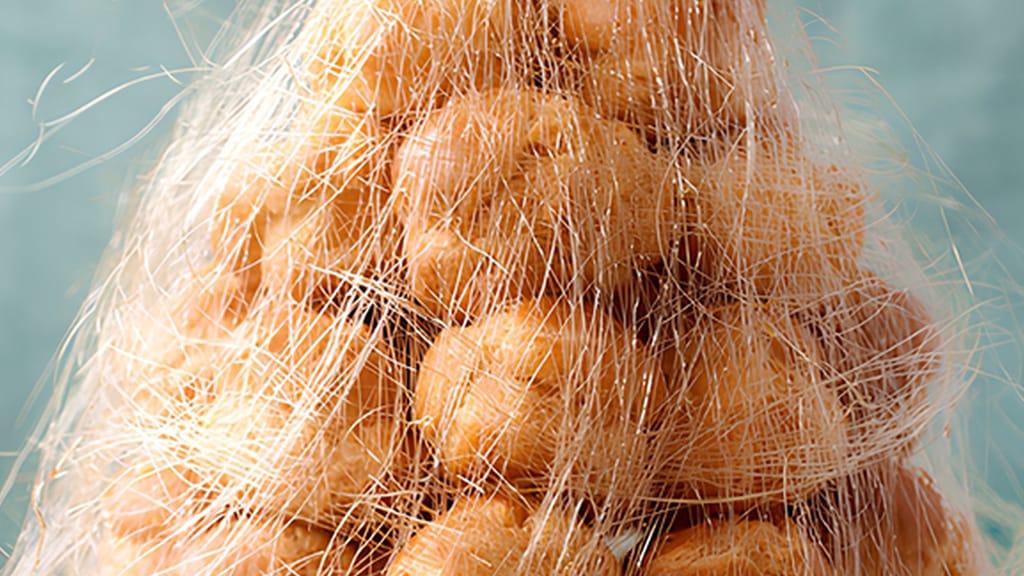
Finally, dip the tops in melted chocolate or drizzle with caramel. Stacked into a tower and held together with caramel, these become a croquembouche — the French dessert for weddings and big celebrations.
Croquembouche
Croquembouche – a festive tower of cream-filled profiteroles

Pipe éclairs into elongated strips 10–14 cm long, bake in two stages, fill with pastry cream, and dip the top in chocolate. Use a piping bag fitted with a star tip (or a round one) and pipe straight, even-length strips — a consistent shape means even baking. A star tip also creates ridges on the surface that help prevent cracking.
Bake in two stages: first 10 minutes at 200°C (400°F) to form a firm shell, then lower the temperature to 170°C (340°F) and continue baking for another 15–20 minutes until golden. Don't open the oven door during this time, or the éclairs will collapse.
Once cooled, fill the éclairs with pastry cream — vanilla, chocolate, coffee, or pistachio — through two or three holes poked in the bottom. Dip the tops in chocolate melted with a splash of cream, or in classic fondant, and let set.
The classic combo is pastry cream inside and chocolate on top — but you can vary both. Some tried-and-tested combinations:
Pastry cream (crème pâtissière): a rich vanilla custard made from milk, egg yolks, sugar, and starch. The go-to filling for éclairs; flavour it with coffee, chocolate, or pistachio.
Whipped cream (crème chantilly): a lighter filling typical of profiteroles.
Chocolate ganache: chocolate melted with cream in roughly a 1:1 ratio — thicker as a filling, thinner as a glaze.
Glaze: dark, milk, or white chocolate, caramel, or the traditional fondant used on éclairs.
Add the cream and glaze only once the pastries are completely cool, and serve them filled as soon as possible — a moist filling will soften the shell over time.
Éclairs are perfect with coffee or for an afternoon treat, while profiteroles suit a festive table — and if choux pastry isn't on the cards right now, there are a few reliable alternatives.
For a wedding or a big celebration, a croquembouche tower of profiteroles is a real showstopper, or go for elegant macarons with vanilla and chocolate cream. For a dinner party, éclairs with coffee work beautifully, or something fresher — like tiramisu with raspberries or panna cotta. For a family get-together, reach for a classic that never disappoints, like a homemade apple strudel made with stretched dough.
Always choose based on the occasion, the number of guests, and the season — a lighter fruit filling is lovely in summer, while richer chocolate suits winter better.
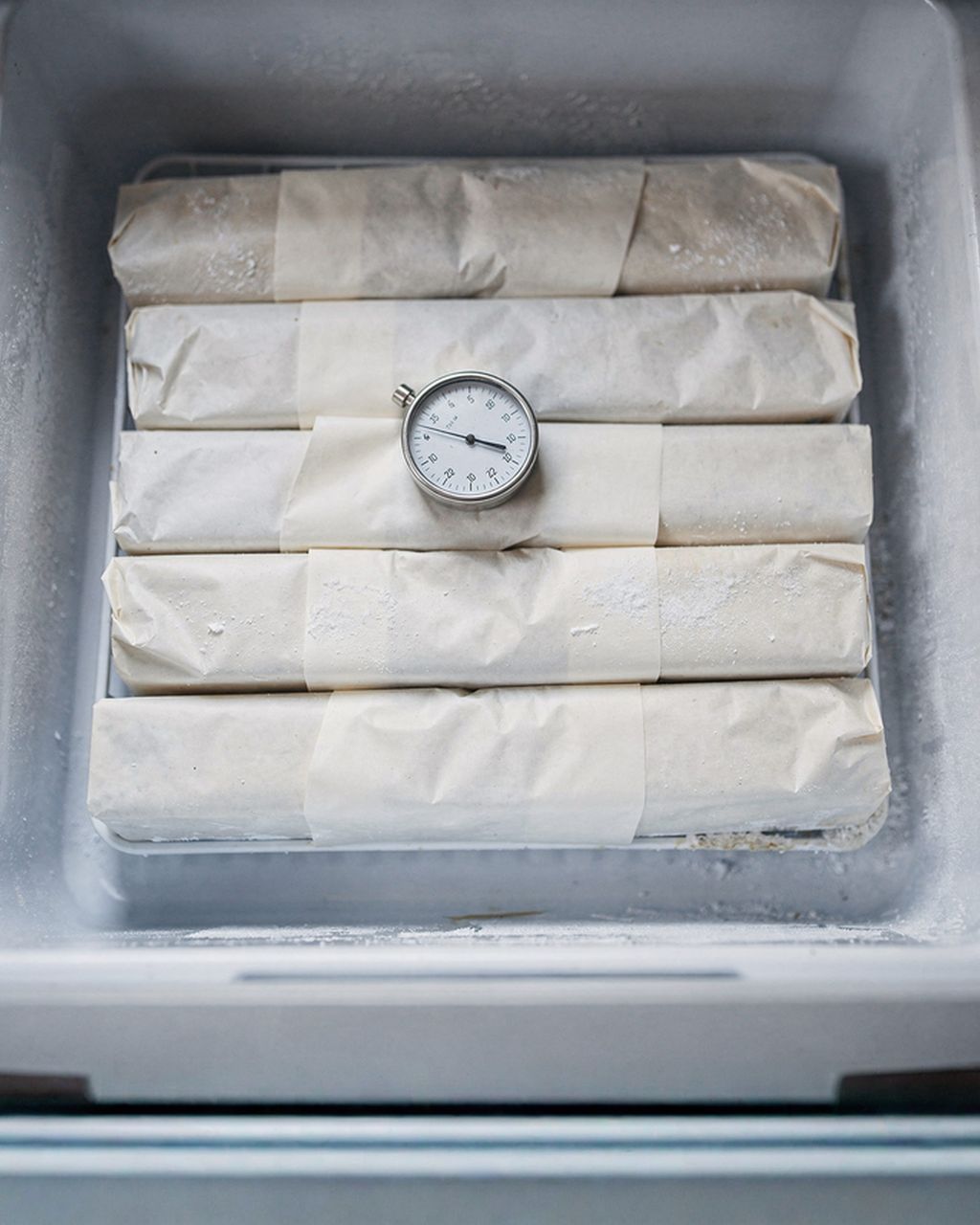
Yes — unfilled baked shells work best, and they'll keep in the freezer for several weeks. Let them thaw before filling, then crisp them up for a few minutes in a 160°C (320°F) oven to bring back the crunch. Don't freeze them once filled — both pastry cream and whipped cream turn watery after thawing. You can also freeze the piped raw dough and bake it straight from frozen.
Filled, they'll keep in the fridge for about 24 hours, but they're best enjoyed straight away. The longer they sit, the more the moist filling softens the crisp shell, so it's best to add the cream and glaze just before serving. Unfilled shells will keep for a day in a sealed container at room temperature.
All three are made from choux pastry, but they differ in shape and composition. An éclair is elongated, filled with pastry cream, and glazed on top; a věneček is ring-shaped and usually filled with both whipped cream and pastry cream; a větrník is round, sliced open, and generously filled with whipped cream and caramel cream. The éclair and věneček are the closest relatives — one's the "finger," the other the "little ring."
Éclair means "lightning" in French, and the name became attached to this pastry in the mid-19th century. The most common explanation is that it's eaten in a flash, or that its glossy glaze "flashes" like lightning. The exact origin of the name isn't actually documented — these are more likely folk explanations passed down over time.
Yes, ice cream is one of the classic profiterole fillings, and paired with warm chocolate sauce it creates a lovely hot-cold contrast. The shells need to be completely cooled, fill them just before serving, and serve immediately so the ice cream doesn't make the pastry soggy. Éclairs, on the other hand, are rarely filled with ice cream — pastry cream is their signature filling.
One recipe worth heating the oven for, one tip, and one deal from the shop. Nothing else.