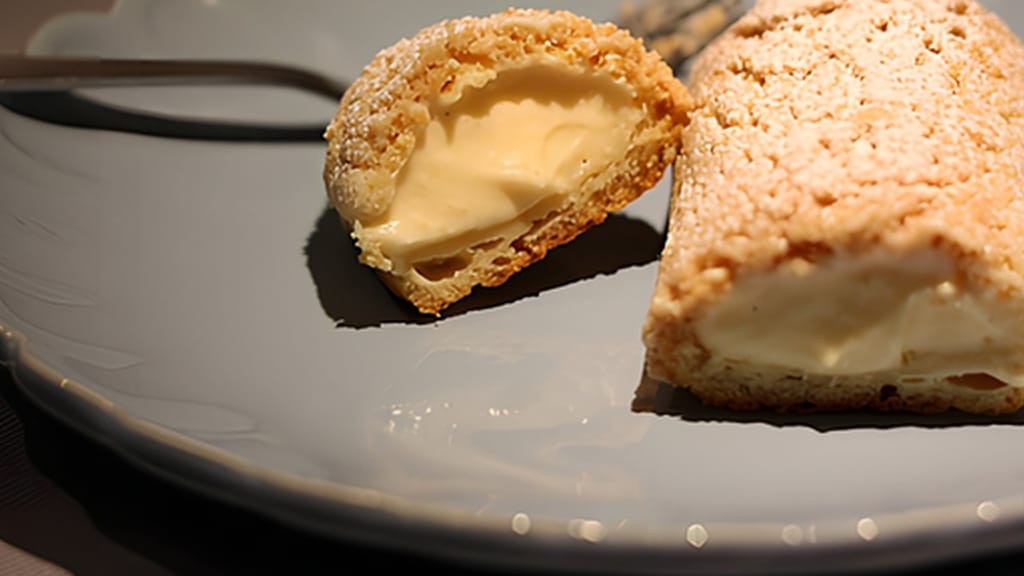
Eclairs à la ladurée – irresistibly delicious pastries
Choux Pastry: How to Get the Right Consistency and Why It Collapses After Baking
Updated Oct 17, 2026
Choux pastry works when three things are right: the dough has the correct consistency (it runs off the spoon in a firm "V"), it's baked hot at first, around 200 °C (400 °F), and then dried out in the oven until the walls are dry all the way through. It almost always collapses for the same few reasons: too much egg, a cold or opened oven, or shells pulled out before they had time to set. This one basic dough makes Czech věnečky, větrníky, profiteroles and éclairs, so once you've mastered it, you have a whole Czech pastry shop at your fingertips.
Choux pastry is a cooked dough made from water (or milk), butter, flour and eggs. It isn't raised with yeast or baking powder, only with steam. The flour is first cooked in the hot liquid, the starch gelatinises, and you get a thick paste that holds on to moisture. In the oven, the water turns rapidly into steam, which puffs the dough up from the inside, and the egg proteins then set the hollow shell.
From one dough you can make:
věnečky — rings piped with a star or round tip, filled with cream and glazed with fondant,
větrníky — large round shells with caramel glaze and whipped cream,
profiteroles — small bite-sized balls,
éclairs — elongated "fingers"; the article How to Bake Perfect Éclairs covers them in detail.
The comparison of profiteroles and éclairs sums up how they differ only in shape and filling. The base is always the same, and that's what this article is about.
Classic choux pastry is built on a ratio of roughly 2.5 : 1 : 1.5 (liquid : butter : flour), and the eggs are added according to consistency, not the number in the recipe. For one tray of věnečky (about 20) or 8–10 větrníky, you'll need:
250 ml water (or half water, half milk),
100 g butter,
150 g plain flour,
a pinch of salt (and, for sweet versions, 1 teaspoon of sugar if you like),
4–5 large eggs, which is roughly 220–280 g of beaten egg.
Water gives a crisper, paler shell; milk gives a softer shell that browns sooner (milk sugar and proteins darken faster in the oven). Plain flour is the safe choice; you can use semi-coarse flour, but the dough turns out slightly coarser and is harder to pipe.
Cooking the dough means adding all the flour at once to boiling liquid with the butter and stirring over the heat until the dough pulls away from the sides and a thin whitish film forms on the bottom of the pan. This stage decides how many eggs the dough can take.
Bring the water, butter and salt to the boil — the butter must be completely melted before the water starts to evaporate.
Take the pan off the heat, add all the flour at once and stir vigorously with a wooden spoon to avoid lumps.
Return to a medium heat and stir for 1–3 minutes. The dough comes together into a smooth ball, pulls away from the sides, and a fine crust is left on the bottom.
Transfer the dough to a bowl and let it cool for a few minutes, or beat it with a stand mixer and paddle attachment so the steam escapes faster.
Why dry it: the more water you cook out of the dough, the more eggs it can take — and the eggs give the structure that holds the shell up. Underdried dough gets "saturated" after just three eggs and comes out flat. Overdried dough (greasy, with the butter separating out) will crack instead.
Choux pastry made with 150 g of flour usually takes 4 to 5 large eggs (about 220–280 g), but consistency decides, not the count. Eggs vary in size and dough varies in how long you dried it, so the same recipe may take 4 eggs one time and almost 5 the next.
Add the eggs to warm, not hot, dough. Around 60 °C (140 °F) — warm to the touch, but you can still hold a finger in it. In hot dough the eggs would start to scramble.
Beat the eggs beforehand in a measuring jug and add them in stages, ideally one egg at a time and the last one by spoonfuls.
Beat until smooth after every addition. The dough first breaks up into slippery pieces, then comes back together. Add the next portion only when it's smooth and glossy again.
Keep the last egg aside and add it only according to the consistency test below.
Pouring it all in at once is the most common mistake: you can't take an egg back out of the dough, and dough that is too loose spreads and deflates after baking.
Choux paste of the right thickness is glossy and smooth, and it slides slowly off a wooden spoon in a firm "tongue" that ends in an upside-down triangle — the letter V. The V test shows both things that matter in a single motion: how runny the paste is and whether it holds its shape.
The V test: scoop up some paste with a wooden spoon or spatula, lift it and hold it vertically. Within a few seconds the paste should stretch and hang in a thick V-shaped tail about 3–5 cm (1¼–2 in) long, which holds together and doesn't snap off right away.
The paste stays on the spoon in a clump and doesn't flow → it's too thick, so add a spoonful of egg.
The paste runs off the spoon quickly and the tail snaps off → it's too loose, so don't add any more egg.
It slowly forms a glossy V and holds → it's exactly right.
The groove test: draw a groove through the paste with your finger or a spoon. If the edges of the groove slowly start to close up within a few seconds, you're done. A groove that stays sharp means the paste is thick; one that closes up immediately means it's too loose.
On the baking sheet: a piped mound should hold its shape and only settle slightly. If it spreads into a flat disc within a minute, the paste is too loose — and a disc won't puff up into a proper shell.
Choux pastry is piped from a piping bag, not spooned — that's the only way to get shells of the same size that bake evenly. Hold the bag perpendicular to the tray, just above it, and squeeze with even pressure.
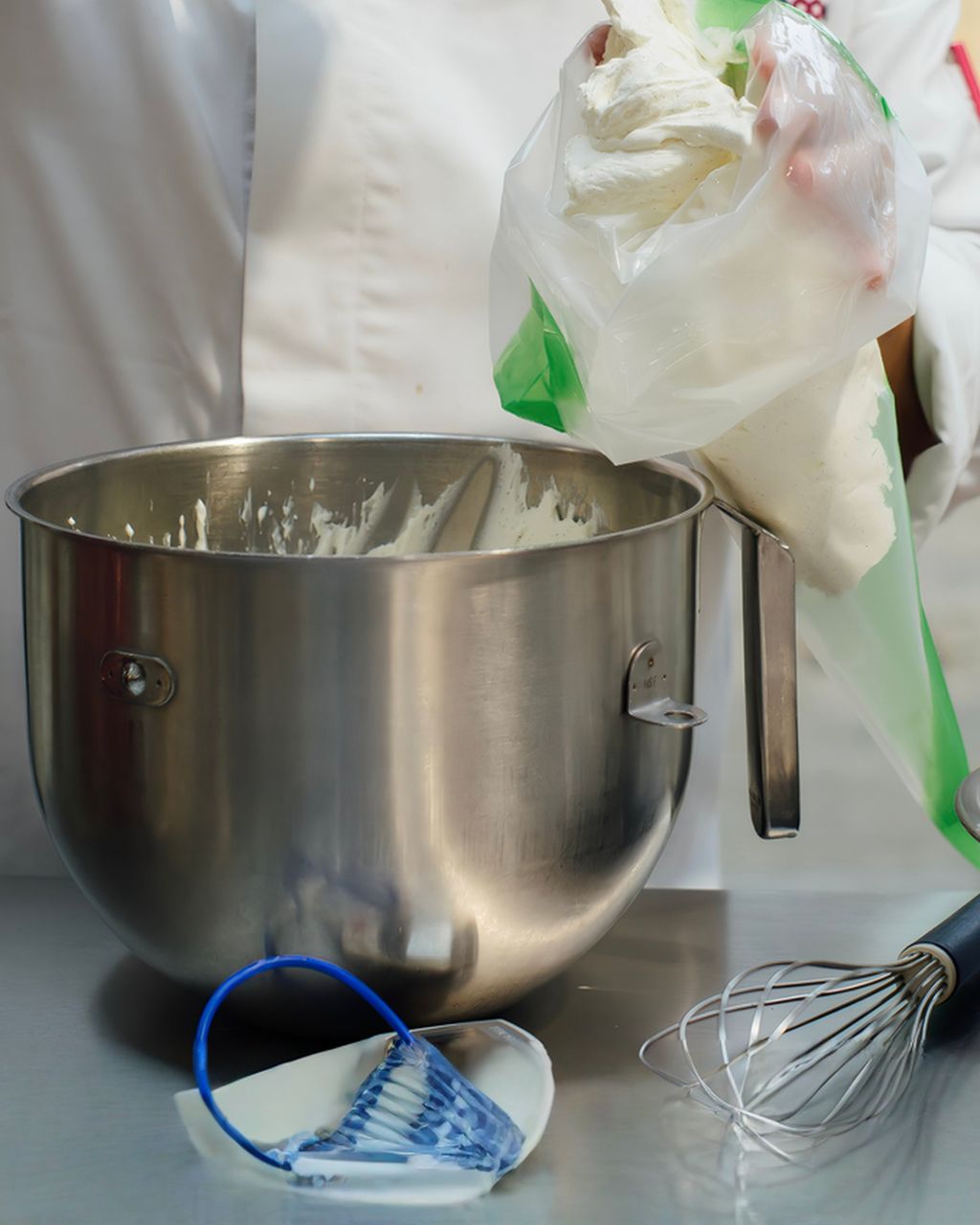
Bag: a batch made with 150 g of flour weighs around 700 g. In a smaller bag you have to keep refilling it, and the warmth of your hand heats the dough in the meantime; 46×26 cm piping bags hold the whole batch at once and leave you room for a proper twist. A cloth bag works too, but you have to boil it clean after every bake.
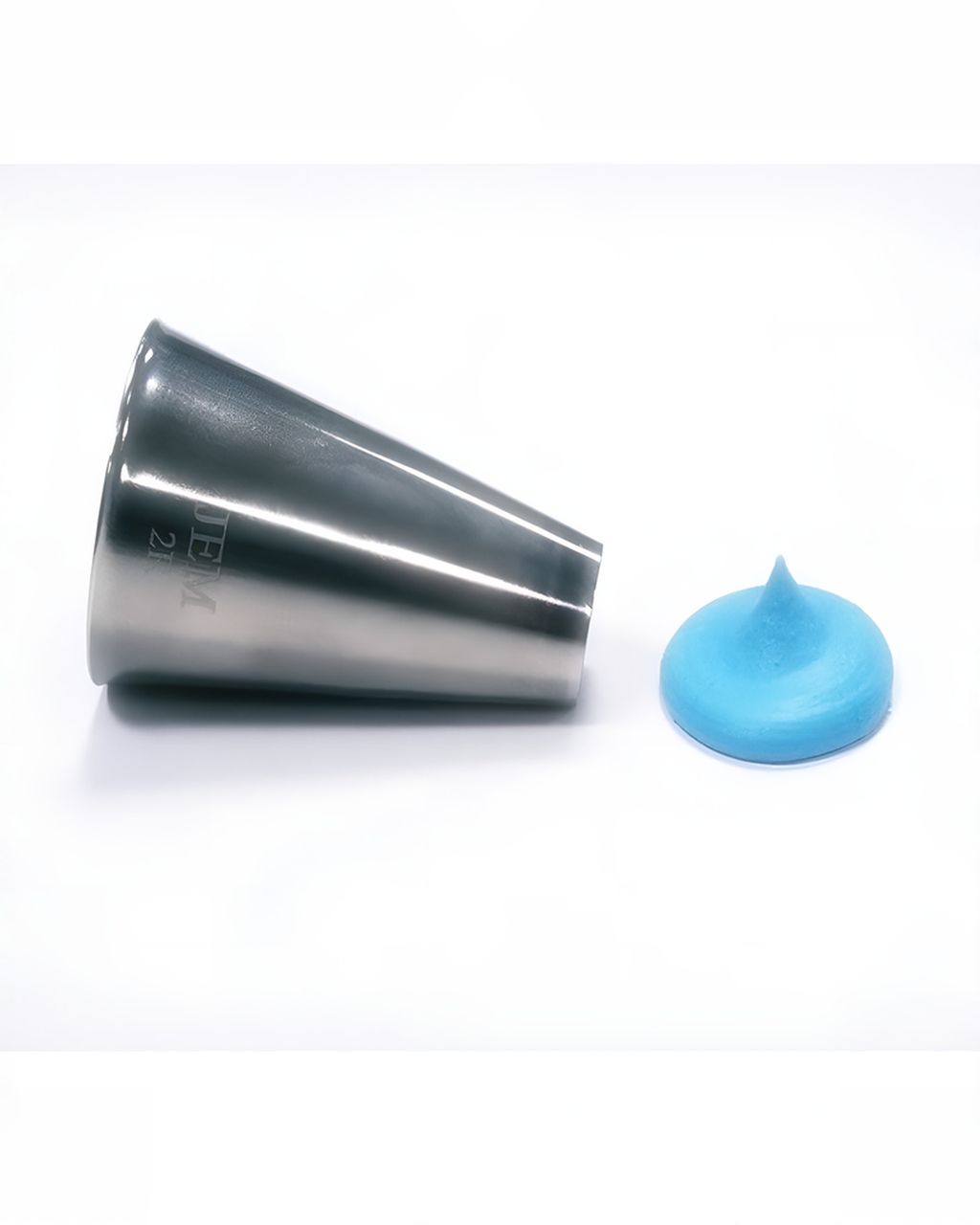
Tip: for profiteroles and větrníky, reach for a medium round tip, such as the JEM Savoy round #2R — the mounds come out smooth and regular. Classic ridged věnečky are piped with a larger star tip; the ridges help the dough expand evenly and crack less.
Sizes: profiteroles about 3 cm, větrníky 5–6 cm, věnečky rings 6–7 cm across. Leave at least 3 cm between pieces — the dough roughly doubles in volume in the oven.
Peaks: smooth down the little tip left after you lift the piping tip away, using a finger dipped in water. Otherwise it will burn and the puffing will be uneven.
Choux dough will keep in the bag for roughly an hour at room temperature; no longer, or it starts to form a skin.
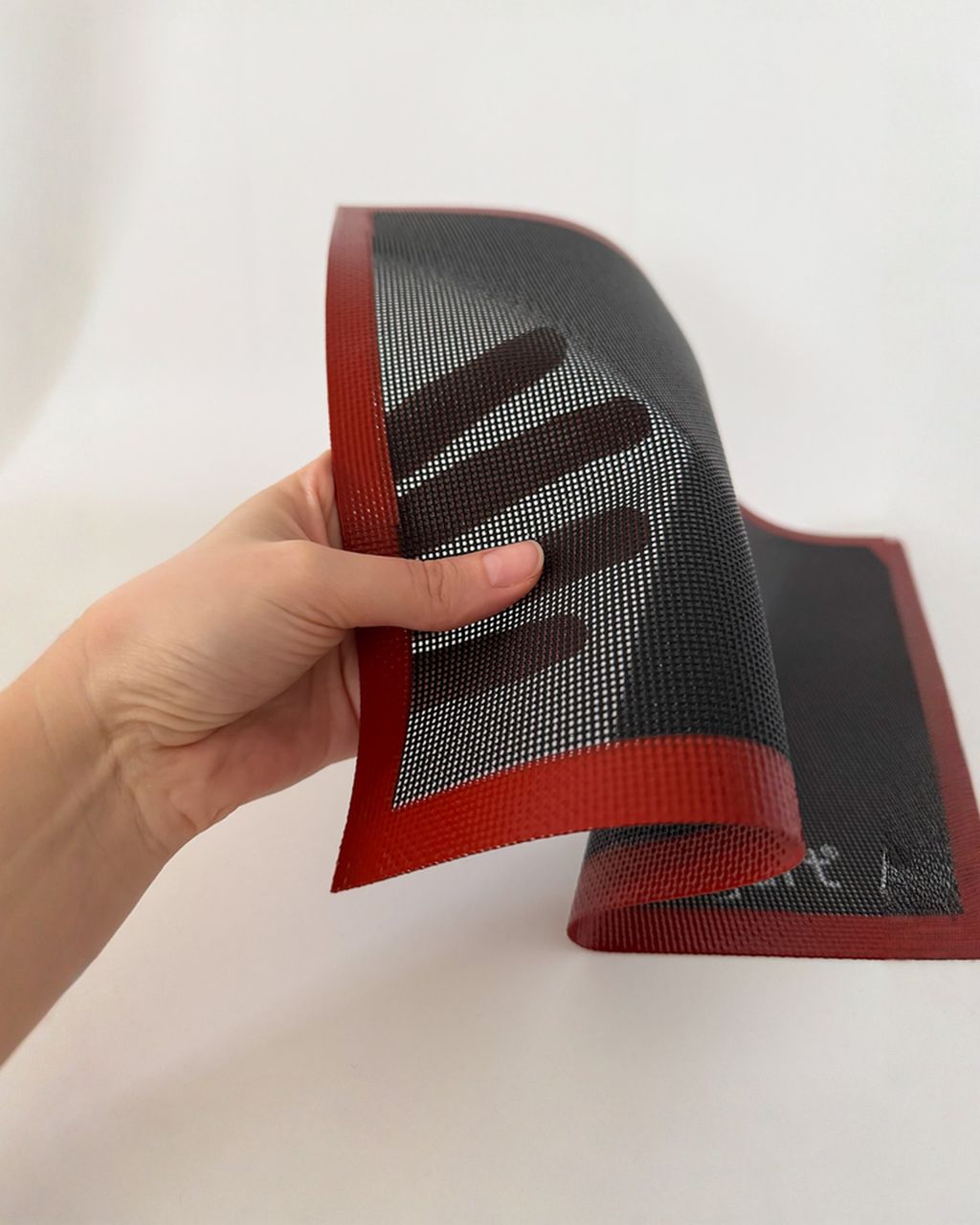
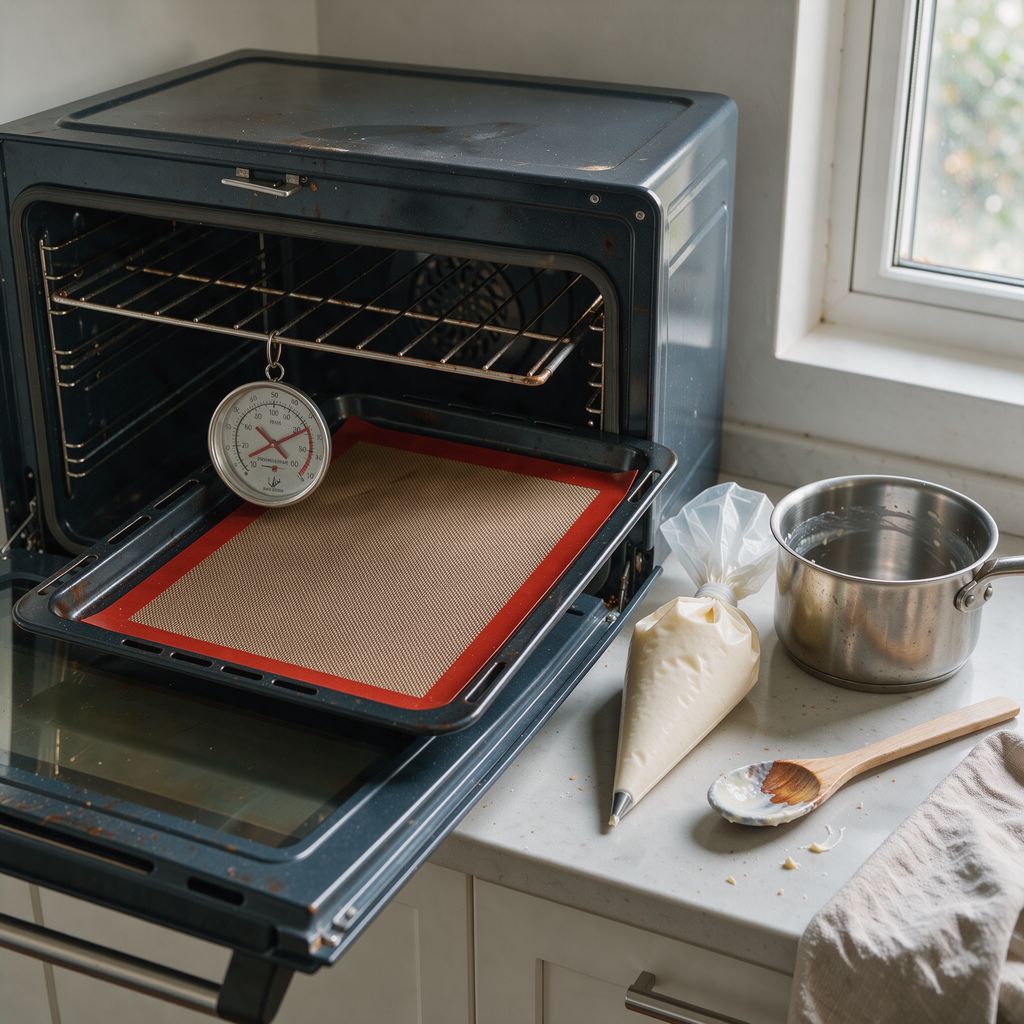
A perforated silicone mat gives choux pastry the flattest, driest bases, because the holes let steam and hot air reach the bottom; baking parchment works too, but the bases tend to be less flat. You can also bake on a greased and floured tray or on a solid silicone mat — each surface gives a slightly different result.
Baking parchment is cheap and it works. It just slides around while you pipe (stick it down at the corners with a dab of dough) and the bases of the shells tend to be less flat.
A greased and floured tray is the old, proven way. The bases bake through nicely, but the fat and flour on the tray scorch and the shells sometimes stick.
A solid silicone mat doesn't move, but it insulates — the bases can stay paler and moister, which is exactly what you don't want with choux pastry.
A perforated silicone mat combines both: it stays put, nothing sticks, and the tiny holes let hot air and steam reach the bottom. The bases are flat, dry and evenly baked, which is exactly where shells most often stay raw.
You'll find mats, trays and other baking equipment together in the baking tins and tools section.
Choux pastry is baked first at 200 °C (400 °F) for about 15–20 minutes so it puffs up sharply, then the temperature is lowered to 170–180 °C (340–355 °F) for another 10–20 minutes so the walls bake through and set. Finally, the shells are dried out.
Preheat the oven properly — at least 20 minutes. The dough needs an instant blast of heat, otherwise the steam escapes before it can puff the dough up.
Top and bottom heat is the safer choice for choux pastry. A fan oven (about 10–20 °C lower) works too, but a strong fan can make the shells puff up lopsided.
Don't open the oven for the first 20–25 minutes. Cold air knocks the steam down before the shell has set.
Lower the temperature and bake until the shells are golden brown right into the creases and ridges — not just yellowish.
Dry them out: turn off the oven, prop the door open (a wooden spoon works) and leave the shells inside for 10–15 minutes. Alternatively, pierce them on the side with a skewer as soon as you take them out, so the steam can escape.
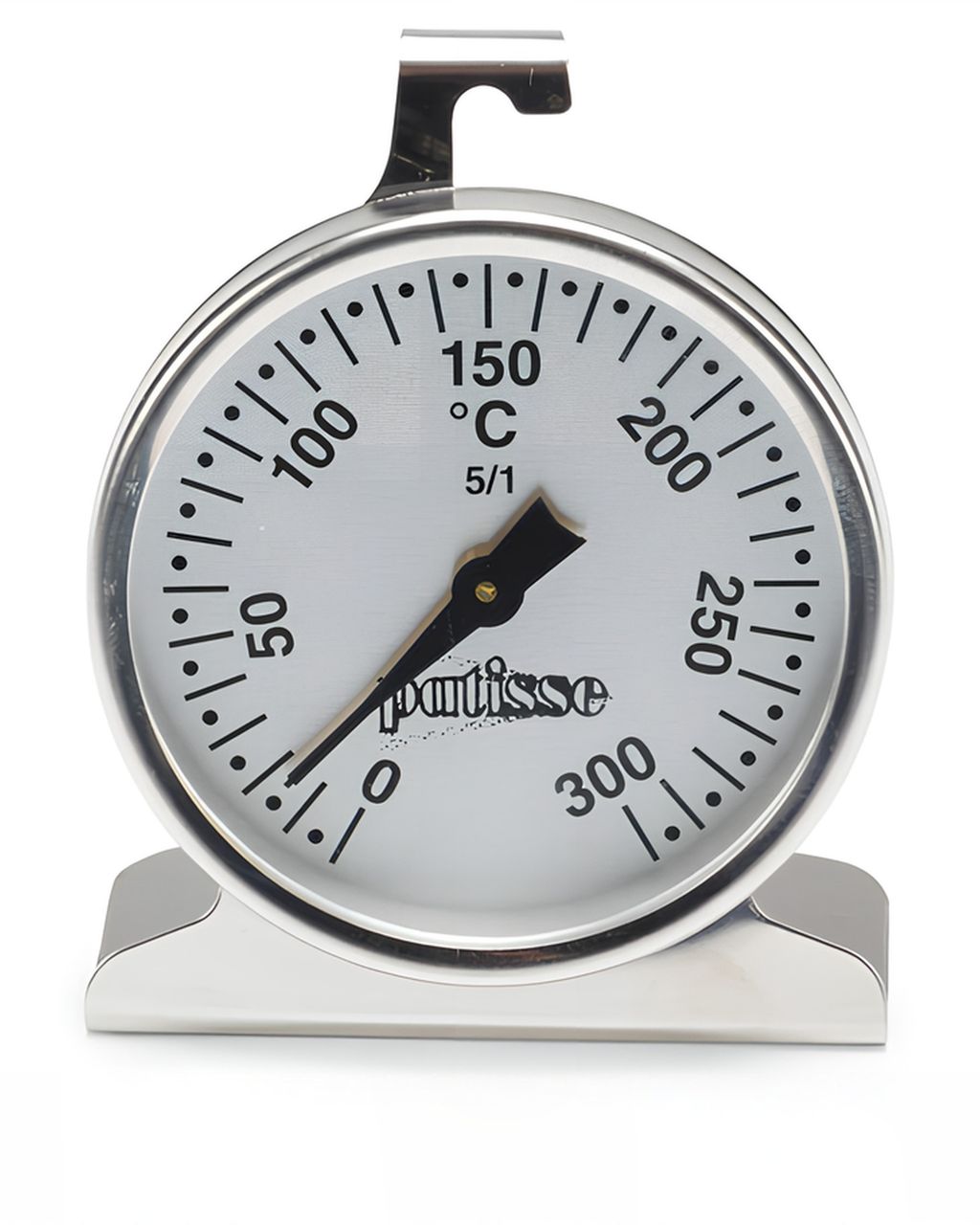
Why use an oven thermometer: home ovens commonly deviate from the set temperature by 10–30 °C, and they heat differently at the back and near the door. If your oven delivers 180 °C instead of 200 °C, the dough puffs up little and slowly. An Patisse oven thermometer hung on the rack shows you the real temperature, so you know whether to adjust the dial. With choux pastry, that's the difference between a puffed ring and a flat pancake.
Choux pastry collapses when its walls don't manage to set before the steam inside condenses. There are five most common causes: too many eggs, an opened oven, taking the shells out too early, a low oven temperature and an insufficiently cooked base.
Too many eggs, loose dough. Loose dough has too little structure for that much water. It puffs up, but can't support its own weight. Fix: add the eggs in stages and keep an eye on the V test.
Opening the oven in the first half of baking. Cold air knocks down the steam and a shell that isn't firm yet caves in. Such a shell won't puff up again.
Taking them out too soon. They look done on the outside, but the inner walls are still damp. As they cool, the steam inside condenses and the shell crumples. Fix: bake until golden brown right into the creases and dry them in the slightly open oven.
Low or fluctuating temperature. An oven that runs cooler than the dial says dries the dough slowly instead of puffing it up sharply. Check it with a thermometer.
An insufficiently cooked base. Dough that wasn't dried out on the stovetop stays sticky and damp even after baking. Fix: stir over the heat until a film forms on the bottom of the pan.
If the shells collapse only a little, you can often save them: put them back in a 160 °C (320 °F) oven for 5–10 minutes and let them dry out. Completely deflated discs won't puff up again, but cut into pieces they work well in a creamy dessert served in a glass.
Choux pastry is filled with butter or custard cream (věnečky), whipped cream (větrníky, profiteroles) or caramel cream, and glazed with fondant or caramel. Fill the shells only once they're completely cool, ideally just before serving, so they soften as little as possible.
For věnečky, the classic filling is butter cream, meaning custard cream with butter, and they're glazed with fondant on top. Whipped cream belongs in větrníky and profiteroles; if you need it to hold its shape inside the shell, the article firm whipped cream filling with gelatine will help. If the French version tempts you, try éclairs Ladurée-style.
Eclairs à la ladurée – irresistibly delicious pastries
Ladurée-style éclairs made with choux pastry
Yes, choux pastry can be frozen both raw and baked. Pipe raw mounds onto a tray, freeze them, then transfer to a bag; bake them straight from frozen, just 5–10 minutes longer. Baked empty shells keep in the freezer for about a month, and before filling you just need to crisp them up again in a 160 °C (320 °F) oven for 5 minutes.
Empty choux shells keep for 1–2 days in an airtight container at room temperature. Eat filled ones ideally the same day, or the next day at the latest from the fridge, as the cream gradually softens them. You can revive soft empty shells with 5 minutes in a 160 °C (320 °F) oven.
Yes, finished choux dough keeps in the fridge for up to 24 hours, with cling film pressed directly onto the surface. Before piping, let it warm up for about 30 minutes and give it a quick stir. Shells made from chilled dough puff up slightly less than those made from fresh.
Yes, you can beat the eggs into choux dough in a stand mixer with the paddle attachment (not the whisk). Cook the flour on the stovetop with a wooden spoon, though. The mixer has the advantage of cooling the dough quickly and working the eggs in until smooth; just stop it between additions and check the consistency with the V test.
You can bake choux pastry without gluten, because its shape comes mainly from the eggs and the gelatinised starch, not from gluten. Replace the plain flour with the same weight of a good gluten-free baking blend. The dough tends to be a little looser, so add the eggs more carefully and dry the shells for longer.
One recipe worth heating the oven for, one tip, and one deal from the shop. Nothing else.