Macarons with vanilla and chocolate cream
How to Color Macarons: How Much Gel Food Coloring to Use Without Cracked Shells
Updated Oct 15, 2026
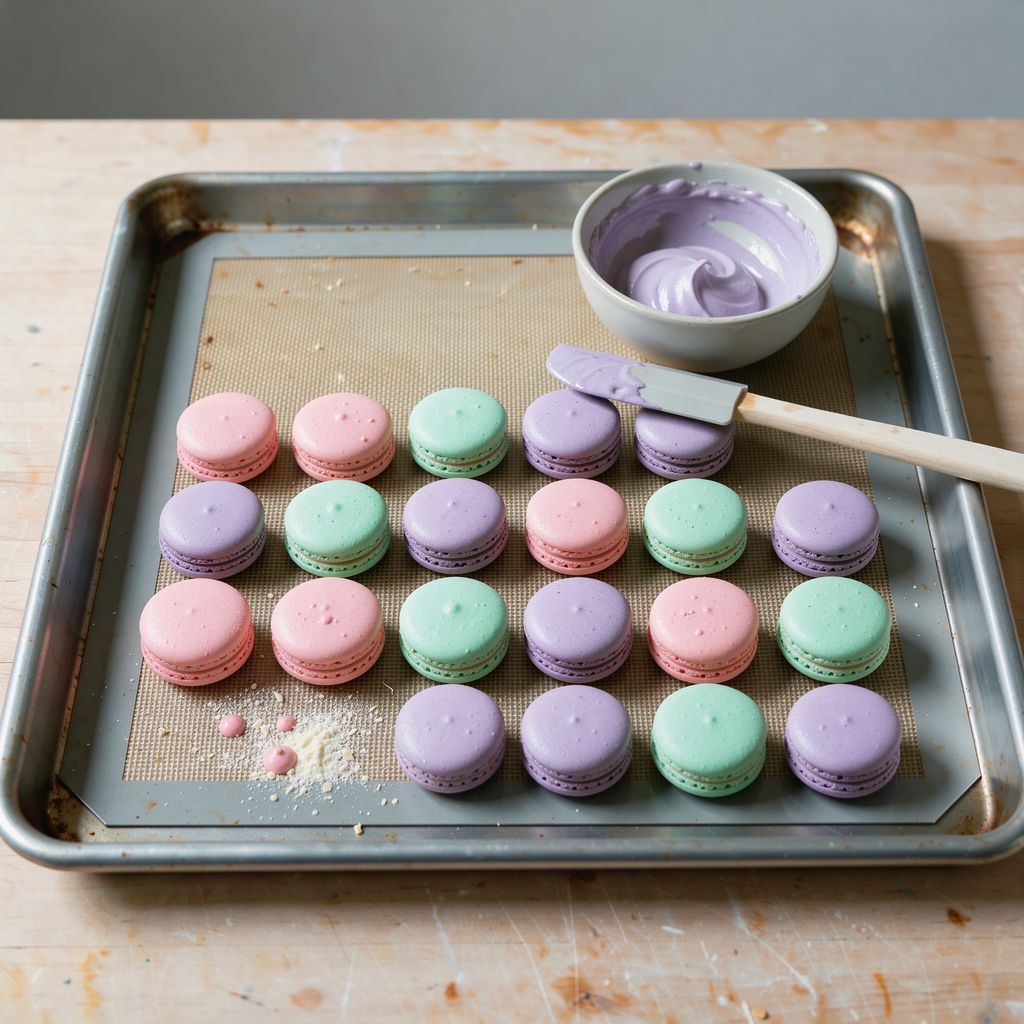
Coloring macarons works best with concentrated gel food coloring, added to the finished meringue, and for a batch made with 100 g of egg whites you should stay at around 10 drops of gel at most. More coloring means more water, and water is the most common reason shells crack, come out without feet or spread. Here you'll find exact amounts for pastel and deep shades, the right moment to add the color, and what to do if you want a truly dark shade. The method for the shells themselves has its own article, so this one sticks to color only.
Macarons crack after coloring mainly because of water: every coloring except powder adds liquid to the batter, which weakens the meringue and keeps the shell from drying properly. Macaron batter is balanced to the gram – egg whites, almonds and sugar in harmony. Add a few extra grams of liquid and that balance is gone.
What happens when you add too much coloring:
The batter thins out and spreads into flat discs after piping.
The shell doesn't dry – no dry skin forms, so in the oven the steam bursts upward instead of out to the sides.
The feet are missing or lopsided, because the surface isn't firm enough.
Cracks can have other causes too (under-mixed batter, air in the batter, an oven that's too hot) – those are covered in our step-by-step method for perfect macarons. But coloring is the variable you're most likely to overdo when making colored macarons.
Seasonal baking plans, tested recipes and kitchen tricks that save you time. Unsubscribe in one click.
Use concentrated gel food coloring for macarons, add powder for very dark shades, and skip supermarket liquid coloring entirely. The difference is how much water you bring in for each shade.
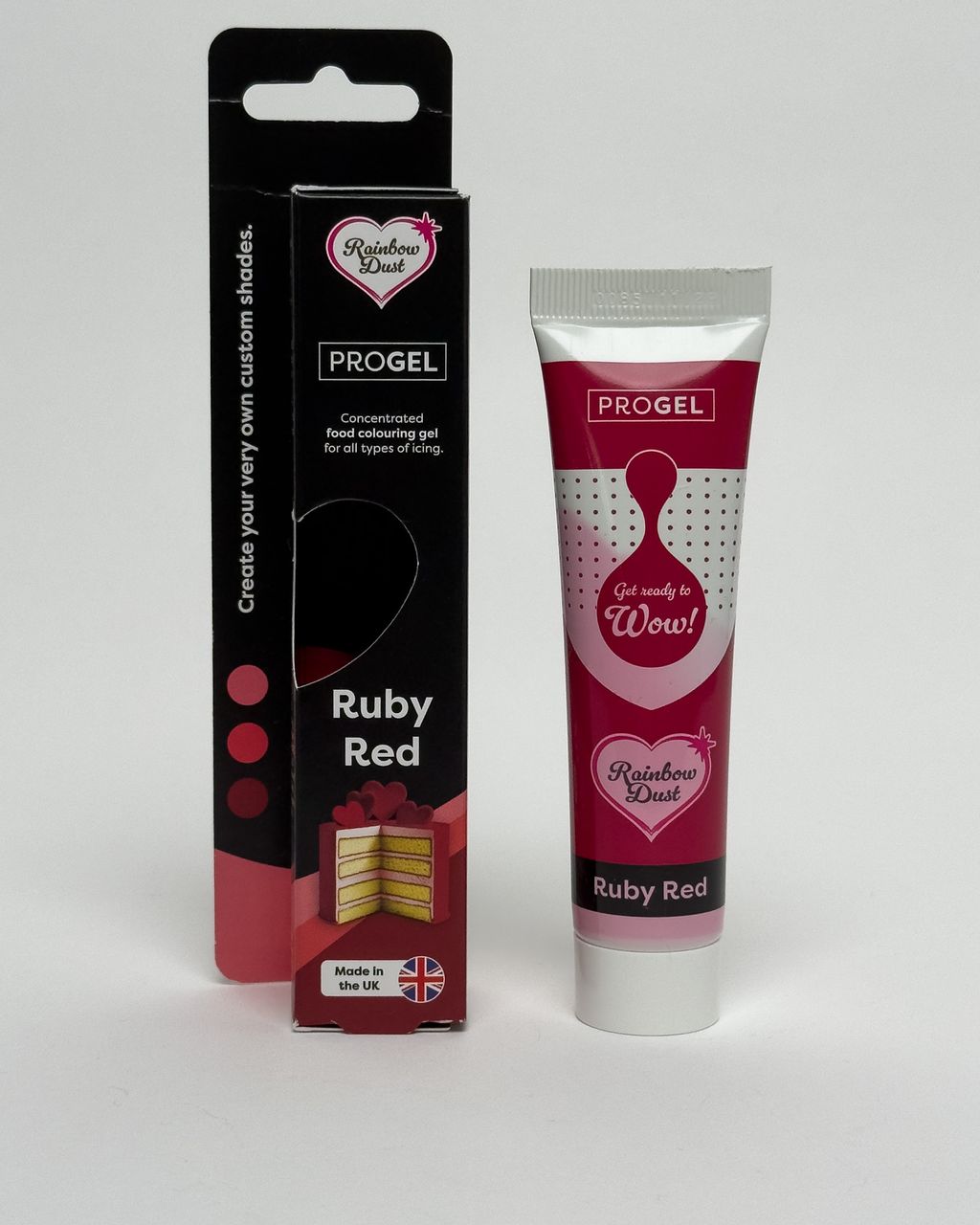
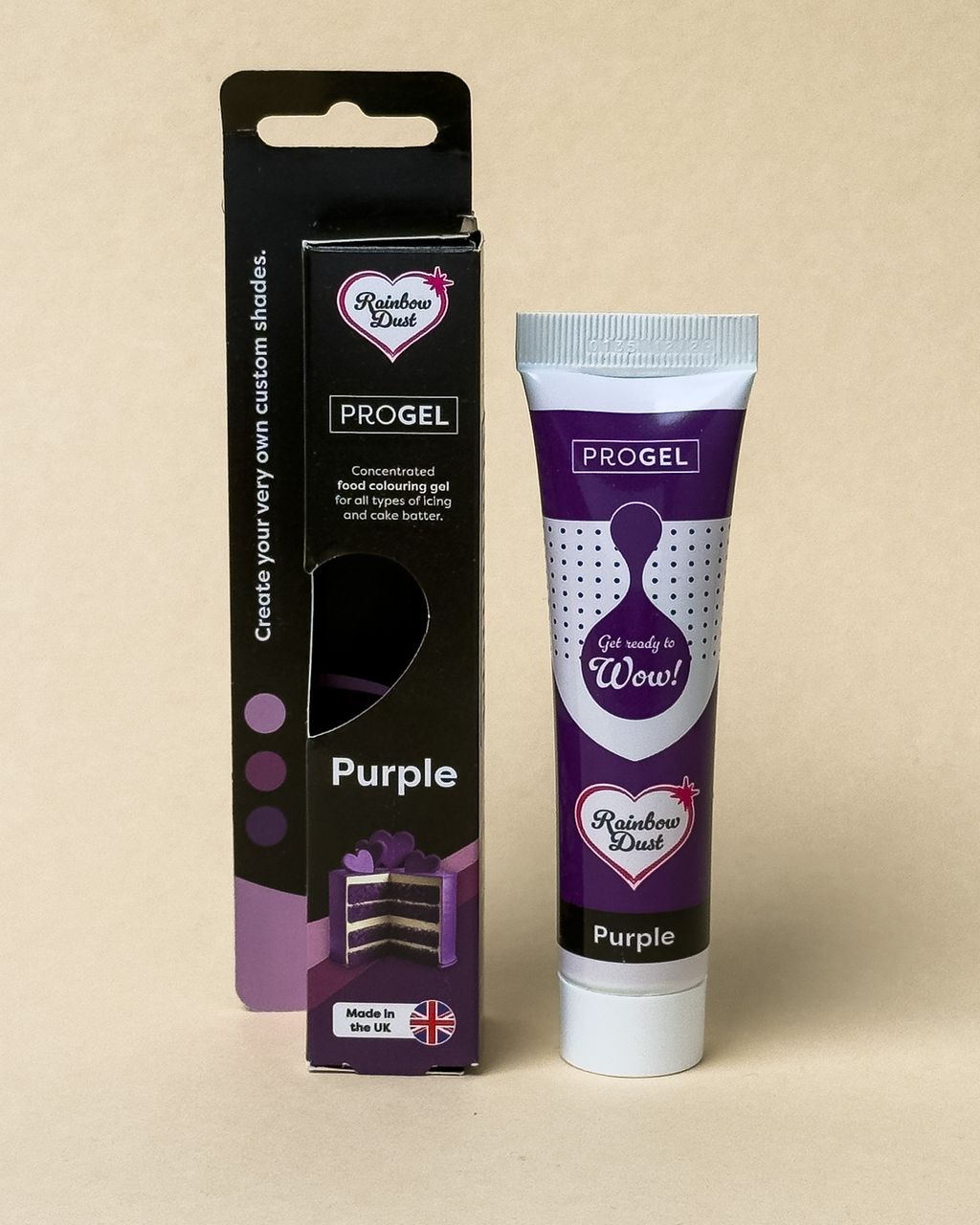
Gel coloring (gel, paste) – highly concentrated, and a single drop is enough for a pastel. It has the best balance of strength and water, which is why it's the standard. This includes ProGel gel colors by Rainbow Dust, which we carry.
Powder coloring – adds no water at all, so it's the safest option for deep red or black. On its own, though, it often doesn't give a vivid enough color, it dissolves less easily and can leave the batter speckled. It's sold elsewhere, and we don't carry it; professionals combine it with gel.
Liquid coloring (the little bottles from the store) – weak, so you have to use a lot, and that's exactly what macarons can't handle. You can still make a pastel with it, but nothing stronger.
If all you need is a pastel, gel is more than enough – don't buy anything else.
For a batch with 100 g of egg whites (about 40 shells, 4 cm across), 1–3 drops of gel are enough for a pastel and 4–8 drops for a medium shade; don't go beyond roughly 10 drops. Drop size varies between tubes and with finger pressure, so treat the drops as a guide and watch the meringue.
Approximate amounts per 100 g of egg whites:
Pastel (light pink, mint, lavender): a toothpick tip up to 3 drops.
Medium shade (raspberry, pistachio, lemon): 4–8 drops.
Deep shade (burgundy, dark purple): around 10 drops at most, plus dried egg white (see below). Beyond that, reach for powder.
Follow the instructions on the packaging too – for colorings with E-numbers it's a matter of regulations, not just appearance.
People who bake macarons often weigh their gel on scales accurate to 0.01 g. For a few batches that isn't necessary – but it helps to note how many drops each shade took and repeat the amount next time.
Add the coloring to the meringue at the end of whipping, once it holds stiff peaks – it will mix in within two or three turns of the whisk and you won't need to fix anything during macaronage. Gel works evenly into glossy meringue, and a few extra seconds of whipping won't hurt it.
What not to do:
Don't add the coloring at the start of whipping. The water and glycerin in the coloring slow down foam formation, and the meringue won't be as firm.
Don't add it during macaronage. You'll have to mix longer to blend it in and you'll overmix the batter – it will spread and won't develop feet.
Don't add the coloring drop by drop in several rounds. Decide on the shade beforehand and add it all at once.
The same goes for Italian meringue (meringue whipped with hot sugar syrup): add the coloring once the meringue is fully whipped and has cooled to lukewarm.
A baked shell is usually slightly lighter and more matte than raw batter, so mix the shade about half a tone darker than you want the result to be. The color fades a little in the oven, and the matte surface softens it visually.
Pastels baked at 150–160 °C often turn beige. Bake them at the low end of your oven's range (around 140–145 °C) for a few minutes longer and watch whether they're browning.
White and pastel shells can also be protected with a second baking sheet above them, or with parchment paper on the upper rack.
Yellow and green brown first, and the brownish tinge shows on them immediately.
One-shell test: bake one or two shells first and fine-tune the rest based on them – for the next batch, because you shouldn't add anything to finished batter.
With deeply colored macarons, expect a drier shell too. Letting the piped shells rest longer before baking (10–20 minutes more, until the surface stops being sticky) will help.
You get a deep shade without cracks by firming up the batter with dried egg white and adding powder instead of more gel – not by pouring in more gel. Dried egg white adds protein, so the meringue can carry a little extra water and the shell dries more reliably.
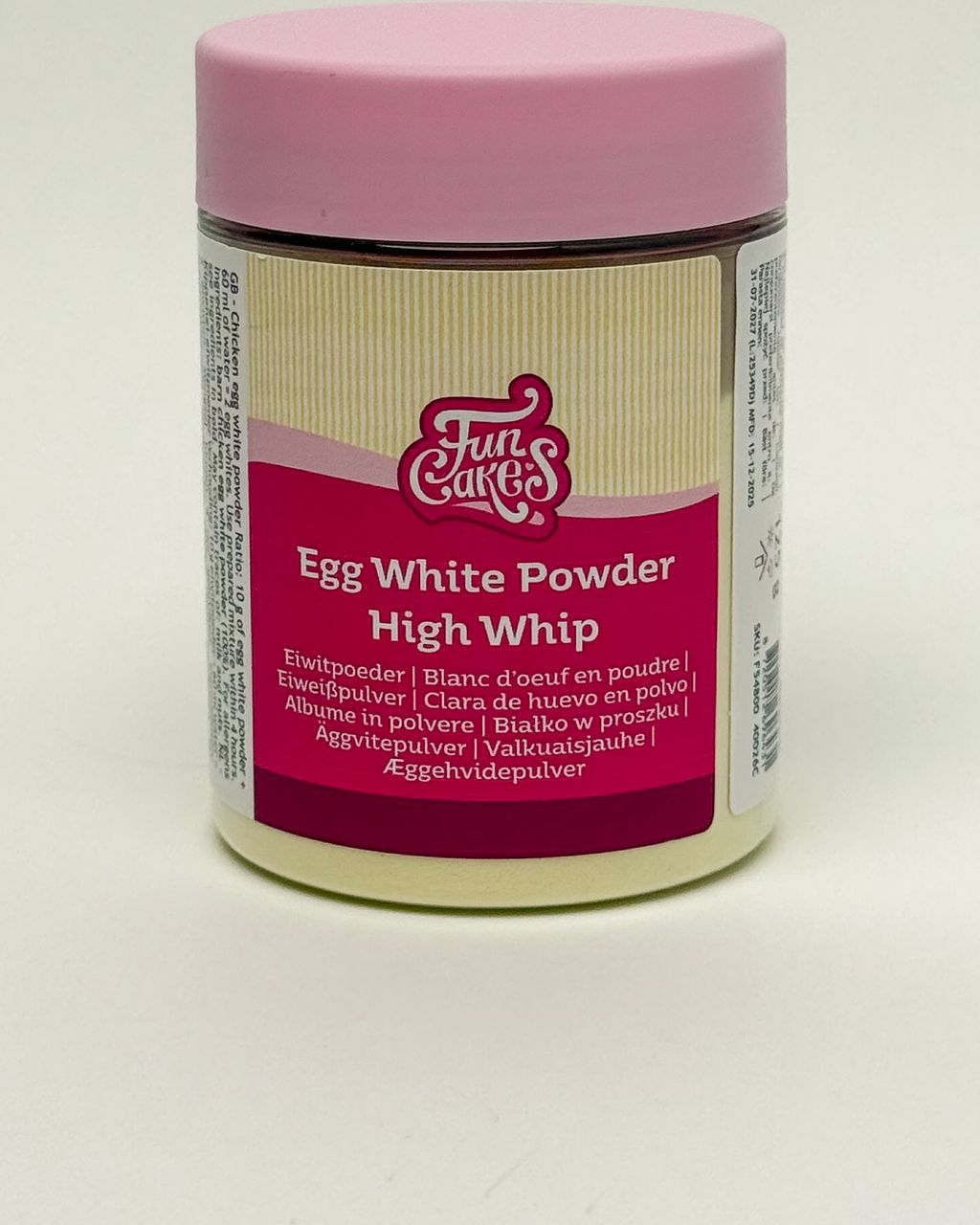
Dried egg white: 2–3 g per 100 g of fresh egg whites. Mix it with the sugar you add to the meringue so it doesn't clump. We use FunCakes dried egg white (you'll find it among the products below) – any pure dried egg white with no additives works just as well.
Aged egg whites: whites separated a day ahead and left in the fridge lose some of their water, and the meringue is firmer. It works even without dried egg white, but less predictably.
Gel + powder: build the base of the shade with gel (up to 10 drops) and add depth with powder coloring.
Longer drying: a deeply colored shell needs more time to form its skin. Touch it with a finger; only bake once it's no longer sticky.
Black is the extreme: gel alone gives more of a dark gray, and the amount needed for black will wreck the batter. A better route is to replace 10–15 g of almond flour with cocoa (more than the usual 5–10 g, since here the cocoa carries all the color) and only then top up the dark base with black gel – the result is closer to black and tastes like chocolate.
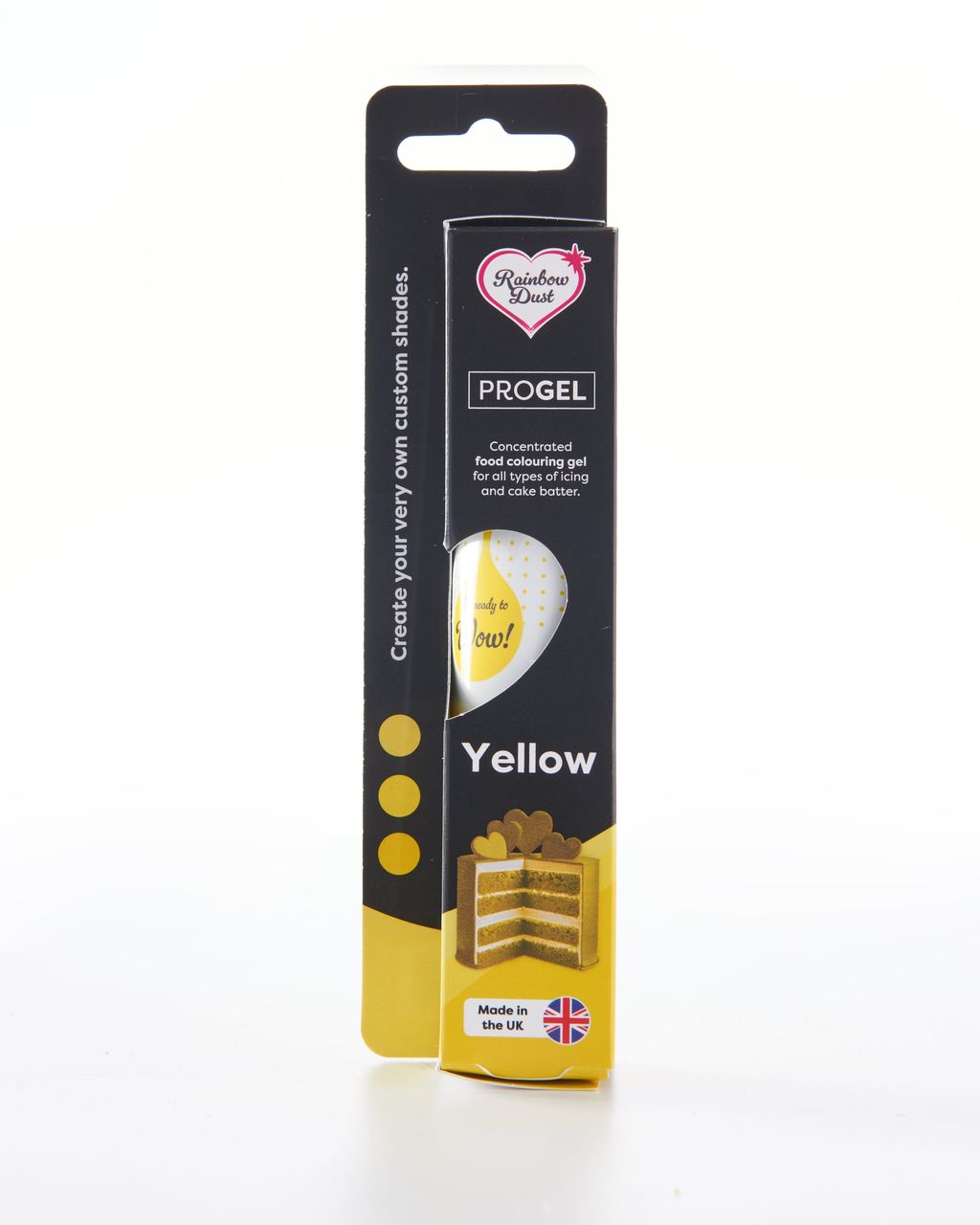
Make red macarons with ProGel Ruby, and if you want a warmer, more "Christmas" red, add a drop of Yellow. Ruby on its own is a deep ruby red with a slight burgundy tinge – lovely for raspberry or sour cherry macarons, but you won't get a clean, bright red from it without adjusting.
How to do it (per 100 g of egg whites, around 10 drops in total at most – the ceiling applies to red too):
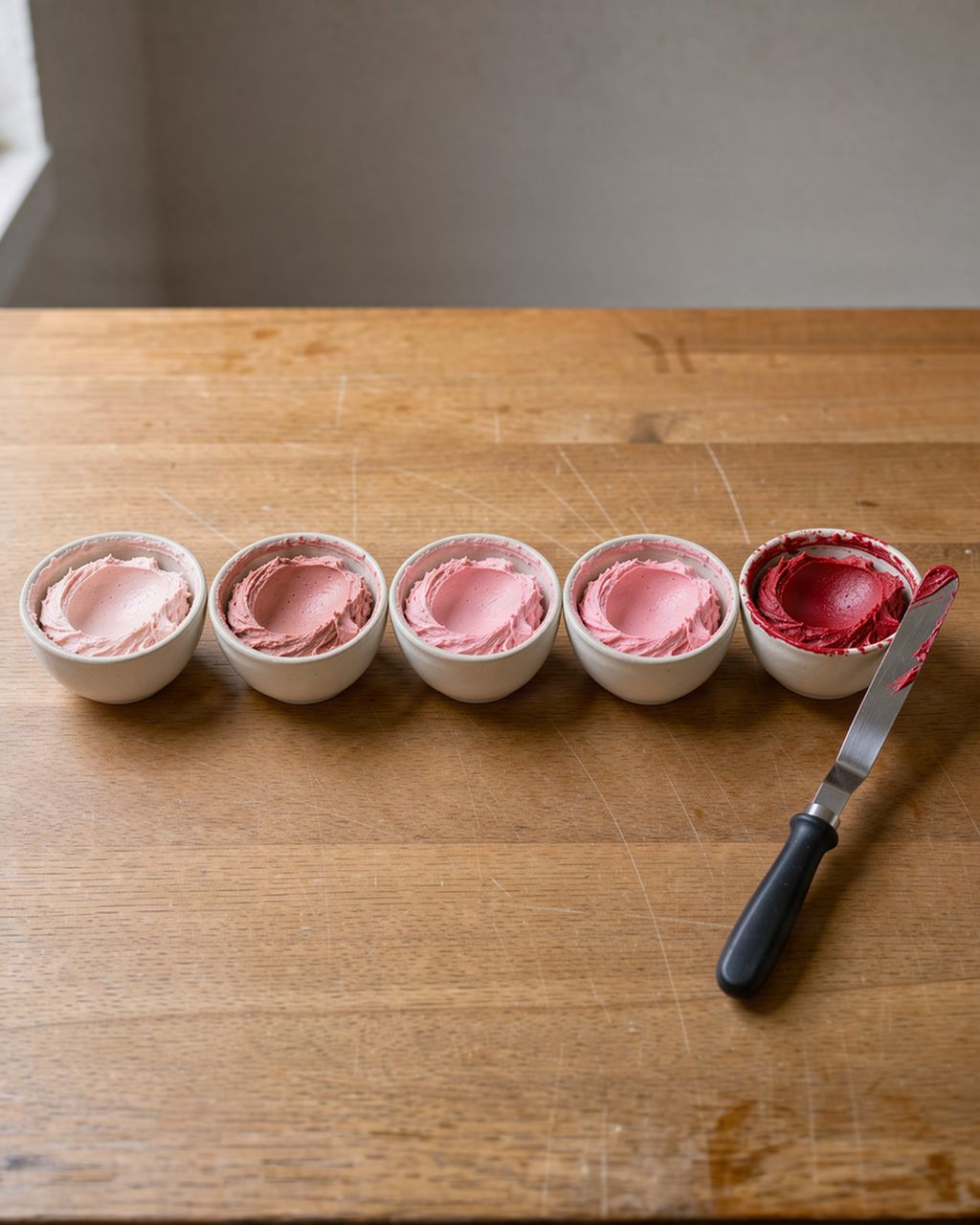
Burgundy / raspberry: 6–10 drops of Ruby, nothing else.
Warmer red: 6–8 drops of Ruby + 1–2 drops of Yellow. Yellow tones down the burgundy tinge and moves the shade toward tomato red.
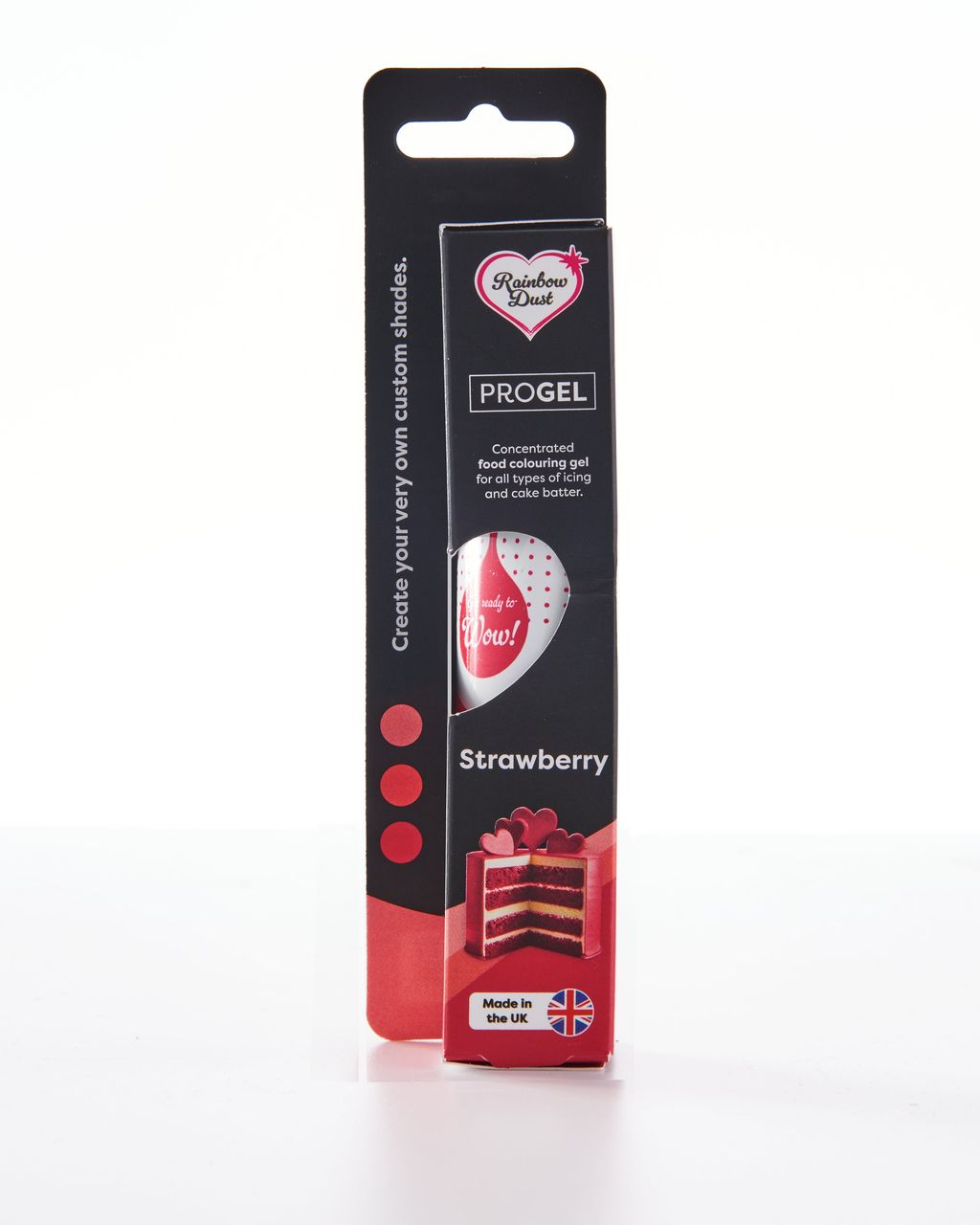
Pink: 1–2 drops of Ruby or Strawberry; Strawberry gives a lighter, sweeter pink.
Red is the most demanding shade – in the oven it fades more than any other, often to coral, so mix it darker than you want the result to be. The advice from the section on deep colors applies to it twice over: dried egg white instead of extra drops, longer drying, and powder to top up for a truly deep red.
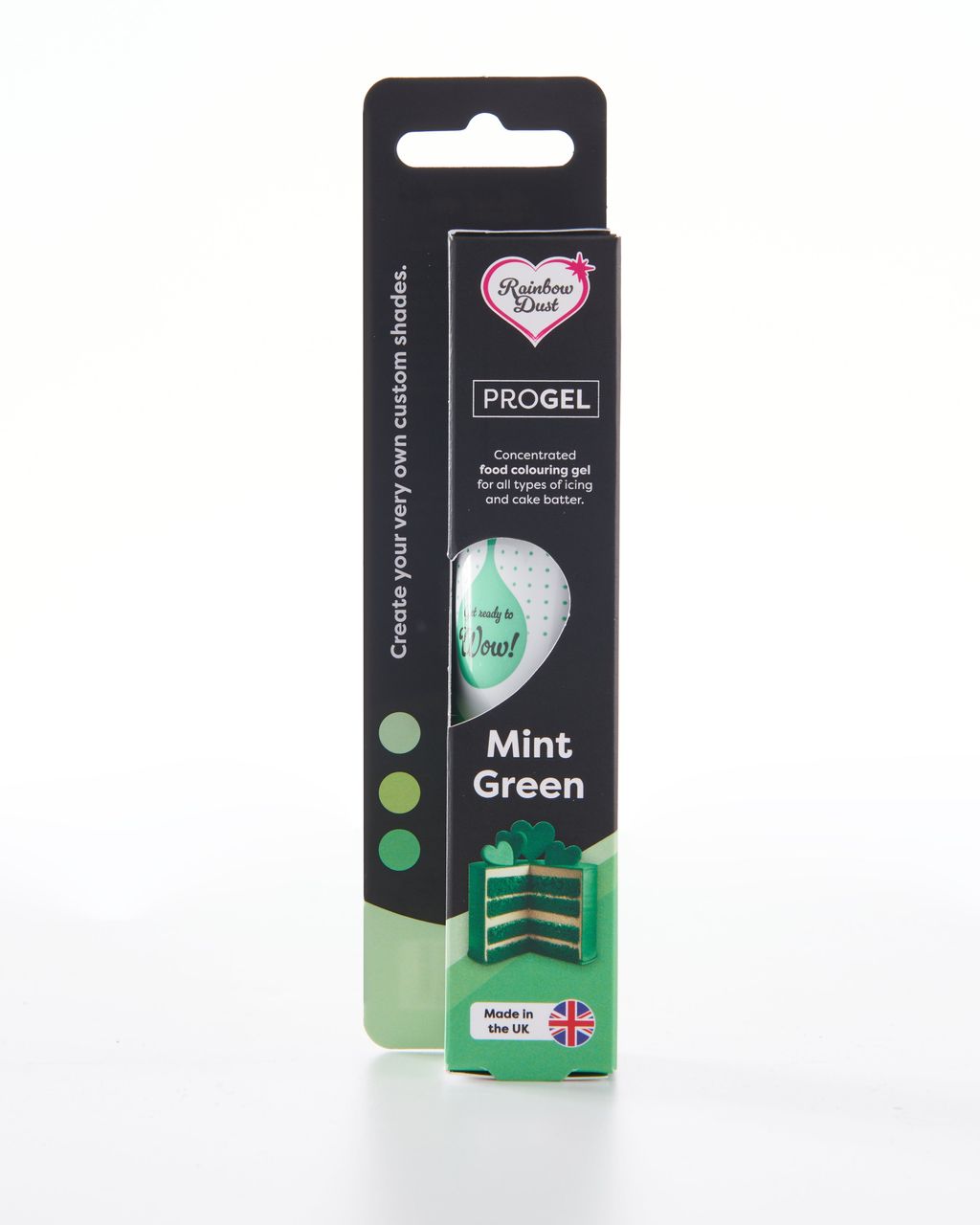
You match macaron color to the filling by letting the filling speak for flavor and simply tuning the shell to its color: raspberry ganache with pink, pistachio with green, lemon with yellow. The shell itself tastes mainly of almonds, and the flavor is carried by the filling.
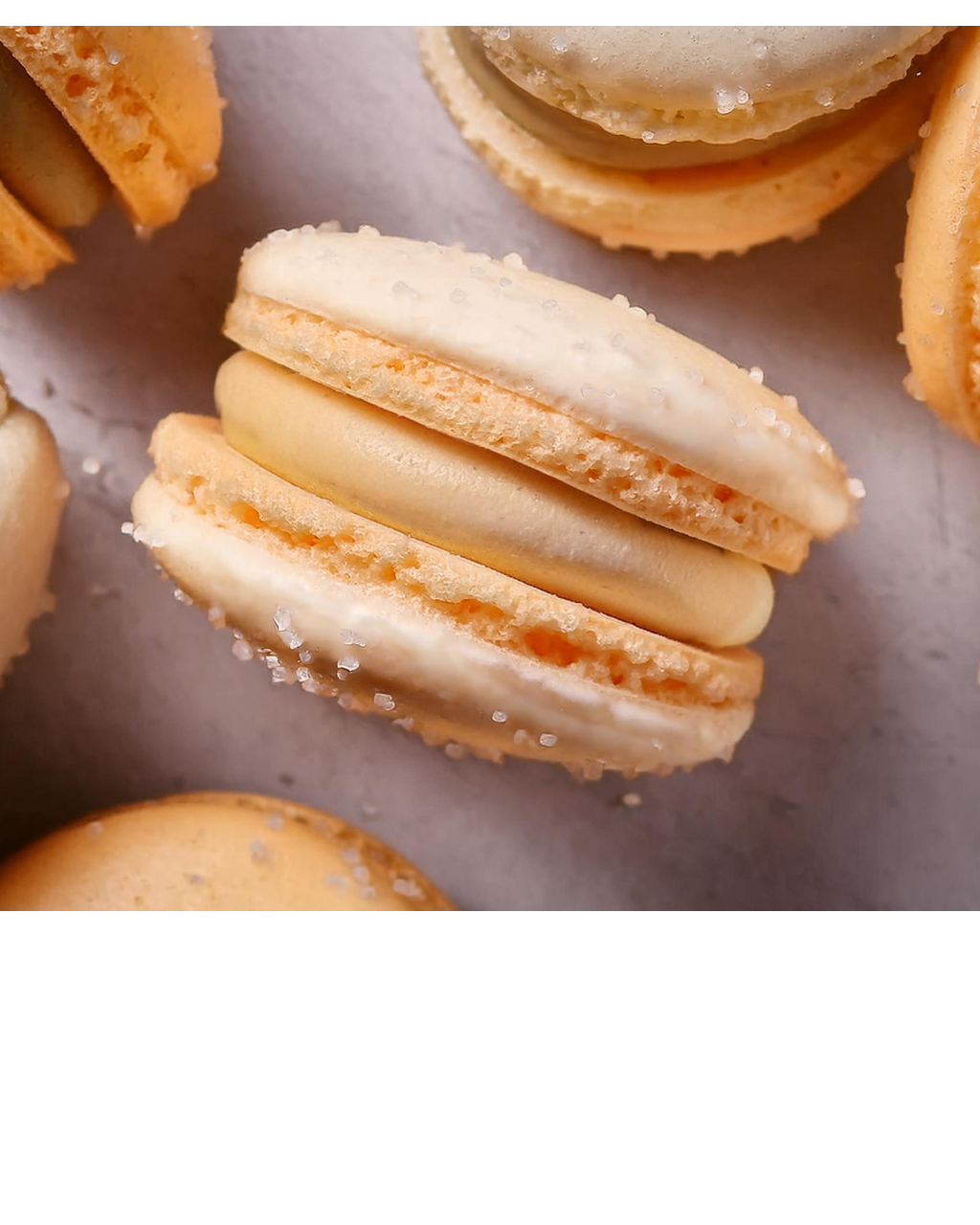
If you want a ready-made base, take inspiration from the recipe for macarons with vanilla and chocolate cream, or fill them with salted caramel cream for macarons. If you're coloring white chocolate ganache, gel behaves differently than in meringue – the difference is explained in the article on how to color white chocolate with gel or oil-based coloring. And for a two-tone filling, two-tone cream in a piping bag comes in handy.
Macarons with vanilla and chocolate cream
Macarons with vanilla and chocolate cream
Salted caramel cream - great for macarons and more
Salted caramel cream for macarons
Gel food coloring in normal amounts (up to 10 drops per 100 g of egg whites) won't change the flavor of your macarons – a few drops of gel are neutral in taste. You might notice a difference only with large amounts of deep red or black, which can sometimes have a slight bitterness. That's also why deep shades are better built with powder or cocoa than with more drops of gel.
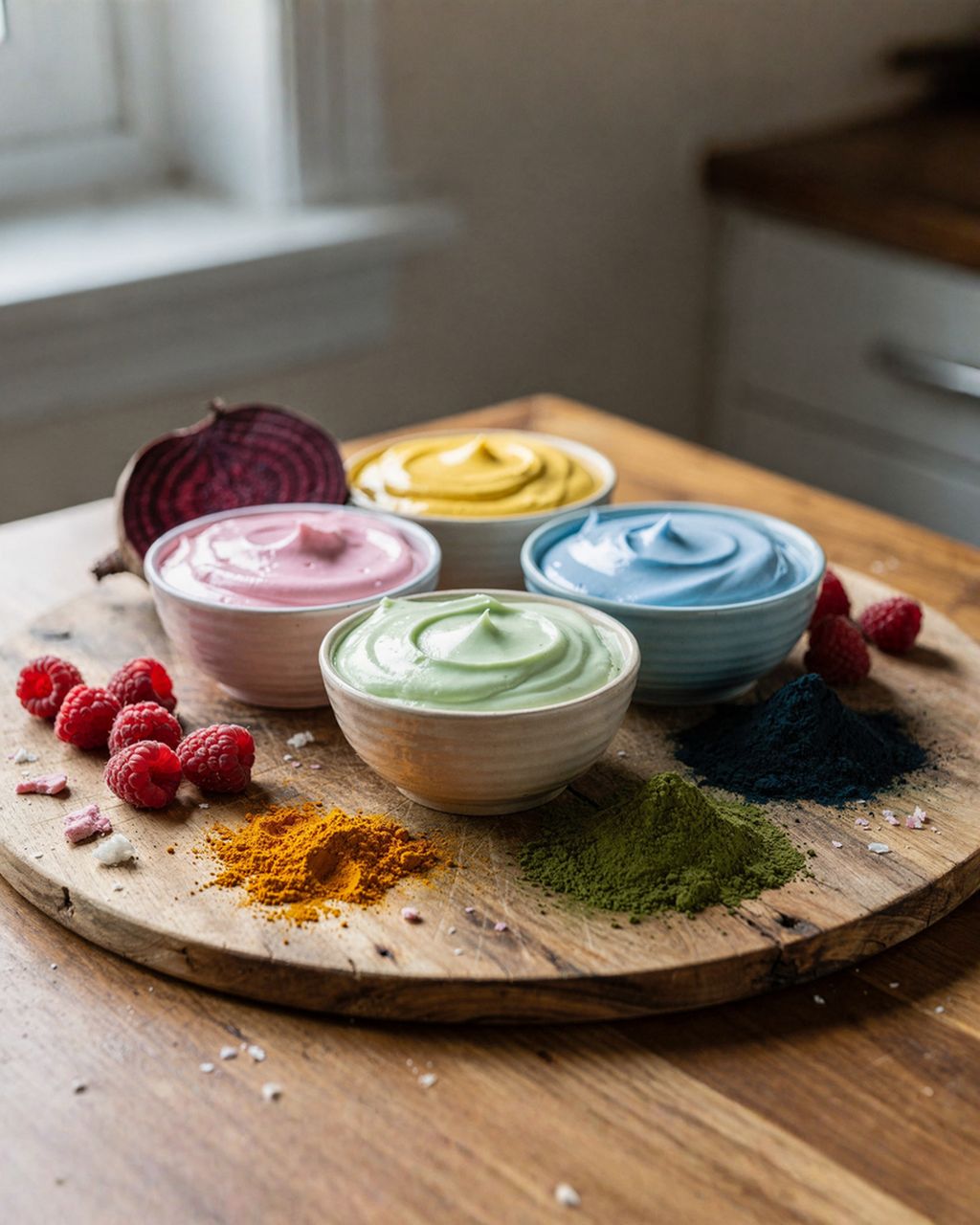
You can color macarons naturally with powders such as freeze-dried raspberry, matcha or cocoa: use 5–10 g of powder per 100 g of egg whites and reduce the almond flour by the same weight. Expect softer shades that lean toward muted browns, because natural colorings brown easily in the oven.
Yes, you can paint baked shells with a brush dipped in gel thinned with a drop of alcohol, or dust them with edible luster dust. Apply wet gel only in a thin layer and let it dry, otherwise the shell will go soft.
The color of baked macarons holds, but it fades within a few days in direct light. Store them in a closed container in the fridge, where they're also in the dark, and use them within 3–5 days. You can also freeze them for up to a month; thaw them in the closed container so condensation doesn't form on them.
Yes: divide the finished meringue into portions, color each one separately, then macaronage each portion on its own. Then place the colors side by side in the piping bag, or paint stripes of gel on the inside of the bag for a marbled effect.
One recipe worth heating the oven for, one tip, and one deal from the shop. Nothing else.