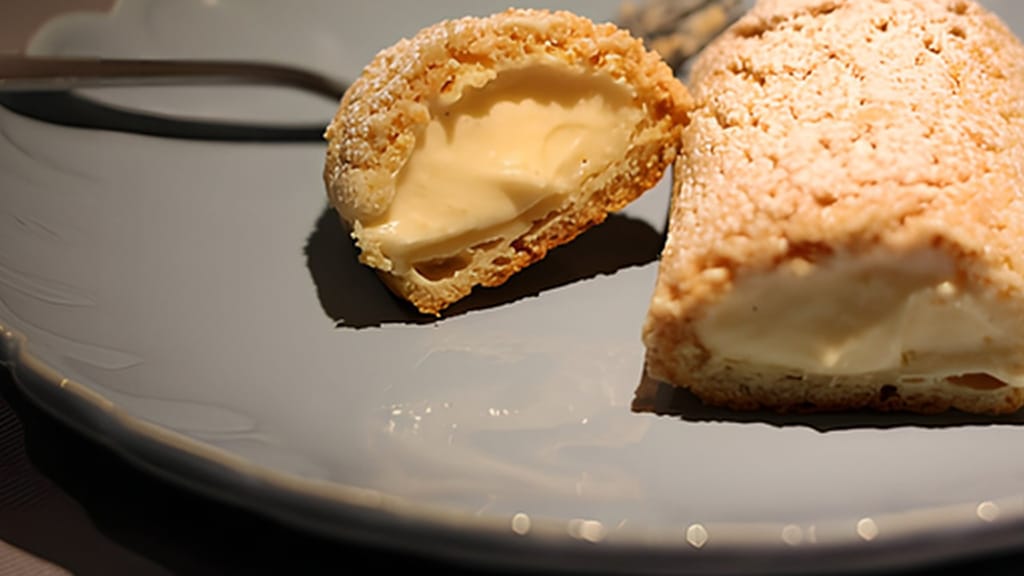
Éclairs à la ladurée – irresistibly delicious pastries

Updated Jul 19, 2026
A religieuse is a classic French pastry made of two choux buns filled with pastry cream and topped with icing – a smaller ball perched on a bigger one, so the whole thing looks like a nun in a habit. It looks like something straight out of a Parisian patisserie window, but you can absolutely make it at home. You just need to nail three things: choux pastry, pastry cream (crème pâtissière), and clean assembly. We'll walk you through every step, show you where things typically go wrong and why, and share the tricks to help you finish it off like a pro.
A religieuse is a traditional French pastry made of choux dough: two hollow balls (choux buns) filled with pastry cream, stacked on top of each other and topped with icing that matches the filling's colour. The smaller ball sits on the bigger one, so the whole dessert resembles a nun in a habit – hence the name, since religieuse means "nun" in French.
The three most common flavours are:
chocolate – chocolate pastry cream with a glossy chocolate icing,
coffee – delicate coffee-flavoured cream with a coffee glaze,
vanilla – the classic crème pâtissière with white fondant.
And that's not all – pastry chefs also fill religieuses with praline cream, caramel, and fruit fillings. The combination of choux pastry and silky cream stays the same; only the flavour and icing colour change.
According to historical sources, the religieuse was created around 1856 at the Café Frascati patisserie on Boulevard Montmartre in Paris. It emerged at a time when French pastry chefs were competing to create the most striking and delicious desserts, and it quickly became a classic.
It's built on choux pastry, a technique perfected a generation earlier by the legendary pastry chef Marie-Antoine Carême, famous for turning desserts into architectural works of art for the eyes as much as the palate. The basic idea behind the religieuse hasn't changed since the 19th century: light, hollow pastry, rich cream, and an icing that holds both balls together. Only the flavours and decorations have evolved with the times.
Éclairs à la ladurée – irresistibly delicious pastries
Full recipe for chocolate religieuse with choux pastry and pastry cream
A great religieuse comes down to the quality of just a handful of ingredients – nothing exotic required. For both the choux pastry and the cream, you'll need:
butter (at least 82% fat) – gives the dough richness and flavour,
plain flour – sifted, to keep the pastry light,
eggs – fresh, at room temperature; they hold the whole choux structure together,
whole milk – the base of the cream,
egg yolks, sugar and cornflour – for the crème pâtissière,
good-quality dark chocolate (at least 60% cocoa) – for both the cream and the icing,
a vanilla pod or real vanilla extract.
Need a gluten-free version? Swap the plain flour for a gluten-free bread blend with xanthan gum – choux pastry handles it fine. For a vegan version, use plant-based milk and butter, and thicken the cream with cornflour alone; the texture will be a touch softer, but it works.
Choux pastry (pâte à choux) is the base of the religieuse and its relatives, like éclairs and profiteroles. The trick is simple: you first "scald" the flour in hot liquid, then beat eggs into the cooled mixture, and in the oven, steam puffs up the dough and creates a hollow inside. None of it is difficult – you just need to follow the order of steps and get the temperatures right.
For one baking tray you'll need: 125 ml water, 125 ml milk, 100 g butter, a pinch of salt and sugar, 150 g plain flour and 4 eggs.
Heat the liquid: In a saucepan, bring the water, milk, butter, salt and sugar to a boil until the butter has fully melted.
Add the flour: Remove the pan from the heat, tip in all the flour at once, and stir briskly with a wooden spoon until it forms a smooth, compact ball.
Dry out the dough: Return the pan to low heat and cook the dough for about 2 minutes to drive off excess moisture. You'll know it's ready when a thin film forms on the bottom of the pan.
Let it cool: Transfer the dough to a bowl and let it cool until just warm (about 5 minutes). Adding eggs to hot dough would cook them.
Add the eggs gradually: Beat in the whisked eggs a little at a time, fully incorporating each addition before adding more. The finished dough should be smooth, glossy, and fall off the spoon in a V shape.
Pipe the balls: Using a piping bag, pipe balls of two sizes onto a lined baking tray – larger ones (about 4 cm) for the base, smaller ones (about 2.5 cm) for the tops.
Bake without opening the oven: Bake in an oven preheated to 220°C; after 10 minutes, lower the temperature to 190°C and continue baking for another 15–20 minutes until golden. While baking, don't open the oven door, or the steam will escape and the pastry will collapse.
Let them dry out: Once baked, pierce each ball with a skewer, then return them to the switched-off oven with the door slightly ajar for a few minutes so the insides don't stay damp.

Crème pâtissière is the thick vanilla cream used to fill a religieuse – the same one you'll find in éclairs and fruit tarts. The key is to cook it properly at a boil: it's only once it boils that the starch activates and the cream thickens, while the enzyme in the egg yolks that would otherwise thin it out later gets destroyed. An undercooked cream stays runny.
You'll need: 500 ml whole milk, 1 vanilla pod (or a teaspoon of extract), 6 egg yolks, 100 g sugar, 40 g plain flour, 20 g cornflour, and a pinch of salt.
Heat the milk: Heat the milk with the split vanilla pod until it's nearly boiling, then take it off the heat. Let it infuse for a few minutes so the vanilla flavour comes through.
Whisk the yolks: Whisk the egg yolks with the sugar and salt until pale and foamy.
Whisk in the starch: Add the flour and cornflour and whisk into a smooth, lump-free paste.
Temper the mixture: Whisking constantly, pour the hot milk into the yolk mixture in a thin stream – this gradually warms the yolks without curdling them.
Cook it through: Pour everything back into the pan and cook, whisking constantly, until the cream thickens and starts to bubble – then let it bubble for another minute so the starch fully cooks.
Strain and chill: Strain the cream through a sieve (to catch any lumps), transfer it to a bowl, and cover with plastic wrap pressed directly onto the surface to stop a skin forming. Let it cool completely.
Whisk again before filling: Briefly whisk the chilled cream so it's smooth and pipeable again.
A religieuse comes together in three parts: the filled buns, the icing, and the smaller ball on top. Here's how:
Fill the buns: Push the tip of the piping bag through the base of each bun and fill with crème pâtissière until it feels heavy and full.
Dip in the icing: Dip the top of each bun into melted chocolate ganache or fondant, then let any excess drip off. The icing should be glossy and smooth, not runny.
Stack them: Set the smaller bun on top of the larger one. Use a bit of cream or icing as "glue" to hold it in place.
Decorate: Using a star tip, pipe small rosettes of buttercream or whipped cream around the join – this is the classic religieuse "collar." For extra flair, add a touch of edible gold leaf.
Stick to one colour of icing and cream throughout so the pastry looks clean and cohesive. Let the icing set slightly before serving, or the balls may slide apart.

Serve the religieuse chilled, ideally a few hours after assembling, once the cream has firmed up and the icing has set. It looks best on a simple, light-coloured plate that lets the shine of the icing stand out.
Fresh berries make a great contrast – raspberries, strawberries, or blueberries add a bright tartness against the rich cream. A thin line of chocolate or caramel sauce drawn across the plate also makes for a striking presentation. For more tips on plating like a Parisian patisserie, check out our article on how to serve desserts like a Parisian patisserie.
Most failed religieuses come down to two things: choux that doesn't puff up, and cream that stays runny. Here are the most common pitfalls and what causes them:
The choux collapses: Either you opened the oven too soon, or the dough wasn't dried out enough. Make sure to cook the dough properly on the stove, and never add eggs to a hot mixture.
The dough doesn't puff up: You added too few eggs, or they were cold. The dough should be smooth and glossy, not stiff.
The cream is runny: You didn't cook it long enough – crème pâtissière needs to come to a boil and bubble for a bit before the starch thickens it properly.
The cream has lumps: You didn't temper it enough or didn't whisk enough; pass it through a sieve now, and pour the milk in more slowly next time.
The icing is running: It was too warm. Let it cool slightly so it thickens before you dip the buns.
It's pronounced roughly "reh-lee-zhyuhz," with the stress on the last syllable. The word means "nun" in French, referring to the pastry's shape, which resembles a nun in a habit.
Both religieuses and éclairs are made from choux pastry filled with pastry cream, but the shape is different. An éclair is an elongated log, while a religieuse is two round balls stacked on top of each other in the shape of a nun.
Eat a filled religieuse within 24 hours – over time, the cream softens the choux and it loses its crispness. That said, you can absolutely prep the parts ahead: the empty baked choux buns keep for a day or two in a dry spot, and the crème pâtissière keeps in the fridge for 2–3 days; just assemble everything on the day you plan to serve it.
The best thing to freeze is the empty baked choux buns, which keep for up to a month – just pop them in the oven briefly before filling to re-crisp them. We don't recommend freezing a religieuse once it's filled with crème pâtissière, as the cream releases water and turns watery once thawed.
Instead of fondant, use chocolate ganache (chocolate melted with cream in roughly a 1:1 ratio) or a simple glaze made from icing sugar and a splash of water or milk. Ganache gives a glossier, more chocolatey finish, while a sugar glaze is the quickest option.
One recipe worth heating the oven for, one tip, and one deal from the shop. Nothing else.