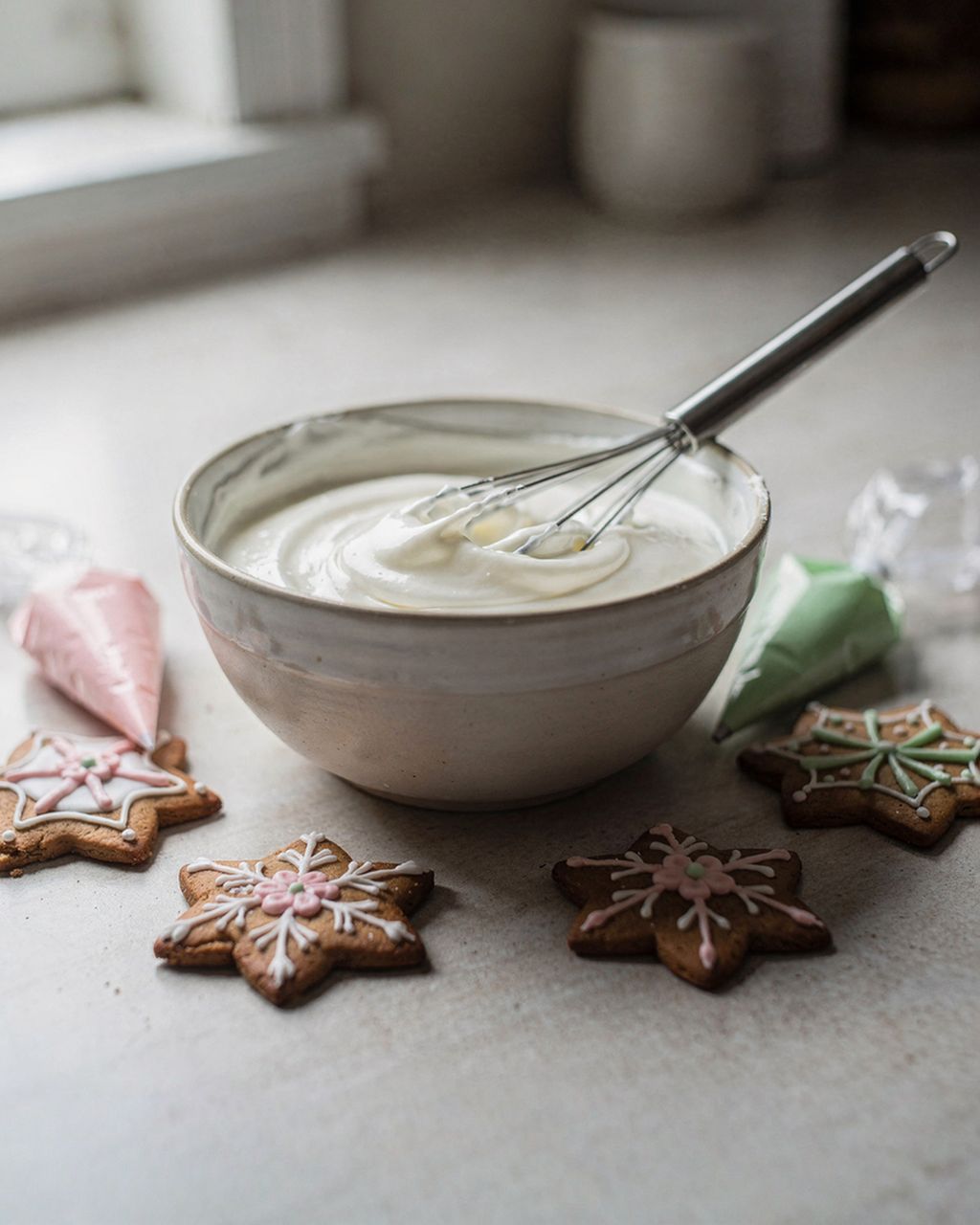
Soft honey gingerbread cookies that never go hard
Red Icing for Gingerbread: How to Get It Deep Red Without Bitterness
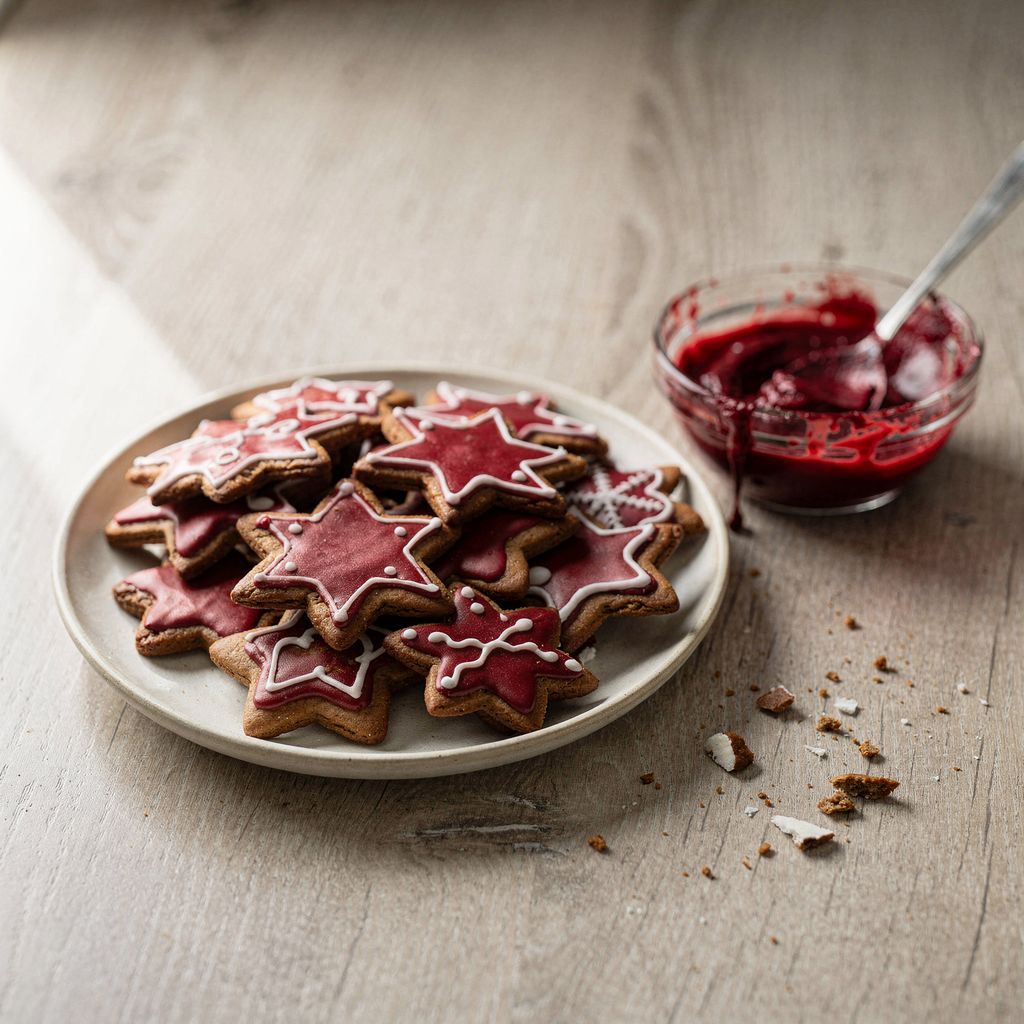
Updated Oct 8, 2026
You get deep red icing for gingerbread by starting with white royal icing and adding concentrated gel colour. The main trick: use less colouring than you think you need, then let it develop for a few hours. A bitter, "chemical" aftertaste almost always means you forced the red: too much colouring at once, or a liquid colouring where you end up pouring in half the bottle. Below you'll find which colouring to choose, how much to use per 250 g of icing, how to let it deepen properly, and what to do if red starts bleeding into white.
Red icing turns bitter when it has too much colouring in it. At higher concentrations, synthetic red colours often leave a bitter, almost metallic aftertaste in icing. In a normal dose you won't notice it, but if you keep adding colour until the icing "finally looks red enough," you'll cross the line where that aftertaste kicks in.
The three most common causes:
Liquid colouring from the supermarket. It's thin and weak, so you need a huge amount of it to get a deep red. Along with the colour, you're also adding water, which thins out the icing.
Colouring straight to the final shade. Red icing darkens noticeably over a few hours. If you colour it to full intensity right away, you'll end up overdoing it — and then you taste the result.
Rushing. Icing coloured right before decorating hasn't developed its full colour yet. The key ingredient here is time, not another drop of colouring.
For deep red royal icing, your best bet is a concentrated gel colour. Here's a quick rundown of what you're likely to find at home:
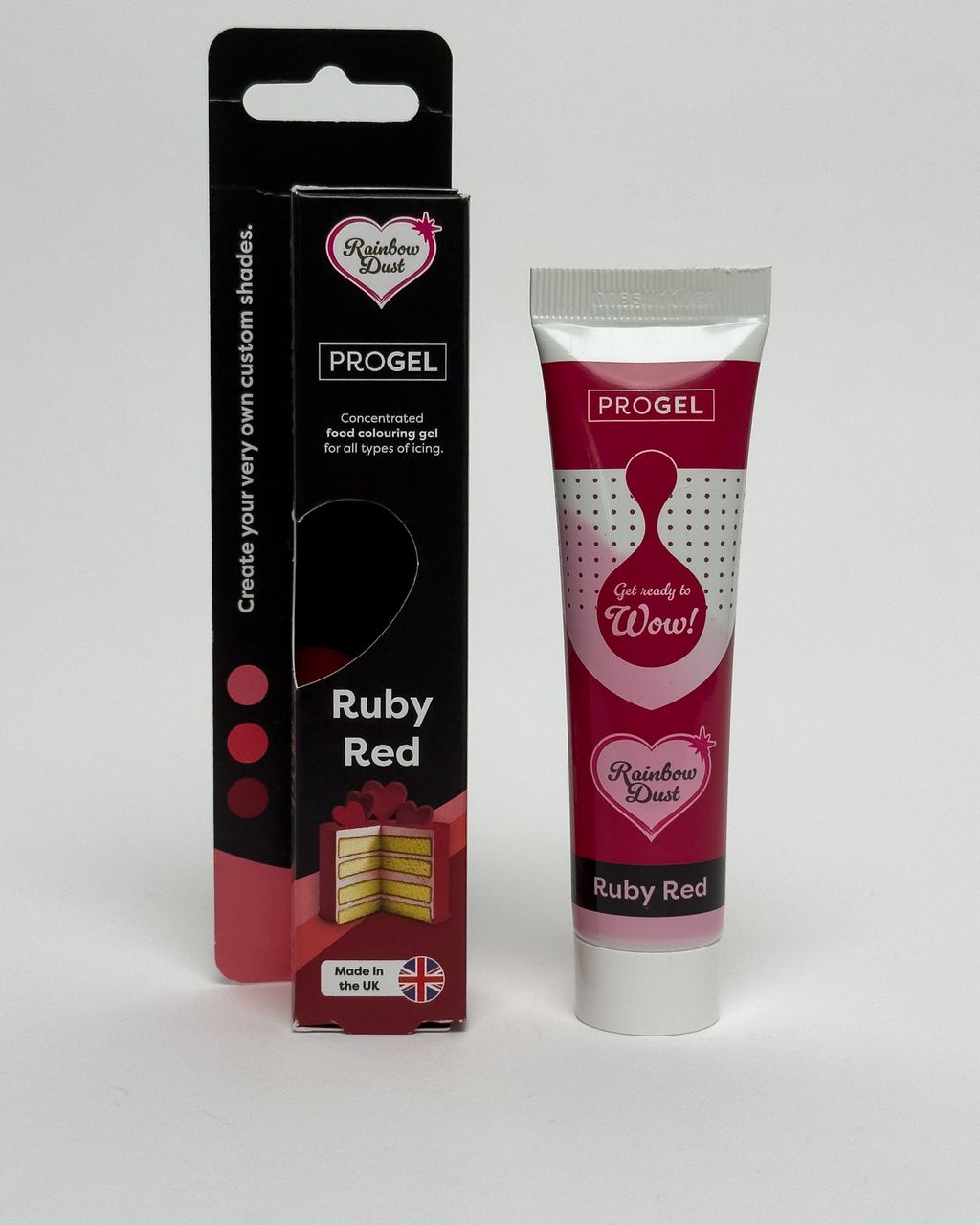
Gel colour (e.g. ProGel). Thick and highly concentrated: a tiny amount goes a long way, it won't thin out your icing, and bitterness is only a risk at large doses. This is the first choice for gingerbread.
Liquid colouring from the supermarket. Fine for a pastel pink. For a deep red, you'd need so much that the icing turns runny and bitter.
Powdered colouring. Very strong and doesn't add water, but it's trickier to dose, and none of the powder should remain undissolved, or you'll end up with dark speckles on your gingerbread.
Natural colourants (beetroot, dried raspberries). These give more of a pink-to-burgundy shade rather than a true bright red, and they bring their own flavour along too. Beetroot colour also fades over time and in light. Fine for a soft pink tone, not for festive Christmas red. More on this in our article on natural colourants as an alternative to food dye.
Oil-based colouring. Meant for chocolate and fats, not royal icing. We cover the differences between types in our article on gel, powder and oil-based food colourings for baking.
For red gingerbread, we reach for ProGel Ruby gel colour from Rainbow Dust (25 g tube). It's a deep ruby red with a slight burgundy undertone, giving a rich pink in small amounts. If you want a warmer, brighter Christmas red, add the tiniest amount of ProGel Yellow on the tip of a toothpick. You'll find more shades in our roundup of icing and buttercream colours and dyes.
With synthetic red colourings, it's worth reading the label. ProGel Ruby contains the colourants E122 and E129. Under EU additive regulations, products containing them must carry a warning: "E122 (Azorubine) and E129 (Allura Red AC): may have an adverse effect on activity and attention in children." This is a mandatory label, not a ban. If you're baking for young children and want to avoid these colourants, go for a natural colouring instead and accept a pinker result.
For 250 g of finished royal icing, start with roughly ¼ teaspoon of gel colour (about 1–1.5 g). A deep red usually ends up needing ½–1 teaspoon, once the icing has had time to develop. More than about 1 teaspoon per 250 g usually won't deepen the colour any further — it'll just add flavour.
Scoop the colour out with a clean toothpick or spoon, never with a finger or an icing-covered knife, so you don't contaminate the gel in the tube.
Mix thoroughly and wait a little between additions. Gel colour develops gradually.
Colour to a shade two to three steps lighter than your target. Time will do the rest.
Here's the process in brief: make white icing, colour it to a strawberry red, let it develop overnight, then adjust the consistency and decorate.
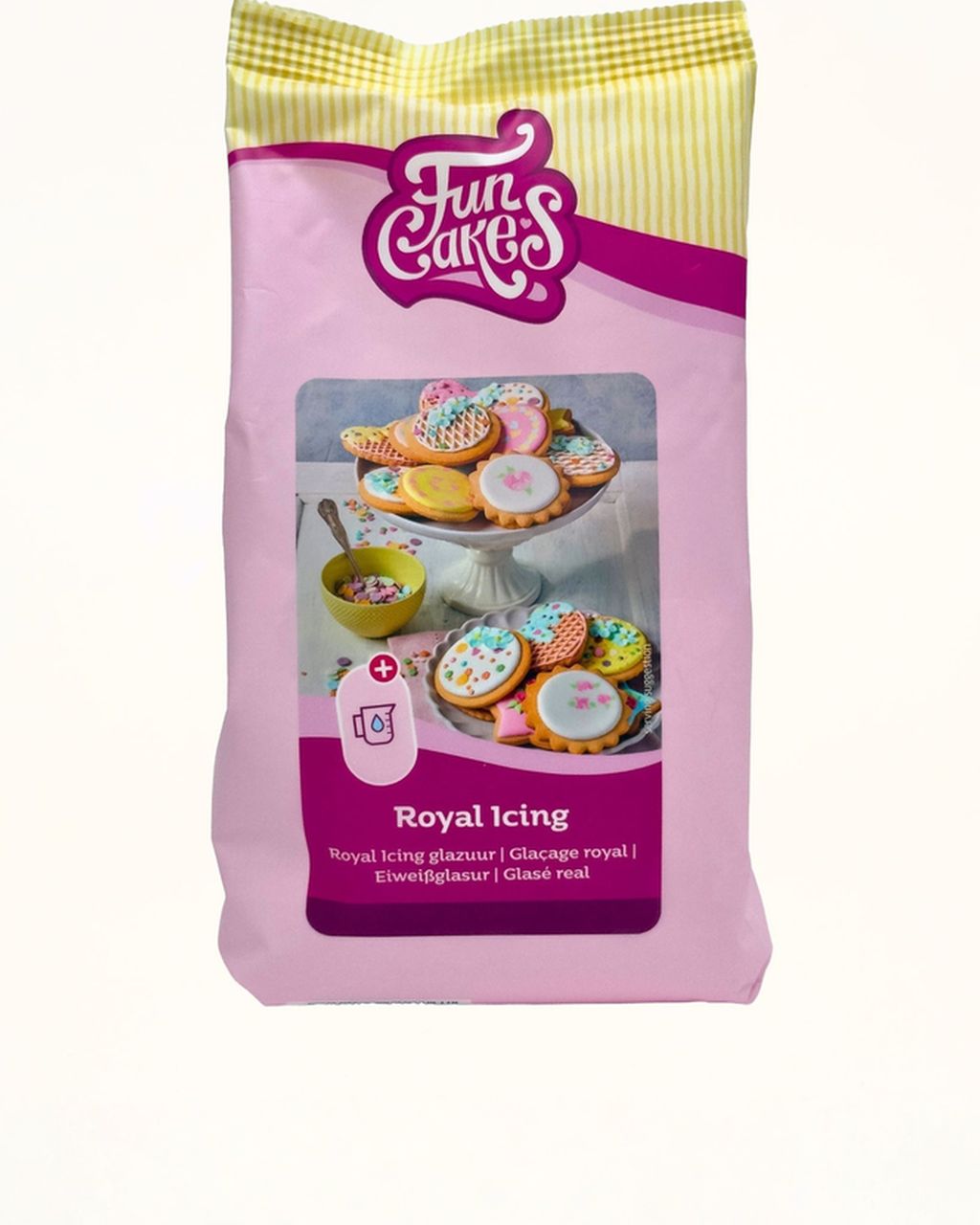
Make white royal icing. Either from egg white and icing sugar, or from a royal icing mix where you just add water as directed on the pack. The mix gives you a consistent thickness and a pure white base, which colours more predictably. You'll find ratios in our article on royal icing: ratios, consistency and colouring.
Colour the icing while it's thick, not runny. Add the colour to the thick icing meant for outlining. Gel brings a bit of moisture with it, so fine-tune the thickness only at the end.
Colour to a lighter shade. Aim for a vivid strawberry red, not the final crimson.
Let it develop. Cover the icing with cling film pressed directly onto the surface (so it doesn't dry out), or seal it in a container, and let it sit for at least 2–3 hours, ideally overnight. Icing made from a royal icing mix can sit at room temperature; icing made from fresh egg white should go in the fridge. The red will deepen by several shades in the meantime.
Check and adjust. Once it's developed, give it a stir. If it's still too light, add a touch more gel and wait another hour.
Adjust the consistency. Keep part of the icing thick for outlining, and thin the rest with water, drop by drop, for flooding. A line drawn with a spoon should settle back into the thinner icing in about 10–15 seconds. If you're struggling with this, our article on royal icing too thin or too thick can help.
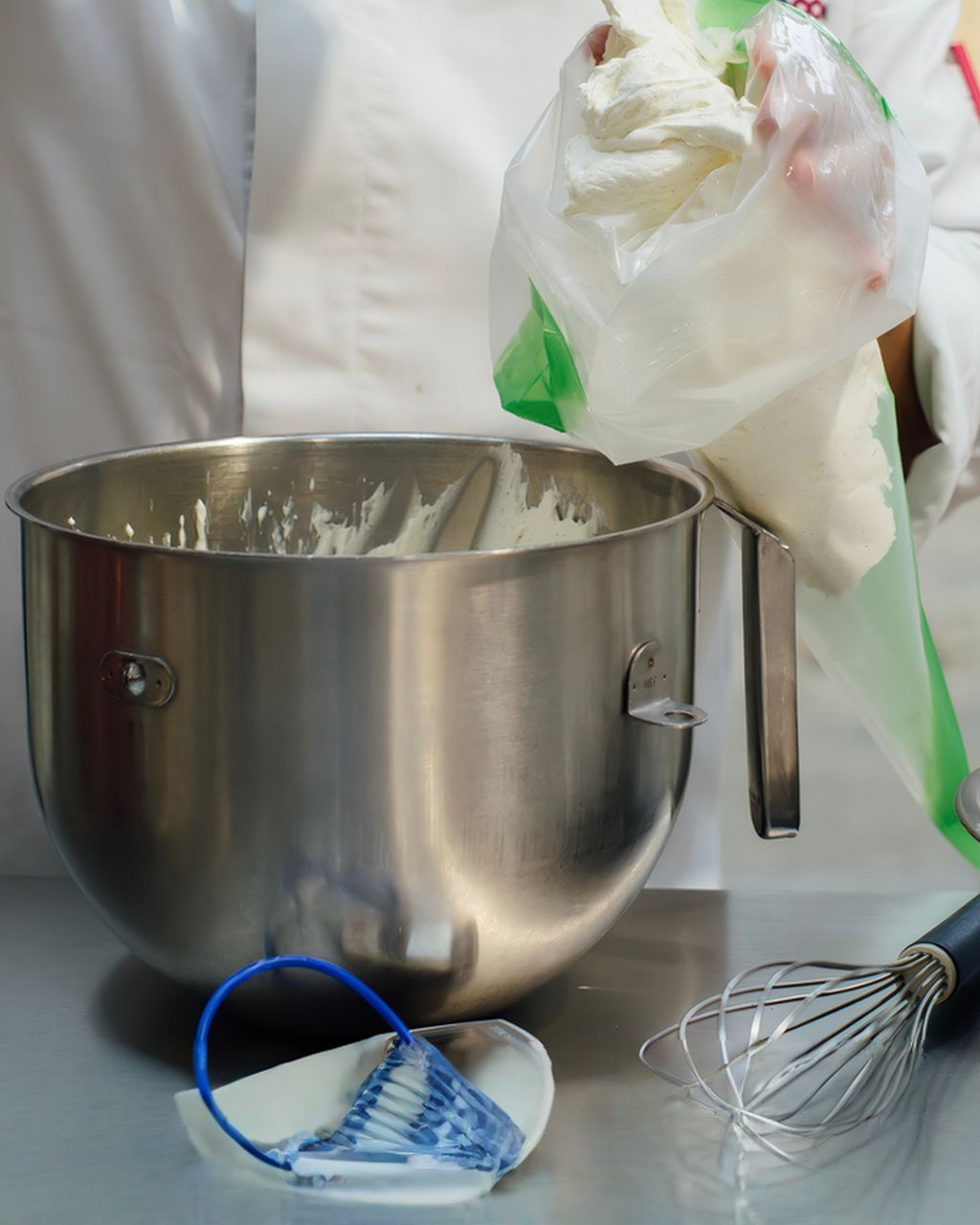
Decorate. Fill a piping bag (our guide to filling a piping bag without the mess shows you how), pipe the outline, then flood the area. For the full decorating process with patterns, see our step-by-step guide to decorating gingerbread.
Want a darker, burgundy-toned Christmas red? Add a drop of black gel colour on the tip of a toothpick. Just a drop — black is even stronger than red.
The most reliable fix for bitter red icing is to dilute it with fresh white icing. This lowers the concentration of colouring, and the aftertaste along with it. The shade will lighten, though it'll darken again a little once it's had time to develop.
A drop of vanilla or almond extract, or a little lemon juice in place of some of the water, can partly mask the aftertaste. It won't remove it completely, though.
Use the bitter icing for fine details rather than flooding large areas. In a thin line, the flavour is barely noticeable.
Next time, colour it in advance and use less. Prevention is a lot easier here than fixing it afterwards.
Red bleeds into neighbouring white icing when one of the two is still wet. The colouring then travels through the moisture into the surrounding areas. It shows up most with red because it's the most intense colour.
Let each area dry fully before adding another colour next to it. The surface needs at least 30–60 minutes, longer for bigger areas.
Don't thin your flooding icing more than necessary. Icing that's too runny dries slowly and the colour spreads.
Dry it quickly. A fan or a slightly open window speeds up surface drying. In a humid kitchen after cooking, icing dries noticeably more slowly.
If your red is over-coloured with gel, give it longer to dry. Gel contains humectants, so over-coloured icing dries more slowly.
Don't stack gingerbread before the icing has dried all the way through, usually 8–12 hours. Otherwise the red will transfer onto the pieces next to it.
If your icing cracks or flakes off after drying, you'll find the cause in our article on why gingerbread icing cracks.
Red icing really shines on gingerbread that stays soft and has a smooth surface: hearts, stars, stockings, St Nicholas figures. Tried-and-tested bases:
Soft honey gingerbread that doesn't go hard: the classic for Christmas decorating, and you can bake it ahead of time.
Super-soft gingerbread: a quicker option when you don't want to let the dough rest.
Red also looks fantastic on the roof or shutters of a gingerbread house. Paired with white outlines and gold details, it makes the boldest Christmas contrast of all.
Soft honey gingerbread cookies that never go hard
Soft honey gingerbread for red icing that doesn't go hard
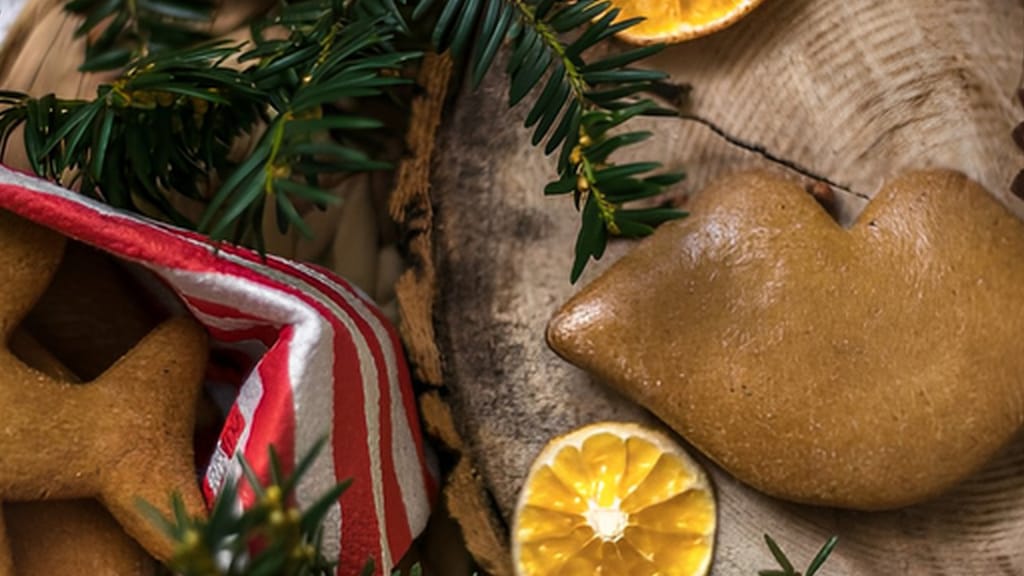
Soft gingerbread cookies
Super-soft gingerbread for decorating with red icing, no dough resting needed
Coloured royal icing usually keeps for 2–3 days in a well-sealed container with cling film pressed directly onto the surface. Icing made with fresh egg white should be kept in the fridge. Always stir it again before using, since it separates over time. The colour tends to deepen during storage, so factor that in.
Yes, red and pink shades can fade over time in direct sunlight or strong light. Store decorated gingerbread in the dark, in a tin or box, rather than on a windowsill. Natural colourants, like those from beetroot, fade considerably faster than synthetic ones.
Don't use ProGel red gel colour in white chocolate, since it contains water and can cause the chocolate to seize. For chocolate, use an oil-based colour or a cocoa-butter-based one instead. Gel, on the other hand, is ideal for royal icing, fondant, marzipan and buttercream.
Patchy red icing is most often down to poor mixing or uneven thinning. Gel colour mixes slowly into thick icing, so after colouring, keep stirring until all the streaks disappear, and thin the whole batch at once rather than in stages. Patches can also come from undissolved powder colouring or from drying in damp conditions, where the surface dries unevenly.
Pink icing usually just hasn't finished developing yet. Cover it and let it sit for a few hours or overnight — in the fridge if it's made with fresh egg white. If it's still pale after that, add a small amount of gel colour, not liquid. Very pale icing is usually a sign of weak liquid colouring, which isn't worth adding more of at that point.
One recipe worth heating the oven for, one tip, and one deal from the shop. Nothing else.