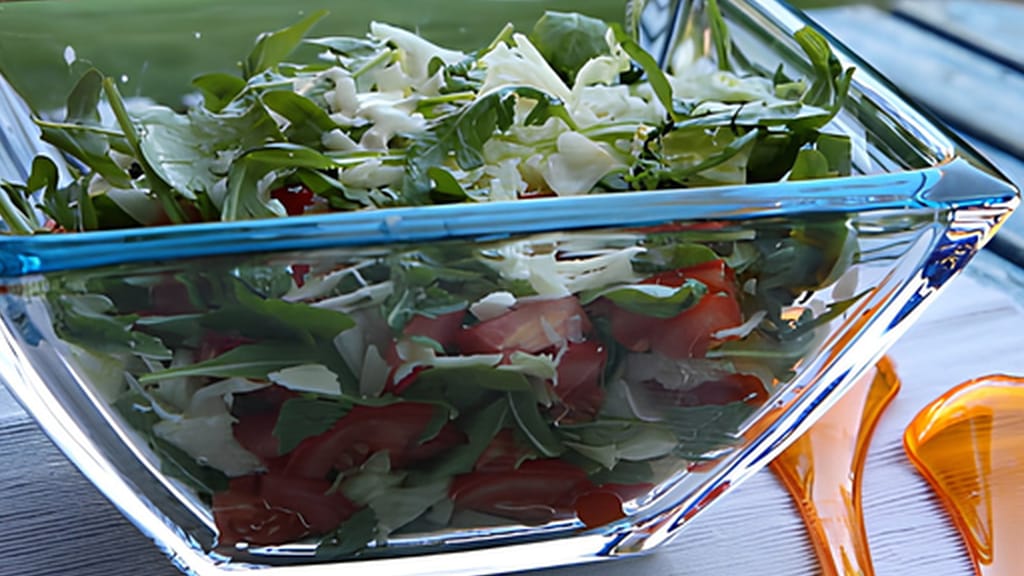
Arugula salad with tomatoes and parmesan
How to Store Arugula and Salad Greens So They Don't Wilt
Updated Nov 17, 2026
Store arugula and salad greens in the fridge dry, unwashed and loosely packed: lay the leaves in a container lined with a paper towel, put another towel on top, close the lid and place it in the crisper drawer. The towel soaks up the drops of water that make leaves rot, and the container protects them from drying out and from getting crushed. According to the USDA FoodKeeper database, arugula and salad greens keep 3–7 days in the fridge. Below you'll find how to handle romaine, watercress and bagged salad, how to revive wilted leaves and what to use instead of romaine.
Arugula lasts longest dry, loosely packed in a container with a paper towel and kept in the crisper drawer. It's the most delicate leaf in the bunch: thin, with little water in reserve, so it wilts fast when dry and rots fast when wet. You have to guard against both.
Sort it right after shopping. Throw out any yellowed or slimy leaves. One rotting leaf can spoil the whole container.
Keep it dry. If it's damp from the store, dry it in a salad spinner or gently pat it with a towel.
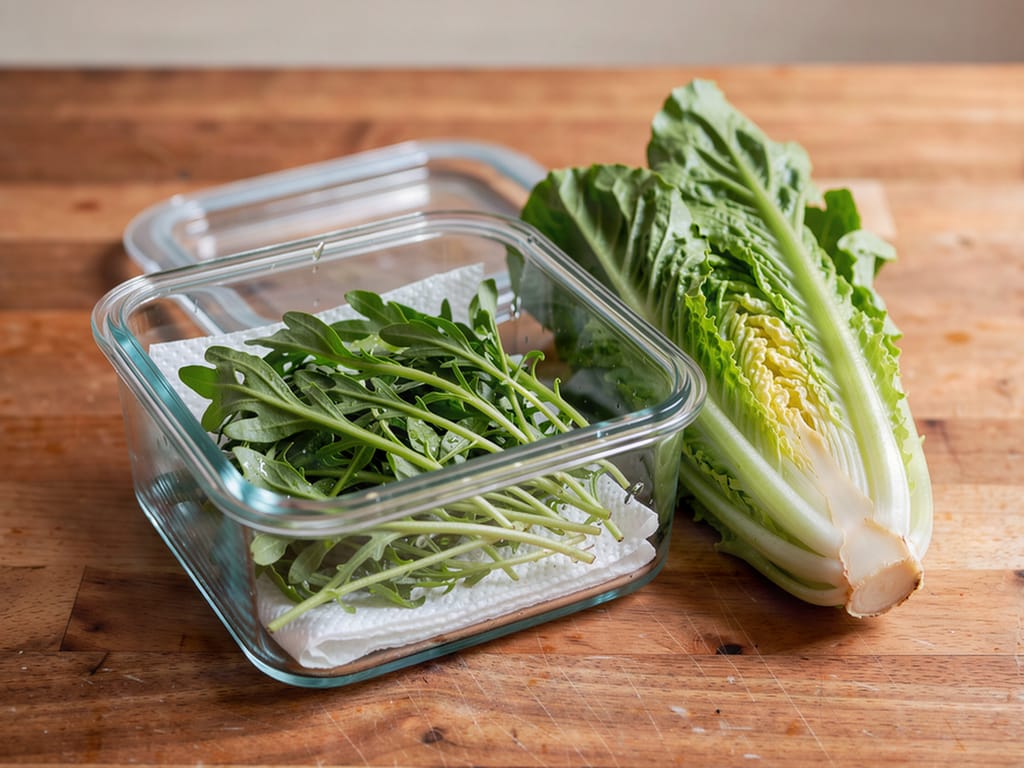
Container + paper towel. Put a folded towel on the bottom, add the arugula loosely (don't press it down), top with another towel and close the lid. The towel catches condensation without letting the leaves dry out.
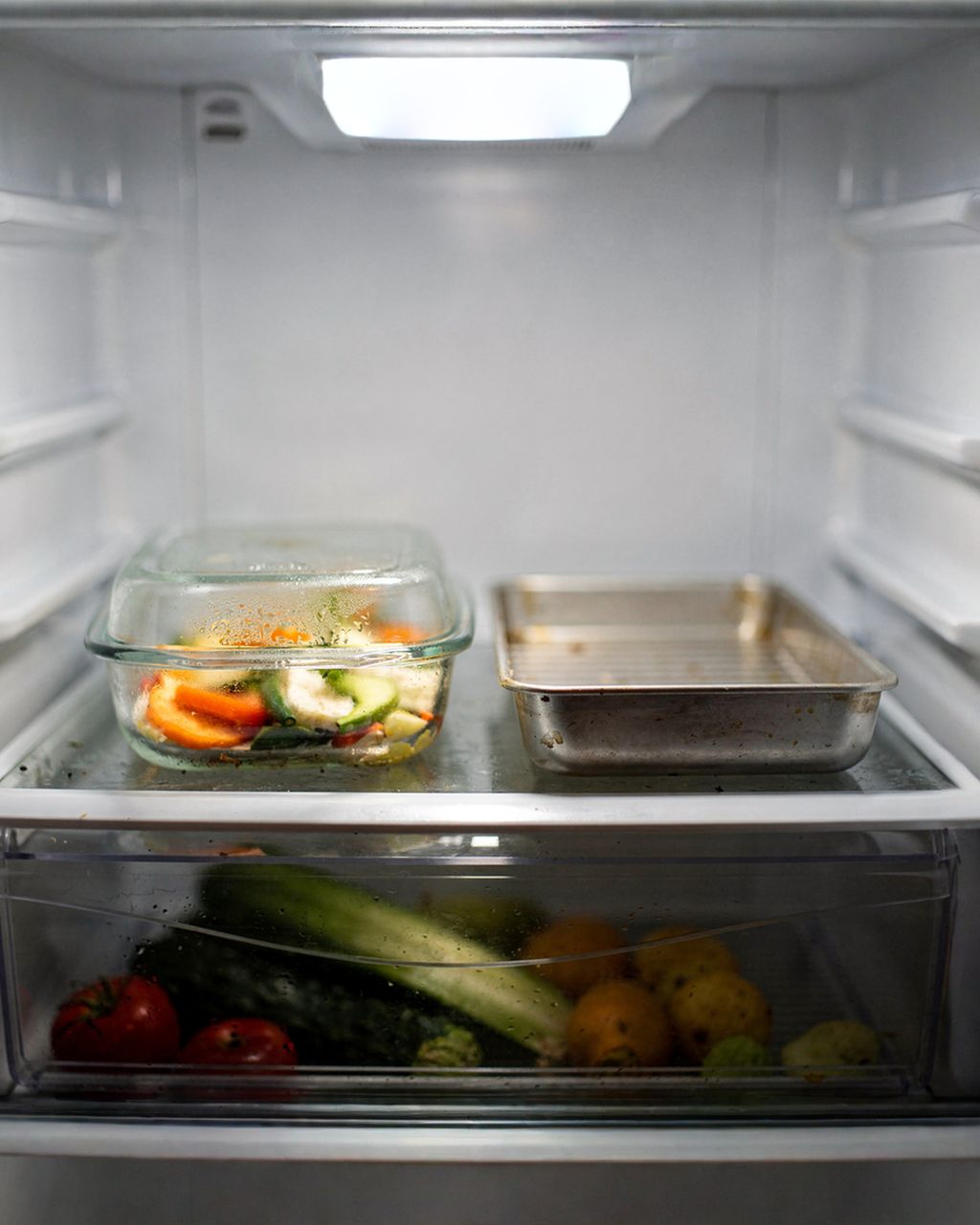
Crisper drawer. It's more humid and stable in there than in the fridge door. Make sure the leaves don't touch the back wall of the fridge, where they can freeze and blacken near the cooling surface. For what goes where in the fridge, see our article on how to store food properly in the fridge.
Change the towel every two days if it's wet, and pick out any leaves that are starting to darken.
How long it keeps: arugula lasts 3–7 days in the fridge (USDA FoodKeeper). Don't leave it at room temperature; the US FDA recommends keeping leafy greens in a fridge at 4°C (40°F) or below. Keep bagged arugula in its bag or move it to a container with a towel, and always follow the use-by date on the package.
Seasonal baking plans, tested recipes and kitchen tricks that save you time. Unsubscribe in one click.
Wash salad greens and arugula just before eating, unless you have a salad spinner and are willing to dry the leaves thoroughly. Water trapped between the leaves is the main reason salad rots and turns slimy in the fridge.
Unwashed and dry: the safest route to longer keeping. You wash only as much as you're about to eat.
Washed ahead: works only if you dry the leaves completely in a spinner and store them in a container with a towel. Handy if you want salad ready for quick dinners over several days.
Bagged salad labeled "washed, ready to eat": don't wash it again. According to the FDA, salad labeled this way can be eaten without further washing. Rinsing it again in the sink adds nothing and risks transferring bacteria from your kitchen to the leaves.
Store romaine as a whole, unwashed head in the crisper drawer, loosely wrapped in a bag or a towel. A whole head lasts much longer than torn leaves, because every damaged spot browns faster.
Don't cut it ahead of time. Tear off leaves only as you need them, and set aside the outer and bruised ones.
Wrapping: wrap the head in a dry paper towel and then in a bag, which you leave partly open. The lettuce can breathe and the condensation stays in the towel.
Keep it away from apples, pears and tomatoes. They release ethylene, a ripening gas that, according to the University of California, Davis, causes brown spots on romaine leaves.
Packaged hearts (small heads) should stay in their original packaging, so keep an eye on the date on the label.
How long it keeps: according to USDA FoodKeeper, salad greens keep 3–7 days in the fridge, a whole, intact head toward the upper end and torn leaves toward the lower.
Store watercress from a garden bed or a pot by leaving it growing and snipping it just before eating. Growing watercress does fine in warmth and light, as long as its base (cotton wool, soil or paper towel) doesn't dry out. Water it a little and often.
Put snipped watercress in a container on a slightly damp paper towel, close the lid and refrigerate. Snipped leaves lose their juiciness and bite quickly, so use them as soon as possible. Bunched watercress (Nasturtium officinale) from the store can be stood stems-down in a glass with a little water, covered with a bag and stored in the fridge. According to USDA FoodKeeper, watercress keeps 3–5 days in the fridge.
Store bagged salad in the fridge at 4°C (40°F) or below and use it by the "use by" date, and after opening, follow the manufacturer's instructions. It's a ready-to-eat food that no cooking will make safe, so stricter rules apply than for a head from the market:
Follow the "use by" date and the manufacturer's guidance on how soon to use the bag once opened. Don't eat it after the date, even if it looks fine.
Fridge at 4°C or below. The FDA recommends this limit (40°F) for leafy greens. At up to 4°C E. coli practically doesn't multiply on leaves, but in the warmth it starts to multiply quickly.
Listeria grows even in the fridge. According to the European agency EFSA, Listeria monocytogenes is among the bacteria that can multiply slowly even at fridge temperatures. That's why a fridge alone isn't enough for ready-to-eat salads; the use-by date matters too.
A puffed-up bag, liquid at the bottom, or slimy, browning leaves are reasons to throw out the whole bag, not just the worst leaves.
Get it home quickly from the store, and in summer use a cooler bag. The FDA recommends buying only bags that were displayed in a refrigerated case.
Arugula and salad greens keep 3–7 days in the fridge at 4°C or below, watercress 3–5 days, and bagged salad until its "use by" date. Here's an overview for your crisper drawer:
Arugula: 3–7 days (USDA FoodKeeper)
Leaf lettuce and romaine: 3–7 days (USDA FoodKeeper)
Bunched watercress: 3–5 days (USDA FoodKeeper)
Bagged salad: until the "use by" date, and after opening as the manufacturer says
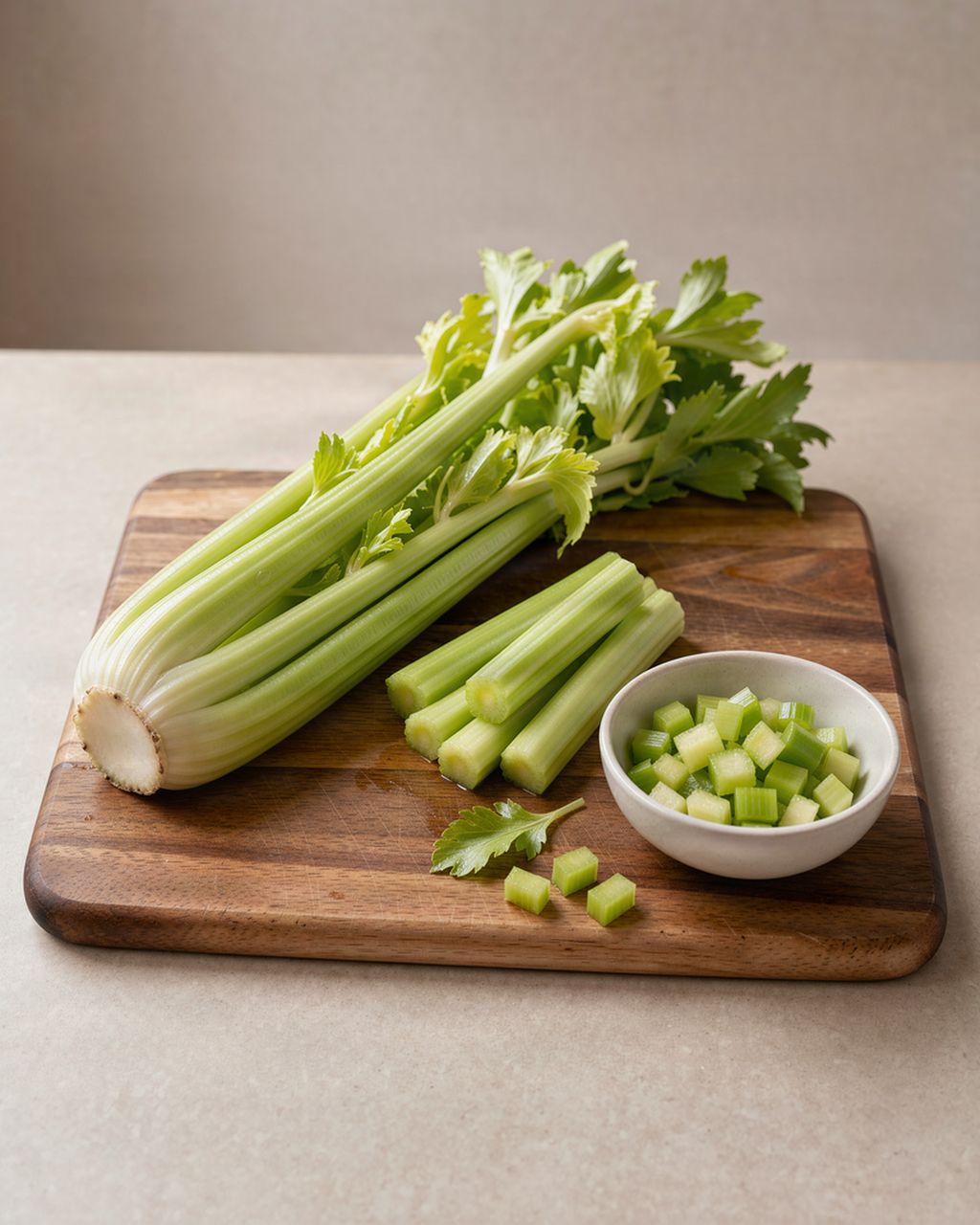
Don't throw out wilted but healthy arugula: stir it into pasta or risotto at the last moment. We cover other fridge vegetables by the same logic in our piece on celery stalks, and if the power goes out, the article what keeps in the fridge and what to throw out will help.
You can revive wilted salad with ice water: submerge the leaves in a bowl of cold water and ice for about 15 minutes, as recommended by the University of Arizona's agricultural extension. The cells soak up water, firm up again and the leaves turn crisp.
Remove any slimy or brown leaves. Nothing will save them, and they don't belong in the water.
Separate the leaves so the water reaches them from all sides.
Submerge them in ice water without salt or vinegar. Salt would actually draw water out of the leaves.
Lift them out, dry them thoroughly in a spinner and use them right away.
This works on wilted but healthy leaves: romaine, iceberg and arugula. An ice bath doesn't work on spoiled salad. Wilting is only water loss, but the breakdown of a leaf can't be reversed.
You can replace romaine with iceberg lettuce, napa cabbage, lettuce hearts, chicory (endive), or baby spinach or baby kale; it depends on what you need it for:
Iceberg lettuce: the closest crunch and juiciness, milder in flavor. A universal substitute.
Napa cabbage (Chinese cabbage): a firm rib like romaine's, good in salads with a bold dressing and for quick searing.
Lettuce hearts: they're really small heads of the romaine type, so closest in flavor and texture.
Chicory (endive): crunchy but slightly bitter, and it holds its shape on the grill or in a pan. Use it where cheese, nuts or fruit balance it out.
Baby kale or baby spinach: when a green base matters more to you than crunch.
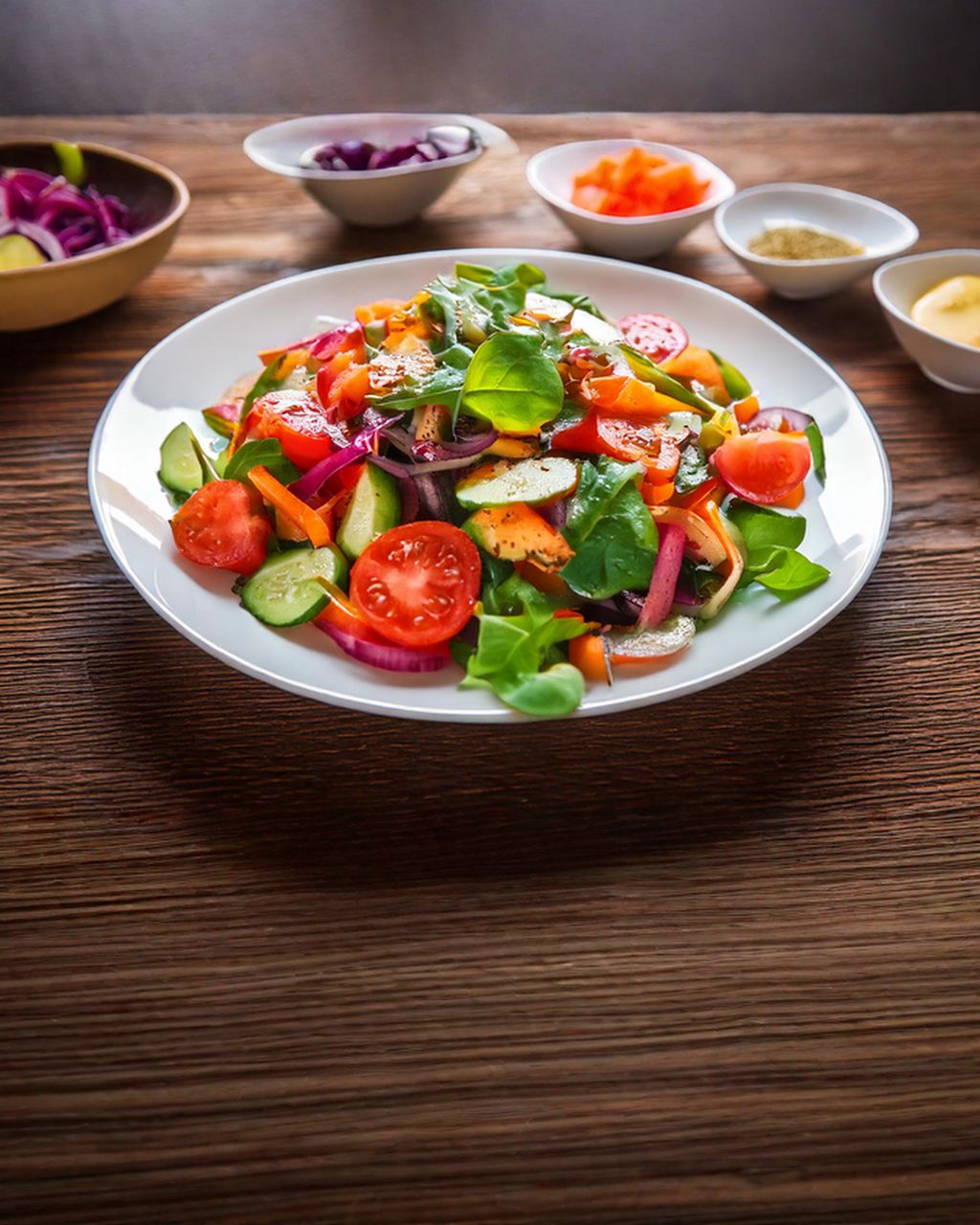
For Caesar salad, reach for iceberg or lettuce hearts, because what matters there is a firm leaf that can carry a thick dressing. If you'd rather build a salad around arugula, try the salad with arugula, tomatoes and Parmesan or beet gnocchi in an arugula salad. You'll find more combinations and dressings in our article on how to make vegetable salads.
Arugula salad with tomatoes and parmesan
Fresh arugula salad with tomatoes and Parmesan

Beetroot gnocchi with light arugula salad
Beet gnocchi in a light arugula salad
Don't freeze arugula for salads. After thawing it goes limp and mushy, because the water inside the cells breaks the leaves' cell walls as it freezes. If you want to save it, blend it with oil into pesto or stir it into a hot dish and freeze that instead.
Spoiled arugula feels slimy, darkens to brown or black, falls apart and smells musty or sour instead of fresh and peppery. Throw out individual leaves like that right away so they don't spread to the rest. If most of the container is slimy or there's liquid in the bag, throw out the whole pack. Leaves that are merely limp but otherwise clean and fragrant aren't spoiled, and you can revive them in ice water.
Arugula in the fridge most often turns black when it freezes against the back wall or when water is left on the leaves. Touching the cooling surface makes the leaves freeze and blacken, while drops of water and condensation in the container speed up rot. So store it dry, with a paper towel, and away from the back wall of the fridge.
Don't leave torn or chopped romaine out at room temperature overnight. The USDA advises not leaving cut vegetables out of the fridge for more than 2 hours. A whole, intact head tolerates it better for a short time, but after a night in the warmth it wilts and spoils faster.
Bagged salad turns slimy because juice leaks from the torn edges of the leaves, and in a closed, damp bag bacteria multiply in it and break the leaves down. Warmth and condensation speed the whole process up. Don't eat slimy salad, and throw out the whole bag, not just the worst leaves.
One recipe worth heating the oven for, one tip, and one deal from the shop. Nothing else.