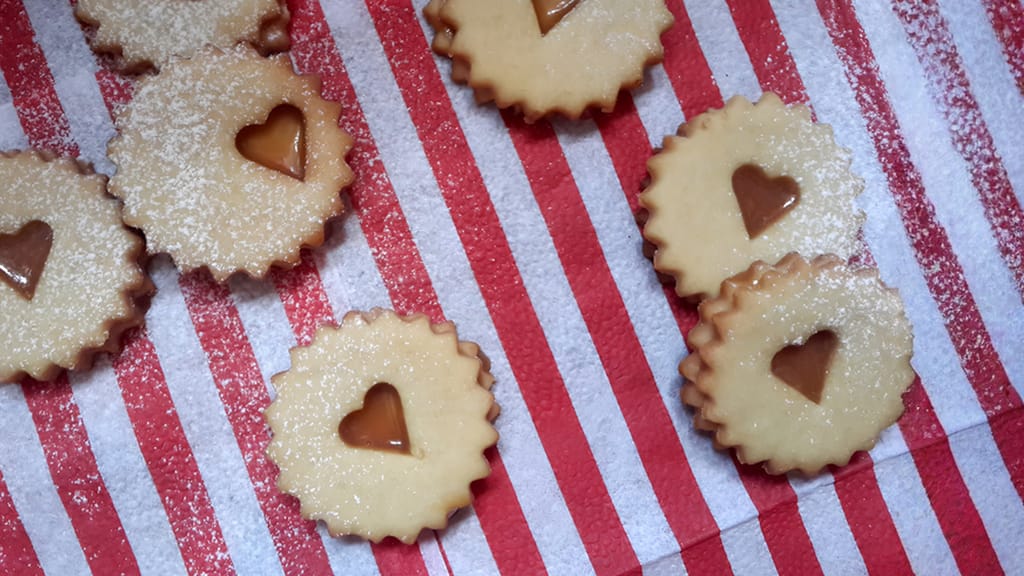
Linzer cookies filled with salted caramel
Caramel for Christmas Cookies: What Temperature to Cook It To So It Doesn't Turn Rock Hard
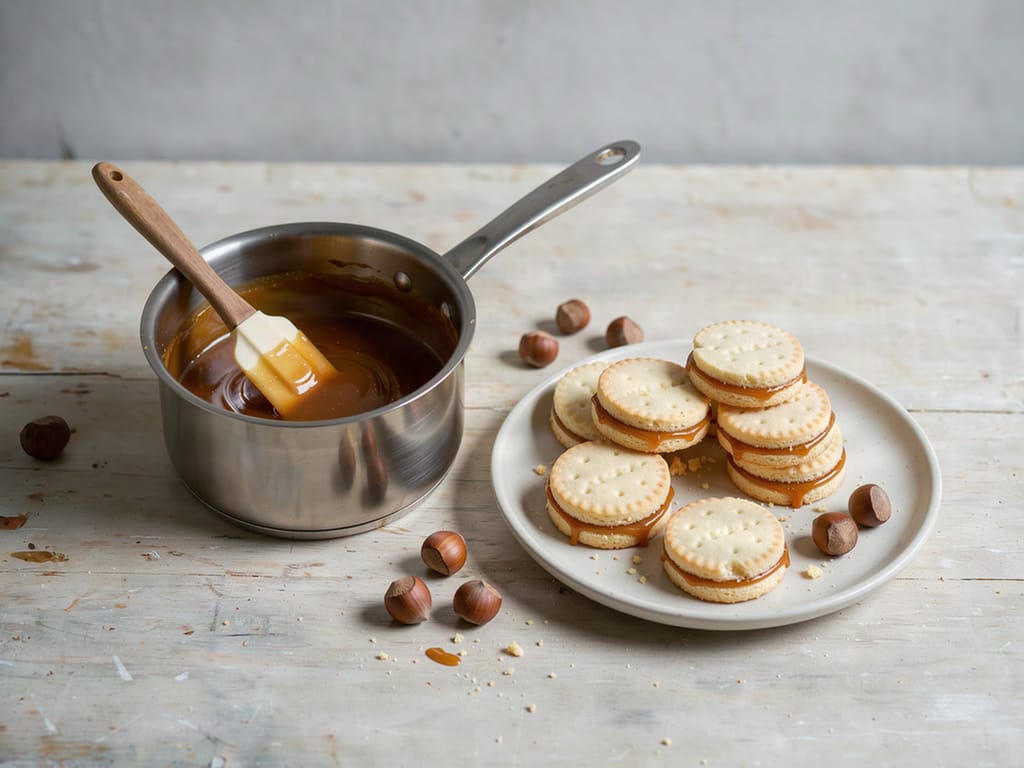
Updated Nov 3, 2026
Caramel Christmas cookies come down to one number: the temperature you cook the caramel to. For a sandwich cookie filling that should stay soft and sticky once cool, cook it with cream to 112–117 °C (234–243 °F). At 118–122 °C (244–252 °F) you get caramel candies you can cut into pieces, and above 145 °C (293 °F) you get hard caramel that snaps. Add glucose or invert sugar syrup too, so the caramel doesn't crystallize and turn grainy. Below you'll find temperatures for each use, a test that needs no thermometer, and the reasons caramel hardens in finished cookies.
Caramel in cookies hardens for one of three reasons: it was cooked to too high a temperature, it crystallized, or its moisture moved into the dough. Each one looks different:
Hard and glassy, but smooth – the water has boiled off. Every degree above your target temperature means firmer caramel once cool.
Grainy, cloudy and crumbly – it crystallized. Left to sit and cool, sucrose reverts to crystals, typically within a few days in a cookie box.
Soft at first, then set after a few days – the surrounding crisp dough has drawn some of the water out of it. The caramel dries out while the cookies soften a little.
A thermometer fixes the first problem, glucose or invert sugar syrup fixes the second, and the right layer thickness and storage fix the third. You'll find it all below.
How to soften gingerbread that’s gone hard, when to fill Linzer cookies and how to tell the carp is done. One recipe and one tip a week. Unsubscribe in one click.
Cook caramel with cream to the temperature that gives the firmness you want once it cools. The higher the temperature, the less water is left in the caramel and the firmer it gets:
105–108 °C (221–226 °F) – thick caramel sauce. It still flows once cool. Too soft for sandwiching cookies, as the pieces would slide around.
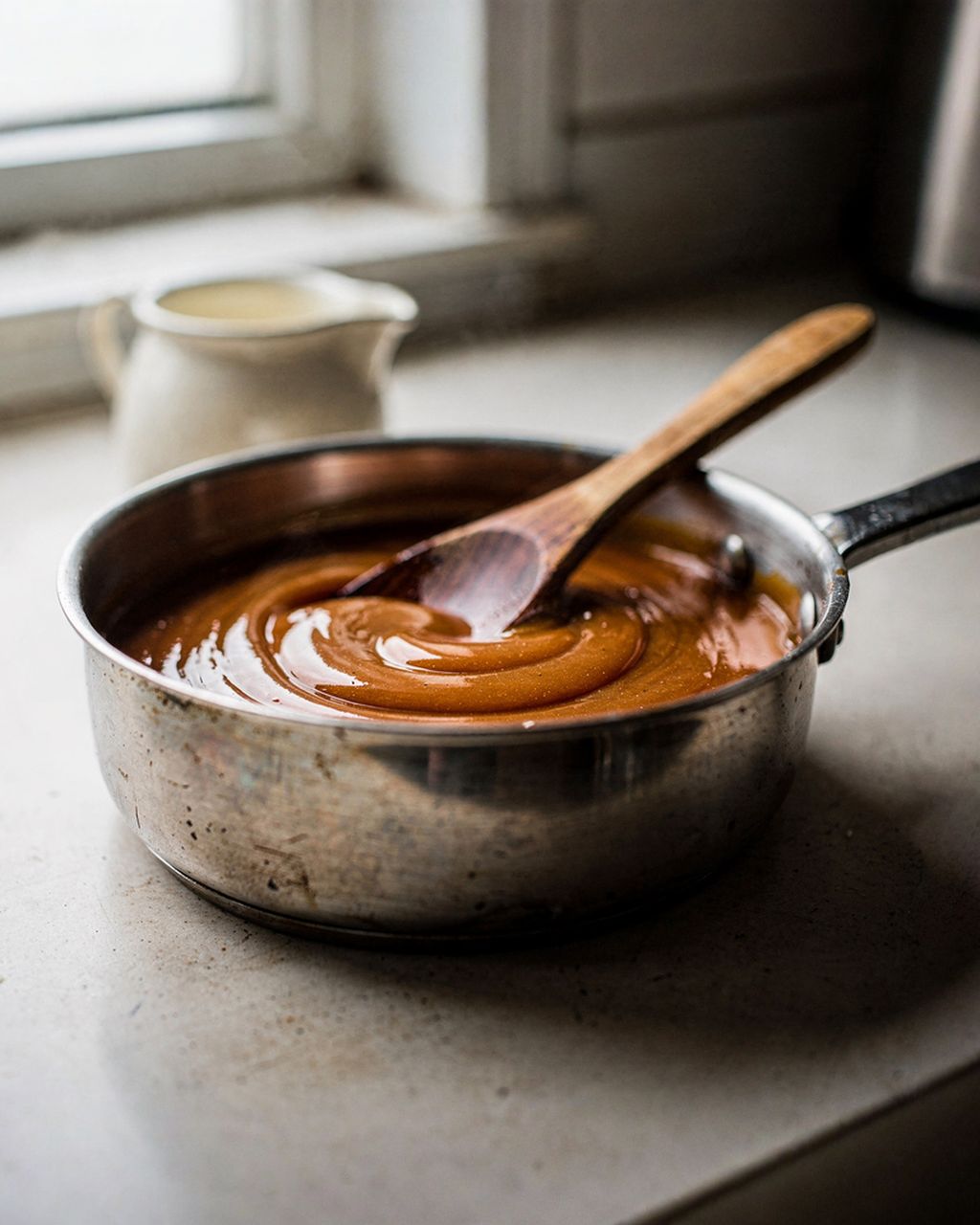
112–117 °C (234–243 °F) – soft filling. Once cool it stays put but remains sticky and chewy. This is what you want for sandwiched linzer cookies and tartlet cups.
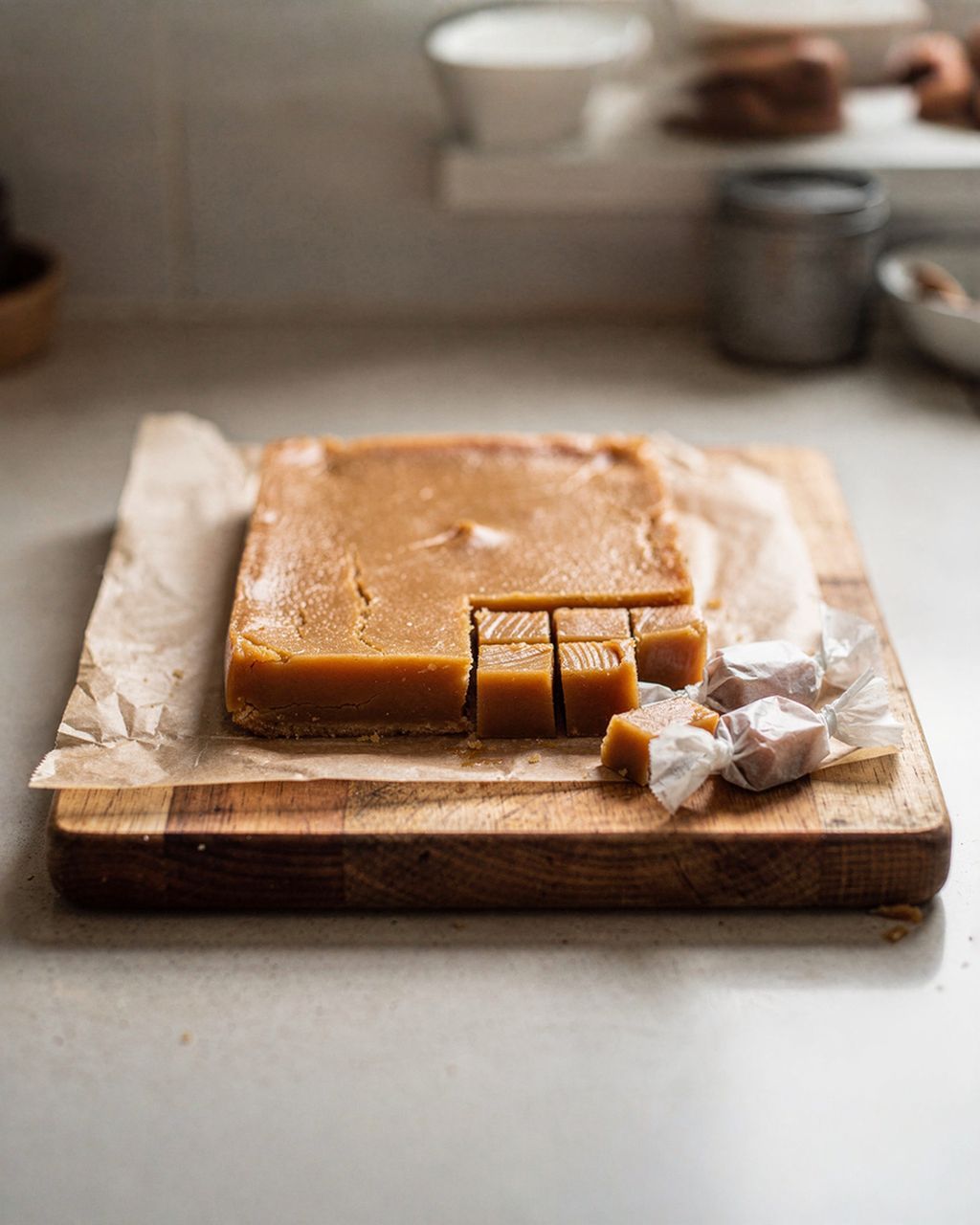
118–122 °C (244–252 °F) – caramel candies. The mixture holds its shape and can be cut into cubes. Soft, chewy caramels sit at the low end, firmer ones at the high end.
Above 145 °C (293 °F) – hard caramel. Once cool it snaps like glass. It's for caramelized nuts and brittle, where you want that crunch.
Measure with a probe candy thermometer or a digital one that reads to at least 200 °C (392 °F). An oven thermometer won't do. Before cooking, check yours in boiling water: it should read about 100 °C (212 °F), a little less at higher altitudes. Whatever the difference is, shift your target temperature by the same amount. From about 110 °C (230 °F) the temperature climbs quickly, so stay at the pot and keep measuring. The article on homemade caramel candies covers the temperatures for caramels in detail.
Without a thermometer, you can judge caramel's temperature with the cold-water drop test: drip a little caramel from a spoon into a glass of ice water and lift it out with your fingers.
It spreads out and can't be picked up – below 110 °C (230 °F), keep cooking.
A soft ball that flattens between your fingers – about 112–116 °C (234–241 °F), cookie filling.
A ball that holds its shape but can be squeezed – about 118–120 °C (244–248 °F), soft caramels.
A hard ball that is almost impossible to squeeze – from 121 °C (250 °F), firm caramels.
Threads that snap and break in the water – the hard stage, above 145 °C (293 °F).
Test after every minute of boiling, each time with a clean spoon and fresh water. The test is less precise than a thermometer, but it's good enough for cookie filling.
To make caramel filling for cookies, caramelize sugar to an amber color, pour in hot cream, add butter and cook it all to 112–117 °C (234–243 °F). The basic method:
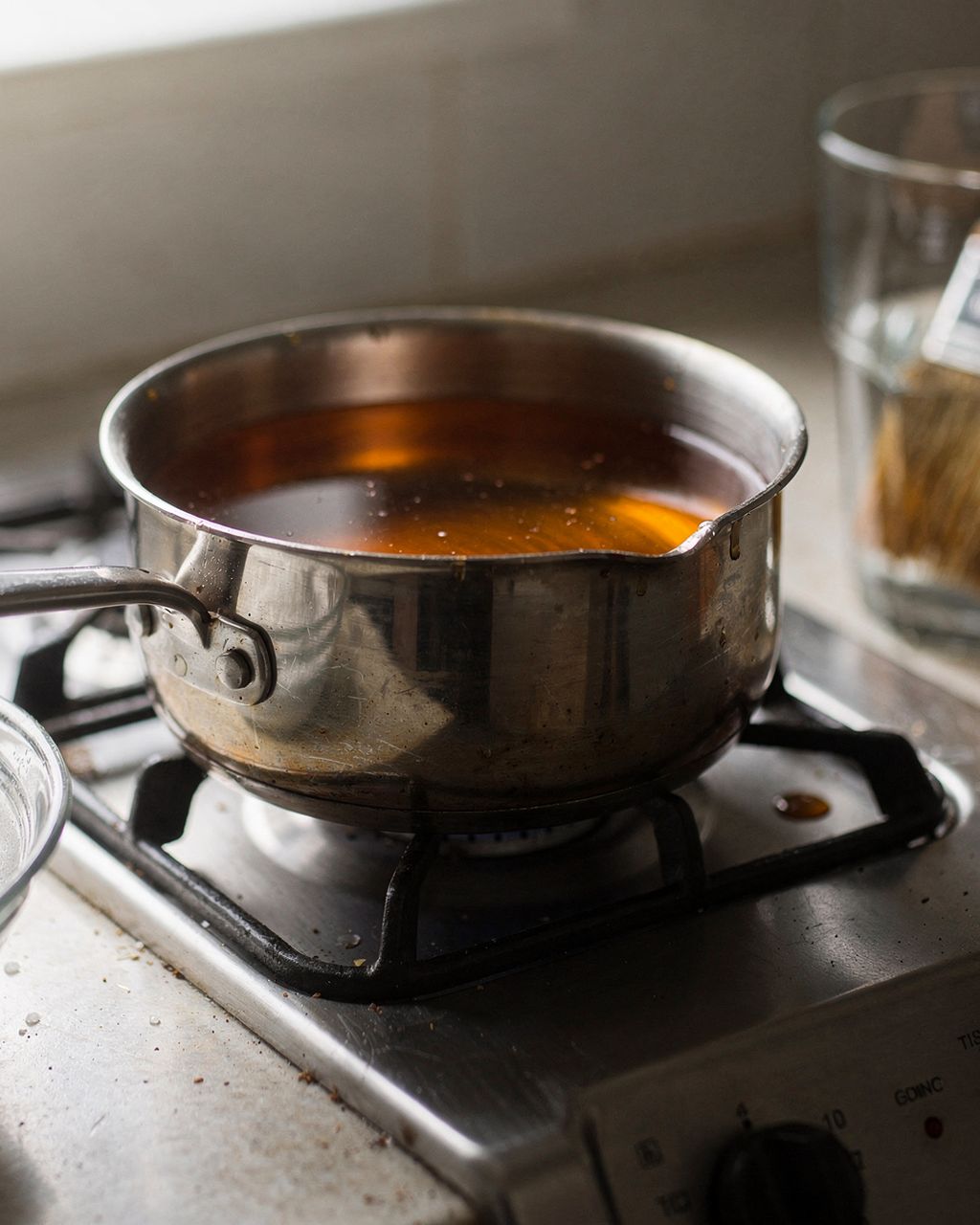
Melt the sugar in a heavy-bottomed pot and let it turn amber, around 170–180 °C (338–356 °F). The article on how to make caramel from sugar explains when to take it off the heat so it doesn't turn bitter.
Remove from the heat and pour in the hot cream a little at a time. The caramel will bubble up fiercely.
Return to a gentle heat, add the butter and cook, stirring constantly, until it reaches 112–117 °C (234–243 °F).
Let the filling cool to room temperature and stir it. Warm, it's thin and would run out of the cookies.
Spread it in a thin layer on fully cooled cookies, then let the sandwiched cookies set for an hour.
A ready-made recipe where all of this works is salted caramel linzer cookies:
Linzer cookies filled with salted caramel
Linzer cookies filled with salted caramel: caramel Christmas cookies
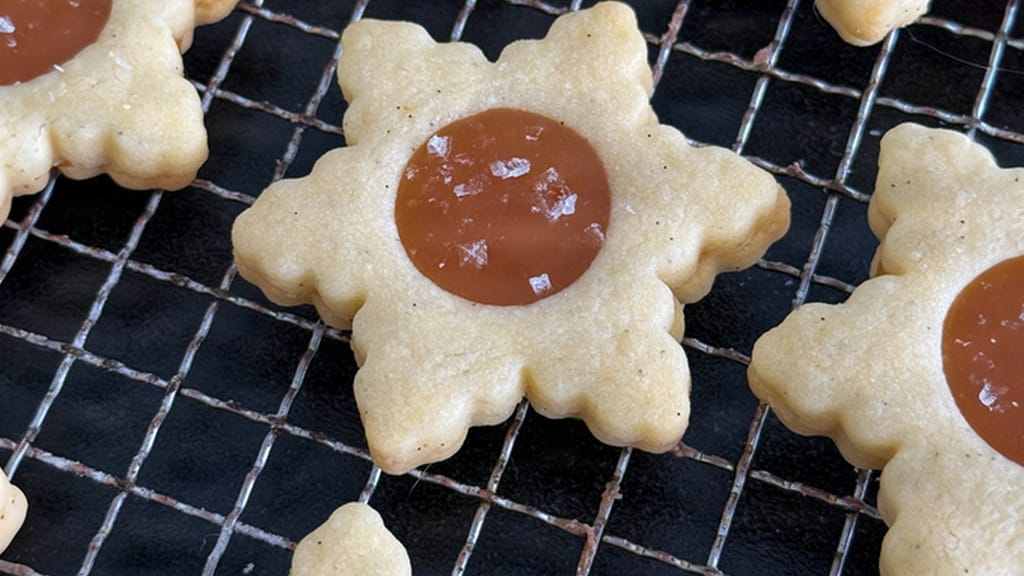
Linzer cookies with salted caramel and flaky sea salt
Linzer cookies with salted caramel and flaky salt
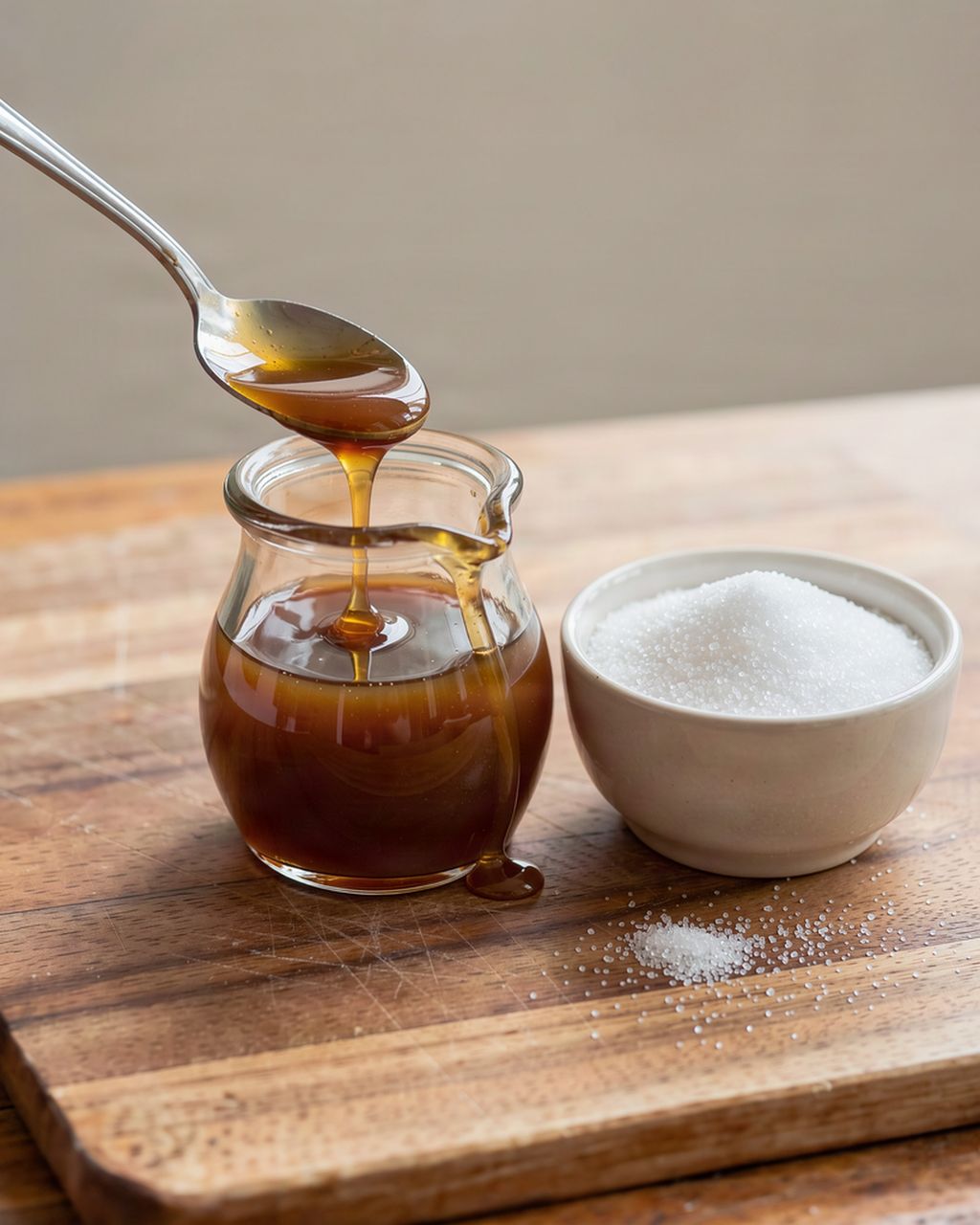
To keep caramel in cookies from crystallizing, replace part of the sugar with glucose syrup (15–20% of the sugar's weight) or invert sugar syrup (10–15%). For 200 g of sugar, that's 30–40 g of glucose or 20–30 g of invert syrup. Glucose and fructose have a different molecular shape from sucrose, so they wedge in between and keep it from arranging itself back into crystals.
Glucose syrup is neutral in flavor, adds shine to the caramel, and keeps the filling smooth even after days in the box. We use FunCakes glucose syrup (375 g); according to the manufacturer, it's designed precisely to prevent unwanted sugar crystallization.
Invert sugar syrup works similarly, and you need slightly less. It's sweeter and the caramel darkens faster with it, so watch the color a little earlier. Here you'll find it as liquid invert sugar for baking.
Honey also slows crystallization, but it brings its own flavor and burns easily.
Add either one to the sugar at the start, not into the finished caramel. Why caramel crystallizes and how to rescue a grainy batch is covered in why caramel crystallizes. You'll find more baking syrups and sugars in the sugars and syrups category.
For caramelized nuts and brittle, the caramel should be hard, so let the sugar caramelize and watch the temperature for color, not for softness. A caramel layer that still goes into the oven is a different story:
Caramelized nuts and brittle: let the sugar turn golden to amber (165–180 °C / 329–356 °F), stir in toasted nuts and spread immediately on baking paper. Once cool it snaps, and that's just how it should be.
Caramel layer for a tray bake (for example with nuts on shortcrust): in the oven the caramel keeps cooking and thickening. On the stovetop, just cook it until the sugar dissolves and the mixture thickens slightly, and leave the rest to the oven. Stick to the time in the recipe; one extra minute turns the layer into a hard slab.
Caramel made from sweetened condensed milk is a different technique: it browns by slow heating, not by burning sugar, and stays creamy once cool. You'll find how to cook it safely in the article on condensed milk for caramel.
How to cut tray-bake cookies into neat squares is described in the article on tray-bake cookies.
Store caramel cookies separately, in a tin or box in a cool room, and serve them at room temperature. Caramel straight from the fridge turns firm, while at room temperature it softens again.
Don't store them with gingerbread or other moist cookies. Caramel attracts moisture and turns sticky.
Put baking paper between the layers, otherwise the sticky filling glues the pieces together.
Cookies with a cream and butter filling keep for a shorter time than dry kinds. You'll find how long each type lasts in the overview how long cookies keep by type.
The general rules are in the article on how to store Christmas cookies.
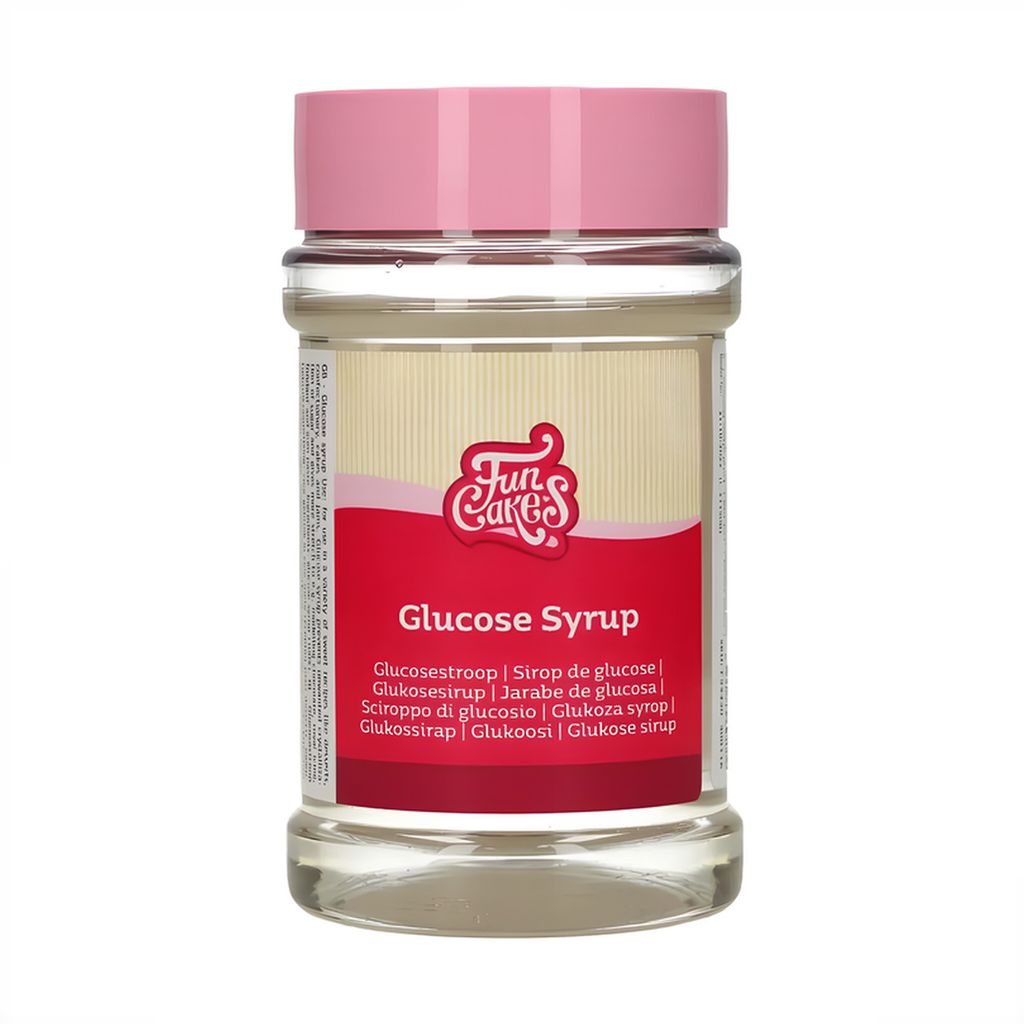
FunCakes
FunCakes Glucose Syrup (375 g)Yes, you can easily make the caramel filling a few days ahead. Keep it covered in the fridge and use it within a week. Before using, warm it gently in a water bath, then let it cool to room temperature so it has the right thickness. Cold, it's too stiff, and the cookies would break when you spread it.
Caramel filling leaks out when it was cooked to too low a temperature or when it's spread on warm cookies. Below about 110 °C (230 °F) it stays runny once cool. For sandwiching, cook it to 112–117 °C (234–243 °F) and spread it only when both the filling and the cookies have cooled.
You can rescue set caramel with heat and liquid: put it in a pot with 2–3 tablespoons of cream or water for every 100 g and heat it, stirring, until it melts. Then boil it briefly and check the temperature again. Caramel that has already hardened inside finished cookies can't be softened again.
Invert sugar syrup is the best substitute for glucose syrup, and you need slightly less of it (10–15% of the sugar's weight). In a pinch, honey or half a teaspoon of lemon juice can help, but the result is less predictable and honey adds its own flavor.
Cookies with a caramel filling can be frozen, but after thawing the caramel may turn damp on the surface and sticky. Freeze them in a sealed tin with paper between the layers, and thaw them in the tin without opening it, so moisture doesn't condense on the cold cookies. The article on how to freeze cookies and dough explains the method.
One recipe worth heating the oven for, one tip, and one deal from the shop. Nothing else.