Homemade caramel sauce with just 4 ingredients
Why Caramel Crystallizes (and How to Fix Grainy Caramel)
Updated Oct 4, 2026
Caramel crystallizes when sucrose molecules in a hot, supersaturated syrup lock back together into crystals. The trigger is usually a single undissolved grain of sugar, stirring at the wrong moment, or a bit of impurity in the pan. In seconds, clear syrup turns into a cloudy, grainy mass. The good news: it's easy to prevent, and grainy caramel can almost always be rescued. Below you'll find out why it happens, how to stop it, how to fix grainy caramel, and what to do if your caramel seizes up after you add the cream.
Caramel crystallizes because the dissolved sugar in a thick syrup "wants" to go back to its solid form, and it only takes a single seed crystal to set that off. The most common triggers and risk factors are:
Undissolved sugar crystals on the sides of the pan that fall back into the syrup.
Stirring once the syrup is already boiling.
Sugar that hasn't fully dissolved before the water starts boiling.
Impurities – bits of old sugar on your spoon, dust, a stray crumb.
Pure sucrose with no anti-crystallization ingredient – that is, a syrup made from just sugar and water, with no glucose syrup, invert sugar, or acid.
Why does this happen so easily? As the syrup boils, water evaporates and the pan ends up holding more sugar than it could normally keep dissolved at that temperature. This is called a supersaturated syrup, and it's unstable. Sucrose molecules are all identical and love to lock into a regular lattice — the moment they find a ready-made crystal, they start piling onto it. One crystal creates another, and the reaction cascades through the whole pan.
How to spot grainy caramel: the syrup turns cloudy and pale, a white crust forms on the surface and sides, and instead of flowing smoothly the mixture clumps or looks like wet sand. On your tongue, you'll feel tiny grains instead of smoothness.
You prevent crystallization by keeping any seed crystals out of the syrup and adding an ingredient that blocks crystal formation. In practice, that means six habits:
A clean pan and tools. Ideally a heavy-bottomed stainless steel pan and a silicone spatula — wooden spoons tend to hold onto bits of old sugar in their grain.
Dissolve first, then boil. Heat the sugar and water over low heat, stirring gently, until the syrup is completely clear. Only then turn up the heat. As a rough guide, 60–70 ml of water is enough for 200 g of sugar.
Stop stirring once it starts boiling. As soon as the syrup is at a boil, set the spatula aside. If it's coloring unevenly, just swirl the pan gently.
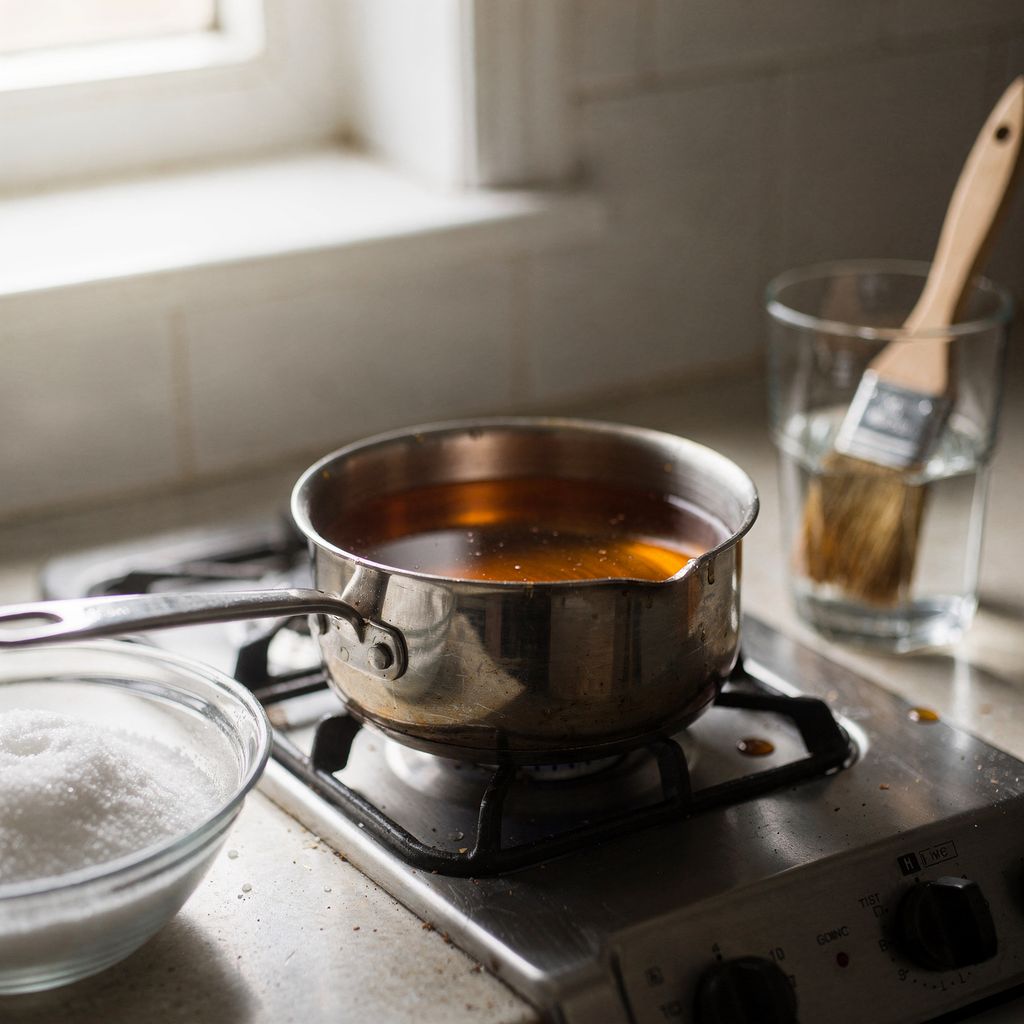
Wash down the sides. Brush away any crystals splashed onto the pan's sides with a pastry brush dipped in water. Alternatively, cover the pan with a lid for 1–2 minutes and let the steam rinse the sides for you.
Add an anti-crystallization ingredient — a spoonful of glucose syrup, invert sugar, or a few drops of lemon juice (see below).
Keep anything cold out of the pan. A cold spoon or a thermometer straight from the fridge can trigger crystallization. Put the thermometer into the syrup right from the start and leave it there.
To stop caramel from crystallizing, add glucose syrup, invert sugar, or a few drops of lemon juice — all three introduce sugars other than sucrose into the syrup (glucose syrup brings glucose, maltose and longer sugar chains; invert sugar and lemon bring glucose and fructose), which stop sucrose from forming crystals. These molecules have a different shape and size, so they get in sucrose's way and keep it from locking into a regular lattice. The main difference between them is how precisely you can dose them.
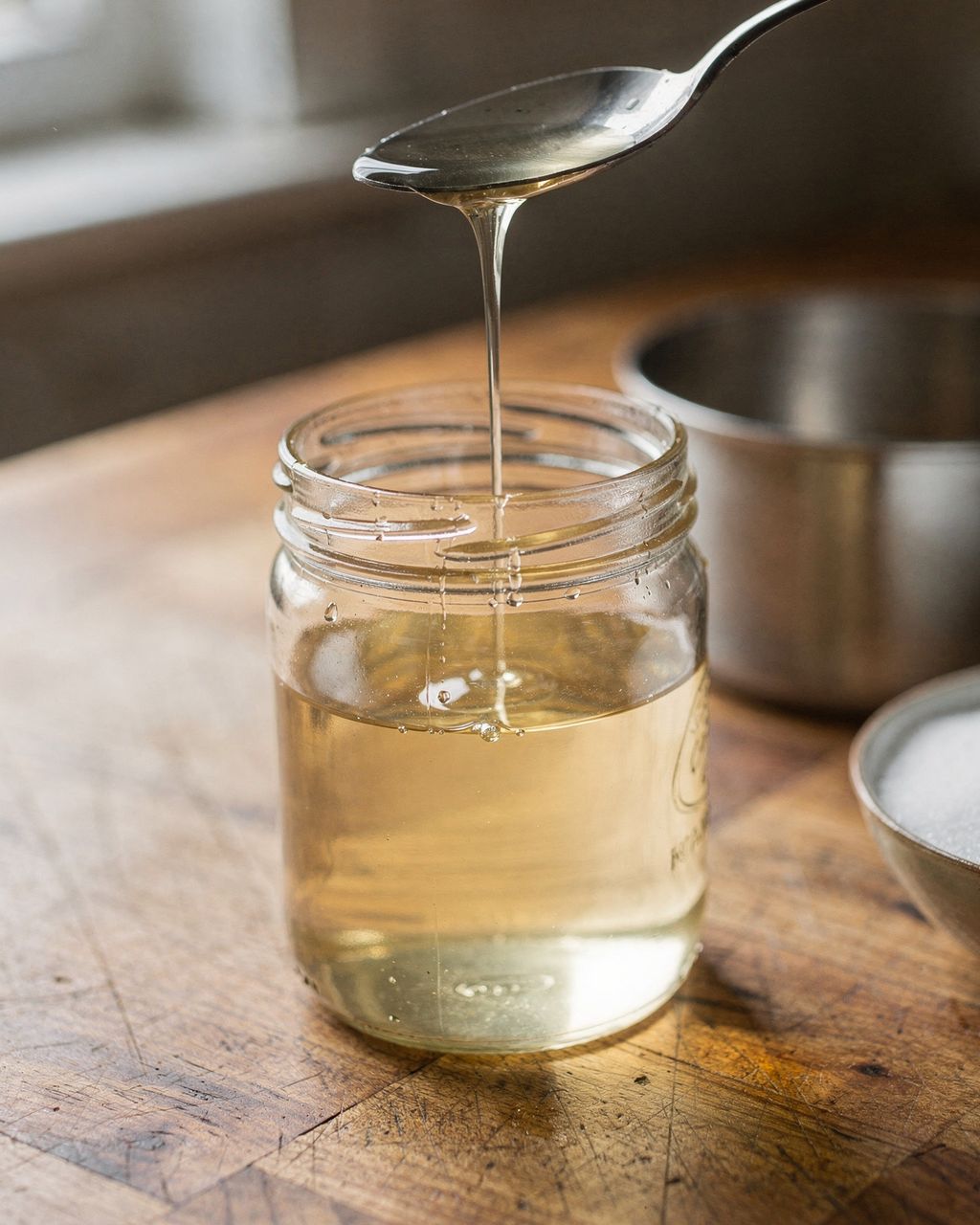
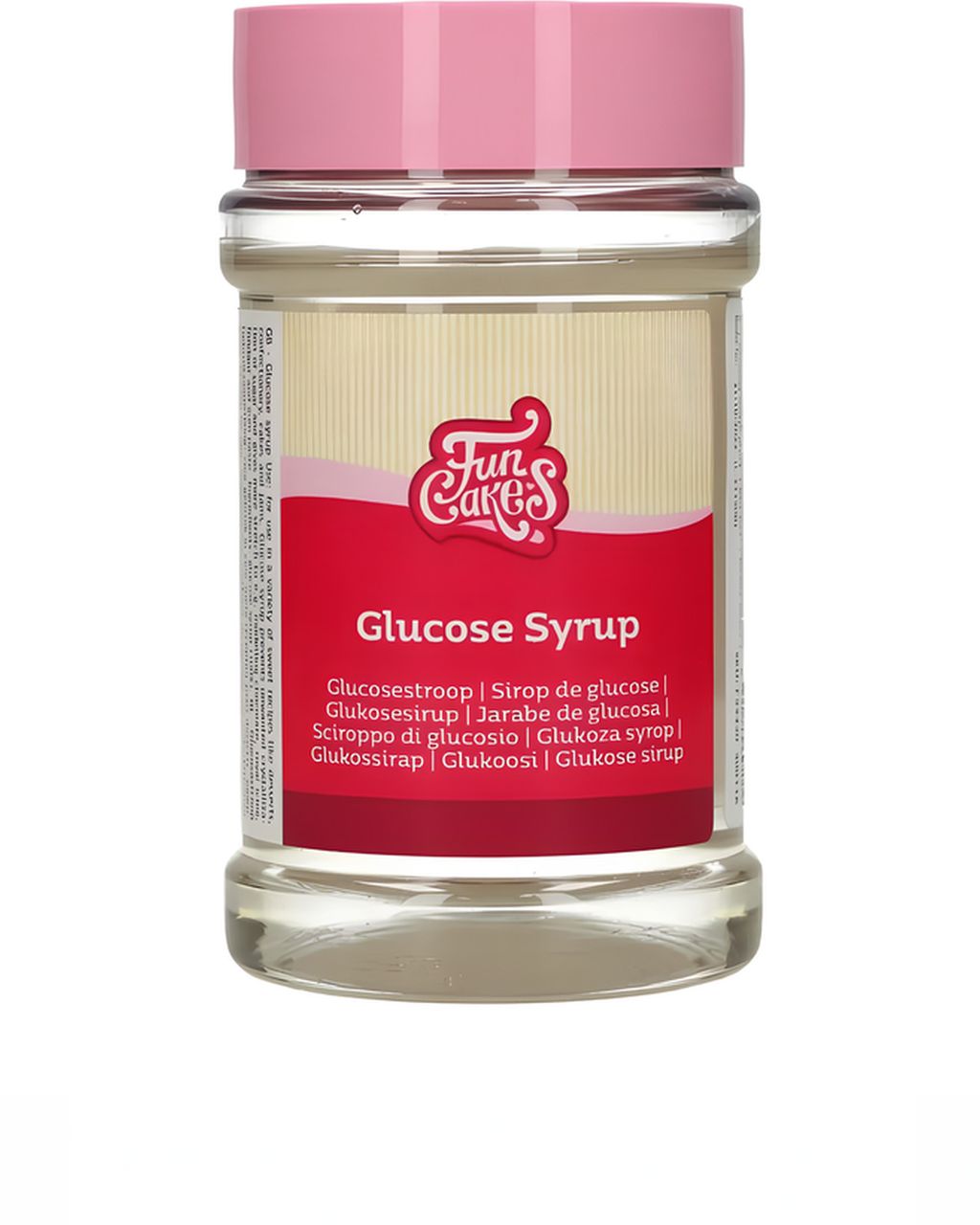
Glucose syrup — the most reliable choice, and neutral in flavor. Add 10–20% of the sugar's weight, i.e. 20–40 g per 200 g of sugar. Especially good for caramel sauces, caramels, and decorating syrups.
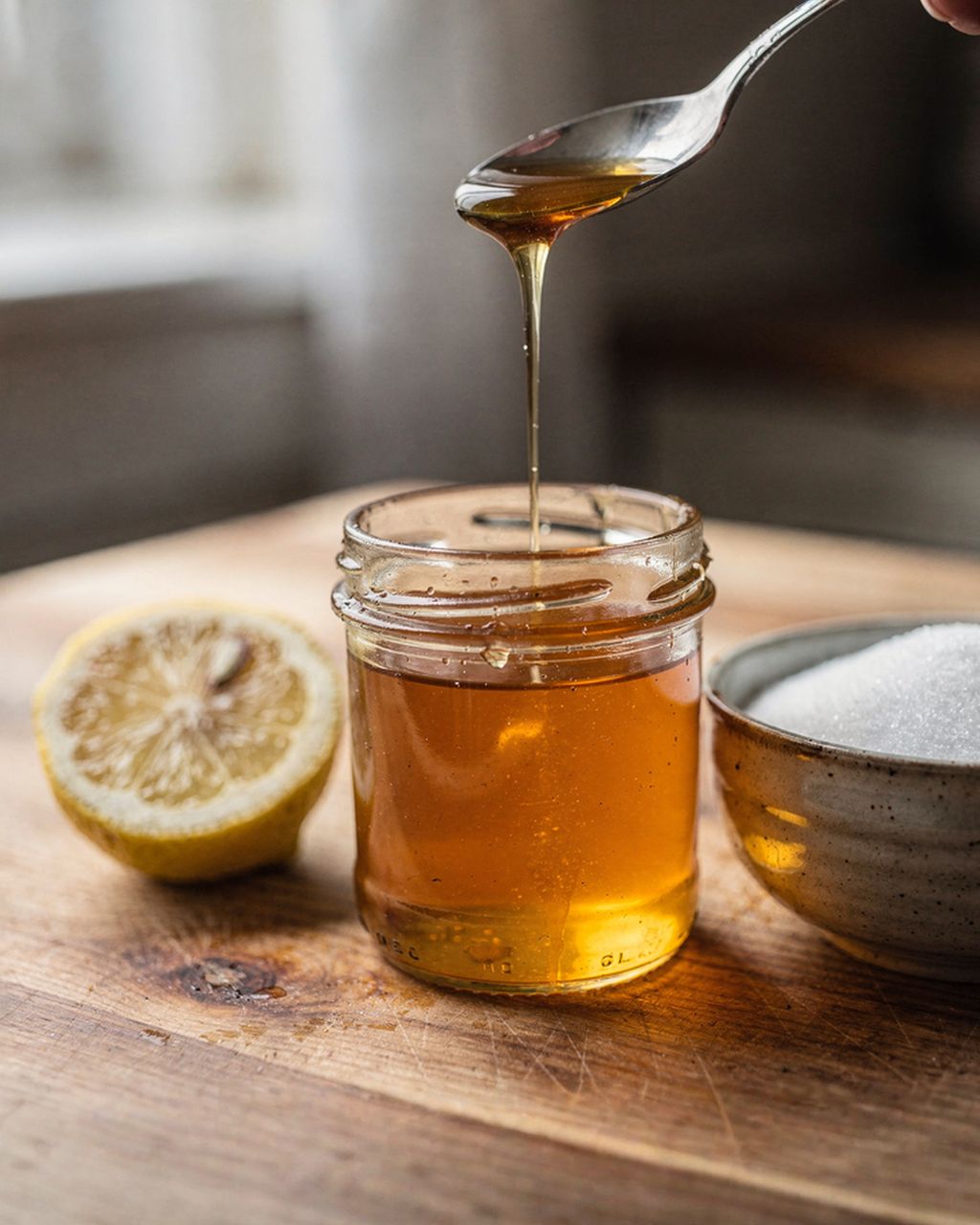
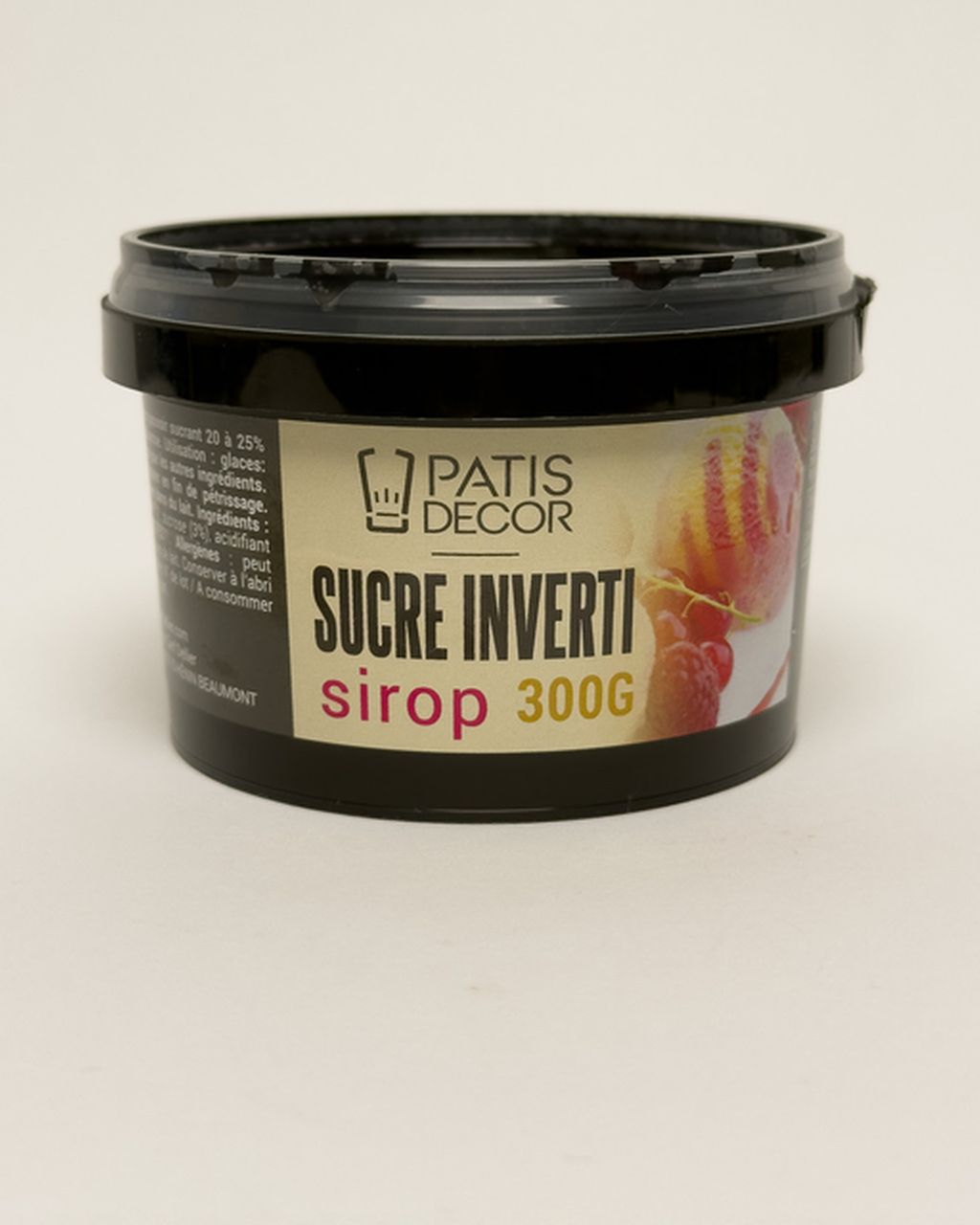
Invert sugar — a mix of glucose and fructose that also holds onto moisture, so caramel sauce and soft caramels stay soft for longer. Just 10–15% of the sugar's weight (20–30 g per 200 g) is enough. Fructose browns faster, so the caramel will color a bit sooner — watch the color, not the clock.
Lemon juice — the acid breaks down some of the sucrose into glucose and fructose during boiling. ½ teaspoon (about 2–3 ml) per 200 g of sugar is enough. It's a cheap emergency fix, but the least precise, since how much sugar actually breaks down depends on how long it boils. Add too much and the caramel will taste sour.
You can find both syrups in the sugars and syrups for pastry-making category. Glucose syrup and invert sugar can stand in for each other in caramel, so you only need one of them.
You rescue crystallized caramel by redissolving the crystals in water and boiling the syrup again, this time without the mistakes. Here's how:
Add water — roughly ⅓ to ½ the weight of the original sugar (70–100 ml for 200 g of sugar).
Heat over low heat, stirring, until every lump and bit of crust has fully dissolved and the syrup is clear again. This takes 3–5 minutes.
Cover with a lid for 1–2 minutes so the steam washes the crystals off the sides. Or brush them off with a wet pastry brush.
Add a spoonful of glucose syrup or invert sugar so the mistake doesn't repeat itself.
Turn up the heat and boil without stirring until you reach the color you want.
If the caramel crystallized once it had already turned amber, the rescue still works — the flavor will just be a touch more bitter, since it boils for longer. But if it's turned dark brown and smells sharp and acrid, it's burnt, and water won't save it. Start over.
If caramel seizes into hard lumps after you pour in cream, that's not crystallization — it's thermal shock. The cold cream chills the caramel so suddenly that it hardens on the spot. The fix is simple: put the pan back over low heat and stir for 2–5 minutes until the lumps dissolve back into the liquid.
Preventing it is even easier. Warm the cream first to 60–80°C (140–176°F) — hot but not boiling — and pour it in gradually, in thirds, stirring constantly. Watch out, the caramel will bubble up fiercely and spatter.
Fat can separate too. If an oily layer appears on the surface of the sauce and the butter splits out, take the pan off the heat and stir in 1–2 tablespoons of hot cream or water. The emulsion will come back together. For a larger batch, a quick blitz with a stick blender helps.
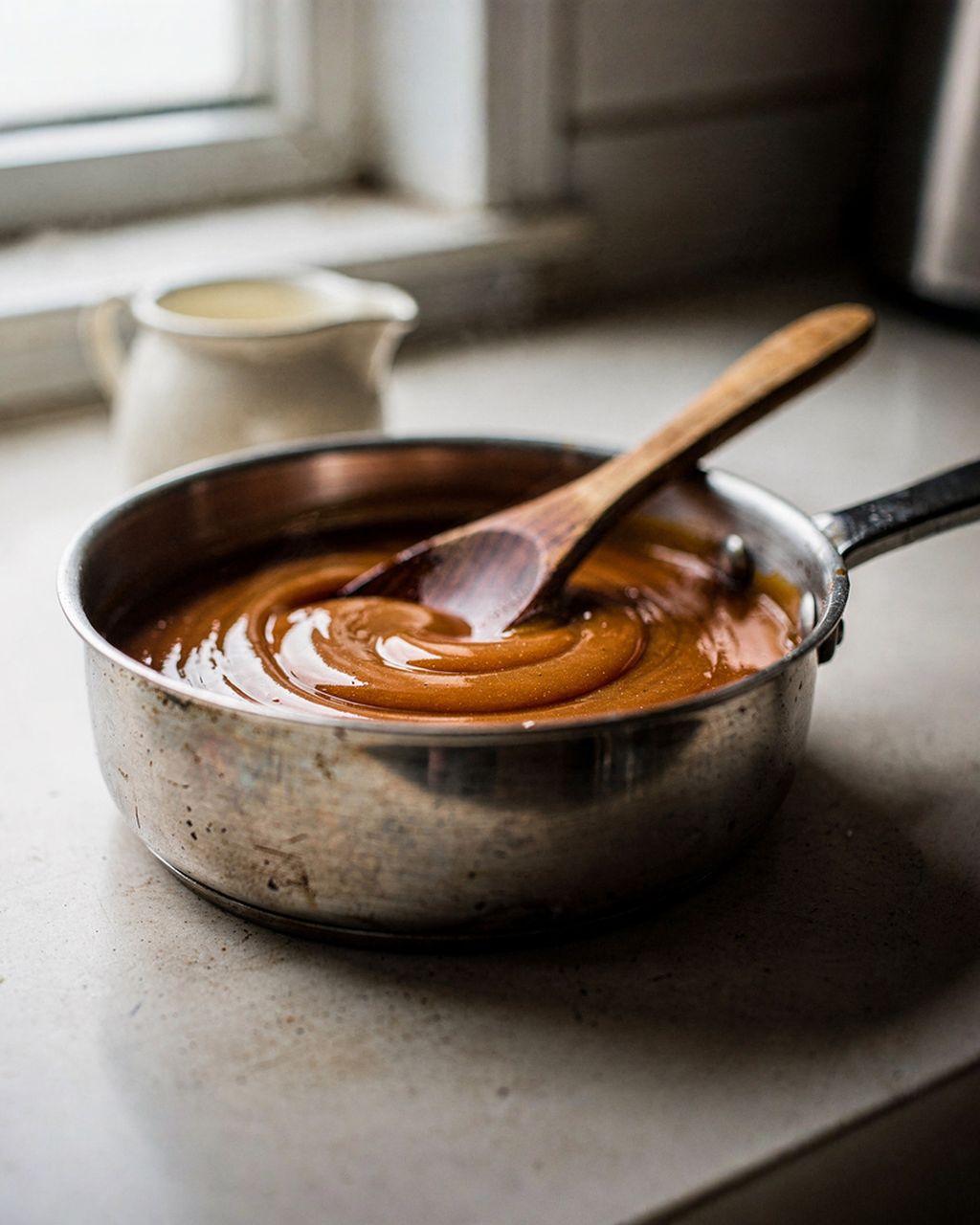
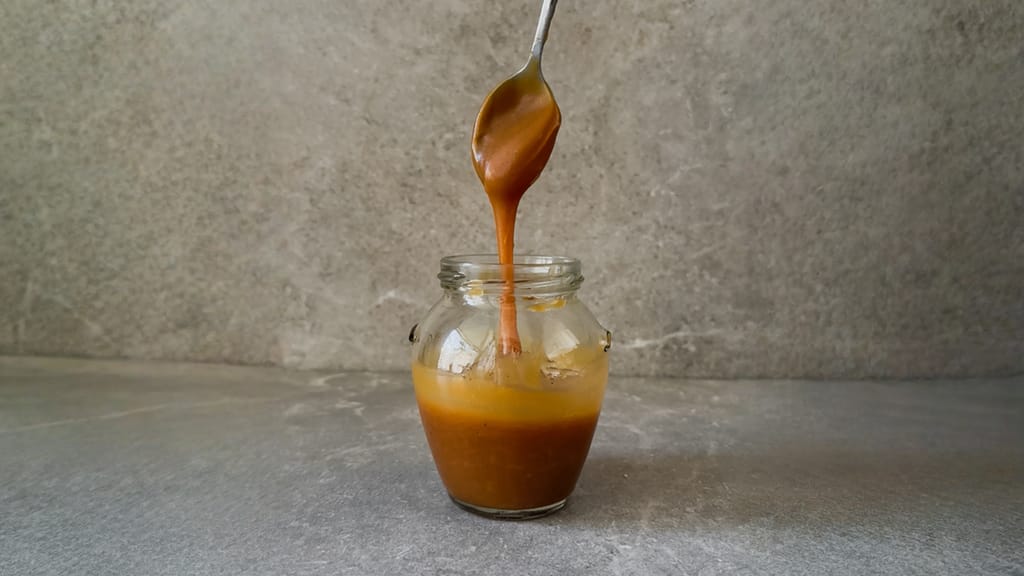
If you'd like to practice on something simple, try this 4-ingredient homemade caramel sauce. It walks you through every step: dissolving the sugar, boiling without stirring, and pouring in the cream.
Homemade caramel sauce with just 4 ingredients
4-Ingredient Homemade Caramel Sauce: Smooth, Crystal-Free Caramel
Caramel sauce turns sugary in the fridge because, once cold, the sugar in it is supersaturated again and slowly crystallizes — especially if water evaporates from the jar or drips dry around the rim. Sauce made from just sugar and water, with no glucose syrup or invert sugar, is the most prone to this — and it doesn't matter whether it's white beet sugar or cane sugar, since both are the same sucrose.
Fix: warm it with 1 tablespoon of water or cream over low heat (or in short bursts in the microwave), stirring until the grains disappear.
Prevention: add 10–20% glucose syrup or 10–15% invert sugar (by weight of the sugar) when you cook it, store the sauce in a clean, well-sealed jar, and wipe the rim clean.
Once it's made, you can use the sauce in something like this salted caramel cream.
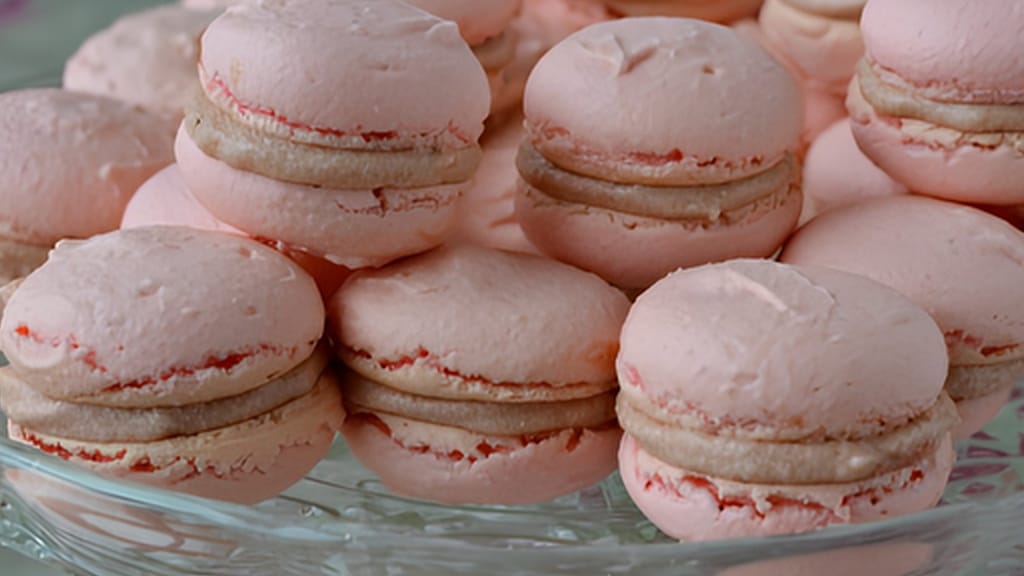
Salted caramel cream - great for macarons and more
Salted Caramel Cream — Not Just for Macarons
Yes — you can make smooth caramel from just sugar and water, as long as you fully dissolve the sugar before it boils, stop stirring once it's boiling, and wash down the pan's sides with a wet pastry brush. Glucose syrup or invert sugar are just insurance that forgives small mistakes. They're most useful for sauces and caramels meant to be stored.
Caramel is most at risk of crystallizing while it's still a clear, colorless syrup, roughly between 110 and 160°C (230–320°F). Around 160°C (320°F), the sugar starts to caramelize and color, and as the sucrose breaks down, the risk of crystallization drops. For a caramel sauce, boil to 170–180°C (340–355°F) for an amber color. Above 185–190°C (365–375°F), caramel quickly turns bitter and risks burning.
Caramel made from brown sugar crystallizes a bit less, because the molasses in it contains glucose and fructose, which slow down crystallization. But it's dark from the start, so it's hard to judge by color when it's done, and it burns more easily. For classic caramel, white sugar is the more reliable choice.
Caramel with nuts crystallizes when you add the nuts to syrup that hasn't colored yet and then stir it. The surface of the nuts and the stirring both act as seed points for crystals. Pastry chefs sometimes do this on purpose when they want nuts coated in a crunchy sugar crust. If you want nuts in glossy caramel instead, boil the syrup to an amber color first and stir the nuts in (ideally pre-warmed) only afterward.
One recipe worth heating the oven for, one tip, and one deal from the shop. Nothing else.