- Season
- Year-round
- Price
- Low
- Nutrition per 100 g
- 331 kcal
- 0 g protein
- 0 g fat
- 82.7 g carbs
Glucose syrup
Jams, honey and syrups
Glucose syrup
Glucose syrup is a viscous, clear, colorless liquid sweetener produced through the enzymatic hydrolysis of starch—most commonly from corn, wheat, tapioca, or potatoes. Unlike granulated sugar, it consists of a complex mixture of glucose, maltose, and longer-chain oligosaccharides, with its precise composition determined by its Dextrose Equivalent (DE) value.
In practice
How to store
- On the counter
Store in a cool, dry location away from direct sunlight for up to 2 years unopened. Once opened, keep tightly sealed to prevent moisture absorption and contamination. Ideal storage temperature is 15–25 °C.
- In the fridge
Refrigeration is not recommended as cold temperatures dramatically increase viscosity, making the syrup difficult to pour and measure. If accidentally chilled, warm gently in a water bath to restore fluidity.
- In the freezer
Freezing is unnecessary and not recommended. The high sugar content prevents true freezing, and temperature cycling can encourage crystallization and degrade quality.
How to choose
When selecting glucose syrup, consider the Dextrose Equivalent (DE) value for your application: Low DE (20-38) syrups offer excellent viscosity and moisture retention for fondants and soft candies; Medium DE (42-48) provides balanced sweetness and anti-crystallization properties ideal for hard candies, caramels and ice cream; High DE (63+) delivers maximum sweetness for beverages. Look for clear, colorless syrup without cloudiness or crystallization. Professional-grade glucose from specialty baking suppliers typically offers superior purity and consistency compared to grocery store varieties. Wheat-derived glucose syrup is exempt from allergen labelling in the EU because refining removes gluten to levels assessed as safe for people with coeliac disease; if you prefer to avoid wheat-derived products, look for syrups that state their starch source.
What to swap in
Best swap
Another glucose syrup, such as light corn syrup where available, is the closest functional substitute, with nearly identical anti-crystallization properties and neutral flavour. Use in a 1:1 ratio for most applications. Liquid invert sugar syrup, widely sold in Europe, also prevents crystallization but is sweeter and browns faster.
In a pinch
Golden syrup or honey can substitute in recipes where some flavor contribution is acceptable, though both are sweeter and will impart distinct taste notes. Reduce quantity by 15-20% and expect altered flavor profiles.
Preparation
Glucose syrup's notorious stickiness requires strategic handling. Lightly oil measuring spoons, cups, and spatulas with neutral vegetable oil to ensure clean release. For precise measurements, weigh rather than measure by volume—the syrup's density makes volumetric measurements inconsistent. When incorporating into recipes, gently warm the syrup to reduce viscosity, making it easier to pour and blend. In candy-making, add glucose syrup to sugar and water before heating to ensure even distribution. Never stir a boiling sugar-glucose mixture vigorously, as this can introduce air bubbles and encourage crystallization.
Don't toss it
Residual glucose syrup clinging to containers need not go to waste. Add warm water to nearly empty jars and shake to create a simple syrup for cocktails or sweetening beverages. Alternatively, use syrup remnants to glaze roasted vegetables or proteins—the Maillard reaction will transform even small amounts into beautiful caramelized finishes.
Buy it from us
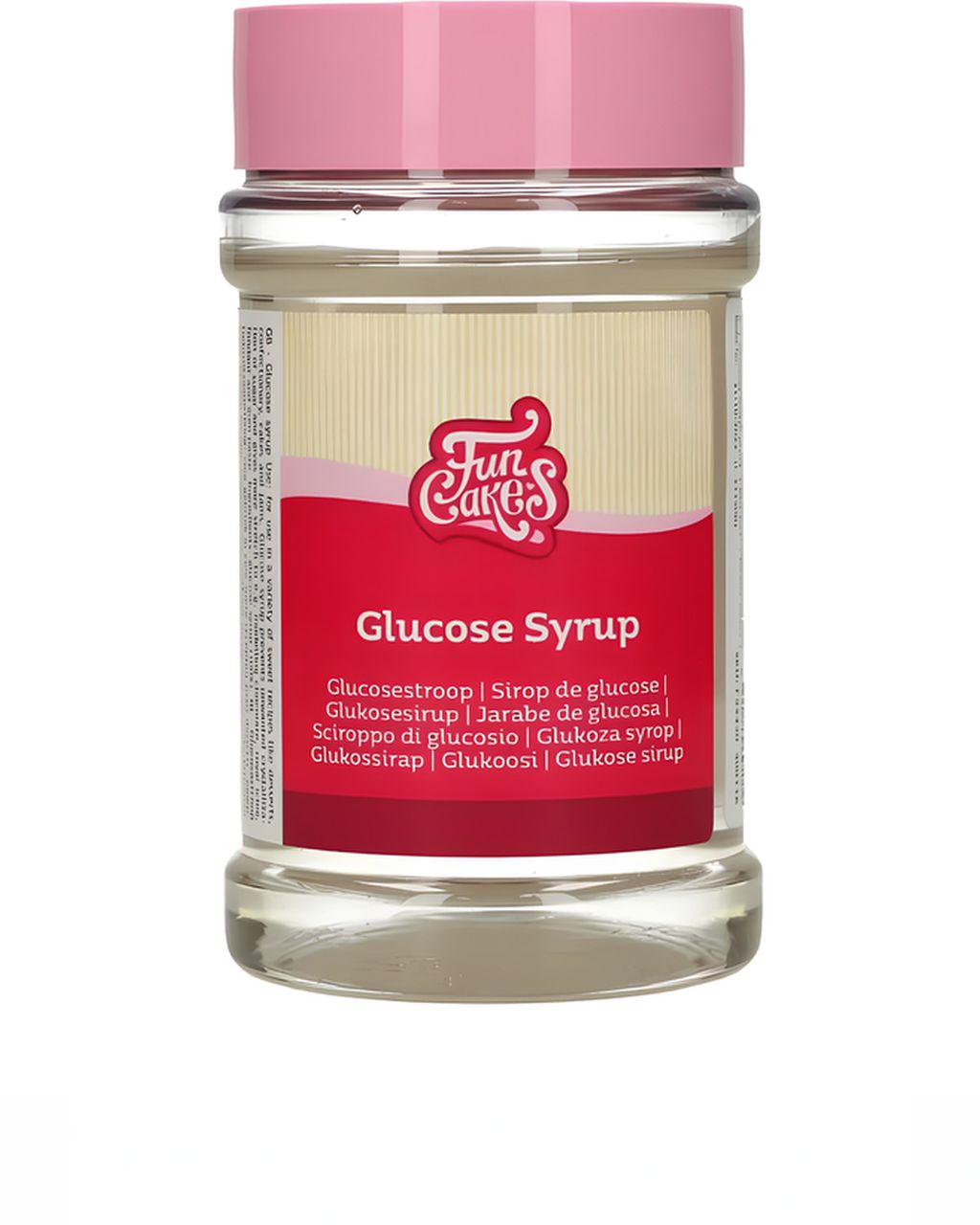
In the kitchen
Cooking
Glucose syrup excels in confectionery applications where sugar crystallization must be prevented. In caramel and toffee production, it interferes with sucrose crystal formation, yielding smooth, glossy results. For ice cream and sorbet, it lowers the freezing point while reducing ice crystal size, creating scoopable texture even at freezer temperatures. In fondant and royal icing, glucose syrup maintains pliability and prevents the grainy texture that plagues pure sugar preparations. Bakers incorporate it into cakes and cookies to retain moisture and extend shelf life. For glazes and mirror finishes on pastries, its viscosity and clarity produce professional results. In ganache, a small addition improves sheen and prevents separation.
Goes well with
- Chocolate and cocoa
- Butter and cream
- Vanilla
- Citrus zests
- Nuts (especially almonds, hazelnuts, pistachios)
- Fresh and dried fruits
- Mint and herbs
- Coffee and espresso
- Caramelized sugar
- Gelatin and pectin
What it is
Glucose syrup is a viscous, clear, colorless liquid sweetener produced through the enzymatic hydrolysis of starch—most commonly from corn, wheat, tapioca, or potatoes. Unlike granulated sugar, it consists of a complex mixture of glucose, maltose, and longer-chain oligosaccharides, with its precise composition determined by its Dextrose Equivalent (DE) value. This versatile ingredient serves as far more than a sweetener; it is a texturizer, humectant, and anti-crystallization agent prized by pastry chefs, confectioners, and food manufacturers worldwide.
How it tastes
Glucose syrup presents a clean, subtly sweet taste that registers approximately 20–70% as sweet as sucrose, depending on its DE value. Its flavor is deliberately neutral and unobtrusive, designed to enhance rather than compete with other ingredients. Lower DE syrups taste less sweet with a mild starchy undertone, while higher DE versions approach the sweetness of table sugar with a pure, uncomplicated finish. The syrup lacks the caramel notes of honey or the butterscotch warmth of golden syrup, making it an invisible workhorse in formulations where sweetness must be controlled without flavor interference.
Common questions
Is glucose syrup the same as corn syrup?
Is glucose syrup safe for people with gluten intolerance or celiac disease?
Can I make glucose syrup at home?
Why does my recipe specifically call for glucose syrup instead of regular sugar?
How do I measure sticky glucose syrup accurately?
Deep dive
5 min read
Varieties
Glucose syrups are classified primarily by their Dextrose Equivalent (DE), which measures the degree of starch hydrolysis: Low DE (20-38) syrups contain longer glucose chains, offering high viscosity, excellent moisture binding, and minimal sweetness—ideal for fondants, marshmallows, and as bodying agents. Medium DE (42-48) represents the most versatile category, balancing sweetness, anti-crystallization properties, and fermentability for hard candies, caramels, ice cream, and brewing. High DE (63+) syrups approach pure glucose in composition, delivering maximum sweetness and browning potential for beverages. Beyond DE classification, syrups vary by starch source: corn-derived dominates North American markets, European syrups are made mainly from maize and wheat (with some potato), and tapioca is widely used in Southeast Asia. Specialty variants include high-maltose syrups (50-70% maltose) prized for reduced sweetness and enhanced stability, and organic glucose syrups meeting certified production standards.
History
The story of glucose syrup begins in early 19th-century Russia, where German-Russian chemist Gottlieb Sigismund Constantin Kirchhoff made a serendipitous discovery in 1811. While searching for alternatives to expensive cane sugar during the Napoleonic blockades, Kirchhoff found that heating potato starch with dilute sulfuric acid produced a sweet syrup—the first documented glucose syrup. This acid hydrolysis method would dominate production for over a century. East Asian cooks, however, had long made malt syrups by converting rice starch with sprouted grain; Japanese ame is mentioned in the 8th-century Nihon Shoki, though it was made with malt enzymes rather than acid. The American corn industry transformed the market in 1842 when English immigrant Thomas Kingsford pioneered corn starch extraction, eventually making corn syrup the dominant form in North America. In 1849, German chemist Hermann von Fehling published a test for reducing sugars that later became a standard tool for analysing glucose syrups. The 20th century brought enzymatic hydrolysis, replacing harsh acids with specific enzymes for gentler, more controlled processing. Today, European starch plants, many of them more than a century old, remain major producers of glucose syrup, and the sector employs thousands of workers.
Science
The transformation of starch to glucose syrup is an elegant exercise in controlled molecular deconstruction. Starch consists of two polysaccharides: amylose (linear chains of 200-2000 glucose units) and amylopectin (highly branched structures containing millions of glucose molecules). Production begins with gelatinization—heating starch slurry to 100-110°C causes granules to absorb water and swell, disrupting their crystalline structure into an amorphous gel accessible to enzymes. Liquefaction follows, where α-amylase enzymes randomly cleave internal α-1,4 glycosidic bonds, rapidly reducing viscosity and producing dextrins of varying chain lengths. The critical saccharification stage employs glucoamylase, which systematically cleaves glucose units from chain ends, progressively increasing the DE value. Temperature, pH, enzyme concentration, and reaction time are precisely controlled to achieve target compositions. The syrup's anti-crystallization magic lies in its molecular diversity: the mixture of glucose, maltose, maltotriose, and higher oligosaccharides physically interferes with sucrose crystal lattice formation. In frozen desserts, these varied molecules disrupt ice crystal growth while lowering the freezing point through colligative effects. The syrup's hygroscopic nature—its affinity for water molecules—explains its moisture-retention properties in baked goods, as glucose molecules form hydrogen bonds with water, preventing migration and staling.
Sourcing and ethics
Glucose syrup production intersects with broader agricultural and environmental concerns. The dominant feedstock—corn—raises questions about monoculture farming practices, pesticide use, and GMO prevalence, particularly in North American production where over 90% of corn is genetically modified. In the EU, ingredients produced from genetically modified crops must be labelled as such, so EU-made glucose syrups are in practice made from conventional, non-GM starch. European production primarily uses wheat and maize sourced from EU crops, supporting regional agriculture and shorter supply chains. Organic glucose syrups, certified to exclude synthetic pesticides and GMO feedstocks, offer a more sustainable alternative, though at premium prices. The starch industry has made strides in water recycling and energy efficiency, with modern facilities recovering co-products like corn gluten meal for animal feed. For those prioritizing transparency, manufacturers like Cargill and regional European producers publish sustainability commitments. When possible, source from suppliers who disclose starch origins and processing methods.