Beef Gelatin Powder 200 Bloom
Mousse Cake Step by Step: Gelatine, Ring, and Acetate Strip
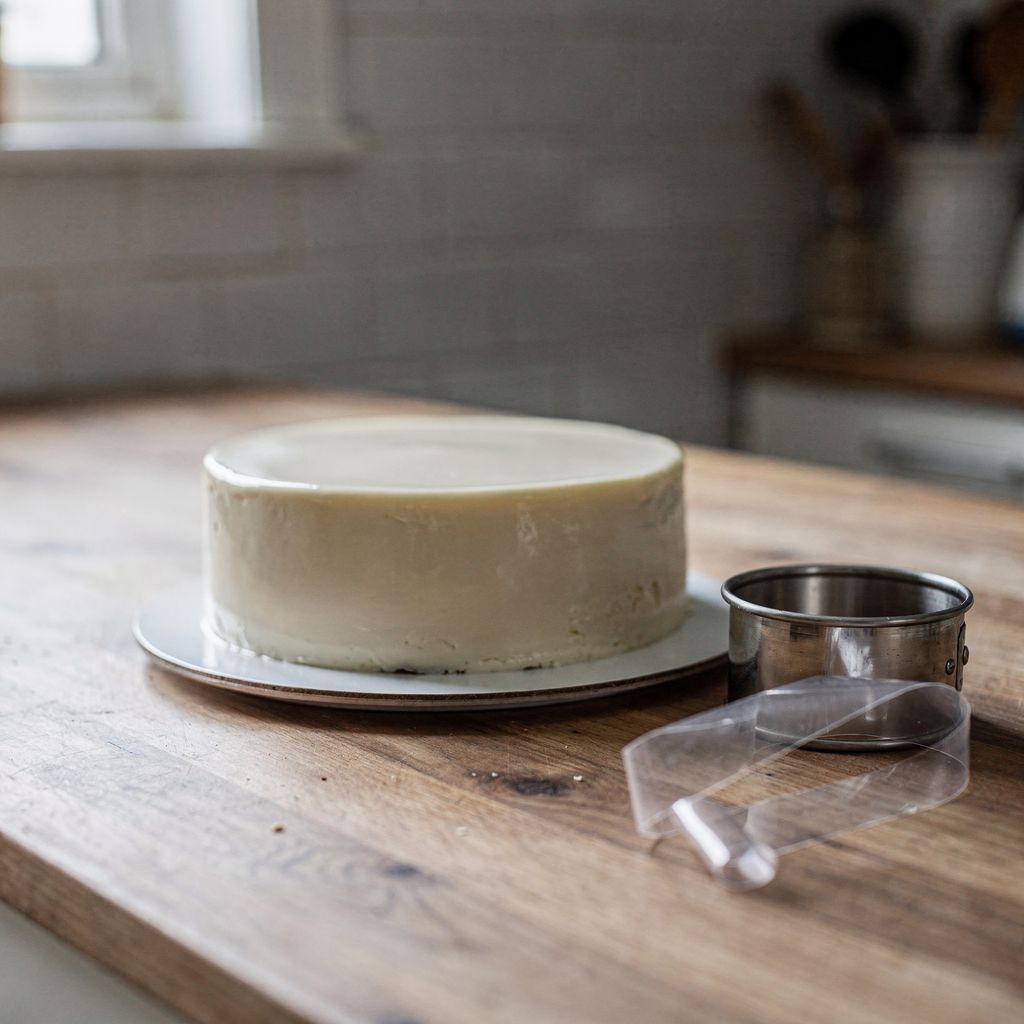
Updated Oct 8, 2026
A mousse cake holds its shape thanks to three things: the right amount of gelatine (roughly 1–1.5% of the mousse's weight), the ring it sets in, and the acetate strip that gives it a smooth side. Get those three right, and the rest is just patience – a night in the freezer and a slow thaw in the fridge. Below you'll find the full method, from soaking the gelatine to slicing the finished cake, with gram amounts, temperatures, and the mistakes that most often make a mousse collapse.
A mousse cake is a cake whose main layer is a mousse – a flavoured base (chocolate, fruit purée, cheesecake filling) folded together with whipped cream and set with gelatine. Without gelatine, that mousse would only hold its shape in a glass; to stand on its own once released from the ring, it needs a gel that locks the air bubbles in place.
The classic build, from the bottom up:
base – a crisp layer (sablé, crumb base) or a thin sponge,
mousse – the main bulk of the cake, 3–5 cm,
insert (optional) – a fruit jelly or creamy layer through the middle,
top – mirror glaze, velvet spray, or simply fruit.
If you just want a spoonable mousse with no assembly required, go for the chocolate mousse recipe instead – that one's made for glasses, not a cake ring.
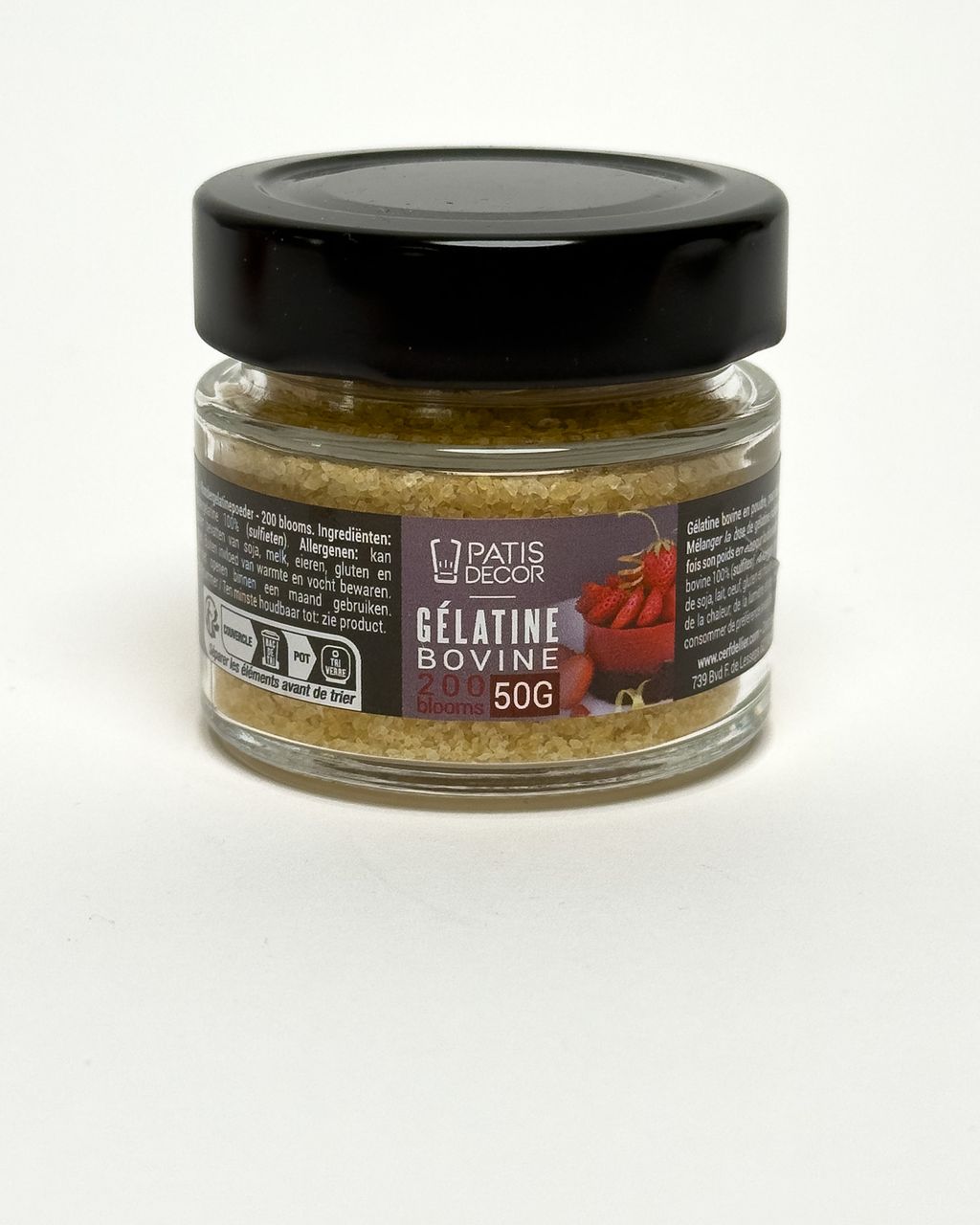
For a mousse that needs to stand on its own once the ring comes off, use about 1–1.5% powdered 200 Bloom gelatine of the mousse's total weight – that's 10–15 g per 1 kg of mixture.
0.8% – a very delicate mousse; the cake needs to be served well chilled,
1.2% – a sensible middle ground for a cake you're serving at home,
1.5% – a firm mousse for a taller cake or a warmer room; go higher and it starts turning rubbery.
The Bloom number tells you how strong the gel is. Powdered gelatine typically sits around 200–225 Bloom, while leaf gelatine comes in several grades (roughly 120–250 Bloom, with "silver" at around 160 being the most common) – which is why you can't swap one for the other gram-for-gram. The article Bloom gelatine: what the Bloom number means and how to convert gelatine strength breaks this down in detail. Your safest bet is powdered beef gelatine, 200 Bloom, where you know exactly what you're weighing. You'll find gelatine and other setting agents in our gelling agents and binders category.
Cover powdered gelatine with 5–6 times its weight in cold water (e.g. 12 g gelatine + 70 g water), let it bloom for 10 minutes, then dissolve it in a warm base or briefly in the microwave at 50–60°C (122–140°F).
Never boil gelatine – prolonged heat weakens the gel.
Count the soaking water into the mousse's total weight so your percentages stay accurate.
Stir dissolved gelatine into the warm base first (purée, ganache) – never straight into cold cream, which would make it seize into rubbery strands instantly.
Fresh pineapple, kiwi, papaya, and figs contain enzymes that break gelatine down. Briefly cook purées made from these fruits before using them, or use the tinned/stewed versions instead.
Gelatine is the best choice for a mousse cake: it melts at mouth temperature, so the mousse feels smooth on the tongue, and it holds up through freezing and thawing. Agar sets at around 32–40°C (90–104°F), needs to be boiled, and gives a firmer, more "cuttable" gel – it's harder to fold into mousse and can weep water after thawing. It works better for firm inserts and vegan versions. Pectin belongs in fruit jellies and glazes; on its own, it won't hold a mousse together.
For a detailed comparison, see the article Types of gelling agents: pectin, agar, and gelatine, and how to use them.
For the mousse itself, you need a bottomless ring with smooth, straight sides, at least 5–6 cm tall. The cake sets inside it on a flat base, and once it's firm, you simply lift the ring off. Your options:
Smooth stainless steel ring in a fixed diameter (18, 20, 24 cm) – the cleanest edge, the professional standard.
Adjustable ring – one piece that covers multiple sizes, a cheap and practical choice for home use; just make sure it's fastened tightly.
The removable side of a springform pan without the base – this works, though it's usually shorter and the clasp can sometimes leave a seam mark in the mousse.
Silicone mould – you can only unmould the mousse while frozen, but you get shapes a ring simply can't make.
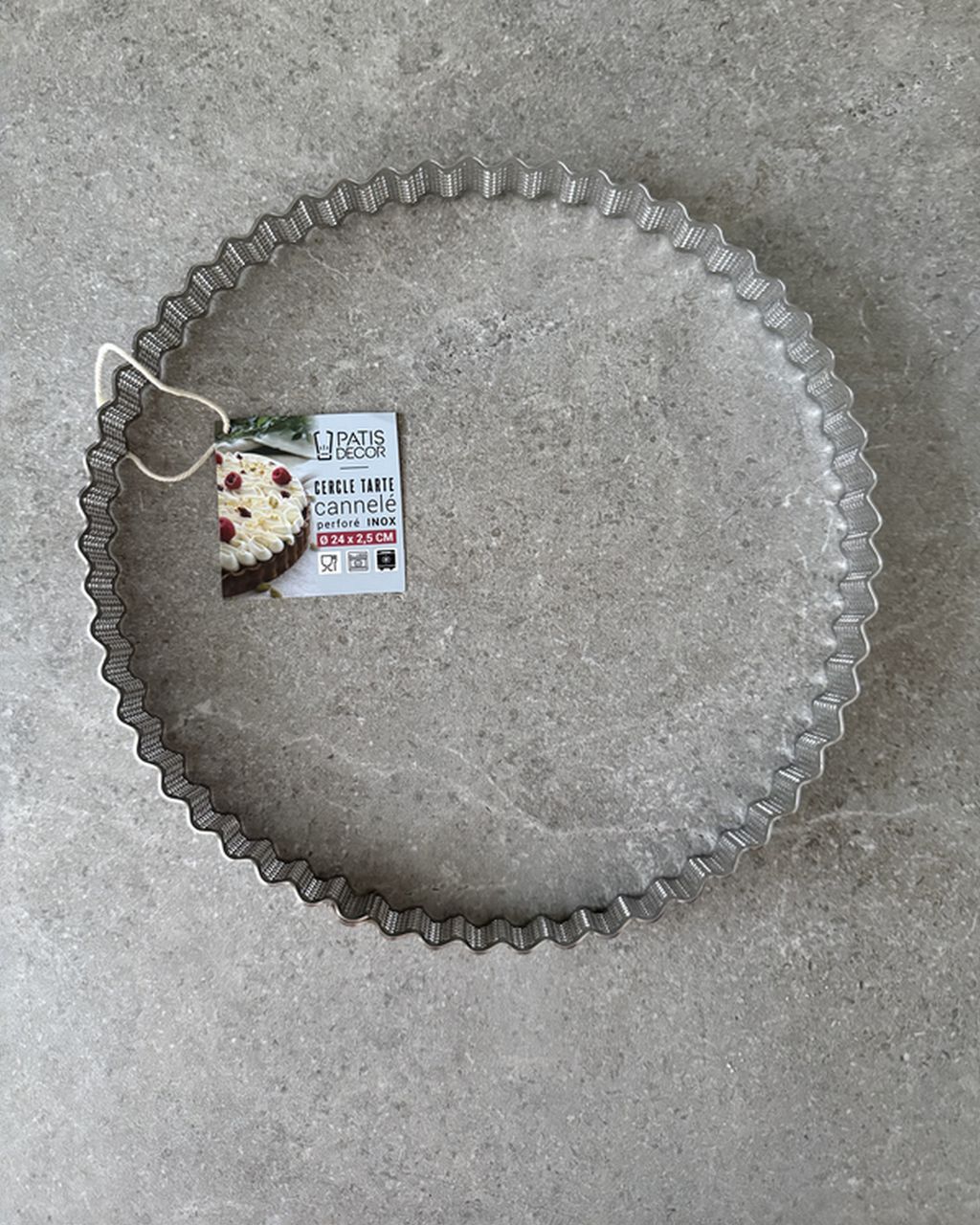
Where a perforated ring comes in: for a crisp base. A sablé baked in a perforated ring stays flat, evenly baked, and crisp even along the sides, because steam escapes through the holes. We stock a perforated stainless steel ring, Ø 24 cm, with a wavy edge – bake a shortcrust shell in it, then pour or pipe the mousse inside or on top, and you get more of a mousse tart than a classic mousse cake. You won't get the straight sides a smooth ring gives you – here, the wavy edge is purely decorative.
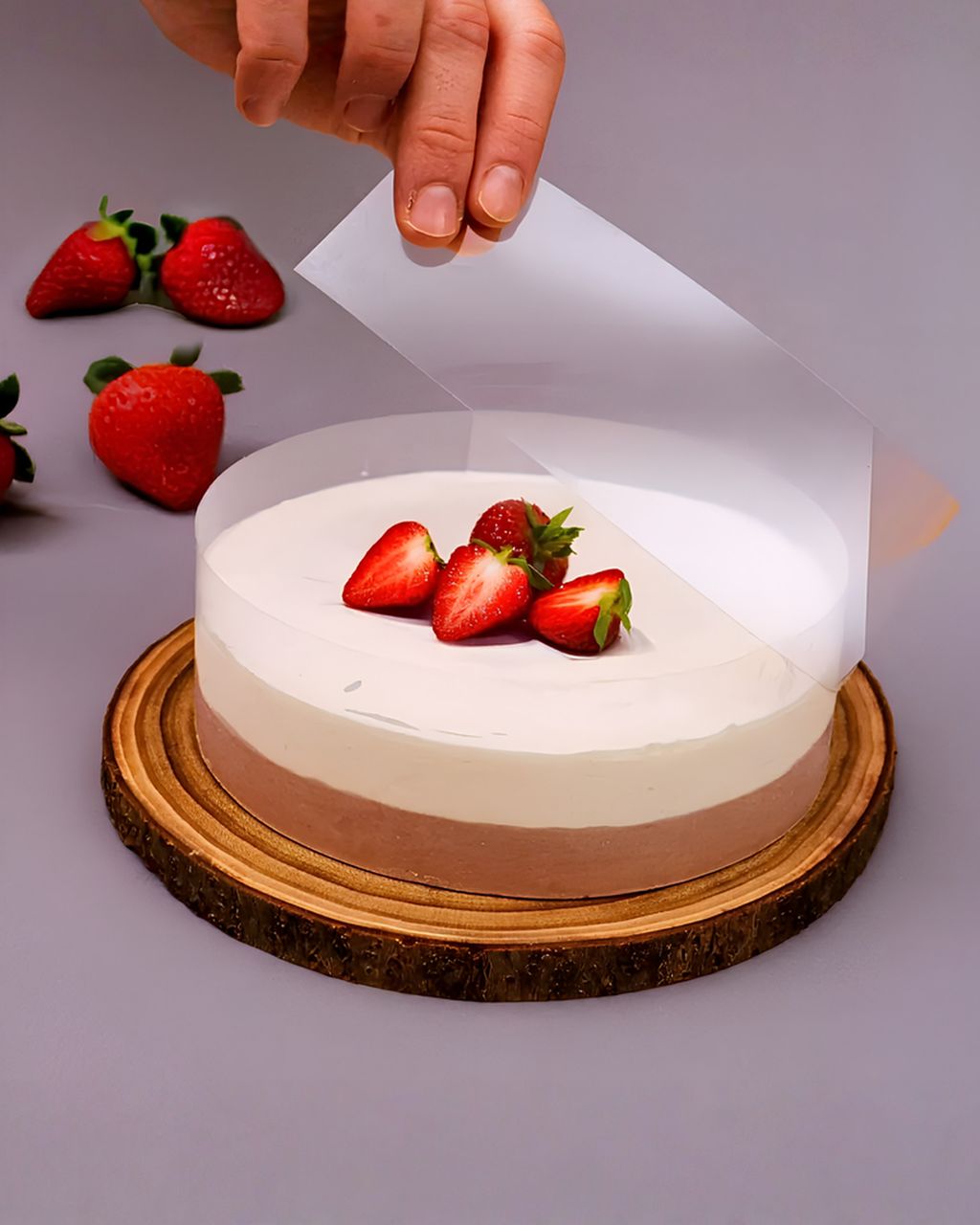
An acetate strip (cake collar) goes inside the ring, lining the whole circumference, so the mousse doesn't stick to the metal and the cake comes out with a perfectly smooth, glossy side once the ring is removed. Without it, the mousse grips the metal, tears as you lift the ring off, and the edge comes out smudged.
Cut the strip 2–3 cm longer than the ring's circumference (for a 24 cm ring, that's about 75 cm around → cut roughly 78 cm of strip), overlap the ends, and tape them together on the outside.
Use a strip as wide as the ring is tall, or slightly wider – that way you can level the mousse easily and have an overhanging edge to grip when pulling the strip off.
A 35 mm cake collar is right for a shorter cake or individual desserts. For a classic mousse cake 5–6 cm tall, use one strip, 6–7 cm wide. Two narrower strips overlapped will technically hold, but the overlap leaves a visible horizontal seam on the side.
Baking paper won't work as a substitute – it absorbs moisture, buckles, and leaves creases pressed into the side.
A mousse cake comes together in seven steps: base → insert → base mixture → cream → combining → freezing → finishing. Plan on making it a day ahead.
Prepare the base. Bake a sablé or thin sponge (such as a light Génoise sponge trimmed down to 1–1.5 cm) and set it inside the ring lined with the acetate strip, on a flat tray or board.
Freeze the insert separately. Pour fruit jelly or a creamy filling into a ring 2–3 cm smaller than your main one, and freeze it solid – otherwise it'll sink into the mousse or spread out.
Cook the base mixture and add gelatine. Stir the dissolved gelatine into your warm purée or ganache (50–60°C / 122–140°F).
Cool the base mixture to 28–32°C (82–90°F). Any warmer and it'll melt the cream; any colder and it'll start to set and go lumpy.
Whip the cream to soft peaks only. Whip 33% cream straight from the fridge until it just holds soft peaks – it should still ribbon off the whisk. Fully stiff cream gives a grainy, dry mousse.
Combine in two stages. First fold a third of the cream into the base to loosen it up, then gently fold in the rest with a spatula. Pour the mousse into the ring right away, press the insert halfway down into it, and level the surface.
Freeze, then finish. Freeze for at least 8–12 hours, ideally overnight. Glaze and decorate the cake while it's still frozen, then let it thaw in the fridge.
Unmould a mousse cake while it's still frozen: warm the ring briefly with a hairdryer or your hands (5–10 seconds), lift it off upward, then carefully peel away the acetate strip. The mousse is still firm at this point, so the edge stays sharp.
Pull the acetate strip off in one smooth motion around the circumference, not bit by bit.
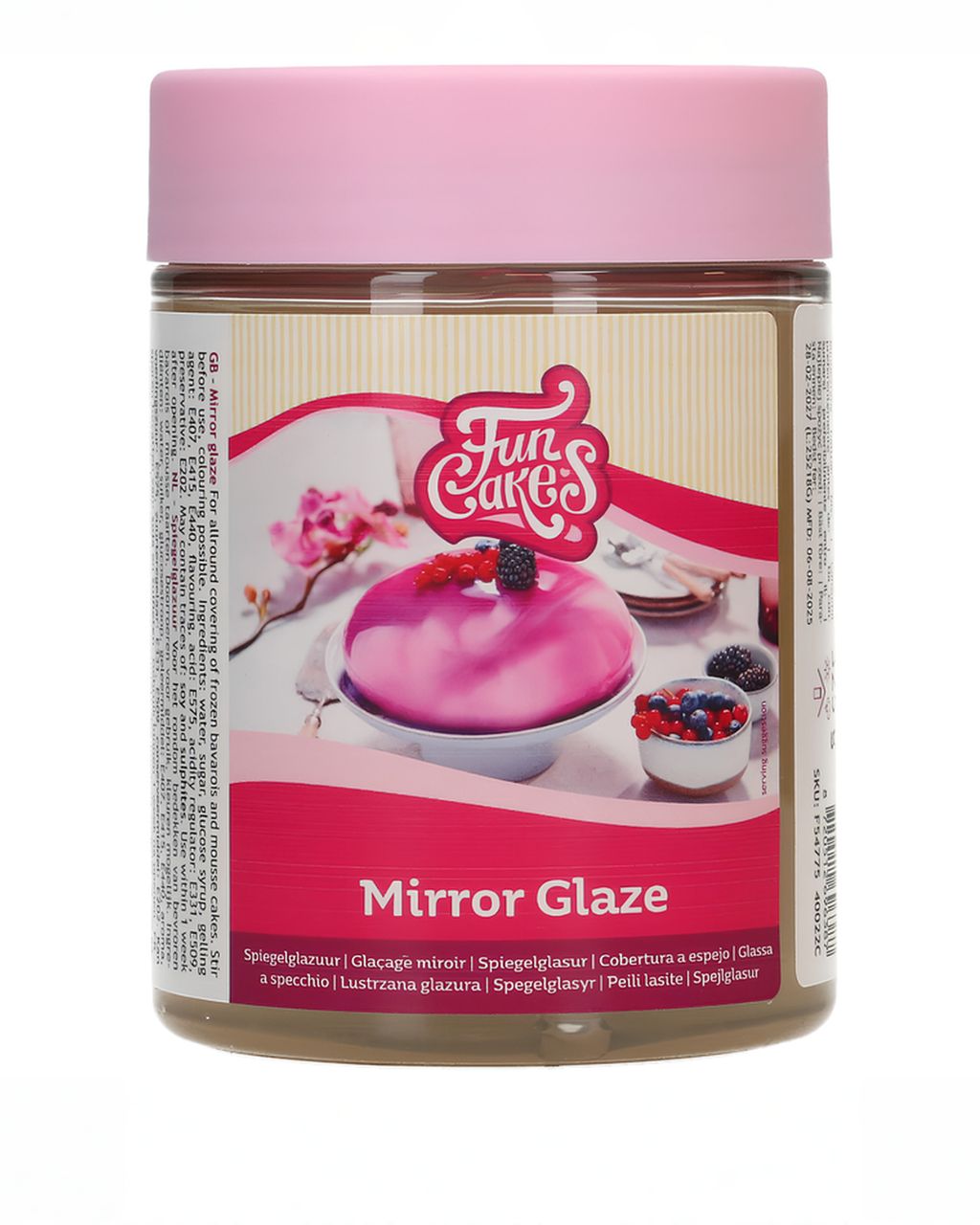
If you're adding a mirror glaze, pour it now – onto the frozen cake, at 30–35°C (86–95°F), so it sets quickly instead of sliding straight off. For glaze that won't flow smoothly or keeps bubbling, see the article Mirror glaze not flowing smoothly: why it happens and how to get rid of bubbles.
Move the cake onto a serving plate and let it thaw in the fridge for 4–6 hours (longer for a taller cake). Left at room temperature, the sides will fog with condensation and the glaze will go dull.
Slice a mousse cake with a long knife dipped in hot water and wiped dry – redo this before every single cut. A hot blade glides through the mousse without pressing down, so the layers stay clean and the insert doesn't get squeezed out of shape. The cake is easiest to slice fully thawed from the fridge, not half-frozen – a half-frozen mousse drags on the knife and cracks instead of cutting cleanly.
Once thawed, a mousse cake keeps in the fridge for 2–3 days and tastes best on day one. Keep it covered with a dome or box, since the cream mousse easily picks up smells from other food.
Yes, you can freeze a mousse cake up to about 2–3 weeks in advance, as long as it's well wrapped in plastic so it doesn't pick up a freezer taste. Save the glaze and decorations for the day you thaw it, though – a mirror glaze loses its shine if it's frozen and thawed a second time.
You can make a mousse cake without gelatine, but the mousse won't hold its shape as reliably on its own – the most common vegetarian substitute is agar. As a rough guide, 1 g of agar replaces 2–4 g of gelatine – start at the lower end, since a higher dose of agar sets quickly into something brittle. Dissolve the agar in part of the liquid base, simmer it for 1–2 minutes, and fold it into the cream quickly while the base is still around 40°C (104°F), since agar sets at roughly 32–40°C (90–104°F). Without any setting agent at all, only a mousse with a high chocolate content will hold its shape on its own, and even then only once it's thoroughly chilled.
For a mousse cake in a 24 cm ring with a 4 cm layer of mousse, you'll need roughly 1.8 litres, which works out to about 1.2–1.4 kg of mousse depending on how airy it is. For an 18 cm ring, about half that amount is enough.
A wet surface on a mousse cake is condensation – the cake thawed somewhere too warm, or wasn't covered. Thaw it in the fridge instead, and apply the glaze to the cake while it's still completely frozen, not once it's started to soften.
One recipe worth heating the oven for, one tip, and one deal from the shop. Nothing else.