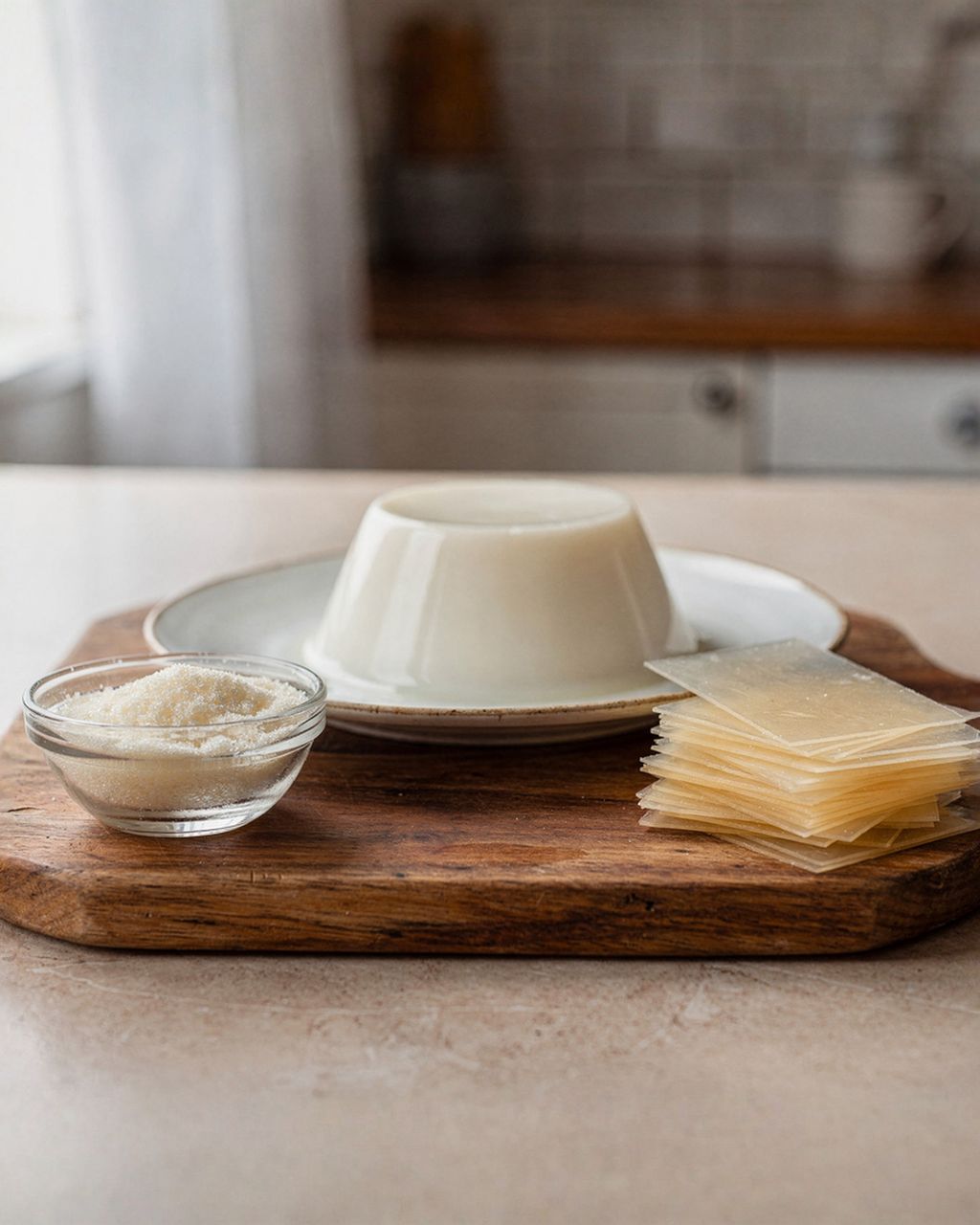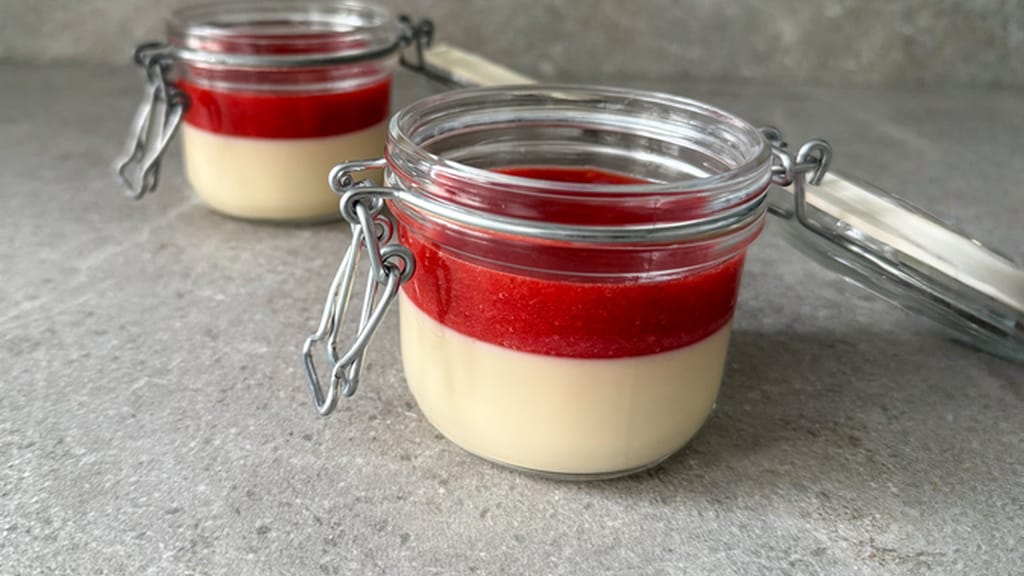
Panna cotta: a simple italian dessert ready in no time
Types of Gelling Agents: Pectin, Agar and Gelatine, and How to Use Them
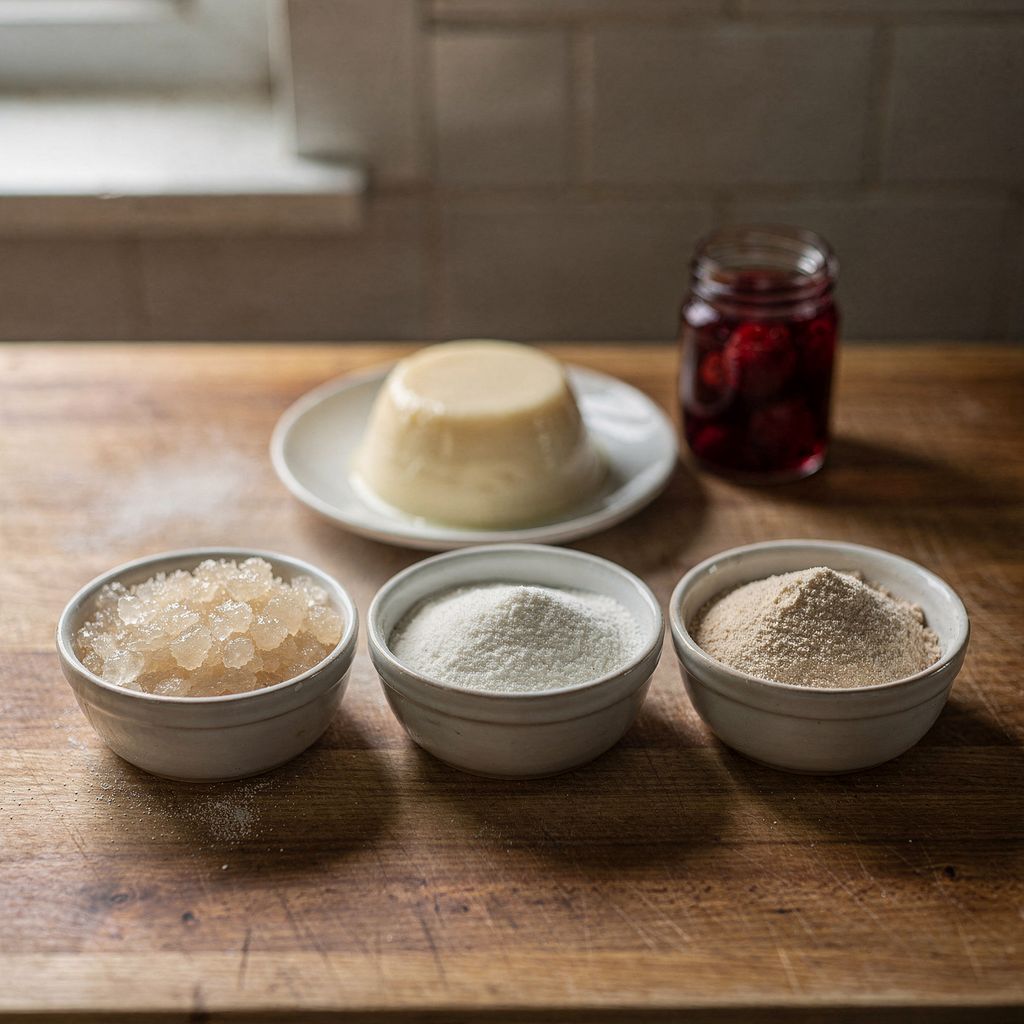
Updated Oct 6, 2026
There are three gelling agents you'll run into most often in a home kitchen: gelatine (an animal protein), agar (from seaweed) and pectin (from fruit). Each sets differently, at a different temperature, and gives a different texture – gelatine soft and springy, agar firm and brittle, pectin sticky and fruity. Once you know what each one needs, you'll stop ending up with runny panna cotta or jam that's still liquid a week later.
The main differences are origin and temperature: gelatine is animal-derived, only dissolves in warm liquid, and melts around 81–95°F (27–35°C) – in other words, in your mouth; agar is plant-based, needs to be boiled, and holds up to temperatures as high as 185°F (85°C); and pectin comes from fruit and only sets with the right balance of sugar and acid.
Gelatine – made from collagen (pork or beef). Dissolve it at 122–140°F (50–60°C); it sets in the fridge below roughly 59–68°F (15–20°C) and melts around 81–95°F (27–35°C), depending on its strength in Bloom – essentially, in your mouth. Texture: soft, springy, "wobbly."
Agar (agar-agar) – made from red seaweed. It must be boiled (194–212°F/90–100°C), sets as low as 90–104°F (32–40°C), and only melts again around 185°F (85°C). Texture: firm, brittle, crumbles when broken.
Pectin – from fruit, mainly apples and citrus peel. Activated by boiling; classic pectin needs plenty of sugar and an acidic environment. Texture: sticky, jammy, glossy.
Depending on the brand, agar is roughly three to eight times stronger than gelatine, so you need much less of it. Unlike gelatine, whose strength is rated in Bloom, agar has no standardised strength, so the dose varies between manufacturers – you can't swap them spoon for spoon.
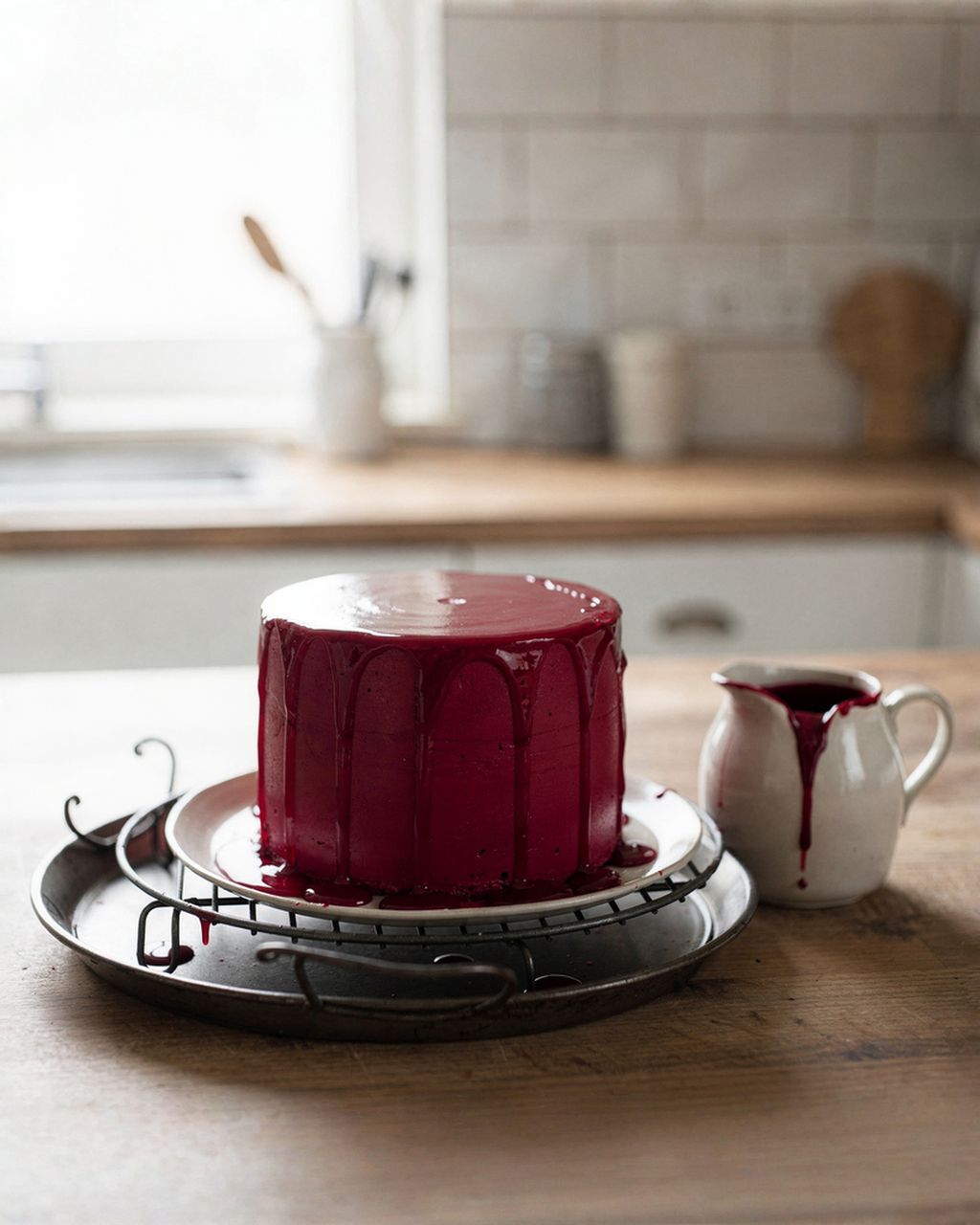
Gelatine is the best choice for desserts that should feel delicate and melt on the tongue – panna cotta, mousse, cake creams, marshmallows or mirror glaze. It sets slowly (4–6 hours in the fridge, ideally overnight), but the result is a silkiness agar simply can't match.
Work with gelatine in three steps:
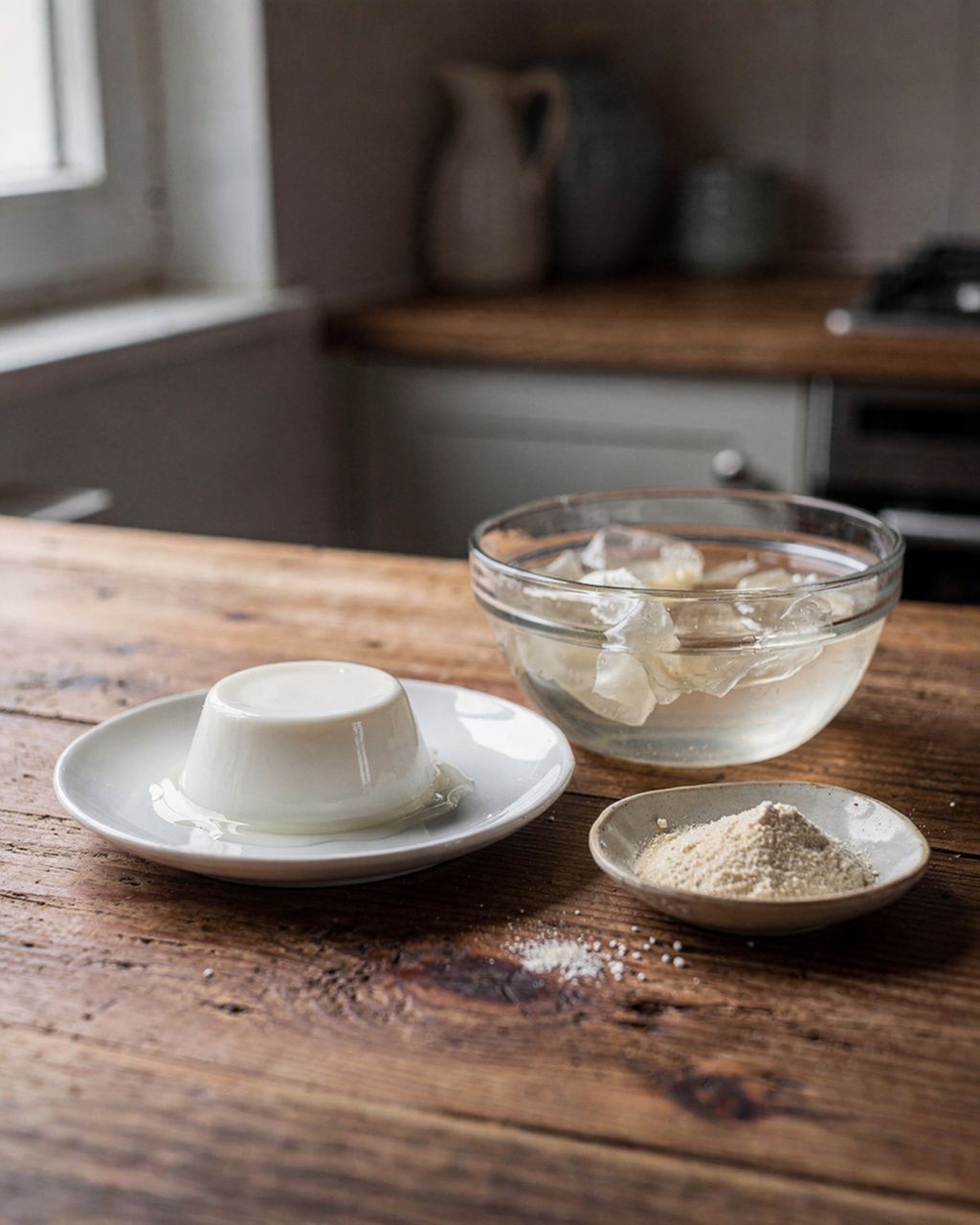
Let it bloom. Sprinkle powdered gelatine into roughly five times its weight in cold water and let it soften for 5–10 minutes. Soak sheet gelatine in cold water, then squeeze it out.
Dissolve it, but don't boil it. Stir the bloomed gelatine into warm liquid (122–140°F/50–60°C) or warm it gently. Boiling weakens its setting power.
Match the temperatures. Stir 2–3 tablespoons of cold cream into the dissolved gelatine first to even out the temperature, then whisk it into the rest of the cream while stirring constantly – otherwise you'll end up with rubbery strands.
How much? As a rough guide, use 1–1.5% of the liquid's weight for a soft panna cotta, and 2–3% for a firm, sliceable jelly. The exact amount depends on the gelatine's strength, rated in Bloom (typically 160–260). Powdered beef gelatine at 200 Bloom, the standard most modern pastry recipes are built around, is available alongside other gelling agents and binders.
Watch out for: fresh pineapple, kiwi, papaya, mango and figs – they contain enzymes that break gelatine down (see the box below). And remember gelatine is animal-derived, so it's off-limits for vegan or vegetarian desserts.
Agar is a plant-based alternative to gelatine made from seaweed – it sets quickly, even at room temperature, and the finished gel won't melt even on a warm day. It's great for vegan desserts, layered cakes (you can pour the next layer after just a few minutes), fruit jellies for summer buffets and garden parties where nothing can afford to melt, and for Asian-style jelly desserts.
Work with agar in three steps:
Stir it into cold liquid first so it doesn't clump.
Boil it for 1–2 minutes. Without boiling, agar won't dissolve and nothing will set – this is the most common mistake people make when switching over from gelatine.
Work quickly. It starts setting as low as 90–104°F (32–40°C), so pour it into the mould right away.
How much? For a soft jelly, use roughly 0.5% of the liquid's weight (5 g per litre); for firm, sliceable cubes, around 1%. A common rule of thumb when replacing gelatine is "1 teaspoon of agar for 1 tablespoon of gelatine" – but since agar's strength varies by brand, treat that as just a starting point and test it on a small batch first.
Weak points: the gel is brittle rather than springy, and over time it can weep water (syneresis). It also weakens in very acidic environments – lots of lemon juice or citrus – and with long boiling, so add acid only at the end. Agar isn't a great fit for creams and foams that are meant to be light and velvety.
Pectin occurs naturally in fruit and is what turns cooked fruit into jam – it needs heat, sugar and acid to work. How much pectin the fruit naturally contains determines whether your jam will set on its own.
High in pectin: apples (especially tart, underripe ones), quince, redcurrants, gooseberries, citrus peel.
Low in pectin: strawberries, cherries, peaches, pears, blueberries – here, added pectin, a piece of apple, or longer cooking will help.
Added pectin comes in two types:
High-methoxyl (HM) – the classic "jam" pectin. It only sets with a high sugar content (roughly 55–65% of the finished jam) and an acidic environment (pH around 3), which is why lemon juice or citric acid gets added to jams.
Low-methoxyl (LM) – sets using calcium rather than sugar. Used in reduced-sugar jams, fruit glazes, and modern pastry gels.
How to tell when jam is done: drop a little onto a chilled saucer and push a finger through it after a minute. If a wrinkle forms on the surface, it's ready. Pectin keeps firming up in the sealed jar over the next day or two, so don't add more just because the hot jam looks runny.
In short: gelatine for delicate creams and foams, agar for vegan and heat-resistant desserts, pectin for jams and fruit fillings.
Panna cotta, mousse, cake cream, marshmallows, mirror glaze → gelatine. Nothing else gives you that silky, melt-in-the-mouth texture.
Vegan dessert, garden-party jelly, quick layers, fruit cubes → agar. Sets within minutes and won't melt in the heat.
Jam, marmalade, fruit pie filling, pâte de fruits, glossy fruit glaze → pectin. It's built for fruit, sugar and acid.
When you swap one agent for another, expect the texture to change too – an agar panna cotta will be firmer and more "crumbly" than one made with gelatine. If you're substituting in a recipe, always recalculate both the amount and the method (agar needs boiling, gelatine doesn't).
Panna cotta: a simple italian dessert ready in no time
Classic gelatine panna cotta – the best practice run for delicate setting
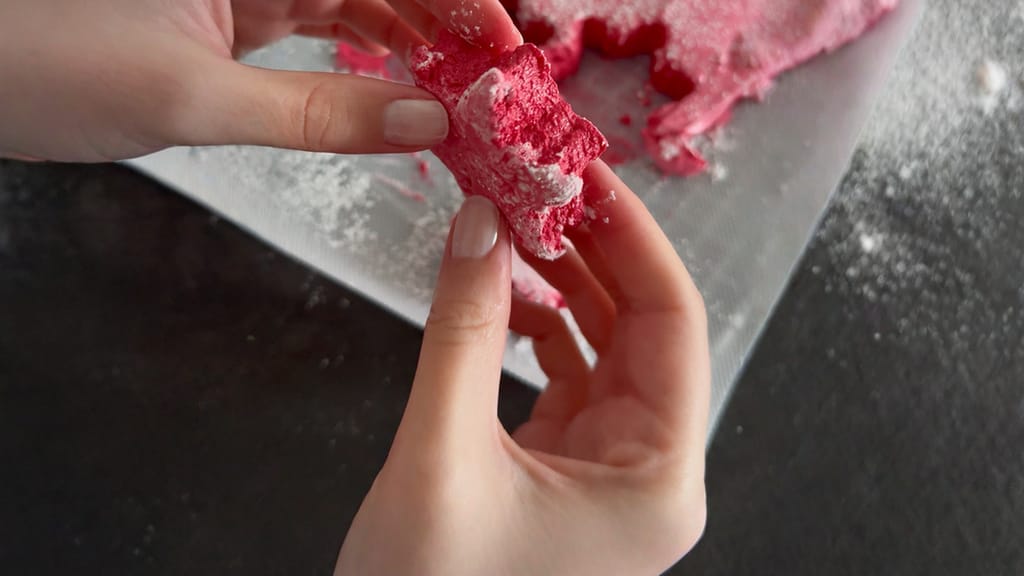
Homemade cherry marshmallows
Homemade cherry marshmallows – gelatine in whipped form
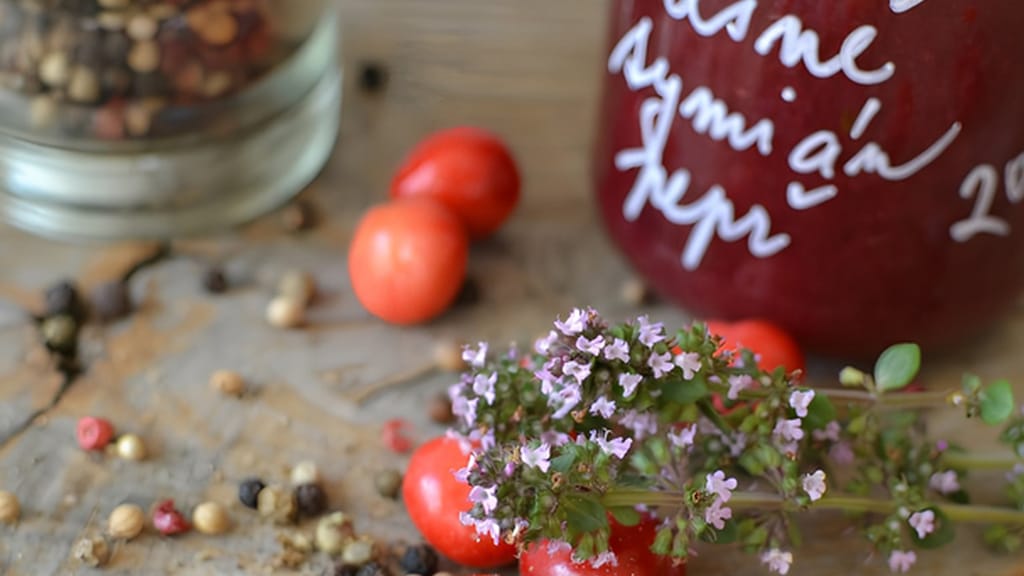
Cherry jam with rainbow pepper and thyme
Cherry jam with mixed peppercorns and thyme – low-pectin fruit in practice
Gelatine is not vegetarian – it's most commonly made from the collagen in pork or beef skin and bones, though fish gelatine also exists. Vegetarians and vegans swap it for agar (in jellies and firmer desserts) or pectin (in fruit fillings and jams). If you need halal or kosher, look for beef or fish gelatine with the appropriate certification.
Yes, gelatine gel is reversible: gently warm it to 104–122°F (40–50°C) until it turns liquid, then either let it set again or add a bit more softened gelatine first. Don't boil it, as boiling weakens gelatine. Agar can also be melted down, but you'll need to bring it back to a full boil.
Gelatine desserts can be frozen, but on thawing the gel often weeps water and turns grainy. Mousses and cream-rich desserts handle freezing better than pure fruit jellies. Agar jellies aren't recommended for freezing at all – they fall apart once thawed.
You can make jam without added pectin by cooking it longer and relying on fruit that's naturally rich in pectin. Add grated tart apple or some redcurrants to strawberries or cherries, pour in lemon juice, and cook until it passes the saucer test. Fruit can also be thickened with chia seeds without cooking, though the result is more of a compote than a classic jam.
To replace gelatine with agar in panna cotta, use far less of it and simmer it briefly with the cream: for 500 ml of cream or plant milk, about 1–1.5 g of agar (roughly half a teaspoon) is enough, compared with 6–7 g of gelatine – less than you'd use for a fruit jelly, since a creamy dessert should stay softer. Stir the agar into the cold cream, bring it to a boil, simmer for 1–2 minutes, then pour it straight into the moulds – it will set in the fridge in about an hour. Expect a firmer, less creamy texture; if it turns out too stiff, blitz the set gel briefly until smooth and you'll get a soft cream you can eat with a spoon.
One recipe worth heating the oven for, one tip, and one deal from the shop. Nothing else.