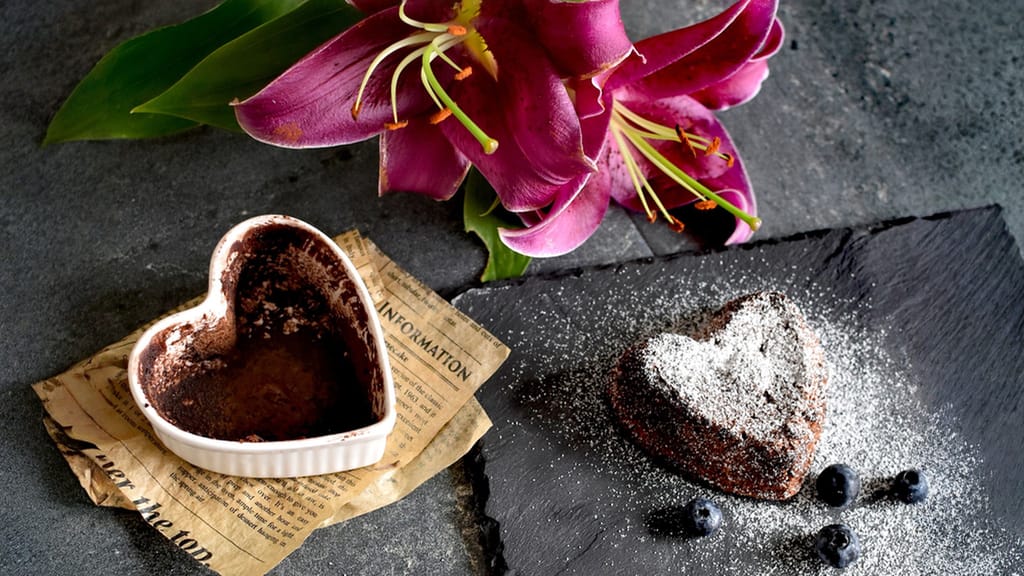
Chocolate fondant with fruit and whipped cream
Whipped Cream Stabilizer: Why You Need It and When You Don't
Updated Oct 6, 2026
Stabilizer goes into whipped cream so it holds its shape and doesn't weep liquid even after several hours – on a cake, in cream horns, or under fruit. That's because freshly whipped cream is a delicate foam that naturally starts to break down over time. But if you're eating it right away, you don't need a stabilizer at all. Here's when it's worth using one, what you can use instead, and how to stabilize whipped cream with gelatine so it stays smooth.
Stabilizer goes into whipped cream so it holds its shape and doesn't weep liquid for more than a couple of hours. Without it, whipped cream gradually softens, sinks, and a milky puddle shows up at the bottom of the bowl.
The reason lies in how whipped cream actually works. As you whip, the fat globules in the cream partially break apart, stick together, and coat the air bubbles, forming a firm fat network. That network holds together only until:
it warms up – the milk fat softens and the structure gives way (which is why whipped cream left out in a warm room collapses fast),
water leaks out – there's still plenty of liquid cream between the fat, and gravity slowly pulls it downward,
you weigh it down – another cake layer, fruit, or decoration presses on a foam that has nothing else holding it up.
A stabilizer gives that network a second line of support: it binds the loose water and firms up the walls of the bubbles. The whipped cream can then sit happily in the fridge until the next day without even a piped rosette losing its shape.
You don't need stabilizer when you'll eat the whipped cream within an hour or two, nothing is resting on it, and it's not going anywhere warm. Specifically:
You're serving it right away – a dollop on a warm dessert, like chocolate fondant with fruit and whipped cream, on a fluffy oven-baked Dutch Baby pancake, or in your coffee.
You're using proper whipping cream (at least 30% fat, ideally 33% or more) and it's thoroughly chilled – it whips up firmer and holds on its own for longer. Cooking cream (12% fat) won't whip up properly either way, stabilizer or not.
You're folding it into something that already holds its shape – mousses and creams made with chocolate, mascarpone, or gelatine already have their own support.
You're using a plant-based whipping alternative (dairy-free whipping cream) – these usually already contain their own stabilizers and emulsifiers.
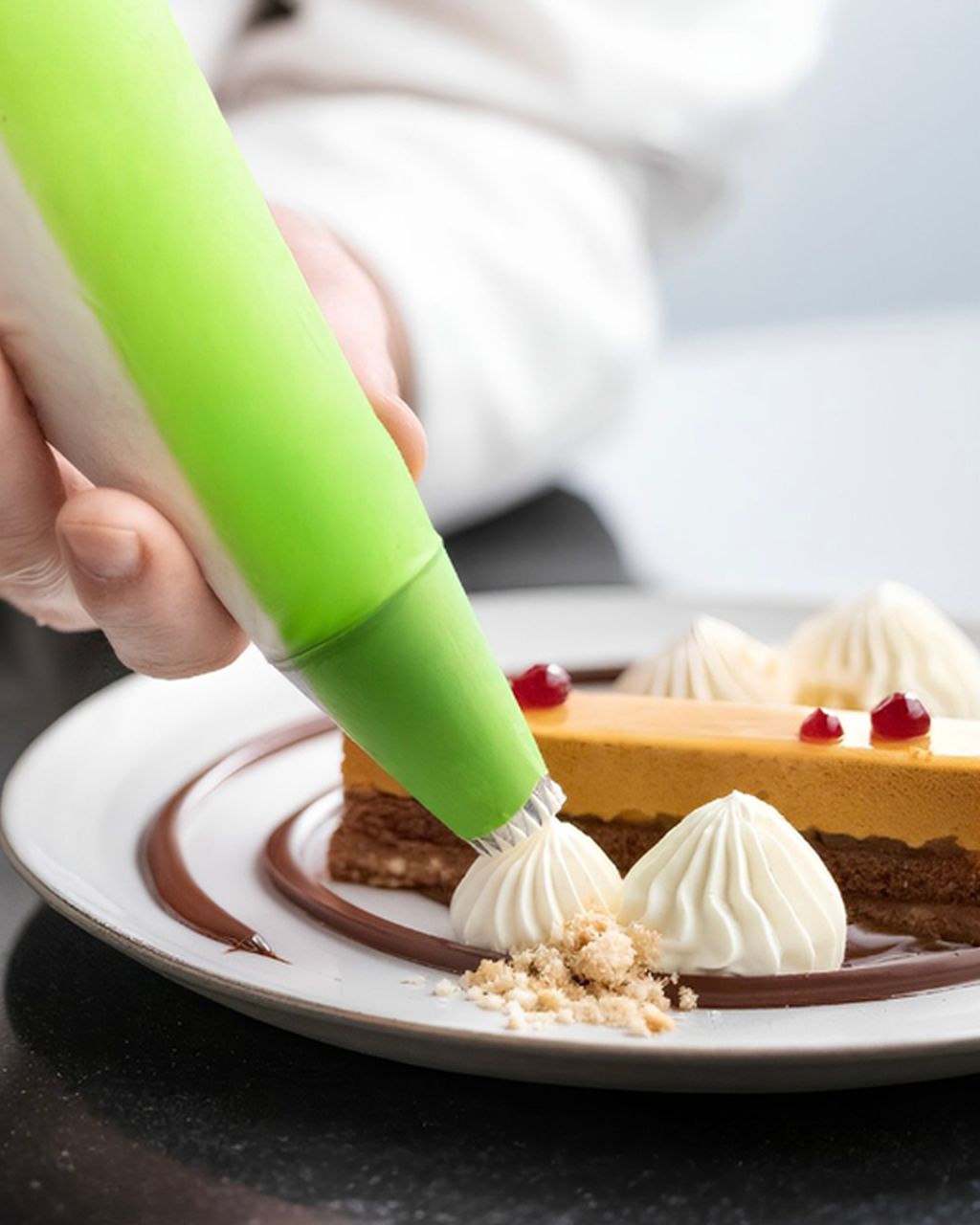
On the other hand, stabilizer is worth using when the whipped cream needs to sit overnight, carry weight, or hold decorative shapes: cake fillings and coatings, Christmas cream horns, slices, piped rosettes, or any dessert you're transporting to a party.
Chocolate fondant with fruit and whipped cream
Chocolate fondant with fruit and whipped cream – here, fresh whipped cream without stabilizer is all you need
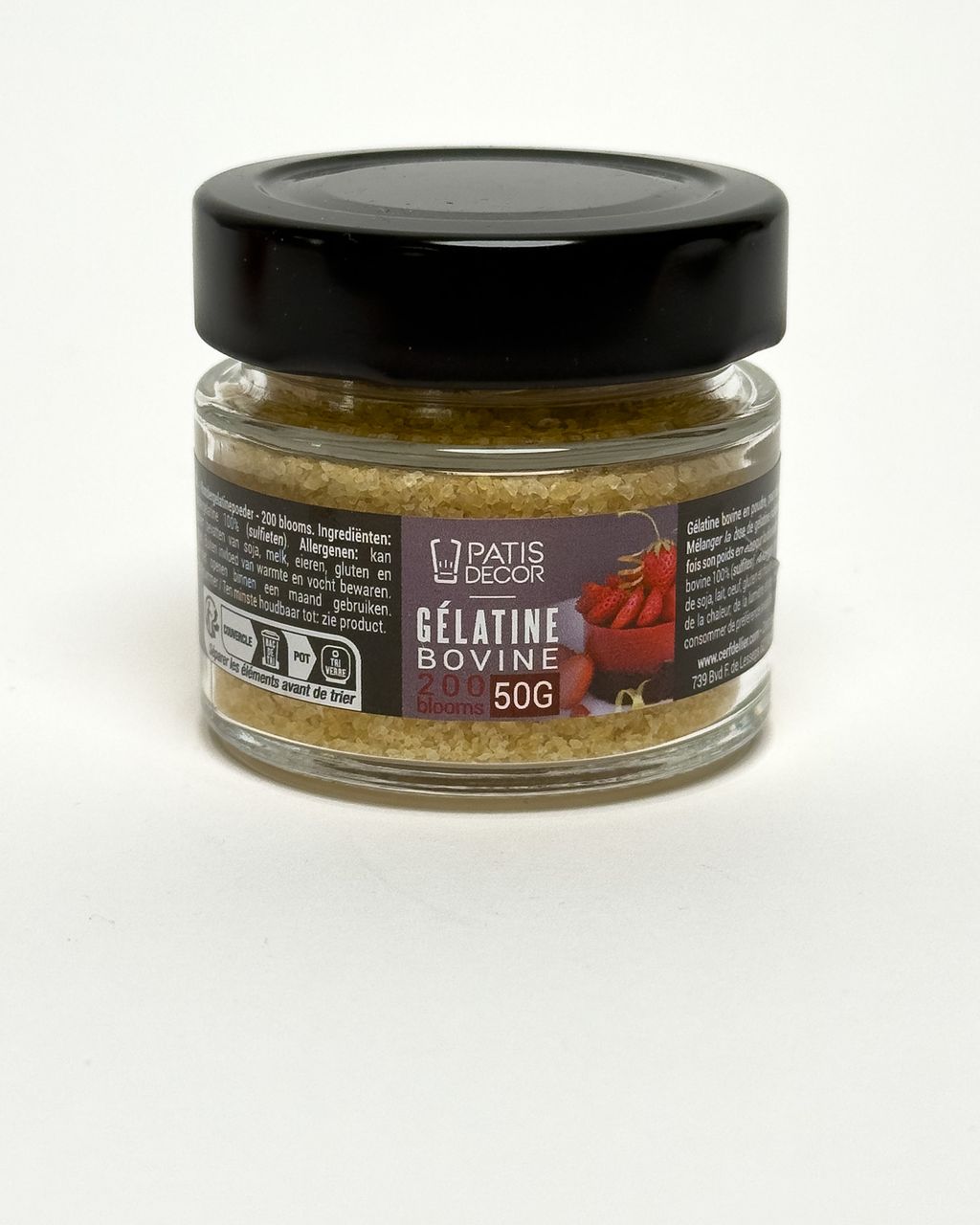
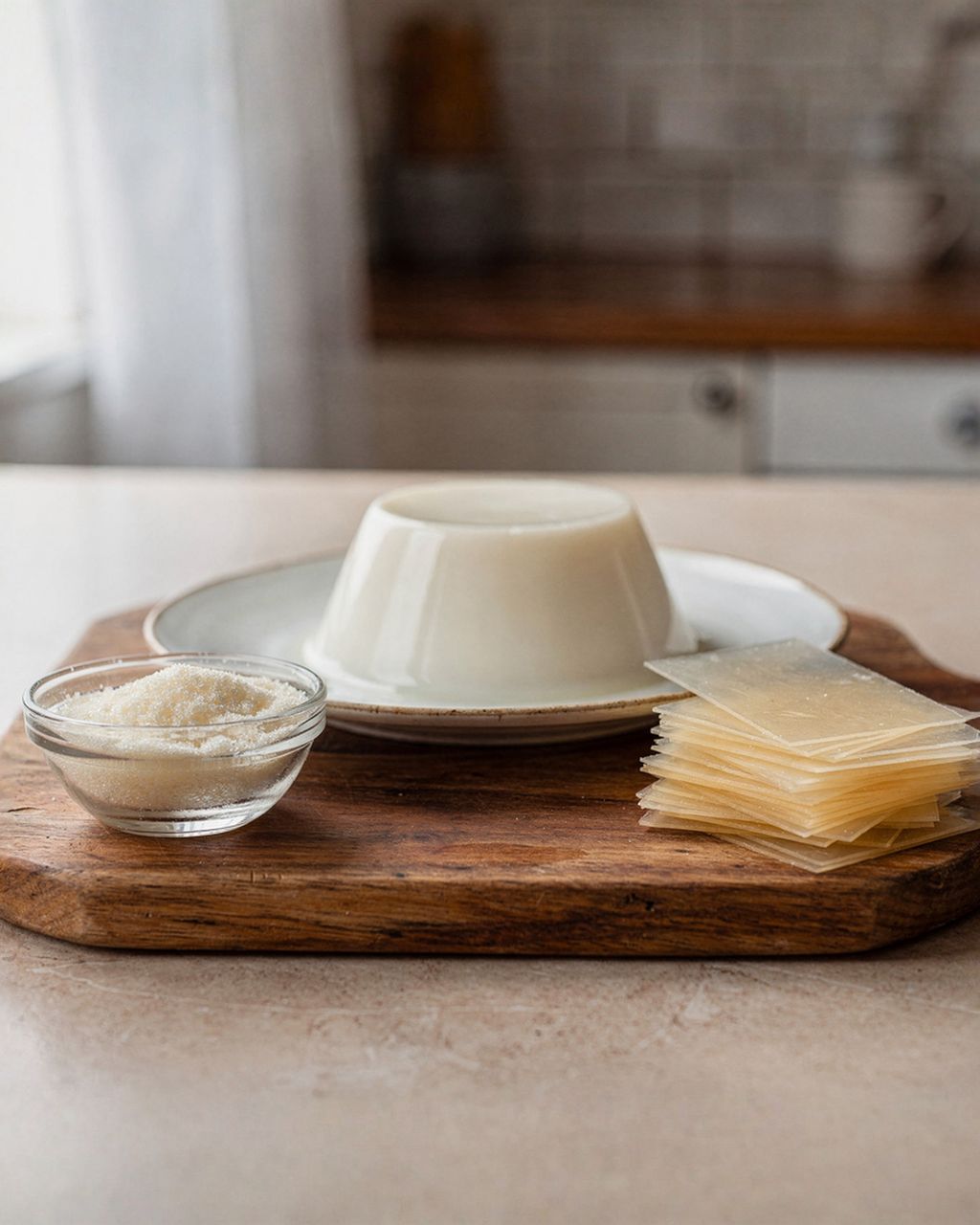
The most reliable way to stabilize whipped cream is with powdered gelatine: roughly 1g per 100ml of cream (using 200 Bloom gelatine). So for 500ml of cream, use 4–5g for a cake or decorating, or 3g if you just want to stop it going flat in the bowl. You'll find gelatine and other helpers among our gelling and binding agents.
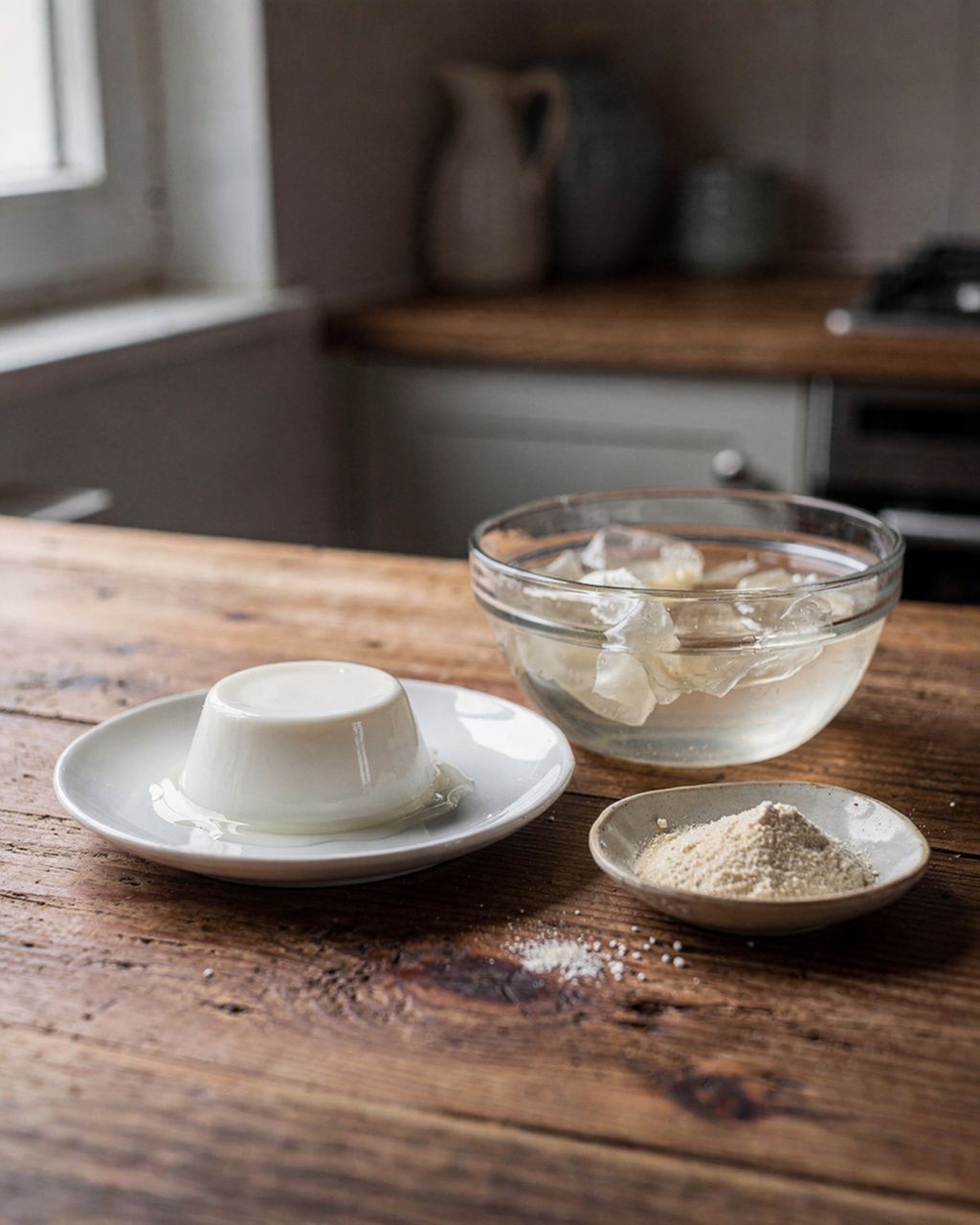
Let the gelatine soak. Sprinkle it over about five times its weight in cold water (4g gelatine = 20ml water) and let it soften for 5–10 minutes.
Melt it. Warm it gently – a few seconds in the microwave or over steam – just until it turns liquid. Don't let it boil, as boiling weakens its setting power.
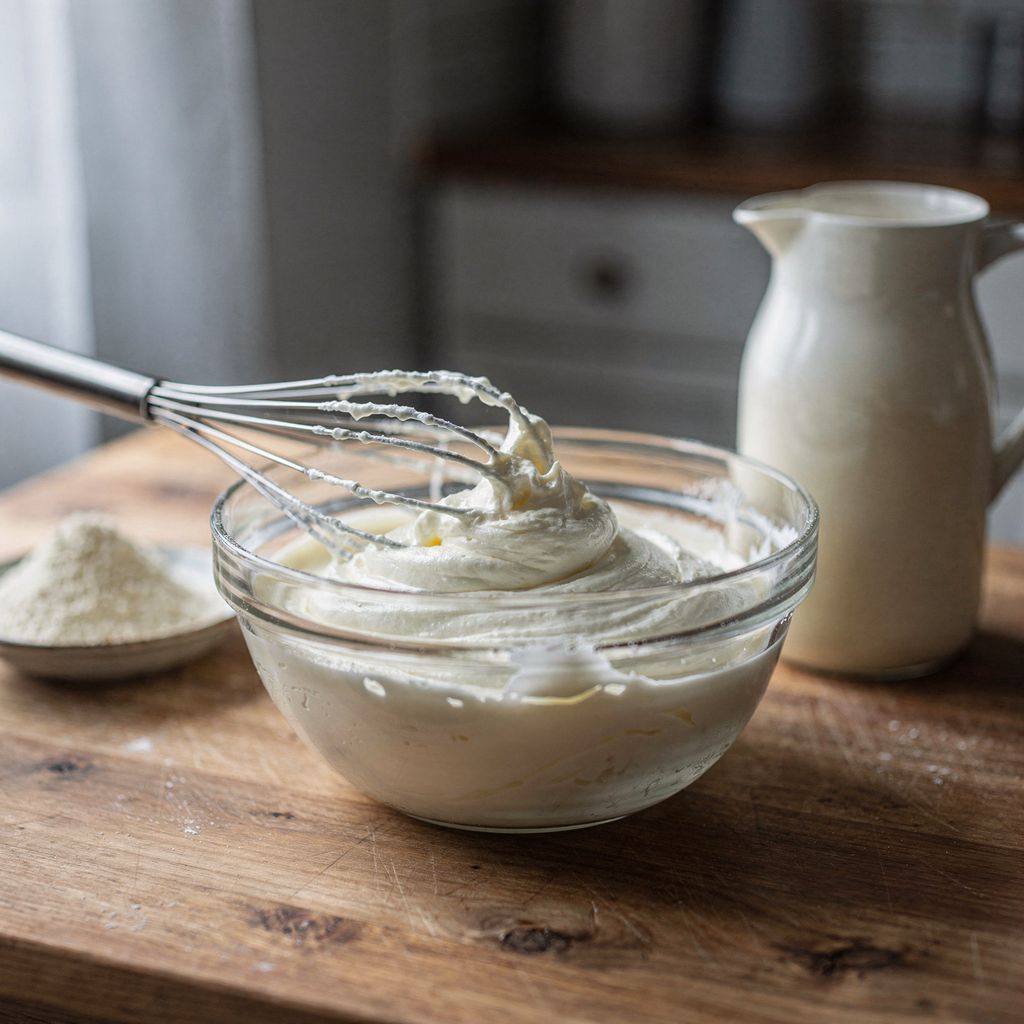
Whip the cream to soft peaks. Whip cold cream (ideally with a chilled bowl too) with sugar until it holds a trail from the whisk but the peak still folds over softly.
Even out the temperatures. Stir 2–3 spoonfuls of the whipped cream into the warm gelatine. This cools and dilutes it slightly, so it won't form rubbery strands once added to the cold cream.
Pour it in a thin stream while whipping continuously, then whip to firm peaks. Use it right away – the gelatine starts to set within minutes.
After a few hours in the fridge, the cream will set into a firm but still creamy texture that slices neatly along with the cake.
For why gelatine strength matters and how to convert a different Bloom value, see our article Bloom rating in gelatine: what the number means.
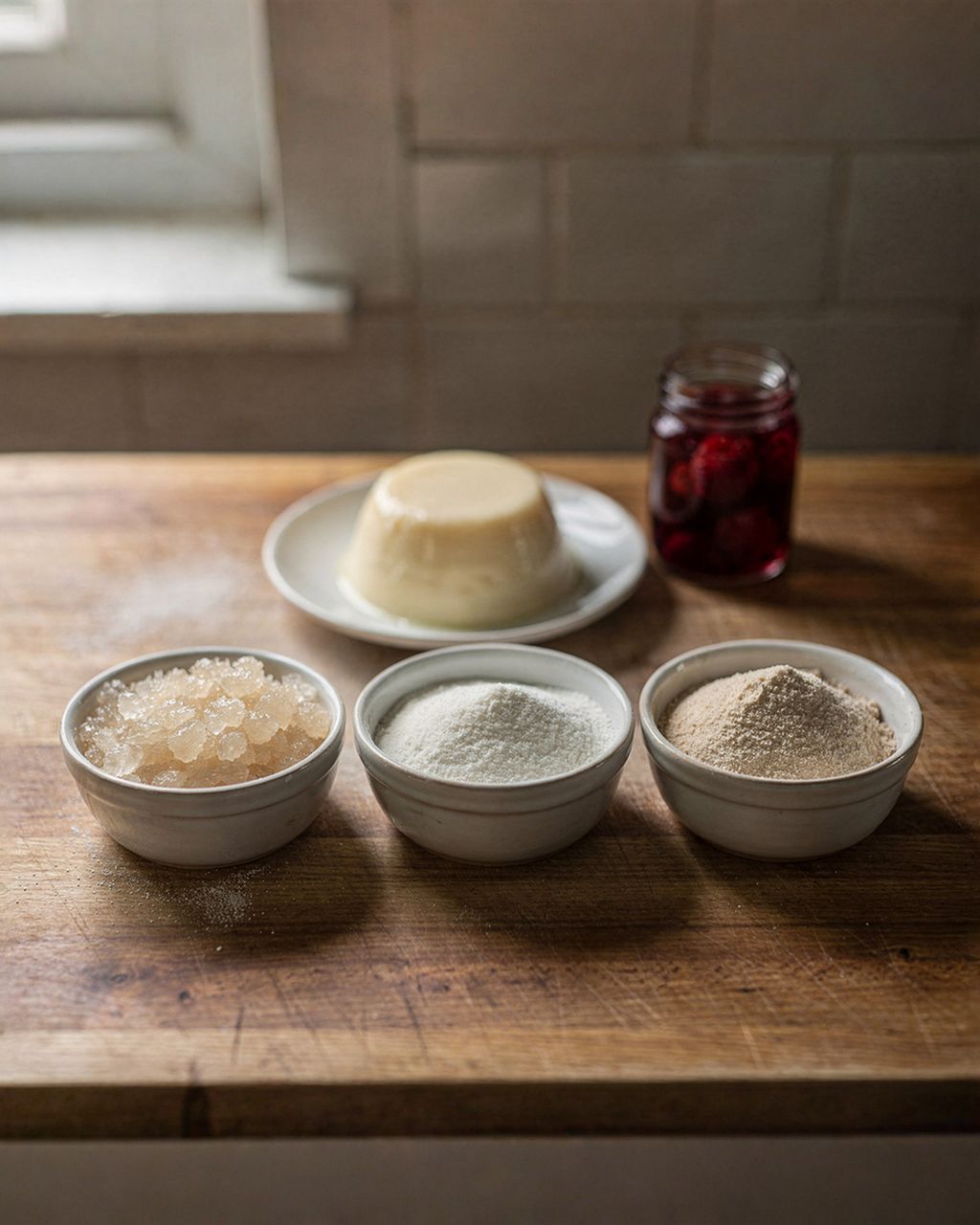
Without gelatine, you can stabilize whipped cream with packet whipped cream stabilizer, mascarpone, white chocolate, or agar. Each method holds for a different length of time and changes the flavour slightly:
Packet stabilizer – based on the ingredients list, this is usually modified starch with sugar or dextrose and a stabilizer. It's quick and fairly neutral in flavour, but it holds less firmly than gelatine: fine for a dollop that needs to last until the next day, often not enough for a cake coating or a tall piped rosette.
Mascarpone – whip it with the cream in roughly a 1:3 to 1:2 ratio. You get a thicker, richer cream that holds beautifully in cakes without any further help. The flavour is heavier and more buttery-creamy.
White chocolate – melted, cooled, and folded into the cream (or made into a ganache chilled overnight). It sets firmly but adds sweetness and a distinct chocolate flavour.
Agar – a plant-based alternative to gelatine, but it sets at around 40°C (104°F) and can easily turn lumpy in whipped cream. You'll find how the different gelling agents compare in our article Types of gelling agents: pectin, agar, gelatine.
What about icing sugar? It sweetens whipped cream more delicately than granulated sugar, but it isn't a stabilizer. Some icing sugars do have added starch – check the ingredients list – though even so, it won't meaningfully extend how long the cream holds its shape.
There are four common mistakes when stabilizing whipped cream: hot gelatine poured into cold cream, gelatine added too late, overwhipping, and warm cream or bowl.
Hot gelatine poured into cold cream – it sets instantly into rubbery strands and lumps. Always temper it first with a few spoonfuls of the whipped cream.
Gelatine added too late – you can't mix it in evenly once the cream is already firm, and you end up overwhipping it. Add it while the cream is still at soft peaks.
Overwhipping – the cream turns grainy, yellows, and eventually separates into butter and buttermilk. Stabilizer won't fix this; switch to a lower speed as you approach firm peaks.
Warm cream or bowl – the fat can't form a firm network and the cream won't whip up properly no matter what you add. Keep the cream in the fridge until the last moment, and in summer, chill the bowl and whisk too.
Whipped cream stabilized with gelatine keeps in the fridge for roughly 2–3 days, depending on the cream's use-by date. Cream made with a packet stabilizer holds its shape for a shorter time, usually just until the next day. Without any stabilizer, expect only a few hours before it starts weeping liquid.
Yes, decorations made from gelatine-stabilized whipped cream can be frozen. Pipe rosettes onto paper, freeze them, then transfer to a container; thaw them in the fridge once they're already on the dessert. Unstabilized whipped cream often weeps liquid and turns grainy after thawing.
Standard packet whipped cream stabilizer usually doesn't contain gelatine – it's typically based on modified starch with sugar and a stabilizing agent. Watch out, though: some whipped cream stabilizers do contain gelatine – check the ingredients list on the package (gelatine, pork/beef). Vegetarians should choose a gelatine-free version, or use agar or mascarpone instead.
For 250ml of cream, one packet of stabilizer is the usual amount, but always check the specific instructions on your package. Add it to the cream once it starts to thicken, then finish whipping. Using more packets won't make the cream noticeably firmer – it'll just add a starchy taste – so for more demanding decorating work, reach for gelatine instead.
One recipe worth heating the oven for, one tip, and one deal from the shop. Nothing else.