Homemade almond muesli bars
What to Substitute for Glucose Syrup: Invert Sugar, Golden Syrup, Honey and More
Updated Sep 25, 2026
The closest swap for glucose syrup is invert sugar (store-bought or homemade), used 1:1 by weight; golden syrup or rice syrup also work well. Honey, maple syrup and agave only work where you don't need a perfectly smooth confectionery texture. What matters is the job the syrup is doing in the recipe: preventing crystallization in caramel, adding shine to a glaze, or lending creaminess to ice cream. Below you'll find what to use for what, and why.
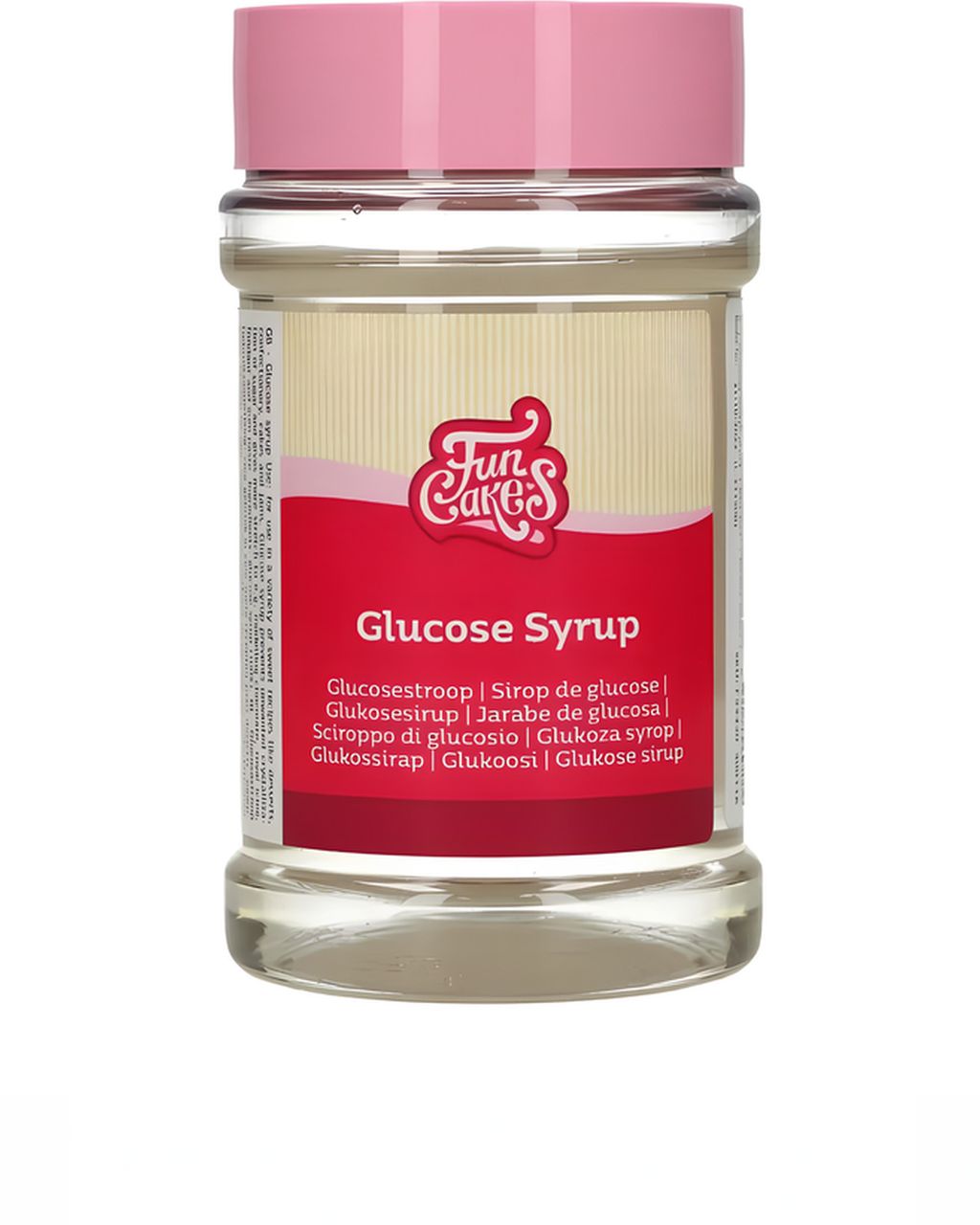
Glucose syrup is a thick, clear syrup made by breaking down starch (most often from corn, wheat or potato), and in recipes it plays a mainly functional role rather than a sweetening one. It's roughly half as sweet as sugar and contains around 20% water.
What it actually does:
Prevents crystallization. Glucose molecules and longer sugar chains get in the way of sucrose crystals forming, so caramel, fondant or toffee stay smooth instead of turning grainy.
Holds onto moisture. It's hygroscopic — it binds water, so baked goods and sweets stay fresh longer.
Gives shine and flexibility. A mirror glaze without it turns dull, and toffee sets rock-hard.
Adds body without added sweetness. In ice cream and sorbet it thickens the mix and keeps ice crystals fine, without making the dessert too sweet.
So a substitute only works if it can deliver at least the one property the recipe relies on most. Sugar or syrup alone won't cut it — you need another sugar that "gets in the way" of crystals the same way.
There are seven ways to replace glucose syrup: invert sugar, homemade invert syrup, golden syrup, rice syrup, honey, maple syrup or agave, or a drop of acid stirred straight into the caramel. Ranked from most to least reliable:
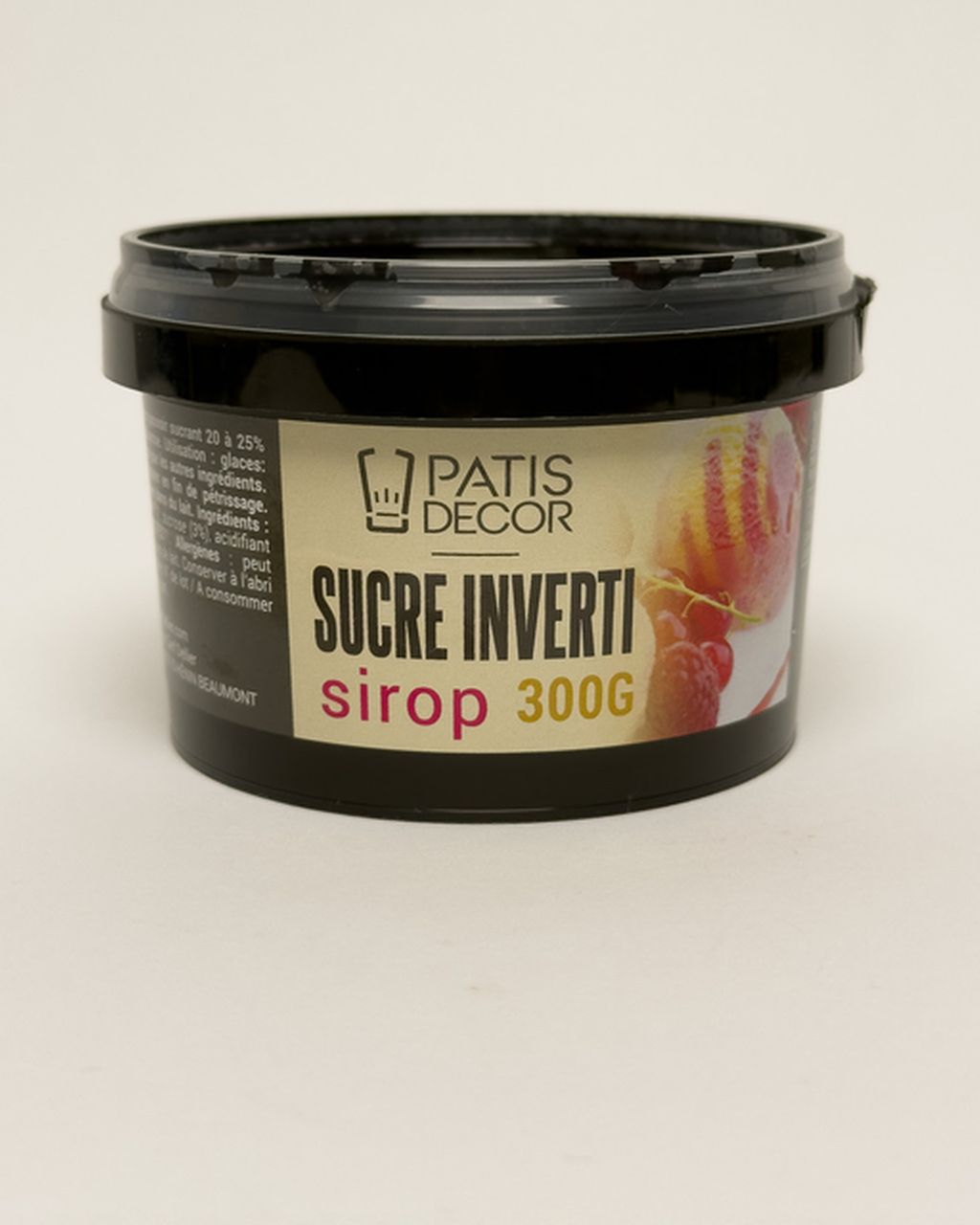
Invert sugar — 1:1 by weight, works almost everywhere.
Homemade invert syrup — the same thing, just cooked up yourself from sugar, water and acid.
Golden syrup — 1:1, adds a buttery, caramel flavour and colour.
Rice syrup — 1:1, the least sweet option, with a subtle nutty note.
Honey — 1:1, but only in baking, sauces and glazes where its flavour isn't a problem.
Maple syrup, agave — only for sauces, drinks and baking; not for confectionery.
A drop of acid straight into the caramel — if you have no syrup at all, you can partially "invert" the sugar yourself.
Ratios are by weight, not volume — syrups vary in density, and a tablespoon of honey weighs more than a tablespoon of glucose syrup.
Invert sugar is the closest substitute for glucose syrup, since it prevents crystallization by the same mechanism. It's sucrose broken down into glucose and fructose, and according to confectionery sources, it only needs to make up around 10–15% of the total sugars in a mix to keep the result smooth.
What to watch out for:
It's sweeter than glucose syrup — roughly on par with sugar, if not a touch sweeter. In desserts where glucose syrup was used generously (ice cream, glazes), you'll notice it.
It browns faster. Fructose caramelizes at a lower temperature, so caramel darkens sooner and baked goods brown more. Watch the colour closely, and feel free to drop the oven temp by about 10°C (20°F) when baking.
It holds more water. Baked goods will be more tender, and toffee a touch softer.
You can make homemade invert syrup from sugar, water and acid in about 30 minutes. Acid plus heat breaks sucrose down into glucose and fructose — exactly what you need.
In a heavy-bottomed saucepan, combine 500g sugar, 250ml water and ¼ tsp citric acid (about 1g; or 1 tablespoon lemon juice).
Bring to a boil, stir once to dissolve the sugar, then stop stirring.
Reduce to a gentle simmer and let it bubble for 20–30 minutes, until the syrup reaches 108–112°C (226–234°F) and turns a pale straw colour. If it darkens, you're boiling it too hard.
Let it cool, then pour into a clean jar. It will thicken to the consistency of runny honey.
A slightly sweeter, slightly tangier syrup is normal. If the tanginess bothers you, neutralize it at the end with a pinch of baking soda (it will fizz — add it gradually).
Both golden syrup and rice syrup replace glucose syrup 1:1, and both reliably keep caramel and confectionery smooth.
Golden syrup is largely invert sugar with a caramel flavour. It's great in caramel, toffee, flapjacks and gingerbread doughs, where its buttery flavour is a bonus. It's not right for a clear glaze or white fondant, though — it will give them a yellowish tint.
Rice syrup is mostly maltose and longer starch-derived sugars, similar to glucose syrup, and it's the least sweet of all the substitutes. It has a mild, slightly toasted, nutty flavour. Ideal for granola bars and toffee, where you want a binder rather than extra sweetness.
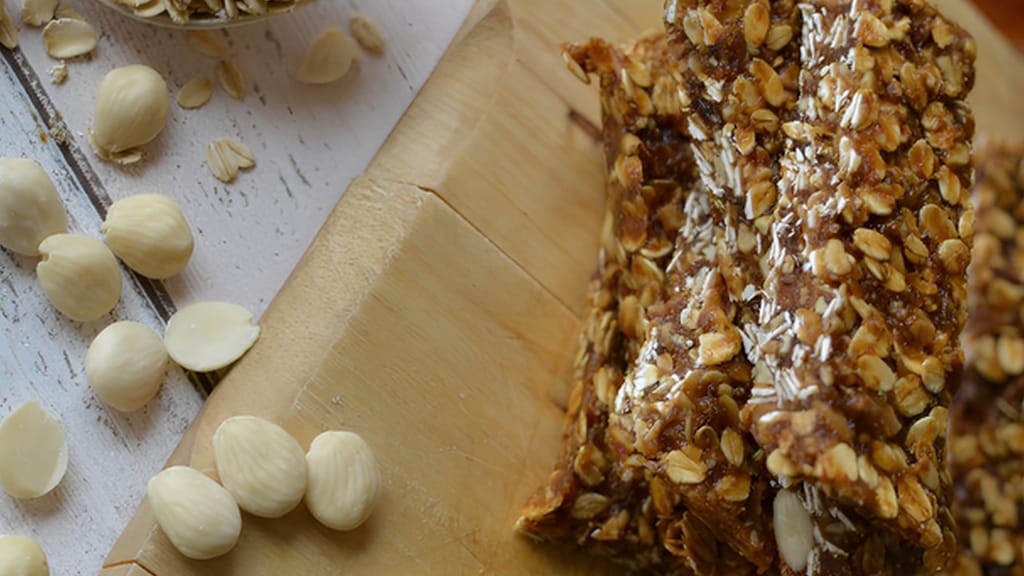
Homemade almond muesli bars
Homemade almond granola bars — a good spot for rice or golden syrup instead of glucose syrup
Honey only replaces glucose syrup where its distinct flavour isn't an issue and where you don't need perfectly smooth confectionery. In baking, caramel sauce, or a gingerbread glaze, it works 1:1 by weight.
In hard candy, toffee and nougat it's unreliable: at high temperatures it browns quickly, foams up, and its enzymes and acids throw off the sugar ratios unpredictably. If you do use it, go for a light acacia honey — it has the most neutral flavour and stays liquid the longest.
Maple syrup and agave syrup aren't good substitutes for glucose syrup in confectionery — they don't prevent crystallization reliably, and maple syrup is roughly a third water, so caramel made with it would take longer to cook and set less firmly. They do work in sauces, dressings, drinks and doughs, where the glucose syrup was only there for moistness. Agave is also very sweet (mostly fructose), so use about a quarter less of it.
For caramel and toffee, use invert sugar, golden syrup or rice syrup 1:1. It's purely about crystallization here, so the substitutes that work best are the ones whose sugars get in the way of sucrose crystals forming. With invert sugar, keep an eye on the caramel with a thermometer as well as visually — it darkens faster. For clear fondant, stick to invert sugar or homemade invert syrup only; golden or rice syrup would tint it.
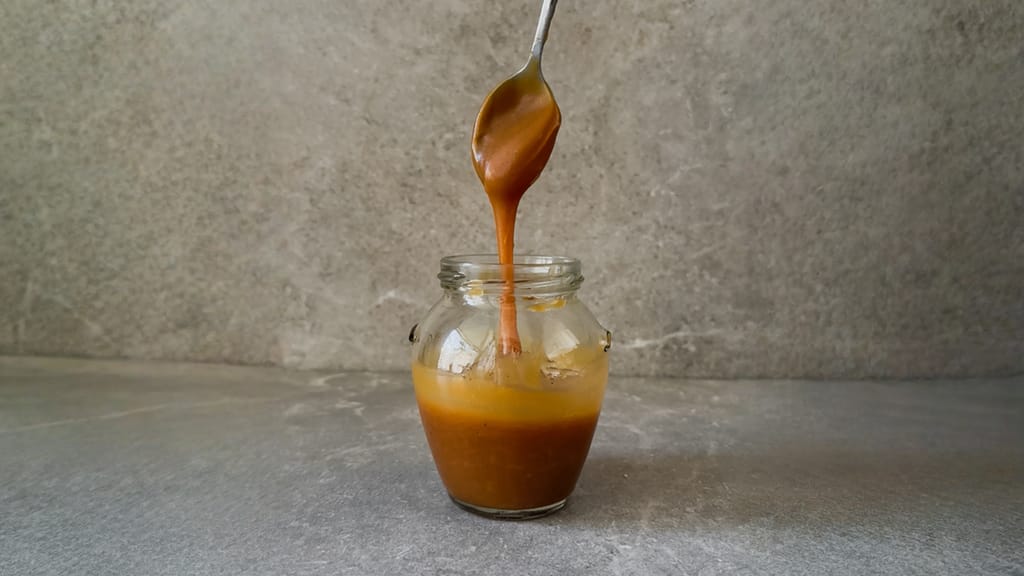
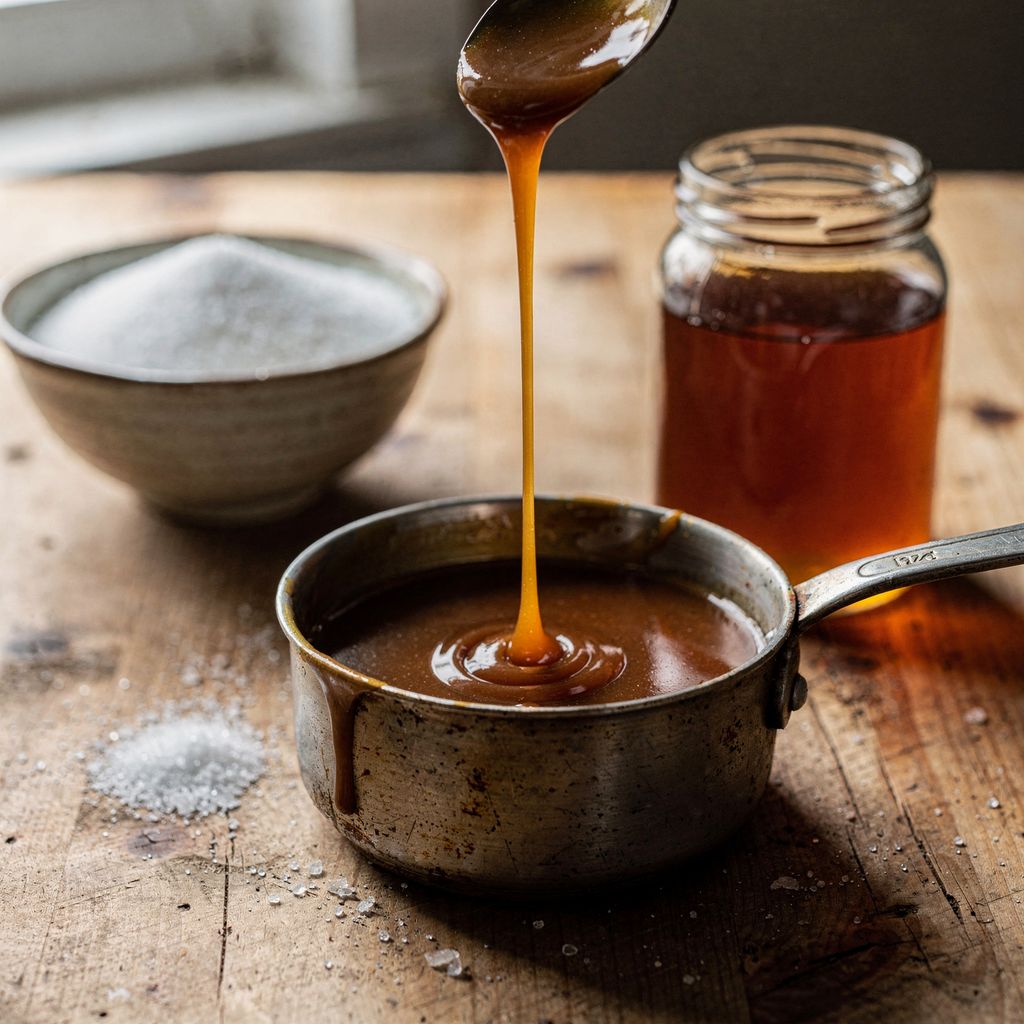
Homemade caramel sauce with just 4 ingredients
4-ingredient homemade caramel sauce — smooth caramel even without glucose syrup
For a mirror glaze, replace glucose syrup with invert sugar or light honey, 1:1. Both keep the shine and flexibility, and the glaze will just be a touch sweeter. Only use golden syrup in a dark chocolate glaze — in a pale one, its colour would show. Plain sugar alone isn't enough either — the glaze will go dull and start cracking once it cools.
In ice cream and sorbet, replace glucose syrup with invert sugar, but only half the amount, making up the rest with regular sugar. Invert sugar is sweeter and lowers the freezing point more, so a full swap would make the ice cream too sweet and too soft. Rice syrup can be used 1:1 — it adds body similarly to glucose syrup. Honey works too, but the ice cream will taste of honey.
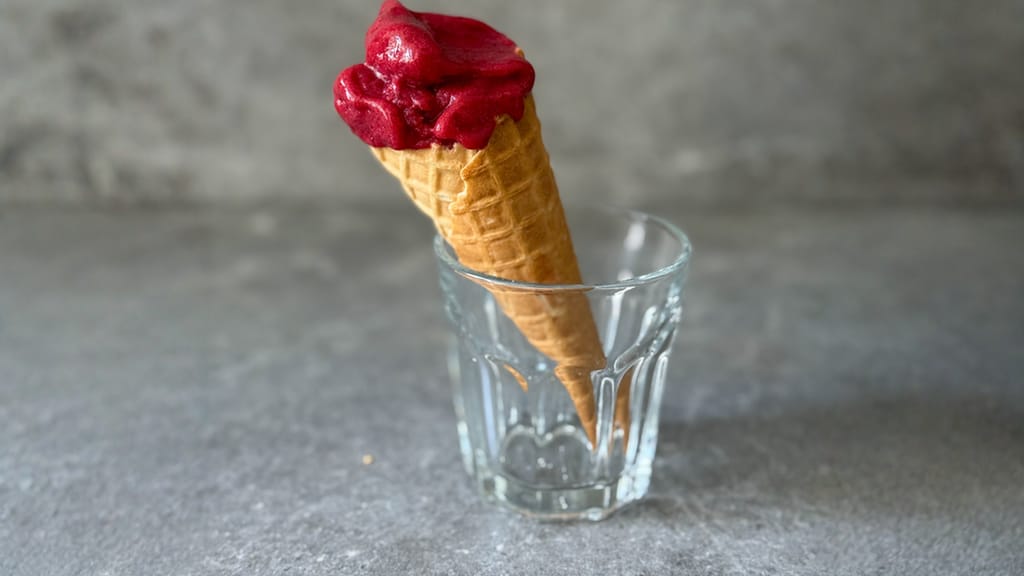
Homemade plum sorbet with cardamom and brandy
Homemade plum sorbet — replace half the glucose syrup with invert sugar
For marshmallows and nougat, use invert sugar or golden syrup 1:1. The syrup keeps the foam soft and stops it from turning crunchy the next day. Honey works too, but the result will be denser and darker — in classic Montélimar nougat, though, honey is part of the recipe itself, so there's no need to substitute it, just watch your temperatures. If you're also substituting the gelatine, treat that separately — every change affects the texture.
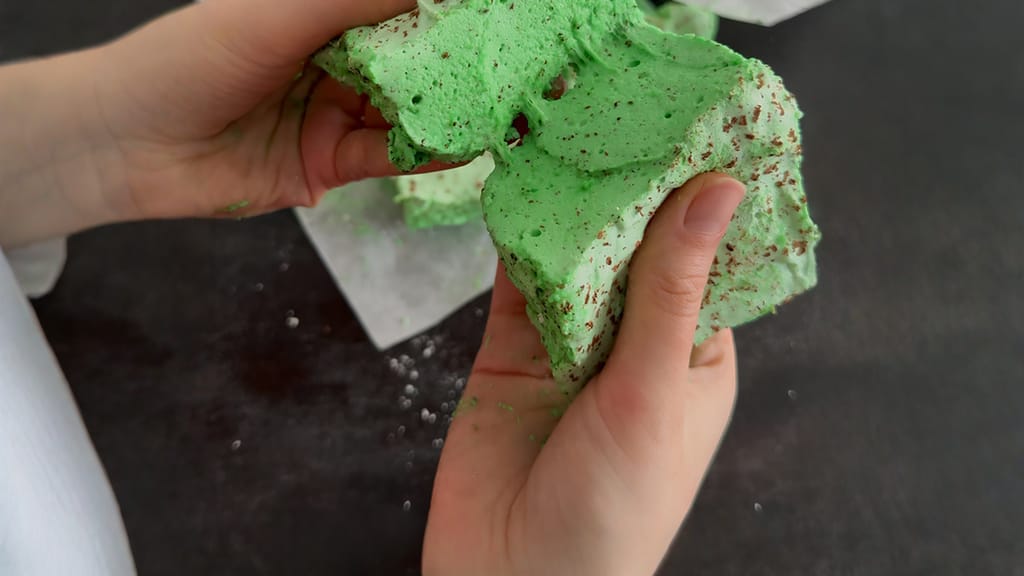
Homemade mint chocolate marshmallows
Homemade mint marshmallows — swap glucose syrup for invert sugar or golden syrup 1:1
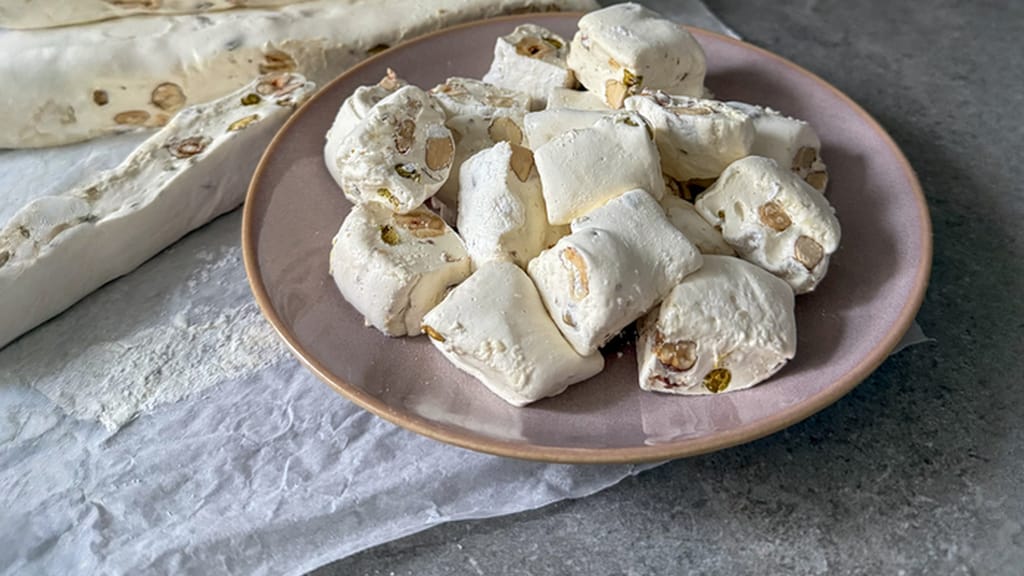
Montélimar nougat – homemade white nougat with honey and nuts
Montélimar — white nougat made with honey, where glucose syrup can be replaced with invert sugar 1:1
Glucose syrup is easiest to replace in baking — honey, golden syrup, invert sugar and even maple syrup all work 1:1. Here it's mainly about moistness and binding, not crystallization. If the recipe only calls for 1–2 tablespoons, you can simply leave it out and add the same weight of sugar plus a teaspoon of water; the baked goods will just go stale a little sooner.
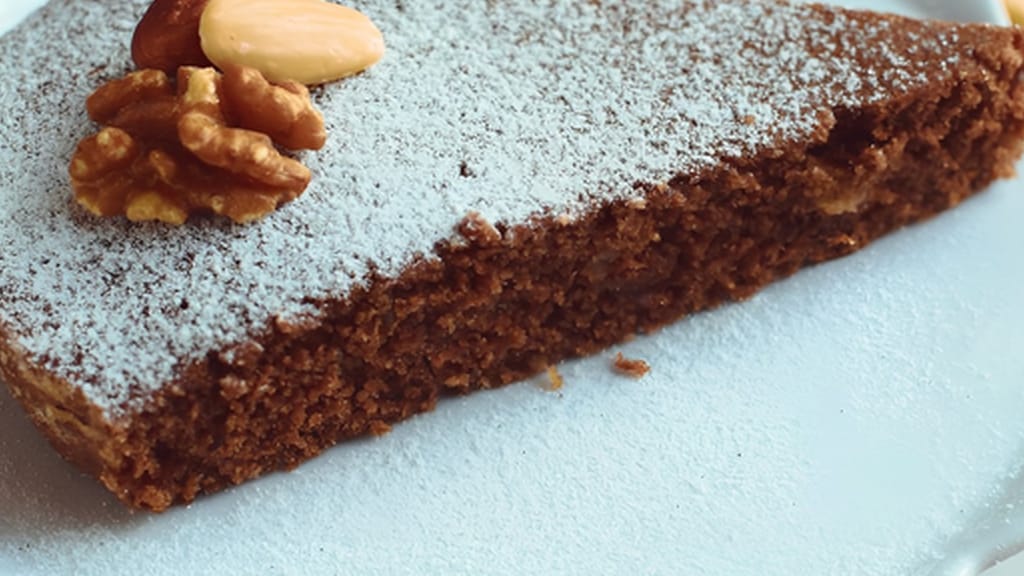
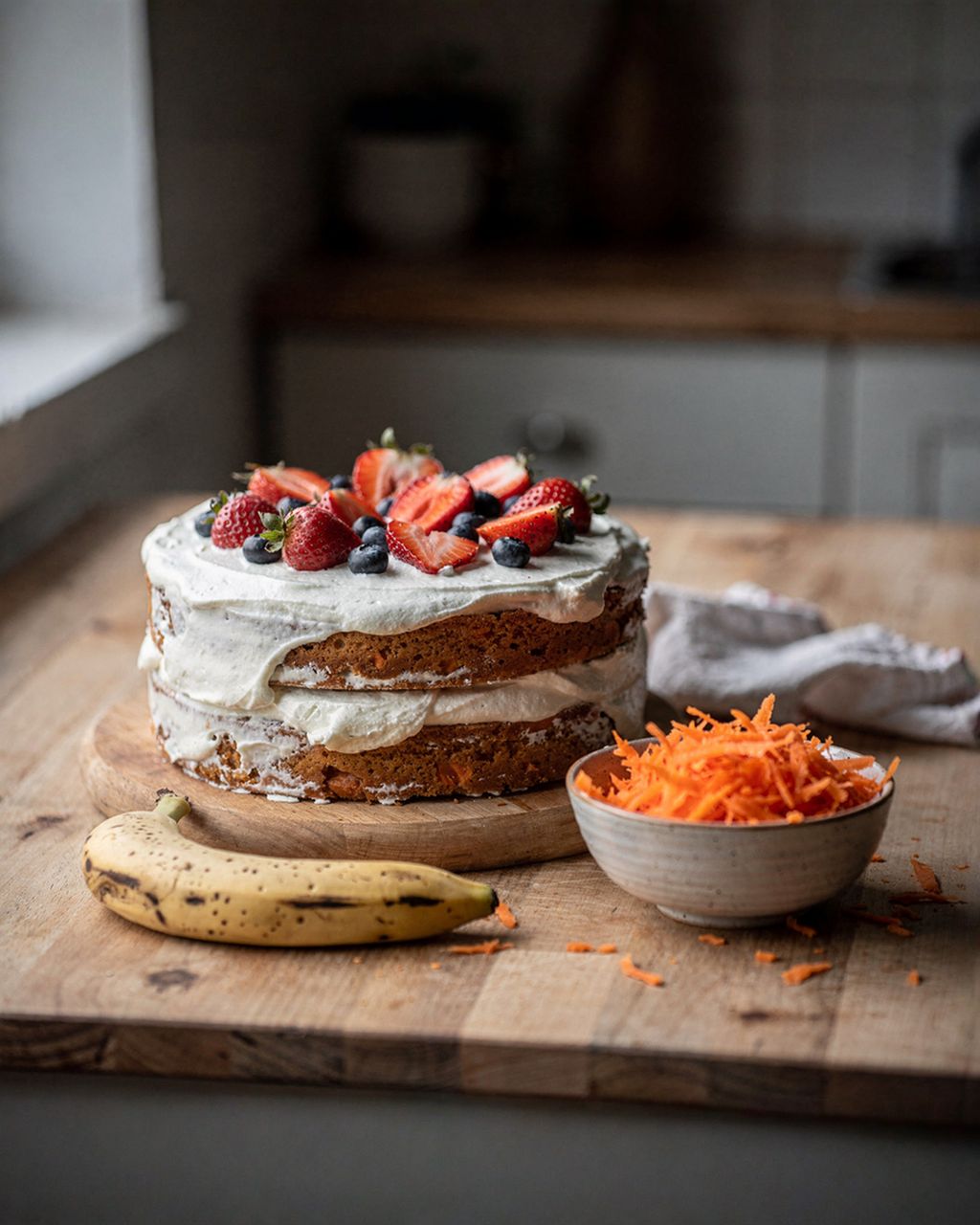
Lactose-free sheet pan gingerbread cake. quick and really good!
Quick sheet-pan gingerbread — soft and moist even without glucose syrup
If you have no syrup on hand, add a little acid to the sugar as it cooks — part of the sucrose will break down into invert sugar right in the pan, keeping the caramel smooth. For 200g sugar, 1 teaspoon lemon juice or ⅛ teaspoon cream of tartar is enough.
On top of that, three habits that prevent crystallization just as effectively:
Don't stir once the sugar has dissolved. Just swirl the pan gently instead.
Wipe down the sides of the pan with a wet pastry brush. A single stray sugar crystal on the rim can trigger a chain reaction.
Use a clean pan and clean sugar. Crumbs and dust act as seeds for crystals.
You'll spot grainy, cloudy caramel by its dull surface and the way it drags on the spoon. You can rescue it by adding a splash of water and boiling it back down again.
Pretty much — American corn syrup is a glucose syrup made from corn starch, and it's a 1:1 swap in recipes.
No — glucose-fructose (or fructose-glucose) syrup contains fructose alongside the glucose, so it's sweeter, browns faster, and behaves a lot like invert sugar. That means you can use it 1:1 in caramel and baking just like invert sugar, just expect a darker colour and sweeter taste; in ice cream, use it at only half the amount of glucose called for.
Practically speaking, no — wheat-based glucose syrup is refined so thoroughly that EU legislation (Regulation 1169/2011) exempts wheat-based glucose syrups (including dextrose) from mandatory gluten allergen labelling. If you have coeliac disease, always follow your doctor's advice and check the label on the specific product.
Dip your spoon or spatula in hot water, or lightly oil it, and weigh the syrup straight into the pan on a kitchen scale. If the syrup has stiffened in the jar, stand it in warm water for a few minutes and it will loosen up.
Opened glucose syrup keeps for months in a well-sealed container at room temperature, since its high sugar content stops microbes from multiplying. Homemade invert syrup should be kept in a clean, sealed jar in the fridge and used within a few weeks; if mould appears on the surface or it starts to ferment, throw it out.
One recipe worth heating the oven for, one tip, and one deal from the shop. Nothing else.