Homemade caramel sauce with just 4 ingredients
Glucose Syrup: What It Is, What It's For, and When You Actually Need It
Updated Oct 4, 2026
Glucose syrup is a thick, clear syrup made from starch, and in confectionery its main job is stopping sugar from crystallising. Thanks to it, caramel stays smooth, mirror glaze stays glossy, marshmallows stay bouncy, and sorbet turns out smoother and less icy. It's nothing fancy or chemical — just a different kind of sugar — and knowing when to reach for it can save you from a lot of ruined batches.
Glucose syrup is a concentrated sugar solution made by breaking down starch — usually from corn, wheat, or potatoes — using enzymes or acid. Starch is a long chain of glucose molecules; once you "chop" it into shorter pieces, you end up with a mix of glucose, maltose, and longer sugar chains dissolved in a small amount of water.
Here's what you need to know for cooking:
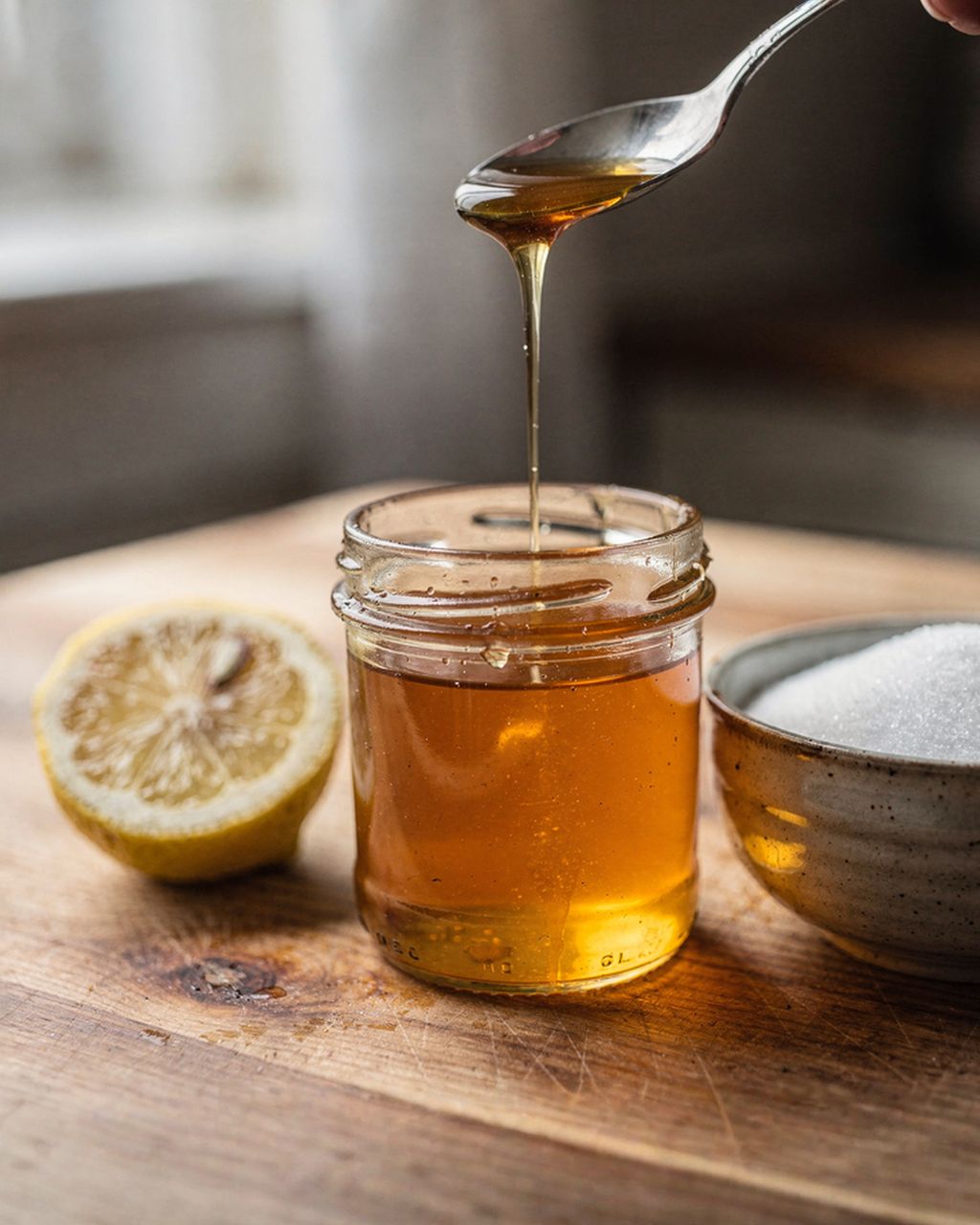
Texture: as thick as honey, clear, with a mild, neutral sweetness and no aroma.
Composition: roughly 80% sugars (solids), 20% water.
Sweetness: standard confectioner's glucose syrup (with a DE of around 40) is, according to expert sources, roughly half as sweet as regular table sugar.
Flavour: neutral, so it won't mask vanilla, chocolate, or fruit — unlike honey.
The DE number (dextrose equivalent) on the label tells you how far the starch has been broken down. The higher the DE, the more free glucose there is, meaning a sweeter, thinner syrup. For home baking and confectionery, a mid-range DE of around 38–45 — which is what most store-bought syrups have — is ideal.
Glucose syrup prevents crystallisation because its differently sized molecules get in the way between sucrose molecules, stopping them from lining up into a crystal lattice. Plain sugar is a single, uniform molecule — in a supersaturated solution (caramel, fondant, glaze), it loves to re-form into crystals, leaving you with a grainy result or a rock-hard mass.
When you add glucose syrup, you introduce a mix of glucose, maltose, and longer chains into the pot. These sugary "building blocks" get scattered around, so crystals have nothing to grow from. That's why caramel made with glucose stays smooth and glossy, even if you stir it or a stray sugar grain is left clinging to the side of the pan.
Glucose syrup also does three other useful things:
Locks in moisture — desserts stay soft and don't dry out as quickly.
Softens ice cream's texture — it slows the growth of ice crystals, giving sorbet a smoother, less icy bite.
Adds body without over-sweetening — you get extra solids and thickness without piling on the sweetness.
You'll want glucose syrup anywhere you're cooking concentrated sugar or want a dessert to stay smooth and soft: caramel and caramel sauce, mirror glaze, marshmallows, ganache and pralines, sorbet and ice cream, fondant, hard candies and lollipops. You don't need it in standard creamed or shortcrust-style batters, or in gingerbread dough — it wouldn't improve anything there.
Rough quantities you can't go wrong with:
Caramel and caramel sauce: replace 10–20% of the sugar's weight with glucose (for 200 g of sugar, swap in 20–40 g of glucose syrup). Add it to the pan right from the start, together with the sugar.
Mirror glaze: the classic ratio is glucose to sugar 1:1 (say, 150 g + 150 g). Without it, the glaze won't have that glassy shine and will cloud over quickly.
Marshmallows: typically 1 part glucose to 2 parts sugar. The mixture whips up more easily and the finished pieces stay bouncy instead of drying out.
Ganache and praline fillings: roughly 5–10% of the ganache's weight. The emulsion is more stable, the filling smoother, and it keeps longer.
Sorbet and homemade ice cream: replace 20–25% of the sugar with glucose. The sorbet will be less sweet, smoother, and have finer ice crystals; if you want it to scoop more easily, swap in some dextrose instead of glucose syrup.
Fondant: here, glucose doesn't stop crystallisation — it controls it. Fondant is made by deliberately letting sugar crystallise into very fine crystals under controlled conditions; glucose keeps those crystals tiny, so the fondant turns out smooth and creamy rather than grainy.
Hard candies and lollipops: glucose is the most reliable safeguard here — without it, the sugar can easily crystallise before you've managed to pour it into the moulds. You can get by without it using a splash of acid (citric acid or cream of tartar), which breaks down some of the sugar during cooking, but the result is less predictable.
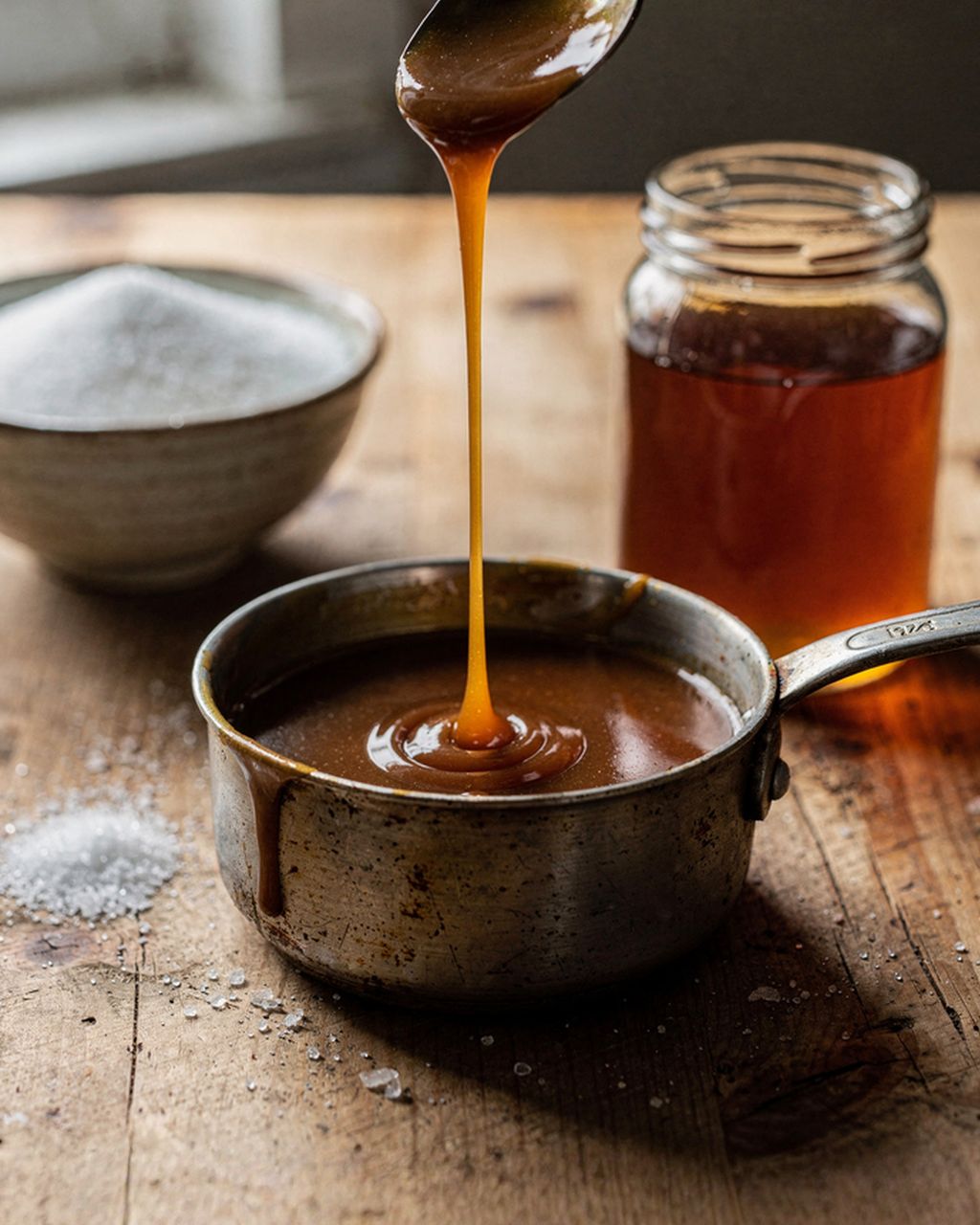
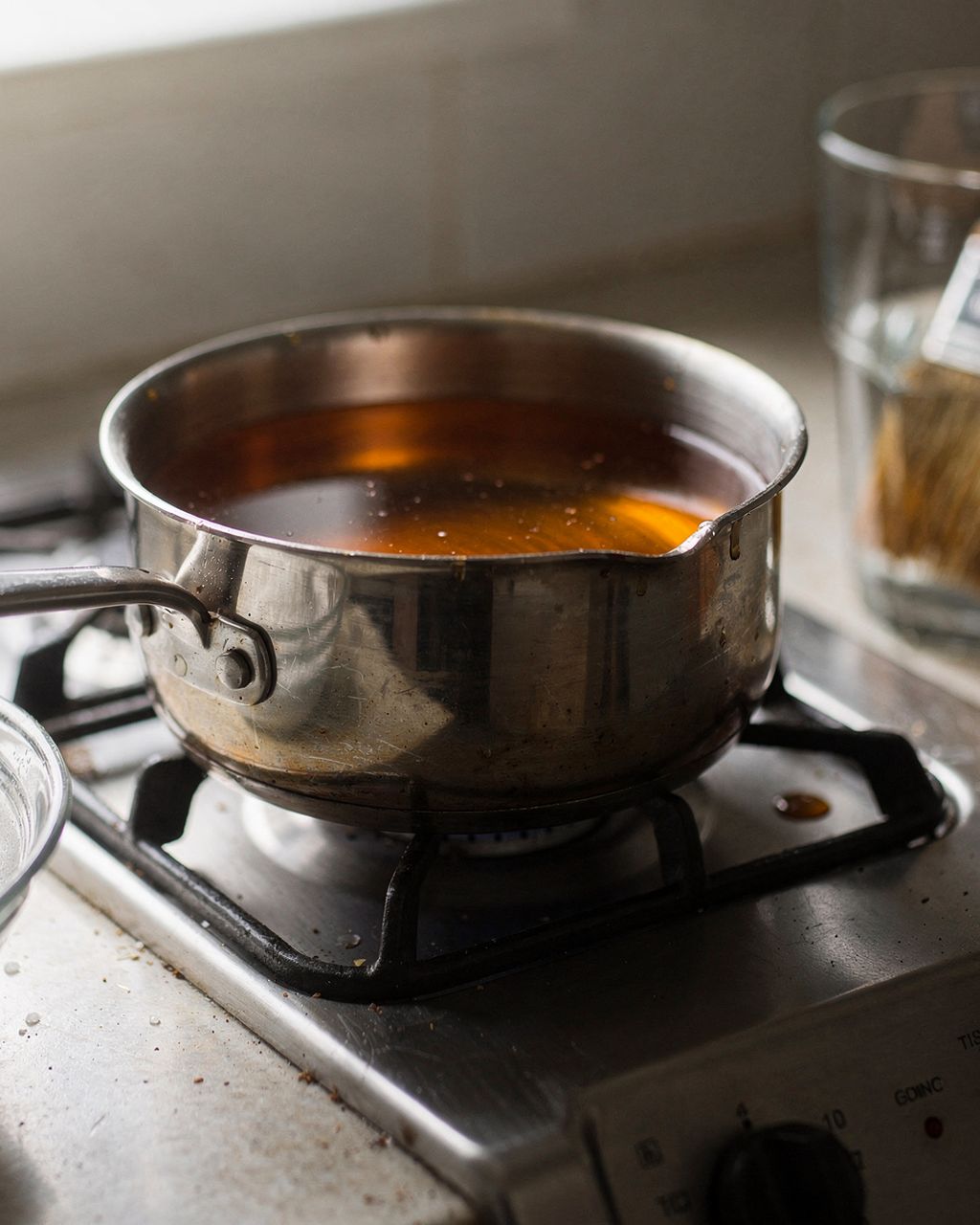
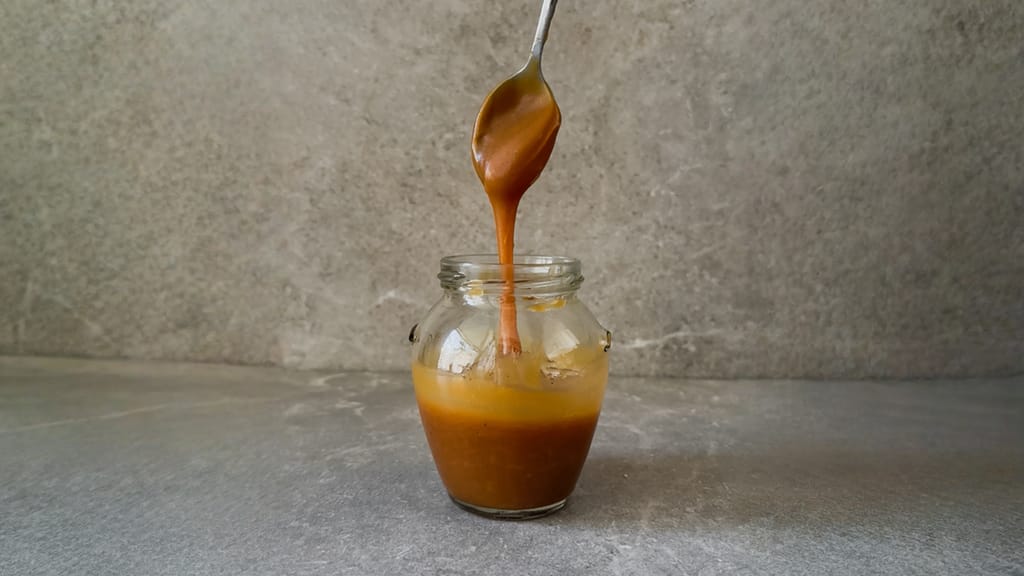
Homemade caramel sauce with just 4 ingredients
A 4-ingredient homemade caramel sauce — the perfect place to see what glucose syrup does for caramel
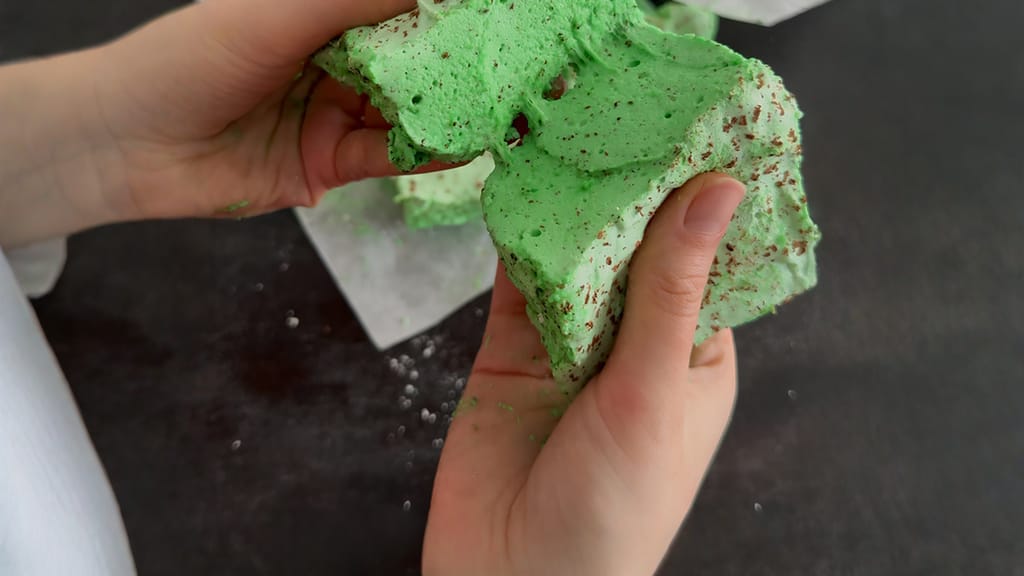
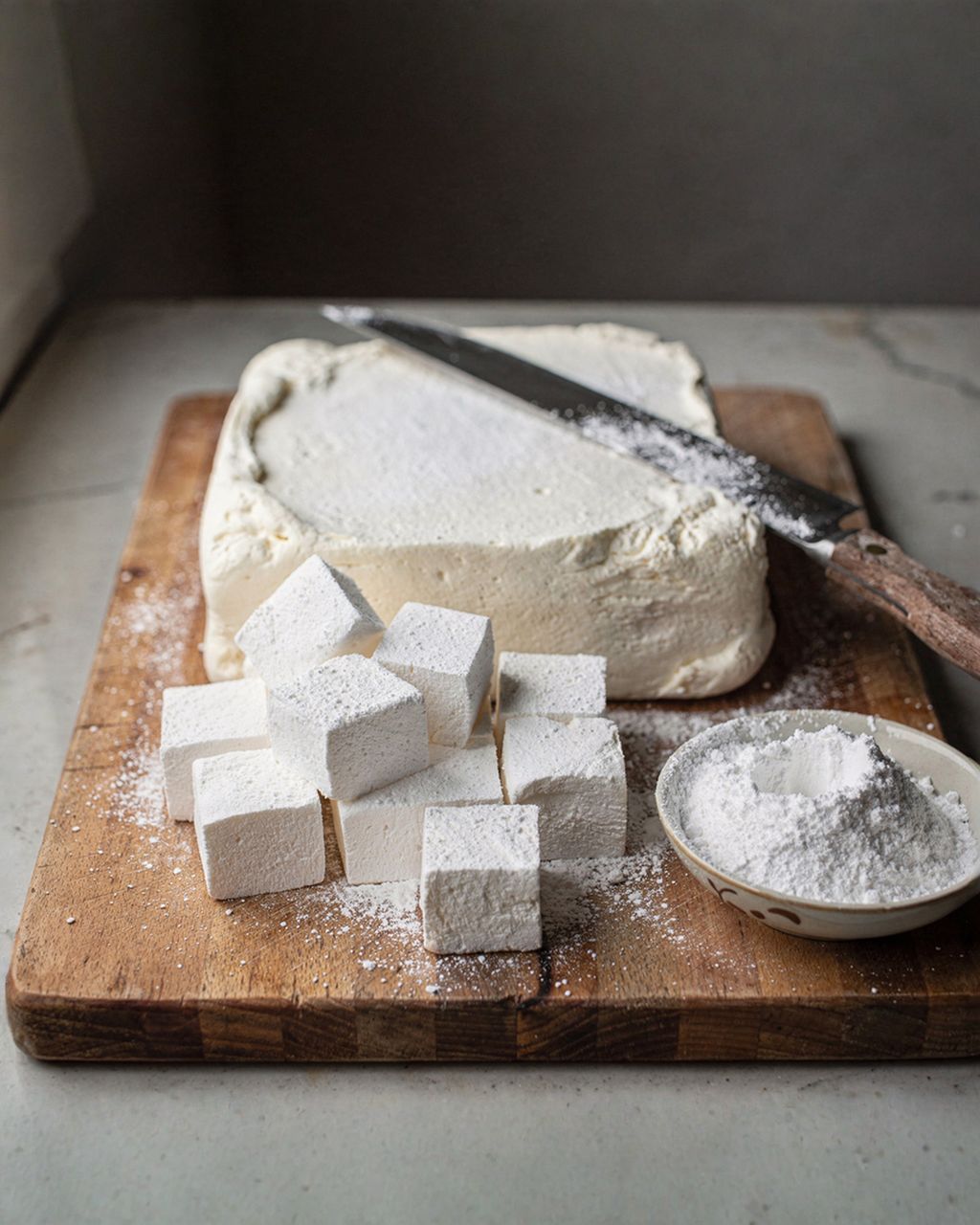
Homemade mint chocolate marshmallows
Homemade mint marshmallows with chocolate — a classic treat where glucose syrup keeps things bouncy
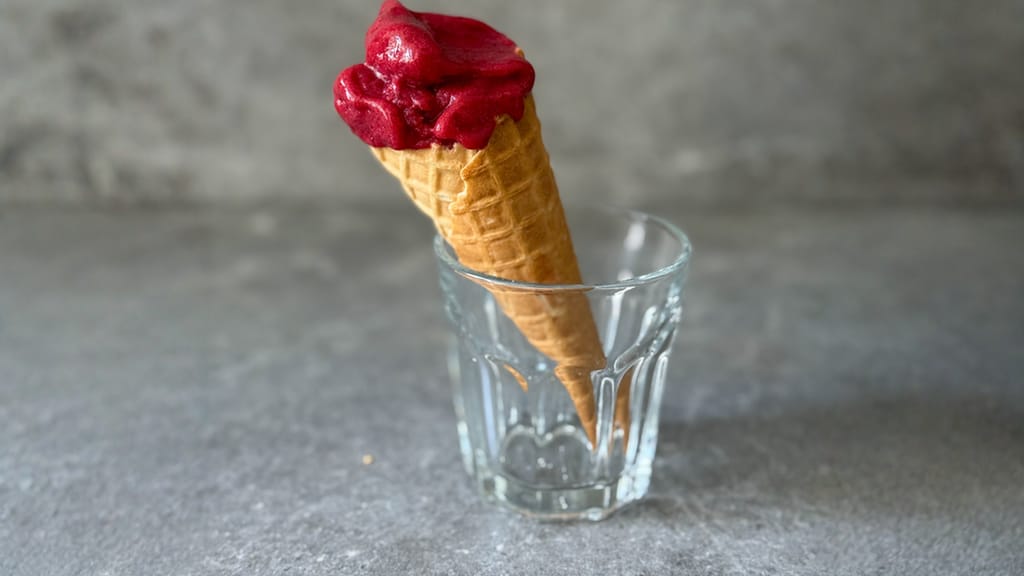
Homemade plum sorbet with cardamom and brandy
Homemade plum and cardamom sorbet — see for yourself how glucose syrup smooths out ice crystals
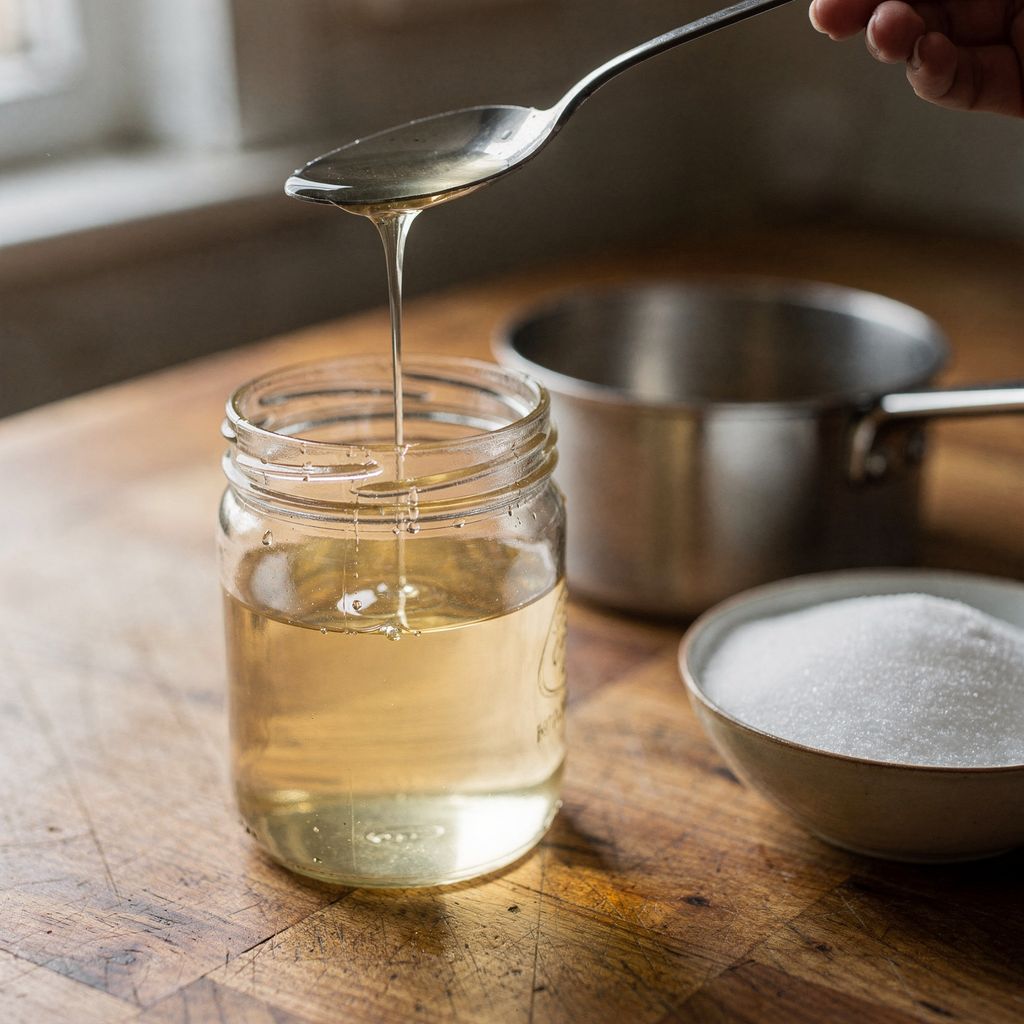
Always weigh glucose syrup rather than measuring it by the spoon — and weigh it straight into the pan on the scale. It's so thick that half of it stays stuck to the spoon, throwing off your measurement.
A few tricks that make life easier:
Dip your spoon or fingers in water first. The syrup won't stick to a wet surface and will slide off cleanly.
Warm it up. Stand the jar in warm water (40–50°C/104–122°F) for a few minutes, or microwave it for 10–15 seconds — it thins out and pours much more easily.
Put it in the pan first. Pour the sugar on top of it, not the other way round — this stops the sugar from scorching on the bottom and helps the syrup dissolve evenly.
Hot water is all you need to clean up. Glucose is a sugar, so it dissolves away without any scrubbing.
All of these syrups prevent crystallisation, but only glucose syrup (and corn syrup) do it without adding noticeable flavour, colour, or extra sweetness. So it really comes down to which of those you can least afford in your dessert.
Corn syrup is essentially glucose syrup made from corn. The American product is often also flavoured with vanilla and salt. In American recipes, you can swap it for glucose syrup 1:1.
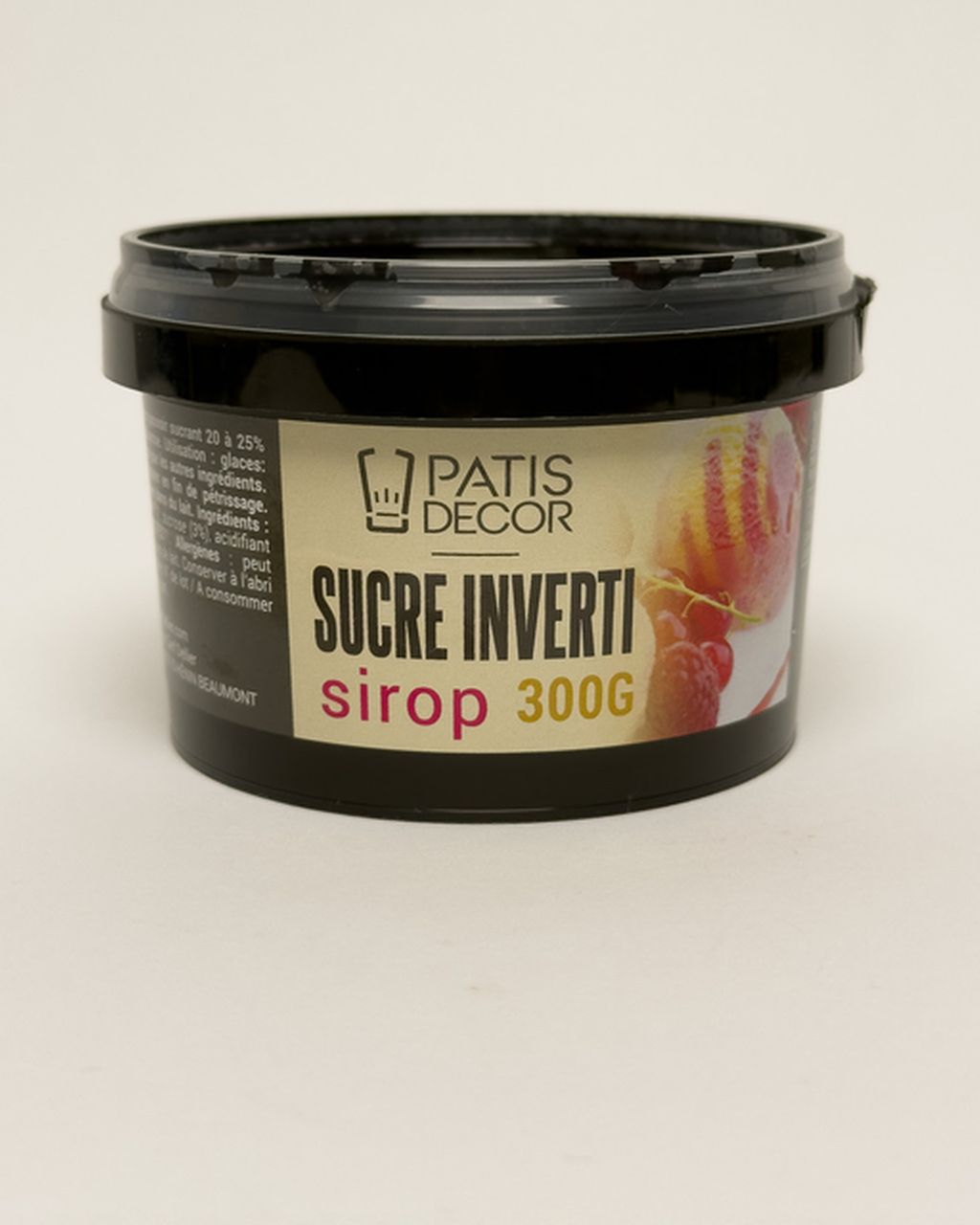
Invert sugar is sucrose broken down into glucose and fructose. It's about as sweet as regular sugar, holds onto moisture beautifully, and works especially well in ice cream, ganache, and baked goods that need to stay soft.
Honey also slows crystallisation, but it brings a strong flavour of its own, darkens caramel, and scorches more easily.
Golden syrup behaves similarly to invert sugar but has a caramel flavour and colour.
If you don't have glucose syrup on hand, you'll find a full rundown of substitutes and ratios in our article on what to use instead of glucose syrup.
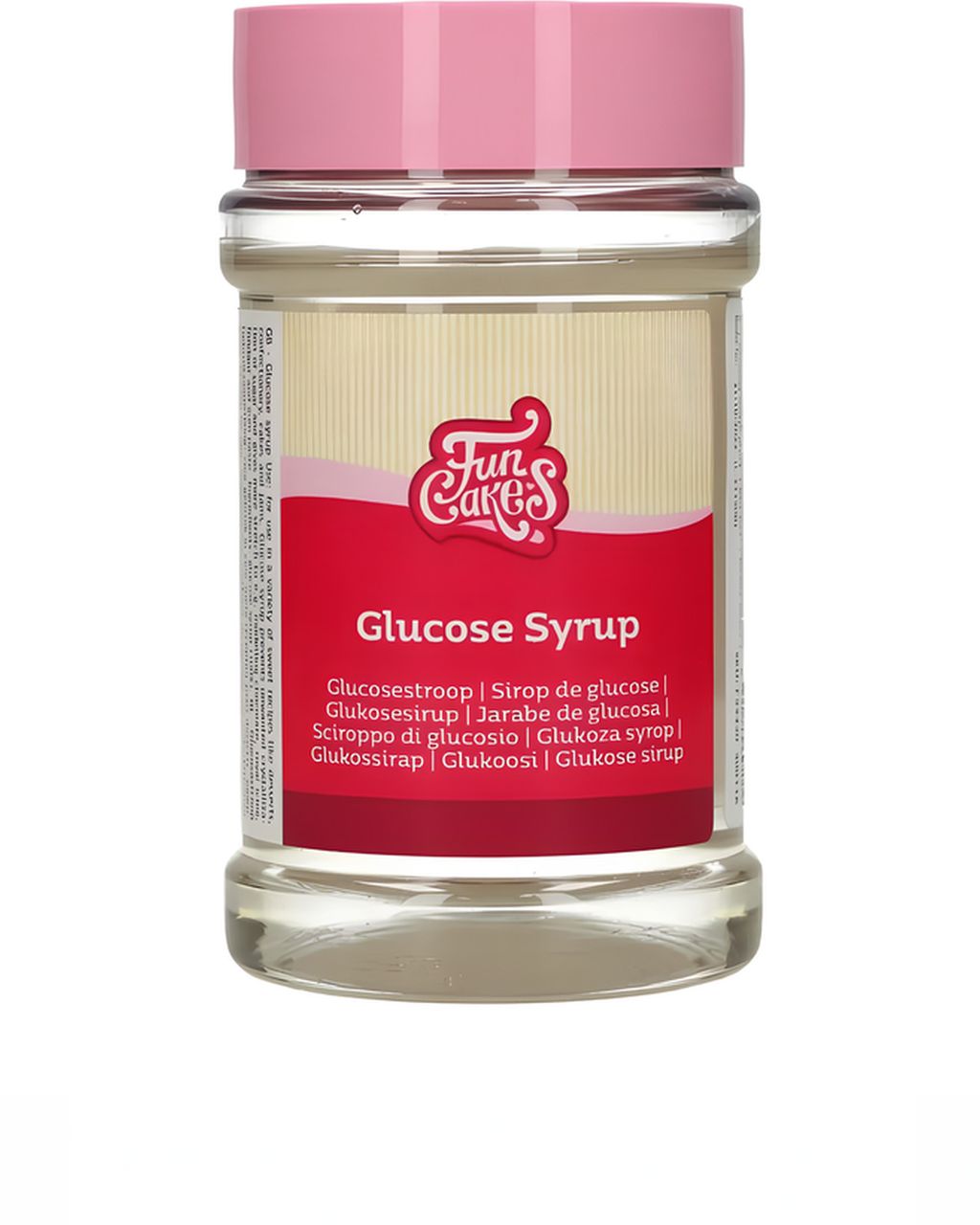
You'll find glucose syrup at baking and confectionery suppliers and online shops — it's not something you'll typically spot on a regular supermarket shelf. It's usually sold in jars or tubs of 300–500 g, which is enough for several batches of caramel or glaze at home. Alongside glucose, you'll also find invert sugar and other confectioner's sugars in our baking sugars and syrups category.
Storage is simple:
Keep it at room temperature, tightly sealed, somewhere dry. Don't put it in the fridge — it'll thicken so much you won't be able to get it out of the container.
Shelf life is long, typically a year or more; just check the date on the packaging.
Keep an eye on the lid and rim. Syrup that dries in the threads can glue the lid shut — wipe the rim with a damp cloth before closing it.
Wheat-based glucose syrup is refined so thoroughly that it contains virtually no gluten, which is why EU rules don't require it to be labelled as an allergen. But if you're cooking for someone with coeliac disease and want complete peace of mind, choose a corn- or potato-based syrup instead — the starch source is usually listed on the label. If you have coeliac disease, always follow your doctor's or dietitian's advice.
No — dextrose (grape sugar) is pure glucose in powder form, while glucose syrup is a liquid blend of glucose, maltose, and longer sugar chains. Dextrose is sweeter, and you can't swap it in for the syrup 1:1 in recipes, since it doesn't match the syrup's density or water content.
No — glucose syrup is roughly half as sweet as granulated sugar and contains about 20% water, so your result would end up less sweet and noticeably wetter. Use it only as a partial sugar substitute, generally 10–25% of the sugar's weight, except in mirror glaze, where it can make up to half the sweetener (glucose and sugar 1:1).
Glucose syrup rarely crystallises; if it's thickened or turned cloudy, just stand the jar in a warm water bath at 40–50°C (104–122°F) and stir. However, if it smells fermented, is foaming, or has mould on the surface, throw it out — water or contamination has gotten into it.
Yes, just dissolve it in warm liquid first — you don't need to cook it. In a cold mixture, the thick syrup dissolves very slowly and will just sink to the bottom, so stir it into warmed milk or sugar syrup first, then chill the mixture afterwards.
One recipe worth heating the oven for, one tip, and one deal from the shop. Nothing else.