- Season
- Year-round
- Price
- Medium
Calories and nutrition
per 100 g
147 kcal
Calories
18.5 g
Protein
0.7 g
Carbs
7.7 g
Fat
Bone-in ham
Šunka od kosti ("ham off the bone") is a Czech cooked ham made from the whole muscle of a pork leg: cured, usually lightly smoked and cooked, then sliced so that the meat grain and rim of fat show on every slice. It is mostly sold in the top Czech quality class, without starch or added proteins, and eaten cold on bread, on open sandwiches and in hot dishes.
per 100 g
147 kcal
Calories
18.5 g
Protein
0.7 g
Carbs
7.7 g
Fat
Do not leave it at room temperature. Keep it on the table for 1–2 hours at most, then put it back in the fridge.
Store it in the fridge at the temperature on the label, usually 0–5 °C. An unopened pack keeps until its use-by date. Eat freshly sliced ham from the counter and opened packs within 2–3 days, wrapped in paper or in a closed container. A whole cooked ham in one piece keeps about a week in the fridge, a cut one 3–5 days. Take the use-by date seriously: Listeria can slowly multiply in ready-to-eat cooked meat even in the fridge.
You can freeze it; it keeps its quality for 1–2 months in the freezer. Separate slices with baking paper and wrap in portions with no air. Thaw it in the fridge and do not refreeze. After thawing it is wetter and more rubbery, so use it in hot dishes rather than on open sandwiches.
Read the label or ask at the counter. Under Czech Decree No. 69/2016 Coll., pork ham may only be made from pork leg or meat from the leg and must carry a quality class. Highest-quality ham (nejvyšší jakost) must contain at least 16 % pure muscle protein, is made from whole muscles (which may be divided for shaping) and must not contain colourings, fibre, starch, or plant or other added proteins. Premium ham (výběrová) must have at least 13 % muscle protein. Standard ham (standardní) needs at least 10 % and may be made from coarsely minced meat; nobody would call it šunka od kosti. Beyond that, look for a short ingredient list and visible grain with a natural rim of fat. The colour should be evenly pink, not grey, the cut moist but not slimy, and any liquid in the pack clear. At the counter, have it freshly sliced: thin slices for open sandwiches, thicker ones for cooking.
Prague ham (pražská šunka) or another highest-quality whole-muscle cooked ham, which is very close in method and flavour.
Premium-class (výběrová) cooked ham, or smoked pork leg or neck (uzené maso). Formed standard-class ham works in hot dishes but is softer and uniform.
The ham is fully cooked and ready to eat. Serve slices cold from the fridge, or let them stand out of the fridge briefly to bring out the flavour. You can trim off the fat rim, but it carries much of the flavour. Carve ham on the bone with a long, sharp knife into thin slices across the grain, working toward the bone. Keep the cut face covered.
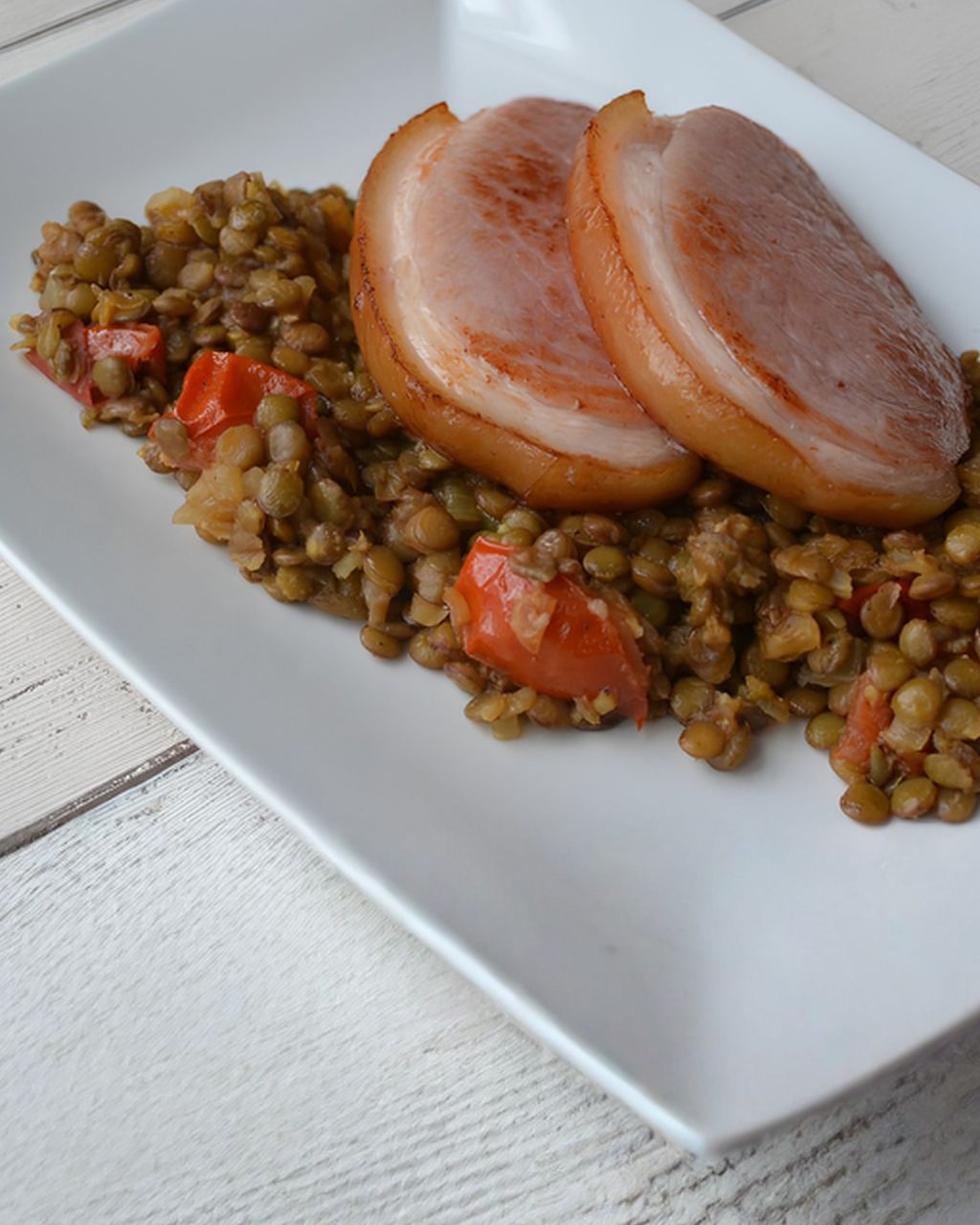
Use trimmings and ends in šunkofleky (baked ham and pasta), omelettes, pea or potato soup, or pancake fillings. Simmer the bone from a bone-in ham with split peas, lentils or cabbage for a smoky soup base.
Roughly what one piece weighs.
150 g
1 piece
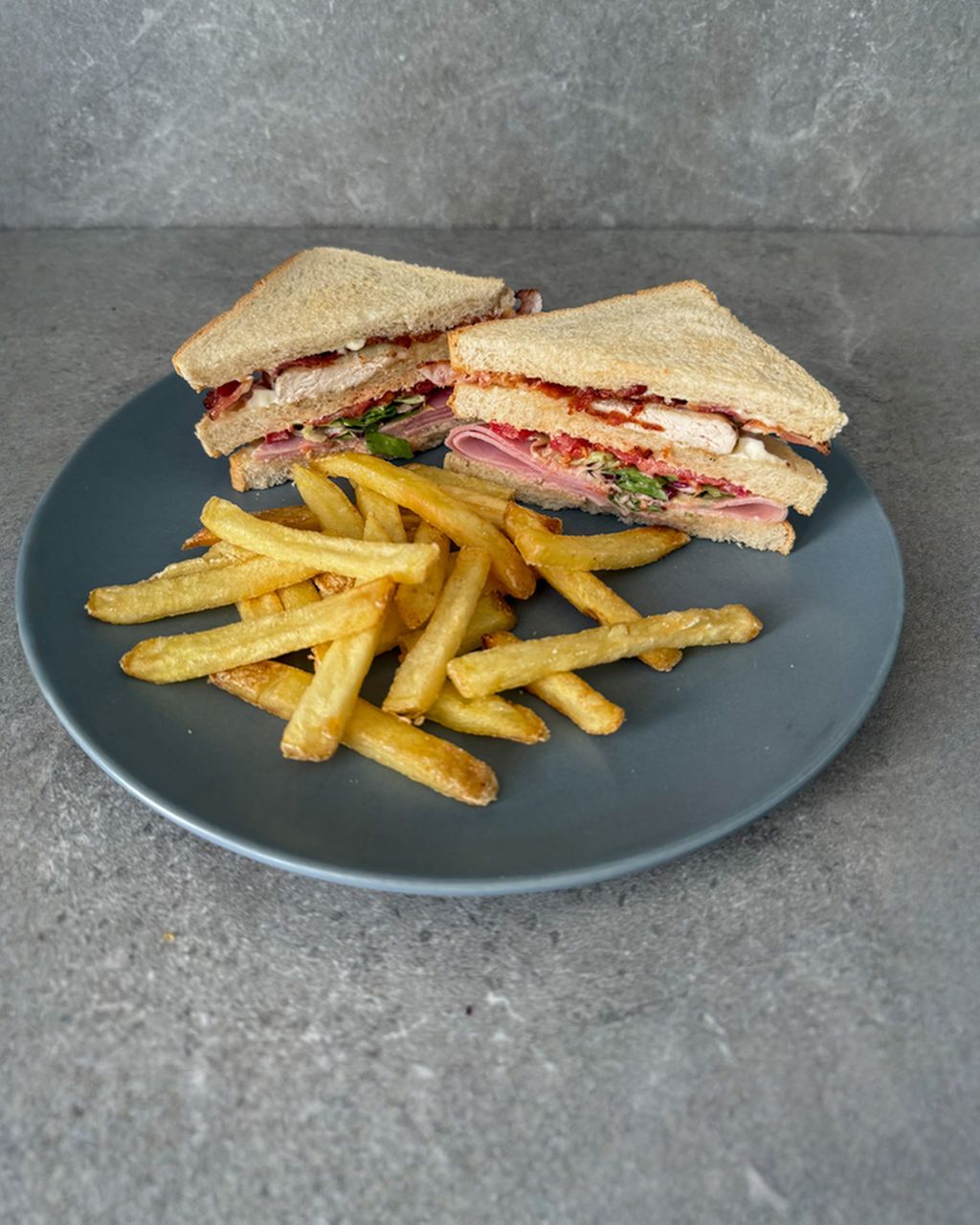
In Czech homes it is mostly eaten cold: on buttered bread or a rohlík roll, on chlebíčky open sandwiches, on a cold platter with gherkins, horseradish and mustard, and as ham rolls. It also works in cooking, in šunkofleky, toasties, omelettes and scrambled eggs, or in savoury bakes. A large piece or whole bone-in ham can be warmed in the oven and glazed for a festive table. It is already cooked, so it only needs heating through; long roasting at high heat dries out the lean meat.
Šunka od kosti is a Czech cooked ham made from a whole pork leg. The meat is cured in brine, usually lightly smoked, cooked and then sliced so that it keeps the grain of the whole muscles and their natural rim of fat. The name ("ham off the bone") goes back to Prague ham, when the whole leg was cured and cooked on the bone and the ham was carved off the bone at the counter. Some butchers still sell ham on the bone, but most šunka od kosti in shops is made from a boned leg. The words "od kosti" are not defined in law; what tells you the quality is the class on the label, most often šunka nejvyšší jakosti (highest quality).
It tastes cleanly of pork and is mildly salty. Smoked ham has a light smoky note and often a faint sweetness from the brine. It is firm and juicy, the muscle fibres show on the cut, and the thin rim of fat adds richness. Because it is sliced from whole muscles, the slices vary in shape and have natural marbling, unlike the uniform oval of formed ham.
Seasonal baking plans, tested recipes and kitchen tricks that save you time. Unsubscribe in one click.
3 min read
The most common premium label. At least 16 % muscle protein, whole muscles, no starch, fibre, colourings or added proteins. Usually lightly smoked.
Also made from whole muscles, with at least 13 % muscle protein. The decree allows the thickeners carrageenan, eucheuma gum and xanthan in it, but not starch or added proteins.
Smoked ham is smoked before cooking and has a light smoky note; dušená (unsmoked) ham is gently cooked after curing, without smoking, and tastes milder.
Whole legs or large pieces with the bone in, which some butchers still sell. They are carved at home or at the counter.
Prague ham is the historical forerunner of šunka od kosti. Dry-cured ham such as prosciutto or jamón is not cooked but air-dried and belongs to a different category. Formed standard-class ham made from coarsely minced meat is a different product too.
Eat freshly sliced ham and opened packs within 2–3 days, unopened packs by the use-by date. A whole cooked ham in one piece keeps about a week in the fridge, a cut one 3–5 days. You can freeze it for 1–2 months, but after thawing it is wetter, so it is better in baked dishes. Details are in can you freeze ham, salami and bacon.
Do not leave it on the table for more than 1–2 hours; how long topped open sandwiches keep is covered in how long do chlebíčky and canapés last. For pregnancy, the UK NHS advises keeping cooked ham and other cold pre-cooked meats chilled and eating them before the use-by date. Because of listeria, we suggest serving it to pregnant women heated until steaming hot, at least 70 °C in the centre.
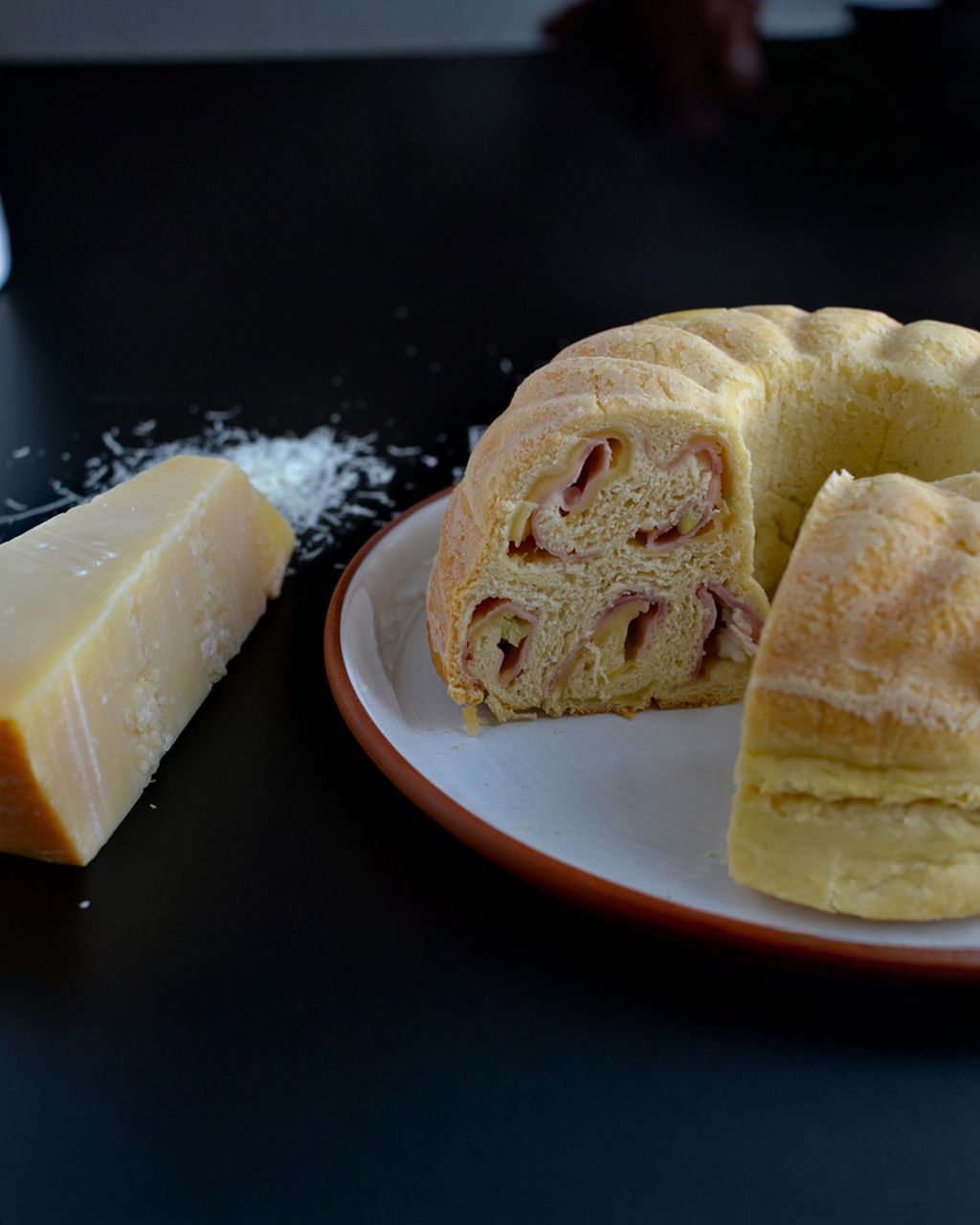
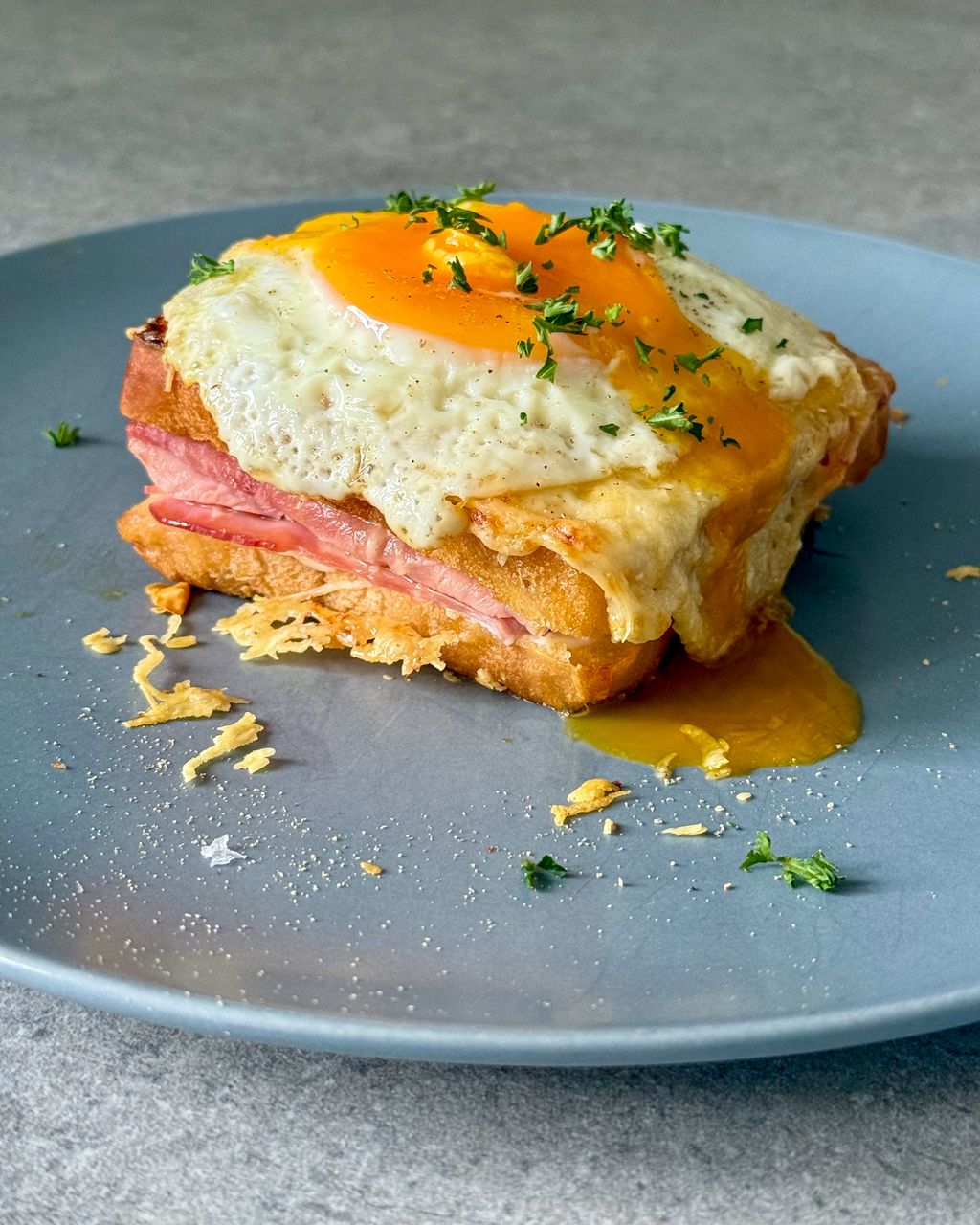
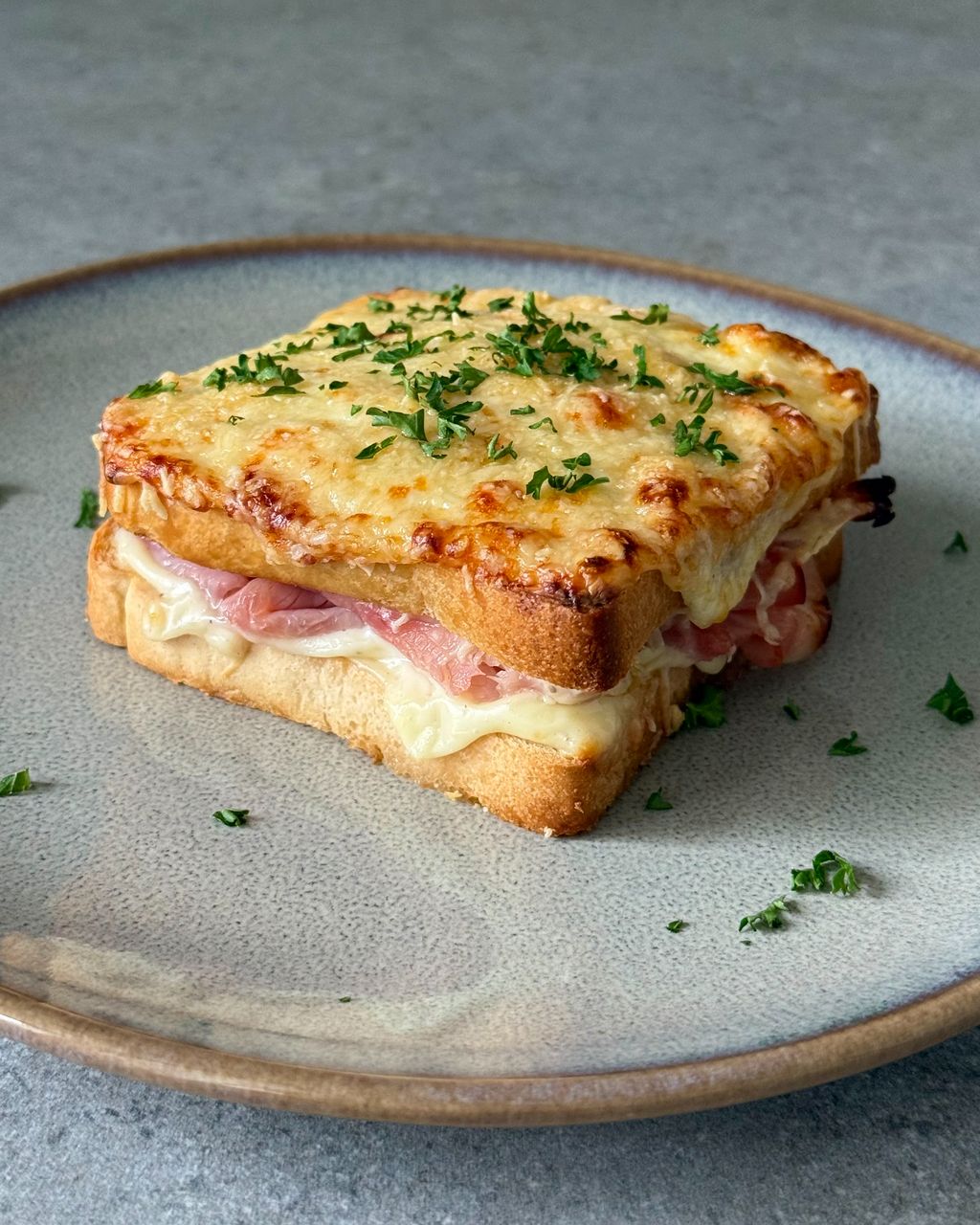
It is at its best cold on fresh buttered bread, with horseradish and mustard. In hot dishes it goes into šunkofleky, omelettes or a baked toastie, for example in croque monsieur, toasted ham and cheese sandwich, and diced into batter, as in savory bundt cake with ham and cheese.
Šunka od kosti comes from Prague ham, which, according to the usual account, the Prague butcher František Zvěřina began making in 1857 after experimenting with curing a whole leg on the bone. It sold in Karlovy Vary and Dresden too, and other butchers copied it in Vienna, Budapest and abroad. From 1879, Antonín Chmel produced it industrially at Zvonařka in Prague's Vinohrady. After nationalisation in 1948, production of ham on the bone almost ceased and was replaced by dušená šunka in aspic, sold in a typical oval tin.
The leg is injected with brine containing salt and sodium nitrite (nitrite curing salt) and left to cure. Nitrite gives the ham its stable pink colour and typical cured flavour and inhibits Clostridium botulinum. Tumbling in a drum spreads the brine through the muscle. The ham is then usually lightly smoked and gently cooked in water or steam until cooked through to the centre.
Czech quality classes are based on pure muscle protein: added water and fillers lower its share, so a higher class means more real meat from the leg. On the pack you may find the Czech quality marks Klasa or Regionální potravina; look for the meat's origin on the label.