- Season
- Year-round
- Price
- Medium
Calories and nutrition
per 100 g
106 kcal
Calories
16.7 g
Protein
0.3 g
Carbs
3.7 g
Fat
Premium-Quality Pork Ham
Premium-quality pork ham (šunka vepřová nejvyšší jakosti) is Czech cooked ham made from pork leg in the top of the three quality classes set by Czech Decree No. 69/2016: it must contain at least 16% pure muscle protein and no starch, fibre, colourings or added proteins. It is eaten cold on bread and open sandwiches and used in hot dishes.
per 100 g
106 kcal
Calories
16.7 g
Protein
0.3 g
Carbs
3.7 g
Fat
Do not leave it at room temperature. Keep it on the table for 1–2 hours at most, then put it back in the fridge.
Keep it in the fridge at the temperature on the label; producers state 0–5 °C or 0–7 °C. An unopened pack keeps until its use-by date. Once opened, follow the pack: some producers say "use within 24 hours". If the pack says nothing, eat opened or freshly sliced ham within 2–3 days, wrapped in paper or in a closed container. Never eat it after the use-by date.
You can freeze it; it keeps its quality for 1–2 months. Separate slices with baking paper and wrap in portions with no air. Thaw in the fridge and do not refreeze. After thawing it releases water and is softer, so use it in hot dishes rather than on open sandwiches.
Look for the words "nejvyšší jakosti" on the label. The quality class is mandatory, so if it is missing, the ham is not premium quality. Then read the ingredients: pork leg or meat from the leg should come first, typically 91–95%, followed by water, salt, curing salt and stabilisers. Do not confuse the classes. "Výběrová" (select) ham needs at least 13% muscle protein and may contain the thickeners carrageenan, euchema gum and xanthan. "Standardní" (standard) ham needs at least 10%, may be made from coarsely chopped meat and may contain starch and added proteins; shops sell standard ham with 55% meat. Words like "dušená", "od kosti" (bone-in) or "selská" (country-style) describe the method or style, not a quality class. At the counter choose evenly pink slices, not grey, with no slimy surface and no dried edges. Packs should be intact with clear liquid inside.
Another premium-quality cooked ham, such as bone-in ham or Prague ham. If you avoid pork, premium-quality poultry ham.
Select-quality (výběrová) ham, or home-roasted pork leg, cooled and thinly sliced.
The ham is fully cooked and ready to eat. Take slices out of the fridge shortly before serving so the flavour comes through. Fold or roll them for open sandwiches and platters, or cut into cubes or strips for cooking. Add it to hot dishes near the end so it does not dry out. Use a clean knife and board, because the ham is not cooked again before eating.
Cut ends and slices that are starting to dry into cubes for šunkofleky (ham and pasta bake), omelettes, potato salad or toastie fillings. You can freeze the cubes in small portions.
Roughly what one piece weighs.
100 g
1 piece
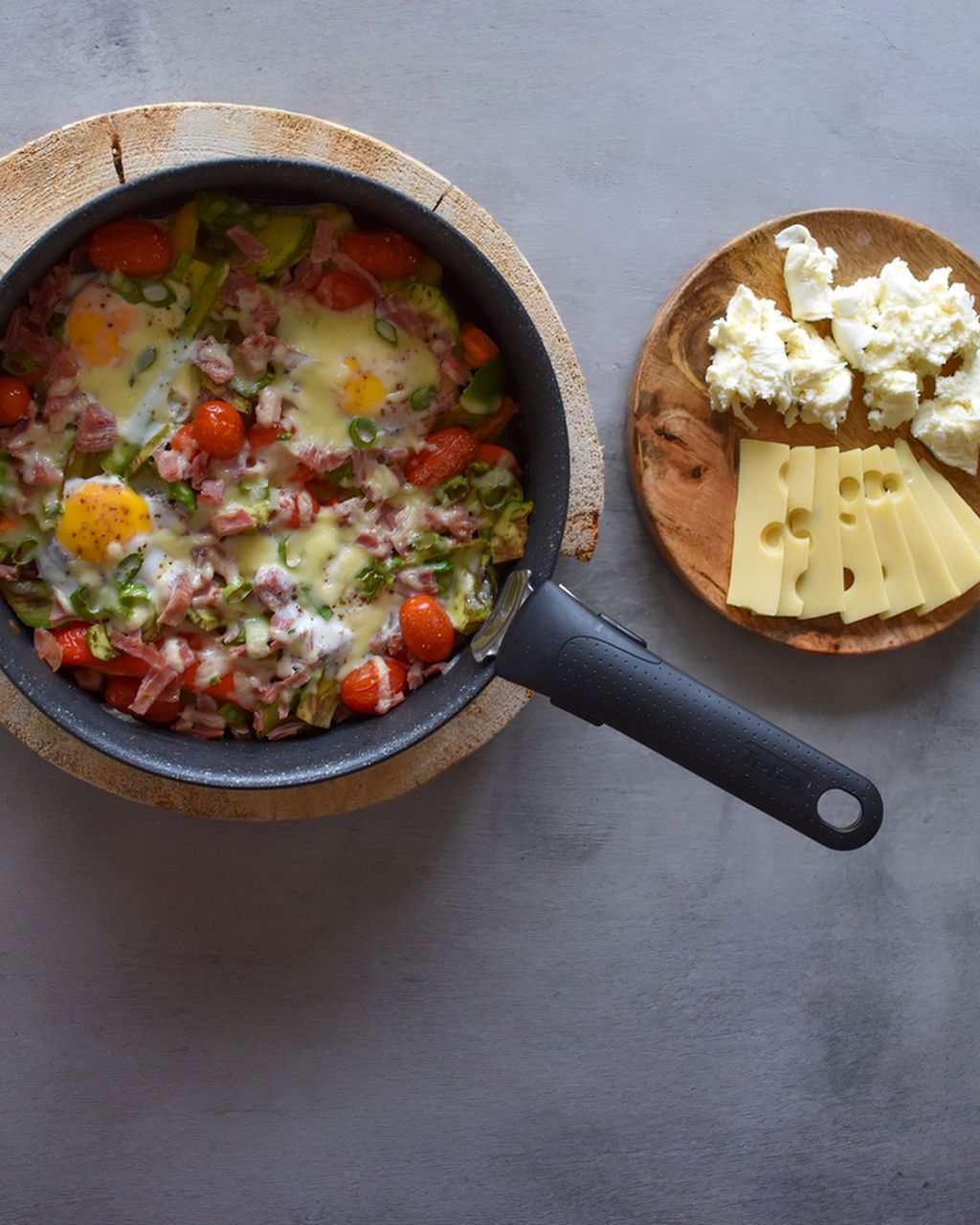
Most often eaten cold: on buttered bread, in a rohlík roll, on open sandwiches, on cold platters and as ham rolls. Hot, it goes into šunkofleky, ham and cheese toasties, omelettes, scrambled eggs, pizza and baked pasta or gnocchi. It is already cooked, so it only needs heating through. Reheat leftover dishes with ham to at least 70 °C in the centre for 2 minutes.
Czech Decree No. 69/2016 on meat products says pork ham may only be made from pork leg or meat from the leg, and every heat-treated product called "šunka" (ham) must carry a quality class on the label. "Nejvyšší jakost" (highest quality) is the strictest of the three: the ham is whole-muscle (muscles may be divided for shaping), contains at least 16% pure muscle protein, and the decree does not allow colourings, fibre, starch, or plant or other added proteins. In practice this is the ham you buy sliced at the deli counter or in packs. Producers typically declare 91–95% meat from the leg; the rest is water, salt and a few additives. It is fully cooked and eaten as it is. It has nothing in common with dry-cured raw ham such as prosciutto.
It tastes cleanly of pork, mildly salty and juicy. Because it is made from whole muscles, you can often see the meat fibres and the seams between muscles on a slice. "Dušená" (steam-cooked) ham tastes milder; lightly smoked ham has a faint smoky note. A good slice is firm and matt, not shiny or rubbery.
Seasonal baking plans, tested recipes and kitchen tricks that save you time. Unsubscribe in one click.
2 min read
At least 16% pure muscle protein, whole-muscle. No colourings, fibre, starch, or plant or other added proteins, except spices and ingredients used to decorate the surface.
At least 13% pure muscle protein, also whole-muscle. The decree additionally allows the thickeners carrageenan, euchema gum and xanthan, but no starch or added proteins. See our page on select pork ham.
At least 10% pure muscle protein. It may be made from coarsely chopped meat and may contain starch and added proteins. This is usually the square "toast" ham with a lower meat content.
These are methods, not classes. Dušená ham is gently cooked after curing; smoked ham is lightly smoked before cooking. Bone-in ham (šunka od kosti) comes from traditional Prague ham and is mostly sold in the highest class. Hams made from meat other than pork must name the species, for example beef ham.
An unopened pack keeps until its use-by date. Eat opened ham as the pack says, or within 2–3 days if it says nothing. You can freeze it for 1–2 months, but after thawing it is wetter and best in baked dishes. What happens to ham and other cured meats in the freezer is explained in can you freeze ham, salami and bacon.
Do not leave it out for more than 1–2 hours; how long open sandwiches keep is covered in how long chlebíčky and canapés last.
The UK NHS lists cooked ham and other cold pre-cooked meats among foods pregnant women should be careful with: keep them chilled and eat them before the use-by date. Listeria can still multiply slowly in chilled ready-to-eat meat, so we suggest heating ham for pregnant women until steaming hot, at least 70 °C in the centre, for example in a baked toastie.
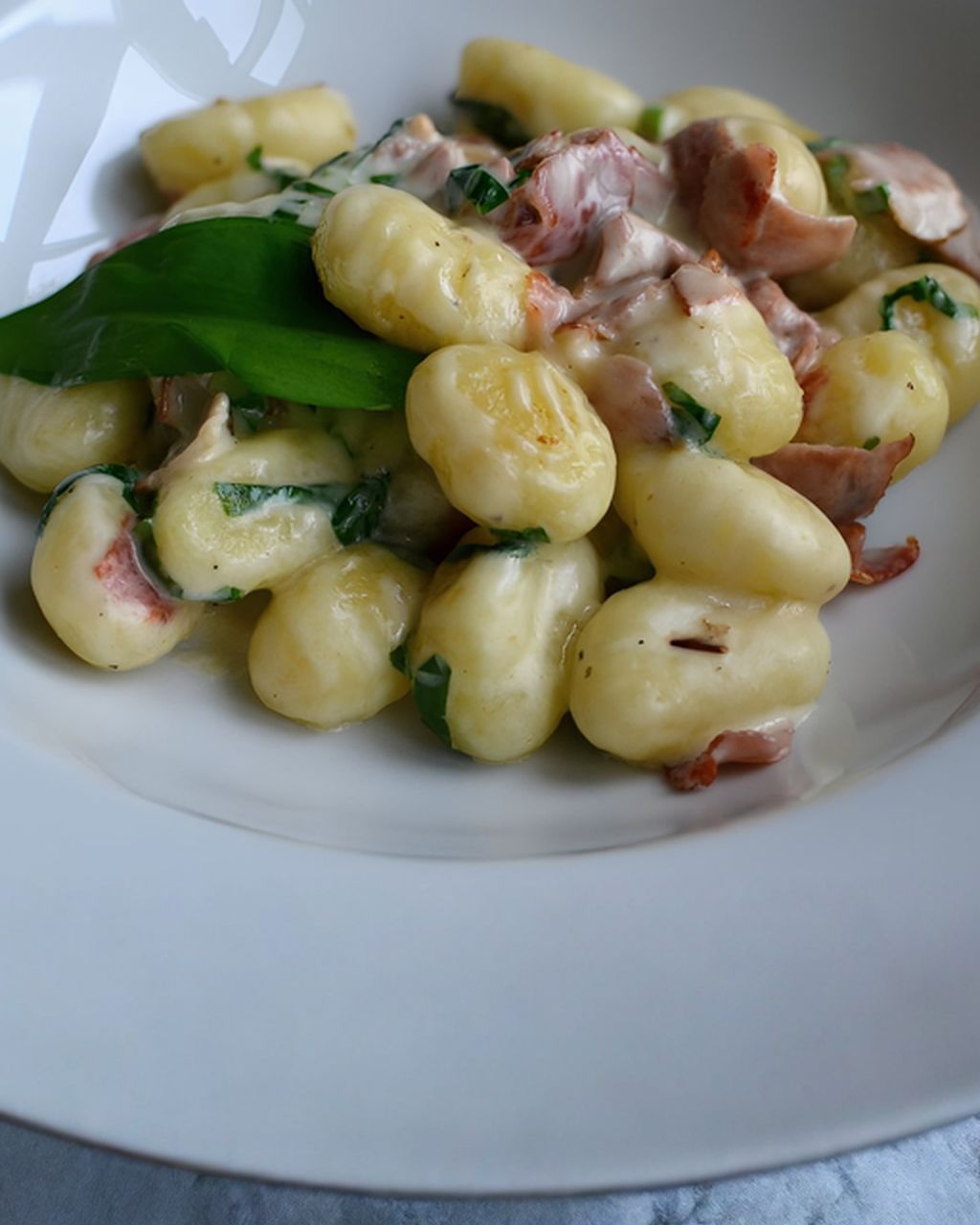
It is at its best cold on fresh buttered bread with mustard or horseradish. Hot, put it in a baked toastie like our croque monsieur, or pan-fry it with gnocchi as in gnocchi with wild garlic and ham.
Brine with salt and sodium nitrite is injected into the pork leg, the meat is left to cure and tumbled in a drum so the brine spreads through the muscle. It is then pressed into moulds and cooked, sometimes lightly smoked first. Nitrite gives the ham its stable pink colour and typical cured flavour. Phosphates in the ingredients help the meat hold water.
The quality classes are based on pure muscle protein. The more added water and fillers, the less protein, so a higher class means a higher share of real leg meat.