What Is a Buchta? Czech Filled Buns vs Kolaches and Buchtičky
What Do Czechs Eat for Breakfast? A Typical Czech Breakfast Explained
Updated Nov 20, 2026
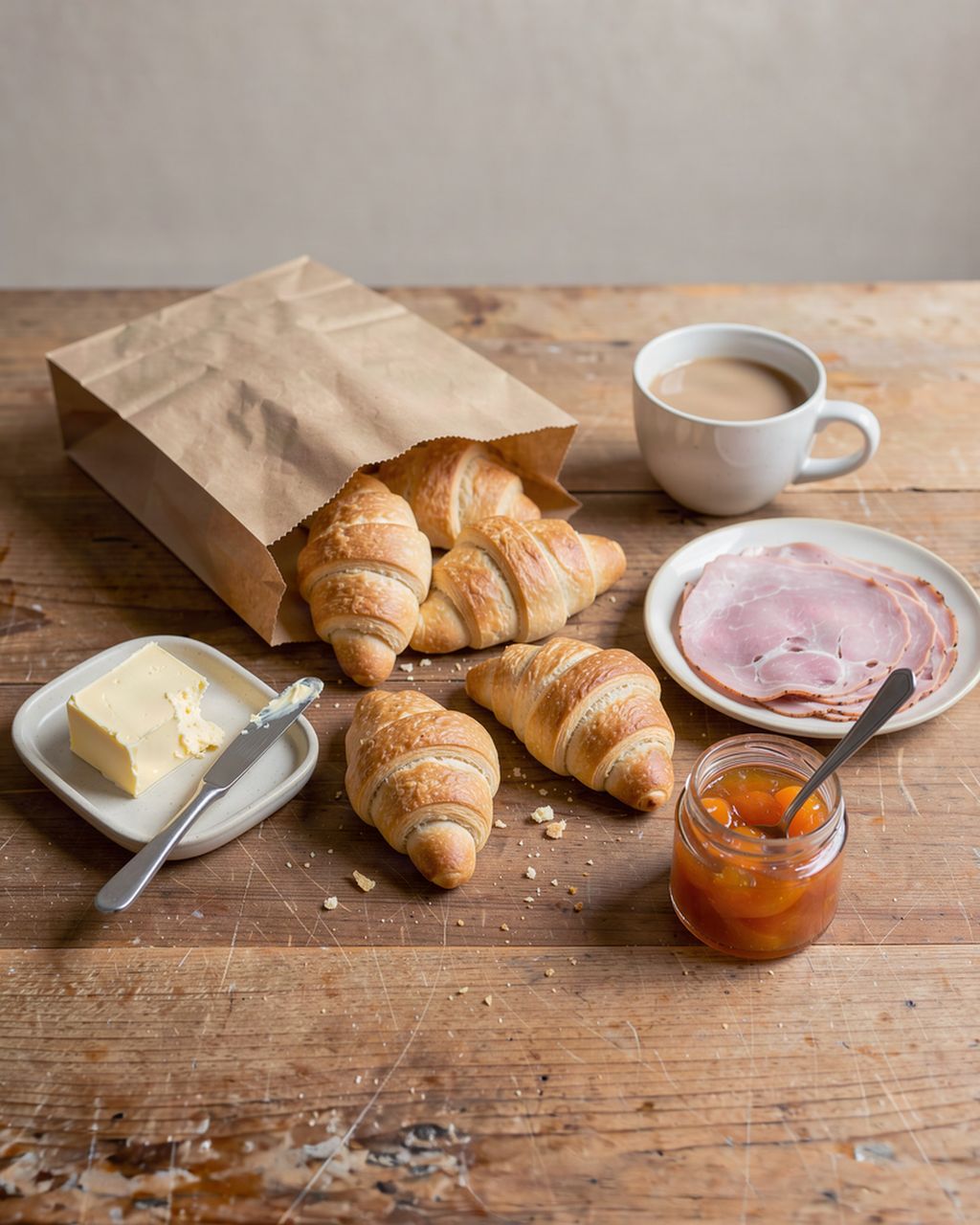
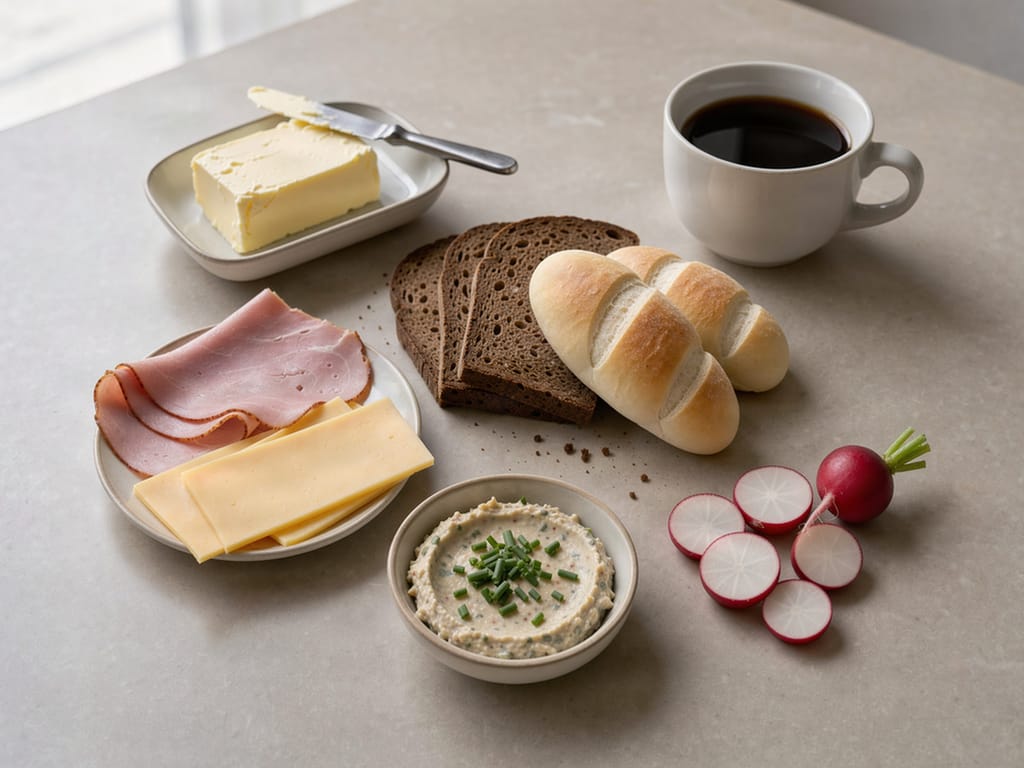
A typical Czech breakfast is bread or a white roll with butter, topped with cheese, ham or a savory spread, with coffee or tea on the side. Sweet pastries such as koláče and buchty appear too, and weekends bring eggs and a slower table. Here is what a Czech breakfast looks like on an ordinary weekday and on a Sunday morning.
On a weekday, most Czech breakfasts are built the same way:
Bread or a roll: a slice of wheat-rye bread or a white roll.
Butter: spread thickly, or margarine in some homes.
A topping: a slice of cheese, ham or salami, or a savory spread.
Something fresh: sliced cucumber, tomato, peppers or radishes, if anyone has time.
A hot drink: coffee for adults, tea or cocoa for children.
Czech surveys over the years have found the same thing: bread or rolls with butter, cold cuts and cheese top the list, and coffee is the most common drink. It is a cold, savory, quick breakfast, closer to a German or Scandinavian table than to an American or British cooked one. Cereal, yogurt and oatmeal are common too, especially among younger people, but they are not what most Czechs think of as a Czech breakfast.
The rohlík (plural rohlíky) is the Czech everyday roll: long, white, slightly curved and baked fresh every morning in shops and supermarkets. A rohlík with butter is many Czechs' childhood breakfast, and a rohlík with butter and ham or cheese is still a standard one. See our ingredient page for the Czech white roll, rohlík.
The other staple is a slice of Czech bread, usually a wheat and rye loaf with caraway seeds and a sourdough tang. Other rolls fill out the basket: dalamánek, a darker rye roll with caraway, and the round houska, a braided white roll with poppy or caraway seeds.
Pomazánky (spreads) are the most Czech part of the breakfast table. They are thick, savory spreads made at home or bought in tubs, and eaten on bread or rolls. Common ones:
Egg spread (vajíčková): chopped hard-boiled eggs with butter or mayonnaise, mustard and chives.
Quark or cream cheese spreads with chives, radish, garlic or paprika.
Liptov-style spread (Liptovská): soft cheese with butter, onion, paprika and caraway.
Fish spreads made from canned tuna or sardines.
Garlic spread (česneková) with cheese or eggs.
The idea is simple: a soft base, something sharp, chopped herbs or onion. Our guides to sandwich spread ratios and egg spread that isn't runny show how they are put together.
Sweet breakfasts exist, they are just less common than savory ones:
A roll with butter and jam, honey or povidla (thick plum butter).
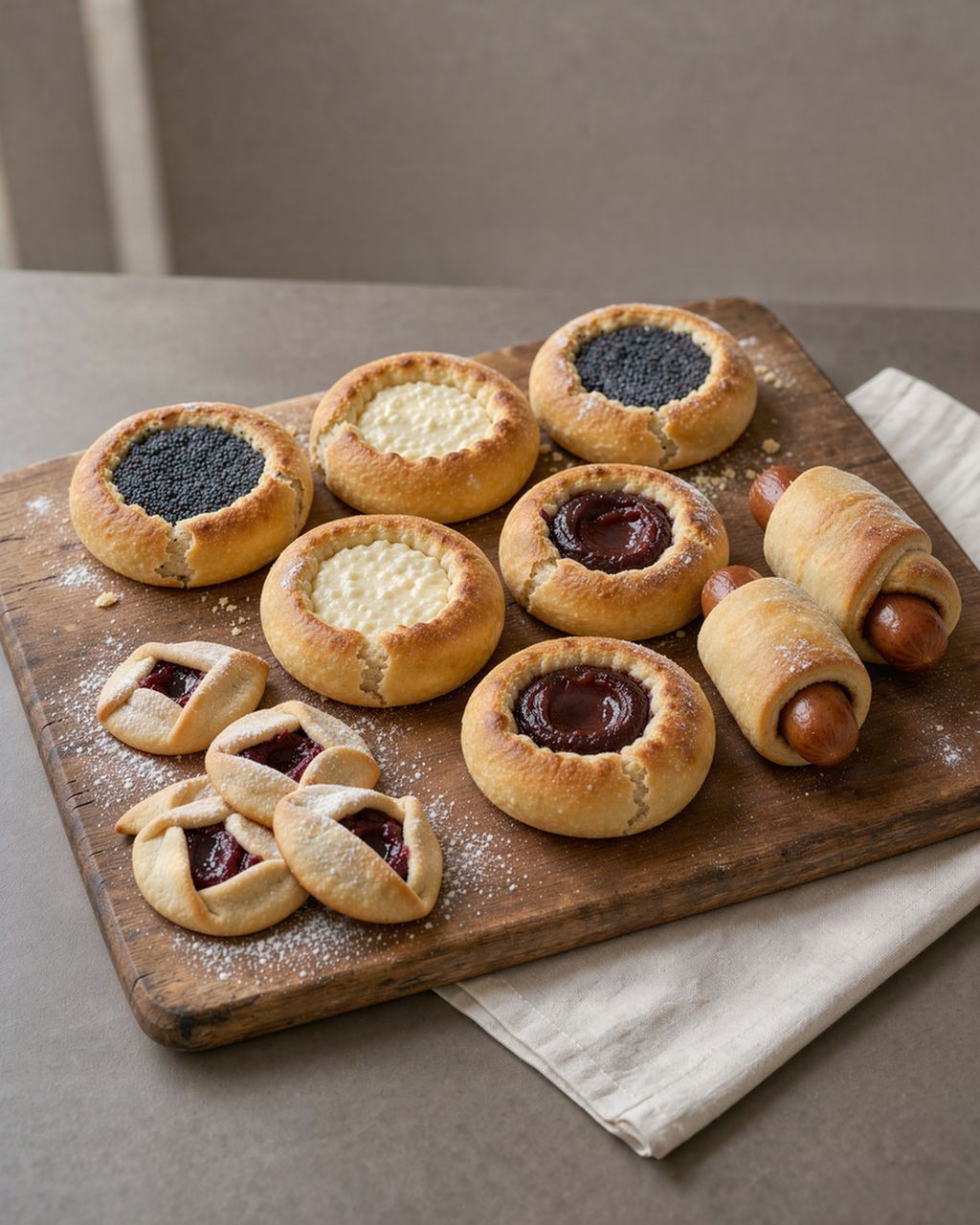
Koláče: round, flat yeast pastries with a filling on top, such as quark, plum butter or poppy seed, often sprinkled with crumble.
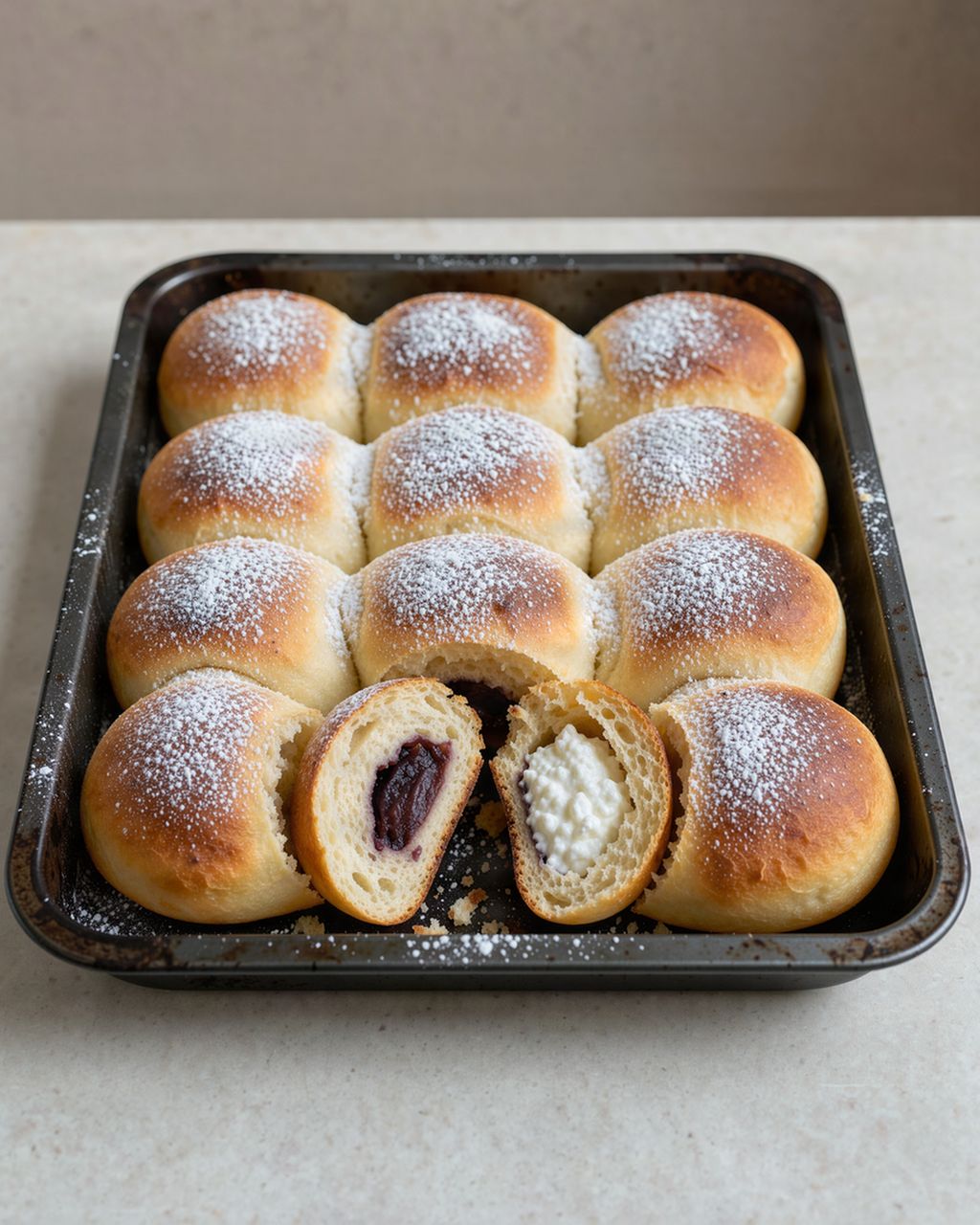
Buchty: soft yeast buns with a filling inside, baked side by side in a pan.
A slice of bábovka (Bundt cake) from the weekend.
These are often home-baked on a weekend and eaten over the next couple of days with coffee; keep any with a quark or cheese filling in the fridge. Bakeries and supermarkets sell them too, so a koláč with coffee on the way to work is common. If you want to bake them, see our guides to kolach dough that stays soft and buchty dough ratios.
Weekends are slower, and the food gets warmer. Typical additions:
Eggs: scrambled eggs (míchaná vajíčka), often with onion, chives or bits of ham or sausage, or hemenex, the Czech name for ham and eggs.
Párky: thin Czech frankfurters, boiled and eaten with mustard, bread or a roll, and sometimes horseradish.
Fresh pastries from the bakery, or something home-baked.
For eggs at breakfast and beyond, see what to cook with eggs. Brunch in cafés is now common in Prague and other cities, but at home most Czech weekend breakfasts still come back to bread, butter and something on top.
Recipe of the week, one tip that saves you time and one deal from the shop. Unsubscribe in one click.
The next issue goes out on Thursday, November 26.
Coffee is the usual breakfast drink for adults. In many Czech homes, especially older ones, it is made as turek: finely ground coffee in a mug, topped with boiling water, left to stand until the grounds settle, then drunk carefully from the top. The name refers to Turkish coffee, but real Turkish coffee is simmered in a small pot, which turek is not.
Instant coffee and moka pots are common at home, and espresso drinks are standard in cafés. Tea is popular, often black tea with lemon, or fruit and herbal teas. Children usually drink cocoa or milk.
Czechs also tend to eat a small second breakfast, svačina, mid-morning: often another roll or bread with a topping, or a piece of fruit. Children take one to school in a box.
A few things visitors expect, or read about, are not everyday Czech breakfasts:
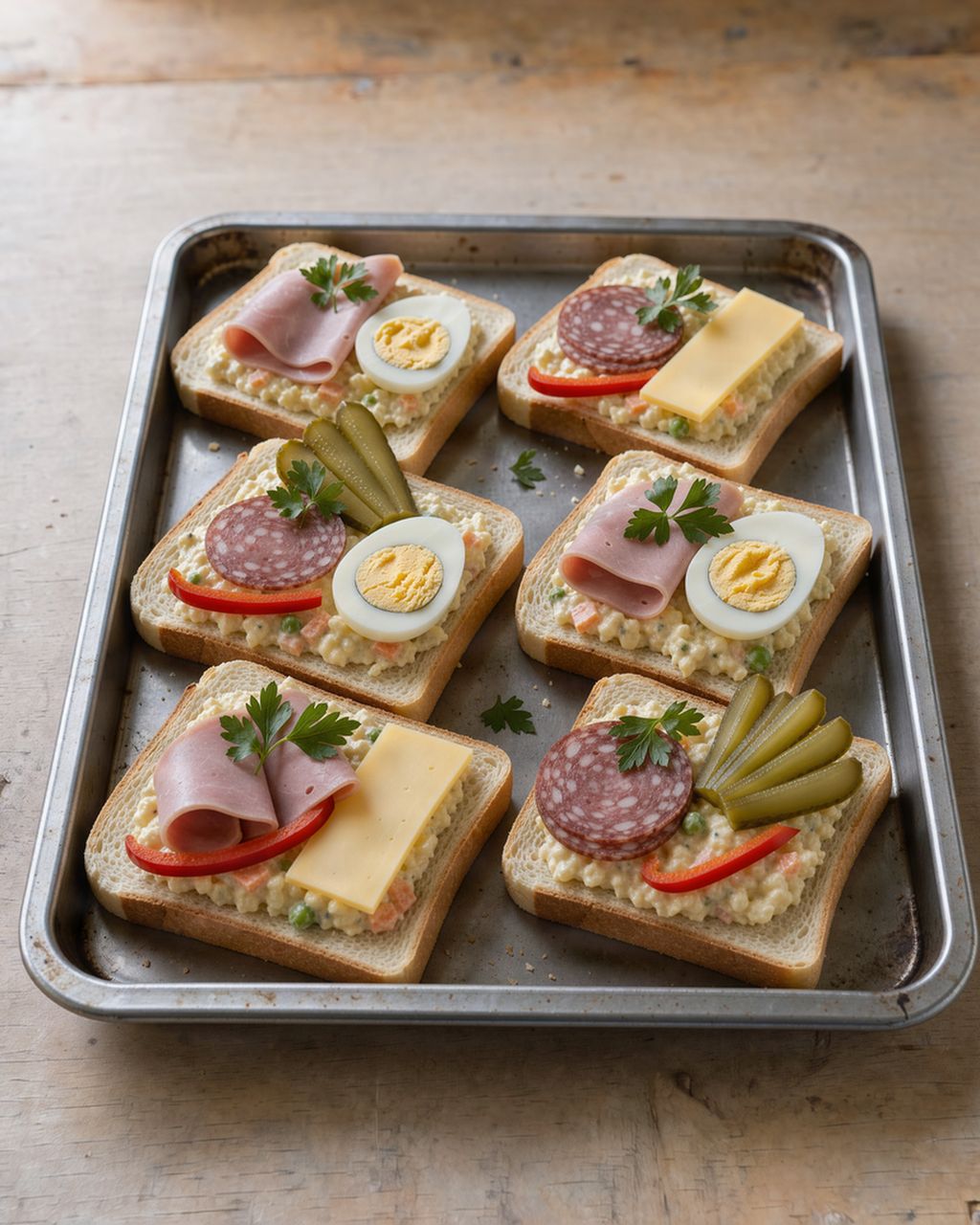
Chlebíčky, the decorated open-faced sandwiches, are party and celebration food, not breakfast.
Trdelník, the rolled pastry sold to tourists in Prague, is not a Czech breakfast at all.
A big cooked breakfast with bacon, beans and toast is a hotel or café option, not a home habit.
Klobása-filled pastries, known in Texas as kolaches or klobasneks, are a Texas Czech development rather than a Czech one.
If you want to cook one Czech breakfast at home, buy a good wheat-rye loaf with caraway, unsalted butter, Edam and ham, and make one spread.
A typical Czech breakfast is bread or a rohlík roll with butter, topped with cheese, ham or a spread, eaten with coffee or tea. It is quick, savory and eaten at home before work or school.
A rohlík is a long, slightly curved white bread roll and the most common bread roll in the Czech Republic. For breakfast it is split or torn and eaten with butter and toppings.
No, chlebíčky are not a breakfast food in the Czech Republic. These decorated open-faced sandwiches are a snack for parties, celebrations, office gatherings and afternoon visits.
Yes, some Czechs eat a sweet breakfast, such as a roll with butter and jam or honey, or a koláč or buchta with coffee. Savory bread with butter, cheese and ham is still the more common pattern.
Turek is the Czech home habit of pouring boiling water over finely ground coffee in a cup and letting the grounds settle. It is named after Turkish coffee but is made differently, since Turkish coffee is simmered in a small pot.
One recipe worth heating the oven for, one tip, and one deal from the shop. Nothing else.