Bread for Chlebíčky and Canapés: Veka, Baguette, Sandwich Bread or Loaf Bread – and How to Slice It
What Are Chlebíčky? Czech Open-Faced Sandwiches Explained
Updated Nov 20, 2026
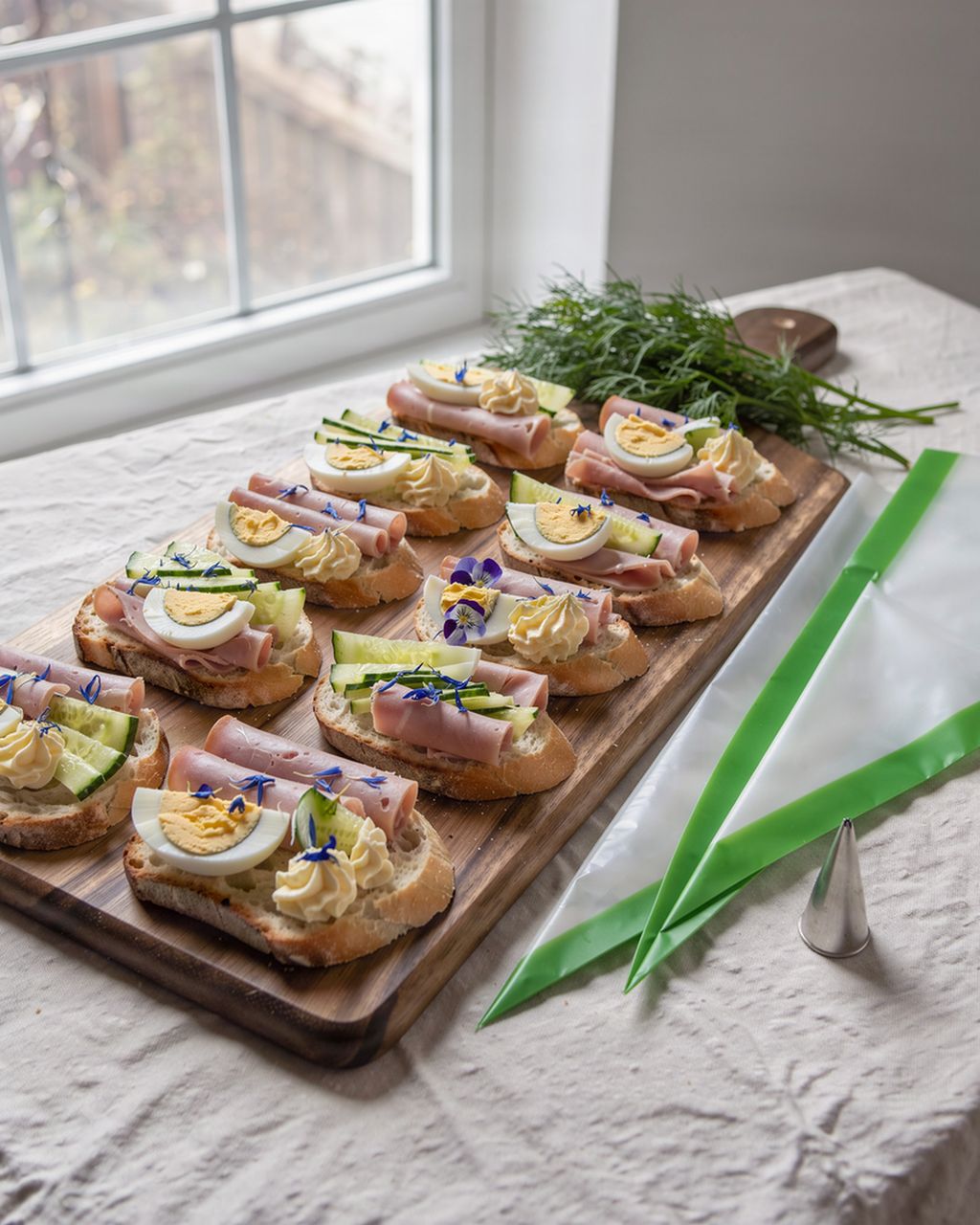
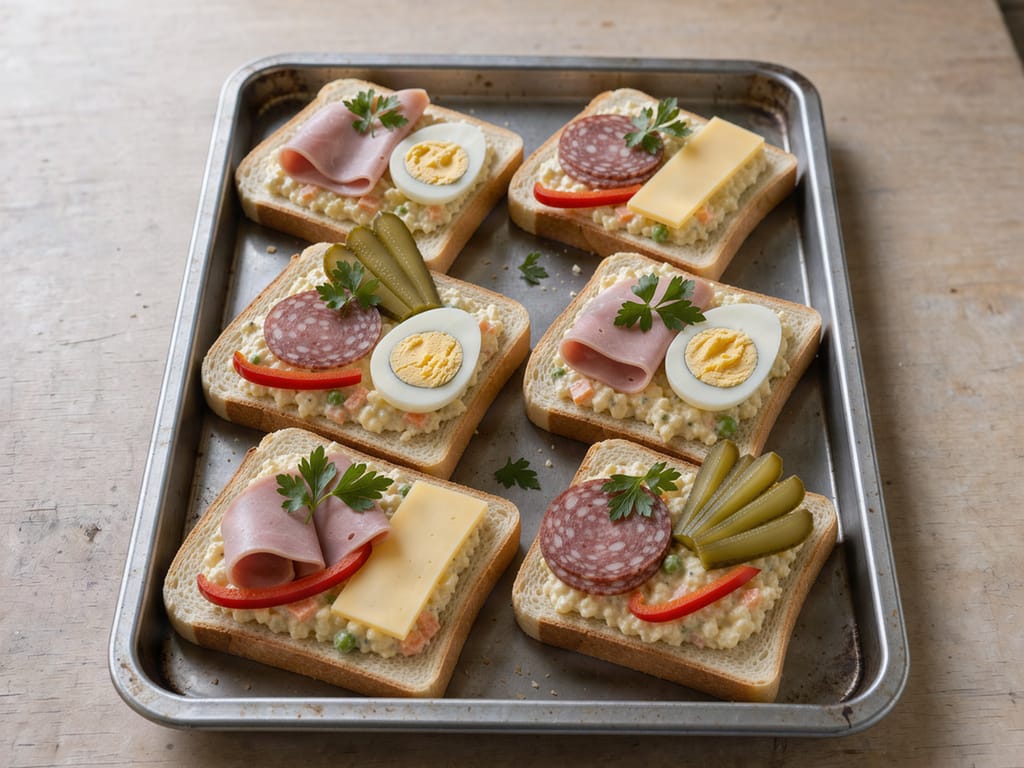
Chlebíčky are Czech open-faced sandwiches: slices of white veka bread spread with butter or potato salad and topped with ham, egg, cheese, salami and pickles, all neatly arranged. They are party, celebration and snack food rather than a meal, and every Czech knows them from New Year's Eve, birthdays and office gatherings. Here is what goes on them, where they come from and when Czechs eat them.
Chlebíčky (KHLEH-bee-chkee; singular chlebíček) means little breads. They are open-faced sandwiches on oval slices of white bread, built in layers and decorated so that each one looks finished on its own. A full name you will see in shops is obložené chlebíčky, topped little breads.
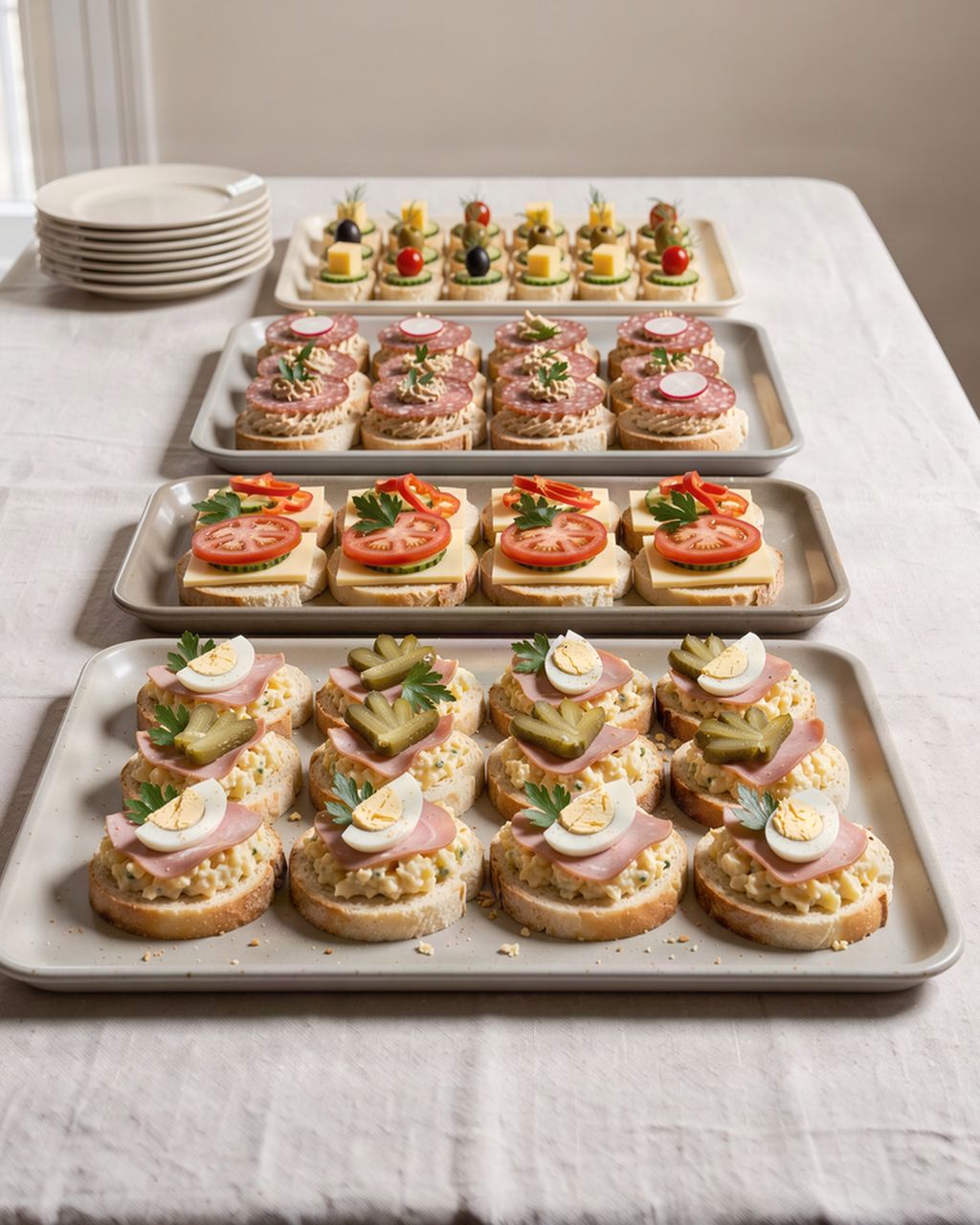
They are not lunch. Chlebíčky are the food Czechs put on a tray when people come over: for birthdays and name days, at the office when someone leaves or celebrates, and above all on New Year's Eve. Delis (lahůdky) sell them by the piece all day, and many people pick one up as a snack.
Recipe of the week, one tip that saves you time and one deal from the shop. Unsubscribe in one click.
The next issue goes out on Thursday, November 26.
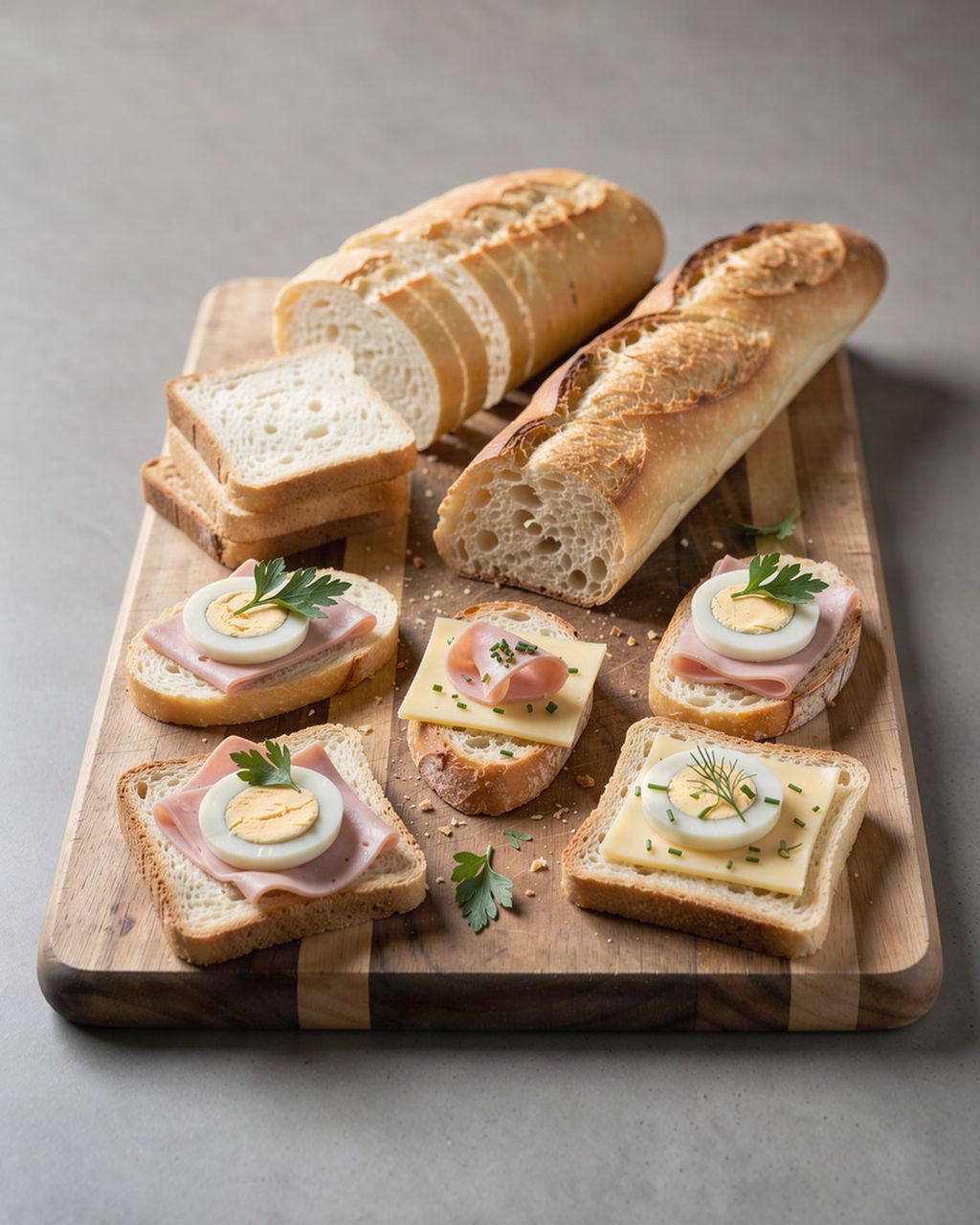
The base is veka, a long, soft white loaf with a thin crust, a little like a fat, soft baguette. It is sliced on a steep diagonal, so each slice comes out oval and about two fingers wide, and is cut thin enough to bite through easily.
Outside the Czech Republic, a soft baguette is the nearest match. A white sandwich loaf works too: cut each slice in half on the diagonal. Some people use rye bread or toast, but then it no longer looks or tastes like a classic chlebíček. Our article on bread for chlebíčky and canapés compares the options and shows how to slice them.
A classic chlebíček is built in three layers.
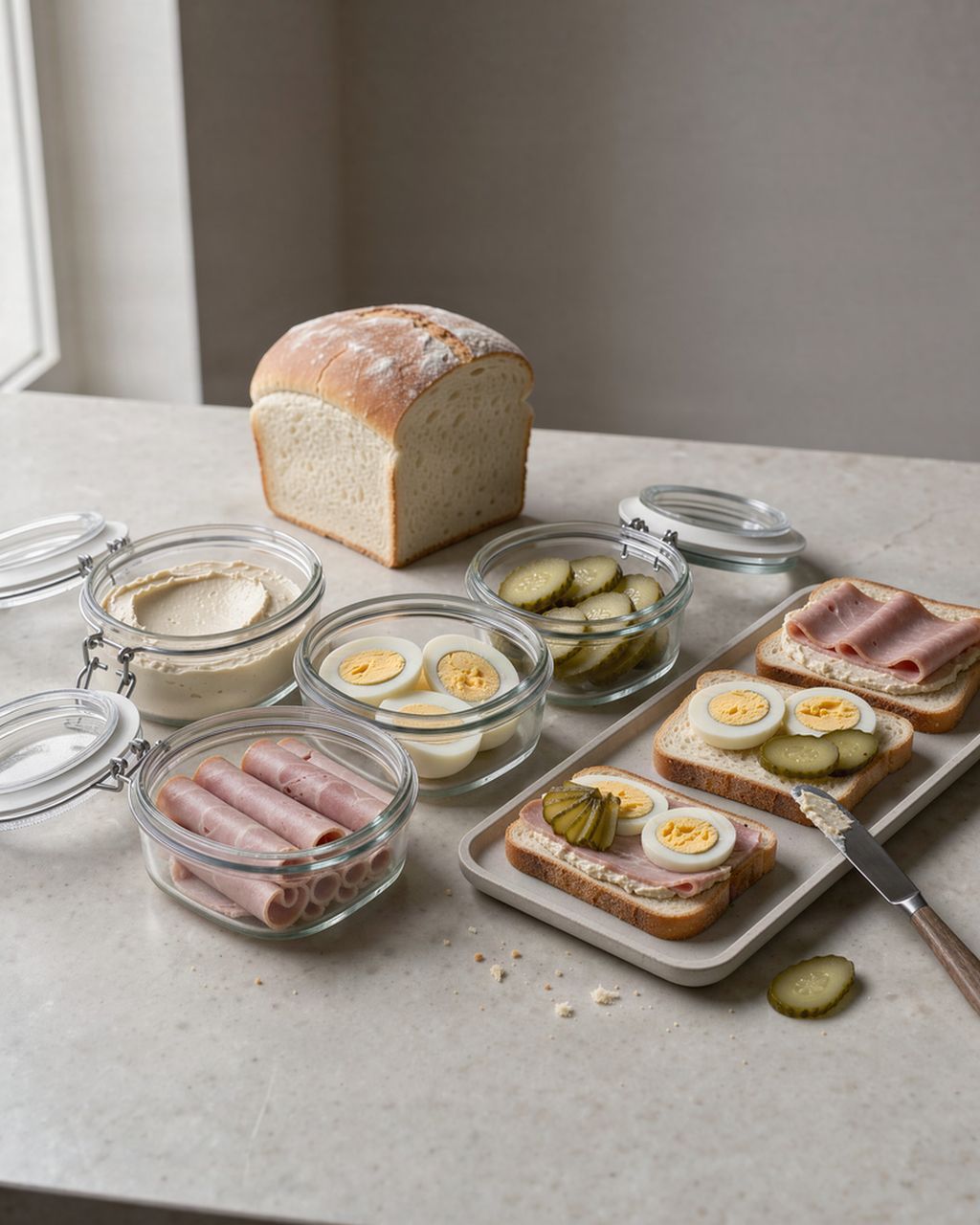
The base: butter, then usually a spoonful of Czech potato salad or vlašský salát, a mayonnaise salad of ham or deli meat, cooked vegetables, peas and pickles. Some versions start with a savory spread instead, such as egg, cheese or ham spread.
The main topping: a folded or rolled slice of ham, a slice of salami, Edam or other hard cheese, half or slices of a hard-boiled egg. A classic ham chlebíček has ham and egg together.
The garnish: a pickle fan, a strip of red pepper, a slice of tomato or radish, a little parsley or chives. Sometimes a dab of mayonnaise holds it in place.
Other common kinds: sýrový (cheese), vajíčkový (egg), salámový (salami), and versions with a fish or cheese spread.
You can see the Czech salads on our ingredient pages for vlašský salát and potato salad.
The modern chlebíček is usually credited to Jan Paukert, who ran a delicatessen in Prague in the early 20th century. The common story is that around 1916 a customer, often named as the painter Jan Skramlík, asked for something more filling than the tiny canapés of the day, and Paukert came up with a larger open sandwich on veka.
Treat the details as legend. Sources disagree on the year (1916 and 1919 both appear), and Czech sources note that manufacturers were already advertising obložené chlebíčky as early as 1902. What is clear is that the Prague deli version, a neat sandwich of about two or three bites, became the national standard. Former Czechoslovak state standards (ČSN) for cold-kitchen products described close to a hundred types.
Open sandwiches are, of course, eaten across Europe, from Danish smørrebrød to Dutch and German versions. The Czech one is recognizable by its soft white bread and its potato salad base.
Look for a lahůdky (delicatessen). Prague has several long-running delis, some over a century old, and newer bistros that make modern versions with better ingredients. Supermarkets and bakeries across the country sell them too, ready-made in plastic trays.
You eat them standing at a counter or take a few away in a paper box. Ordering is by pointing: the cases show every kind, and each piece is priced separately.
In Czech homes, making chlebíčky is a job for the afternoon before the party. Someone slices the veka, someone spreads the salad, and the trays fill up. They are made a few hours ahead, not days, because the bread softens under the salad.
A few practical points:
Spread butter all the way to the edges; it stops wet toppings soaking in.
Keep the finished trays covered, in the fridge, until the guests arrive.
Plan on two or three pieces per person if there is other food.
Our guides cover how to decorate chlebíčky for parties and how long chlebíčky last in the fridge and on the table.
Chlebíček: an oval slice of veka, two or three bites, with a salad or spread base and several toppings.
Kanapka: a smaller square or round of bread or toast with one or two toppings.
Jednohubka: literally one-biter; a single bite on a cocktail stick, often a cube of cheese, a grape, an olive or a bit of ham on a small cracker or bread.
All three show up on the same Czech party table. The chlebíček is the one people count on.
Chlebíčky are Czech open-faced sandwiches made on slices of white veka bread, spread with butter, potato salad or a spread, and topped with ham, egg, cheese, salami and pickles. The singular is chlebíček.
Chlebíčky are made on veka, a long, soft white Czech loaf cut on the diagonal into oval slices. A French baguette or a soft white sandwich loaf is the closest substitute abroad.
Czechs eat chlebíčky at parties, celebrations, New Year's Eve, birthdays, name days and office gatherings, and as a deli snack. They are not a breakfast or a main meal.
Prague deli owner Jan Paukert is usually credited with the modern chlebíček, around 1916. Czech sources note that open sandwiches were already advertised in Bohemia before that, so he shaped and popularized the form rather than inventing the idea.
Chlebíčky are made on soft white veka bread and are small, neat party sandwiches, while Danish smørrebrød is usually made on dense rye bread and eaten as a lunch with a knife and fork.
One recipe worth heating the oven for, one tip, and one deal from the shop. Nothing else.