Traditional Czech Kolache Fillings: Tvaroh, Poppy Seed and Povidla
Kolache vs Koláč, Kolacky and Klobasnek: What Each One Is
Updated Nov 18, 2026
A koláč is the original Czech round yeast pastry with a sweet filling, kolache is what Texans call the same pastry, kolacky are small cream-cheese cookies, and a klobasnek is sausage baked in kolache dough. The names overlap because they come from the same Czech root. Here is how to tell them apart, why Texas has so many kolaches, and how a kolache differs from a danish.
Four words, three different foods:
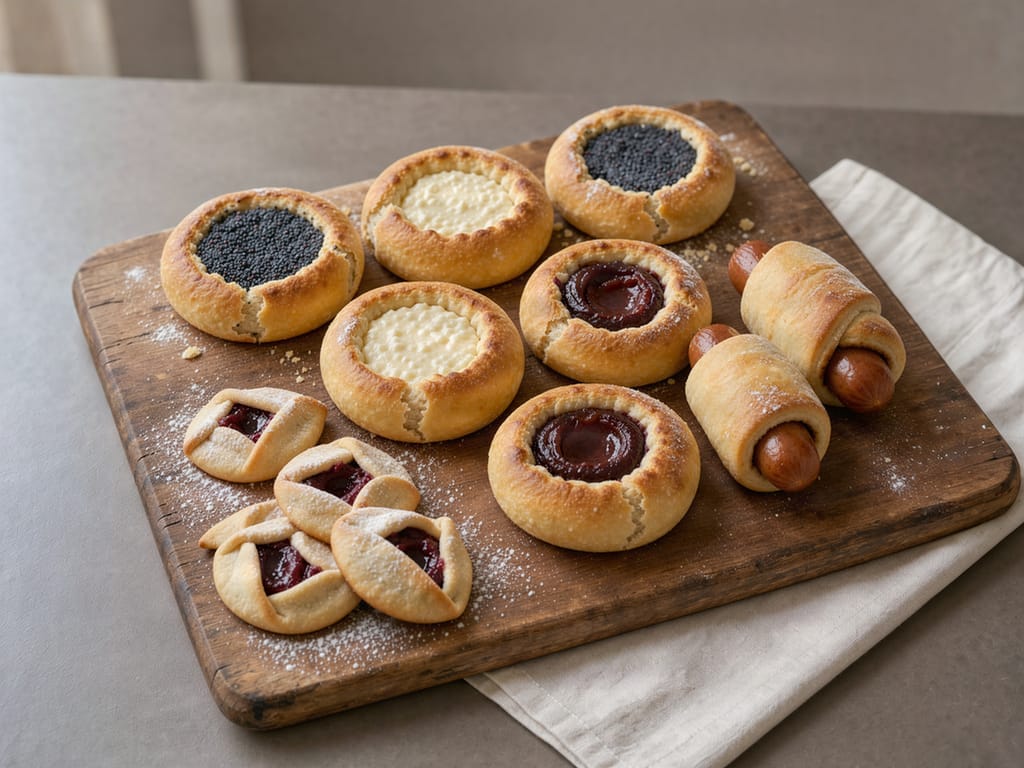
Koláč (Czech, plural koláče): a round, soft yeast-dough pastry with a sweet filling in the middle. This is the original.
Kolache (Texan English, plural kolaches): the same pastry, as Czech immigrants brought it to Texas. Texans use the Czech plural as the singular.
Kolacky / kolaczki (Polish and Slovak-American usage): in the US this usually means small, flaky cookies made from a cream-cheese or butter dough, folded around jam. A different thing from a yeast kolache.
Klobasnek (Czech-Texan, from klobásník; plural klobasniky): a sausage baked inside kolache dough, like a pig in a blanket. Many Texans call it a kolache, which annoys purists.
The rest of this article explains where each name comes from and how to tell them apart.
Seasonal baking plans, tested recipes and kitchen tricks that save you time. Unsubscribe in one click.
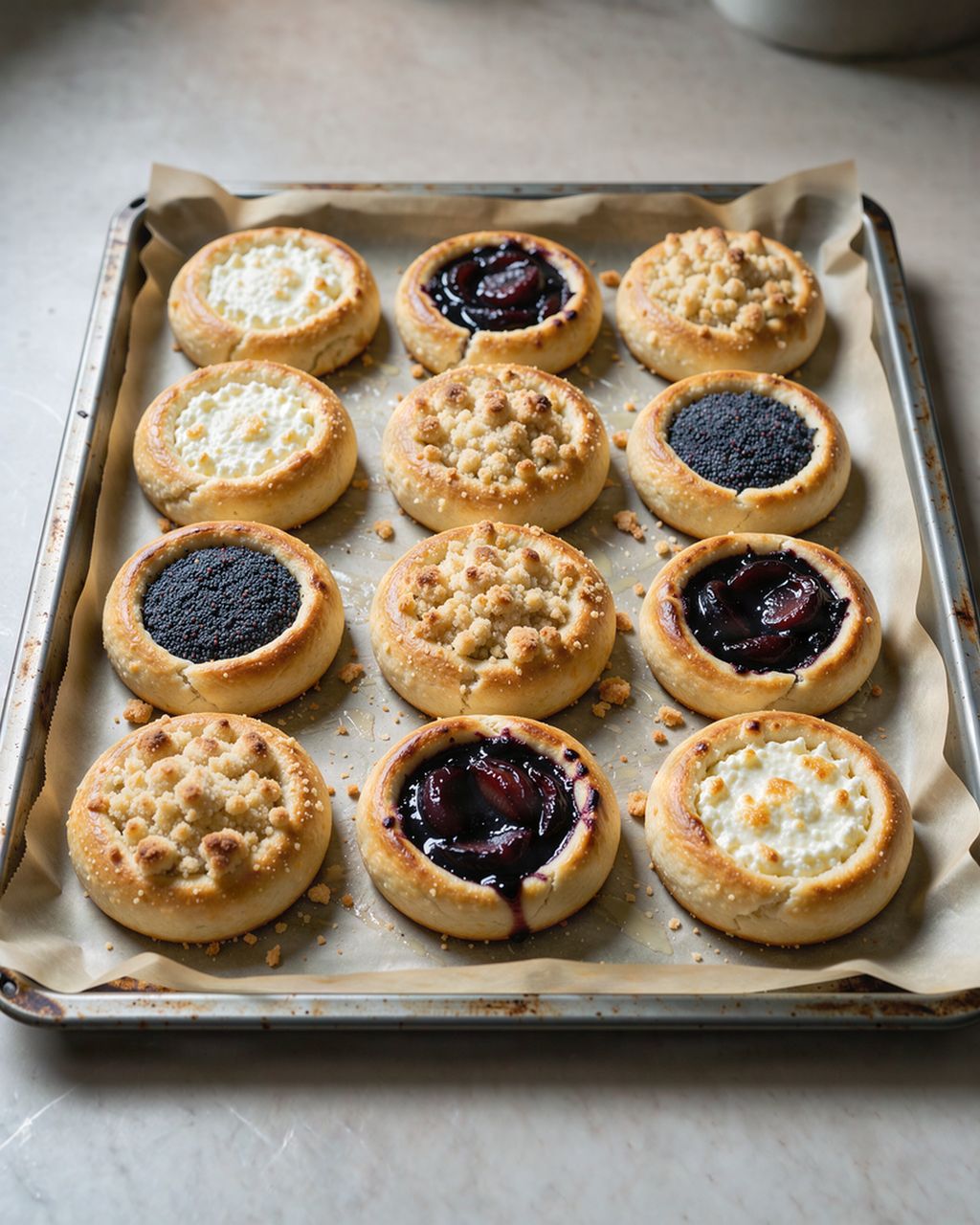
A koláč (the word comes from kolo, wheel or circle) is a round pastry of soft, slightly sweet yeast dough, enriched with milk, butter, eggs and sugar. The center is pressed down and filled. In Czech bakeries the classic fillings are:
tvaroh (fresh curd cheese, similar to farmer's cheese or quark),
mák (ground poppy seeds cooked with milk and sugar),
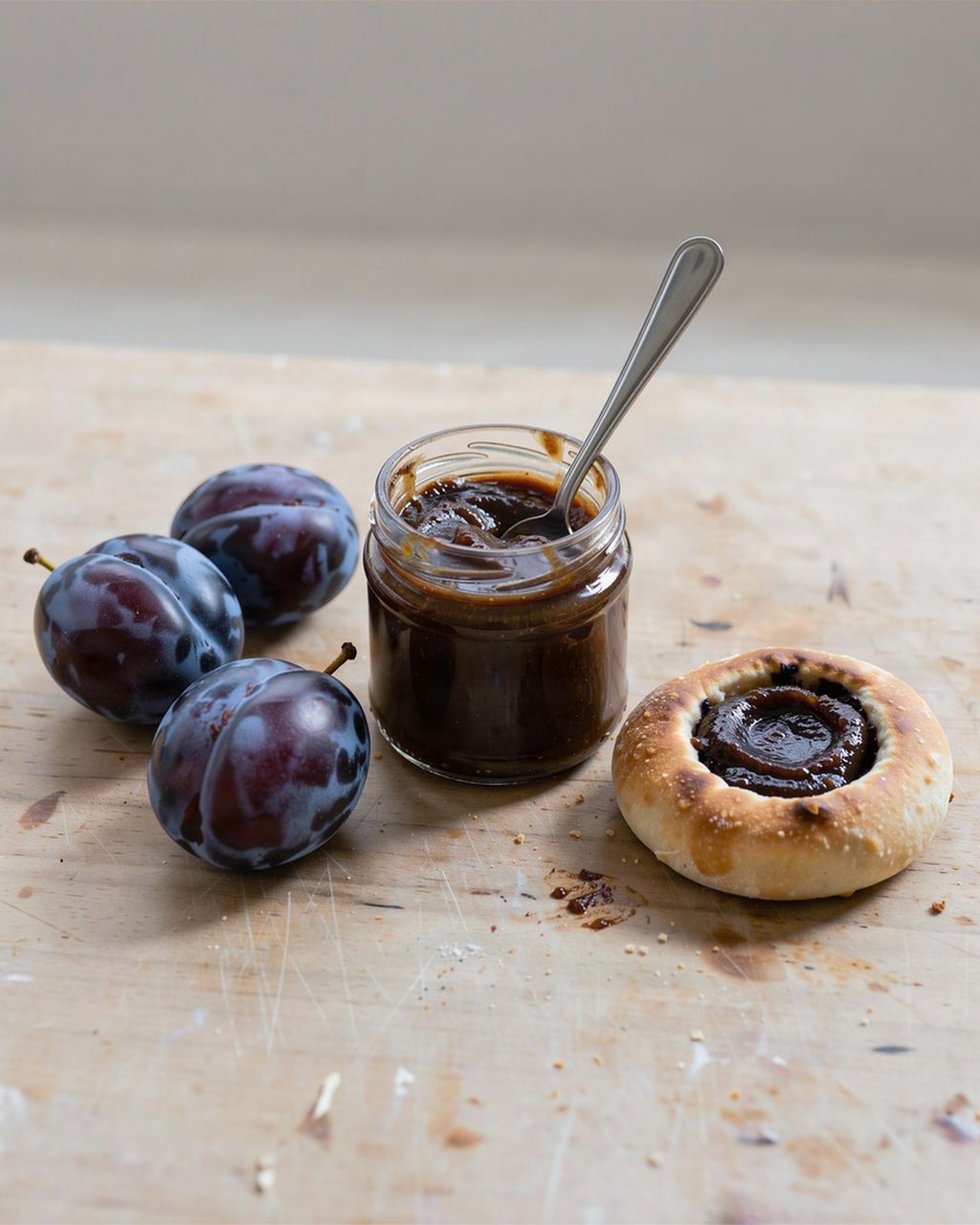
povidla (thick, dark plum butter),
and often a sprinkle of drobenka (also called posýpka), a sweet butter crumb, over the top.
Sizes vary. Small koláčky (the diminutive, little koláče) are baked by the trayful for weddings and Sundays. In some regions, such as the Chodsko area of western Bohemia, koláče are large, flat and plate-sized, with several fillings arranged on one round.
The dough is the point of a good koláč: soft, light and still tender the next day. Our guide to soft yeast dough for kolaches covers the ratios.
Czech-speaking immigrants from Bohemia and Moravia began settling in Texas around 1850, many of them arriving through Austin County and moving on to Fayette County and central Texas farmland. They brought their baking with them, and koláče became a fixture of church picnics, weddings and family gatherings in Czech-Texan communities.
From there the pastry spread far beyond Czech families. The town of West, on Interstate 35 between Dallas and Waco, is known for its Czech bakeries, and road-trip stops along the highway made kolaches a familiar Texas breakfast. Today you will find kolache shops across Texas next to the donut shops, often run by people with no Czech roots at all.
Along the way, the name changed shape. In Czech, koláč is one pastry and koláče is several. In Texas, kolache became the singular, and kolaches the plural.
A klobasnek is a link of sausage (often with cheese or jalapeño) wrapped in kolache dough and baked. The name is built from the Czech klobása, sausage. Texas Monthly traces it to the Village Bakery in West, Texas, which says it first made these in the early 1950s as a sausage take on a hot dog in a bun. That origin story comes from the bakery's family and is widely repeated, but we have not found independent records for the exact year.
In Czech, a koláč is always open-faced with the filling on top, and it is almost always sweet. A sausage rolled up inside dough is not a koláč in any Czech sense. So when a Texas shop sells a "sausage kolache", a Czech would say it is a klobasnek, or simply párek v těstě (sausage in dough), which you find in Czech bakeries as a cheap snack.
Most Texans know this and do not care. If you are asking for one in Texas, "sausage kolache" will get you what you want. If you are writing about them, klobasnek (plural klobasniky) is the accurate word.
The names sound alike because they share a root, but in American kitchens they are different bakes.
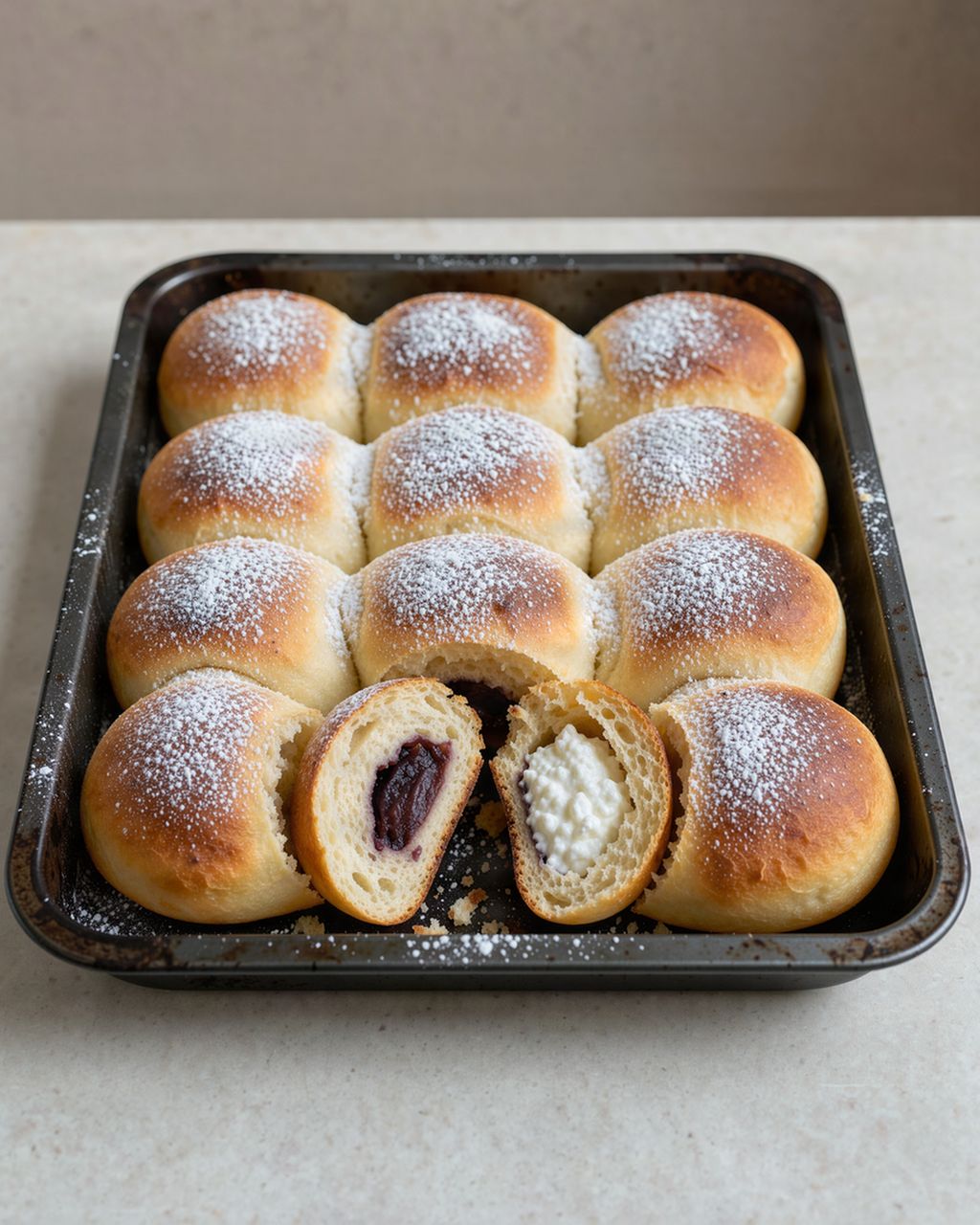
Kolache: a yeast-raised bun. Soft, bready, risen, with the filling in a well on top.
Kolacky / kolaczki: a small cookie. The dough is usually cream cheese and butter with flour, no yeast. It is rolled thin, cut into squares, and two corners are folded over a dab of jam. They bake crisp and flaky and are a Christmas favorite in Polish-American and Slovak-American families in the Midwest.
To add to the confusion, koláčky in Czech simply means small koláče, still made from yeast dough. So a Czech recipe for koláčky is a recipe for small yeast pastries, while an American recipe for kolacky is usually the cookie. Check whether the recipe calls for yeast: that tells you which one you are looking at.
Both are sweet pastries with a filling in the middle, so they look alike in a bakery case. The difference is the dough.
Kolache: an enriched yeast dough, kneaded with butter, eggs, milk and sugar. It bakes up soft and fluffy, like a brioche bun.
Danish: a laminated dough. Cold butter is folded into the dough in many thin layers, as for croissants, so it bakes up flaky and shatters when you bite it.
Fillings overlap: cheese, fruit and poppy seed turn up in both. A cream-cheese kolache and a cheese danish can taste close, but the texture gives them away. If it flakes, it is a danish. If it tears softly like bread, it is a kolache.
A quick checklist:
Yeast and a soft bun, filling on top? Kolache (Texas) or koláč (Czech).
Sausage inside the dough? Klobasnek, even if the sign says kolache.
No yeast, cream-cheese dough, folded corners? Kolacky or kolaczki, the cookie.
Flaky layers? Danish.
If you want to bake the Czech version, start with basic yeast dough ratios. Czech recipes often call for fresh yeast; our yeast converter translates fresh, active dry and instant amounts.
There is no real difference in the pastry: koláč is the Czech word, and kolache is the Texan English form of the plural koláče. In Texas, kolache is used as the singular and kolaches as the plural.
Kolaches with sausage inside are called klobasniky (singular klobasnek). In Texas they are often sold as sausage kolaches, but a traditional Czech koláč is open-faced and sweet.
No: in the US a kolache is a soft yeast bun with a filling on top, while kolacky (or kolaczki) are small flaky cookies made from cream-cheese dough folded around jam.
A kolache is made from soft, enriched yeast dough like a brioche bun, while a danish is made from laminated dough with layers of butter, so it is flaky. Both can have cheese, fruit or poppy seed fillings.
Kolaches are popular in Texas because Czech immigrants who settled in central Texas from around 1850 brought the pastry with them. It spread from Czech-Texan communities to bakeries all over the state.
The klobasnek is a Texan invention, not a Czech one. The Village Bakery in West, Texas, says it first made them in the early 1950s by wrapping sausage in kolache dough.
One recipe worth heating the oven for, one tip, and one deal from the shop. Nothing else.