Kolache vs Koláč, Kolacky and Klobasnek: What Each One Is
What Is a Buchta? Czech Filled Buns vs Kolaches and Buchtičky
Updated Nov 20, 2026
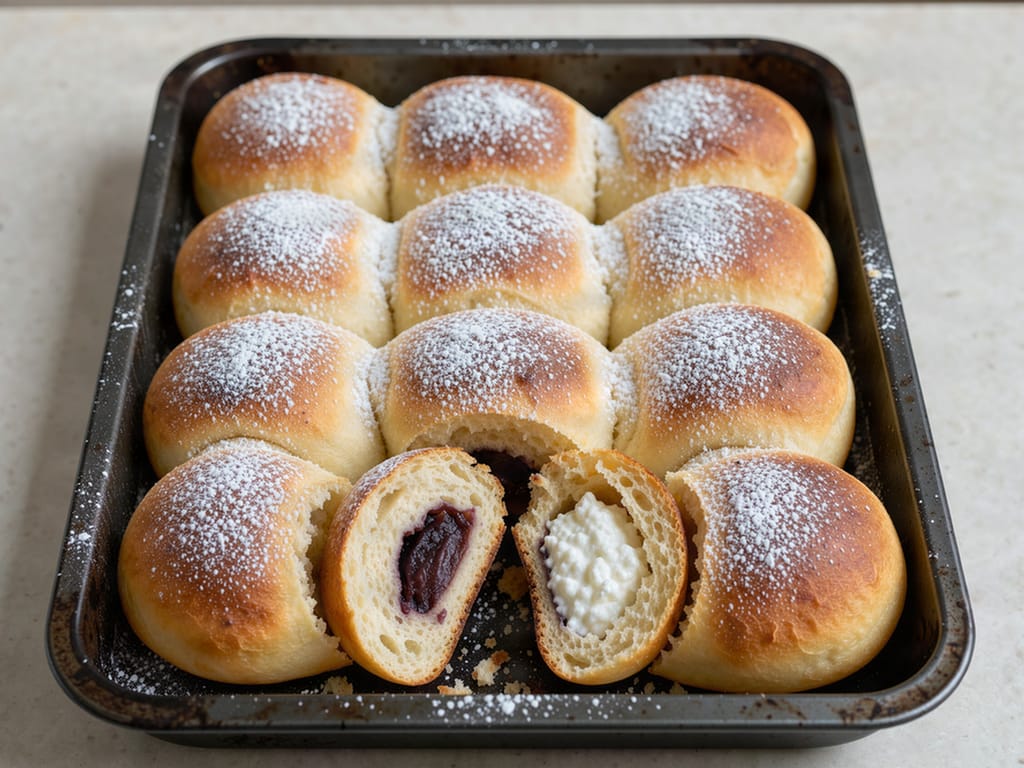
A buchta (plural buchty) is a Czech sweet yeast bun with the filling sealed inside, usually tvaroh (quark), povidla (plum butter) or poppy seed, baked packed together in one pan so the buns pull apart with soft sides. Unlike a kolache, the filling is hidden, not on top. Here is how buchty are made in outline and how they differ from Texas kolaches and buchtičky se šodó.
A buchta (plural buchty) is a soft, slightly sweet yeast bun with a filling sealed inside. The buns are set seam-side down in a greased pan, close enough to touch, and brushed with melted butter or lard. As they rise and bake, they grow into each other, so you get a golden sheet of buns with soft, pale sides that you tear apart by hand.
Buchty are home baking, not pastry-shop baking. They are what a Czech grandmother has on the table when you visit, what gets packed for a train trip, and what people eat for breakfast or with afternoon coffee. They are usually eaten cold or barely warm, often with a dusting of powdered sugar.
The word traveled with the bun. In Austria and Bavaria the same pastry is Buchtel or Buchteln (and in Bavaria also Rohrnudeln), and encyclopedias trace both the name and the pastry to Bohemia.
Three fillings are classic, and many families bake a mixed pan with all three:
Tvaroh (quark): a fresh, soft, mildly tangy curd cheese, sweetened, often with egg yolk, vanilla and sometimes raisins. Outside Central Europe, the closest stand-ins are quark, farmer's cheese or well-drained ricotta.
Povidla (plum butter): very thick, dark, slow-cooked plum butter. It has to be thick, or it boils out. See our page on plum butter (povidla).
Mák (poppy seed): ground poppy seeds cooked with milk and sugar into a thick paste. Our guide on how to process poppy seeds covers grinding and cooking it.
Jam, apricot and apple fillings are common too. Whatever the filling, it has to be thick enough to stay put when you pinch the dough around it.
In outline, without a full recipe:
Dough. An enriched yeast dough: flour, lukewarm milk, yeast, sugar, egg yolks and melted butter, kneaded until smooth and left to rise. Czech bakers often use fresh yeast; our yeast converter gives the instant or dry equivalent.
Shaping. The risen dough is divided into equal pieces, each flattened into a disc, filled, and pinched closed.
Into the pan. The buns go seam-side down into a greased pan, touching. Each one is brushed with melted butter or lard where it meets its neighbors, which keeps the sides soft and lets them separate cleanly.
Second rise and baking. After a short rise, the pan bakes until the tops are deep golden.
For ratios, rising times and why some dough turns out heavy, see yeasted dough for buchty. For oven settings by pan type, see what temperature to bake buchty.
Americans who know kolaches from Texas often ask whether buchty are the same thing. They are related, but not the same.
Czech buchta: filling sealed inside. Buns baked packed together in one pan. Soft sides, torn apart to serve.
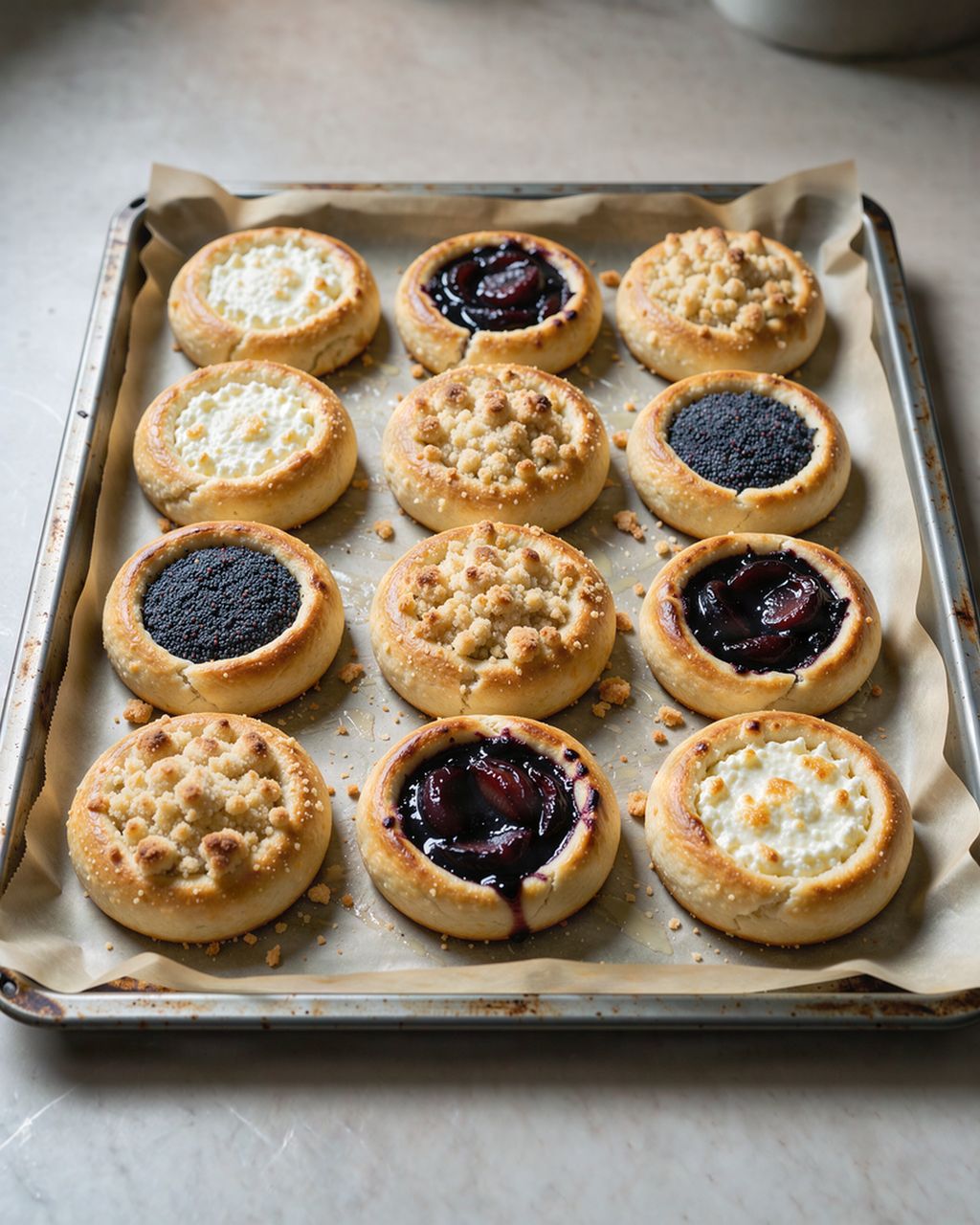
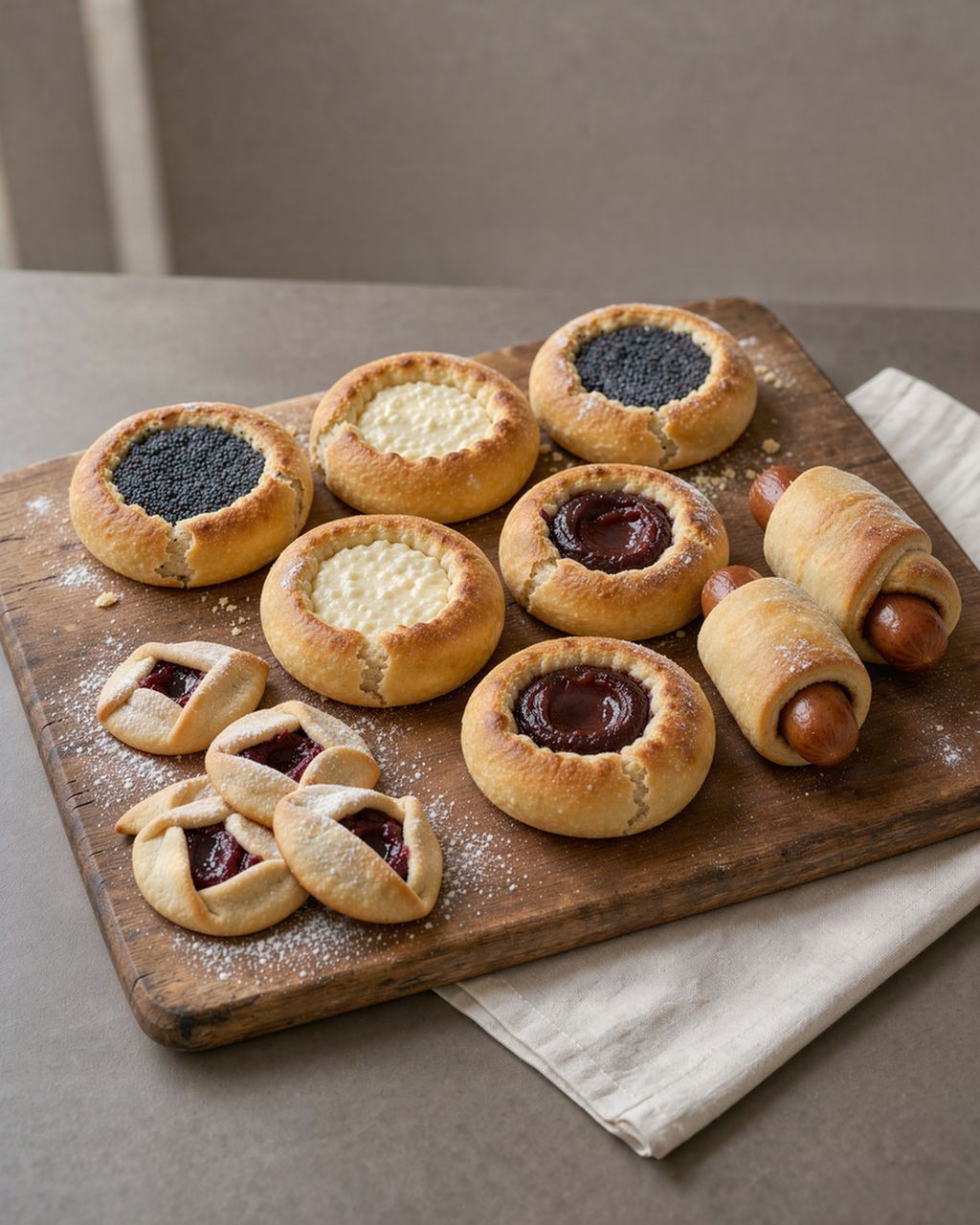
Czech koláč or koláček: a round of the same kind of dough with the filling on top, often with a crumble topping, baked separately. In the Czech Republic the small round ones are often called wedding koláčky.
Texas kolache: descended from the Czech koláček. Czech settlers came to Texas mainly after it became a state in 1845, many of them from Moravia, and brought the open-faced pastry with them. Texas bakers tend to use a sweeter dough and many new fillings, and towns such as Caldwell and Hallettsville hold yearly kolache festivals.
To add to the confusion, many Texans call a sausage baked in sweet dough a kolache. Texans of Czech descent call that a klobasnek (Czech klobásník), and it is a Texas invention, not a Czech pastry. Our guide to soft yeast dough for kolaches covers the open-faced kind.
Buchtičky simply means little buchty, and two names come up again and again:
Dukátové buchtičky (“ducat buns”): tiny, unfilled buns, often no bigger than a walnut, cut from ropes of the same sweet yeast dough, buttered and baked crammed together in a pan. The name refers to the ducat, an old gold coin. We have found no source that explains why.
Buchtičky se šodó: dukátové buchtičky served in a pool of warm vanilla custard sauce. It is one of the most nostalgic Czech dishes, a school-cafeteria staple in the second half of the 20th century, and now back on Prague café menus.
The šodó needs a note. The word comes from the French chaudeau, and the original is a warm, foamy sauce of wine, egg yolks and sugar whisked over steam, similar to zabaglione. In most Czech homes and canteens, though, šodó means a vanilla custard or pudding sauce with no wine at all.
So: a buchta is a full-sized filled bun eaten by hand. Buchtičky se šodó are tiny plain buns eaten with a spoon, as a sweet main course or dessert.
Recipe of the week, one tip that saves you time and one deal from the shop. Unsubscribe in one click.
The next issue goes out on Thursday, November 26.
The dough is soft, rich and only lightly sweet, somewhere between brioche and a soft dinner roll. The flavor comes mostly from the filling: tangy and creamy with tvaroh, deep and slightly tart with povidla, nutty and earthy with poppy seed.
The best part is the soft, buttery side where one bun tore away from its neighbor. Czechs eat buchty with milk, coffee or tea, and they are often better the next day, once the filling has settled into the dough. Keep them well covered, and put buchty with a tvaroh (quark) filling in the fridge if you are keeping them past the day of baking, because the filling is fresh cheese and egg.
A buchta is a Czech filled sweet yeast bun, usually just called a Czech bun or filled bun in English. In Austria and Germany the same pastry is called Buchtel or Buchteln, a word taken from Czech.
No, a buchta has its filling sealed inside, while a kolache shows its filling on top. Both use a similar sweet yeast dough and the same fillings, but kolaches are baked separately as open rounds and buchty are baked packed together in a pan.
Dukátové buchtičky are tiny unfilled versions of buchty, baked close together in a pan. Served in a pool of vanilla custard sauce, they become buchtičky se šodó, a Czech childhood and school-cafeteria favorite.
In Czech homes and canteens, šodó usually means a pourable vanilla custard sauce. The word comes from the French chaudeau, and the original šodó is a warm, foamy sauce of wine, egg yolks and sugar.
Buchty na páře are steamed yeast buns, not baked buchty. They are closer to Czech yeast dumplings and are cooked over steam, then usually served with melted butter, sugar or poppy seeds.
The three classic buchty fillings are sweetened tvaroh (quark), povidla (plum butter) and a cooked poppy seed filling. Jam, apricot or apple fillings are common too.
One recipe worth heating the oven for, one tip, and one deal from the shop. Nothing else.