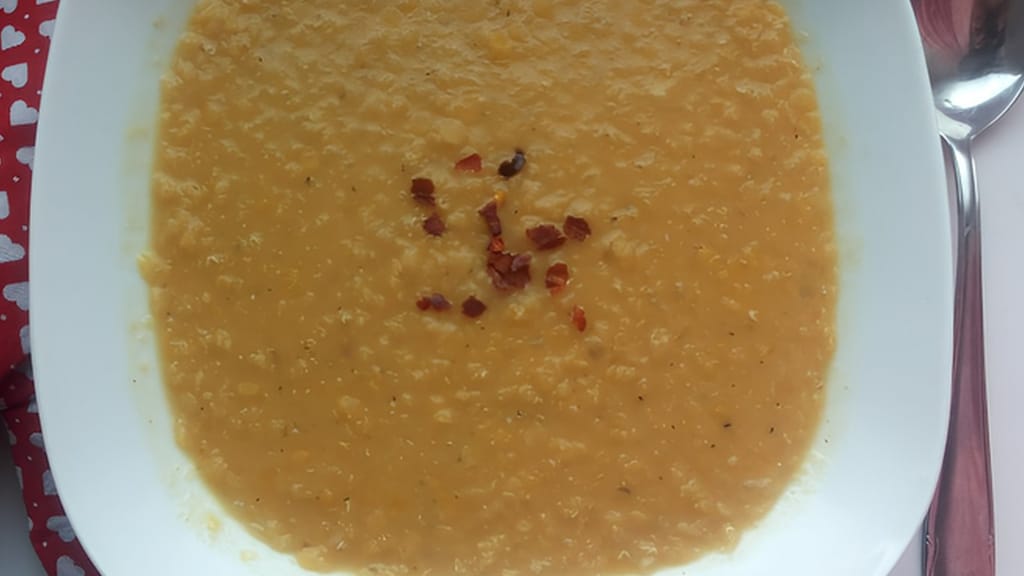
Red lentil soup with coconut milk and chilli
Weekly Meal Plan: How to Build One and Actually Stick to It
Updated Aug 30, 2026
You can put together a weekly meal plan in about twenty minutes: check what you already have at home, pick three dishes to cook in bulk, and build the rest of the week around them. It reliably means less daily decision-making, less food waste, and a smaller grocery bill. What a meal plan can't promise on its own is health — and below you'll find out why that's a claim you can only make in very specific terms.
Meal planning gets you four concrete things: less daily decision-making, less wasted food, a lower grocery bill, and quicker weeknight cooking. None of this is a matter of faith — you can measure it yourself after a month.
Less decision-making. The question "what's for dinner?" comes up once a week instead of seven times. That's the shift that keeps people sticking with a plan after the first few weeks.
Less food waste. According to Eurostat data (opens in a new tab), households throw away roughly 55–62 kg of food per person per year; the EU household average is around 69 kg. Most of that is stuff bought without a plan — plus half the vegetables you meant to cook at some point.
Lower spending. With a list in hand, you buy what you're actually going to cook. Without one, you buy whatever looks good on the shelf.
Quicker weeknight cooking. When the groundwork is done over the weekend, dinner becomes ten minutes of assembly, not an hour at the stove.
And here's the part most meal-planning articles leave out: a plan by itself isn't a health intervention. It doesn't cure anything, it won't make you lose weight on its own, and it guarantees nothing. It reshapes the structure of your week — what you put into that structure is still up to you.
Seasonal baking plans, tested recipes and kitchen tricks that save you time. Unsubscribe in one click.
In Europe, you're not allowed to claim that food prevents or cures disease, and a general statement like "this is healthy" can only appear alongside a specific, approved claim. This comes from Regulation (EC) No 1924/2006, and it applies to articles, not just packaging.
In practice, that boils down to three things:
General health references need backup. Under Article 10(3), a phrase like "good for your health" may only appear together with the specific approved claim it relates to.
Disease claims are almost entirely off the table. A statement like "this meal plan will prevent diabetes" is banned outright for a food product, not just imprecise. The exception is disease risk reduction claims approved under Article 14 — for example, plant sterols and lowering LDL cholesterol — but these may only be stated in exact, pre-approved wording and under set conditions of use.
No numbers on weight loss. Claiming how many kilos you'll lose, and in how long, is banned under Article 12 — which is why you'll never find that on Yumsto.
What you can claim is specific and evidence-based. One sentence applies to every claim below: what matters is a varied, balanced diet and a healthy lifestyle — no single food replaces that. With that in mind, here are a few claims that fit naturally into an ordinary week:
"Beta-glucans contribute to the maintenance of normal blood cholesterol levels." This claim may be used for foods containing at least 1 g of beta-glucans from oats, oat bran, barley or barley bran per quantified portion, and consumers must be told that the beneficial effect is obtained with a daily intake of 3 g of beta-glucans. Oats contain 3–5% beta-glucans by weight, so you're looking at roughly 60–100 g of oats.
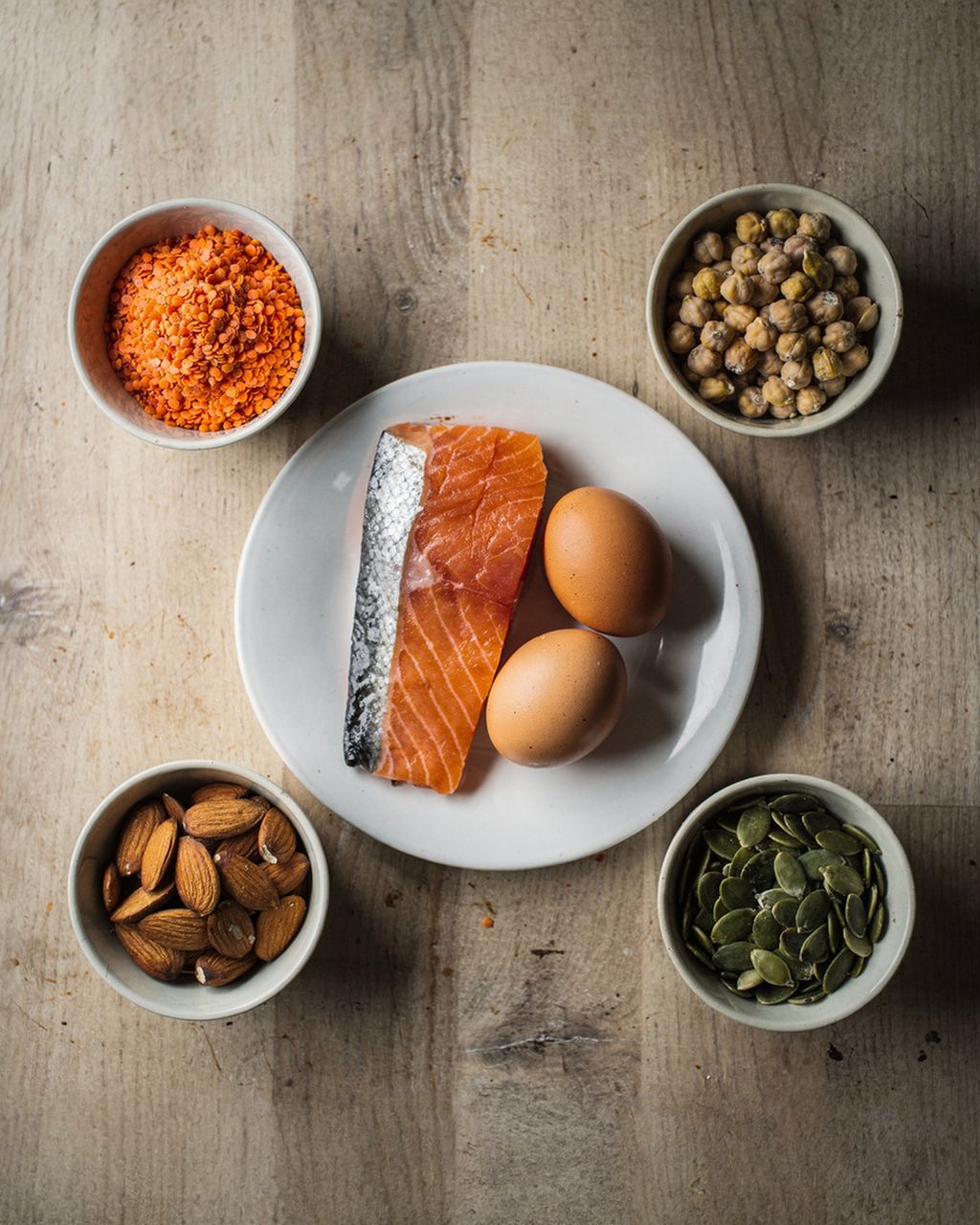
"Protein contributes to the growth and maintenance of muscle mass." This claim may be used for foods that are a source of protein — where protein makes up at least 12% of the energy content. In practice that's covered by 120 g of chicken, two eggs plus a serving of legumes, or 250 g of cooked lentils.
Fatty fish. "EPA and DHA contribute to the normal function of the heart." The effect is linked to 250 mg of EPA and DHA a day; a portion of salmon or mackerel twice a week covers it.
"Potassium contributes to the maintenance of normal blood pressure." This claim may be used for foods that are a source of potassium, meaning at least 300 mg per 100 g — both potatoes and legumes qualify. A 200 g portion of cooked potatoes provides around 700 mg of potassium, roughly a third of the daily reference intake (2,000 mg).
"Vitamin C increases iron absorption." This claim may be used for foods that are at least a source of vitamin C, meaning 12 mg per 100 g — for example, 80 g of raw bell pepper (around 100 mg) or 100 g of broccoli.
Magnesium. "Magnesium contributes to the reduction of tiredness and fatigue." Good sources of magnesium include nuts, seeds, and whole grains; a handful of almonds (30 g) covers roughly a fifth of the daily reference intake.
Notice how cautious these claims are. No "boosts", no "detoxes", just "contributes to normal function". That's exactly how far the evidence goes — anything beyond that is someone's invention.
The process has four steps and takes twenty minutes: stocktake, three anchor meals, filling in the lighter days, and a shopping list. Step two is the one that matters most — most plans fall apart because people plan seven different dishes and give up by Wednesday.
Before planning anything, go through your pantry, fridge, and freezer and note what needs using up. You're looking for three things: what's about to expire, what you have too much of, and what's been sitting there since last time.
This step takes five minutes and saves you the most money out of all four. A plan that starts with half a bag of vegetables in the drawer is free — a plan that starts from a blank page means extra shopping.
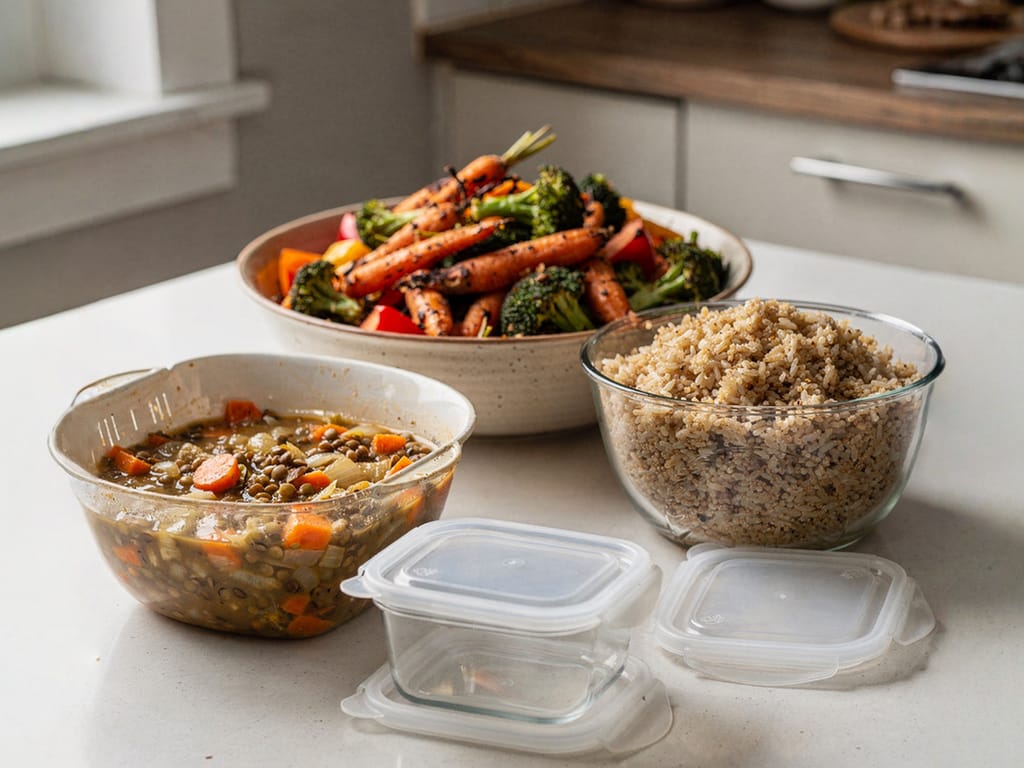
An anchor is one dish cooked in bulk that you reinvent in different forms throughout the week. Three anchors cover seven days; seven separate recipes cover nothing, because you'll never actually cook them all.
A reliable trio looks like this:
A pot of legumes — soup or a stew, holds up to freezing and to day five.
A tray of roasted vegetables — the base for bowls, pasta, wraps, or a fried egg.
One big batch of meat, fish, or a roast — a Sunday cook-up that becomes Monday's lunches.
For each anchor, plan two second forms in advance. Lentil soup is soup on Tuesday and a salad base on Thursday. Roasted vegetables are a side on Monday and a filling on Wednesday. Without that second form, the same dish is still sitting in your fridge on day five and ends up in the bin.
Red lentil soup with coconut milk and chilli
Red lentil soup with coconut milk and chilli — a legume anchor that freezes well
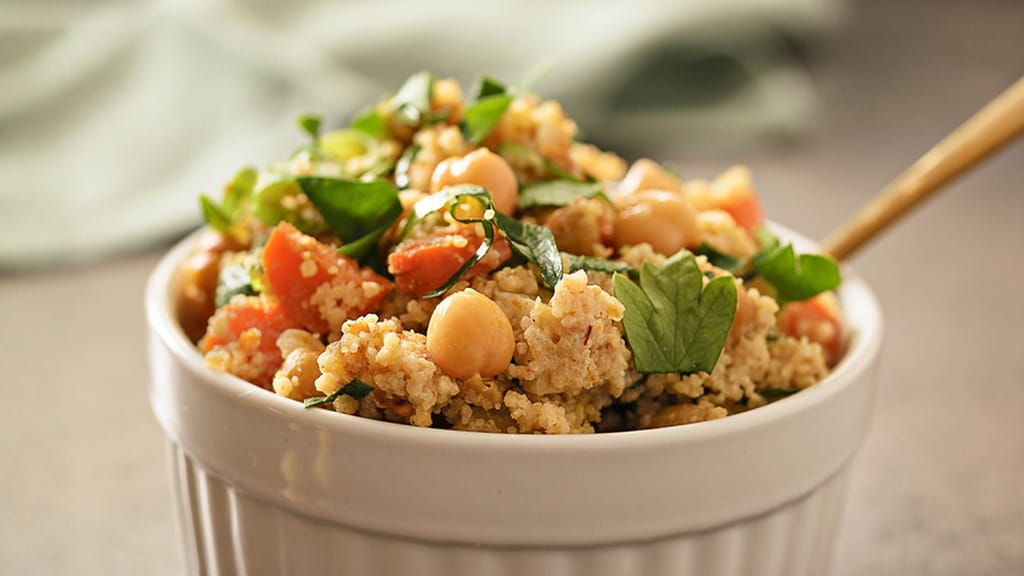
Couscous with chickpeas and roasted vegetables
Couscous with chickpeas and roasted vegetables — the second form of the veg-tray anchor
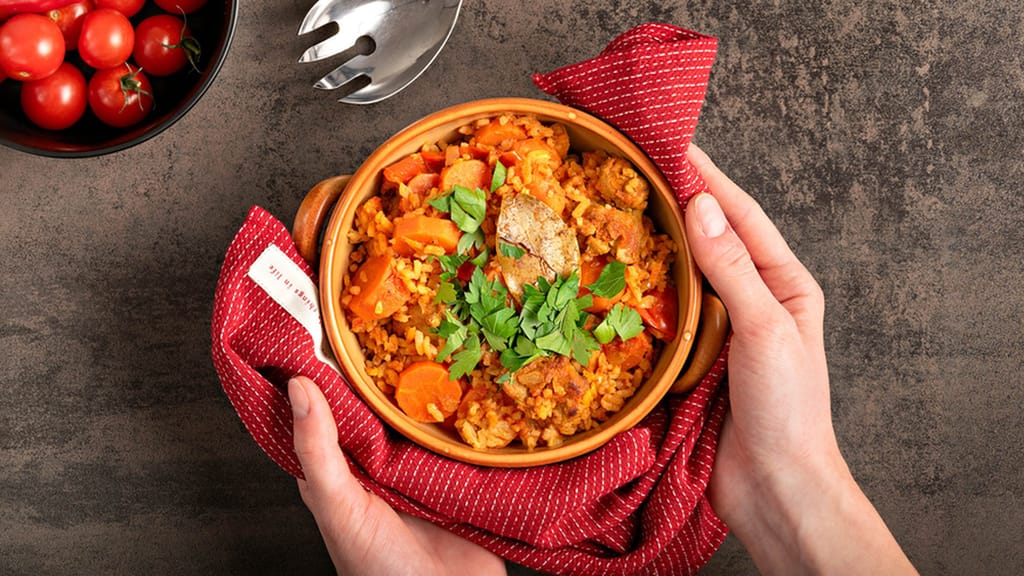
Baked risotto with chicken and vegetables
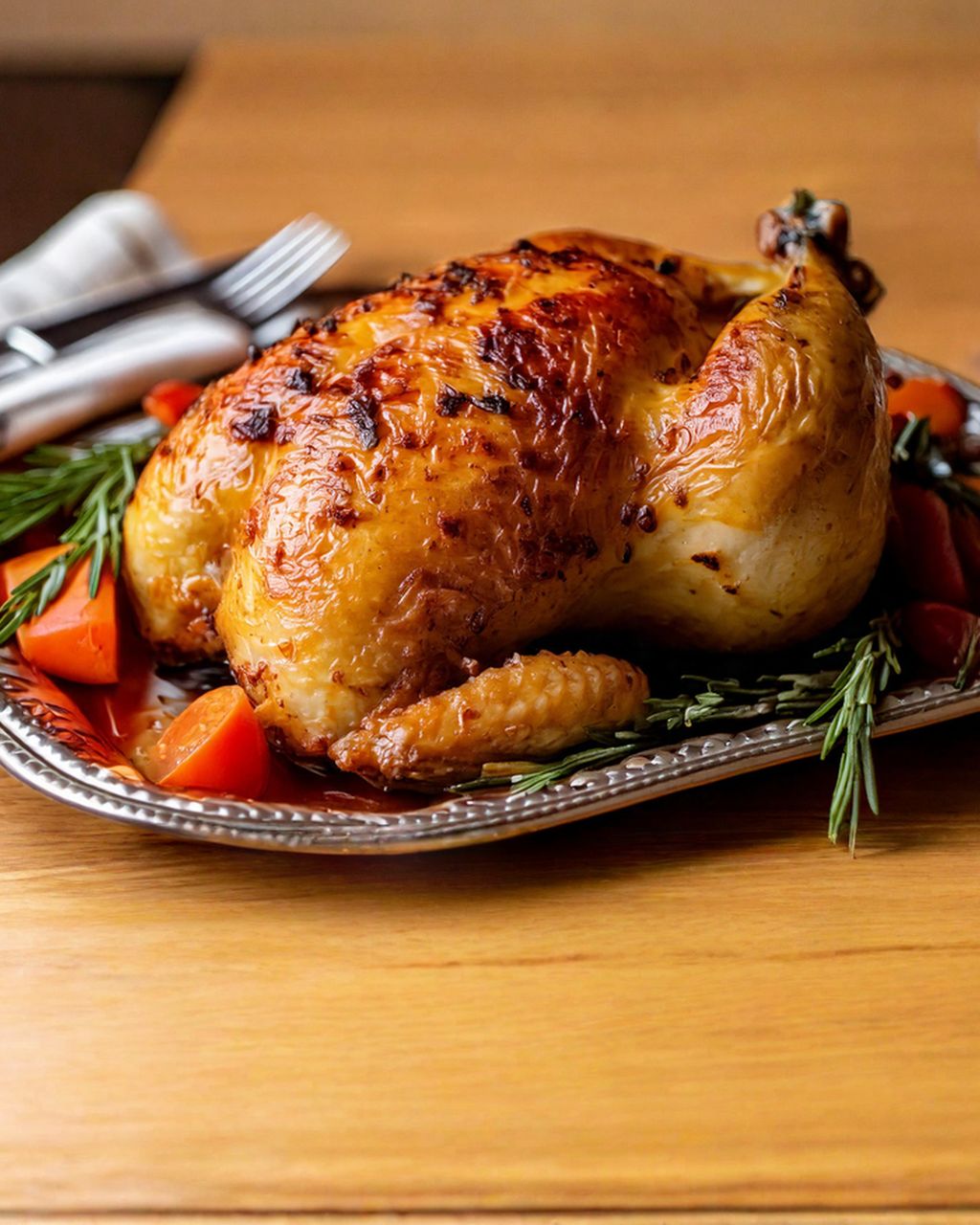
Baked chicken and vegetable risotto — a Sunday anchor that becomes Monday's lunches
Around your three anchors, add two light days (eggs, soup, something from the freezer), one leftovers day, where you deliberately cook nothing new, and one wildcard evening with no plan at all.
That wildcard evening isn't laziness — it's insurance. Every week there's a day when things just don't go to plan; if you've built that in ahead of time, the plan doesn't fall apart. If you haven't, it feels like a failure, and by Saturday you've stopped planning altogether.
Sort your shopping list by store section — produce, bakery, chilled, pantry, frozen — and you'll get through the shop once. A list sorted by dish, on the other hand, will send you round the store four times, because you need tomatoes for three different dinners.
Two things worth noting separately:
Buy fresh vegetables for four days, not seven. By day six, salad is a soggy mess. For the back end of the week, plan on frozen veg, cabbage, carrots, or root vegetables (parsnip, celeriac, celery root) — they hold up.
Keep topping up your pantry staples. Legumes, tinned tomatoes, oats, and frozen peas are what you cook with when the plan falls through.
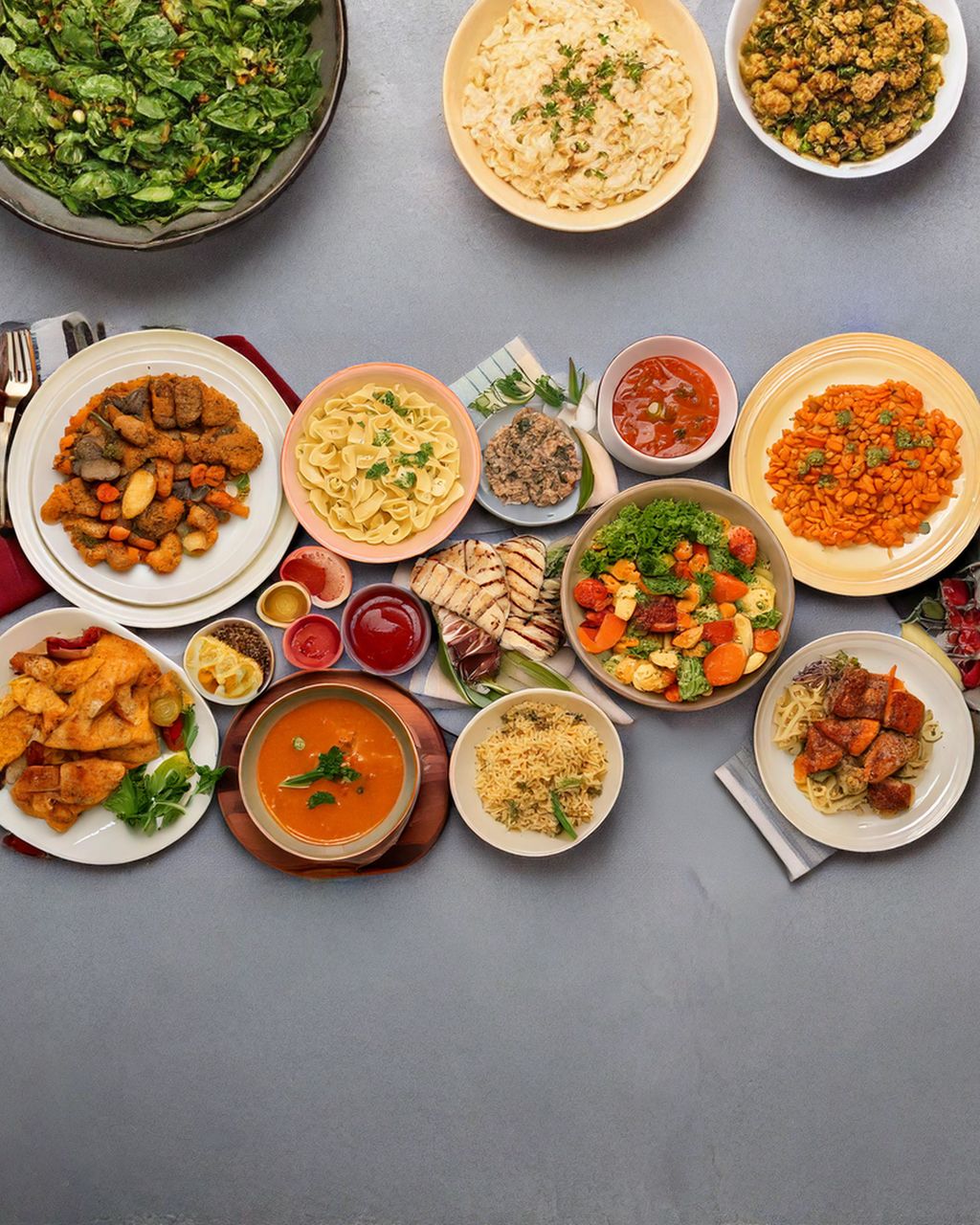
Here's what a week built on three anchors looks like: one proper cooking session on Sunday, mostly assembly the rest of the week.
Sunday (prep, about 90 minutes). Cook a red lentil soup with coconut milk (anchor 1), roast a large tray of vegetables — courgette, pepper, carrot, onion, 200°C, 30–40 minutes (anchor 2) — and bake a chicken and vegetable risotto (anchor 3). If you've got time left, throw together some carrot hummus for snacks too; it's not an anchor, but it'll save you from the afternoon slump.
Monday — lunch: leftover baked risotto. Dinner: a quinoa buddha bowl with egg and chickpeas, topped with the roasted vegetables from the tray.
Tuesday (light day) — lunch: lentil soup. Dinner: smoky salmon with quick sautéed spinach. Squeeze lemon over the spinach — the acidity lifts the flavour so it doesn't taste flat.
Wednesday — lunch: Mediterranean chickpea and goat's cheese salad. Dinner: couscous with chickpeas and roasted vegetables — finishing off the rest of the tray.
Thursday (light day) — lunch: lentil and tuna salad made from the second half of the lentils. Dinner: a quick oat and vegetable soup.
Friday (wildcard evening) — no cooking. That's part of the plan.
Saturday — lunch: tangy lentils with a fried egg. Dinner: leftovers night, finishing off whatever's left.
Keep breakfast to two options you rotate between — porridge with fruit, cashews and chia seeds for a quick morning, and pea and oat risotto with a poached egg when you're after something savoury. Nobody plans seven different breakfasts twice in a row.
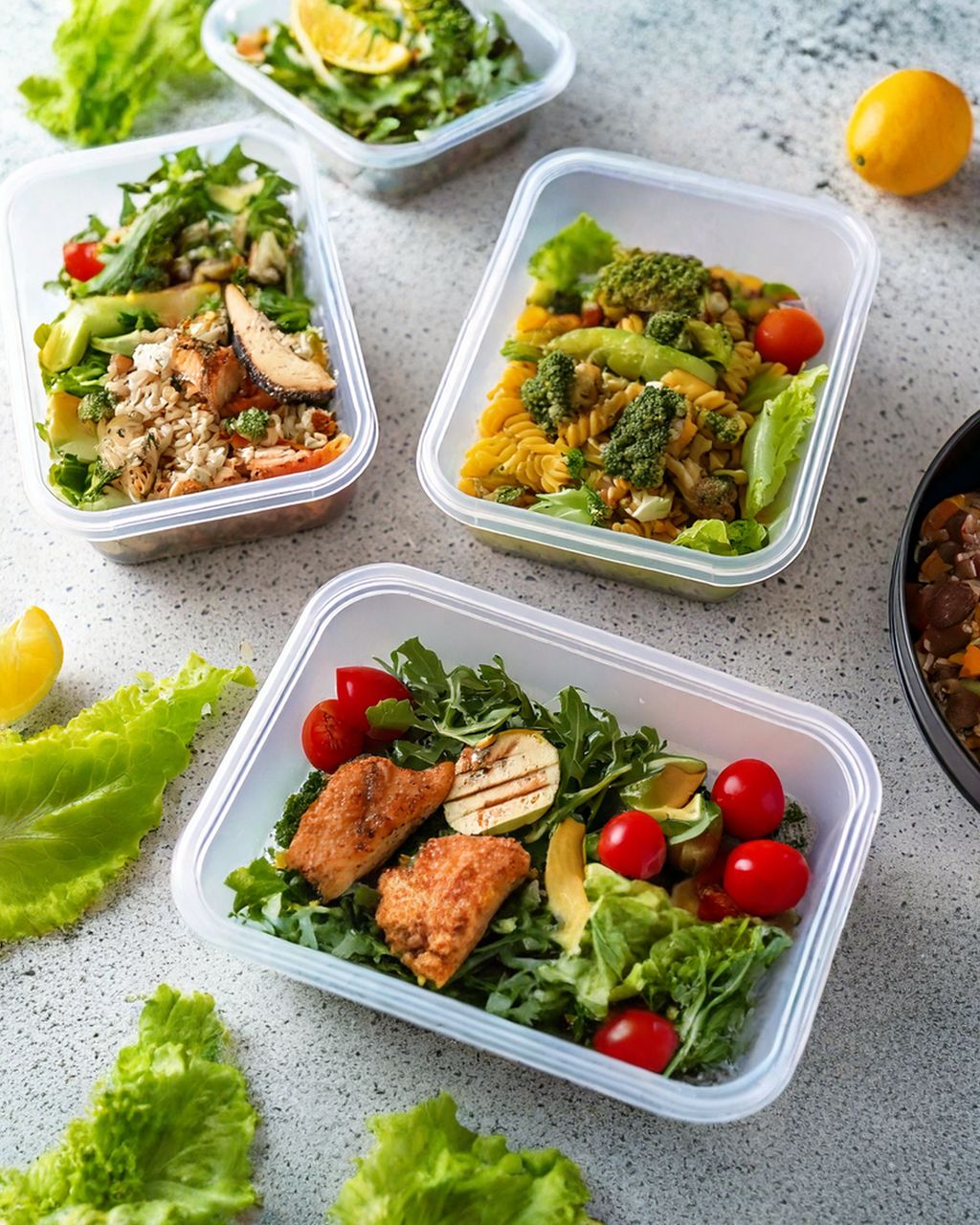
Per portion, plan on 60–80 g of dry grains or legumes, 100–150 g of meat or fish, and 200–300 g of vegetables. Cook each anchor for 4–6 portions straight away — the extra effort is basically zero, and the payoff lasts the whole week.
Storage, in numbers:
Fridge at 0–4°C, cooked food keeps for 3–4 days. Not "as long as it still smells okay".
Cool it fast: move it from the pot into shallow containers and into the fridge within two hours of cooking. A hot pot left cooling on the stove overnight is the single most common mistake in meal prep.
Freezer, up to 3 months, portioned out. Soups and stews freeze beautifully; potatoes and cream-based sauces don't.
Reheat to 70°C at the centre, and only the portion you're actually going to eat. Reheating the whole pot over and over shortens the life of everything in it.
Meal plans collapse for five reasons: seven separate dishes instead of three anchors, meals you don't actually enjoy, an unaccounted-for Friday, a full week's worth of fresh produce bought at once, and cooking too little. All five are fixed at the planning stage, not halfway through the week.
You plan seven separate dishes. The fix is three anchors and their second forms.
You plan meals you don't actually like. A plan built on what you "should" eat lasts about four days. Pick meals you're actually looking forward to, then balance them out.
You forget to account for Friday. See wildcard evening, above.
You buy fresh for the whole week. Build the end of the week around frozen and root vegetables.
You cook too little. If an anchor only yields two portions instead of five, you're cooking again by Wednesday and the plan is over.
And one more thing: a plan is meant to be adjusted, not followed to the letter. Swap lunch and dinner on Thursday and you haven't broken anything. The idea that you either stick to the plan perfectly or fail kills more meal plans than every mistake above combined.
A weekly meal plan can be adapted to gluten-free, vegetarian, or vegan needs just by swapping what goes into the anchors — the structure of three anchors, two light days, and one wildcard evening stays the same.
Gluten-free.Swap wheat for rice, buckwheat, quinoa, millet, or corn polenta. Be careful with oats: they're naturally gluten-free, but commonly cross-contaminated during processing — buy only oats specifically labelled gluten-free.
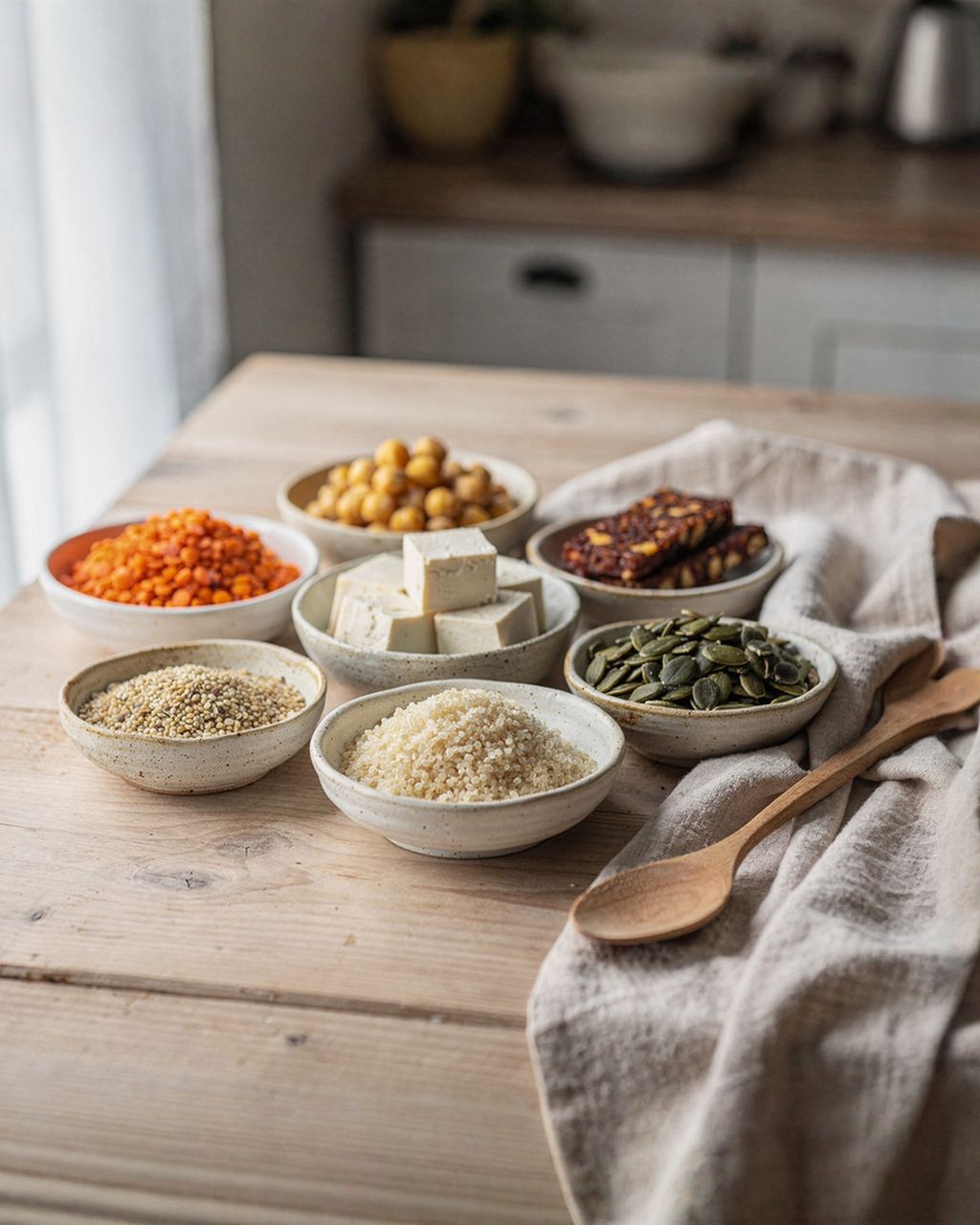
Vegetarian and vegan. Pair a legume with a grain on the same day (lentils and rice, chickpeas and couscous) — together they cover the amino acid spectrum better than either does alone. Vitamin B12 needs supplementing on a fully plant-based diet; plant foods don't offer a reliable source of it.
Allergies and health conditions. This is where general advice stops. Cutting out entire food groups on a guess isn't worth the risk — a dietitian or doctor will build a plan around your own results, not around an article on the internet.
Plan around the number of meals, not the days of the week. Work out how many lunches and dinners you'll actually eat at home over the next seven days, and cook only that many portions — for shift workers that's often five to eight, not fourteen. Cover the rest with portable meals that taste fine cold (grain-and-veg bowls, bean salads) and a freezer stocked in single portions, so you can grab something at any hour.
No, you don't need to count calories to build a meal plan that works. For most people, structure is enough: a protein source, a carb source, vegetables, and a bit of fat in every main meal. Counting calories is worth doing temporarily if you need to find out how much you're actually eating, or if a dietitian sets specific targets for you because of sport or a health condition.
Cook one base and vary only the extras. Build the meal from separate components — a grain, a vegetable, a protein, a sauce — and let everyone assemble their own plate; a kid who won't touch steamed veg will often eat the same vegetable roasted and served on the side. Bring the rest of the household into the choosing too: let someone else pick the menu one day a week, and it cuts down a lot of the mealtime arguing.
You can only batch-cook a month ahead for dishes that freeze well — and that's roughly half of a typical menu. Soups, stews, bean dishes, sauces, and baked goods freeze brilliantly; boiled potatoes, cream and potato-based sauces, leafy greens, yoghurt, and mayonnaise don't — they turn watery or fall apart. A more practical approach than cooking for a whole month is to freeze one extra portion every week — after a month you'll have four different meals in the freezer without ever having spent a whole day cooking.
Whenever a diagnosis, pregnancy, medication, or a child under two is involved. General advice about building a balanced plate applies to a healthy adult; with diabetes, kidney disease, eating disorders, coeliac disease, or food allergies, you need a plan built around your own results, not general guidance. It's also worth a visit if you're chronically tired for no obvious reason, or if your weight keeps shifting up or down without you changing anything.
One recipe worth heating the oven for, one tip, and one deal from the shop. Nothing else.