Grilled chickpea salad

Updated Jul 19, 2026
Prepping lunches ahead of time saves you money and morning stress — and puts you back in control of what you eat. Just cook a few big batches once a week, divide them into containers, and you're set. In this guide you'll learn how to plan your week, store food safely so it stays fresh, how much protein, carbs and fat to pack into each box, and five quick recipes you can pull together in under half an hour.
Meal-prepping your lunches saves time and money, gives you a clear picture of what you're actually eating, and cuts down on waste from single-use packaging. Specifically, here's what you gain:
Time saved— cook bigger batches once a week and in the morning all you do is grab a box from the fridge. No more daily scrambling to figure out what's for lunch.
Lower costs— basic ingredients cost a fraction of a ready-made lunch from a café, and buying in bulk saves you even more.
Control over what's in your food— you decide how much salt and fat goes in, how big the portions are, and you can easily tailor meals to a diet or allergy.
Less waste— reusable containers replace disposable bags and paper boxes.
Better habits— when you've got a balanced lunch ready to go, it's much easier to resist fast food and salty snacks during the day.
A solid plan comes down to five steps: set your goal, map out a full week's menu, buy pantry staples in bulk, make the most of seasonal produce, and get a chunk of the prep done over the weekend.
Set your goal.Save time, save money, or eat healthier? This decision shapes the rest of your plan — if time is what you're after, stick to simple, repeatable bowls; if you're watching your budget, build meals around pulses and seasonal veg.
Map out a full week's menu.Plan for every working day, taking into account the preferences and allergies of everyone in the household. Knowing what you're cooking in advance means you shop precisely and throw nothing away.
Stock up on staples in bulk.Rice, pasta, pulses and oats keep for ages and work out cheaper bought in larger quantities. Frozen veg and fruit hold onto their freshness and come in handy when the fresh stuff runs out.
Reach for seasonal produce.In season, food tends to taste better and cost less — root veg and citrus in winter, wild garlic and asparagus in spring, tomatoes, courgettes and peppers in summer.
Prep the basics over the weekend.Cook 4–5 portions of one component in one go — roast chicken breasts, cooked quinoa or chickpeas, a tray of roasted veg — then just mix and match through the week. For more ideas on what to fill your box with, check out our article on the best protein sources for your diet.
Build a balanced box around a simple ratio: roughly half veg, a quarter protein, a quarter complex carbs, plus a spoonful of healthy fat. According to nutrition guidelines, it's this combination of all three macronutrients that keeps your energy and fullness steady through the afternoon — fast carbs alone will have you heading for the vending machine within two hours.
Protein is the component that keeps you fullest for longest and supports muscle recovery — aim for roughly 20–30g per portion. Chicken, fish like salmon or tuna, pulses (lentils, chickpeas) and high-protein dairy such as cottage cheese or Greek yoghurt all do the job well. Feel free to mix and match plant-based and animal sources.
Go for complex, fibre-rich carbs — wholegrain bread, oats, quinoa, brown rice or sweet potato. They release energy gradually, keeping blood sugar steadier and fullness lasting longer than white bread or sweets ever could.
Healthy fats absolutely belong in your lunchbox — they help your body absorb fat-soluble vitamins (A, D, E, K) and add flavour and staying power to a meal. Get them from avocado, olive oil, nuts and seeds. A spoonful or a small handful is plenty; fats are calorie-dense, so don't overdo the quantity.
Five lunches, each ready in about 30 minutes: Monday's Mediterranean chickpea salad, Tuesday's quinoa and roasted veg bowl, Wednesday's chicken and avocado wraps, Thursday's pasta with wild garlic pesto, and Friday's vegetarian sweet potato curry. Every single one stores well and travels happily in a bag.
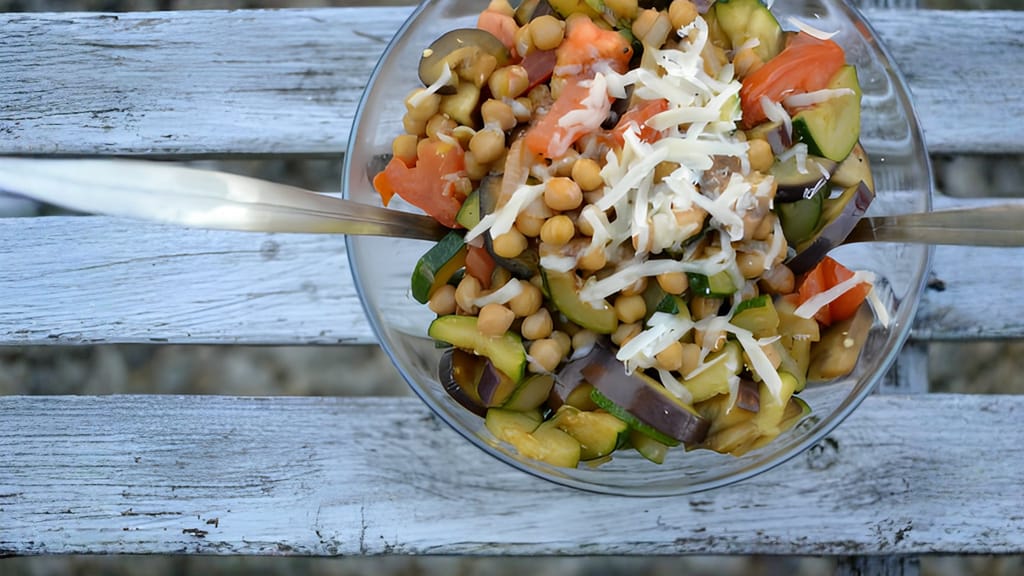
A light but filling way to kick off the week, thanks to protein from the chickpeas. The base is cucumber, tomato, pepper and chickpeas, dressed with olive oil and lemon. Lunchbox tip:carry the dressing separately and toss it through just before eating — the salad will stay crunchy.
Grilled chickpea salad
Grilled chickpea salad — a protein-packed Mediterranean lunchbox
Quinoa brings both protein and fibre to the table. Mix cooked quinoa with roasted carrot, courgette and pepper, drizzle with olive oil and toss in fresh herbs. No quinoa on hand?The same idea works just as well with couscous — you'll find a warm bowl version below that holds up perfectly in a lunchbox.
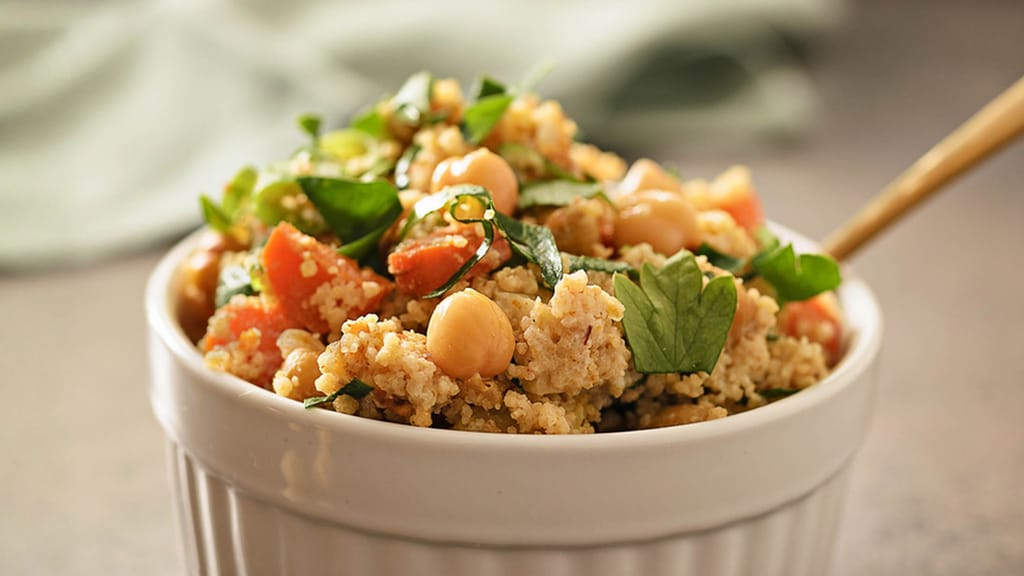
Couscous with chickpeas and roasted vegetables
Couscous with chickpeas and roasted veg — a warm bowl alternative to quinoa
Slice grilled chicken into strips and wrap it in a tortilla with avocado slices, tomato and a spoonful of yoghurt dressing. Wrap it tightly in baking paper and slice it in half — that way it won't come apart in the box. A squeeze of lemon over the avocado keeps it from browning.
A quick fix for spring days: just toss hot pasta with a spoonful of homemade wild garlic pesto. For a gluten-free version, swap in lentil or corn pasta. Make the pesto ahead — it'll keep in the fridge for several days.
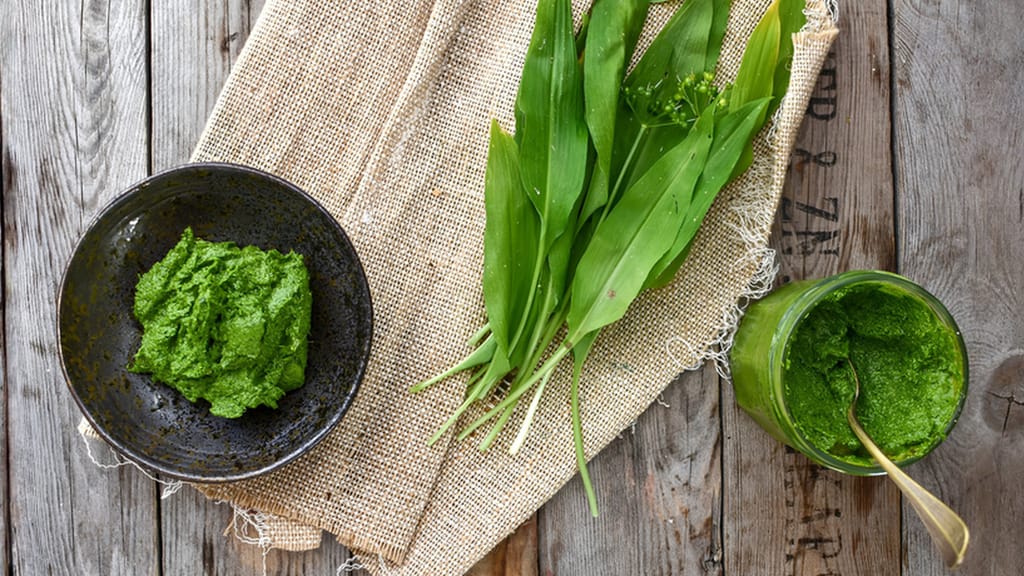
Wild garlic pesto
Wild garlic pesto — for a lunchbox pasta ready in minutes
A fragrant way to round off the week: sauté onion with curry paste, add cubed sweet potato and pour in coconut milk. Curry actually tastes even better the next day once it's had time to sit in the box, so it's well worth making a bigger batch. Serve with rice, or on its own.
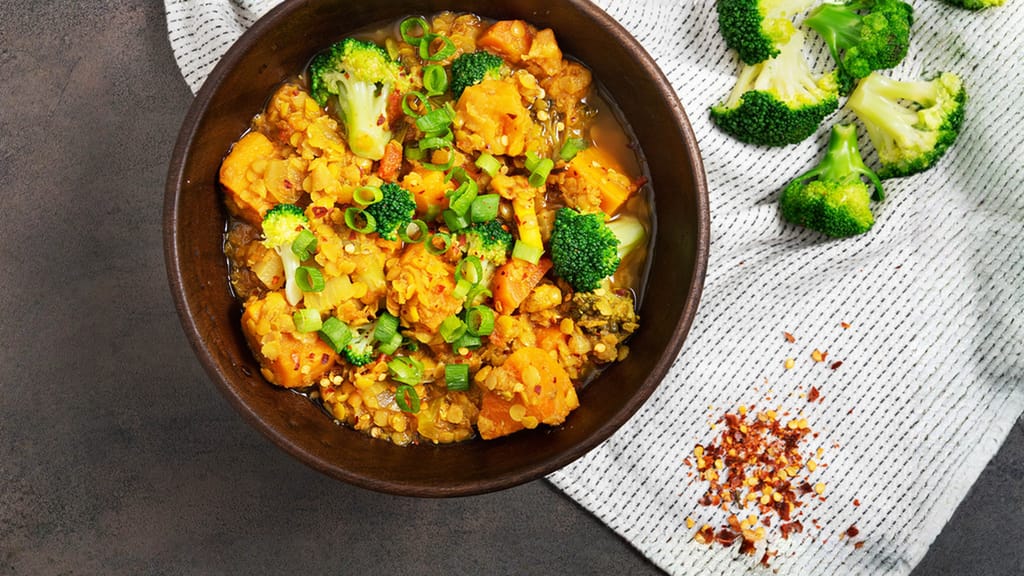
Sweet potato curry with red lentils
Sweet potato and red lentil curry — a hearty vegetarian lunchbox
Cooked food stored in a sealed container keeps in the fridge at or below 40°F (4°C) for about 3–4 days; meals with fish or dairy are best eaten within 2–3 days. Food safety guidelines (such as those from the US FSIS) recommend refrigerating cooked food within two hours of cooking, and reheating it thoroughly to 165°F (74°C). Anything you won't get through in time can go in the freezer, where it keeps its quality for 3–4 months.
Glass is best for longer storage — it doesn't hold onto smells, won't stain from sauces, and can go straight in the oven to reheat. Plastic is lighter and better suited to shorter storage times; just make sure you pick containers that are BPA-free. Either way, go for a tight-sealing lid — air and moisture are what spoil food fastest. Label containers with the date before freezing.
Raw meat belongs on the bottom shelf so nothing drips onto other food; finished lunchboxes are best kept in the middle of the fridge, where the temperature stays most stable. Carry salad dressing and crunchy toppings separately and only add them just before eating. For more on storing food that's still warm, see our article on how to store warm food in the fridge.
Pack the dressing in a separate small pot and only toss it through the salad right before eating — that way leafy greens and crunchy veg stay fresh all morning. Layering helps too: dressing at the bottom, sturdy veg in the middle, leaves on top, then give it a good mix once you're at your desk.
Salads, wraps, and quinoa or chickpea bowls are great cold, so there's no need to heat them up. But anything with meat, rice or sauce (curries, pasta dishes) should be reheated thoroughly to 165°F (74°C) — that's the only way to reliably kill off any bacteria.
Skip freezing anything high in water content or with fresh, crunchy elements — lettuce, cucumber, tomatoes and avocado all turn mushy and watery once thawed. On the flip side, curries, soups, stewed meat, pasta sauces and cooked pulses freeze really well.
Use an insulated lunch bag with an ice pack, or a proper food thermos. An ice pack will keep your box in the safe zone below 40°F (4°C) for several hours, while a thermos keeps hot meals piping hot. Without any cooling, food shouldn't sit out for more than 2 hours.
Squeeze a little lemon or lime juice over the cut surfaces — the acidity slows down browning. Slice the avocado as late as possible, and bury it under the other ingredients in the box so it's not exposed to air. Best of all, just add it fresh on the morning you're eating it.
One recipe worth heating the oven for, one tip, and one deal from the shop. Nothing else.