Vegetable Salad Dressing: How to Make It (and Make It Better)
Vinegar Substitutes: Apple Cider, Wine, Balsamic and White Vinegar
Updated Nov 18, 2026
What can you use instead of vinegar? Most often another vinegar, lemon juice or lime juice. In dressings and sauces, a 1:1 swap works as long as both vinegars are of similar strength. The one catch is white distilled vinegar: it usually has 8% acidity, while apple cider vinegar is usually around 5% and wine vinegar at least 6%. So use roughly one third less when replacing apple cider vinegar with it, and about one quarter less when replacing wine vinegar. In baking, there's so little vinegar that you can swap any vinegar 1:1. Canning is the exception. Never change the vinegar there; use exactly the one the recipe calls for.
A vinegar substitute comes down to two things: how strong the acid is and what flavor it brings. You'll find the strength as a percentage on the label. Under Czech decree No. 248/2018 Sb., producers must state it on the packaging.
White distilled vinegar: most often 8% in the Czech Republic, with a clean, purely sour taste and no fruity notes.
Apple cider vinegar: usually around 5%, mild and fruity.
Wine vinegar: at least 6%, as set by EU Regulation No. 1308/2013 (60 g of acetic acid per liter). Milder than distilled vinegar, with a winey flavor.
Rice vinegar: tends to be even milder and slightly sweet.
Lemon and lime juice: acidity roughly similar to a 5% vinegar, plus a citrus aroma. Lemons vary a lot, though, so treat this as a kitchen guideline, not an exact value.
Balsamic vinegar: both sour and sweet, dark and thicker.
A practical rule: vinegars of the same strength swap 1:1. If you go from 5% apple cider vinegar to 8% distilled vinegar, use about one third less, or dilute it (2 parts vinegar, 1 part water). In place of 6% wine vinegar, use about one quarter less distilled vinegar, or dilute it (3 parts vinegar, 1 part water). In the other direction, use about half as much more apple cider vinegar, or about one third more wine vinegar. In a dressing, always adjust to taste, because everyone perceives acidity differently.
Seasonal baking plans, tested recipes and kitchen tricks that save you time. Unsubscribe in one click.
The best replacement for apple cider vinegar is white wine vinegar, 1:1. It's similarly mild, just slightly stronger (at least 6% versus roughly 5%), so in a dressing you can use a touch less and adjust to taste. Other options:
Lemon juice 1:1: for dressings, marinades and batters. The flavor will be more citrusy.
Rice vinegar 1:1: gentler, good for Asian dishes and vegetable salads.
White distilled vinegar (8%): about ⅔ of the amount and a pinch of sugar to make up for the fruity sweetness of apples.
Apple cider or unsweetened apple juice + lemon: when it's mainly the apple flavor you're after, for example in a sauce or when braising. For 1 tablespoon of vinegar, use 1 tablespoon of lemon juice and 1 teaspoon of cider.
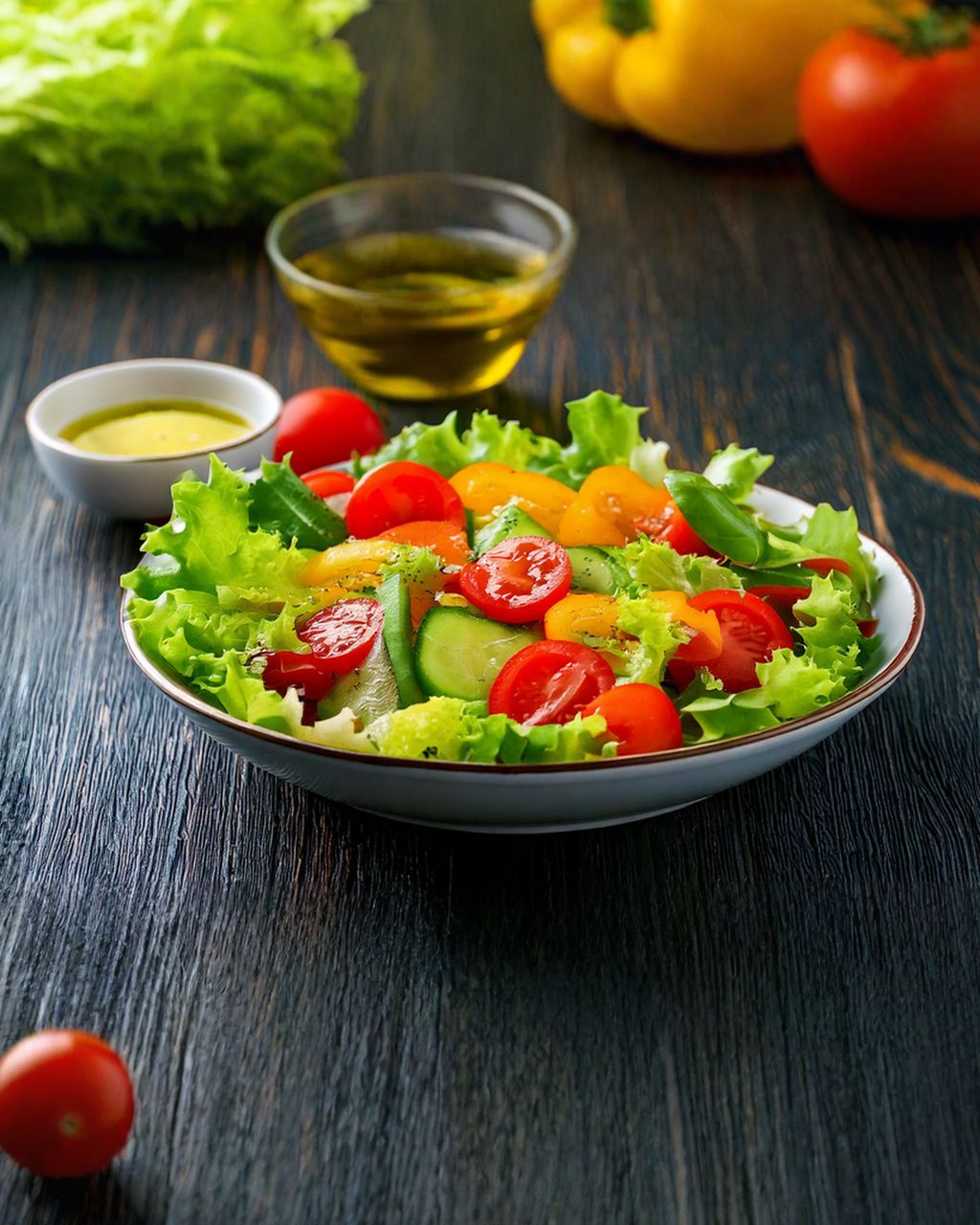
In a vegetable salad dressing you don't need to worry about exact ratios, because you adjust it by tasting. We cover how to build such a dressing in vegetable salad dressing and how to improve it.
You can replace white distilled vinegar with apple cider vinegar, using about half as much again (3 tablespoons instead of 2), or white wine vinegar, using about a third more (4 tablespoons instead of 3). Apple cider vinegar usually has around 5% acid and wine vinegar at least 6%, compared with 8% for distilled. Other options:
Lemon juice: also about 1.5× as much. Great in homemade mayonnaise-based sauces and in potato salad, for example in potato salad with green beans and smoked mackerel.
Brine from pickled gherkins: in potato salad or a sauce, it adds acidity and seasoning at once. Add the salt last.
In soups and legume dishes that are seasoned with vinegar at the end, almost any substitute works. For instance, you can easily finish sour lentils with a fried egg with apple cider vinegar or lemon. Add it by the teaspoon and taste as you go.
You can replace white wine vinegar with apple cider vinegar, 1:1 up to one fifth more (it's slightly weaker, around 5% versus at least 6%), with champagne or sherry vinegar 1:1, or with lemon juice, 1:1 up to one fifth more. Rice vinegar works too; it's milder, so use a little more.
Red wine vinegar has a fuller, more tannic flavor. The closest substitutes:
Sherry vinegar 1:1: the closest flavor, deeper and slightly nutty.
White wine or apple cider vinegar + a splash of red wine: 1 teaspoon of wine per tablespoon of vinegar. It brings back the color and body.
Balsamic vinegar mixed with apple cider vinegar: 1:1, when you want a darker, rounder flavor. The result is sweeter, so cut the sugar elsewhere.
In dark marinades and sauces that rely on a full wine flavor, a splash of red wine really helps. For a delicate green salad dressing, white wine vinegar on its own is enough.
You can replace balsamic with red wine vinegar plus a little honey or sugar. For 1 tablespoon of vinegar, stir in ½ teaspoon of honey. Balsamic is both sour and sweet, so another vinegar on its own would be too sharp.
For dressings: red wine or apple cider vinegar + honey, using the ratio above.
For drizzling over a finished dish (cheese, strawberries, roasted vegetables): you need thickness. Simmer 4 tablespoons of red wine vinegar with 1 tablespoon of honey or brown sugar over low heat until the volume has roughly halved and the mixture coats a spoon. It thickens further as it cools.
For sauces and braised meat: pomegranate molasses 1:1, or soy sauce with a splash of vinegar and sugar. Either gives a dark, deep flavor.
Beets and balsamic are a classic pair. The reduced substitute is perfect for drizzling over red beet and orange carpaccio. You'll find how to boil or roast the beets first in how to boil and roast beets.
You can replace umeboshi vinegar (umeocet) with rice vinegar or lemon juice plus a pinch of salt: for 1 tablespoon, use 1 tablespoon of rice vinegar or lemon juice and about ¼ teaspoon of salt. Umeboshi vinegar isn't a vinegar in the strict sense. It's the salty, sour brine left over from pickling Japanese umeboshi plums, so the substitute needs both acid and salt.
For dressings and vegetables: rice vinegar + salt, or a splash of soy sauce.
For rice and cooked vegetables: lemon or lime juice + salt. For a mild fruity note, add a splash of apple cider vinegar.
Whether you use umeboshi vinegar or a substitute, go easy on the salt in the rest of the dish. It's easy to oversalt with umeboshi vinegar.
In baking, you can replace vinegar with lemon juice or any other vinegar, 1:1. Vinegar in a batter almost always just reacts with baking soda: the acid and the soda release carbon dioxide and the batter rises. The type of acid therefore matters little; what counts is keeping to the amount in the recipe.
Any vinegar ↔ any vinegar: 1:1 in a batter, even with 8% distilled vinegar. There's so little of it that you won't notice a difference in strength or flavor.
Lemon or lime juice: 1:1.
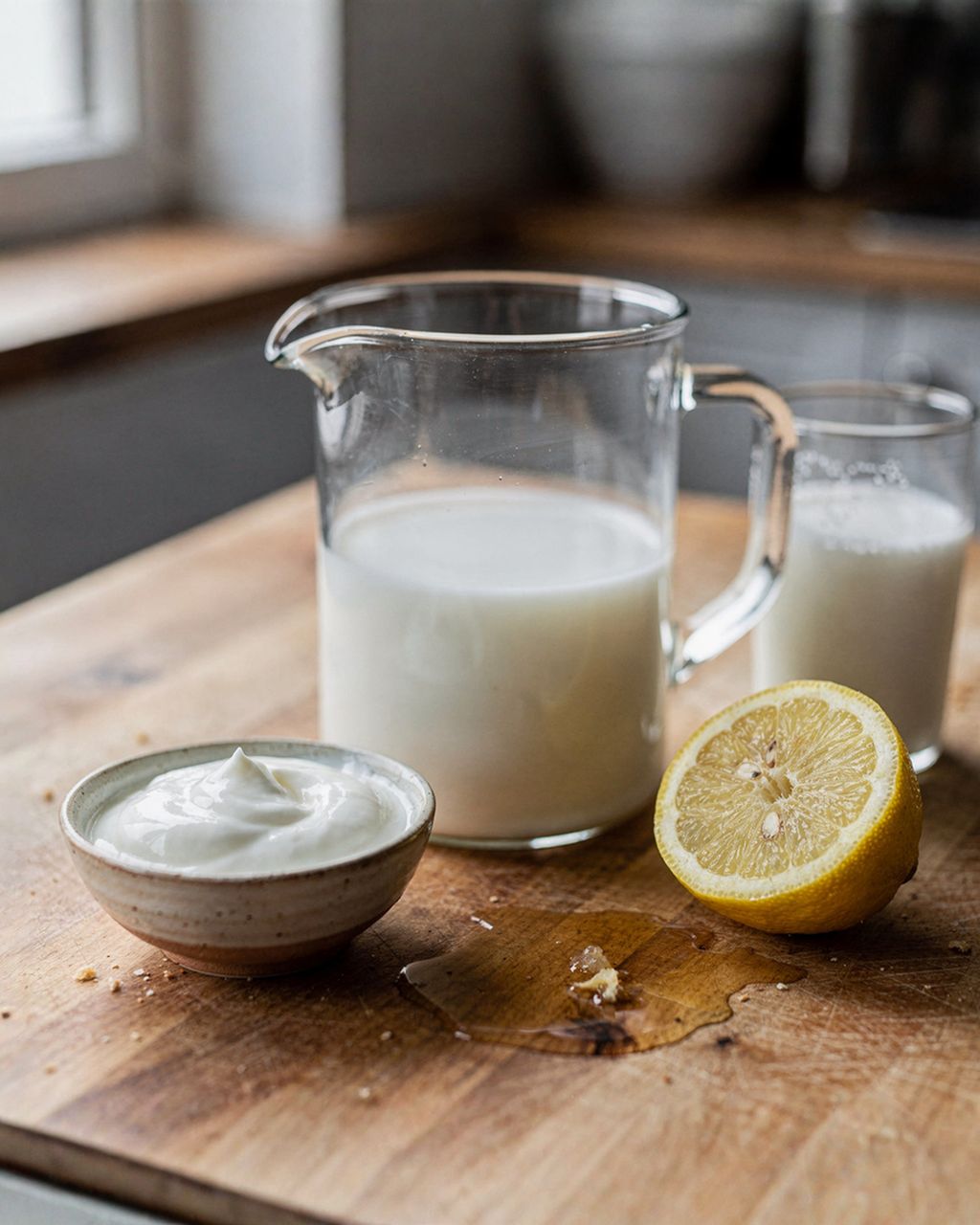
Buttermilk, kefir or yogurt: these work too, but they add liquid, so reduce another liquid (milk, water) by the same amount.
Vinegar also shows up in baking the other way around, when it turns milk into a buttermilk substitute. We cover that separately in what to use instead of buttermilk. For whipped egg whites and meringues, a few drops of vinegar or lemon help stabilize the foam, and the two are interchangeable 1:1.
Vinegar doesn't go bad in the usual sense. According to the Vinegar Institute (cited by Iowa State University Extension), commercial vinegar has an almost unlimited shelf life and preserves itself thanks to its acidity. The best-before date on the bottle tells you how long the producer guarantees flavor and aroma, not when the vinegar becomes unsafe.
Where: at room temperature in a cool, dark cupboard, away from the stove and direct sunlight. It doesn't belong in the fridge; it doesn't need refrigeration (Vinegar Institute).
How: always tightly closed. According to Iowa State University Extension, vinegar's acidity doesn't change as long as no moisture or water gets into the bottle.
White distilled vinegar stays practically unchanged over time, according to the Vinegar Institute.
Apple cider, wine and balsamic vinegar are best used within 2–3 years (room temperature), according to Iowa State University Extension (citing StillTasty). After that they're still safe, just with a weaker aroma.
Like oil, vinegar is a pantry staple that just needs to be kept in the dark and well closed. We cover oil in how to store olive and canola oil. You'll find more substitutes in what to use instead of spices and what to use instead of herbs.
The best vinegar substitute is lemon or lime juice, roughly 1:1 for a 5% vinegar; lemons vary in acidity, so adjust to taste. In potato salad or sauces, the brine from pickled gherkins works too, and in sauces a splash of white wine with lemon does the job. When canning, don't substitute: always use the vinegar the recipe specifies.
You can use balsamic glaze instead of balsamic vinegar for drizzling, but only in a smaller amount in a dressing. Balsamic glaze is thickened and much sweeter than vinegar. Use about half as much in a dressing and add a little acidity with a splash of red wine or apple cider vinegar.
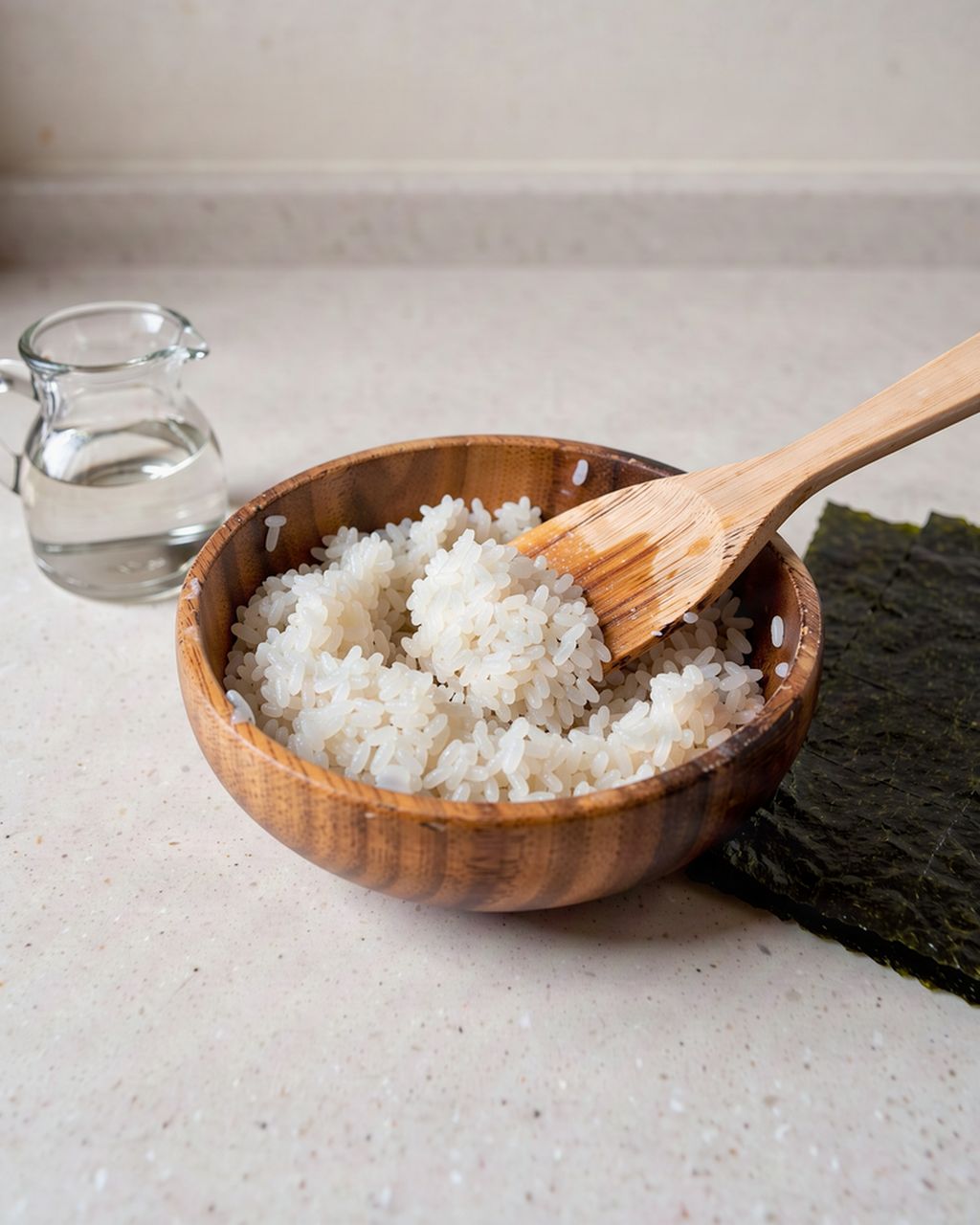
You can replace rice vinegar in sushi rice with white wine or apple cider vinegar 1:1, plus a little extra sugar. Rice vinegar is milder and slightly sweet, so for every tablespoon of the other vinegar, add about ½ teaspoon sugar on top of what the recipe calls for. Don't use white distilled vinegar for sushi rice; it's too sharp.
Yes, cream of tartar stabilizes whipped egg whites just as well as vinegar or lemon. Use about ⅛ teaspoon per egg white and add it when the whites start to foam. It won't change the flavor of the meringues.
Cloudy apple cider vinegar with a slimy sediment isn't spoiled; this is the so-called mother of vinegar. According to the Vinegar Institute, it's formed by harmless acetic acid bacteria. Most producers suppress it by pasteurizing before bottling. Cloudiness or sediment is only a change in appearance, and you can keep using the vinegar. Iowa State University Extension advises straining the sediment through a coffee filter.
One recipe worth heating the oven for, one tip, and one deal from the shop. Nothing else.