How to Store Nuts So They Don't Go Rancid
Olive Oil and Canola Oil: How to Store Them and How Long They Last After Opening
Updated Nov 17, 2026
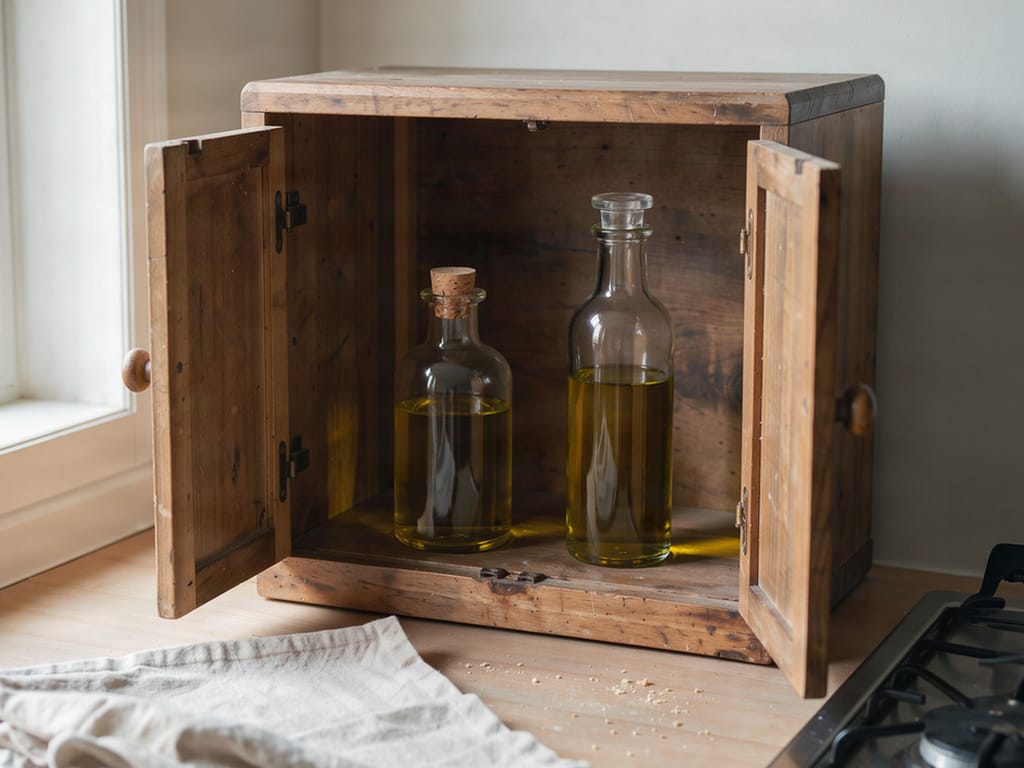
Store olive oil tightly closed in a dark, cool cupboard away from the stove, and use it within about 3 months of opening. Canola oil, according to producers, lasts even longer: up to a year once opened. Oil doesn't need the fridge, since cold only makes it cloudy. The one exception where cold is essential is homemade oil with garlic or fresh herbs. That goes straight into the fridge and keeps for 4 days at most.
Unopened olive oil keeps until the best-before date on the label. Once opened, use it within about 3 months. The North American Olive Oil Association (NAOOA) recommends using an open bottle within 3 months and considers the date on the label the most reliable guide for an unopened bottle.
Here are approximate times from the USDA FoodKeeper storage charts (they apply to olive oil and ordinary vegetable oil):
unopened, room temperature (pantry): 6–12 months
opened, room temperature (pantry): 3–5 months
opened, fridge: 4 months
With extra virgin olive oil, stick to the shorter end. It doesn't spoil any sooner, but you buy it for its fruity aroma, bitterness and peppery kick, and those fade first. After half a year in an open bottle, there's little aroma or pepperiness left.
Tip: write the date you opened it on the bottle with a marker. In three months you won't remember.
Seasonal baking plans, tested recipes and kitchen tricks that save you time. Unsubscribe in one click.
According to the Canadian canola growers' association (Hello Canola), unopened canola oil lasts up to 2 years from production, and opened oil usually up to 1 year, kept at room temperature in a dark, cool cupboard. This applies to refined oil, the kind you can buy in any supermarket.
unopened, room temperature: up to 2 years from production (Hello Canola), but the date on the label always takes priority
opened, room temperature: usually up to 1 year (Hello Canola); the more conservative USDA FoodKeeper charts give 3–5 months for vegetable oils
The gap between sources is big, so in practice: refined canola oil that smells neutral is fine to use even after half a year. Once it starts to smell different, it's done, whatever the calendar says. Cold-pressed canola oil (darker, with a nutty aroma) is more delicate. Go by the producer's date and use it up as soon as you can after opening.
Store both olive oil and canola oil by four rules: dark, cool, tightly closed and in smaller containers. Three things harm oil: light, heat and air. All of them kick off the oxidation that turns oil rancid. Two of the rules work against air: keeping the bottle closed, and using a smaller container so the oil doesn't sit open for months.
Dark. A cupboard or pantry, not a shelf by the window. Extra virgin olive oil contains chlorophyll, which speeds up oxidation in light. Studies have shown that extra virgin oil exposed to light can stop meeting the limits for extra virgin oil after just two months. A dark bottle helps, but it doesn't replace the darkness of a cupboard.
Cool. Not next to the stove or oven, or above the dishwasher. Ordinary room temperature in the coolest cupboard in your kitchen is enough.
Closed. Screw the cap on firmly after every use. Keep an open-necked pourer only for oil you'll use up within a few weeks.
Smaller containers. A five-liter can only pays off if you really will use it all. Otherwise, decant into a smaller bottle only what you'll use, and keep the big container closed in the dark.
The Canadian canola growers (Hello Canola) say the same: keep no more oil in a dispensing bottle on the counter than you'll use in 2–4 weeks, and leave the rest closed in the cupboard.
Olive oil doesn't need the fridge. Kept closed in a dark, cool place, it lasts at room temperature, and the fridge adds only a little. If you put it there anyway, nothing bad happens: chilled olive oil thickens, turns cloudy, forms flakes or even solidifies completely. According to the NAOOA this is purely a change in appearance that affects neither quality nor safety, and the oil clears again at room temperature.
According to Hello Canola, canola oil turns cloudy below 6°C (43°F, fridge temperature) but stays liquid, so you can use it for a cold dressing straight from the fridge. If you mostly buy oil for salads, you'll find more on choosing one in our article vegetable salad dressing and how to improve it.
And beware of the popular "fridge authenticity test": the fact that olive oil doesn't solidify in the fridge doesn't mean it's adulterated. The NAOOA points out that solidifying depends on the olive variety and fatty acid composition, so the test proves nothing.
You can tell rancid oil by nose and tongue: it smells like crayons and tastes like stale walnuts, which is how the NAOOA describes rancid olive oil. A 30-second method:
Pour a teaspoon of oil into a small bowl and warm it in your palm for a moment.
Sniff it. Fresh olive oil smells of grass, tomato leaves or green apple, and fresh refined canola oil of almost nothing.
Taste a drop. Rancid oil is greasy, sour and scratches unpleasantly in the throat. That's different from fresh olive oil, whose peppery bite is clean and fades quickly.
Color alone tells you nothing: olive oil can be golden or green, and cloudiness from the cold is harmless. Aroma is what counts. Don't cook with rancid oil: it spoils the flavor of the whole dish, and the NAOOA recommends not consuming oxidized oil.
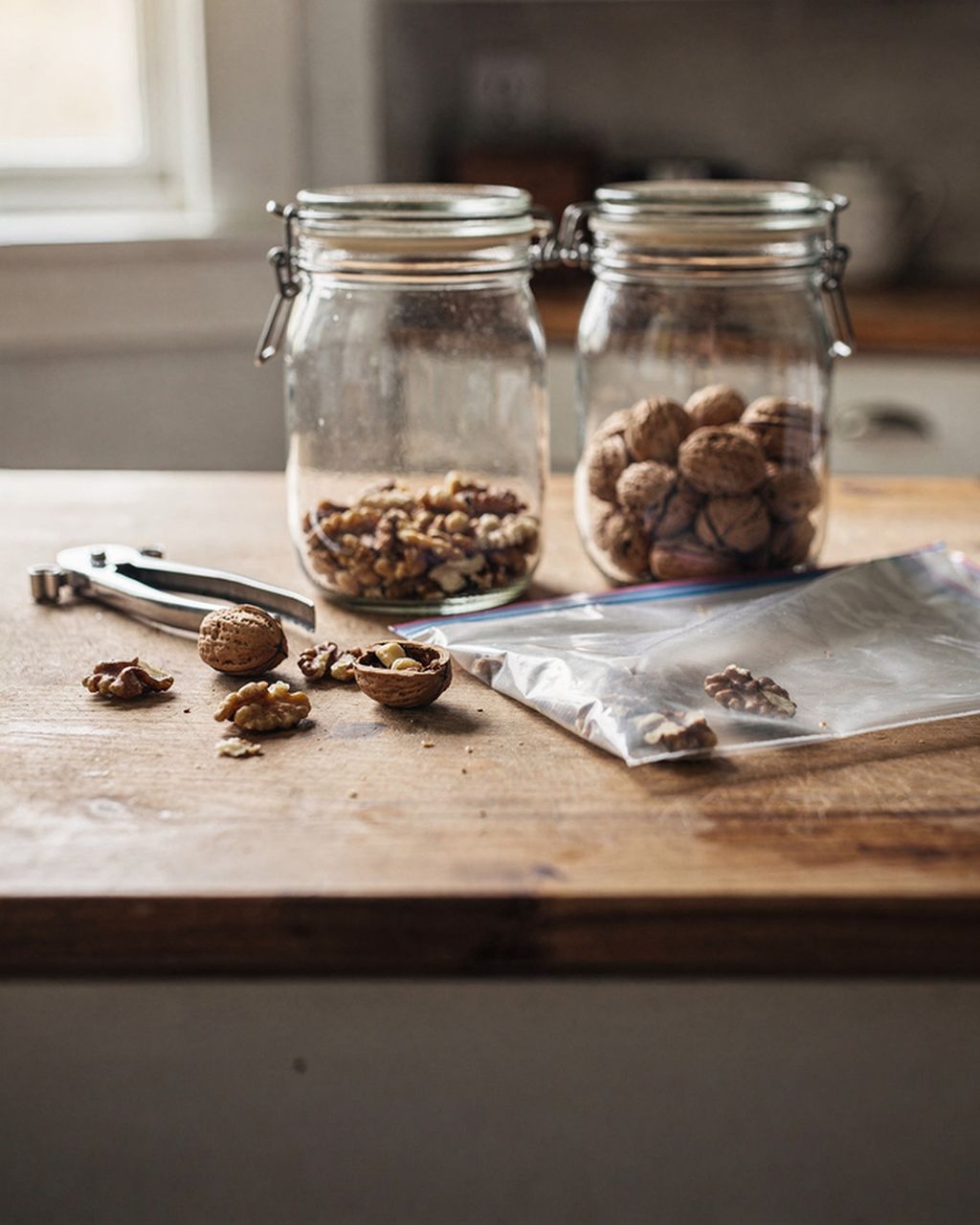
The same process, fat oxidation, spoils nuts too, which are essentially oil sealed in a shell. For how to slow it down, see how to store nuts so they don't go rancid.
Homemade oil with garlic or fresh herbs can produce botulinum toxin at room temperature. That's why, according to US home-canning guidance (NCHFP), it goes into the fridge right after making and should be used within 4 days, with any leftovers thrown away. The reason is a combination of three things:
Spores from soil. Garlic, herbs and chiles can carry spores of the bacterium Clostridium botulinum.
No oxygen. The oil seals in the ingredients and creates an oxygen-free environment in which spores turn into toxin-producing bacteria.
Low acidity and warmth. Garlic and herbs aren't acidic, and room temperature favors the bacteria's growth.
According to the US agency FSIS, garlic in oil is among the foods in which botulism has already occurred. You can't detect the toxin by taste, smell or appearance: the oil can look and smell completely normal.
Store-bought flavored oils are a different category: the producer treats them to make them safe, and you'll find storage instructions on the label. Keep fresh herbs in oil in the fridge even in the form of pesto. For example, wild garlic pesto belongs in the fridge, not on the counter.
You can freeze olive oil and it won't harm it. It just turns cloudy and solidifies, then clears and turns liquid again once it warms to room temperature. It only makes sense for a large supply you won't open for a long time: pour it into smaller clean bottles, keep one in the cupboard for everyday use and leave the rest sealed somewhere cold. Don't move the same bottle back and forth between cold and warm, though, as moisture will condense inside.
You don't need to pour extra virgin olive oil into a dark bottle. Keeping it in the dark matters more than the color of the bottle. Studies show that even oil in dark glass oxidizes in the light, just more slowly. If you buy olive oil in a clear bottle, simply put it away in a closed cupboard. Pouring it into another container also exposes it to air.
Canola oil can stay in its original plastic bottle. Just keep it closed in a dark cupboard away from the stove and oven. There's no need to pour it into glass. If you have a large bottle, decant into a smaller dispensing bottle only as much as you'll use in 2–4 weeks, as the Canadian canola growers (Hello Canola) recommend.
You can often use olive oil after its best-before date if it was kept sealed, stored in the dark, and smells and tastes normal. The best-before date shows how long the producer guarantees quality, not a safety cutoff. Always sniff it before using, though: if it smells of crayons or stale nuts, it's rancid and should go.
You can reuse both canola and olive oil after frying if it looks and smells clean once cooled. How many times and how long to store it can't be answered with a single number. It depends on what you fried in it (breaded foods and fish spoil it faster) and how hot it got. Strain it through a fine sieve or cheesecloth, keep it closed in the dark and treat it as an ingredient with a shorter shelf life: every heating speeds up oxidation, so used oil turns rancid much sooner than fresh oil from the bottle. Throw it out once it darkens significantly, foams, starts to smoke at a lower temperature or smells sharp.
One recipe worth heating the oven for, one tip, and one deal from the shop. Nothing else.