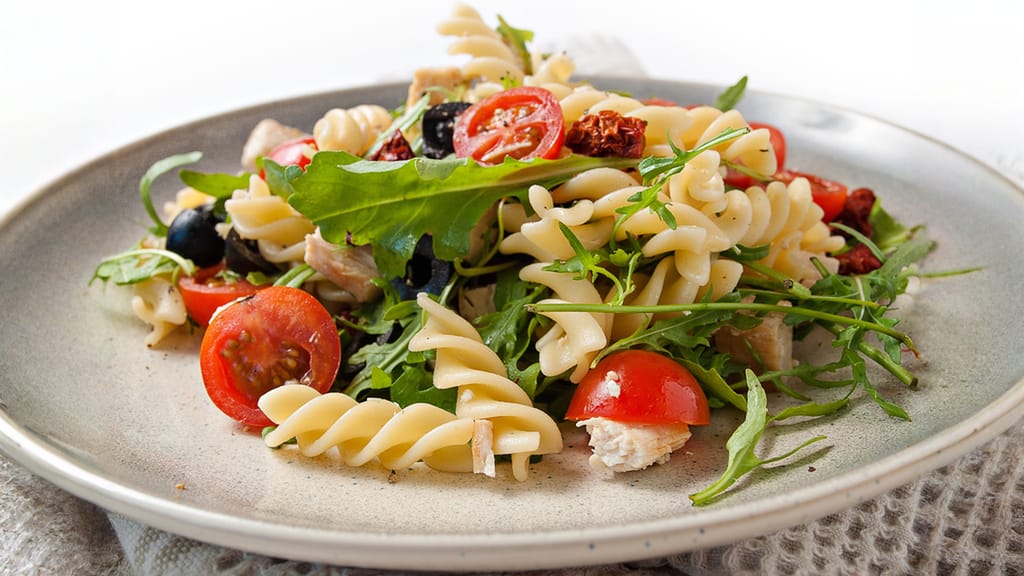
Pasta salad with chicken strips, tomatoes and arugula

Updated Jul 19, 2026
Summer salads can be just as filling as a plate of meat when they're built on three pillars: protein (aim for 20–30g per serving), fibre, and healthy fat. With that trio in place, a salad stops being a side dish and becomes a proper lunch or dinner you can pull together even on the hottest days. Below you'll find how to balance those three components, how to handle meat and plant-based proteins so they stay juicy and crisp, plus tried-and-tested combinations and homemade dressings.
What keeps a salad filling comes down to three components: protein, fibre and healthy fat. Add at least one source from each group to every portion, and the salad will keep you full for hours, not twenty minutes.
Protein — grilled chicken breast, tuna, hard-boiled eggs, chickpeas, lentils or seared tofu; aim for roughly 20–30g per serving.
Fibre — leafy greens (rocket, spinach) add bulk, but it's really the pulses and whole grains like quinoa that make a salad genuinely filling.
Healthy fat — avocado, extra virgin olive oil, nuts and seeds.
Here's why it works: protein triggers satiety hormones (GLP-1 and PYY) and suppresses ghrelin, fibre slows digestion, and fat delays stomach emptying. Nutrition research shows it's the combination of all three — not any single one on its own — that keeps hunger at bay the longest.
Aim for at least 20g of protein per portion — enough that the salad doesn't stay a side dish. Grilled chicken breast is the easiest route, but plant-based sources can do the same job: a tin of chickpeas has around 15g of protein, cooked lentils similarly, and a hard-boiled egg or seared tofu can make up the rest.
If you're not sure where to get your protein from, check out our guide to the best protein sources for your diet. And here are a few tried-and-tested hearty salads that hit this exact ratio:
Pasta salad with chicken strips, tomatoes and arugula
Pasta salad with chicken strips, tomatoes and rocket — a hearty salad with meat
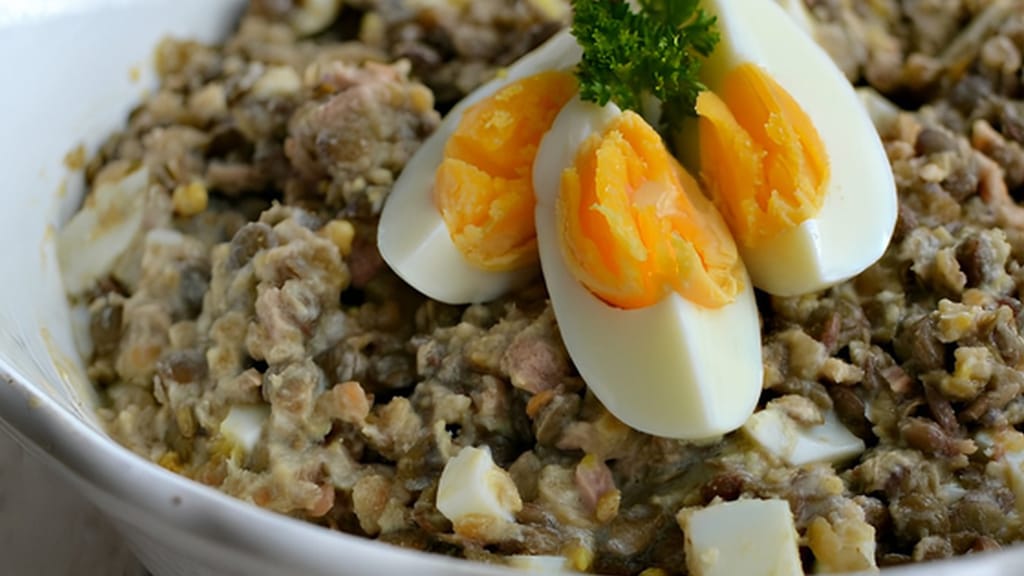
Lentil salad with tuna
Lentil salad with tuna — a double dose of protein in a summer salad
Leafy greens give a salad its bulk, but it's the fibre from pulses and whole grains that actually fills you up. Spinach and rocket on their own bring freshness and few calories, but they only keep hunger away briefly. So add cooked quinoa, chickpeas or lentils — fibre slows digestion and keeps that feeling of fullness going much longer.
A great base that combines a grain and a pulse in one bowl:
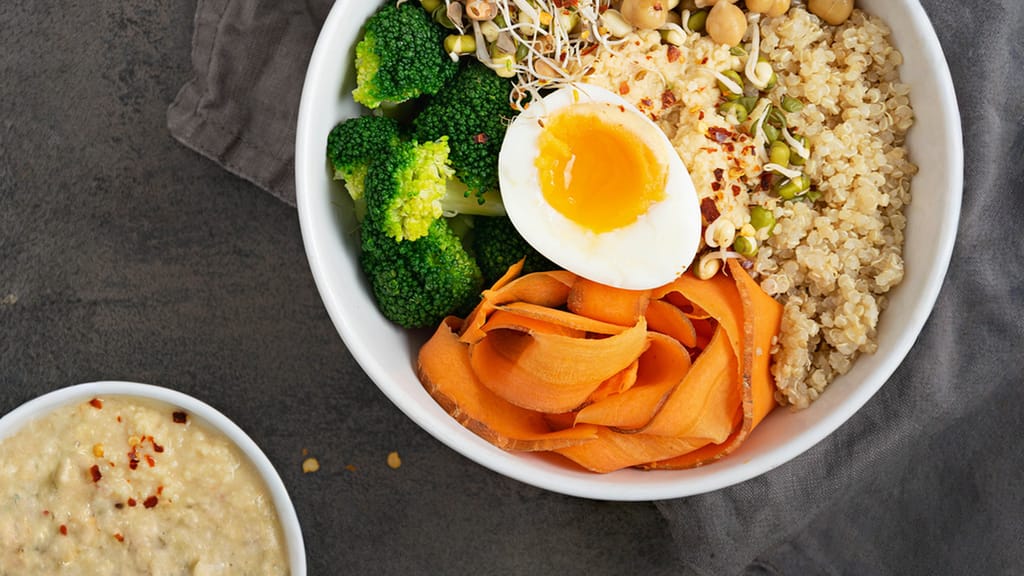
Quinoa buddha bowl with egg, chickpeas and vegetables
Quinoa Buddha bowl with egg, chickpeas and vegetables — fibre and protein in one go
Healthy fat is what finishes a salad off — it delays hunger and carries flavour. Avocado brings creaminess and monounsaturated fats, a handful of almonds or walnuts adds crunch, and walnuts in particular contribute plant-based omega-3s (ALA). Build your dressing base on extra virgin olive oil.
Keep it moderate: half an avocado and a small handful of nuts per portion is plenty. Fat is calorie-dense, so you don't need heaps of it — you just need it to be there.
Meat stays juicy in a salad when you don't overcook it and let it rest afterwards. Two methods cover most salads: grilling (or searing on a ridged pan) for chicken, and a quick sear for steak or pork tenderloin. In both cases, slice the meat only after it's rested, and always against the grain into thin slices.
Marinate the chicken breast for at least 30 minutes, grill for 6–7 minutes per side, then let it rest for 5 minutes. A simple marinade of olive oil, lemon juice, crushed garlic, salt and pepper does the job — the acid from the lemon seasons and tenderises the meat. Heat the grill or pan to medium-high; too fierce a heat will char the outside while leaving the inside raw.
If the breasts are on the thicker side, pound them to an even thickness first or butterfly them — that way they cook through evenly without drying out at the edges.
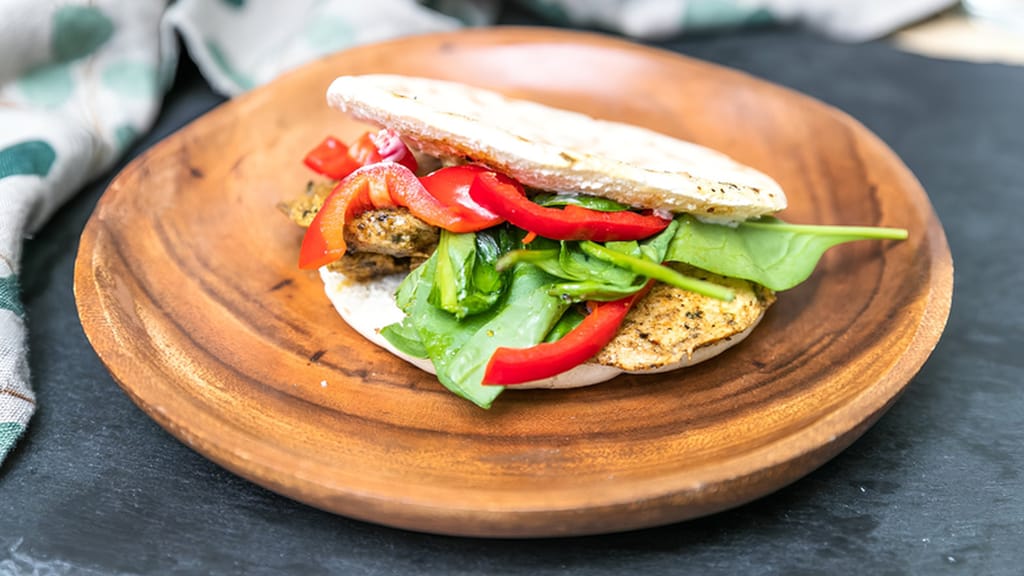
Chicken breast in herb marinade with pita bread
Herb-marinated chicken breast — a juicy base for any summer salad

Sear beef steak or pork tenderloin in a hot pan for 3–4 minutes per side, then let it rest. Bring the meat to room temperature at least 30 minutes before cooking — cold meat straight from the fridge cooks unevenly. After searing, set the meat aside for 5 minutes so the juices redistribute; slice it straightaway and they'll end up on the chopping board instead of in your salad.
Slice both tenderloin and steak thinly against the grain — it makes them easier to eat in a salad and gives the impression of a heartier portion.
A tried-and-tested combo: a mix of leaves (rocket, spinach, iceberg), sliced grilled chicken breast, diced avocado, halved cherry tomatoes, thin red onion rings and crumbled feta. Keep the ratio simple — roughly one chicken breast, half an avocado and a handful of tomatoes per portion, with feta just for seasoning.
Dress it with a balsamic dressing (3 tablespoons balsamic vinegar, 1 tablespoon honey, salt, pepper and a tablespoon of olive oil) and toss just before serving so the leaves don't wilt. Cook the chicken following our recipe for herb-marinated chicken breast. A dedicated recipe for this exact salad is coming soon.
A salad can be just as filling without meat — pulses, tofu and grains bring the protein and texture instead. The most reliable pairing is roasted chickpeas for crunch and marinated tofu for heartiness; between them they take over the role meat would otherwise play.
Roasted chickpeas add crunch to a salad along with protein and fibre. Toss drained, dried chickpeas with olive oil, salt and spices (smoked paprika, cumin or garlic) and roast at 200°C for about 25–30 minutes until golden. The trick to crunchiness is drying them thoroughly first — damp chickpeas tend to steam in the oven rather than roast. Sprinkle them on the finished salad only at the end, otherwise they'll go soft in the dressing.
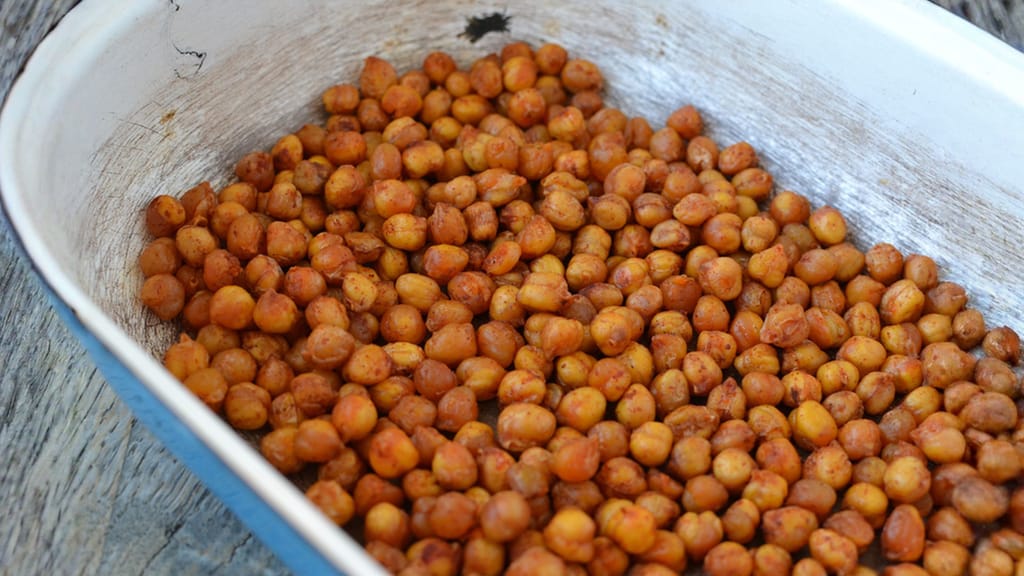
Crispy roasted chickpeas with spices
Crunchy chickpeas roasted with spices — a crispy topping for summer salads
Marinated, pan-seared tofu adds 15–20g of protein per portion and soaks up all the flavour of the marinade. Cut the tofu into cubes, press out the excess water, and marinate it in a mix of soy sauce, crushed garlic and grated ginger. Then fry it in a pan until crisp on every side. The drier the tofu going into the pan, the better it browns — damp tofu just steams. A dedicated recipe for marinated tofu salad is coming soon.
Combine cooked quinoa, chickpeas, cucumber, halved cherry tomatoes and chopped parsley, then dress with a tahini and lemon juice dressing. Keep the ratio simple — roughly equal parts quinoa and chickpeas, with the tahini whisked smooth with lemon juice and a little water, then seasoned with salt and pepper. It's a hearty lunch to take to work or a light dinner, packed with protein and fibre without a scrap of meat.
Two versions of a similar salad you can always rely on:
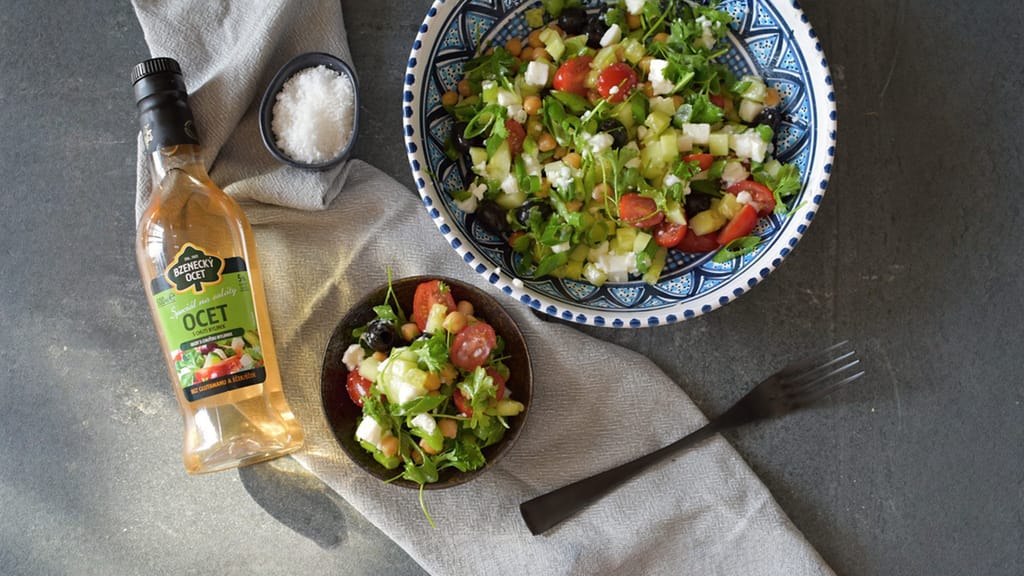
Mediterranean chickpea salad with goat cheese and vegetables
Mediterranean salad with chickpeas, goat's cheese and vegetables — a hearty meat-free lunch
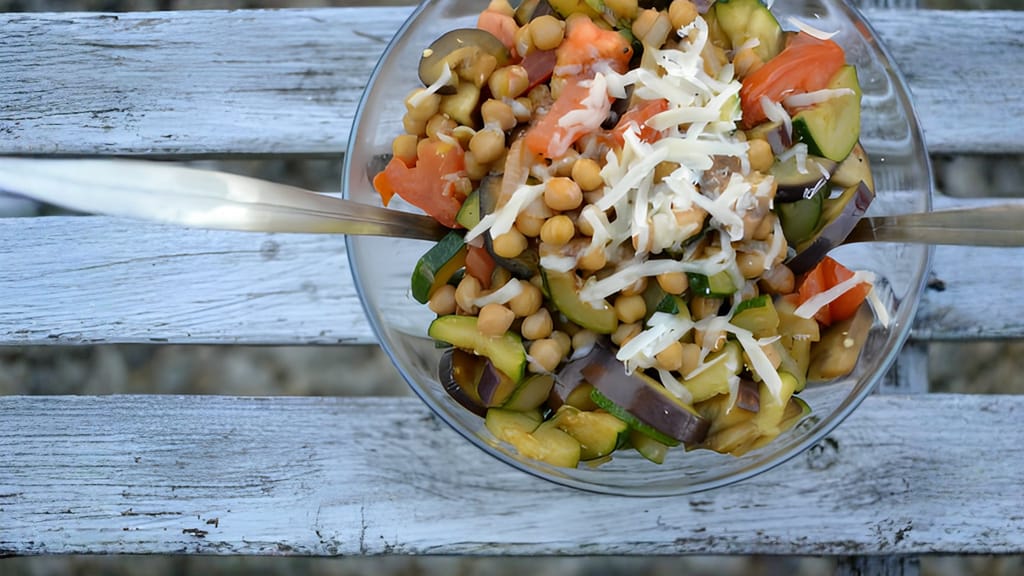
Grilled chickpea salad
Grilled chickpea salad — a summer take on this crunchy pulse
A good dressing rests on a fat-to-acid ratio of roughly 3:1, and two versions will cover most summer salads: a bright lemon-olive oil one and a creamy yoghurt-herb one. Either takes a minute to whisk together at home and tastes better than anything store-bought — plus you know exactly what's in it.
A fresh dressing for vegetable and fruit salads alike: juice of 1 lemon, 3 tablespoons extra virgin olive oil, a pinch of salt and freshly ground pepper. If you like a touch of sweetness, stir in a teaspoon of honey or maple syrup. It lifts the flavour of tomatoes, cucumber and leafy salads without overpowering them.
A creamy, lighter stand-in for mayonnaise-based dressings: 150ml natural yoghurt, a handful of chopped herbs (parsley, chives or dill), a pinch of salt, pepper and a tablespoon of lemon juice. It suits potato and pasta salads well, and pairs nicely with bolder ingredients like grilled chicken or roasted chickpeas.
A good dressing keeps sweet, salty, sour and bitter in balance — none should overpower the rest. If it's too sharp, mellow it with a drop of honey; if it tastes flat, add salt or mustard. Experiment with different vinegars (balsamic, cider) and garlic for extra depth. Always taste your dressing on a piece of lettuce, not off a spoon — it tastes different on the leaves.

You'll know a hearty summer salad by its three components in one bowl: protein (20–30g — chicken, tuna, egg, chickpeas, lentils or tofu), fibre (pulses and whole grains, not just leaves), and healthy fat (avocado, nuts, olive oil). Don't overcook your meat, and let it rest; roast the chickpeas and tofu until crisp, and finish with a homemade dressing at a 3:1 fat-to-acid ratio. That's really all it takes to satisfy even the biggest meat lover.
A salad assembled without dressing keeps in the fridge for 2–3 days; once dressed, eat it by the next day. For meal prep, layer it in a sealed container starting from the bottom: dressing first, then pulses and grains, with leaves on top — toss it all together only just before eating so the leaves don't wilt. Always add avocado and crispy roasted chickpeas fresh, right before serving.
The best swaps for feta in a salad are a Balkan-style brined cheese, firm tofu crumbled with lemon juice and salt, or a fermented almond 'feta' for a vegan version. If you're not fussed about that salty, cheesy tang, just leave it out and boost the saltiness with olives or capers instead — the salad will still work.
Most often it's missing protein and fat — leaves and vegetables on their own take up a lot of space but carry little energy, so hunger creeps back quickly. Add a protein source (at least 20g — chicken, egg, chickpeas, tofu) and a healthy fat (avocado, oil, nuts), and the same-sized portion will keep you full for hours.
Build a low-carb hearty salad around protein and fat, and skip the grains and pulses: grilled chicken or tuna, avocado, hard-boiled eggs, leafy greens, cucumber, and olives with an olive oil dressing. The vegetables give it bulk, while the protein and fat provide the staying power — no quinoa or chickpeas needed.
Without meat or tofu, you can bump up the protein with hard-boiled eggs, edamame, chickpeas, lentils, beans, a spoonful of seeds (pumpkin, hemp), or cottage cheese and feta. Pairing a pulse with a grain (like chickpeas with quinoa) also rounds out the amino acids, so it works as a genuine stand-in for meat.
I send one like it every week. A recipe, a tip, one deal — nothing else.