Wild garlic pesto
Spring Vegetables: What's in Season from March to June and What to Cook
Updated Aug 24, 2026
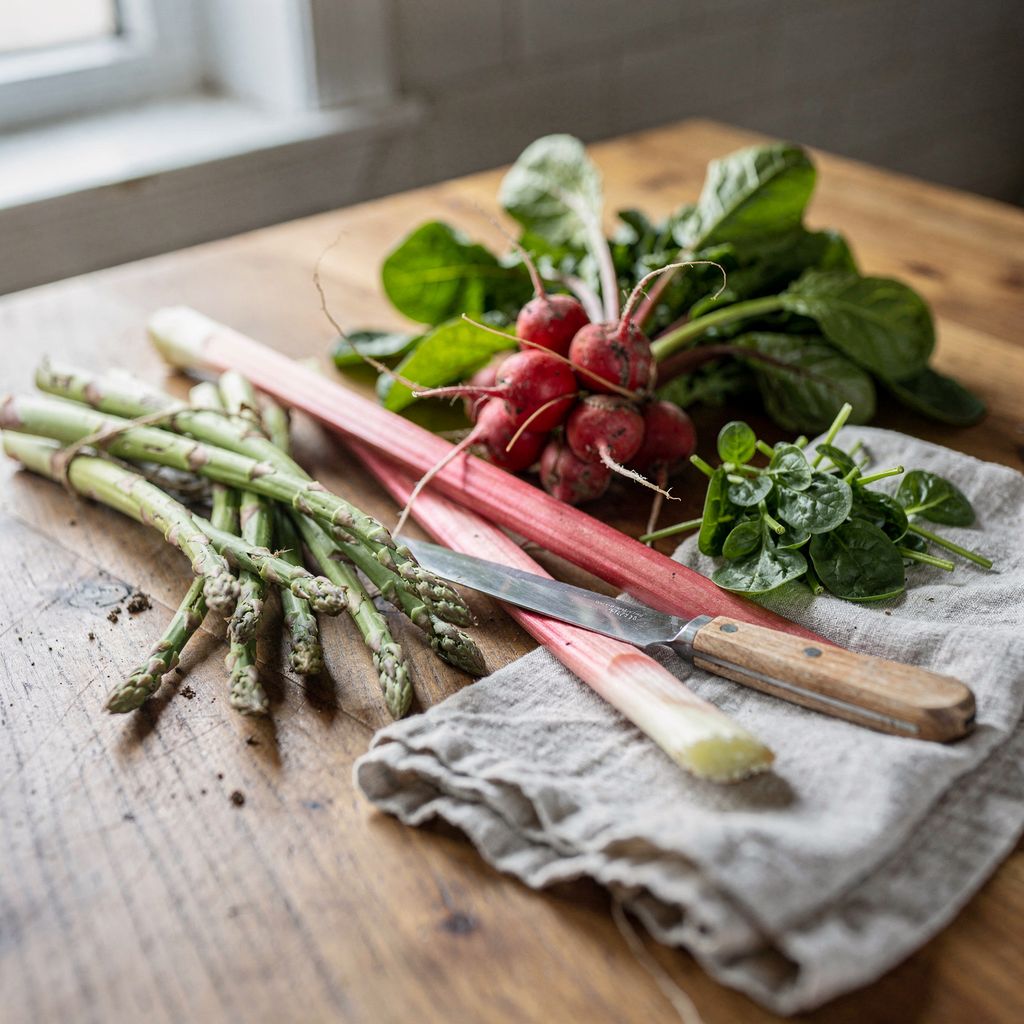
Spring vegetables have short, precise windows: wild garlic from March until it flowers, asparagus from mid-April to June 24th, rhubarb until the end of June. Catch the right moment and you'll get the cheapest, tastiest produce our climate offers all year — miss it, and you're waiting until next spring. Here's what's in season month by month, how to pick and cook it so it stays crisp and green, and a worthwhile recipe for each vegetable.
Home-grown spring vegetables come into season in this order: March – wild garlic, spring onions and chives, April – asparagus, rhubarb, radishes and leafy salad greens, May – asparagus at its peak, kohlrabi, young carrots and the first peas, June – the last of the asparagus and rhubarb, new potatoes and peas.
Month by month, in more detail:
March: wild garlic (young leaves before flowering), chives, spring onions, the first radishes and polytunnel-grown baby spinach, nettle shoots.
April: asparagus from mid-month, rhubarb, radishes, lettuce and rocket, baby spinach, kohlrabi.
May: asparagus at its best in both quality and price, rhubarb, leafy salads, young carrots, the tail end of wild garlic season (once it flowers, the leaves turn bitter).
June: asparagus only until June 24th, rhubarb until month's end, fresh peas in the pod, thin-skinned new potatoes.
Why stick to the calendar: seasonal vegetables are at their most abundant, and therefore cheapest, and don't have to travel thousands of miles, so they're picked ripe instead of green. With peas, the sugars convert to starch fast after picking, and asparagus turns woody and loses its sweetness just as quickly — with both, you can genuinely taste the difference between a spear picked yesterday and one that's a week old.
Seasonal baking plans, tested recipes and kitchen tricks that save you time. Unsubscribe in one click.
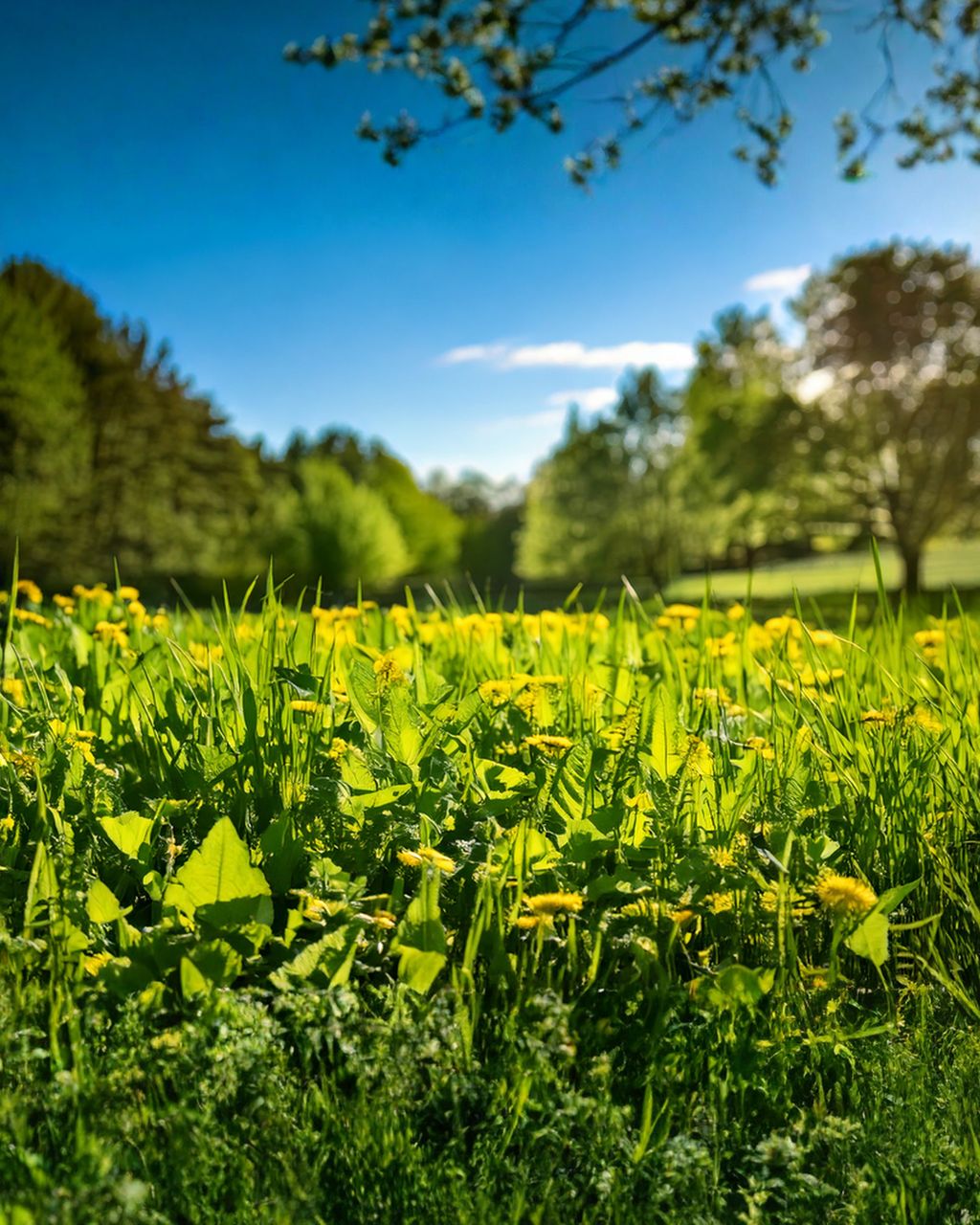
Wild garlic is picked from March until roughly mid-May — always young leaves, before flowering, since once it flowers the leaves turn bitter and lose their aroma. The best leaves are about two fingers wide, deep green and tender, not the overgrown, leathery ones.
It tastes like something between garlic and chives, but its aroma is fleeting: heat kills it. So add it raw, or right at the very end of cooking, off the heat — into soup only once it's in the bowl, into eggs only after they're done, into dough only just before baking. Simmer it for ten minutes and all you'll have left is the green colour.
Two things worth knowing:
Don't store it wet. Wrap the leaves in a damp tea towel and refrigerate; they'll keep 3–4 days before turning yellow.
It can only be frozen once processed. Whole leaves turn black and fall apart once thawed. Blend them with oil in a ratio of roughly 2 parts leaves to 1 part oil, then freeze in spoonful-sized portions.
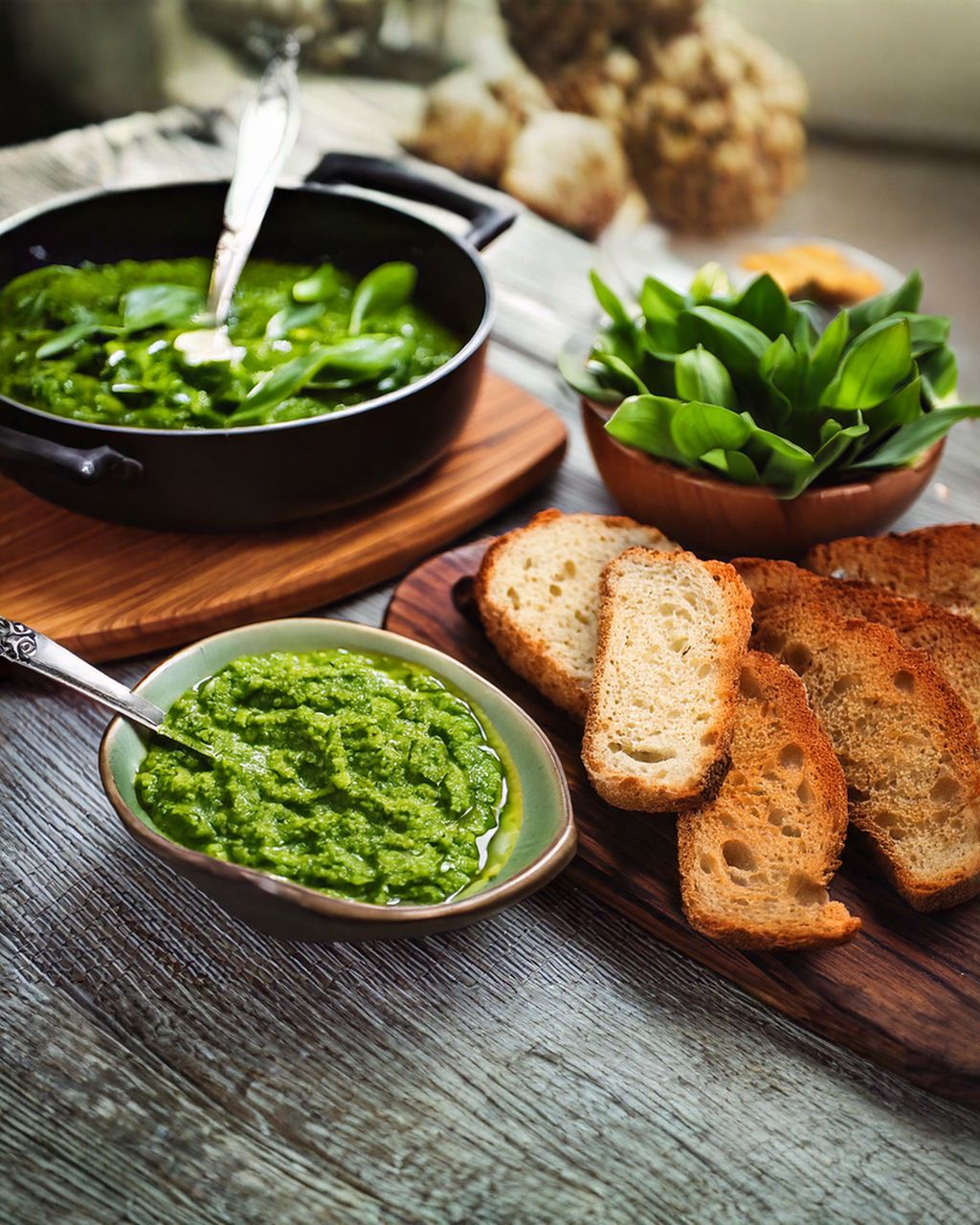
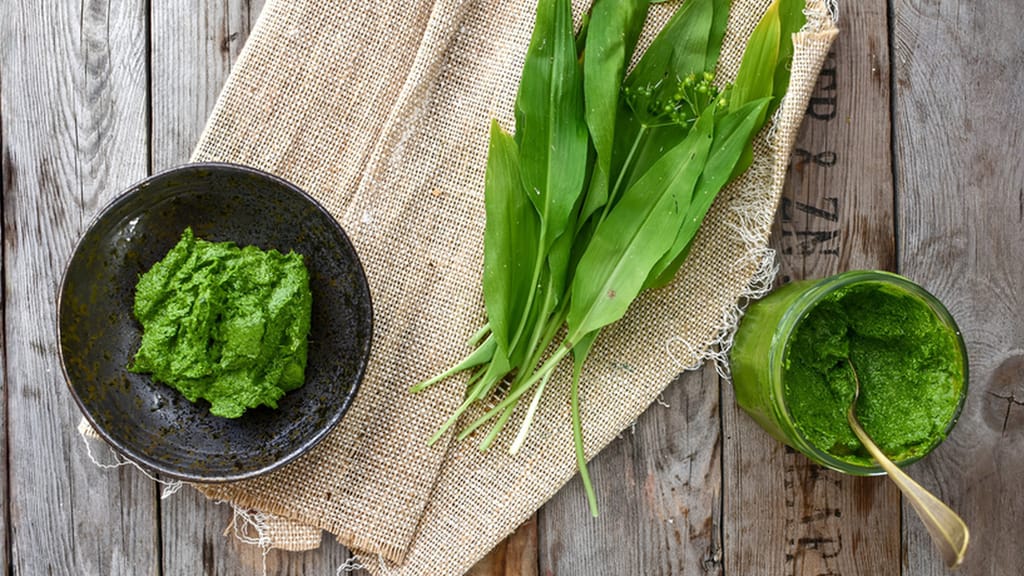
Wild garlic pesto
Wild Garlic Pesto — the fastest way to use up a big batch of leaves
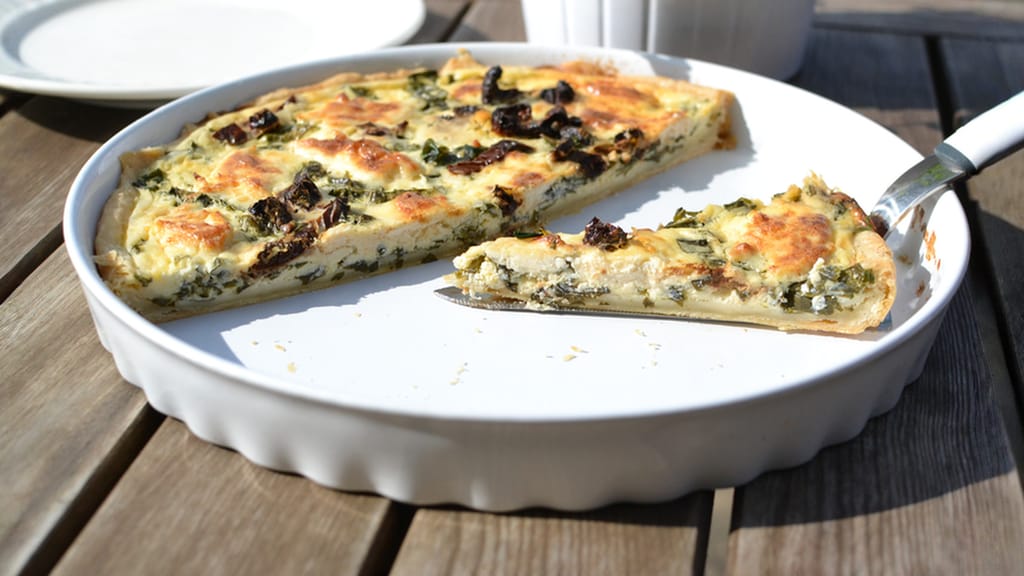
Wild garlic and goat cheese quiche
Wild Garlic and Goat's Cheese Quiche for a Spring Lunch
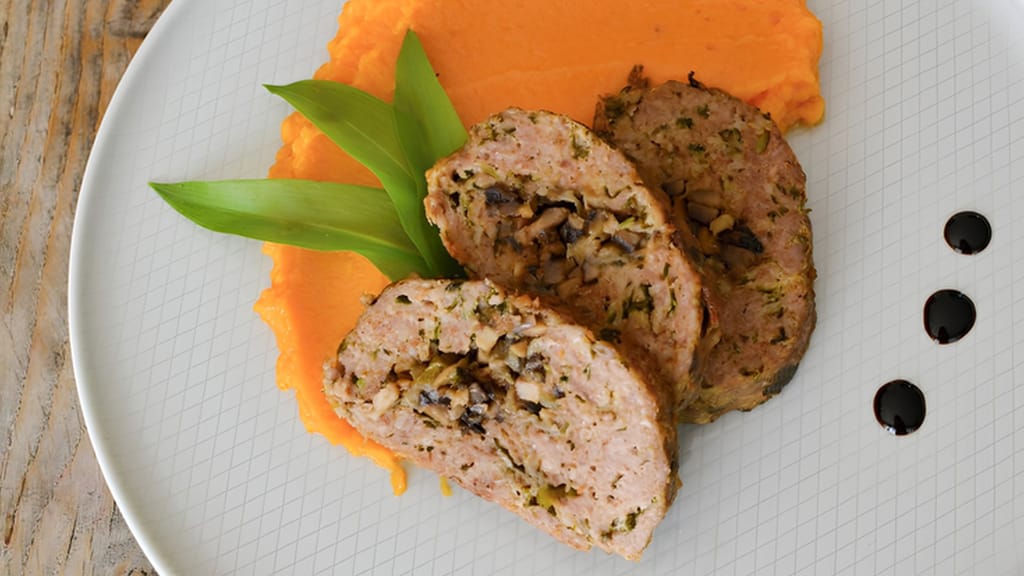
Spring meatloaf with wild garlic and sweet potato mash
Spring Meatloaf with Wild Garlic and Sweet Potato Mash
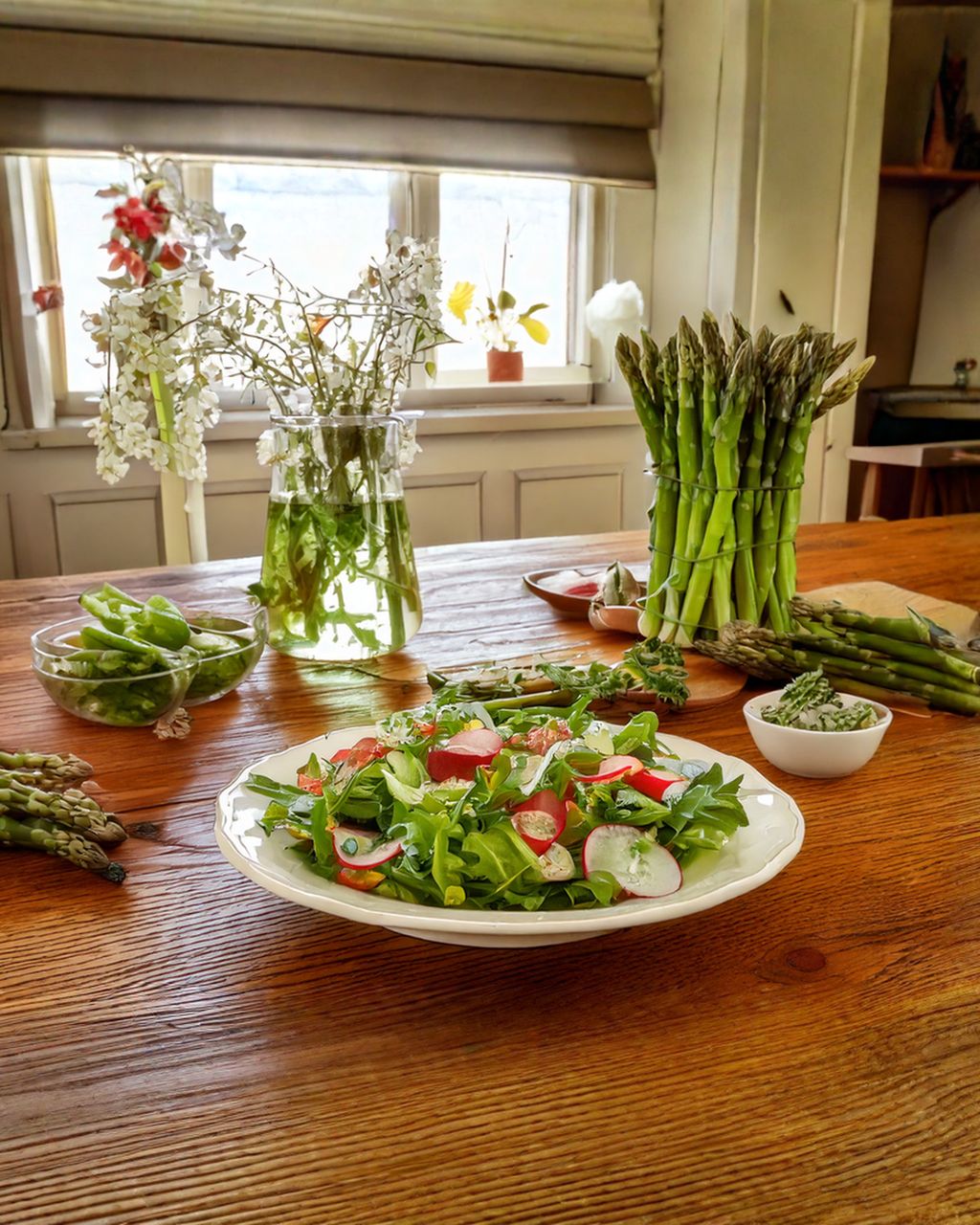
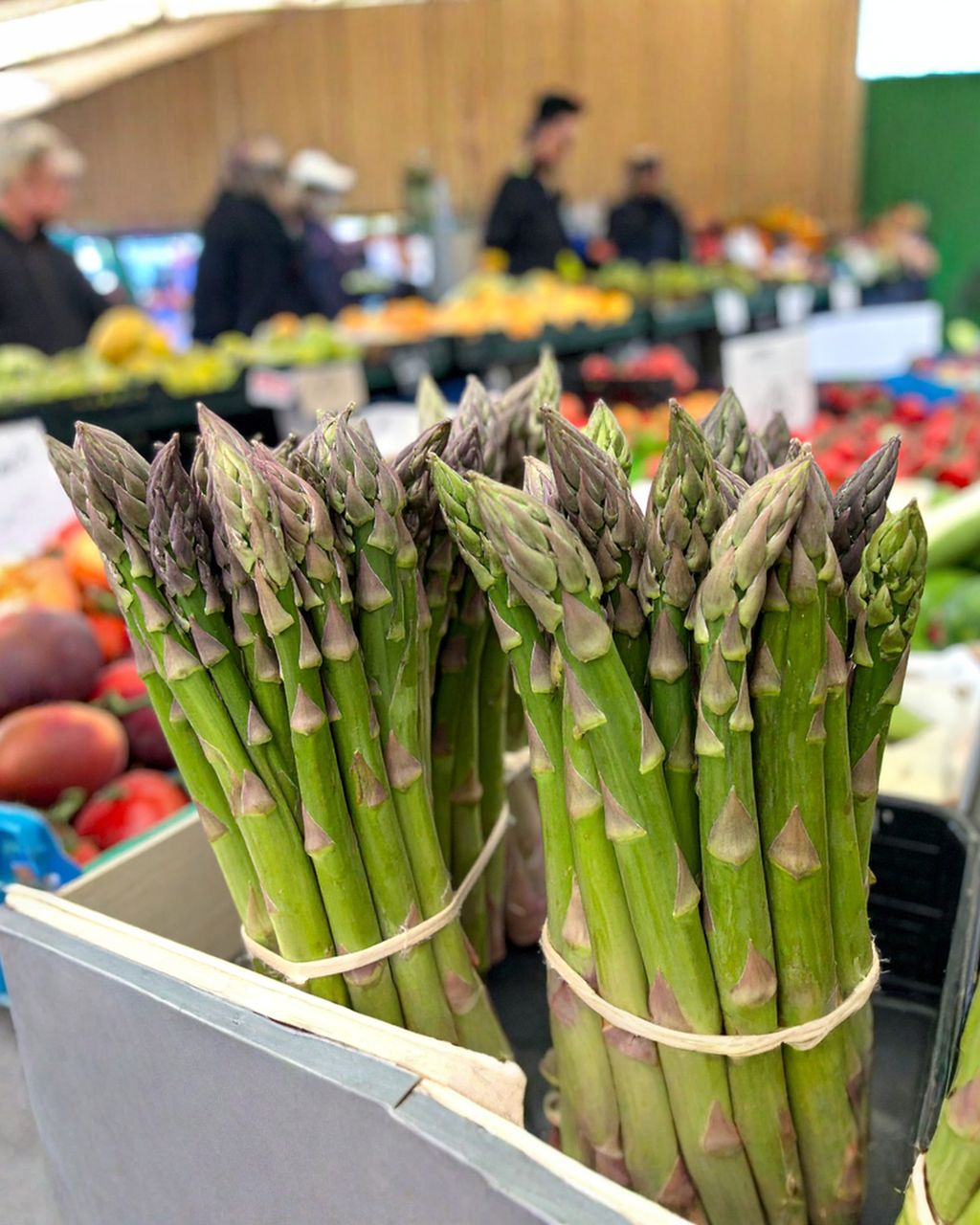
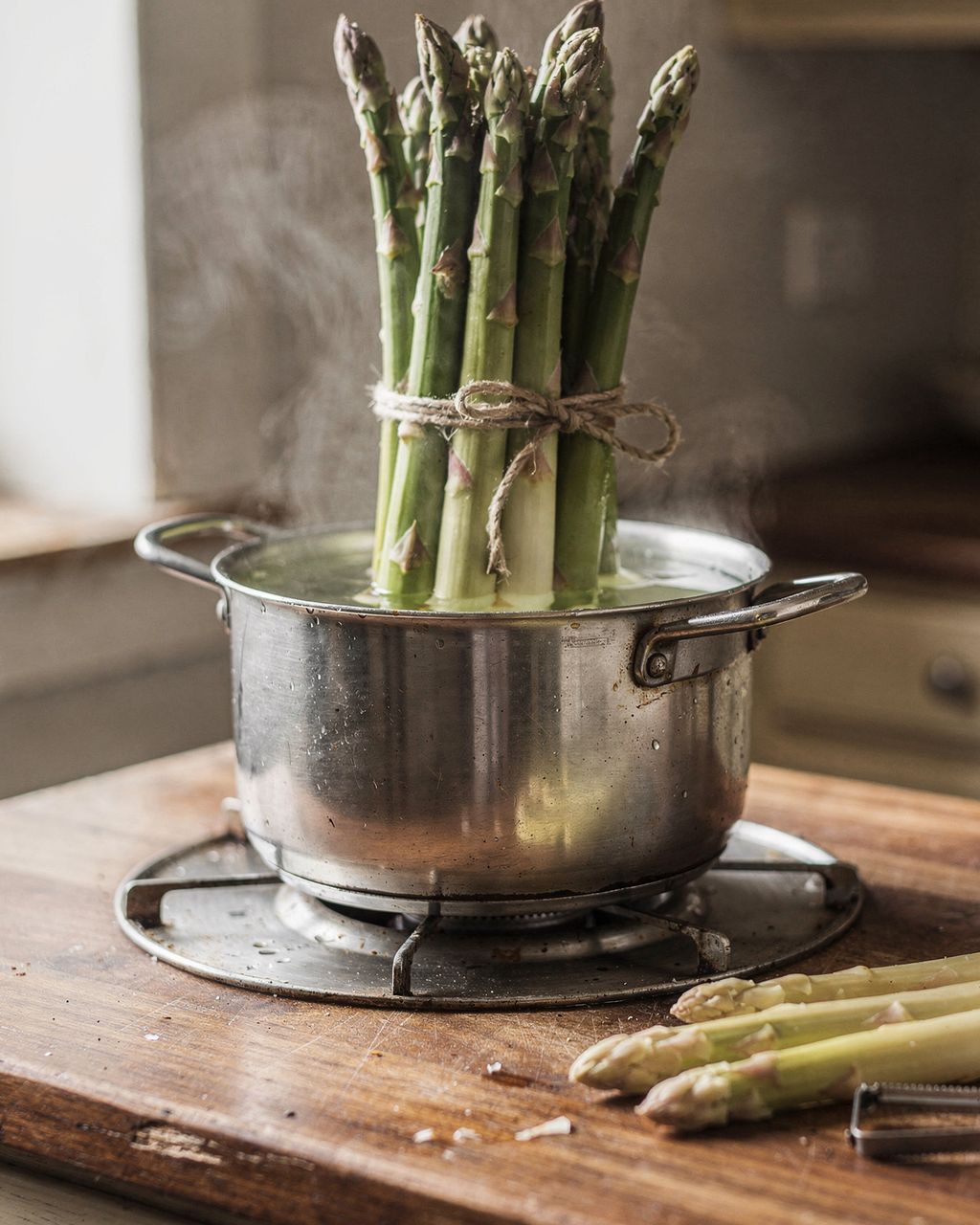
The home asparagus season starts in mid-April and traditionally ends on June 24th, St John's Day — after that date, the spears are left to grow so the plant can build up strength for next year. May offers the best value for money.
How to spot fresh asparagus: the cut end is moist and pale, not dried-out and woody. Twist two spears against each other and fresh asparagus will squeak. The tips need to be tightly closed; once they start opening up, the best of it has passed.
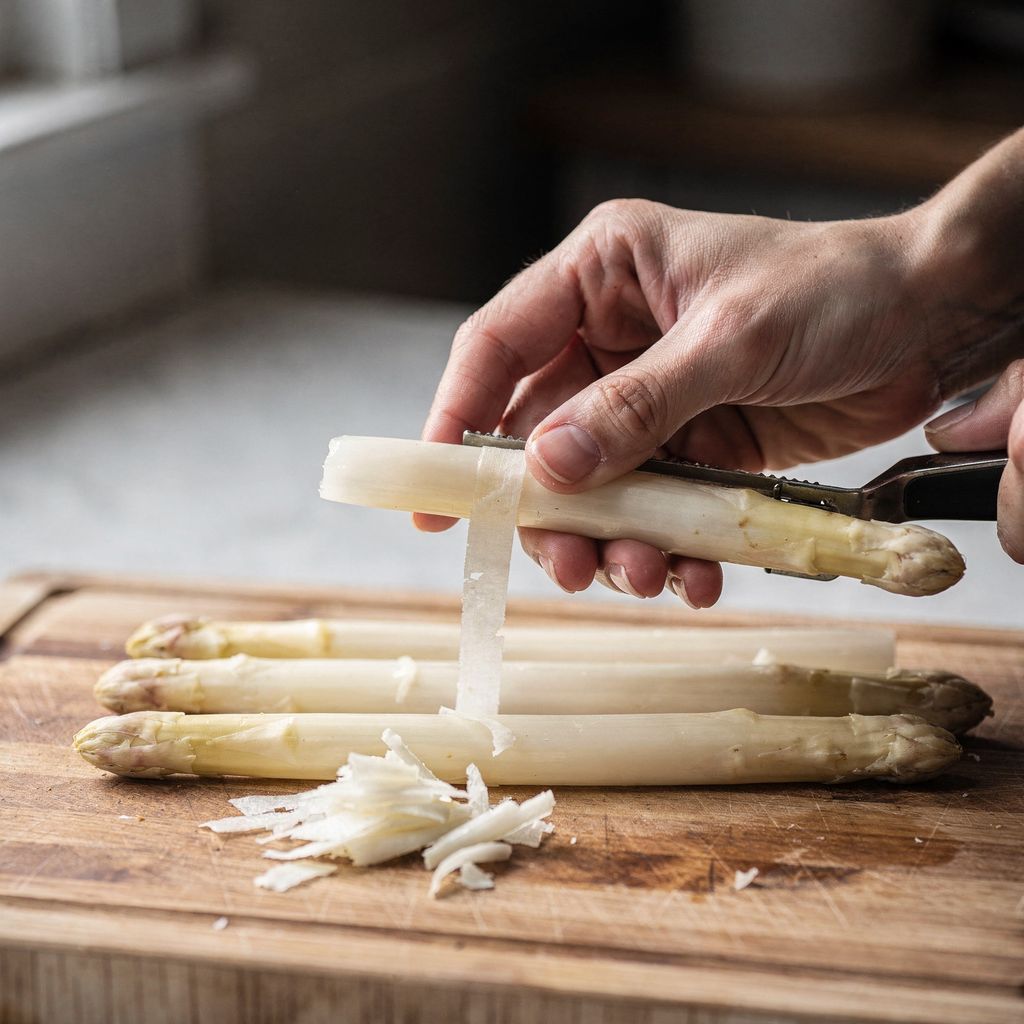
Peeling depends on colour: peel white asparagus along its entire length, from tip to base, and snap or cut off the woody bottom 2–3cm — its skin is always tough. Green asparagus only needs peeling in the bottom third, and thin spring spears often don't need peeling at all.
Cooking: green asparagus for 3–5 minutes in well-salted water, white for 8–12 minutes depending on thickness. For white asparagus, add a pinch of sugar and a knob of butter to the water along with the salt — the sugar tones down its natural bitterness, and the butter clings to the spears. It's done when a knife tip slides easily into the thickest part, but the spear still doesn't droop.
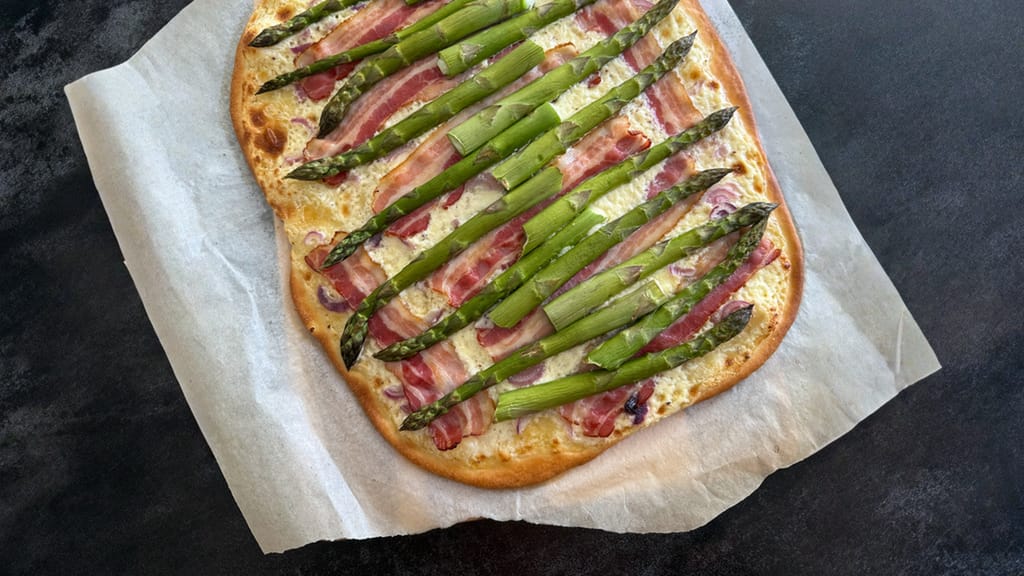
Savory asparagus tart with bacon and yogurt
Savoury Asparagus Tart with Bacon and Yoghurt
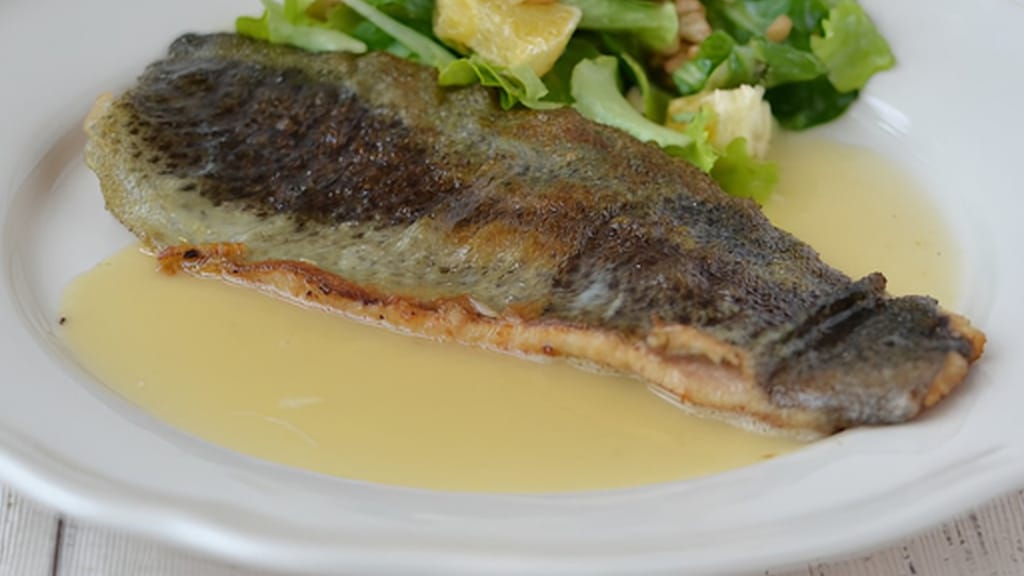
Easy quick hollandaise sauce
Easy Quick Hollandaise Sauce — the classic that belongs with boiled asparagus
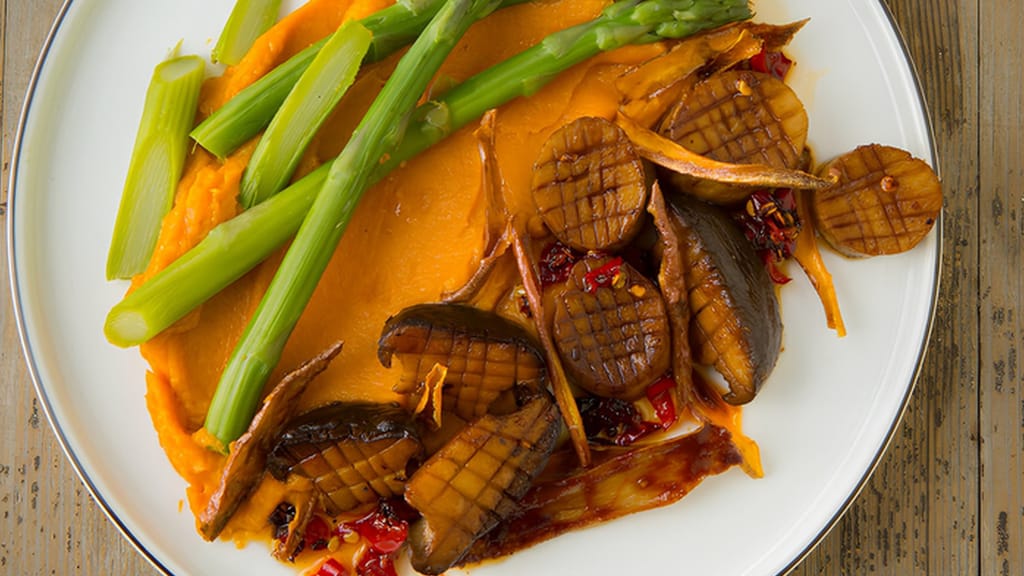
Sweet potato mash with asparagus and mushrooms
Sweet Potato Mash with Asparagus and Mushrooms
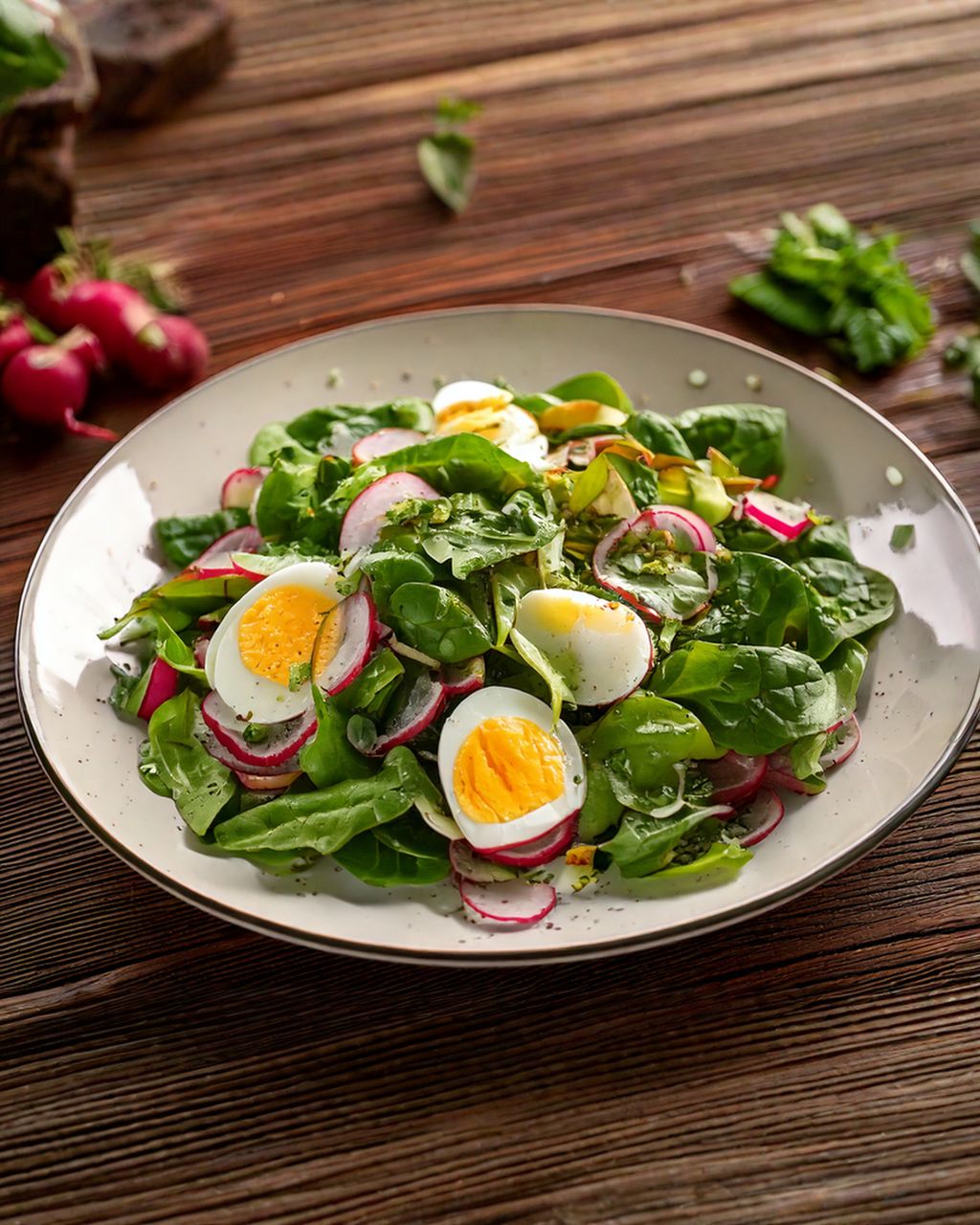
Radishes, baby spinach and leafy salads are the cheapest spring vegetables around, and you can prep them all without cooking: radishes are in season from March, spinach and lettuce from April.
Radishes: pick firm ones with fresh-looking leaves — wilted leaves give away an old radish faster than the bulb itself. If they're too peppery, slice them thin and leave them in ice water for 15 minutes — this cuts the sharpness noticeably and the slices curl up and turn crisp too. Don't throw away the leaves: they're edible and taste like a milder version of rocket, good in soup or in pesto in place of some of the basil.
Baby spinach: small leaves are for salads, bigger, darker ones are for the pan. Always rinse it in two or three changes of water — grit clings around the stems and shows up instantly in the finished dish. On the pan it wilts in 60–90 seconds, after which it just starts releasing water.
Leafy salads: after washing, dry them thoroughly or the dressing won't cling to wet leaves and will just slide to the bottom of the bowl. Mix the dressing only right before serving; salt and acid will wilt the leaves within minutes.
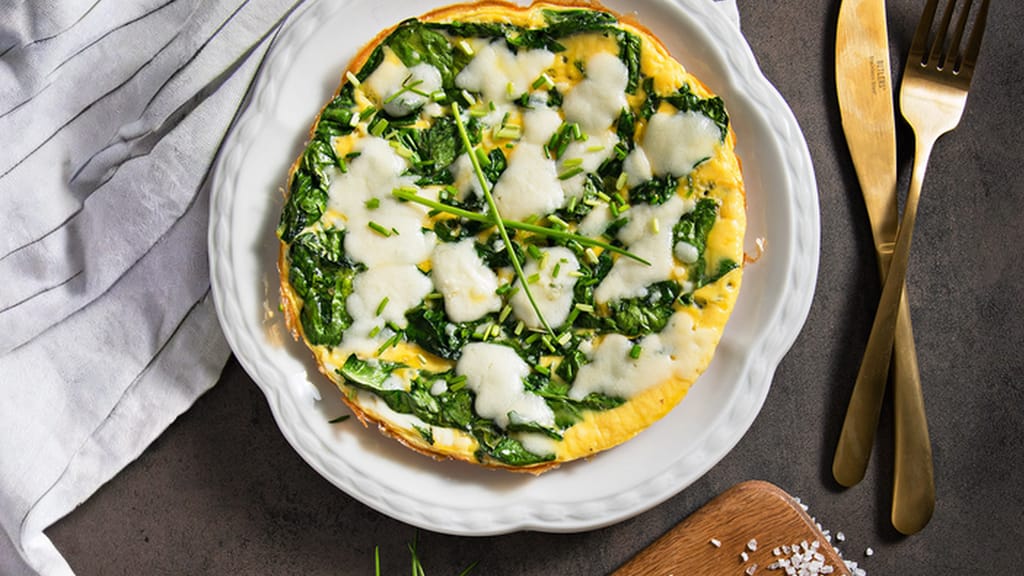
Egg frittata with baby spinach and fresh cheese
Baby Spinach and Fresh Cheese Frittata
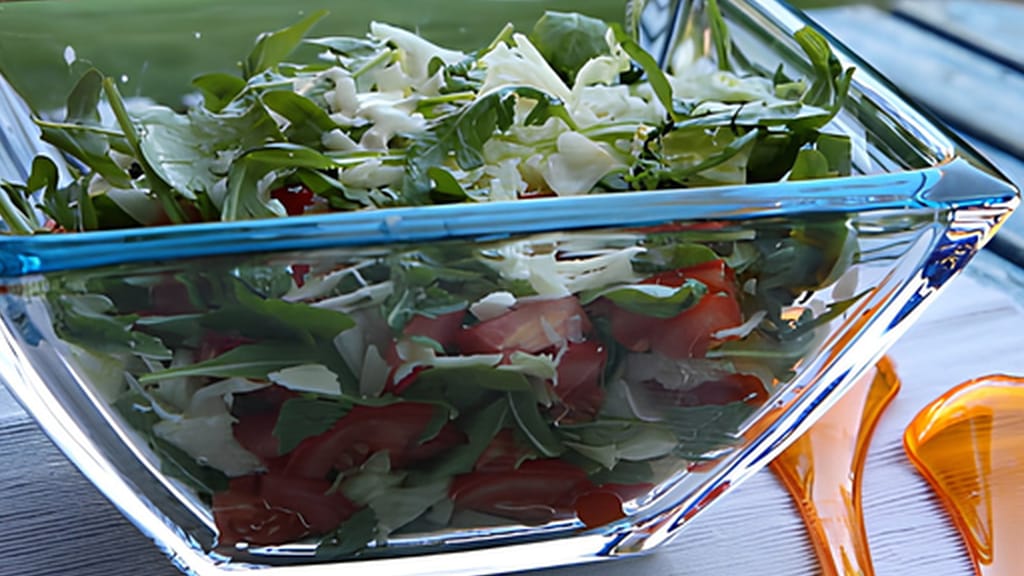
Arugula salad with tomatoes and parmesan
Rocket, Tomato and Parmesan Salad
From May, the vegetables that can handle longer cooking join in — kohlrabi, fresh peas in the pod and new potatoes.
Choose kohlrabi on the smaller side, no bigger than a tennis ball. Large ones tend to be woody and fibrous inside, and no amount of cooking fixes that. Peel the skin generously, even doing it in two passes if needed.
Peas in the pod are best completely fresh and raw; their sugars convert to starch quickly after picking, so sweet peas straight from the market taste completely different from ones that have sat in the fridge for a week. Shell them right before cooking and boil for just 2–3 minutes, no longer.
New potatoes are recognisable by their thin skin, which rubs off with your thumb — they don't need peeling, just a light scrub. Boil them from cold, salted water and they're best hot, straight after draining, with butter and fresh herbs.
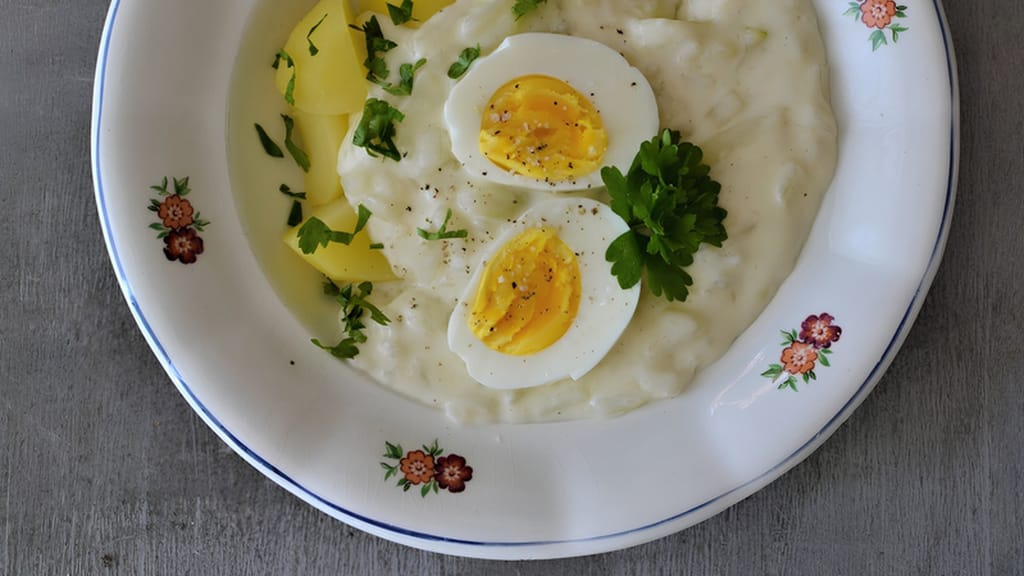
Creamed kohlrabi with potatoes and boiled egg
Creamed Kohlrabi with Potatoes and Boiled Egg — a spring classic
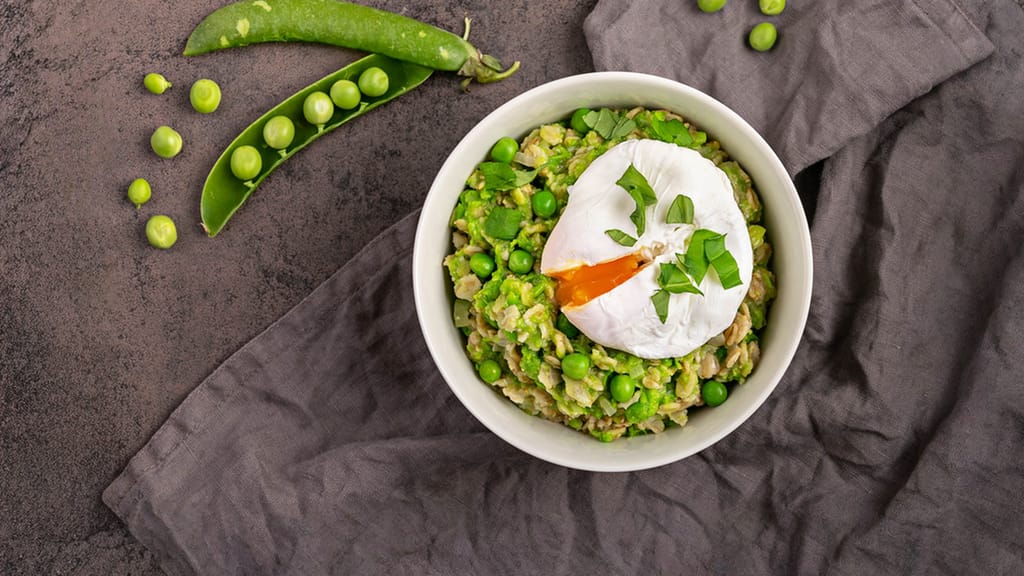
Pea and oat "risotto" with poached egg
Pea and Oat Risotto with a Poached Egg
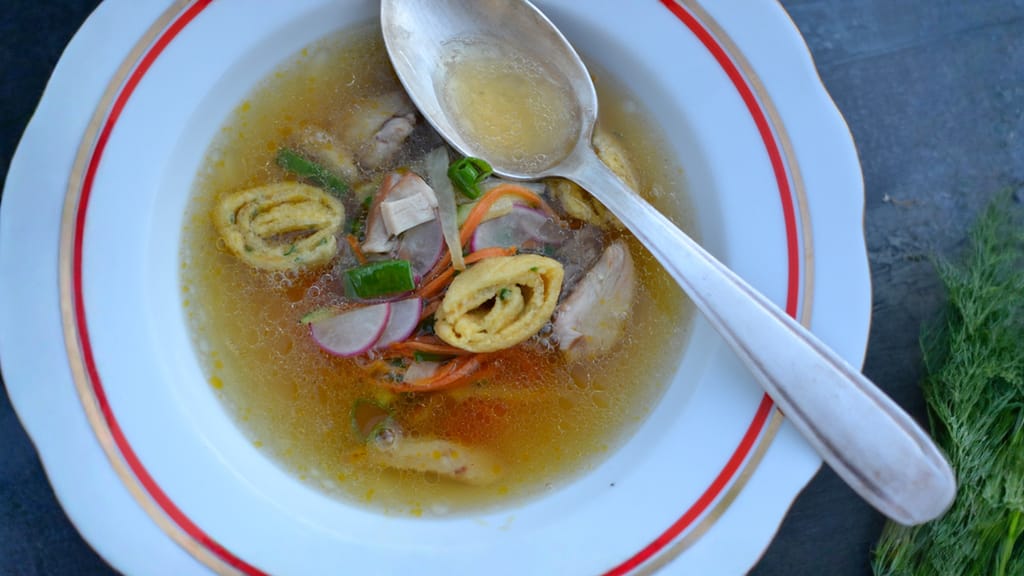
Hearty spring soup with egg roulade
A Proper Spring Vegetable Soup with Egg Ribbons
Rhubarb comes into season in April and harvesting should be finished by the end of June. Not because it turns poisonous — the stalks stay edible later too, but they get thinner and woodier. The real reason is the plant itself: from late June onwards it needs to store energy in the root for next year, and picking it later just needlessly weakens it.
Stalks are twisted off, not cut — a cut stump left at the base can rot. Pick firm, glossy stalks that only bend a little; a limp one is already fibrous.
In cooking, rhubarb is sharply sour, and that's exactly the point — on its own it's not worth much, but it works as a counterbalance to sweet and rich flavours. Two things help the most:
Toss the chopped pieces with sugar and let them sit for 20–30 minutes. This draws out the juice, which you can reduce into a syrup, and the pieces then hold their shape.
Don't cook it too long. After 5–8 minutes it collapses into mush. If you want distinct pieces, bake it raw in the oven or in the dough instead.
Its best partner is strawberries, which come into season at the same time and bring the sweetness rhubarb lacks. Vanilla, ginger and orange zest also pair beautifully with it.
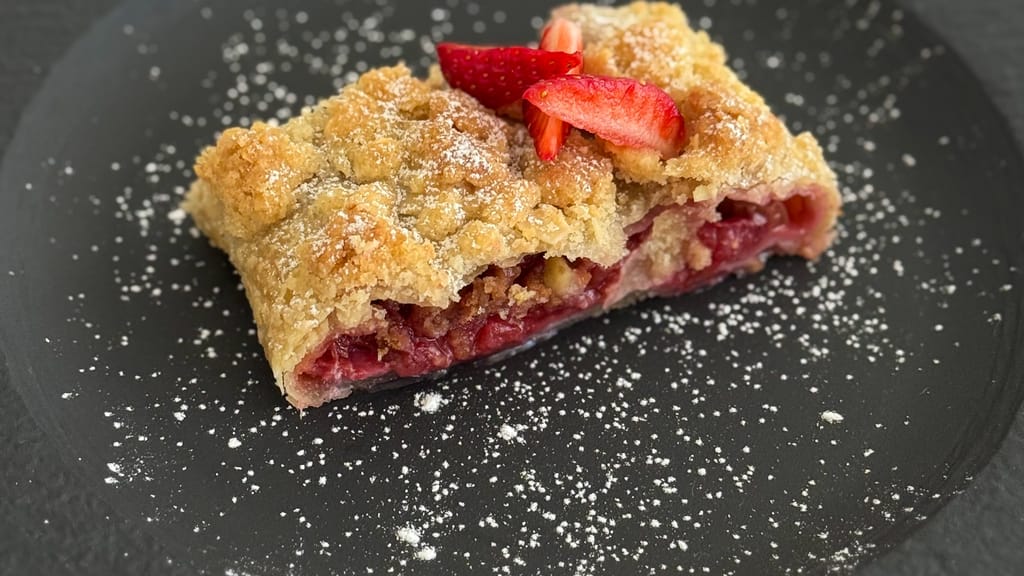
Strawberry-rhubarb strudel with buttery crumble
Rhubarb and Strawberry Strudel with a Buttery Crumble
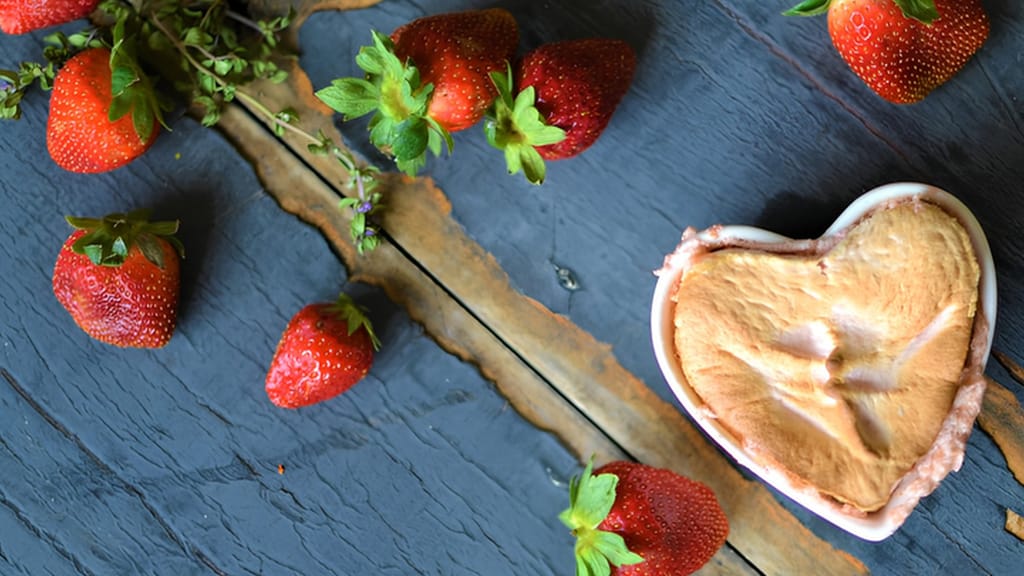
Fluffy strawberry-rhubarb soufflé
Fluffy Soufflé with Juicy Strawberries and Rhubarb
The basic method is blanching: boil briefly in generously salted water and transfer straight into ice water. Salt and speed keep the colour, and the ice bath stops the cooking exactly when you want it to.
Here's how, specifically:
Salt the water like you would for pasta — around 10g of salt per litre. Under-salted water draws flavour out of the vegetable instead of keeping it locked in.
Cook uncovered. A lid traps the acids the vegetable releases, and those turn the green chlorophyll a dull olive colour.
Cook briefly and in batches. Green asparagus 3–5 minutes, peas 2–3 minutes, baby spinach 60–90 seconds, kohlrabi batons 4–5 minutes. Dump everything into the pot at once and the water stops boiling, so the vegetables steam instead of cooking properly.
An ice bath, not just cold tap water. You need water with actual ice cubes in it, and you should pull the vegetables out as soon as they're cold — not leave them soaking.
Save the acid for the end. Don't add lemon, vinegar or wine to the cooking water — acid turns the green pigment grey. Add it to the plate instead.
And one extra rule: spring vegetables are delicate, and their flavour dissolves in fat, not water. A little butter, olive oil or a splash of cream at the end isn't excessive — without it, the flavour falls flat.
Spring vegetables are young, thin-skinned and dry out faster than winter root vegetables — think days, not weeks.
Asparagus: stand it upright in a jar with 2–3cm of water like a bunch of flowers, cover loosely with a bag and refrigerate. It'll keep about a week that way, instead of two days lying flat.
Wild garlic: damp tea towel, bag, fridge — 3–4 days.
Radishes: remove the leaves straight away, or they'll draw moisture out of the bulbs, which then turn soft within two days. The bulbs themselves keep in the fridge for up to 10 days.
Leafy salads and spinach: unwashed, in a sealed container with a piece of paper towel to soak up condensation — 4–5 days.
Rhubarb: wrapped in cling film, it keeps a week in the fridge; chopped and raw, it freezes well, just bear in mind it'll be soft once thawed, so it's better for compotes and fillings than for garnishing.
New potatoes: store somewhere dark and cool, but not in the fridge — below around 7°C the starch starts converting to sugar, making the potatoes taste sweeter and turn darker when fried; ideally keep them at 7–10°C.
Three spring ingredients get their own in-depth articles on Yumst — asparagus, wild garlic and rhubarb. Head there for more detail, from choosing and cleaning right through to processing a whole batch at once.
Wild garlic, chives and spring onions lead the way in March, followed closely by radishes and baby spinach. There's a real gap between the shop shelf and the field, though: whatever's labelled "new" in March is usually polytunnel-grown and weeks ahead of the same vegetable grown outdoors. Asparagus and rhubarb join in April, with peas and new potatoes bringing up the rear in May and June.
Yes — it's the same plant, just grown differently. White asparagus is grown mounded under soil with no light, so it never develops chlorophyll; it's more delicate, slightly bitter, and needs peeling along its full length. Green asparagus grows in light, has a stronger flavour, only needs peeling in the bottom third, and cooks in roughly half the time.
Almost always it's down to under-peeling the base, not under-cooking. The skin and bottom 2–3cm of the spear are woody and won't soften no matter how long you boil them — so peel white asparagus along its whole length and snap or cut off the ends. The other culprit is old asparagus: a dried-out cut end and spread-open tips mean the whole spear has already turned woody.
The closest substitute is young green beans or thin broccolini stems, which blanch in a similar way and work in the same recipes. For the sweeter profile of white asparagus, try young kohlrabi cut into batons and briefly boiled. Frozen asparagus works fine in tarts and purées, but don't rely on it for serving whole spears with a sauce — it turns soft once thawed.
Freezing in fat or salt works best: blend the leaves with oil (roughly 2 parts leaves to 1 part oil) and freeze in ice-cube trays, freeze herb butter in a log and slice off rounds as needed, or layer leaves with 15% salt in a jar in the fridge. Drying looks tempting, but the aroma comes from volatile sulphur compounds that mostly disappear when dried — dried wild garlic tastes like hay. Don't skip the buds either: pickled in vinegar they work like capers and keep for months. There's no point canning pesto in a hot water bath — the heat strips out the flavour.
No — rhubarb leaves aren't for eating. They contain more oxalic acid than the stalks and, in any quantity, cause nausea, vomiting and strain on the kidneys. Cooking doesn't change that: boiling or drying doesn't break down the oxalates, so they're no good as tea or a garnish either. They're perfectly fine on the compost heap, though — they break down there like any other plant matter, and the finished compost is safe to use.
The calendar is your best clue: if something's on sale well ahead of its natural local season, it's been shipped in from elsewhere. Tomatoes in April or asparagus in February aren't home-grown produce. Beyond that, check the cut end and the leaves — locally grown vegetables are picked close by, so they're moist and the leaves look fresh, since they haven't had to survive days in transit. For packaged vegetables, check the country-of-origin label — it's a legal requirement; "packed in the UK" doesn't tell you where it was grown.
One recipe worth heating the oven for, one tip, and one deal from the shop. Nothing else.