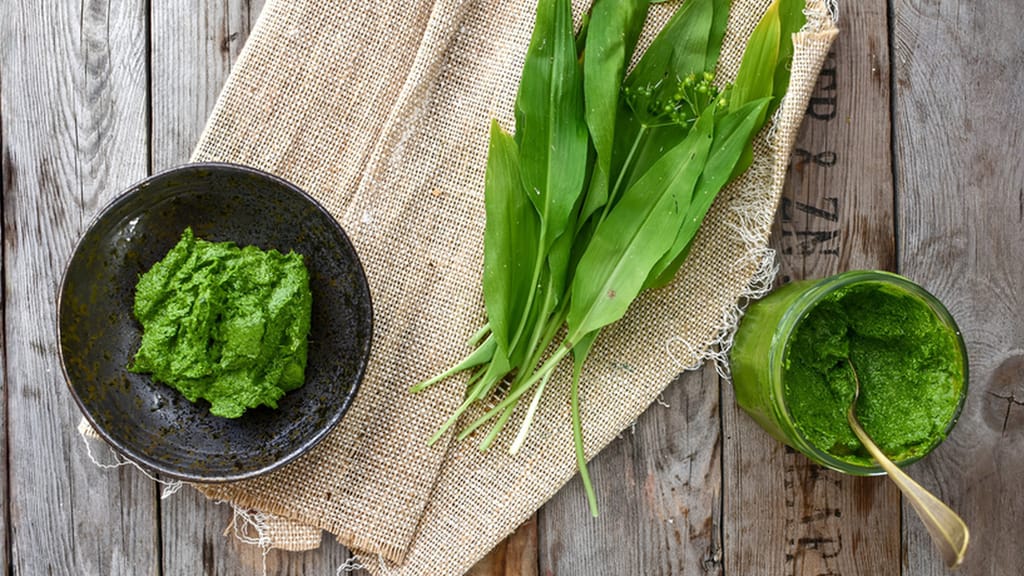
Wild garlic pesto
5 Creative Ways to Cook with Wild Garlic

Updated Jul 16, 2026
Wild garlic has a short season – from March to May – and a flavour nothing from the shop can match: milder and greener than regular garlic, but with the same punchy bite. Before you go hunting for it in the woods or spot it at the market this spring, we'll show you how to identify it safely and tell it apart from its poisonous look-alikes, why it's good for you, and above all, five ways to get it onto your plate – from pesto to spring bakes. And at the end, the most important part: how to store it so it lasts you well beyond the season.
The most reliable test is smell. Rub one leaf between your fingers – if it smells strongly of garlic, you've got the right plant. None of its poisonous look-alikes smell like this. The catch is that after a few leaves, the garlic scent clings to your fingers and you'll mask the smell of the next plant you check. So always test one freshly picked leaf at a time, never a whole handful at once.
Wild garlic leaves grow individually, each on its own stalk rising straight from the ground. They're soft, matte green, with a distinct central vein and the underside facing downward. From April, it flowers with small white star-shaped blooms on a leafless stem. Together, these three traits – the smell, individual leaves on their own stalks, and the soft matte green colour – give you real certainty; never rely on looks alone.
Seasonal baking plans, tested recipes and kitchen tricks that save you time. Unsubscribe in one click.
Wild garlic grows wild in damp deciduous woodland across Europe, most often in the shade of beech and ash trees along streams, where it can carpet the entire forest floor. The season is short: from March to May, with the young leaves before flowering being the best. Pick only a few leaves from any one cluster, never the whole plant with the bulb – in protected areas, picking is often banned entirely.
No forest nearby? You can grow it at home just as easily. Plant bulbs or seeds in a shady, moist spot in the garden or in a large pot on the balcony and let it naturalise – it's hardy and will come back on its own every spring.
Wild garlic isn't just a flavouring. 100g of fresh leaves contains around 150mg of vitamin C – more than the same amount of lemons – plus vitamin A, iron and calcium. Its flavour and benefits both come down to sulphur compounds: crushing the leaf releases allicin, the same compound found in regular garlic, credited with antibacterial and anti-inflammatory effects. Research on garlic also points to a mild effect on blood pressure and cholesterol levels.
One thing follows directly for the kitchen: allicin is volatile and heat-sensitive. You get the most benefit from raw or only briefly warmed wild garlic – so add it to hot dishes at the end of cooking, not the start. Take this as general food information, not medical advice.
From the freshest raw preparations to spring bakes. For each one, we'll point you to a finished recipe so you can dive straight in.
A classic, and the best way to use up a big haul at once. Wild garlic stands in for both basil and garlic, so all you need is the leaves, nuts, hard cheese and oil. Two tricks make all the difference: blanch the leaves briefly and cool them in ice water before blending – you'll keep a vivid green colour that would otherwise turn brown within a day. And once it's in the jar, top it with a thin layer of oil to keep air away from the pesto; it'll keep in the fridge for a week, or frozen in ice-cube portions for a good six months. Pine nuts can happily be swapped for walnuts or sunflower seeds.
Wild garlic pesto
You'll find the exact ratios and method in our wild garlic pesto recipe.
The quickest way to get that spring flavour onto bread. Chopped leaves stirred into softened butter, or into curd cheese with a pinch of salt, make a spread in five minutes that will liven up breakfast or open sandwiches. You can also roll the butter into a log, wrap it and freeze it – then slice off a round for a grilled steak or boiled potatoes whenever you fancy.
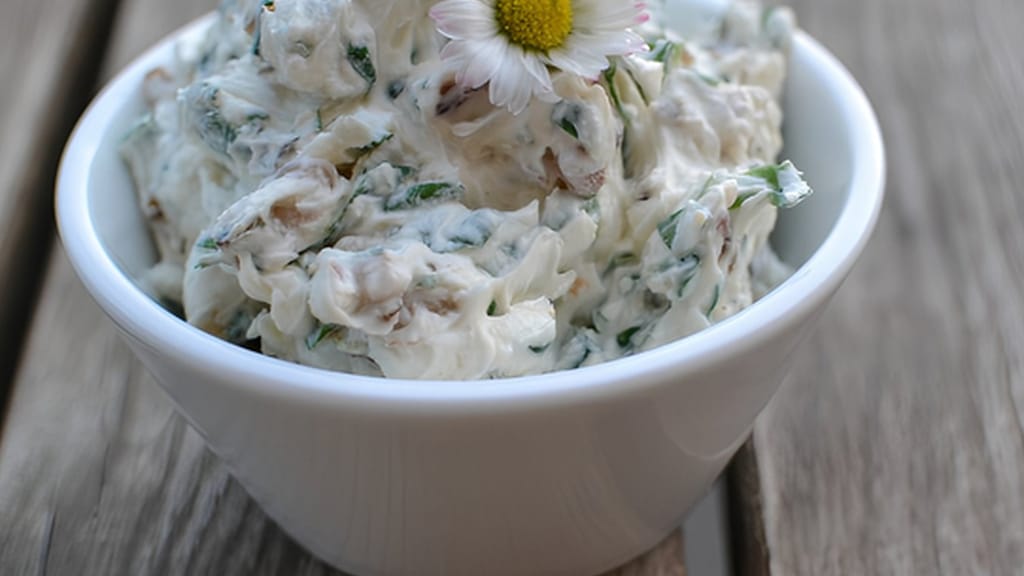
Wild garlic spread
Our wild garlic spread recipe has the exact ratios worked out.
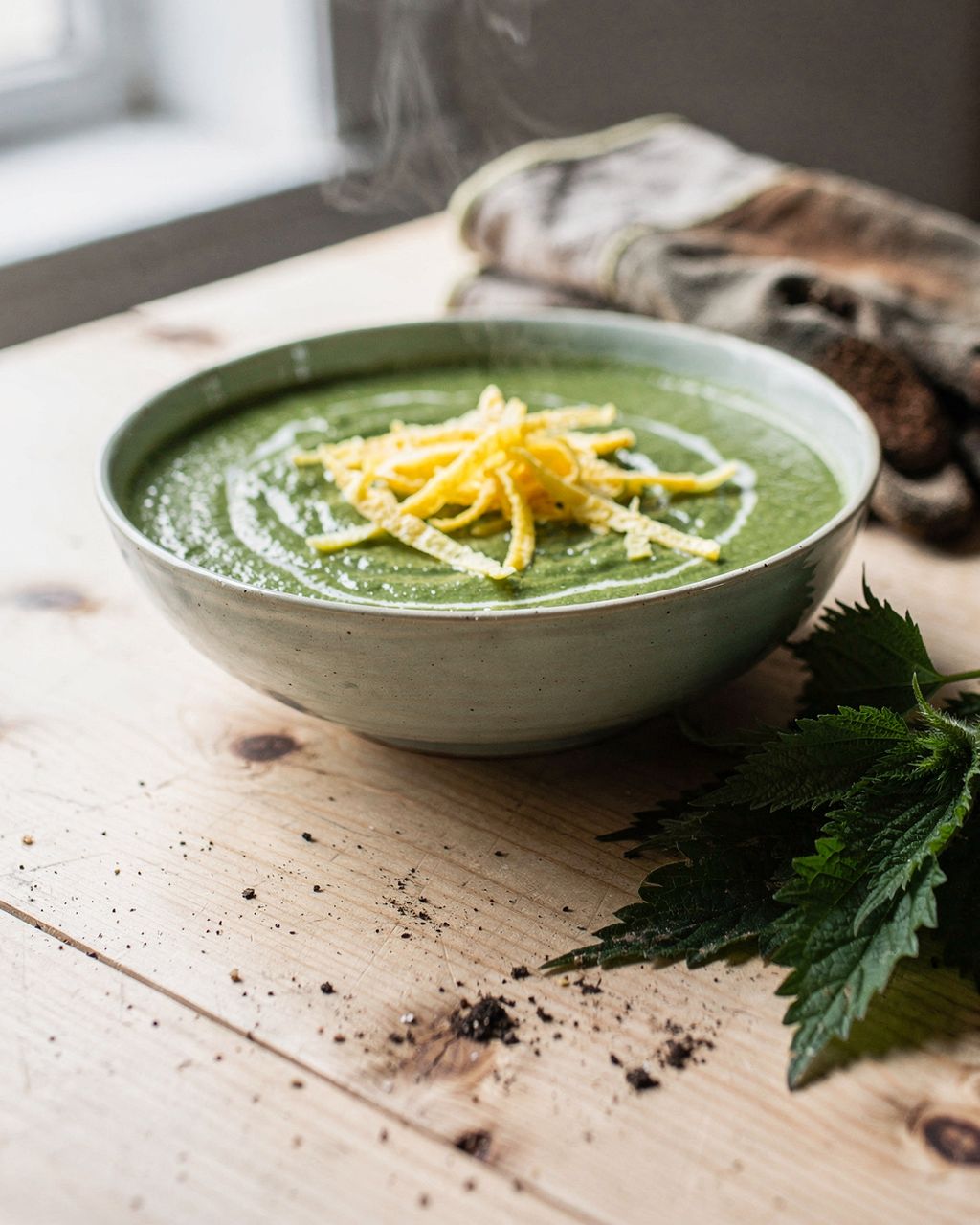
A velvety soup where a potato base gives it body and a handful of wild garlic brings the freshness. Sauté the onion, add potatoes and stock, simmer until soft, then stir in the chopped wild garlic at the end, heat through for just a minute and blend – that brief heating keeps both the colour and the flavour intact. Smooth it out with cream and finish with a few drops of lemon juice or a pinch of grated horseradish, which nicely underline the garlic's freshness. Serve with croutons or toast.
We're still working on the full recipe for this soup.
This is where wild garlic really shines, since heat never gets the chance to dull its flavour. Slice a few leaves into thin ribbons and add them to a spinach, rocket and cherry tomato salad, or a pasta salad with sun-dried tomatoes and goat's cheese. It works even better straight in the dressing: blend a handful of leaves with olive oil, lemon and a pinch of salt, or stir it into yoghurt with mustard. There's just one rule – less is more, so the garlic doesn't overpower the rest of the plate.
Baked wild garlic loses its sharp edge and mellows into a pleasant garlicky aroma – ideal for pastry and fillings. Wrap it in puff pastry as bite-sized triangles, add it to a savoury quiche with goat's cheese, stir it into a meat mixture for a spring meatloaf, or into an Easter stuffing. In every case, add the leaves chopped and towards the end of preparation, so the flavour still comes through.
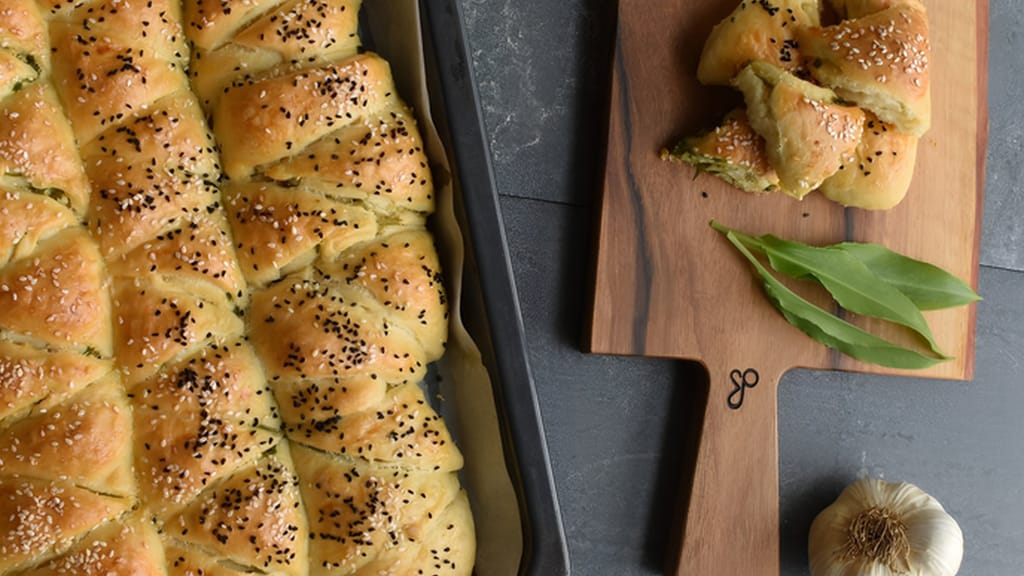
Wild garlic triangles - you'll fall in love with them!
Wild garlic triangles – crispy puff pastry bites.
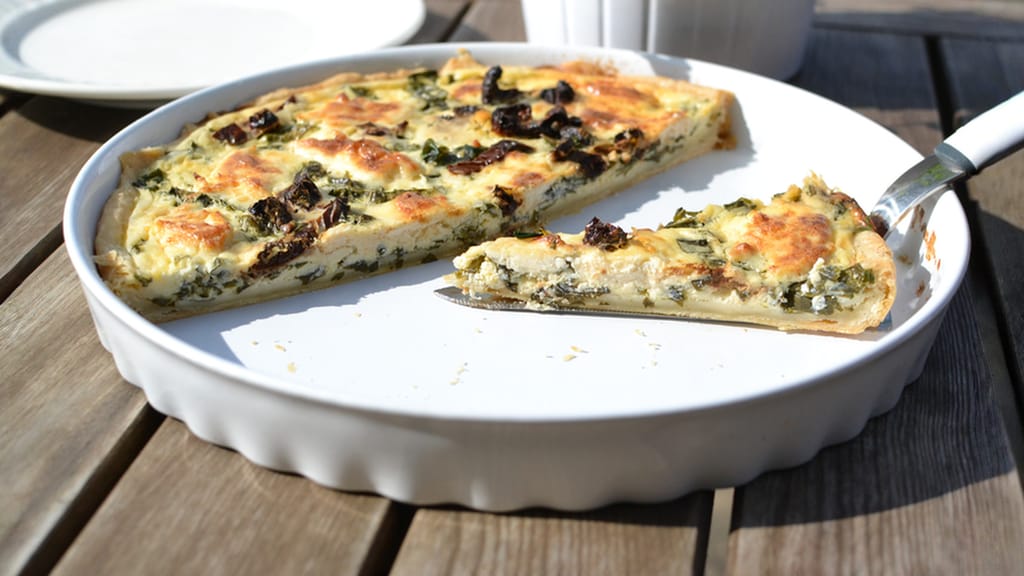
Wild garlic and goat cheese quiche
Wild garlic and goat's cheese quiche for a more special lunch.
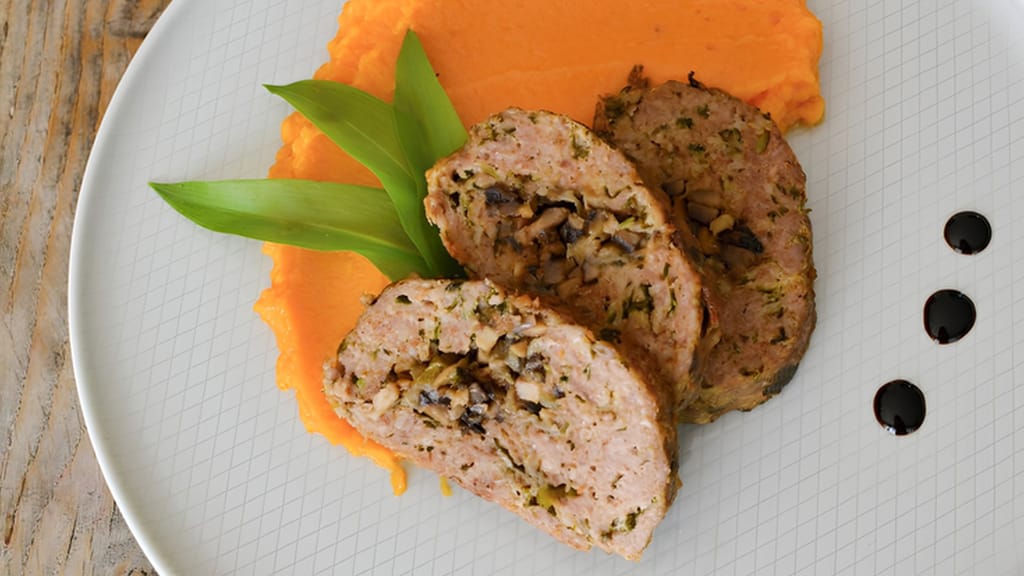
Spring meatloaf with wild garlic and sweet potato mash
Spring meatloaf with wild garlic and sweet potato purée.
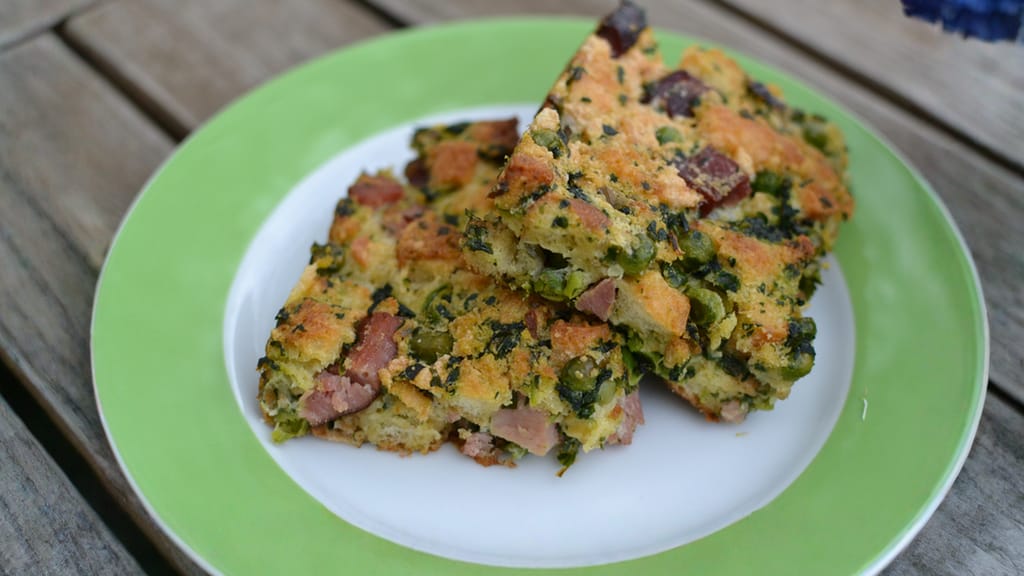
Traditional easter bread pudding with wild garlic
Traditional Easter stuffing with wild garlic.
The season lasts only a few weeks, but you can build up a supply for the whole year. The best methods:
Pesto in ice cubes – blend with oil and freeze in a silicone ice-cube tray. You can then take out exactly as much as you need.
Blanched and frozen leaves – blanch briefly, cool in ice water, squeeze out and freeze in portions. This keeps the colour and flavour better than freezing raw.
Herb butter – rolled into a log and wrapped, it keeps in the freezer for months.
Wild garlic salt – blend the leaves with coarse salt in roughly a 2:1 ratio and dry it out; you'll end up with an aromatic salt that seasons just about anything.
Drying, on the other hand, doesn't work very well – most of the flavour leaves with the moisture, so it's better saved for freezing and oil-based methods.
Smell is the deciding factor: rub one freshly picked leaf between your fingers – wild garlic smells strongly of garlic, while lily of the valley and autumn crocus don't smell like that at all. Wild garlic leaves also grow individually, each on its own stalk, and are soft with a matte green colour. Always test just one leaf at a time, because after a few leaves the garlic scent will cling to your fingers and mask the smell of any other plant you check. If you're not sure, don't pick it.
From March to May, with the young leaves before flowering being the best. Once it flowers (small white star-shaped blooms), the leaves toughen up and the flavour fades. It grows in damp, shaded deciduous woodland.
Yes, it's tastiest raw, and that's also when it keeps the most of its beneficial compounds. Add it chopped to salads, dressings, spreads or pesto. For cooked dishes, stir it in right at the end – its allicin content is sensitive to heat.
Partly, yes. Allicin, credited with antibacterial effects, is volatile and breaks down with heat. So add wild garlic to soups, fillings and bakes as late as possible, and keep the heat exposure as short as you can. The flavour and aroma survive baking too, just in a milder form.
Freezing works best: as pesto frozen in ice-cube portions, as briefly blanched and frozen leaves, or rolled into herb butter. Wild garlic salt also works brilliantly – blitz the leaves with coarse salt in roughly a 2:1 ratio, then dry it out. Drying the leaves on their own isn't worth it – most of the flavour disappears along with the moisture.
The closest match in flavour is a combination of spring onion or chives with a clove of garlic. For pesto and spreads, a mix of baby spinach with a little garlic also works well. But your safest bet is to stock up on pesto or frozen herb butter during the season.
One recipe worth heating the oven for, one tip, and one deal from the shop. Nothing else.