Pappardelle with asparagus
Asparagus: Nutrition, Season, and How to Cook It Without Overdoing It
Updated Aug 24, 2026
Asparagus is the young shoot of the perennial plant Asparagus officinalis, and in the UK it's in season roughly from mid-April to the end of June. Green and white asparagus are exactly the same plant — the only difference is whether the shoot grew in the light or under a mound of soil. 100g of raw asparagus has 20 kcal, 41.6 µg of vitamin K, and 52 µg of folate. Below you'll find what asparagus actually contains (including figures that get misquoted all over the internet), how to trim it without wasting half the bunch, and how long to cook it so it stays crisp instead of turning to mush.
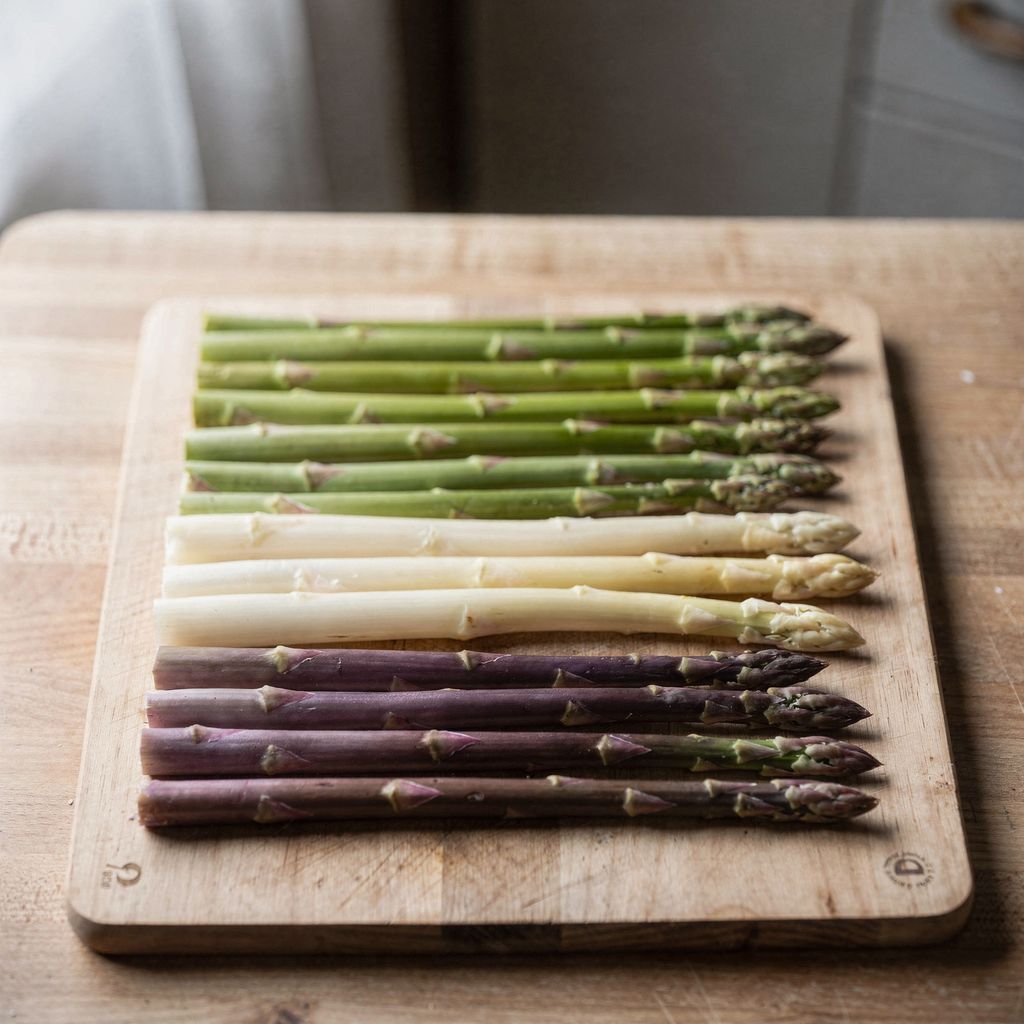
Green, white, and purple asparagus are all one and the same plant. It's light, not variety, that determines the colour.
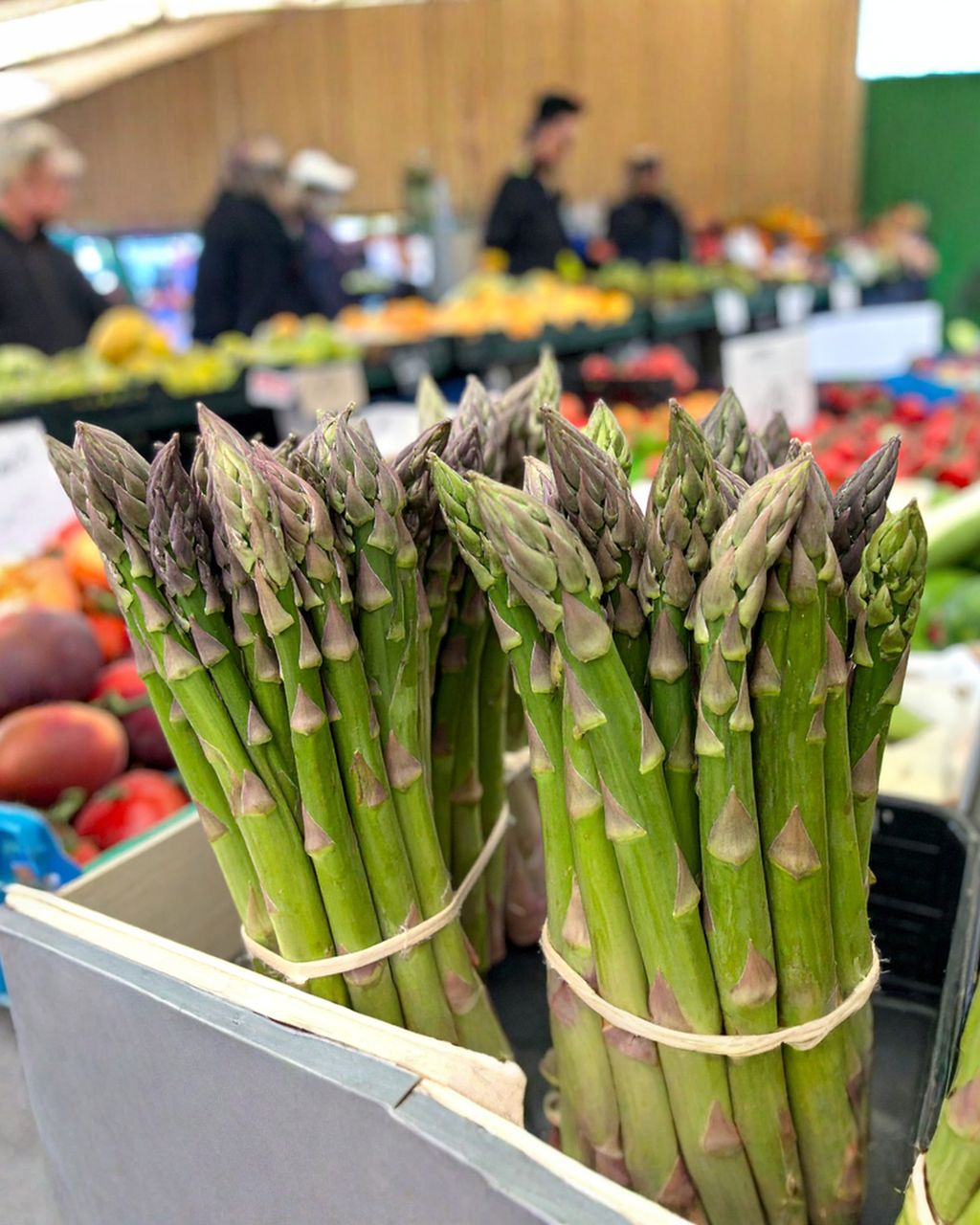
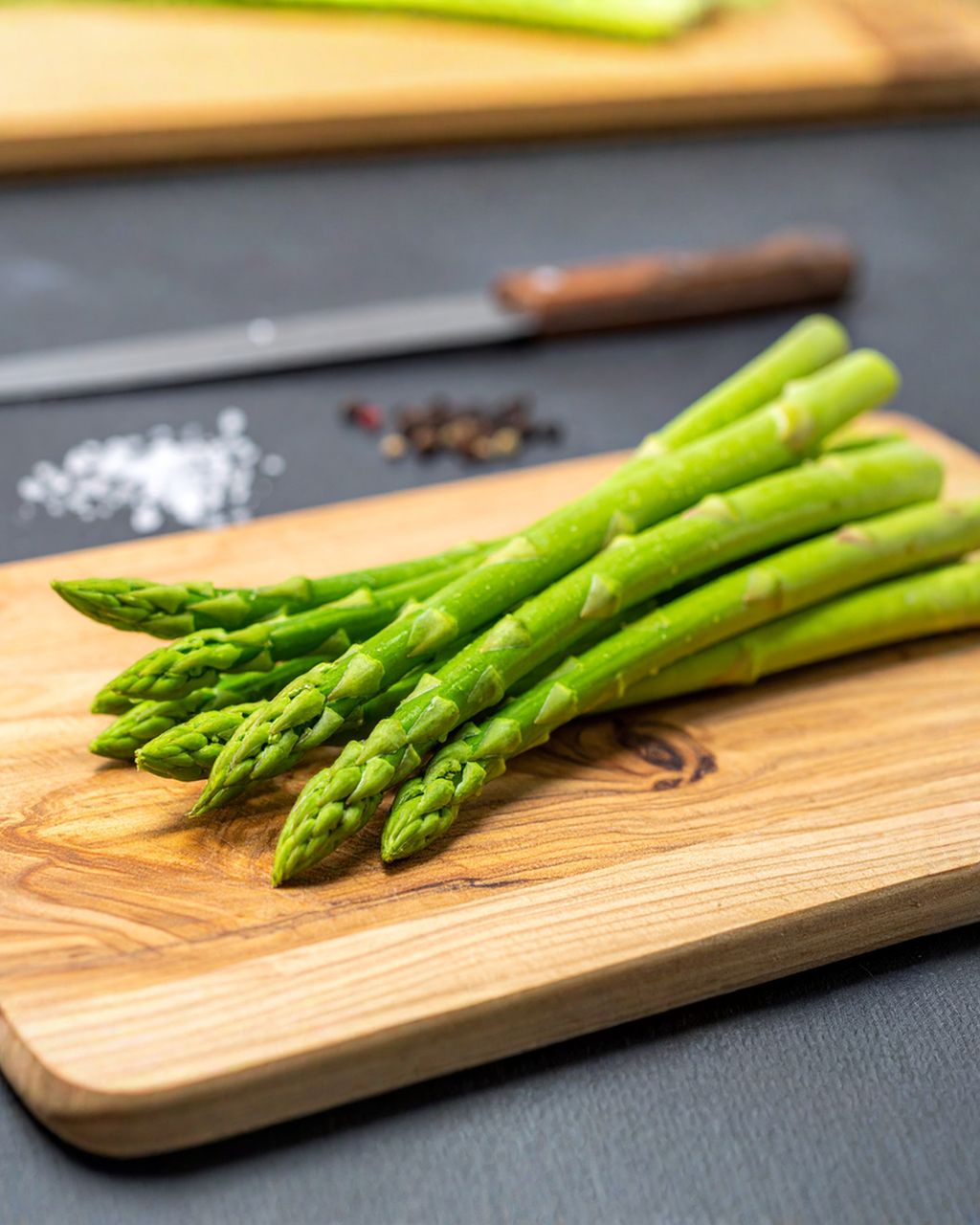
Green asparagus grows freely in the sun, so the shoot photosynthesises as it develops. It has a bolder, grassier, slightly nutty flavour, thinner skin, and less woodiness.
White asparagus grows under mounded soil and covered with sheeting, so it never sees the light. The flavour is milder and slightly sweeter, but the skin is much tougher — white asparagus always needs peeling, all the way down.
Purple asparagus pushes up above ground and colours before it has time to turn green. It tends to be sweeter and more tender, and usually loses its purple hue during cooking.
For the kitchen, that boils down to one practical rule: green asparagus can handle quick, high-heat cooking (grill, pan, oven), while white asparagus wants water and more time, since it's more fibrous and its flavour comes through better with a good amount of fat.
Seasonal baking plans, tested recipes and kitchen tricks that save you time. Unsubscribe in one click.
In the UK, asparagus is typically harvested from around mid-April to the end of June. In parts of Central Europe the season traditionally wraps up on 24 June — and that's not just superstition: the plant needs the rest of summer to let its shoots grow into ferny foliage and store energy in the root for next year's crop.
That's exactly why asparagus is so pricey. From planting, it takes three years before a bed can be harvested for the first time, and a productive bed can then keep producing for up to fifteen years. So you're buying a vegetable that simply can't be rushed.
Out of season, you'll mostly find imported asparagus from Peru or Spain. It's not bad, exactly, but the long journey costs it sugar and moisture — a freshly cut spear springs back when bent and looks moist at the cut end, while an older one is dry and woody.
100g of raw green asparagus contains 20 kcal, 2.2g protein, 0.12g fat, 3.9g carbohydrates, and 2.1g fibre. Water makes up around 93% of its weight. According to the USDA database (entry Asparagus, raw), it also provides:
Vitamin K: 41.6 µg — that's 55% of the reference intake (NRV), which puts asparagus among the higher vitamin K foods
Folate: 52 µg — 26% NRV, so a good source of folate
Iron: 2.14 mg — 15% NRV; this is non-haem (plant-based) iron, the same form found in most other vegetables
Vitamin E: 1.13 mg — 9% NRV
Potassium: 202 mg — 10% NRV
Vitamin C: 5.6 mg — 7% NRV
Phosphorus: 52 mg — 7% NRV
These figures are for raw asparagus. Boiling loses some vitamin C and folate into the cooking water, while roasting and grilling are gentler on both.
What this article deliberately won't tell you is what individual nutrients supposedly "do" in the body or what asparagus is claimed to prevent. Health claims in the EU are governed by Regulation (EC) No 1924/2006 and must be pre-approved — and most of what gets written about asparagus online isn't. The nutritional content is fact; the promised effect is a different matter entirely.
No — 5.6 mg of vitamin C (7% NRV) and 202 mg of potassium (10% NRV) per 100g don't come close to justifying a "high in" claim. Several figures about asparagus circulate online that the actual data doesn't support:
"High in vitamin C." It isn't. 5.6 mg per 100g is 7% NRV — to be labelled a source of vitamin C, a food needs at least 15%. Bell peppers have over twenty times as much.
"Great source of potassium." Not that either. 202 mg is 10% NRV, less than you'd get from a banana or an ordinary potato.
"High in fibre." 2.1g per 100g is a perfectly average amount, on par with carrots.
"Rich in low-GI carbohydrates." Asparagus has 3.9g of carbs per 100g. At that quantity, glycaemic index is more or less irrelevant.
"Less than 0.5g fat." Technically true, but needlessly cautious phrasing — asparagus has just 0.12g of fat.
What does check out and is worth remembering: vitamin K. At 55% NRV per 100g serving, that's well above average for a vegetable, and it's the one nutrient where asparagus genuinely stands out.
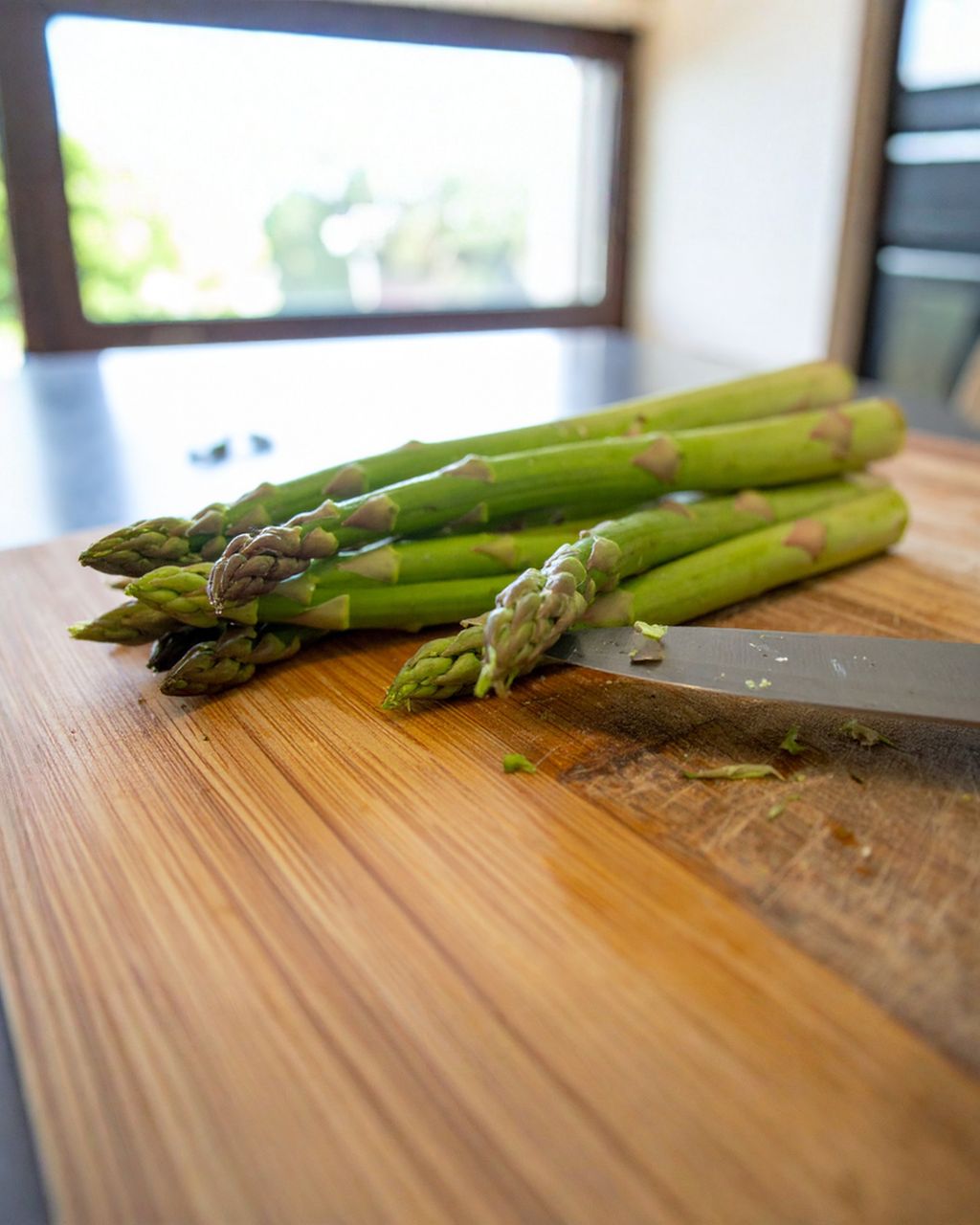
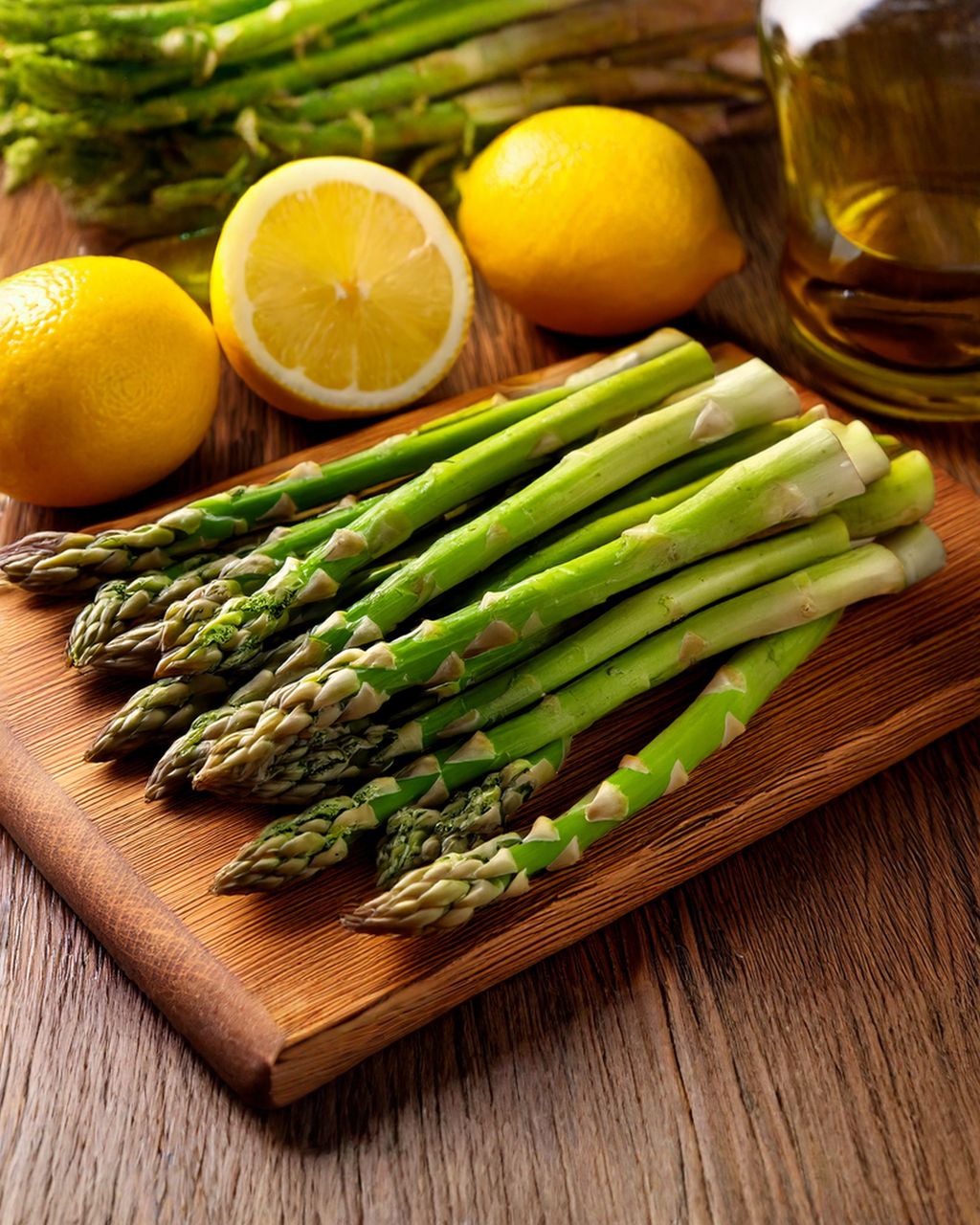
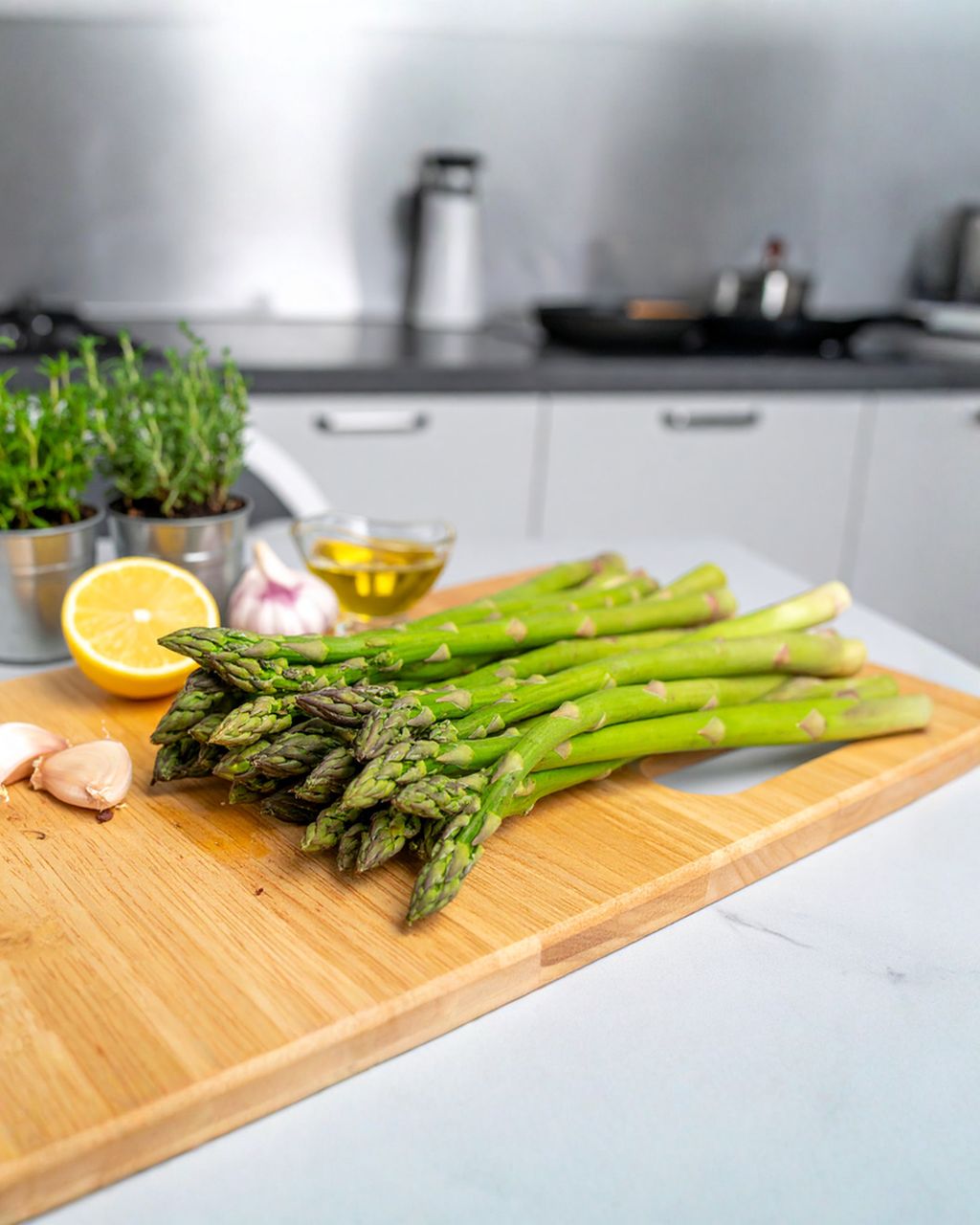
Trim asparagus by cutting off 2–3 cm from the base and peeling the bottom third of the spear with a vegetable peeler; white asparagus should be peeled along its entire length.
The old tip to "bend the spear and let it snap naturally where the woody part ends" is the most common asparagus myth out there, and it costs you half your bunch. The spear snaps wherever you happen to be holding it, not where it actually stops being tough. Tests show that snapping wastes around 50% of the weight, while cutting and peeling wastes less than 30%. With thick spears, the gap is even bigger.
Here's how to do it:
Green asparagus: cut with a knife 2–3 cm from the base, where the cut end is dry and pale. Then use a peeler to peel the bottom third of the spear. Thin spring spears no thicker than a pencil don't need peeling at all.
White asparagus: peel the whole spear, starting about 2 cm below the tip and working down. Peel in long strokes, pressing harder near the base, where it's toughest. Finish by cutting off the last 2–3 cm of woody stem.
Don't throw away the peelings and trimmings. Simmer them in water for 20 minutes and you've got the base for an asparagus soup, or a flavourful liquid to cook fresh asparagus in.
Cook trimmed asparagus as soon as possible. Peeled spears dry out quickly and toughen up if left exposed to air.
Boil green asparagus for 2–5 minutes, white for 5–8 minutes (thick spears up to 12), or roast at 200–220°C for 10–12 minutes. Broken down by method:
Green asparagus, boiled: 2–5 minutes
White asparagus, boiled: 5–8 minutes, thick spears up to 12
Roasted: 200–220°C, 10–12 minutes
Grilled or pan-fried: 4–6 minutes, turning occasionally
Steamed: 4–6 minutes for green, 8–10 for white
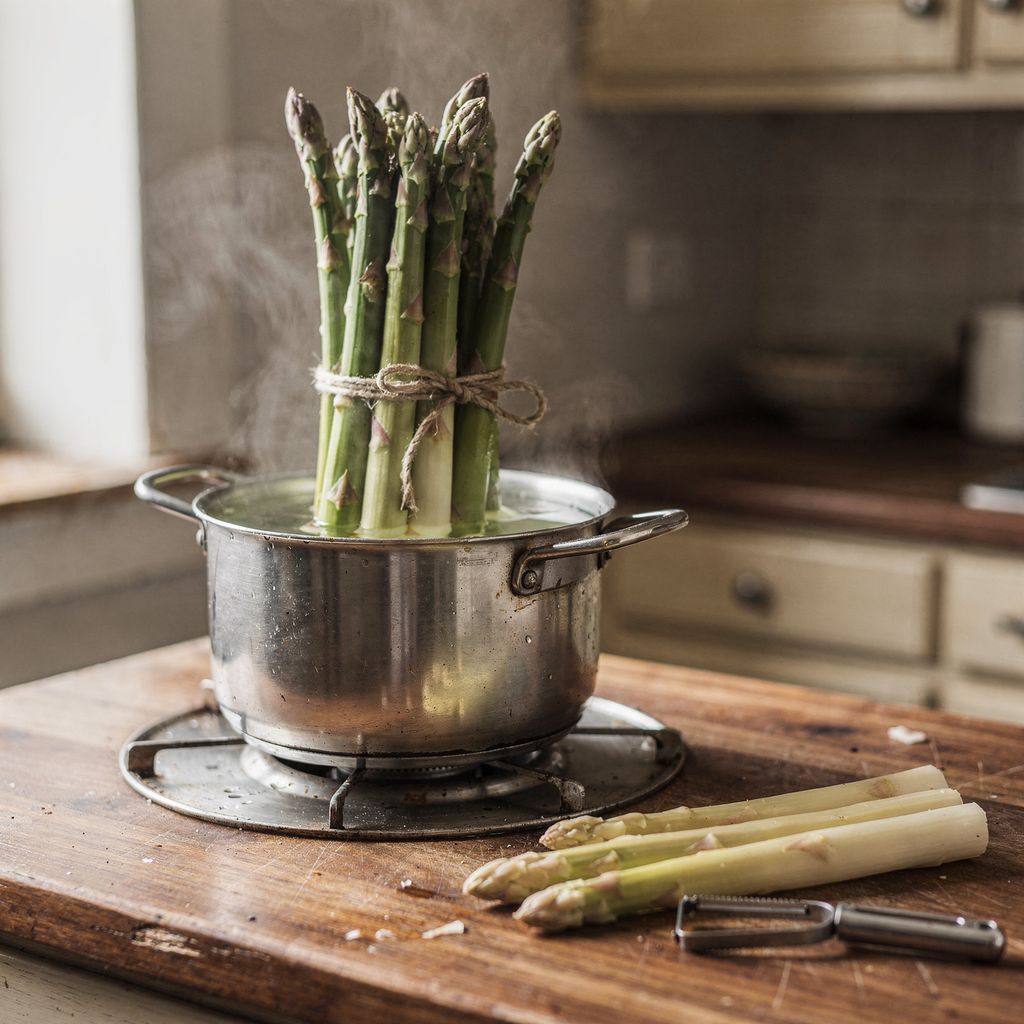
When boiling, tie the spears into bundles of eight with kitchen string and stand them upright in the pot so the tips stay above the waterline. The bases boil while the delicate tips just steam gently — otherwise you end up with mushy tips and a tough base.
For every 2 litres of water, add a teaspoon of salt, 1–2 teaspoons of sugar, and a tablespoon of butter. The sugar isn't there for sweetness — it balances out the slight bitterness asparagus naturally has.
Lemon only belongs with white and purple asparagus. The acid helps them keep their pale colour. With green asparagus it does the opposite — it reacts with the chlorophyll and turns the spears grey.
You'll know it's done when the tip of a knife slides into the base with slight resistance and the tip still holds its shape. If you're serving it cold or in a salad, plunge it straight into ice water once cooked — this stops the cooking and keeps the green colour vibrant.
Asparagus loves fat, egg, acidity, and smoke. Those four directions cover almost everything you'll ever want to do with it:
Butter and egg. Asparagus's flavour compounds are fat-soluble, so butter, hollandaise, or a poached egg carry its flavour right across your palate. The classic combo of asparagus, melted butter, and breadcrumbs still works a treat after a hundred years.
Smoked and cured meats. Bacon, pancetta, ham off the bone. Salt and smoke balance out the grassy bitterness.
Hard cheese. Parmesan or a similar hard cheese adds a big hit of umami that asparagus barely has on its own, giving the dish instant depth.
Acidity and herbs. Lemon, young peas, tarragon, chives, dill.
Two things to avoid: don't add asparagus to long-simmered sauces, where it'll fall apart into stringy fibres, and don't drown it in strong spices. Garlic works well with asparagus, but only used sparingly — roasted whole or lightly fried in butter, not crushed into a dressing. Save the chilli for another dish, or you'll end up paying for a delicate vegetable and eating a fiery sauce instead.
If you're pairing wine with asparagus, go for a dry sauvignon blanc or grüner veltliner. Asparagus is notoriously tricky with wine, and its sulphur compounds will clash badly with a big red.
Asparagus works beautifully in pasta, savoury tarts, and as part of a main course. Pick your recipe based on how much time you've got:
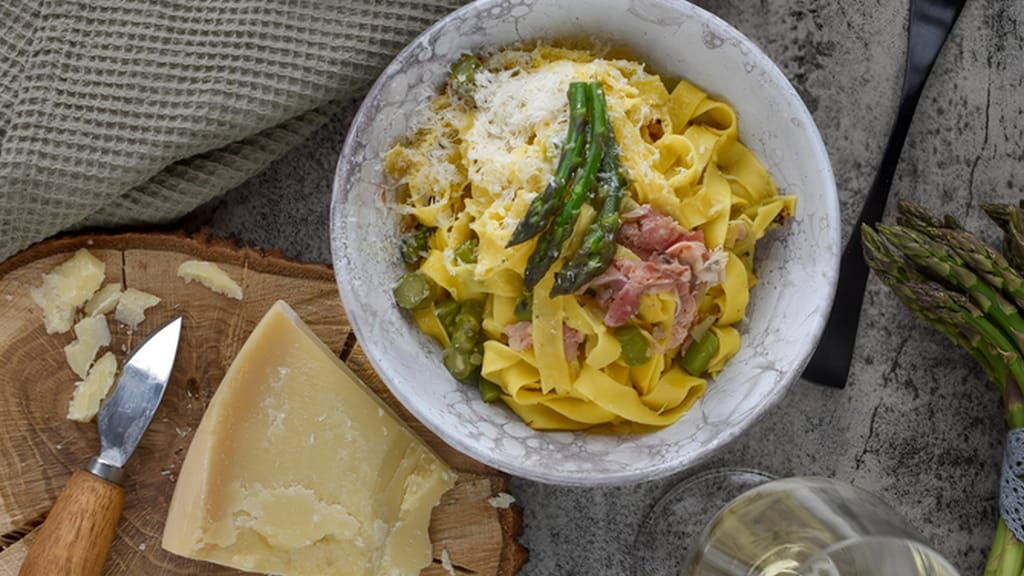
Pappardelle with asparagus
Pappardelle with asparagus: a quick spring pasta with green asparagus
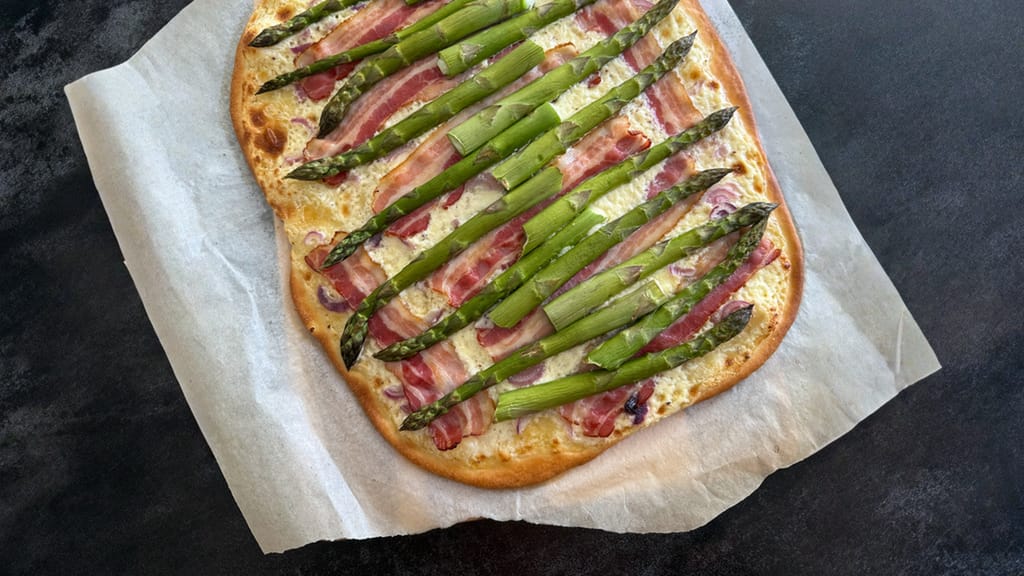
Savory asparagus tart with bacon and yogurt
Savoury asparagus tart with bacon and yoghurt
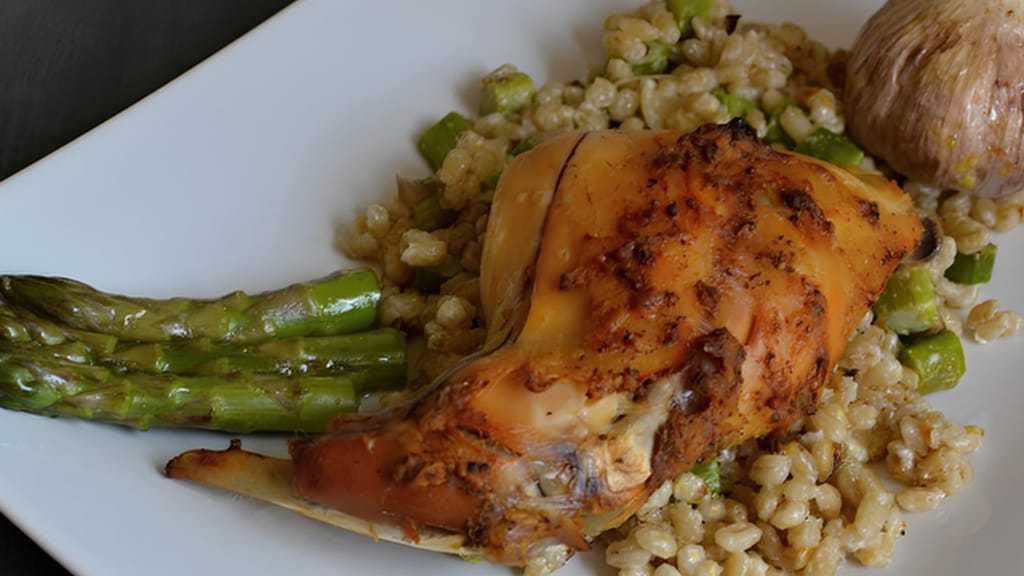
Roast rabbit with garlic and green asparagus
Roast rabbit with garlic and green asparagus for a Sunday lunch
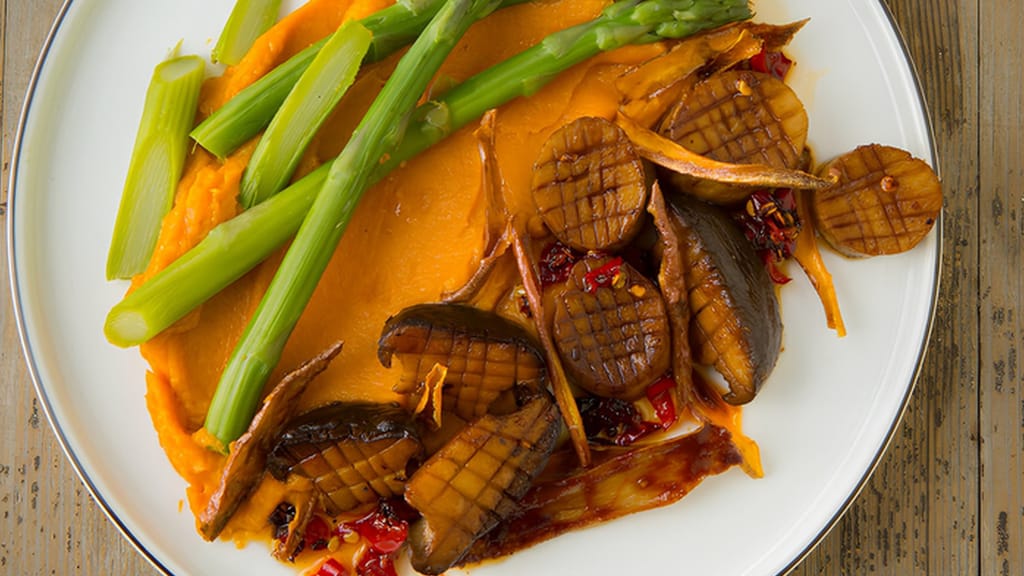
Sweet potato mash with asparagus and mushrooms
Sweet potato mash with asparagus and mushrooms: a one-pan meat-free meal
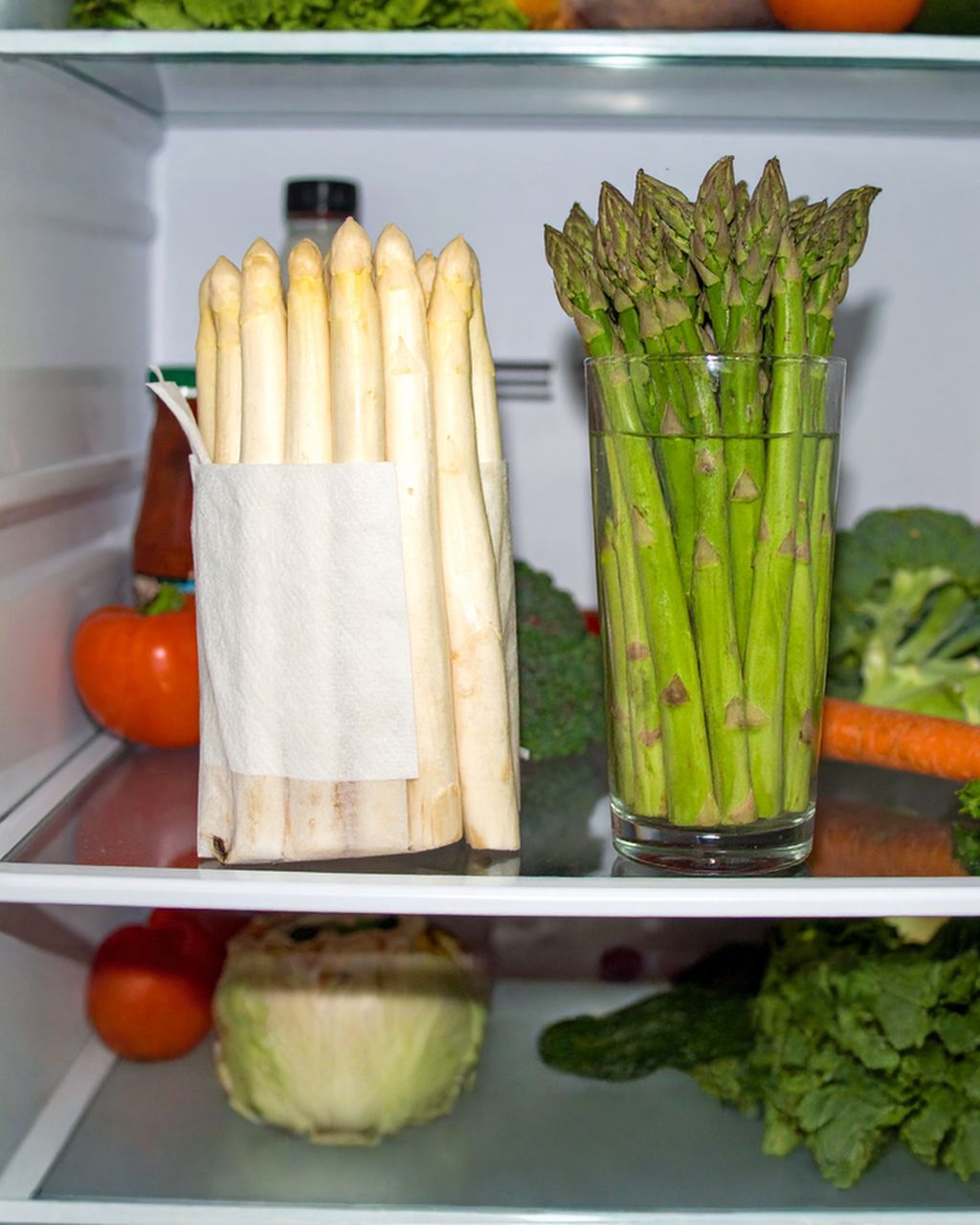
Store asparagus standing upright in a glass with 2–3 cm of water, covered loosely with a bag, in the fridge — it'll keep for up to ten days this way. It behaves just like cut flowers, drinking water through its base. Alternatively, wrap it in a damp tea towel and keep it in the vegetable drawer.
What it doesn't like is being kept near apples, tomatoes, or bananas. They release ethylene, which makes asparagus turn soft and woody fast. We've covered storage in more detail in our article on keeping asparagus fresh for up to ten days.
The smell comes from asparagusic acid, which the body breaks down into volatile sulphur compounds that show up in urine within about half an hour of eating. Interestingly, almost everyone produces these compounds — but not everyone can smell them. A large study of nearly 7,000 people found that around 60% of the population has what's called asparagus anosmia, a variation in smell receptors that means they simply don't detect the odour. It's completely normal and nothing to worry about.
Yes, raw asparagus is perfectly safe to eat, and thin green spears are genuinely delicious raw. Shave it into long thin ribbons with a peeler, or slice it thinly on an angle, then drizzle with olive oil and lemon and leave it for a few minutes — it softens slightly and the flavour opens up. Thick spears and white asparagus are best cooked, though, as raw they're fibrous and unpleasantly tough.
Yes, but you need to blanch it first, otherwise it turns limp and bitter in the freezer. Trim the asparagus, drop it into boiling water for 2–3 minutes, plunge it straight into an ice bath, pat it thoroughly dry, then freeze it spread out on a tray before transferring it to a bag. Stored this way it keeps for around eight months, and you can cook it straight from frozen in soups, sauces, or a stir-fry — just not in salads, since it won't be crisp once thawed.
Asparagus usually turns bitter when it's old or hasn't been peeled properly. The bitterness sits mainly in the skin and the woody base of the spear, so a thorough peel removes most of it. A few other things play a role too: spears left too long at the end of the season, dry growing conditions, and — for white asparagus — accidental exposure to light. A pinch of sugar and a knob of butter in the cooking water reliably balance out any bitterness.
Tinned asparagus can't match fresh for flavour or texture, but it has its place when you don't need it to be crisp. The canning process softens it, strips away the grassy freshness, and lets some of the water-soluble vitamins leach into the liquid, which gets poured away. On the plus side, it's available all year round and works well in dips, salads, or soups. Rinse it under cold water before using to wash off the slightly tangy taste of the brine.
One recipe worth heating the oven for, one tip, and one deal from the shop. Nothing else.