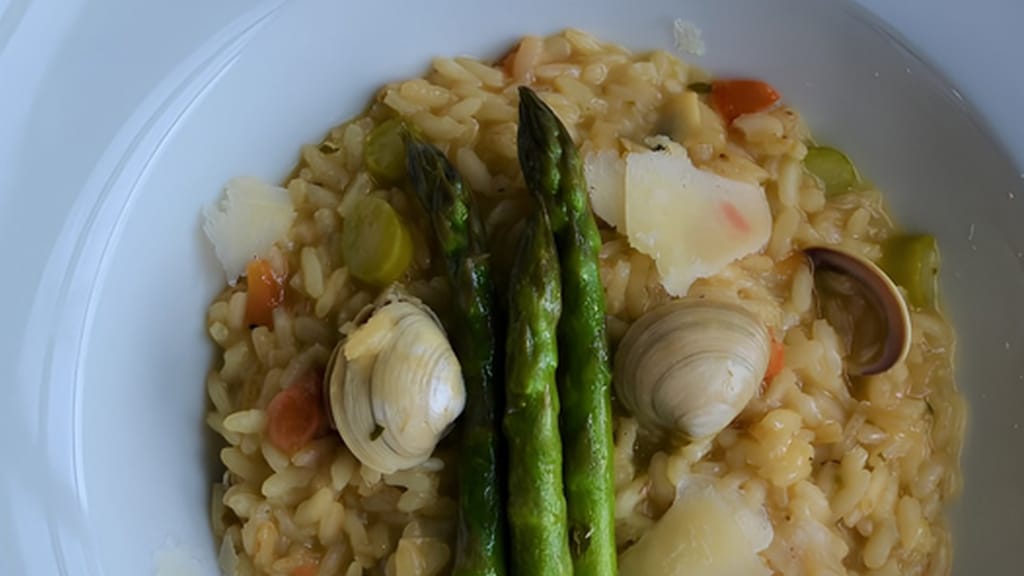
Green asparagus and seafood risotto
How to Pick Fresh Asparagus: Types, Season & Storage

Updated Jul 19, 2026
You can spot fresh asparagus at a glance: it has a deep, even colour, firm springy stalks, tightly closed tips and a moist, glossy cut end. In this guide we'll cover everything else — how green, white and purple asparagus differ, when each is in season, where to find the freshest bunches, how to store it at home, and how to cook it so it really shines. No filler, just what you need to know before you grab a bundle.
Green, white and purple asparagus are all the same plant (Asparagus officinalis) — the difference comes purely from how they're grown. Green asparagus grows in sunlight, develops chlorophyll, and has the most pronounced, grassiest flavour. White asparagus is grown under mounded soil with no light exposure, so it stays pale, delicate and slightly sweet. Purple asparagus has the highest sugar content, giving it a fruity sweetness and a faint nutty note. How you cook it in the kitchen depends on which type you've got.
Green asparagus is the most common variety here and the easiest to work with — thin stalks don't need peeling, just snap off the woody ends. Thanks to growing in sunlight, it has the most chlorophyll and, according to nutrition tables, the highest vitamin C content and the most intense flavour. It handles high heat brilliantly: a quick grill, a sear in the pan, or a blanch all suit it well. It works beautifully in salads, alongside fish or eggs, or stirred into risotto.
Green asparagus and seafood risotto
Green Asparagus and Seafood Risotto
White asparagus grows underground away from light, so it never develops chlorophyll and has a milder, sweeter taste with a faint bitterness. It's the star of spring across Central Europe — in Germany and Austria it's nicknamed "white gold". Its skin is tougher and more fibrous, so always peel it, and boil it a few minutes longer than green asparagus. It's classically served with hollandaise sauce, melted butter and new potatoes.
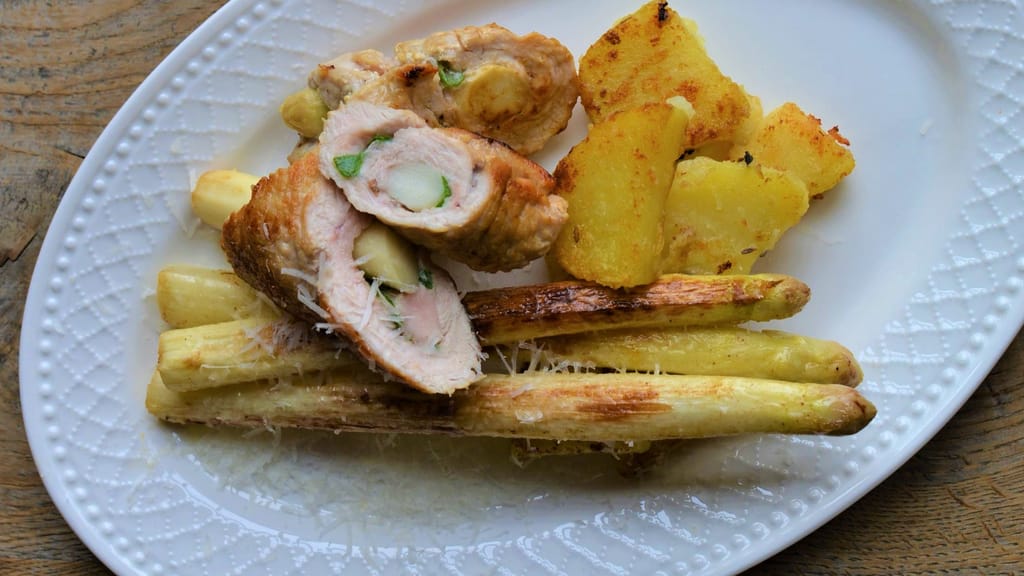
Turkey roulade stuffed with white asparagus and pan-fried asparagus
Turkey Roulade Stuffed with White Asparagus
Purple asparagus is the rarest and sweetest variety — it has slightly more sugar than green and a subtly nutty flavour. Its purple colour fades during cooking as the stalk turns green, so you'll get the best of its looks and crunch by eating it raw: sliced thinly into a salad, as carpaccio, or just briefly seared. If you do cook it, keep it as gentle and brief as possible.
You can spot fresh asparagus by four telltale signs — colour, stalk firmness, tips and the cut end:
Colour: deep and even. Green asparagus should be bright green with purple-tinged tips; white asparagus should be pale cream with no yellowing or brown spots.
Stalk firmness: firm and springy, snapping crisply when bent. A soft or rubbery stalk means the asparagus has been sitting around too long.
Tips: compact and tightly closed. Loose or crumbling tips belong to older bunches.
Cut end: moist and glossy means it was harvested recently. A dry, darkened or woody end signals long storage.
The freshest asparagus, in season, comes from a local grower or farmers' market — it's often picked just a day or two before it's sold. Supermarkets win on year-round availability and usually lower prices, but their asparagus often travels from the other side of the world, losing moisture, flavour and nutrients along the way. The simple rule: the shorter the trip from field to shelf, the better the asparagus. If you spot moist cut ends at the market and a stallholder who can tell you exactly when it was picked, you're in the right place.
In the Czech Republic, asparagus season runs roughly from mid-April to 24 June — traditionally harvesting stops on St John's Day so the plants can regenerate. This is when it's cheapest, freshest and most nutrient-rich, since it's local and just-picked.
Abroad, things look different. In California or Mexico, the season starts earlier, often as soon as February or March. In the Southern Hemisphere — Peru or Australia, for example — harvesting happens during our autumn, roughly September to December, which is where most out-of-season imported asparagus comes from. It tends to be pricier and, after a long journey, less flavourful, so it's worth waiting for the local spring crop.
Asparagus stays fresh in the fridge for about 3–4 days if you treat it like a bunch of flowers — it wants cool and damp conditions. Two reliable methods work well:
Standing in water: trim about 1cm off the bottom of the stalks, stand the bunch in a jar with 2–3cm of cold water, loosely cover the tips with a bag, and refrigerate. Change the water every other day.
Wrapped in a damp cloth: remove the rubber bands, wrap the bottom of the stalks in a clean, damp cloth, place in a bag or airtight container, and store in the vegetable drawer.
Whichever method you choose, keep asparagus away from apples and tomatoes — they release ethylene, which speeds up softening. Don't wash it before storing, as moisture on the tips accelerates spoilage.
Prepping asparagus takes three steps: snap off the woody ends, peel the bottom two-thirds of white and thicker green stalks, and then choose a quick cooking method.
Woody ends: hold the stalk at both ends and bend — it will naturally snap right at the point where the tender part meets the tough part. Or simply trim off the woody third with a knife.
Peeling: thin green asparagus doesn't need peeling; for white and thicker green stalks, peel the bottom two-thirds with a peeler and leave the tips alone, as they're tender.
Grilling and pan-searing: drizzle with olive oil, season with salt, and grill over medium heat for 5–7 minutes until tender with nicely charred edges.
Blanching: 2–3 minutes in boiling salted water, then shock in ice water — this keeps the colour vivid and the texture crisp.
White asparagus should be boiled in water with a little salt, sugar and butter for roughly 10–15 minutes, until a knife tip slides through easily.
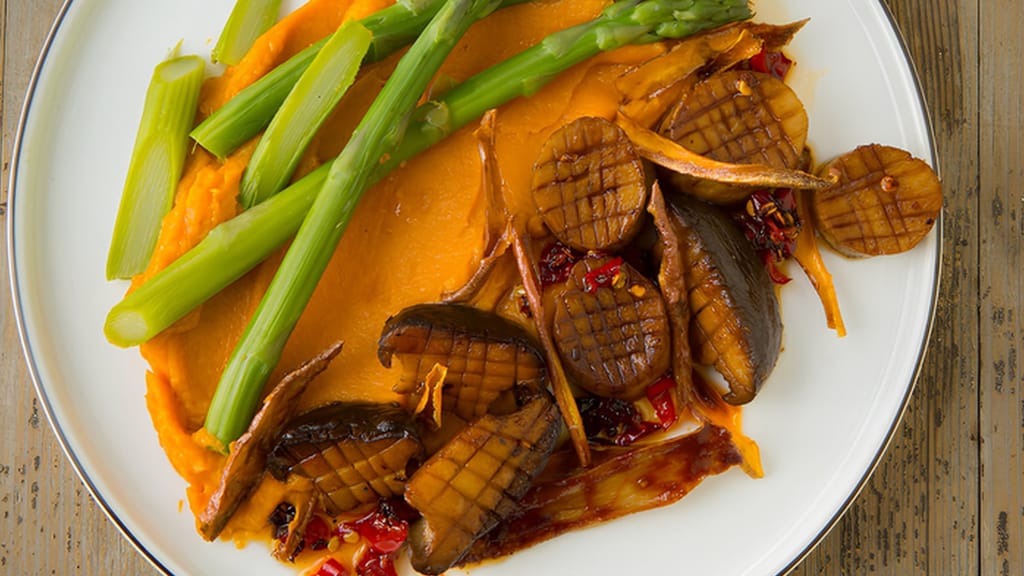
Sweet potato mash with asparagus and mushrooms
Sweet Potato Mash with Green Asparagus and Mushrooms

Savory asparagus tart with bacon and yogurt
Savoury Asparagus Tart with Bacon and Yoghurt
Choose fresh asparagus by its deep colour, firm stalks and tightly closed tips, buy it in season from April to June from local growers, and store it at home standing in water or wrapped in a damp cloth. Grill or pan-sear green asparagus, peel and boil white asparagus a little longer, and save purple asparagus for salads, raw. The rest is just the joy of cooking.
Thin green asparagus doesn't need peeling — just snap off the woody ends. Only peel thicker stalks, and always peel white asparagus, since its skin is tougher and more fibrous; use a peeler on the bottom two-thirds and leave the tips alone.
Boil white asparagus in salted water for roughly 10–15 minutes, depending on how thick the stalks are. Add a pinch of sugar and a knob of butter to the water to round out the flavour; it's done when a knife tip slides in easily.
Yes, but blanch it briefly first (about 2 minutes) and pat it dry — otherwise it turns mushy and dark once thawed. Frozen asparagus keeps for about 8–12 months and is best used in soups and sauces afterwards, rather than as a crisp side dish.
Asparagus is one of the lowest-calorie vegetables around — nutrition tables put it at roughly 18 kcal per 100g. It's a good source of fibre, folate, and vitamins C and K, with green asparagus containing slightly more of these than white.
The telltale smell comes from asparagusic acid, which the body breaks down into volatile sulphur compounds excreted in urine. It's completely harmless, and thanks to genetics, some people can't smell it at all.
One recipe worth heating the oven for, one tip, and one deal from the shop. Nothing else.