Soft honey gingerbread cookies that never go hard
Chocolate Glaze for Gingerbread Cookies: Which Chocolate, How Much Fat, and Why Cookies Stay Hard Underneath
Updated Oct 27, 2026
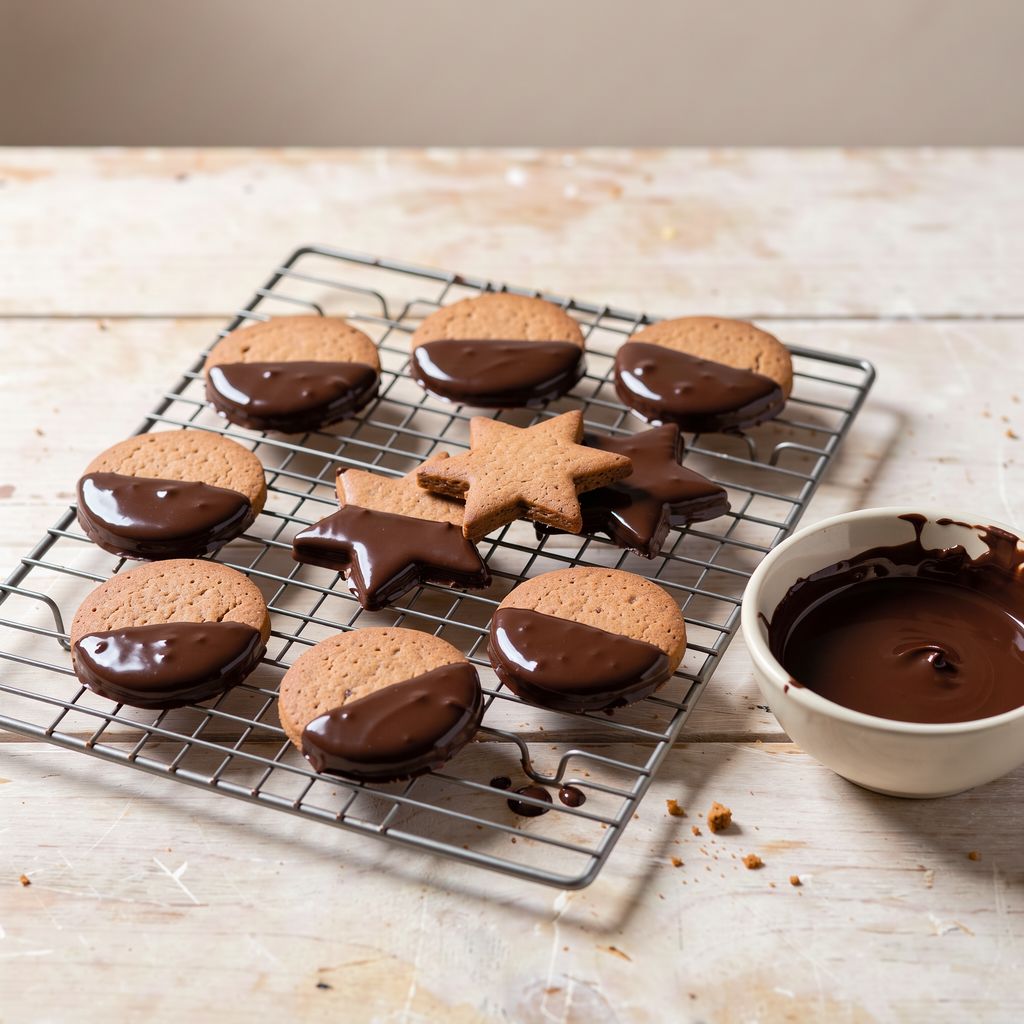
Chocolate glaze for gingerbread cookies is made with real chocolate mixed with 10–20% fat (coconut oil, for example). That keeps it soft, so it doesn't crack when you bite into it. One rule first: only coat the cookies once they've softened. Chocolate seals moisture out, so a hard cookie under it stays hard.
Use real chocolate for gingerbread cookies and soften it with a little fat. It tastes better than compound coating and is just as pliable once the fat is added. The difference comes down to the type of fat:
Real chocolate (including couverture) gets its fat from cocoa butter. It tastes clean, melts on the tongue and has a nice shine. Left as it is, though, it sets into a hard, brittle shell. That's great for pralines, but not so good on a soft gingerbread cookie.
Compound coating (on the package often just "coating" or "cocoa coating") has the cocoa butter replaced with vegetable fat. It needs no tempering and stays flexible without cracking, but it feels waxy in the mouth and the cocoa flavor is weak.
On the package, real chocolate is labeled chocolate or couverture chocolate. A label that just says coating (compound, cocoa) means a substitute made with vegetable fat.
The middle path is real chocolate plus a little fat. You get the flavor of chocolate and the flexibility of compound coating, and there's no need to temper.
What works well on gingerbread cookies:
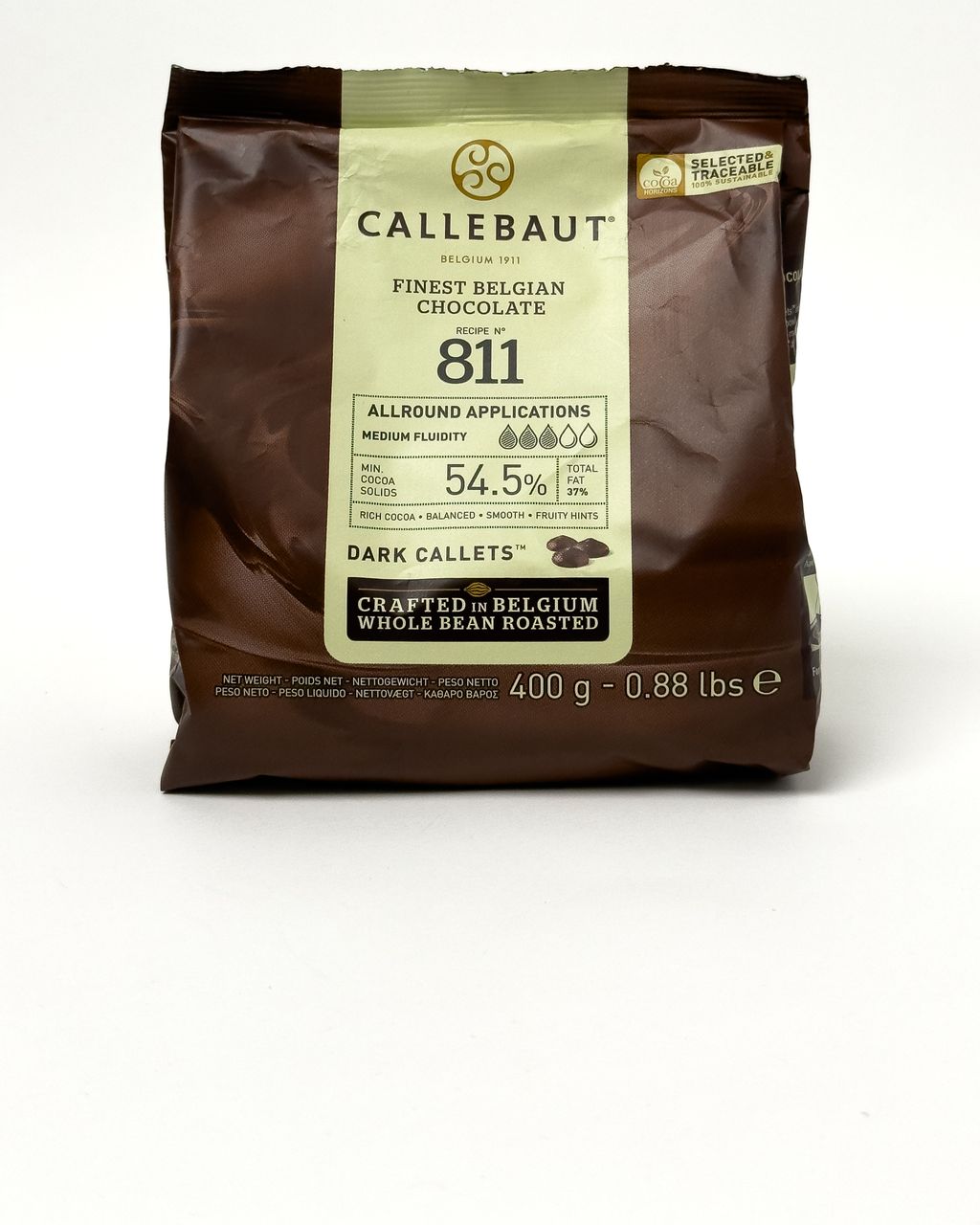
Dark is the classic. Its bitterness is a great counterpoint to honey and spices. Callebaut 811 has 54.5% cocoa according to the manufacturer and a medium fluidity, so it's easy to apply even to small shapes: Callebaut dark chocolate callets (811).
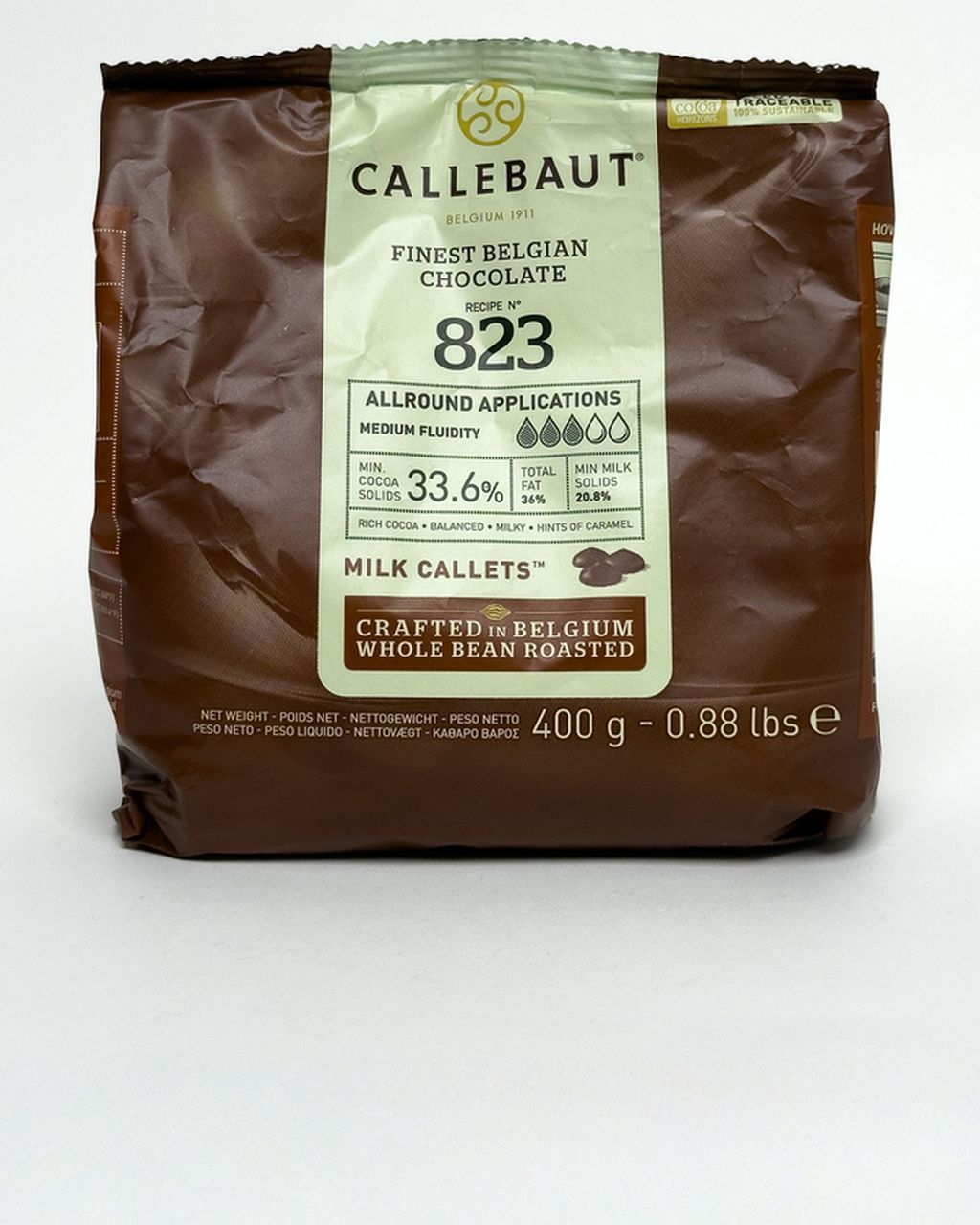
Milk is milder and popular with kids. Callebaut milk chocolate callets (823) have 33.6% cocoa.
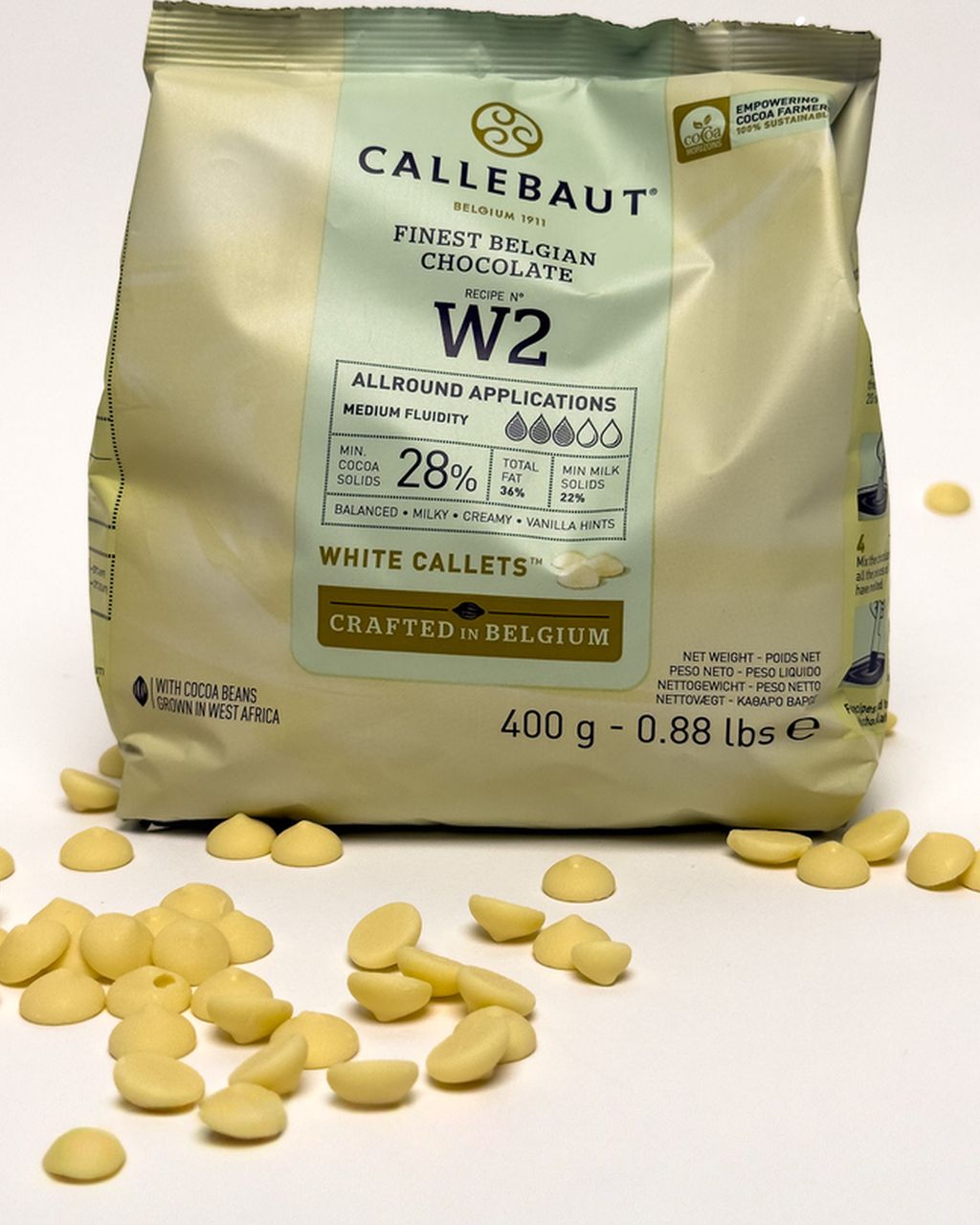
White is sweet and, above all, the only kind you can color. Callebaut white chocolate callets (W2).
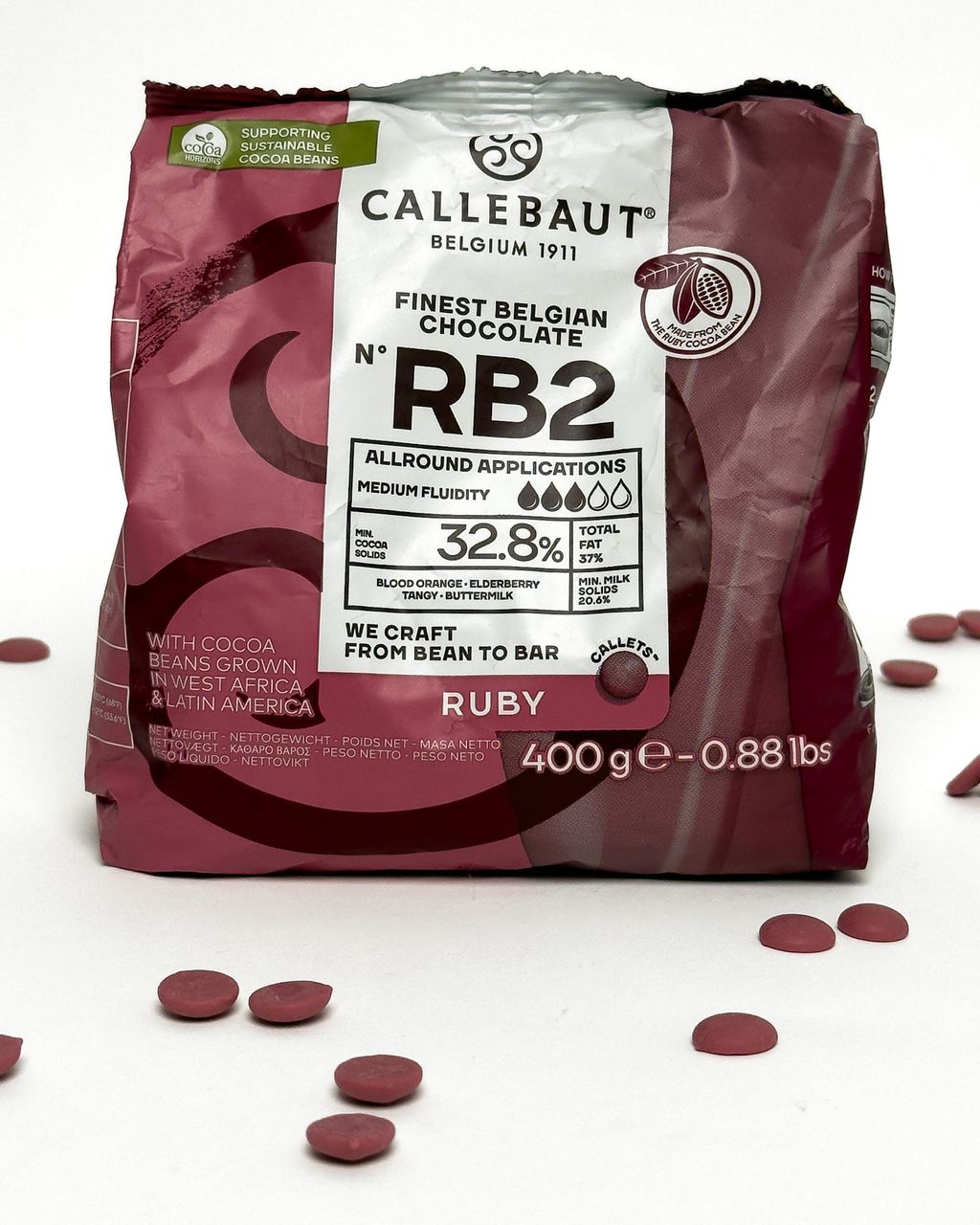
Ruby is naturally pink with a fruity tang and no added coloring. It looks unexpected on gingerbread, and the tartness nicely freshens up the honey dough: Ruby RB2 chocolate callets.
Callets melt evenly and need no chopping. A good baking bar works too, as long as cocoa butter is in the ingredients rather than vegetable fat. You'll find the whole selection in the baking chocolate and coatings category.
Add fat equal to 10–20% of the chocolate's weight, so 20–40 g for 200 g of dark chocolate. The fat breaks up the rigid crystal structure of the cocoa butter, so the glaze sets into a flexible layer that doesn't flake off or shatter into shards when you bite into it.
Approximate ratios for 200 g of chocolate:
Dark: 30–40 g of fat (15–20%). Dark is the hardest, so it needs the most.
Milk: 20–30 g (10–15%).
White and ruby: 20 g (10%). They're softer to begin with, and with more fat the glaze would stick to your fingers.
Which fat to use:
Coconut oil (refined, with no scent) is the best choice. It's solid at room temperature, so the glaze sets well, and it adds no flavor.
Solid baking fat (shortening) works the same way and is the classic choice in Czech glazes.
Butter tastes best, but it contains around 16% water, so the glaze is softer and the cookies keep for a shorter time. Use it only up to 10%.
Oil (sunflower) is only for a teaspoon to improve the flow. In larger amounts, the glaze won't set.
You'll know the ratio is right when the glaze at 30–32 °C (86–90 °F) runs off the spoon in a continuous stream, not in drops, and once set, it only ripples slightly when you bend the cookie instead of cracking.
If you'd rather go with pure cocoa butter, or you're wondering what to replace it with, the article What to substitute for cocoa butter covers it.
Glaze gingerbread cookies only when they're soft, because chocolate acts as a fat barrier, and the moisture that's supposed to soften the cookies practically can't get through it. Freshly baked gingerbread cookies are hard. They soften over the following days as the honey in the dough draws moisture from the air. If you glaze them while they're hard, you lock them in: the cookie under the chocolate stays hard, often for weeks.
How to do it:
Let the baked cookies cool, then put them in a tin or box.
Add a slice of apple (or a piece of baking paper with a few drops of water under the lid) and close it.
Leave them for 2–5 days at room temperature, and replace the apple once it wilts.
The cookie is ready when you can press it lightly without it snapping, but it doesn't yet give way like a sponge.
If you're in a hurry, you have two options:
Glaze only half or just the top. The unglazed underside keeps absorbing moisture, so the cookie will soften afterward, just more slowly.
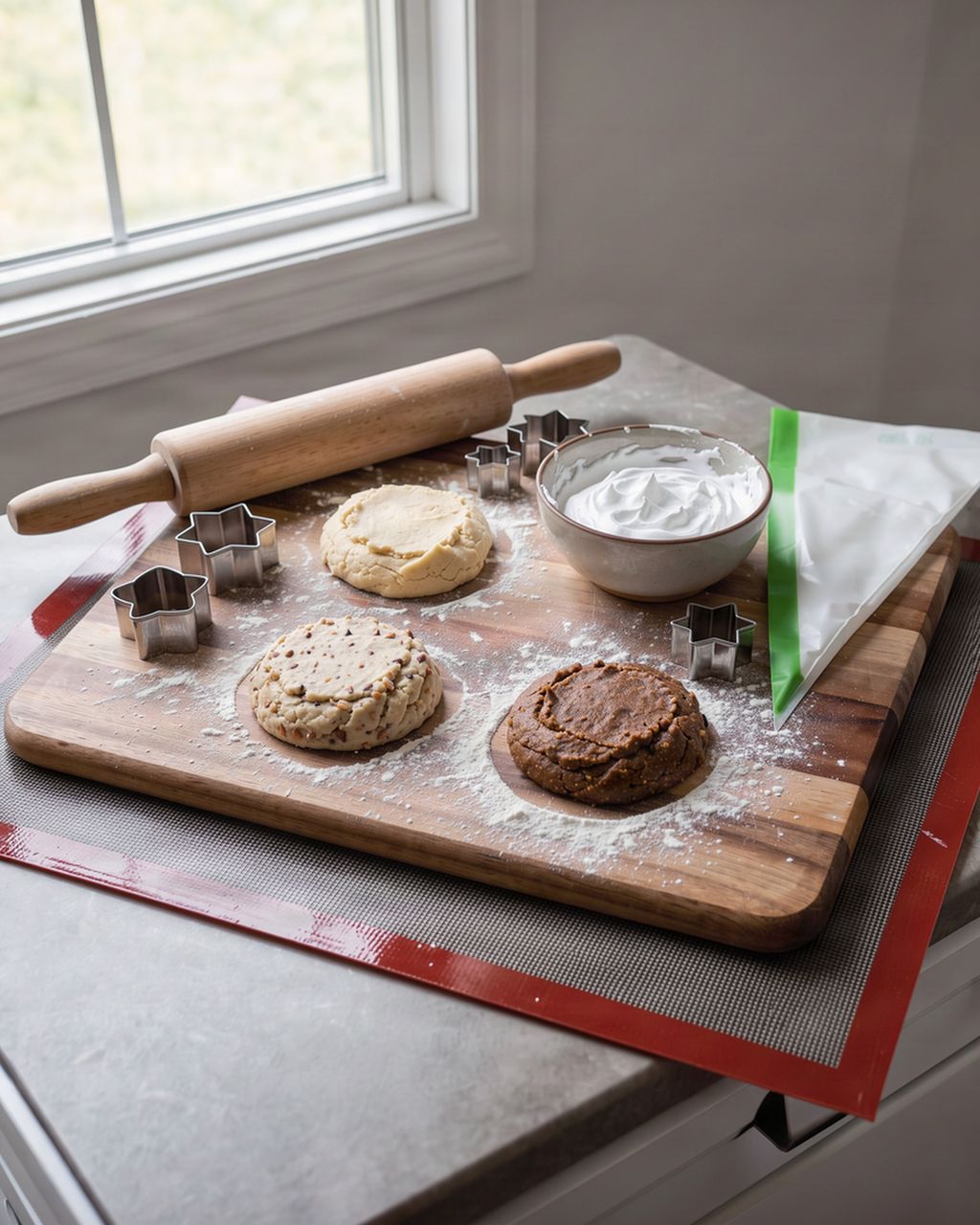
Bake a recipe that softens quickly. Soft honey gingerbread cookies that don't go hard or tender gingerbread cookies turn soft within 1–2 days.
Watch out for the opposite problem too: cookies that are too moist and mushy make the glaze "sweat," and the chocolate loses its shine. So open the tin, take out the apple, and let the cookies dry for a while on a rack before glazing.
Soft honey gingerbread cookies that never go hard
Soft honey gingerbread cookies that don't go hard: an ideal base for chocolate glaze
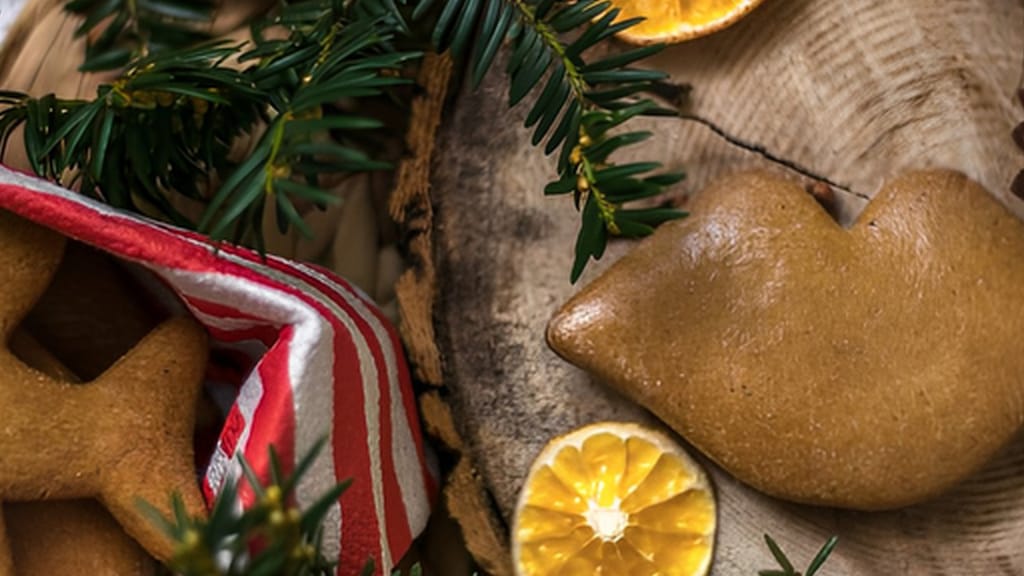
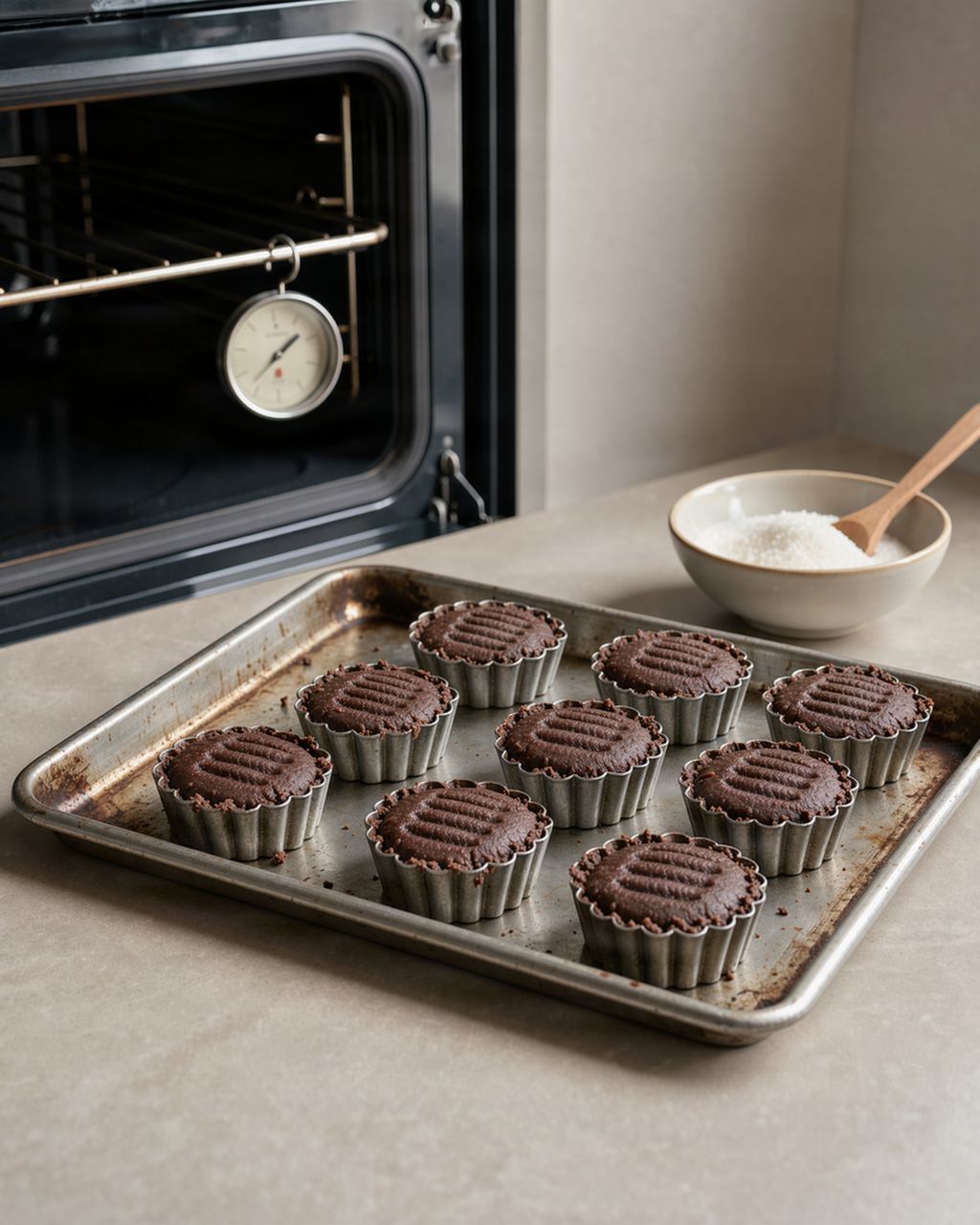
Soft gingerbread cookies
Tender gingerbread cookies that soften in 1–2 days and go straight into the chocolate glaze
Melt the chocolate with the fat to 40–50 °C (104–122 °F) depending on the type, let it cool to 30–32 °C (86–90 °F), and dip the cookies into it rather than brushing it on. Here's how:
Melt slowly. Use a water bath, or the microwave in 20–30 second bursts, stirring in between. Dark chocolate tolerates up to 45–50 °C (113–122 °F); milk, white and ruby no more than 40–45 °C (104–113 °F). Overheated chocolate thickens and turns grainy.
Stir in the fat (melted or chopped) until the glaze is smooth.
Let it cool to 30–32 °C (86–90 °F). A warmer glaze is thin, runs off and stays translucent. A cooler one is thick and gets lumpy.
Dip. Hold the cookie by its edge, dip the top or half of it, hold it over the bowl for a moment and let it drip. Wipe the bottom edge on the rim of the bowl.
Let it set at room temperature, ideally 16–20 °C (61–68 °F), on baking paper or a rack. In 20–40 minutes the glaze is dry to the touch.
Decorate while the glaze is still soft with sprinkles, nuts or candied orange peel. If you want to pipe lines, wait until it's set.
200 g of chocolate with fat will glaze roughly 40–60 small cookies (tops only), or about half that if you dip them halfway.
A large sheet-pan gingerbread cake takes a slightly different glaze, thicker and poured on. You'll find that in Glaze for sheet-pan gingerbread. The general rules for dipping other cookies (shortbread-style linzer cookies, vanilla crescents) are covered in Dipping cookies in chocolate.
Only white chocolate can be colored, and only with an oil-based dye. A water-based gel color makes the chocolate seize. White chocolate with 10% fat added is an ideal base: melt it first, stir in the fat, then add the color drop by drop.
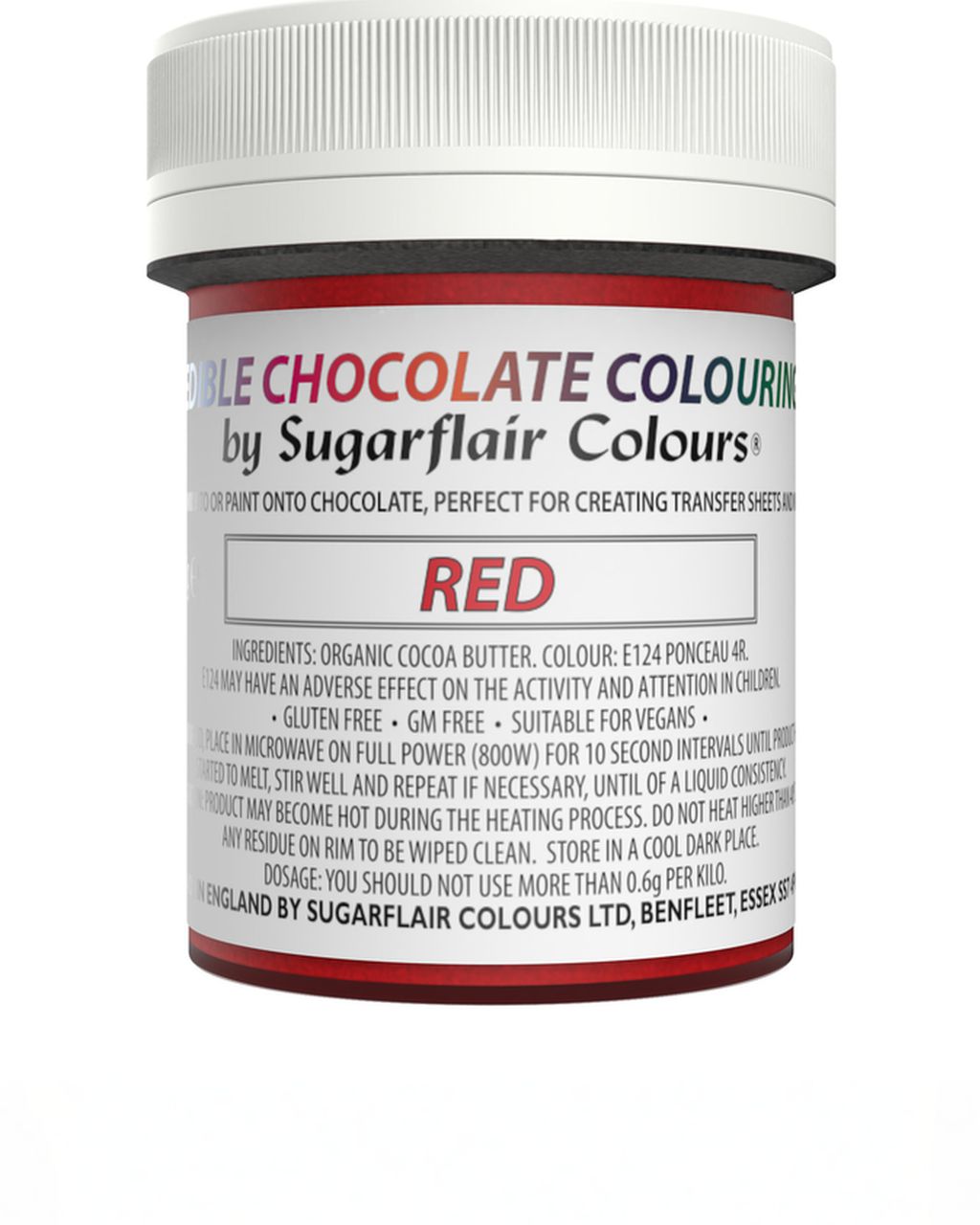
For a deep red, you need an oil-based color, such as Sugarflair oil-based chocolate color in red. Start with about 1/4 teaspoon per 100 g and add more as needed, because the color darkens slightly once it sets.
For pink you don't need to color anything: ruby chocolate is pink on its own.
For a marbled effect, drip dark chocolate into the white glaze and drag a skewer through it. For more on keeping the pattern from bleeding, see Marbled glaze for gingerbread cookies.
If you're after a red royal icing instead of a chocolate one, take a look at Red icing for gingerbread cookies.
Store them in a closed box in a cool place, ideally at 12–18 °C (54–64 °F), and not in the fridge. In the fridge, moisture condenses on the chocolate, and once you take them out, a grey film (sugar bloom) appears and the glaze goes dull.
Separate the layers with baking paper so the glaze doesn't stick together.
Don't store them with an apple slice. It has already done its job before glazing, and the moisture would now only dull the glaze.
With a glaze made with coconut oil or solid baking fat, the cookies stay nice for 2–3 weeks. With butter, it's better to eat them within 10 days.
Glaze filled gingerbread cookies only after sandwiching them. You'll find the method in Filled gingerbread cookies.
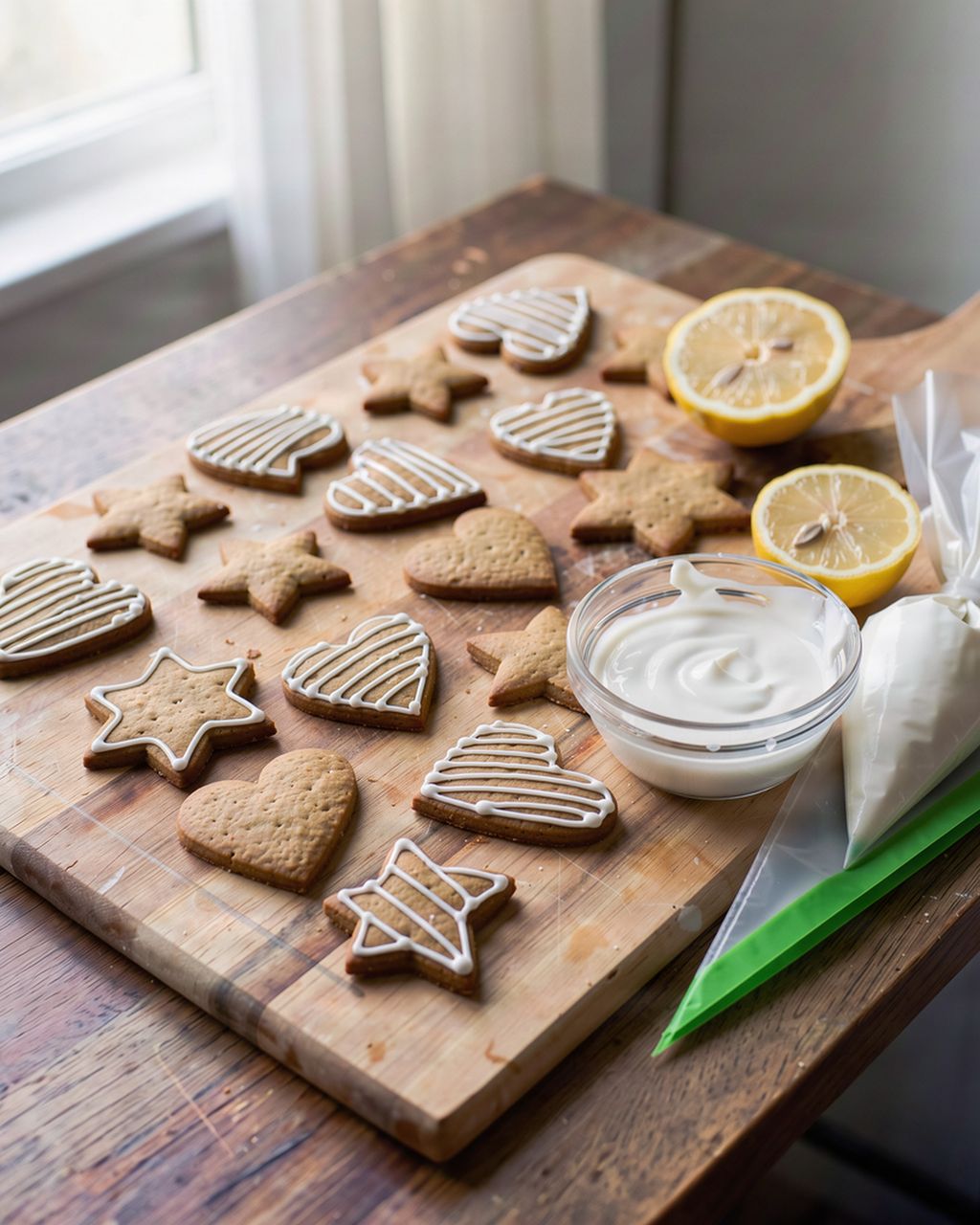
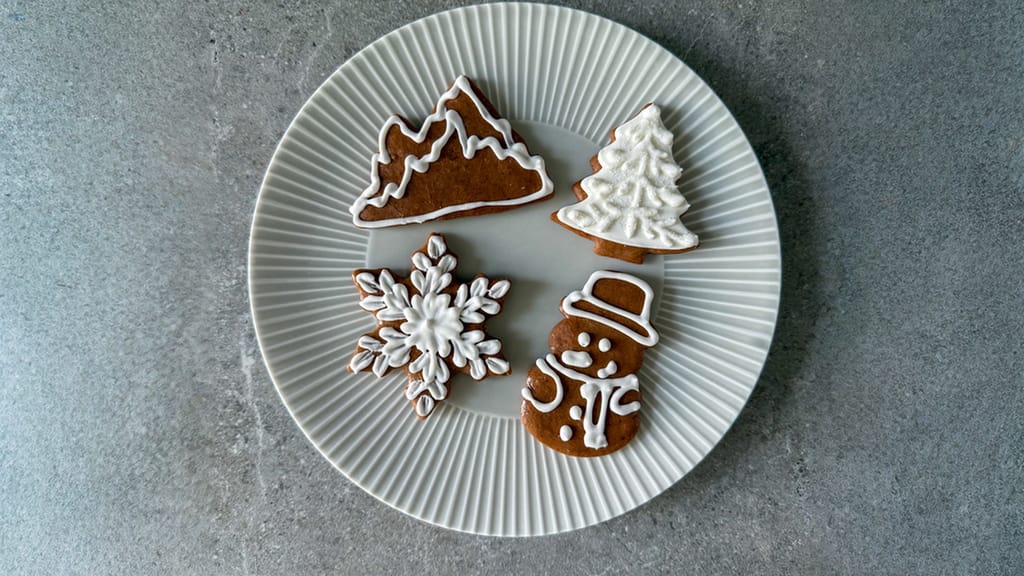
Without chocolate, you can decorate gingerbread cookies with classic royal icing, or with a powdered sugar icing made without raw egg white. You'll find the recipe, the right consistency and step-by-step decorating in Icing for gingerbread cookies: recipe, consistency and decorating. If you're wondering whether raw egg white is safe, the article Raw eggs in cookies and creams covers it. And for fine decorating on top of chocolate, a gingerbread decorating pen comes in handy.
For a standard batch made with 500 g of flour (roughly 60–80 small cookies), plan on 200–400 g of chocolate plus fat if you're only coating the tops. If you're dipping half of each cookie, you'll need about double, so 400–800 g, because each cookie picks up more glaze and some always stays behind in the bowl.
Yes, but only once the chocolate has set completely, usually after 1–2 hours. On soft chocolate, royal icing spreads and runs, and the water in it soaks into the chocolate and dulls the surface.
You can, but it's a different glaze. Cocoa, powdered sugar, butter and a little milk make a soft, creamy frosting that never sets into a glossy shell, and the cookies stick together. For storing and stacking in a box, real chocolate with added fat is more reliable.
A grey or white film is bloom. It's either fat bloom (the chocolate set too warm or too slowly) or sugar bloom (the cookies were kept in the fridge or in a damp place). It's purely cosmetic and the taste is the same. To prevent it, let the glaze set at 16–20 °C (61–68 °F) and store the cookies outside the fridge.
No, not if you add 10–20% fat. The fat disrupts the crystallization of the cocoa butter, so the glaze sets flexible and usually glossy without tempering. It works best when it sets at 16–20 °C (61–68 °F). Tempering is only worth the effort with pure chocolate that has no added fat.
One recipe worth heating the oven for, one tip, and one deal from the shop. Nothing else.