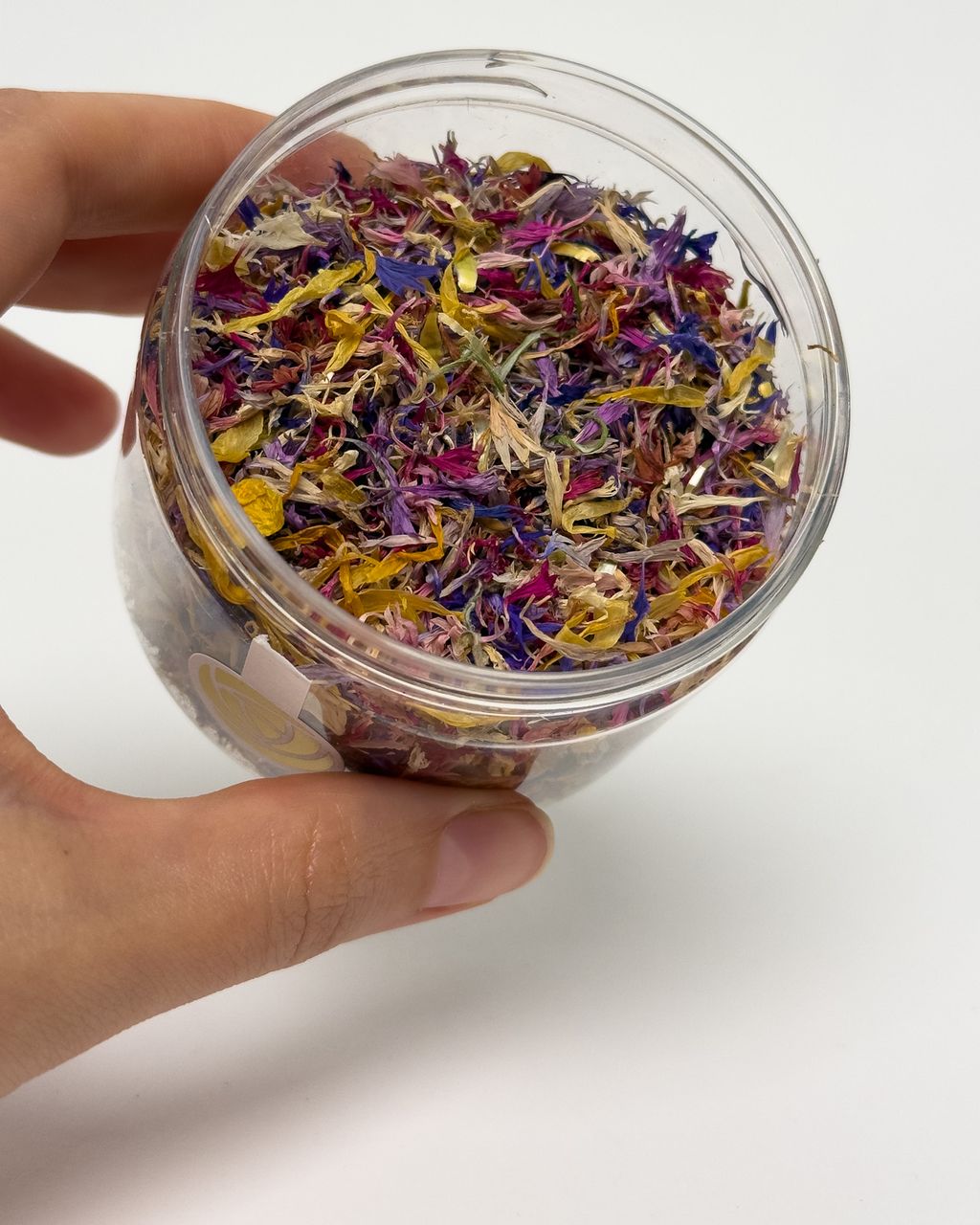
Dried Cornflower Petals – Classic Mix
How to Decorate Czech Open-Faced Sandwiches (Chlebíčky) for New Year's Eve and Parties
Updated Oct 15, 2026
Decorating chlebíčky in a nutshell: a firm base, one standout garnish per sandwich, a contrast of colors, and protection against drying out – and the most delicate touches go on just before serving. The Czech open-faced sandwich is a Czech invention; according to accounts from the time, Prague delicatessen owner Jan Paukert came up with it around 1916. It has barely changed in a hundred years, which is exactly why decoration matters so much: everyone knows what a chlebíček should look like, so every detail shows. Here you'll find what to decorate them with, how to pipe butter rosettes, when to reach for edible flowers, and how to plan your New Year's Eve chlebíčky so they don't look tired by midnight.
A nicely decorated chlebíček has a firm base, a low and stable build, one standout garnish, a contrast of colors, and protection against drying out. In detail:
The base holds its shape. The spread or salad must be thick enough not to run over the edge of the bread.
Height of no more than 3–4 cm. A taller chlebíček falls apart when you bite into it and tips over on the tray.
One star per sandwich. A rosette, a cucumber fan, a little flower – not all at once. An overloaded chlebíček looks cheap.
Color contrast. On a pale base (egg, ham, cheese) you need a green, red, or blue accent.
Delicate garnishes last. Add herbs, flowers, and cress only 1–2 hours before serving, not the evening before.
A classic chlebíček is built from the bottom up in five layers: bread → fat barrier → base → main topping → garnish.
Bread (veka): slice the loaf on the diagonal into 1–1.5 cm slices. One loaf yields roughly 20–25 pieces. Day-old bread slices more cleanly than fresh.
Fat barrier: a thin layer of butter (or mayonnaise) stops a moist salad from soaking the bread. This step is the one most often skipped, and then the underside of the sandwich is soggy within two hours.
Base: potato salad, egg spread, or another spread. Spread it into a slight dome and trim the edges flush with a knife – a straight edge does half the work of a "deli" look.
Main topping: a ham cone, a slice of salami, a quarter of an egg, a slice of cheese. Arrange them so they overhang the edge of the base slightly but don't hang over the bread.
Garnish: a cucumber fan, a radish slice, a strip of pepper, a rosette, a little flower.
If you'd like to make the base yourself, try an easy egg spread that is incredibly good or a yellow spread with egg and Gouda. A roasted red beet spread adds color contrast to the tray. Why one spread holds its shape and another runs, and how to thicken it, is covered in spreads for chlebíčky: basic ratios and consistency.
Six types of garnish suit chlebíčky: fresh vegetables, herbs and sprouts, egg, piped rosettes, aspic, and edible flowers. Each does something different:
Vegetables (cucumber, radish, pepper, cherry tomatoes): inexpensive, colorful, and good for 4–6 hours. Tomatoes release juice, so put them at the edge, not in the middle of the spread. For a cucumber fan, slice lengthwise into 4–5 slices without cutting all the way through the end, then fan it out with your fingers.
Herbs and sprouts (dill, chives, parsley, cress): the quickest fresh green. They wilt within 1–2 hours outside the fridge, though, so they go on the chlebíček just before serving.
Egg: a quarter or slice of hard-boiled egg is a classic. Cut with a wet knife and the yolk won't crumble.
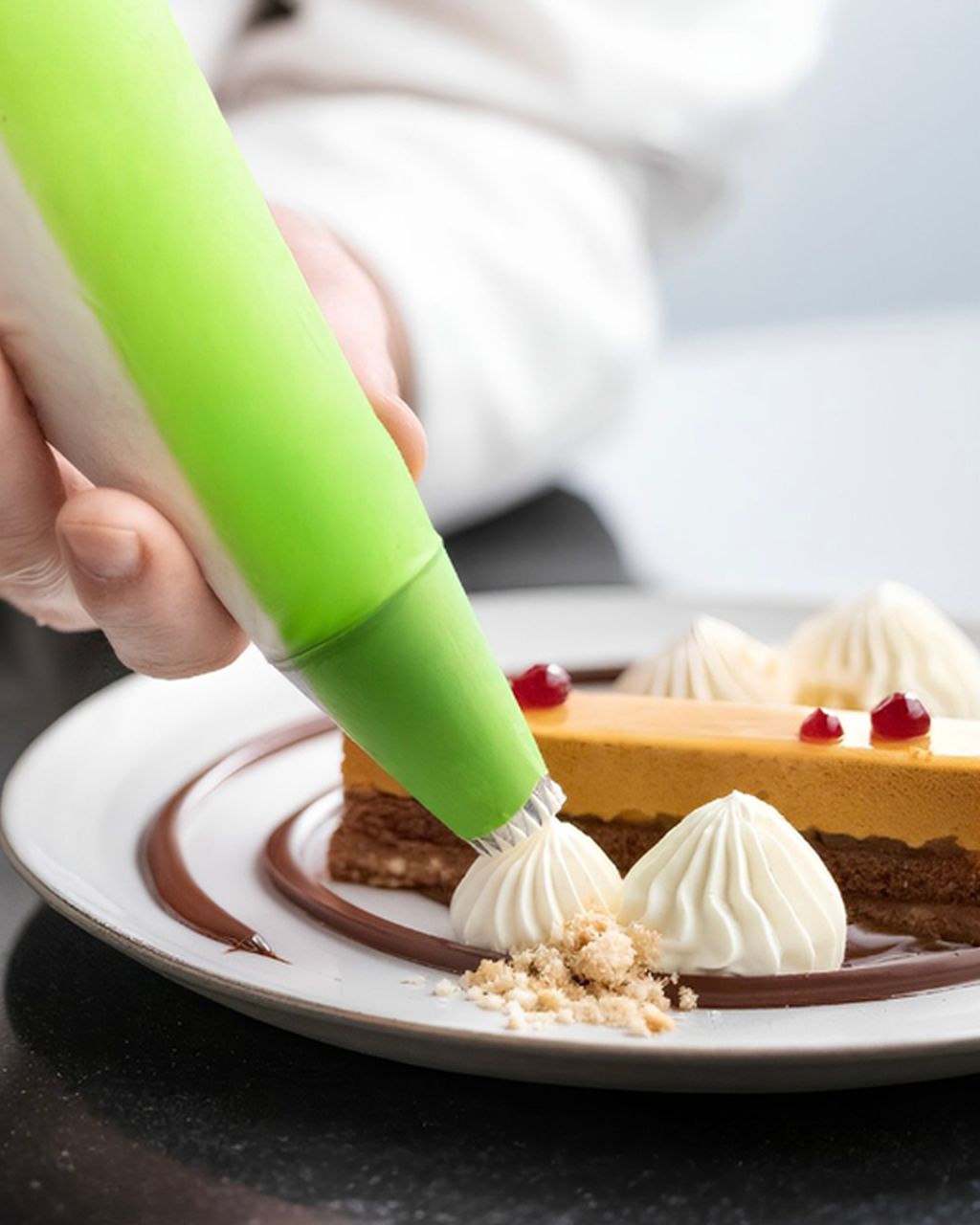
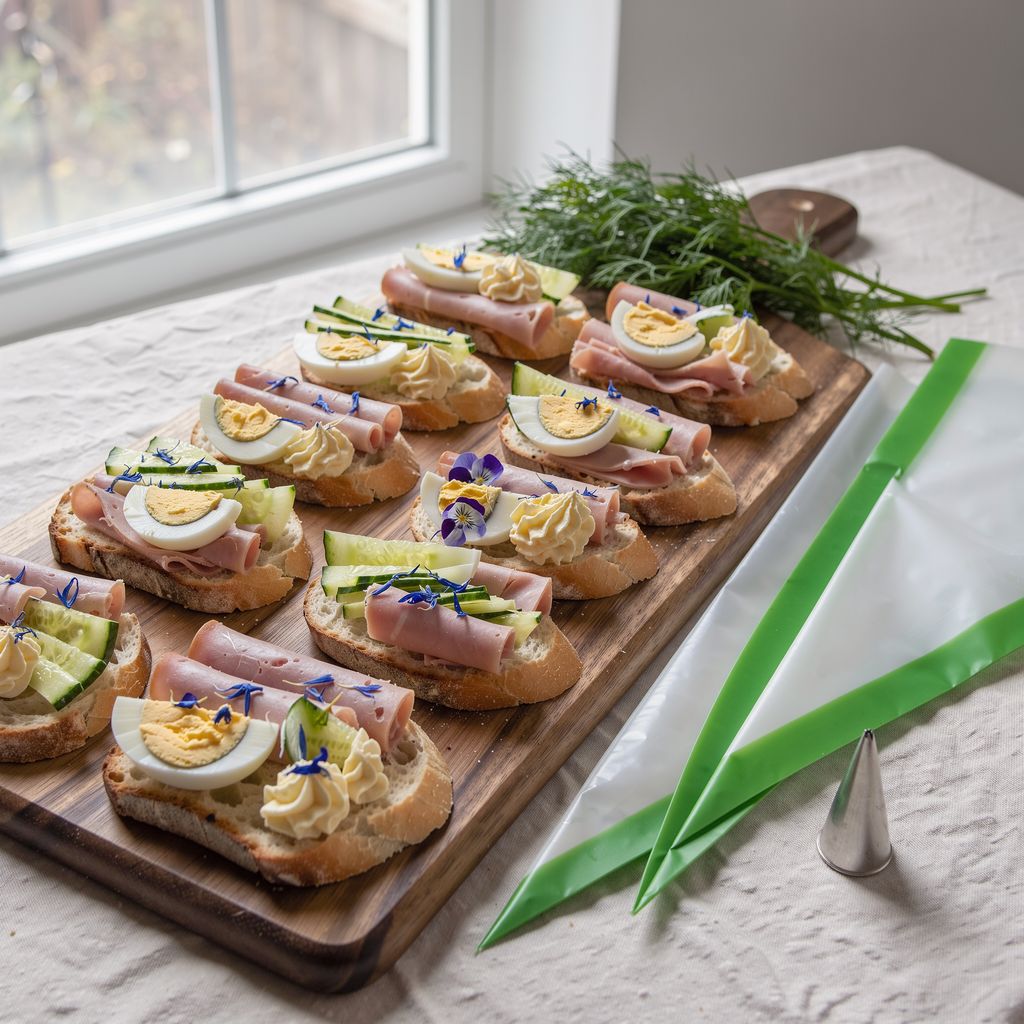
Rosettes of butter or spread: they unify the whole tray, because every piece has the same "signature." Thick store-bought mayonnaise will hold a rosette shape too, but homemade egg mayonnaise is usually too thin. You need a piping bag and a piping tip – described below.
Aspic: shine and protection against drying out. It takes more work, but chlebíčky with aspic keep the longest.
Edible flowers: fresh ones (from your own unsprayed garden or sold as edible) look the liveliest but last only a few hours. Dried edible flowers are available year-round – in winter, when you can't find fresh ones, they're a practical choice.
For a festive tray, combining two or three of these is enough. A rosette plus a little flower, or egg plus dill – more than that needlessly scatters the look.
Pipe rosettes for chlebíčky from softened butter or a thick cheese cream at about 18–20 °C (64–68 °F), through a small open star tip in a disposable bag. Here's how:
The mixture: let the butter soften, but it must not turn shiny or runny. Butter mixed 1:1 with cream cheese or soft spreadable cheese (lučina) reliably holds its shape. Homemade egg mayonnaise is usually too thin for rosettes – it flattens within minutes.
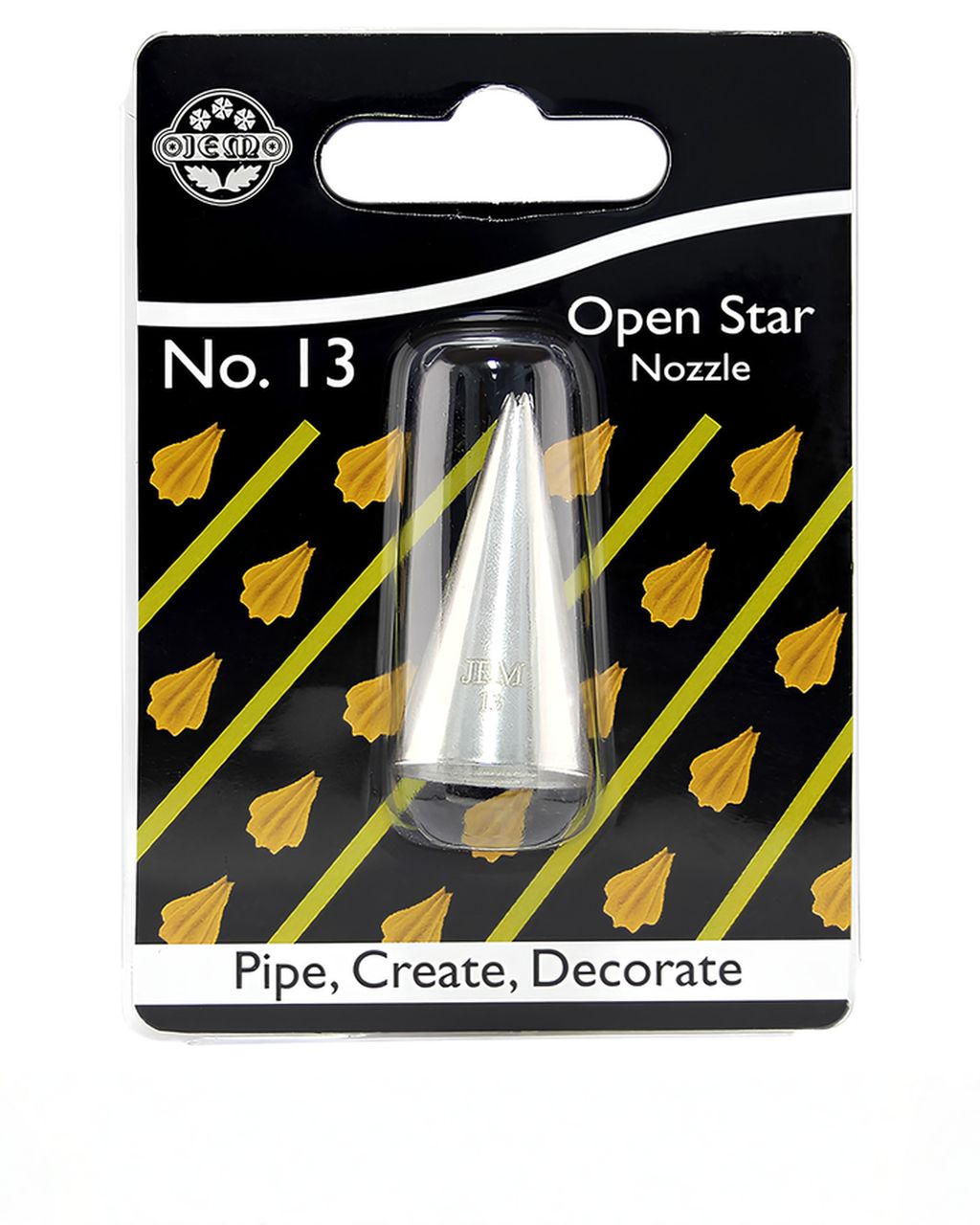
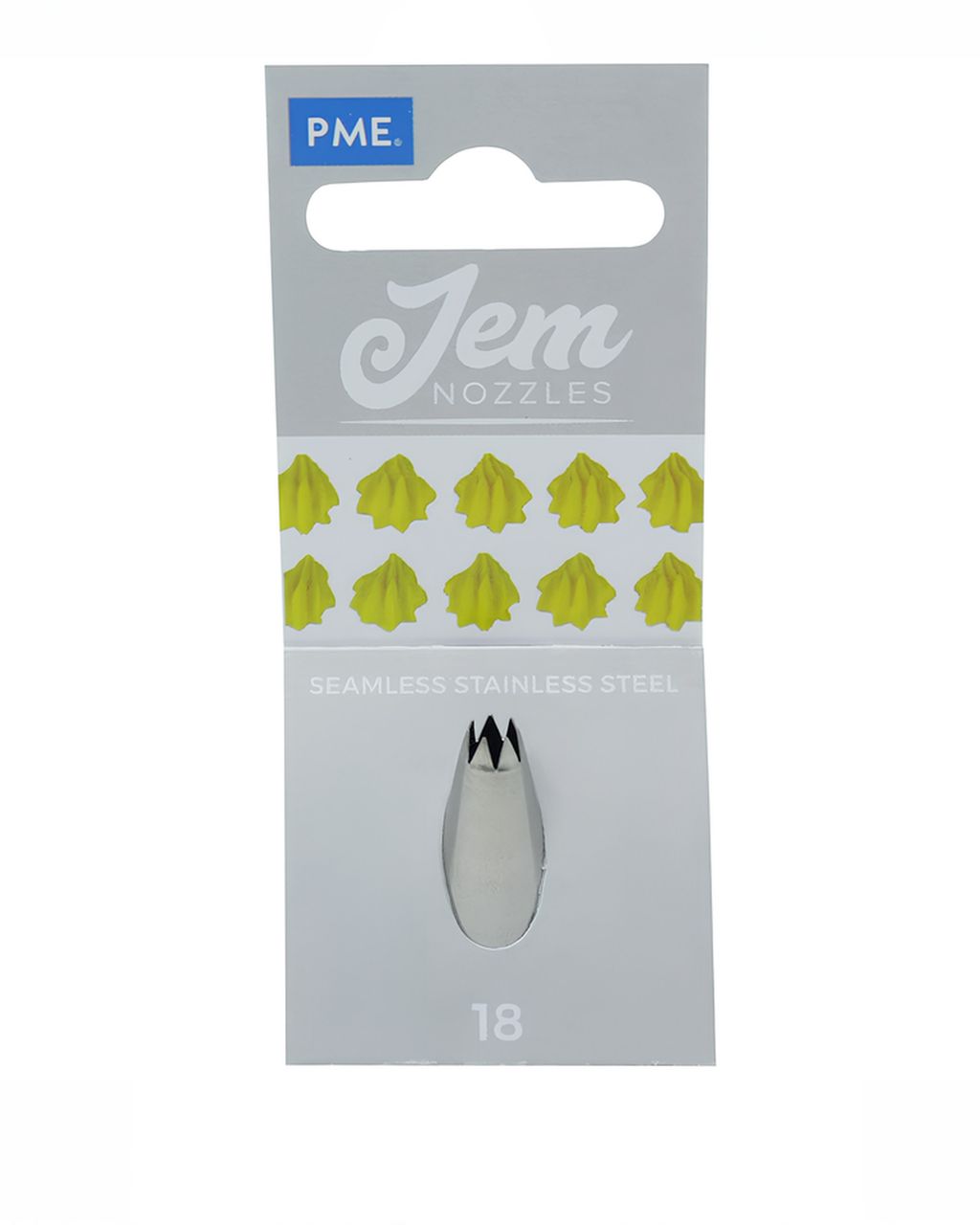
The tip: small open stars are enough for chlebíčky. The JEM open star no. 13 makes small rosettes and dots for the edge, and no. 18 makes a slightly larger rosette that can carry a little flower or a slice of olive. Both are metal and sharp, so the ridges come out clean.
The bag: in disposable piping bags (such as One Way 30 cm), fill no more than two-thirds and twist the end. For savory mixtures a disposable bag is more practical than a cloth one – butter and onion won't linger in it until your next baking.
The technique: hold the tip upright 1 cm above the chlebíček, squeeze, let the mixture flow out to the size you want, release the pressure, and only then lift. If you lift and squeeze at the same time, you get a "tail."
Chilling: put the piped chlebíčky in the fridge for 15–20 minutes so the rosettes firm up and don't get squashed when you cover them.
You'll find other tip shapes and how to choose one when you want more than a rosette in the article piping tips: which to use for what and how to choose.
If you don't have a tip, snip off the end of the bag and pipe smooth dots – it looks more modest, but neat. A freezer bag with a corner snipped off works too, though it tends to split at the seam.
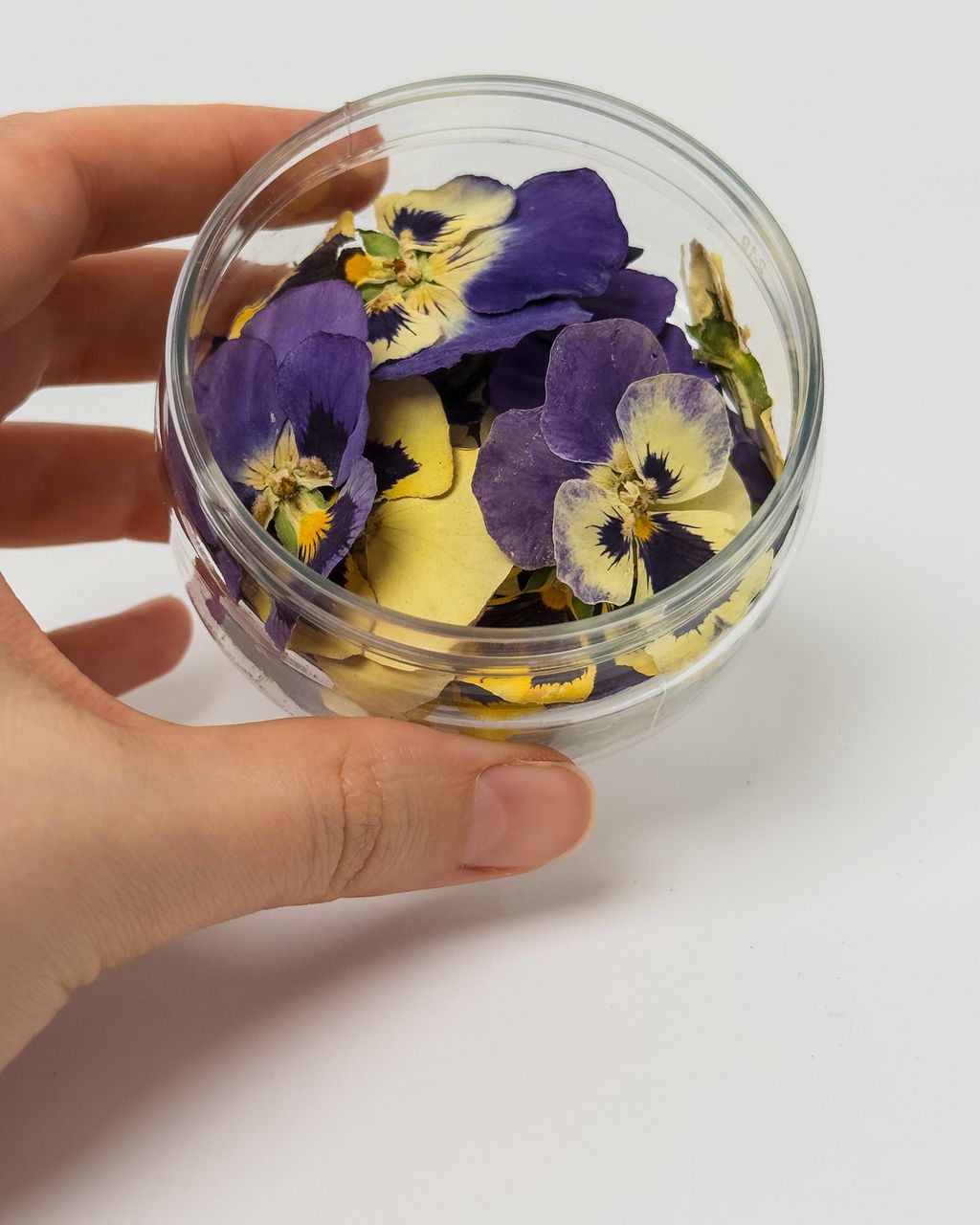
Dried cornflower and dried pansies suit savory chlebíčky best – they have a delicate, almost neutral flavor, they won't overpower ham or egg, and they give colors vegetables can't: blue and purple.
Cornflower (petals or whole flowers) is a deep blue and small – a few petals on a rosette or on the edge of an egg are enough. It goes well with egg, cheese, and salmon.
Pansies are flat and large, and a single flower makes the whole garnish. They stand out best on a pale base – cheese cream or egg spread.
You can pick dried edible flowers from our selection of edible flowers; for chlebíčky, Rosie Rose dried cornflower petals – Classic Mix and Rosie Rose dried pansies are a particularly good fit. Fresh pansies in season in the garden are just as good, but in December you usually can't find them.
When to add them: dried flowers draw moisture from the spread and soften within a few hours, and cornflower may bleed a little color onto a moist base. So place them no earlier than 1–2 hours before serving, ideally on a butter rosette or set aspic, not directly onto a wet salad. Tweezers help – fingers break the petals.
Which flowers are truly edible and which only look innocent is covered in the article edible flowers: which are truly edible and which are best left uneaten.
Aspic is a thin layer of set clear broth with gelatin that you pour over the chlebíček to give it shine and slow down drying out. The ham beneath it won't curl at the edges, the egg won't darken, and the garnishes stay in place.
Working ratio: roughly 15–20 g gelatin (about 9–12 sheets) per 500 ml of clear broth. The lower end gives a delicate, wobbly aspic, the upper end a firmer layer that holds even in a warmer room. For a tray of 20–25 chlebíčky, 500 ml is plenty.
How to do it:
Chill the chlebíčky first for at least 30 minutes – on a cold surface the aspic sets quickly and doesn't run.
Let the aspic cool until it is lukewarm and starting to thicken. If it's warm, it runs onto the tray; once set, it can no longer be applied.
Apply it with a brush or spoon in one thin layer, then 20–30 minutes in the fridge.
Lay edible flowers only on set aspic, and as without it, no earlier than 1–2 hours before serving. The aspic separates them from the moist spread.
How to soak and dissolve gelatin properly so the aspic sets and has no lumps is covered in the article how to use gelatin: sheet vs. powder, soaking and ratios.
For a New Year's Eve party, count on 3–4 chlebíčky per person if there's other food on the table, and 6–8 if chlebíčky are the main refreshment. New Year's Eve is a long evening, so split them into two batches.
A timeline that keeps them fresh:
The day before: boil the eggs and prepare the spreads, potato salad, and aspic. Keep everything in the fridge, with the spreads covered.
4–6 hours before serving: slice the bread, brush with the fat barrier, arrange the base and toppings, and pipe the rosettes. Pour aspic over them, if using.
1–2 hours before serving: herbs, cress, edible flowers.
Until serving: in the fridge, covered with plastic wrap stretched over the edges of the tray so it doesn't touch the garnishes (toothpicks stuck into a few chlebíčky help).
Prepare the second batch (for midnight) completely, but add the garnishes only around 11 p.m. According to general food safety guidance, don't leave chlebíčky with mayonnaise, eggs, and meat at room temperature for more than 2 hours – bring them out of the fridge gradually, not the whole tray at once.
Decorated chlebíčky can't be frozen – the mayonnaise splits after thawing, the eggs turn rubbery, and the cucumbers and herbs go watery. You can freeze only the bread itself (the veka, a Czech baguette-style loaf) and assemble the sandwiches after it has thawed.
Carry chlebíčky in a shallow box or on a tray, packed snugly side by side so they can't slide around, and cover them with plastic wrap held up by toothpicks. Take the most delicate garnishes, meaning herbs and edible flowers, separately and add them once you arrive.
Softened butter, cream cheese, or quark mixed with butter can replace mayonnaise on chlebíčky, and they also hold the shape of a rosette better. A thin layer of butter or soft spreadable cheese under the base also works as a fat barrier.
Color is what makes vegetarian chlebíčky: a beet or egg spread as the base, a slice of cheese or grilled pepper instead of ham, and a rosette on top with an edible flower or cress. Alternate light and dark bases on the tray so each row has a different color.
Dried cornflower and pansies hardly change the taste of chlebíčky; they add only a delicate, slightly grassy note. Flowers with a strong scent, such as rose or lavender, don't suit savory chlebíčky – they end up tasting perfumed.
One recipe worth heating the oven for, one tip, and one deal from the shop. Nothing else.