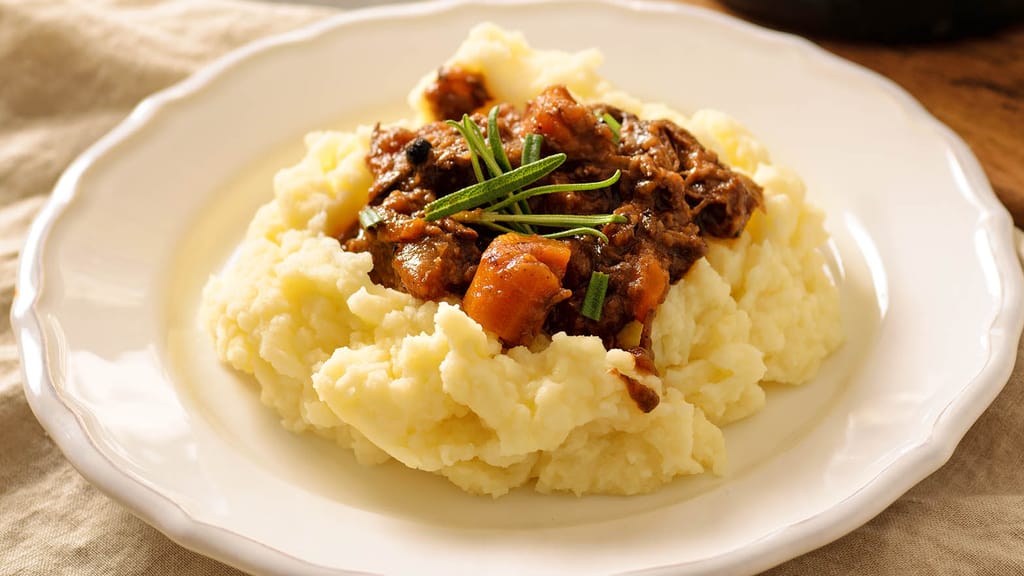
Oven-braised beef in red wine with vegetables

Updated Jul 19, 2026
Vacuum-sealed meat keeps noticeably longer in the fridge than meat stored in ordinary packaging – beef and pork typically last 1–2 weeks, poultry and fish around a week, while unwrapped meat should be used within a few days. But vacuum sealing isn't magic: it only protects the meat properly when it's kept at 0–2°C, and with fish it actually introduces a risk of its own. In this article you'll find realistic storage times by type of meat, why vacuum sealing works and where its limits lie, how to defrost meat safely, and how to get started with vacuum sealing at home.
In a properly chilled fridge (0–2°C), vacuum-sealed meat lasts roughly as follows:
Beef: 2–3 weeks
Pork: 1–2 weeks
Poultry (chicken, turkey): up to 1 week
Fresh fish: 2–4 days
Without vacuum sealing, these times are several times shorter – use unwrapped beef and pork within 3–5 days, poultry and fish within 1–2 days.
Take eye-catching claims like "beef lasts 6 weeks" with a grain of salt: they apply to professional packaging and precisely controlled temperatures around 0–1°C, not to an ordinary home fridge. According to the US Department of Agriculture (USDA), raw meat stays safe for anywhere from a few days to a couple of weeks depending on the type – and the moment the temperature fluctuates, that window shrinks. What's more, vacuum sealing doesn't stop all bacteria (more on that below), so these figures are upper limits, not targets to aim for.
Beef and pork are among the longest-lasting types of meat – realistically count on 1–2 weeks, and well-packaged beef kept at 0–1°C can last a bit longer still. One thing that might throw you off: vacuum-sealed beef often darkens to a purplish or greyish colour. That's not spoilage, just a lack of oxygen – once opened, the meat turns red again within minutes of exposure to air. If you're deciding which cut to work with, this overview of types of beef and how to use them can help.
Oven-braised beef in red wine with vegetables
Beef braised in wine with vegetables in the oven – a great way to use well-aged beef
Poultry is more delicate than red meat, so even vacuum-sealed, use it within a week and ideally as soon as possible. Chicken and turkey are more prone to bacteria like salmonella and campylobacter, so hygiene during packaging and handling is essential: clean hands, cutting board and knife, and nothing that touches the finished dish. Vacuum sealing doesn't reduce the risk from these bacteria – it only slows spoilage if they're already present.
Fish is the most delicate of all and comes with its own catch: use fresh fish within 2–4 days even when vacuum-sealed. With fish, vacuum sealing carries a risk of Clostridium botulinum growth (the bacterium behind botulism), which multiplies even in cold, oxygen-free conditions. That's why you should take fish out of its vacuum packaging before leaving it in the fridge for longer or before defrosting it – exposure to oxygen prevents the toxin from forming. If you're going to cook the fish right away, though, vacuum sealing is perfectly fine.
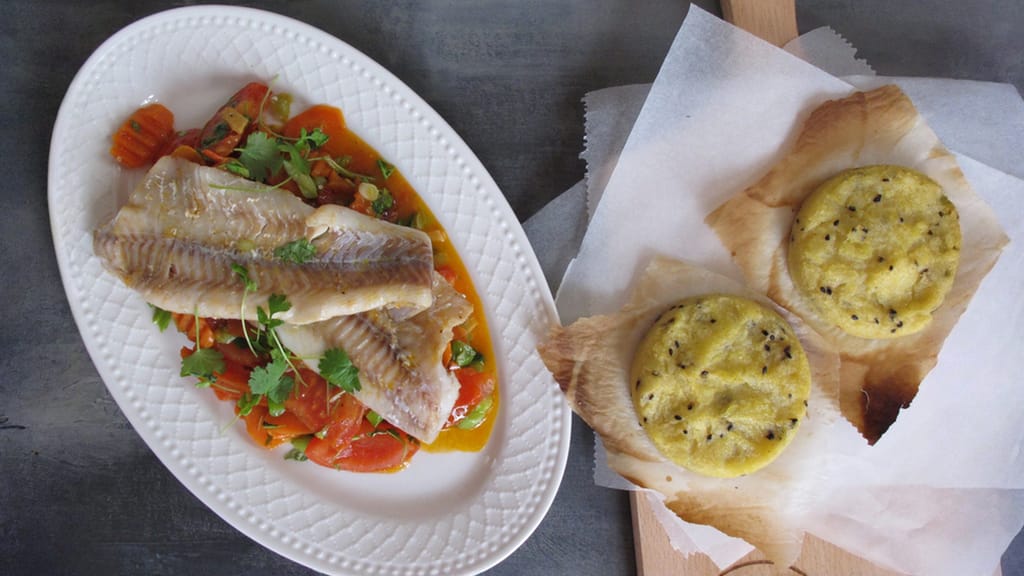
Grilled trout with polenta and vegetables
Grilled trout with polenta and vegetables – quick way to use fresh fish
Vacuum sealing extends shelf life by removing air from the packaging – without oxygen, the growth of the aerobic bacteria and moulds that spoil meat slows down significantly, fat oxidation (rancidity) doesn't occur, and the meat doesn't dry out or lose its juices. That's why vacuum-sealed meat stays fresher in both taste and appearance for longer, and in the freezer, vacuum sealing protects it from freezer burn.
But there are clear limits. Vacuum sealing is not sterilisation: it doesn't destroy bacteria already present in the meat, it just makes life harder for them. It doesn't stop anaerobic bacteria either – in fact, an oxygen-free environment suits them just fine. And most importantly, it's no substitute for proper chilling – temperature remains the deciding factor.
Four factors determine how long vacuum-sealed meat lasts: temperature, packaging quality, freshness of the meat before sealing, and hygiene during handling.
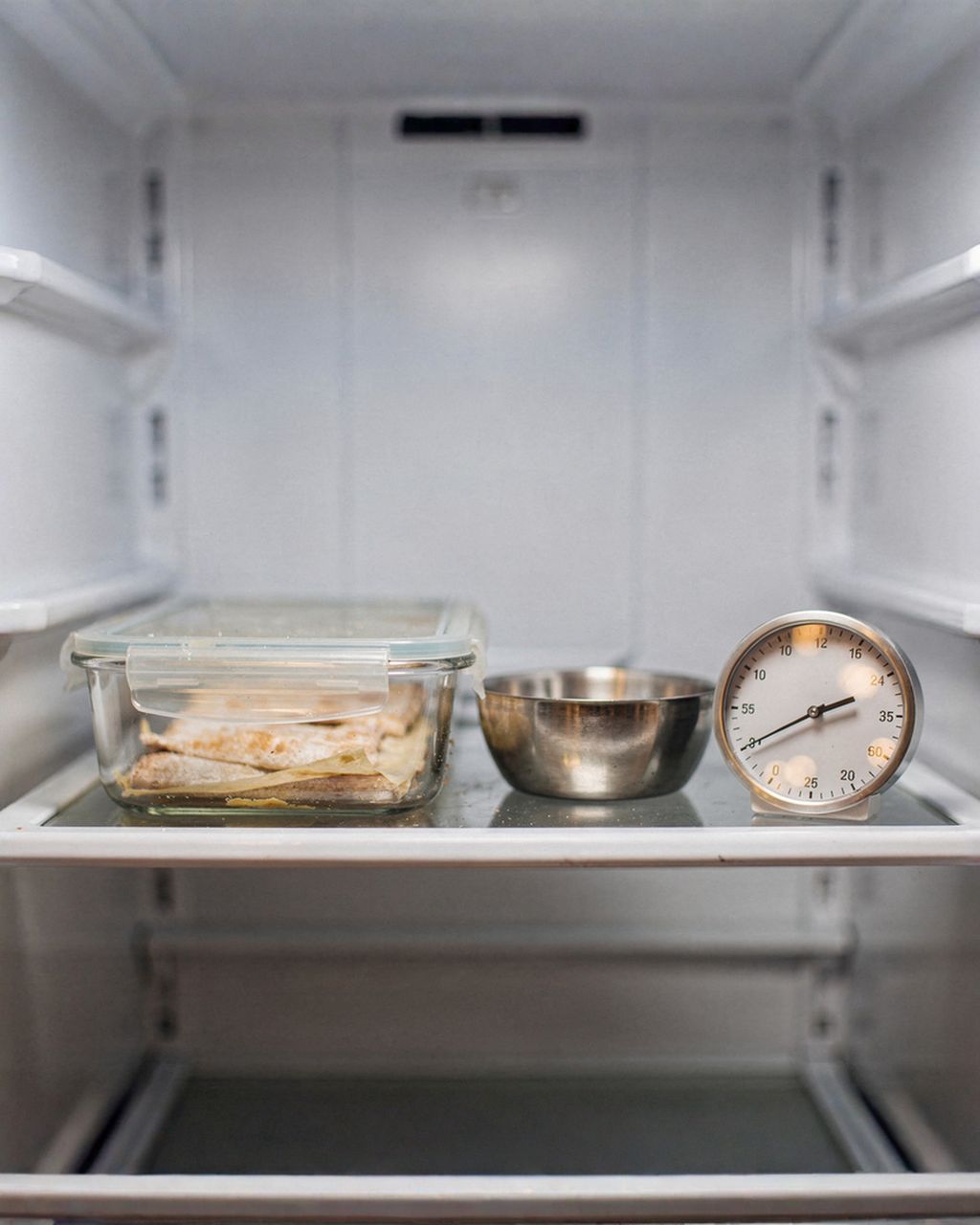
Temperature (the most important factor): ideally 0–2°C. Every extra degree shortens the storage time. Check your fridge with a thermometer – home appliances commonly run at 4–6°C, warmer than you might expect. It also helps to organise your fridge properly, since the bottom shelf above the vegetable drawer tends to be the coldest.
Packaging quality: the seal must be tight and intact, with no air left inside the bag. Any damage to the packaging lets air in and speeds up spoilage. With store-bought vacuum-packed meat, check that the seal hasn't loosened and the bag isn't puffed up.
Freshness before packaging: vacuum sealing doesn't restore freshness, it only preserves the meat's current state. Always vacuum-seal the freshest meat possible, ideally right after buying it.
Checking before use: go by smell, colour and surface texture. A greyish colour in vacuum-sealed beef on its own doesn't mean spoilage (it's just the lack of oxygen), but a slimy surface, a sweetish or sour smell, or a puffed-up bag are clear warning signs – throw that meat out.
Thaw vacuum-sealed meat in the fridge (the safest method) or submerged in cold water (faster) – never at room temperature or in the microwave. Take fish out of its vacuum packaging before thawing.
The safest way is to let the meat thaw directly in the fridge. Take it out of the freezer and place it on a plate or in a bowl to catch any juices that leak out. Depending on the size of the piece, this takes 24–48 hours. The temperature stays stable and bacteria barely multiply. Raw meat thawed in the fridge can be refrozen within one to two days; otherwise, cook it straight away.
If you're short on time, submerge the meat in its watertight packaging in a bowl of cold water, changing the water every 30 minutes to keep it cold. A smaller piece will be ready in 1–3 hours. The water must not be warm, and the meat should be cooked immediately after thawing – never refreeze meat raw once it's been thawed in cold water.
Avoid three things: the microwave (it thaws unevenly, edges start to cook and the texture gets damaged), room temperature (the surface quickly enters the danger zone of 5–60°C, where bacteria multiply fastest), and refreezing raw meat that's already been thawed (quality and safety both decline with every cycle). Thawed meat that's already been cooked, on the other hand, can be frozen without issue.
Vacuum sealing extends freshness in both the fridge and freezer and best preserves flavour and juiciness; freezing keeps meat for the longest time (months to years) but can change the texture; a regular fridge is the simplest option but gives the shortest shelf life.
Vacuum-sealed in the fridge: longer freshness, full flavour and juiciness, and saves space. Downside: the cost of a vacuum sealer and bags, plus the need for correct technique – a badly sealed bag spoils meat faster than ordinary packaging.
Freezing (ideally vacuum-sealed): the longest shelf life, with vacuum sealing also preventing freezer burn. Downside: slow thawing and, with some meats, a slight loss of texture.
Regular fridge: no upfront cost and the simplest option. Downside: the shortest shelf life and faster drying out and oxidation.
The best combination for home use is to vacuum-seal the meat and then, depending on how soon you'll need it, put it in the fridge or the freezer.
To vacuum-seal at home, all you need is a vacuum sealer and compatible bags or rolls. Choose your machine based on how often you'll be sealing and whether you want to pack moister, juicier foods too.
The basic essential is a vacuum sealer. External (chamber-less) models are cheaper and more than adequate for home use; chamber models are pricier, more powerful, and can handle liquids too, making them better suited to frequent vacuum sealing. You'll also need good-quality bags or rolls – ideally multi-layered and textured ones, which the machine can draw air out of more effectively and which protect the meat from both air and moisture.
Pay attention to suction strength and speed, the moist-seal function (for juicy meat and foods containing liquid), a pulse setting for delicate cuts, and possibly a marinating function. For everyday home use, a reliable, tight seal matters more than maximum power.
Keep hygiene in mind when packaging – use clean gloves or tongs. Place the meat in the bag evenly and in a single layer so the air can be drawn out uniformly. Keep the edge of the bag where the seal will be clean and dry, or the seal won't hold properly. Label each bag with the type of meat and the date it was sealed, so you can keep track of everything in the fridge and freezer. For extra flavour, you can add herbs or spices to the meat – the vacuum draws them in faster than a regular marinade would.
No, a darker purple or greyish colour in vacuum-sealed beef is completely normal and doesn't mean it's spoiled. It happens because there's no oxygen in the packaging; once opened, the meat turns red again within a few minutes of contact with air. Spoilage is signalled by a slimy surface, a sweetish or sour smell, and a puffed-up bag – those are the real warning signs.
Vacuum-sealed meat lasts far longer in the freezer (−18°C) than in the fridge: beef, pork and poultry keep for roughly 2–3 years, fish for 1–2 years. Vacuum sealing also prevents freezer burn, so the meat keeps its flavour and texture better than in a regular bag. From a safety standpoint, frozen meat stays edible almost indefinitely, though its quality does gradually decline.
Raw meat thawed in the fridge can be refrozen within 1–2 days, though expect a slight loss of juiciness. Meat thawed in cold water or at room temperature shouldn't be refrozen raw – cook it straight away instead. Once meat has been cooked, you can freeze the finished dish without any worries.
Yes, you can vacuum-seal cooked meat, sauces and ready meals too – just let them cool completely first, ideally in the fridge, so steam doesn't condense inside the bag. Cooked dishes then last around a week vacuum-sealed in the fridge and several months in the freezer. For liquid dishes, use the moist-seal setting, or freeze them first and vacuum-seal afterwards.
Yes, and it's actually one of the perks of vacuum sealing – the vacuum draws the marinade into the meat faster than conventional marinating. For a liquid marinade, use the moist-seal function, or freeze the marinade briefly first so the machine doesn't suck it out. Dry seasoning and herbs can be added to the meat without any restrictions.
One recipe worth heating the oven for, one tip, and one deal from the shop. Nothing else.