Sunday lunch: perfect homemade beef sirloin in cream sauce
Meat Left Out of the Fridge: How Long It Lasts and When to Toss It
Updated Sep 5, 2026
Meat left out of the fridge is good for a maximum of 2 hours — and if the kitchen's above 30°C, just one. After that window, nothing saves it — not putting it back in the fridge, not cooking it thoroughly. This isn't overcaution: between 5°C and 60°C, bacteria on meat multiply fastest, and under ideal conditions their numbers can double roughly every 20 minutes. Here's how to keep track of that time, why the hours add up, and what to do with meat that's blown past the limit.
Meat out of the fridge has a budget of 2 hours at room temperature, or 1 hour in heat above 30°C. This applies to both raw and cooked meat. Specifically:
Room temperature (20–25°C): maximum 2 hours.
Above 30°C — a hot summer kitchen, a car in the sun, standing near the grill: maximum 1 hour.
Minced meat, poultry, offal, and finely diced raw meat: stick to the lower end, ideally under 1 hour. They have far more surface area, and therefore far more room for bacteria to multiply.
Boiled, roasted and stewed meat: the same 2 hours, counted from the moment it stops being hot (drops below 60°C).
Over the limit: throw it out. No tasting, no re-cooking it back to safety.
Two hours isn't a single sitting — it's the total time the meat has spent in the warmth, added up — the trip home from the shop, time on the counter, and minutes on the table all count. More on that below.
Seasonal baking plans, tested recipes and kitchen tricks that save you time. Unsubscribe in one click.
The range between 5°C and 60°C is the temperature band where bacteria in food multiply fastest — which is why it's called the danger zone. Room temperature sits right in the middle of it. Salmonella, Staphylococcus aureus and E. coli can double roughly every 20 minutes under ideal conditions (around their optimum of 35–37°C); at room temperature (20°C), the pace is roughly an order of magnitude slower — about one doubling per hour. Even so, two hours on the counter is enough for the population to grow noticeably — and the warmer the meat, the faster it happens.
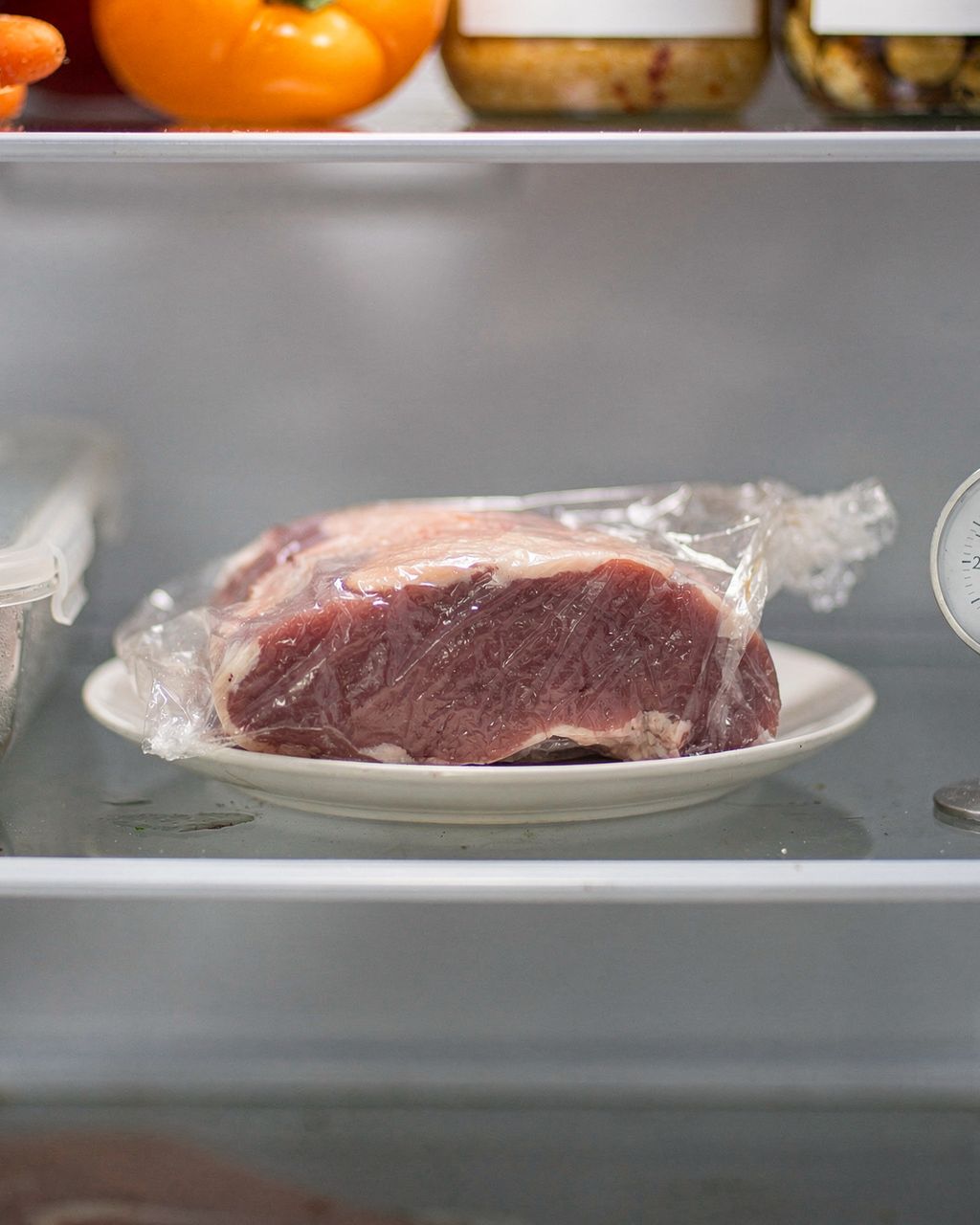
The fridge is your defence against this. Set it to 0–4°C and store meat in the coldest spot — in most fridges, that's the bottom shelf above the vegetable drawer. Cold doesn't stop bacterial growth, but it slows it to a crawl, which is the entire point of refrigeration. We break down what goes where in the fridge in our article on organising fridge storage by temperature zone.
The 0–4°C lower limit isn't arbitrary. EU regulation (EC No 853/2004) sets specific maximum temperatures for meat all the way to your kitchen: fresh meat 7°C, poultry 4°C, offal 3°C, and minced meat just 2°C. The more finely the meat is processed, the stricter the temperature — and the same logic applies at home.
No. Cooked meat has the same 2-hour limit as raw — and in one respect, it's actually worse off. Cooking reliably kills live bacteria, but it doesn't solve two problems:
Spores survive cooking. Clostridium perfringens forms spores that ordinary cooking doesn't destroy. As a pot cools slowly through roughly 50°C down to 15°C, those spores germinate — and since cooking wiped out all the competing microflora, they have free rein. In a big pot of meat in sauce, or a roasting tray, they can multiply fast without changing the taste, smell or look of the food at all.
Cooking doesn't destroy the toxin. Staphylococcus aureus produces an enterotoxin when left in warm conditions, and it's remarkably tough — lab studies show it stays active even after 30 minutes of boiling. So re-cooking isn't a reset button. It kills the bacteria, but any toxin they've already produced stays right there on the plate.
Which leaves one practical rule: "I'll just cook it again" is not a safety measure. What matters is how long the food spent in the warmth — not what you do to it afterwards.
The two-hour limit is cumulative across the whole day, not reset at each stage. Meat that spent 40 minutes in a bag on the way home from the shop and an hour on the counter during prep has already used up 100 minutes of its two-hour budget — leaving just 20 minutes for serving.
A typical day tends to look like this:
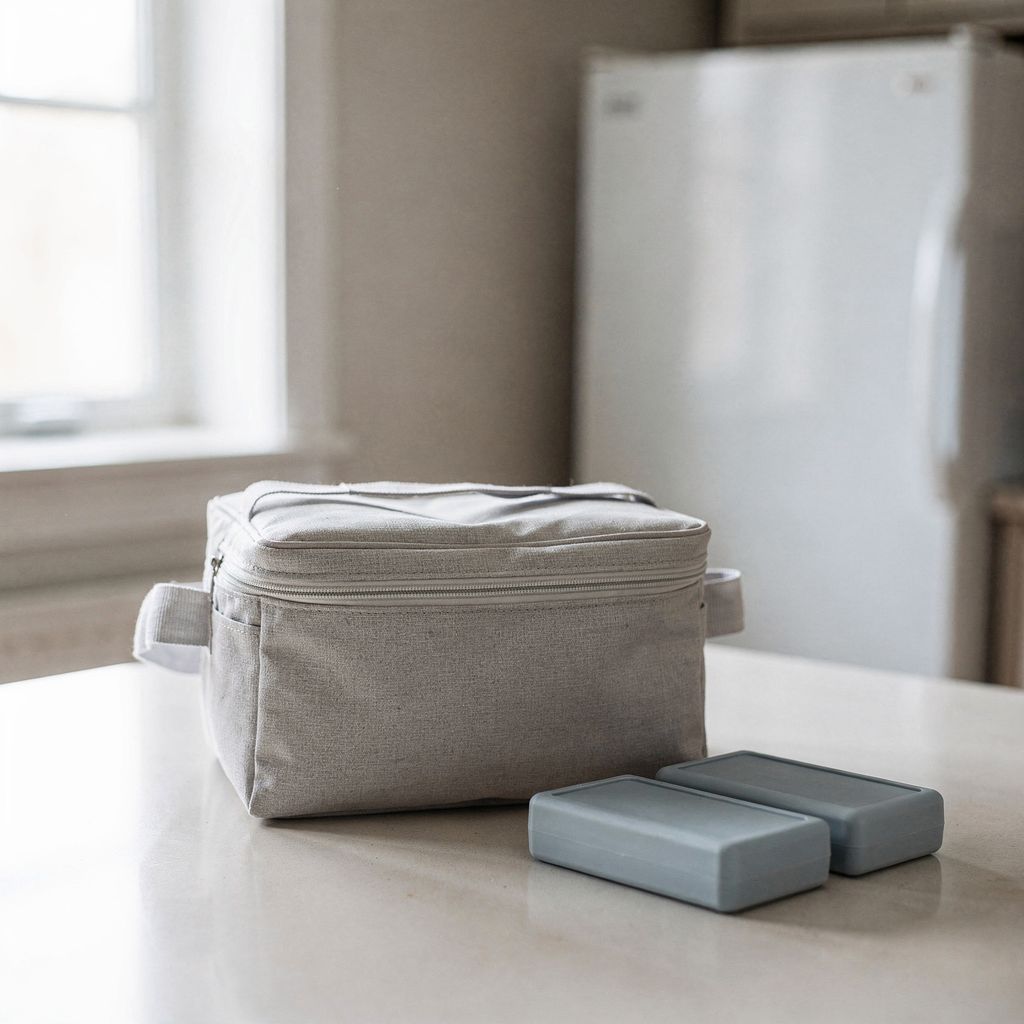
The trip home from the shop (10–40 min). No issue in winter, but a real one in summer. Grab meat last in the shop and carry it home in an insulated bag with a cooler pack. A car boot in the sun can easily hit over 40°C — at that point, the limit drops under an hour.
Prep on the counter (10–60 min). Cutting, marinating, coating meat. Whatever you're not actively working with should stay in the fridge, and be brought out in batches.
Roasting or boiling. This part doesn't count toward the budget — above 60°C, meat is out of the danger zone.
Serving and the table (20–120 min). This is where the limit gets blown most often. Put leftovers away in the fridge right after the meal — not after you've done the washing up.
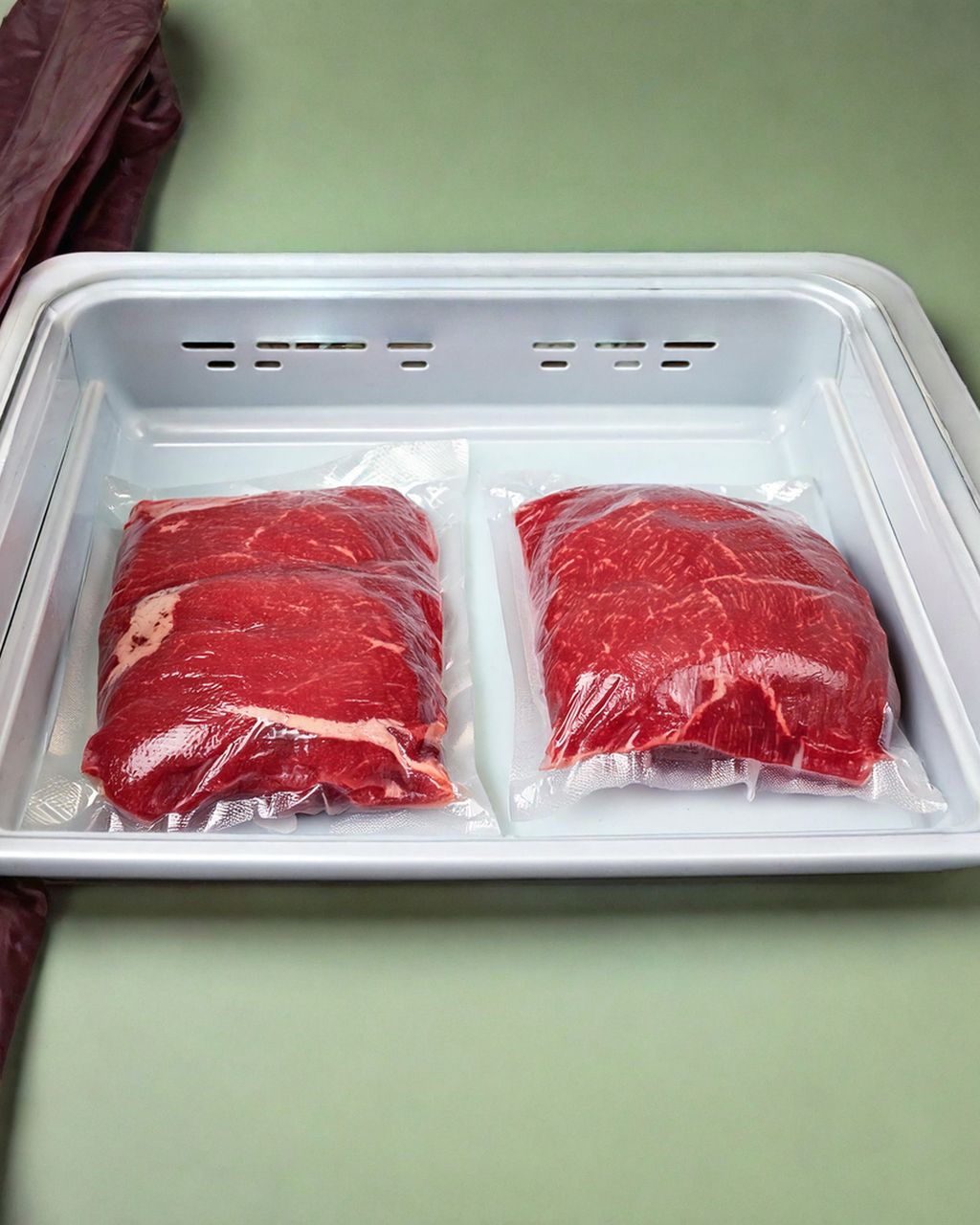
The exception is vacuum-packed meat, which people often assume gets extra leeway. It genuinely does last longer in the fridge, but outside the fridge the same two hours apply — vacuum sealing slows down oxygen-dependent bacteria, not the ones that don't need oxygen at all.
Thaw frozen meat in the fridge at a temperature below 4°C — allow 24 hours for every 2.5 kg. So a 1.5 kg chicken should go into the fridge the evening before; a large pork leg can safely be moved two days ahead.
Thawing meat on the counter is the most common mistake: while the centre of the piece is still frozen solid, the surface — where most of the bacteria live — has already spent hours sitting in the danger zone. It looks like one process, but it's really two very different pieces of meat happening at once.
If you need it faster:
Cold water: submerge the meat in a sealed bag in cold water, changing the water every 30 minutes. Cook it immediately once thawed.
Microwave: works, but the edges partially cook. The meat needs to go straight onto the pan or into the oven afterwards.
Meat thawed in the fridge can be safely refrozen raw — it's safe, though it will lose some juiciness. Meat thawed in cold water or the microwave should be cooked immediately; you can only refreeze it after it's been cooked. Use fridge-thawed poultry by the next day; fridge-thawed red meat keeps for roughly three days after thawing.
Let a steak sit out for 20 to 40 minutes before cooking — not hours. It's not a safety issue, but it's not a miracle fix either — there's simply no point dragging it out.
Measurements show why: a 2.5 cm-thick rib-eye left on the counter for an hour only warms at its centre from roughly 4°C to 11°C, and after two hours, to about 17°C. That's a negligible difference in how it cooks. The real benefit of letting meat sit out is different — the surface dries out, and a dry surface means faster searing and a better crust. You get that in half an hour, with the help of a paper towel.
What's not worth doing: letting minced meat, poultry, or diced meat come to room temperature. There's no benefit for these cuts, and the risk climbs faster than it does for a whole piece.
Get cooked food into the fridge within 2 hours of finishing cooking, ideally within one. Don't wait for it to cool on the counter — a large pot holds heat inside and can take up to five hours to pass through the danger zone.
How to speed up cooling:
Split it into portions in shallow containers, ideally no deeper than 5 cm. A shallow dish cools several times faster than a deep pot.
Take the lid off while the food cools — otherwise the steam stays trapped inside.
Set the pot in a sink of cold water and stir occasionally. Water pulls heat away far faster than air does.
Carve up large cuts of meat before you start cooling them. A whole roast or a whole roasted chicken cools slowest right at the centre.
Once food is just warm, you can safely put it in the fridge covered. We go into detail on this in our article on storing warm food in the fridge.
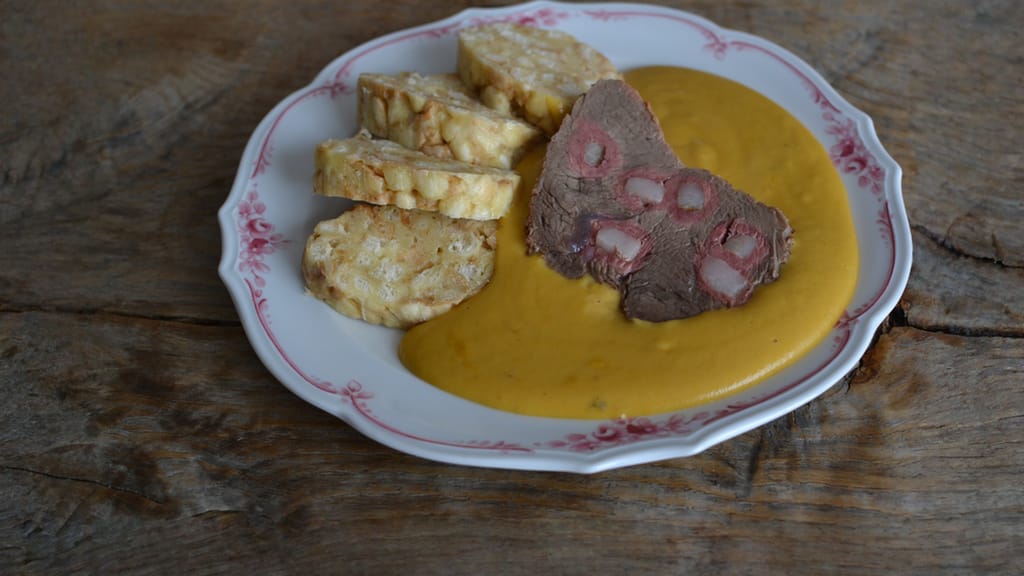
Sunday lunch: perfect homemade beef sirloin in cream sauce
A Sunday pot roast in sauce is exactly the kind of large pot of meat that needs to be split into portions and cooled quickly
Throw it out. No exceptions, no matter how it looks or how much it cost.
Eight to ten hours at room temperature is wildly beyond any safe limit — in that time the bacterial population can double ten times over or more, which is plenty of time to build up a heat-stable toxin. Re-cooking won't help, freezing won't help, and it won't help that the meat looks and smells perfectly normal. Spoiled meat can't be saved — it can only be thrown out.
The same rule applies to meat forgotten in a car, a bag, or a fridge that lost power overnight and sat above 5°C for an extended period. Tossing the meat is the cheapest decision you'll ever make in the kitchen.
In summer heat above 30°C, you only get one hour with meat out of the fridge — and at a barbecue, that budget disappears before you notice. A few habits will cover you:
A cooler box with ice packs is essential, not a luxury. Take meat out in batches that will fit on the grill all at once.
Marinate in the fridge, not on the table. Marinating takes hours — and the meat needs to stay below 4°C for the entire time. An acidic marinade won't stop bacteria from multiplying.
Don't use marinade that touched raw meat as a sauce unless you boil it for at least two minutes first.
One board and plate for raw meat, a separate one for cooked. The plate that carried raw meat to the grill shouldn't be used for the cooked pieces.
Keep cooked meat above 60°C, or serve it right away. A lukewarm plate sitting on the table for two hours is a classic summer food-poisoning scenario.
You'll find more on technique and preparation in our article on grilling meat, vegetables and meat-free options.
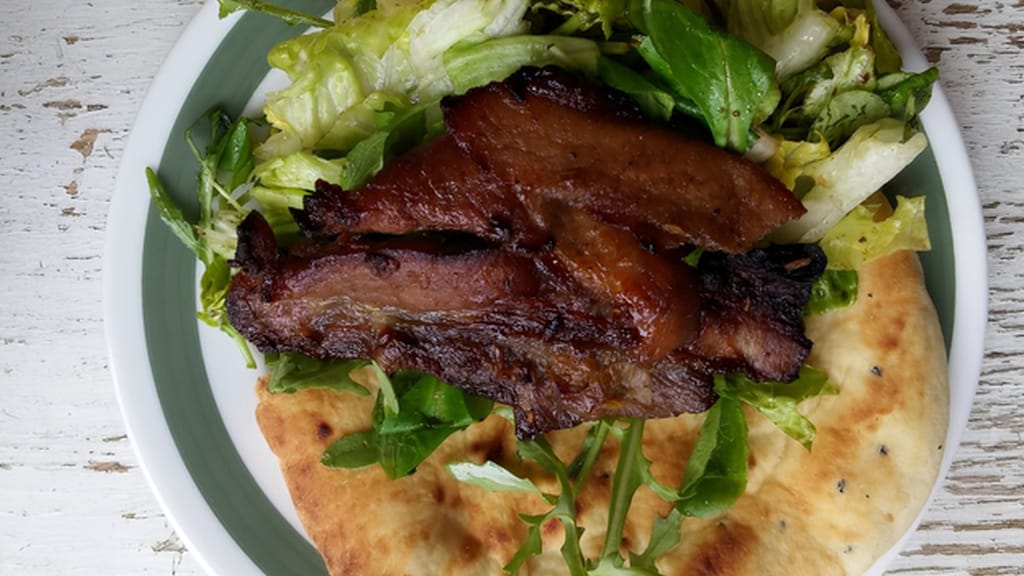
Grilled asian-style pork belly
Asian-style grilled pork belly — a long marinade that belongs in the fridge the whole time, not on the kitchen counter
Outside the fridge, every type of meat has the same two-hour limit. In the fridge at 0–4°C, though, it varies a lot:
Minced meat and meat mixes: 1–2 days.
Poultry (whole or portioned), raw sausages and offal: 1–2 days.
Pork and veal in larger cuts: 3–4 days.
Whole beef cuts (steaks, roast beef, slices): 3–5 days.
Cooked or roasted meat and finished meat dishes: 3–4 days.
The logic stays the same throughout: the more finely processed the meat, the larger the surface area, and the shorter the shelf life. If your fridge runs above 4°C, knock a day off every figure above. We've dedicated a separate guide to each type, with specific days and temperatures.
Yes — an hour at room temperature is fine, and you can put it back in the fridge. But the clock keeps running: the next day you'll only have about one hour left in the budget. Make a note and use it first. If it was over 30°C, or it's minced meat or poultry, the budget is already used up — cook it that same day.
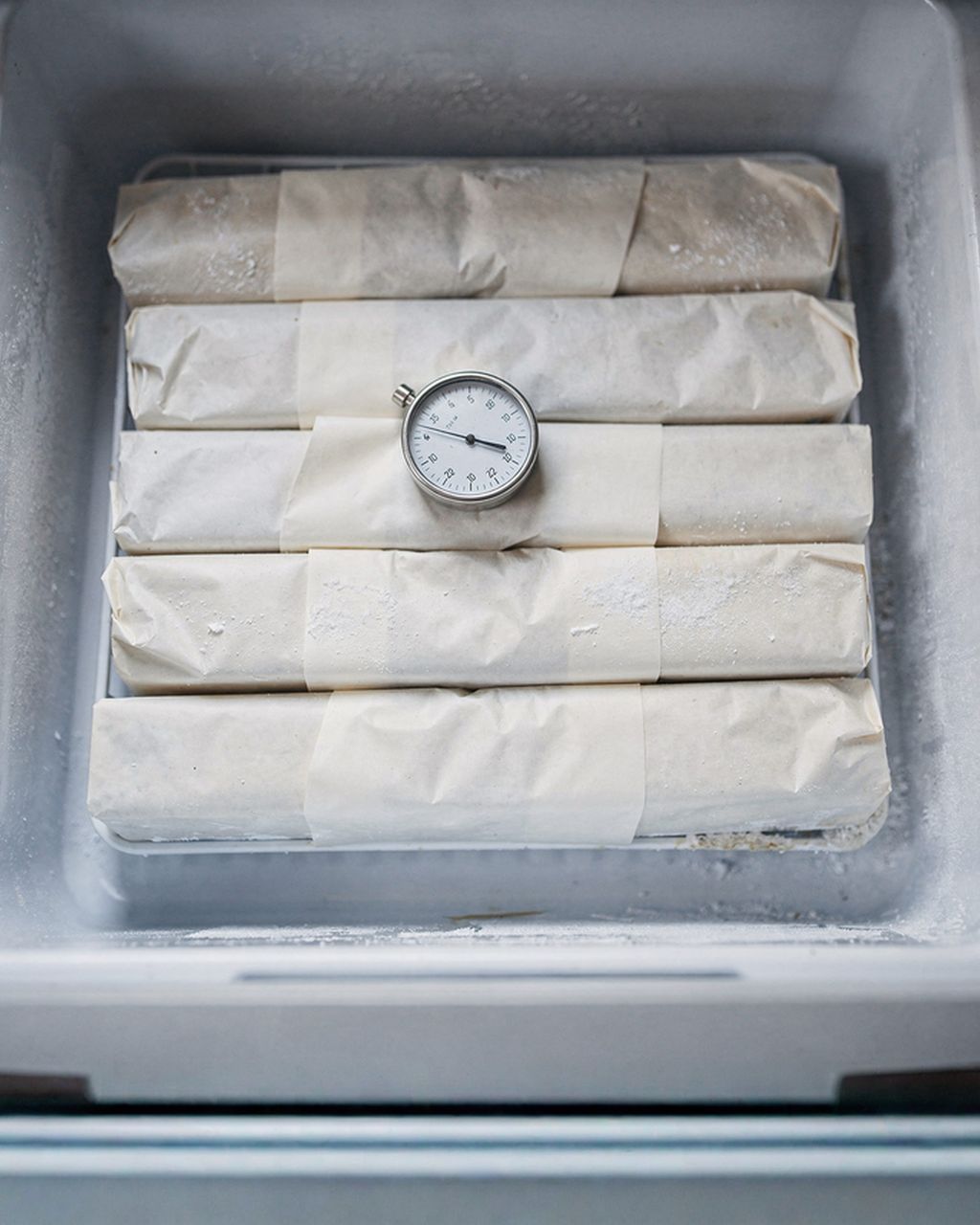
Set your fridge to 0–4°C and store meat on the coldest shelf — in most fridges that's the bottom shelf, right above the vegetable drawer. The door is the warmest spot, so keep meat out of it. Every extra degree noticeably shortens shelf life — the difference between 4°C and 7°C can easily be several days — so it's worth checking the actual temperature with a thermometer rather than trusting the dial.
No — outside the fridge, the same two-hour rule applies to vacuum-packed meat. Vacuum sealing significantly extends shelf life in the cold because it limits oxygen-dependent bacteria, but anaerobic bacteria — including spore-formers — don't need oxygen and keep multiplying in the warmth regardless. The longer use-by date on the pack only holds if the cold chain is never broken.
Long-cured, fermented salamis can handle room temperature for several hours because low water activity, salt and nitrites protect them. But moist smoked meat, soft ham and ham-based sausage are ordinary chilled products, and the same two-hour rule applies to them as to fresh meat. What matters is the moisture content of the product, not the fact that it's smoked.
No. Freezing halts bacterial growth, but it doesn't kill the bacteria and it won't destroy toxins that have already formed — staph enterotoxin, for instance, survives freezing just fine. Once thawed, the bacteria pick up right where they left off. The freezer is a tool for storing meat that's already safe, not for fixing meat that's gone over its time limit.
Yes, and marinating changes nothing. The acid in lemon juice, vinegar or wine adds flavour and softens the surface of the meat, but it doesn't reliably kill bacteria — marinating should always happen in the fridge, below 4°C. Any time the meat spends sitting out in its marinade on the counter counts toward the two-hour budget, so use it up soon after taking it out of the fridge.
One recipe worth heating the oven for, one tip, and one deal from the shop. Nothing else.