Perfect handful-style lentil soup
How to Store Hot Food in the Fridge: Safely and Without Losing Quality

Updated Jul 19, 2026
Pop hot food in the fridge within two hours of cooking — you don't need to wait for it to cool to room temperature first. That's the single most important sentence in this whole article, and it busts the biggest myth around storing hot food. Modern fridges handle a warm pot just fine; the real risk runs the other way — leaving food to cool for too long lets bacteria multiply in the "danger zone". Below you'll find how to cool food quickly, how long meat, fish, soups and pasta actually keep, and how to store everything so it holds onto its flavour.
Yes. You can put hot food straight into the fridge without letting it cool to room temperature first — according to the USDA (the US food safety authority), rapid cooling is actually the best protection against bacterial growth. The old advice to "let it cool down first" dates back to when fridges couldn't hold a steady temperature and a hot pot could throw them off balance. Today's fridges regulate temperature continuously, so a brief rise caused by warm food isn't a problem.
The one thing to watch out for: don't cram a large pot of boiling soup straight into the fridge. It won't cool fast enough, and it'll needlessly warm up the food around it. The fix isn't to leave it on the counter — it's to split the food into smaller, shallow containers, which we'll cover in the next section.
Poorly stored hot food is the most common route to food poisoning — and along the way, you needlessly lose flavour and texture too. It boils down to three things: health, safety and quality.
Bacteria. Salmonella, E. coli and Staphylococcus aureus multiply fastest in the so-called danger zone, roughly between 4 and 60°C (40–140°F); according to the USDA, under favourable conditions their numbers can double in as little as 20 minutes. The longer food stays in this range, the greater the risk.
Taste and texture. Leave pasta or rice sitting warm for too long and it turns mushy and loses its bite; meat dries out and loses its flavour.
Health consequences. Spoiled food doesn't always look or smell suspicious, yet eating contaminated food can still leave you with diarrhoea, vomiting and fever.
The goal is simple: get food out of the danger zone and into the fridge (ideally down to 1–4°C / 34–39°F) as fast as possible — within two hours of cooking at the latest. The most effective methods:
Split food into smaller, shallow containers. A thinner layer cools far faster than a full pot — this is the single most important trick of all.
Use an ice bath. Set the pot in a sink or larger basin filled with cold water and ice, and stir occasionally; the temperature then drops evenly and quickly.
Stir it. Simply stirring moves heat from the centre of the dish out to the edges, where it escapes faster.
Only cover the container once it's nearly cool, or leave the lid slightly ajar, so steam doesn't condense underneath it — condensation doesn't do the food's quality any favours.
In summer, when the kitchen is over 30°C (86°F), that two-hour window shrinks to just one hour.
Cooked food generally keeps in the fridge (at 1–4°C / 34–39°F) as follows: meat and poultry 3–4 days, soups and stews 3–4 days, pasta and rice 3–5 days, cooked fish and seafood just 1–2 days. In more detail:
Meat and poultry: 3–4 days. Wrap it well or store it in an airtight container so it doesn't dry out or pick up other smells.
Soups and stews: 3–4 days in a sealed container. Freeze for longer storage.
Pasta and rice: 3–5 days. Cool rice as quickly as possible (we explain why in the FAQ below).
Fish and seafood: 1–2 days — it spoils faster than anything else, so don't push your luck.
If you're ever unsure about a food's quality, stick to a simple rule: when in doubt, don't eat it. Health always comes first.

Every food group has its own rules. Here's what to do with meat, fish, soups, pasta and vegetables so they last longer and still taste fresh.
Meat belongs in the coldest part of the fridge — the bottom — in an airtight container or a sealable bag. This prevents juices from leaking onto other food (cross-contamination) and helps meat stay juicier for longer. Always keep raw meat below cooked dishes, never above them.
Fish is the most delicate of all — store it at the lowest possible temperature and use it within one to two days. Ideally, place it in a bowl of ice and cover with foil or a lid. For more detail, see our separate article on how long carp keeps in the fridge and how to store it properly.
Store soups in airtight glass or plastic containers. Cool them quickly in shallow containers before refrigerating, so steam doesn't condense under the lid. They keep for 3–4 days; freeze for longer storage — most soups and stews freeze without losing any flavour, which is exactly why they're so great for cooking ahead.
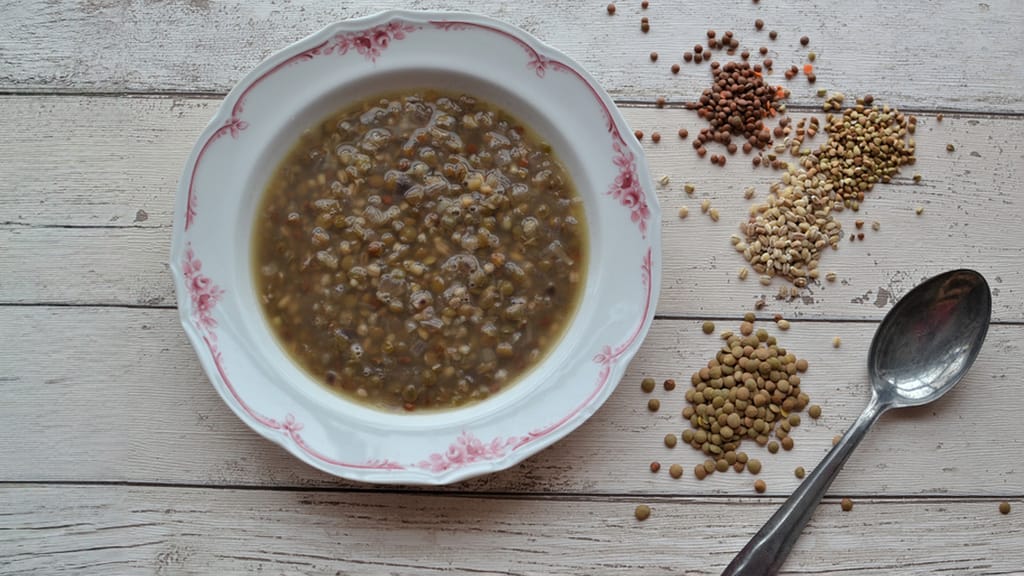
Perfect handful-style lentil soup
A hearty lentil soup you can make in advance and freeze without a second thought
Cool cooked pasta and rice quickly and store in an airtight container; they'll keep for 3–5 days. Rapid cooling matters especially for rice, because of the bacterium Bacillus cereus (more on this in the FAQ). Both are ideal for meal prep — batch-cook a larger amount and you've got the base for lunches for half the week.
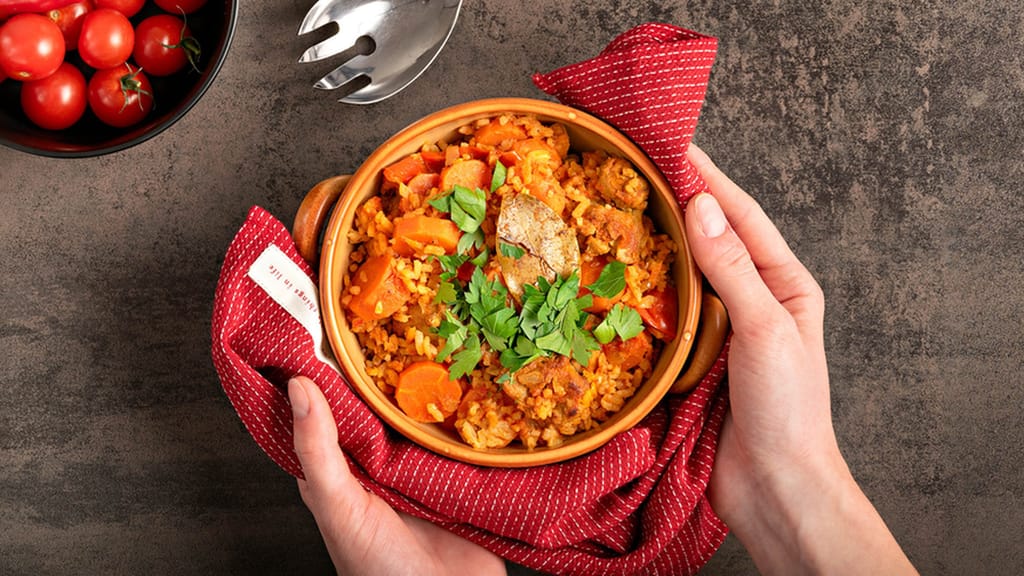
Baked risotto with chicken and vegetables
Baked chicken and vegetable risotto — the rice in it keeps in the fridge for 3–5 days
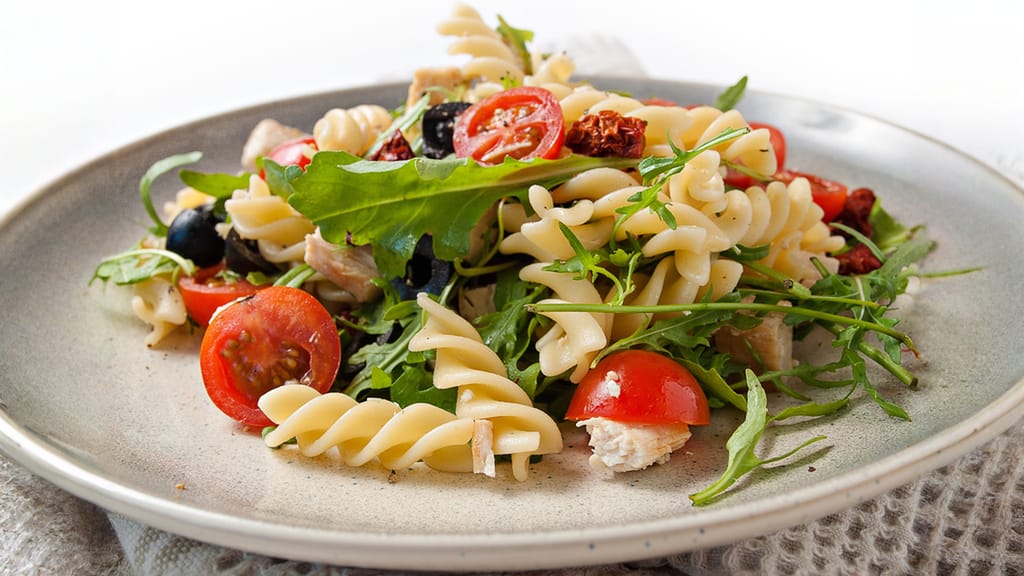
Pasta salad with chicken strips, tomatoes and arugula
Pasta salad with chicken strips — it keeps beautifully cold with no loss of quality
Vegetables stay freshest in the humidity-controlled drawer at the bottom of the fridge. Don't seal them in plastic bags — moisture gets trapped inside and they go mouldy faster. Reach for a paper bag or a container with holes for air circulation instead.
You can prevent cross-contamination with three habits: keep raw meat at the bottom in a sealed container, keep cooked food above it, and clean the fridge regularly. Specifically:
The right containers. Airtight glass or plastic containers protect against both contamination and drying out. For fruit and veg, use perforated bags or containers with ventilation.
Separating raw and cooked. Raw meat belongs at the bottom in a sealed container, so juices can't drip onto other food.
Regular cleaning. Once a week, go through everything and toss anything past its date or mouldy; once a month, take out the shelves and drawers and wash them with warm water and a mild detergent.

Put hot food in the fridge within two hours of cooking — don't wait for it to cool to room temperature. Cool it quickly: split it into shallow containers, use an ice bath, and stir. Keep your fridge at 1–4°C (34–39°F), raw meat at the bottom, cooked food on top. Meat and soups keep for 3–4 days, pasta and rice for 3–5 days, fish just 1–2 days. And if you're ever unsure about its quality, don't eat it.
Small portions of hot food won't bother a modern fridge — it constantly regulates its own temperature and easily corrects for a brief spike. The real problem is a big, piping-hot pot, which cools slowly and ends up warming the food around it. So split food into smaller, shallow containers first, and only then put those in the fridge.
Repeated reheating and cooling isn't a great idea — every trip through the danger zone (4–60°C / 40–140°F) gives bacteria another chance to multiply. Only reheat the portion you're about to eat, and leave the rest undisturbed in the fridge. As a rule, reheat cooked food no more than once.
Cooked rice can harbour spores of the bacterium Bacillus cereus, which survive cooking and germinate — producing toxins — if the rice cools slowly at room temperature. So cool rice as quickly as possible (ideally within an hour), refrigerate it, and reheat it thoroughly only once.
Warning signs include a sour or ammonia-like smell, sliminess on the surface, a change in colour, and visible mould. Be careful, though — the bacteria that cause food poisoning don't always change how food looks or smells, so also go by how long it's been stored. If in doubt, don't eat it.
If you know you'll eat the food within three to four days, the fridge is fine. For longer storage, the freezer is clearly the better option — it stops bacterial growth and quality loss in its tracks. Freeze in portions, and freeze food that's already been cooled quickly, so large ice crystals don't form.
One recipe worth heating the oven for, one tip, and one deal from the shop. Nothing else.