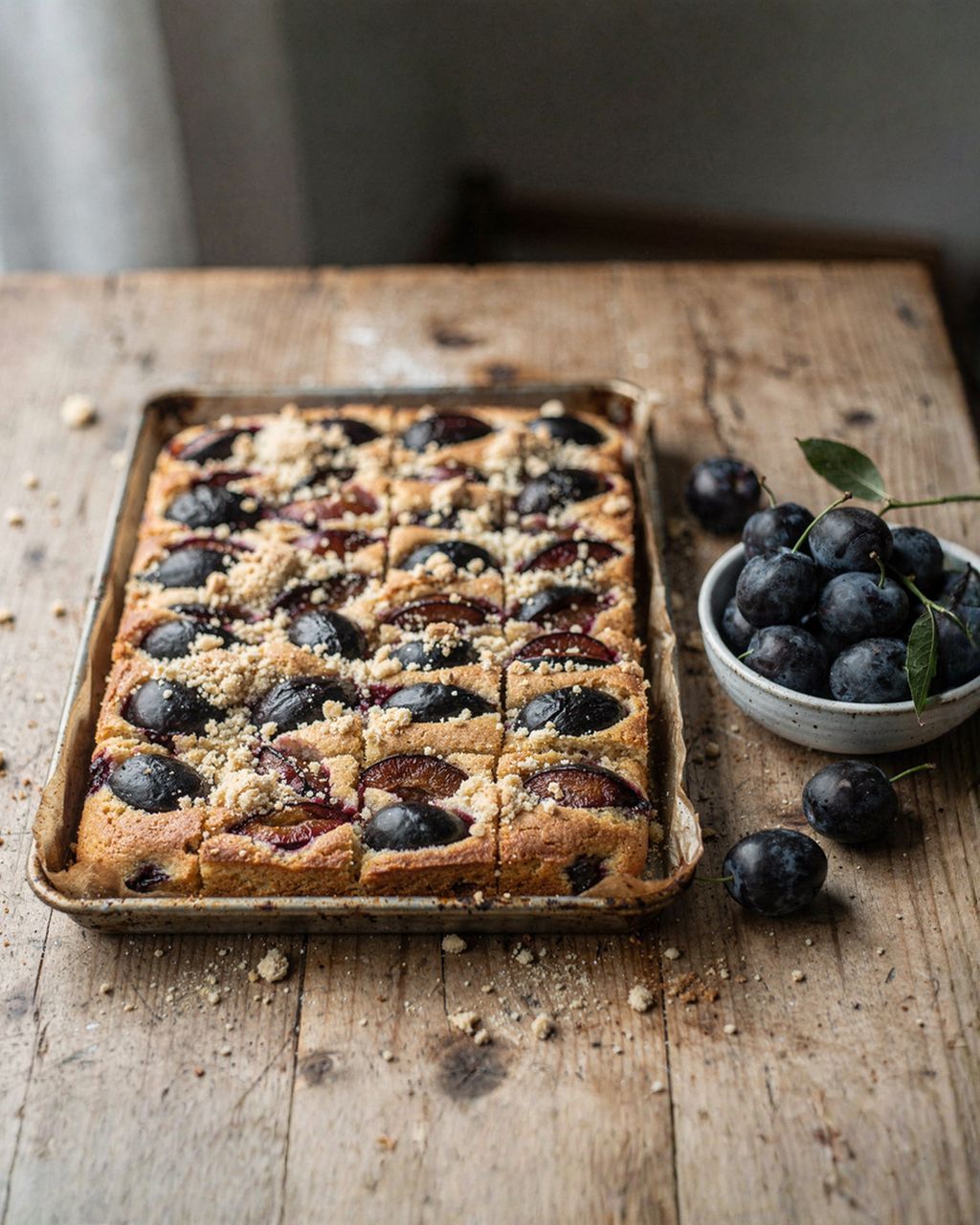
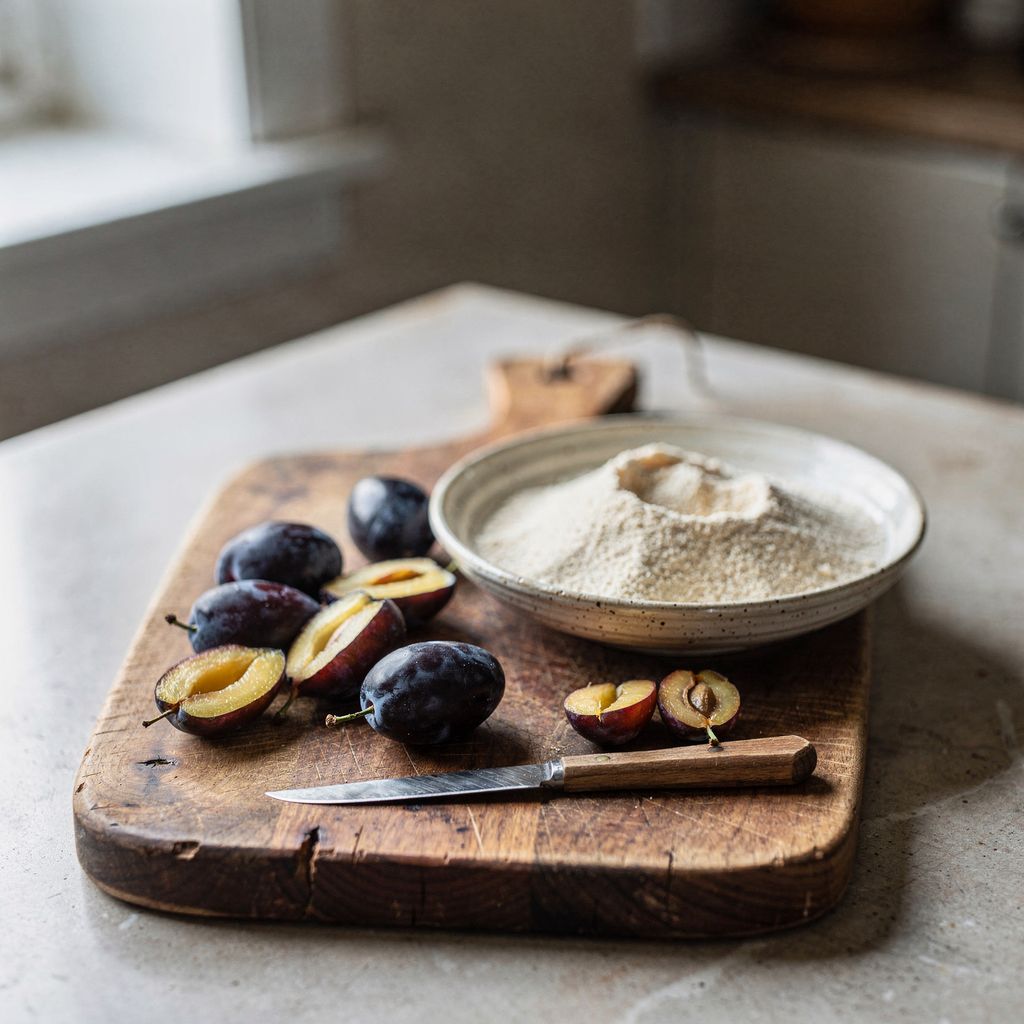
Plum ricotta cake with almonds
Updated Aug 23, 2026
You can spot proper baking plums by their shape: go for true plums — elongated, dark blue, firm-fleshed, with a stone that pops out easily. Round plums and greengages are juicier, their stones cling to the flesh, and they'll collapse in the oven before the dough even has a chance to bake through. Plum season runs from late July to the end of September, and the difference between a good cake and a soggy mess is decided before you even switch on the oven: which variety you buy, how ripe you let it get, whether you peel it, and what you use to soak up the juice the fruit releases as it bakes.
In short: a true plum is elongated, dark blue, firm, and its stone comes out cleanly. A round plum is round, juicier, and the stone clings to the flesh. A greengage is round, greenish-yellow to yellow, notably sweet and firm. For baking, the true plum wins — it holds its shape in the oven and releases the least juice.
In more detail, because each type behaves differently in the dough:
True plum (*Prunus domestica*) — elongated to egg-shaped, dark blue-purple skin, firmer flesh, stone comes away easily (which is exactly why it's the classic "freestone" plum). Lowest juice-to-flesh ratio of the bunch. The clear choice for cakes, dumplings and plum butter alike.freestone
Semi-freestone plum — less elongated than a true plum, also blue, but the flesh is softer and doesn't separate from the stone as easily. Usable for baking, just expect more juice and stone-removal with a knife rather than your thumb.
Round plum — round, varies in colour, noticeably juicier and tarter, stone holds firm. Only add it to dough cut into quarters, and with a thicker barrier layer underneath.
Greengage — round, greenish-yellow to yellow, very sweet and aromatic, firm flesh. Works better in a cake than a round plum, but won't give you the colour or the typical plum tartness. So go lighter on the sugar.
Mirabelle and cherry plum — tiny yellow fruit, sweet and soft. Great for dumplings and preserving, but too small for a tray bake — they'll just cook down to mush.
Watch out for loose labelling at the shop: all sorts of round, imported fruit gets sold as "plums". Go by shape and stone, not the label.
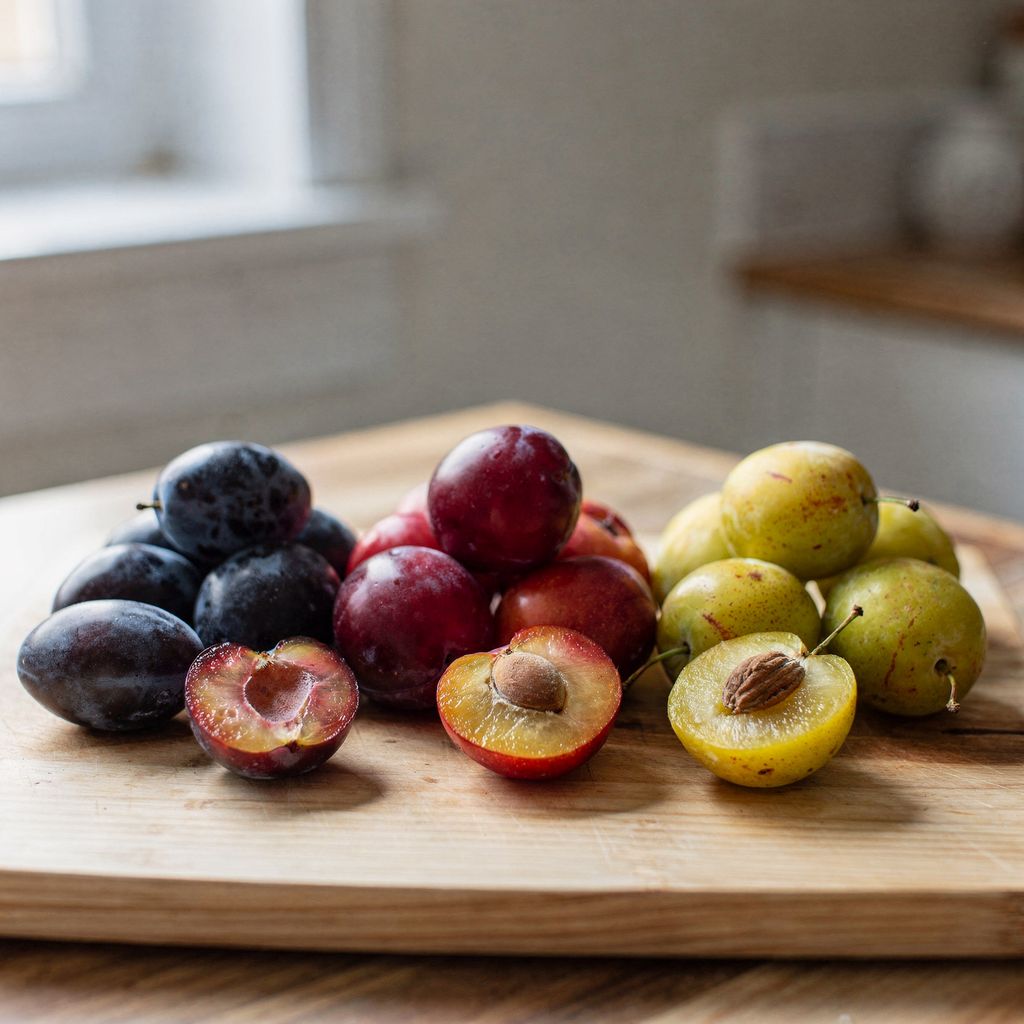
Among the common Czech-grown varieties, look for Domácí velkoplodá, Stanley, Čačanska lepotica, Valjevka or President — all of them are blue, firm, and have stones that come out cleanly.
The season runs roughly from late July to the end of September, with varieties following one another:
late July to early September — Čačanska lepotica, Stanley
mid to late September — Domácí velkoplodá, Valjevka, President
Late-September varieties are the best for baking. They've had more sunny days behind them, meaning more sugar and less water, so they'll come out sweetest in a cake.
A ripe plum gives slightly under your thumb but doesn't leave a dent, the skin is a deep, even dark colour with no green near the stem, and the fruit smells fragrant even through the skin. For baking, you want exactly this stage — a day earlier than you'd pick for eating straight out of hand.
Concrete clues to check when you're standing over a crate:
Bloom (that dull white coating) is a good sign. It's a natural protective layer, not a spray, and it means the fruit hasn't been handled too much.
Colour near the stem. A greenish or pale orange tinge means underripe. A ripe plum is dark all the way up to the stem.
The stem comes away easily. If you have to tug at it, the fruit isn't ripe yet.
Smell. A ripe plum smells sweet and slightly winey even at room temperature. Cold from the fridge, it won't smell like anything — leave it on the counter for an hour and sniff again.
The stone. Break one open as a test. If the stone comes out clean, the whole crate is ready to use.
Leave underripe plums on the counter in a well-ventilated bowl for two to three days — not in a plastic bag. They'll soften and get juicier at home, but they won't get any sweeter — the fruit only makes sugar on the tree. So don't try to rescue sour, underripe fruit in a cake; make it into a compote instead.
No — don't peel plums for baking. The skin is the only thing holding each half together, and without it the fruit will collapse into mush in the oven. It also holds most of the colour and the tartness that balances out the cake.
Peeling only makes sense in three situations:
Plum butter and jams, where you want a smooth, silky texture.
Delicate desserts like creams and mousses, where skin would be out of place.
Very thick skin on certain imported varieties, if it's noticeably tough or gritty when you taste it.
If you do need to peel them, do it the same way as tomatoes: score a cross on the bottom, blanch the fruit for 30 seconds in boiling water, then plunge into an ice bath. The skin will slip right off and the flesh stays firm.
Plums are mostly water — ripe fruit runs around 80% water, and a good chunk of that ends up in the oven, soaking into the dough. The fix isn't to fight the juice, but to give it somewhere to go: a thin absorbent layer between the fruit and the dough that catches it and disappears into the finished cake.
What to use, depending on your dough:
Coarse semolina — 2 to 3 tablespoons for a 30 × 40 cm tray, scattered over the rolled-out dough. It soaks up liquid, swells, and disappears once baked. The best choice for yeasted dough.
Breadcrumbs — same quantity, absorbs even more than semolina, but you'll notice a slight flavour from it. Great under both shortcrust and yeasted dough, especially with really juicy fruit.
Plain flour or cornflour — about 1 tablespoon per 500g of fruit, but toss the fruit itself in it, not the dough. Good for clafoutis-style bakes and sponge batters, where the juice needs to bind directly into the crumb.
Ground poppy seed, ground nuts or almond flour — 3 to 4 tablespoons for a tray. Absorbs just as well as semolina and adds flavour on top. The tastiest option if you don't want an "invisible" fix.
And three things that work even better than any absorbent layer:
Place the halves cut-side up. The juice then sits in the hollow of the fruit, evaporates and caramelises. Cut-side down, it runs straight into the dough.
Don't sugar them in advance. Sugar draws juice out osmotically even before baking. Sprinkle it on right before the tray goes into the oven, or better still, after baking.
Bake on the bottom rack at 180°C for 35 to 45 minutes. The base bakes through before the juice has a chance to soak it. A perforated baking mat or a holed tray makes a noticeable difference here.
Cut very juicy round plums or semi-freestone plums into quarters. More surface area means faster evaporation and less water with nowhere to go.
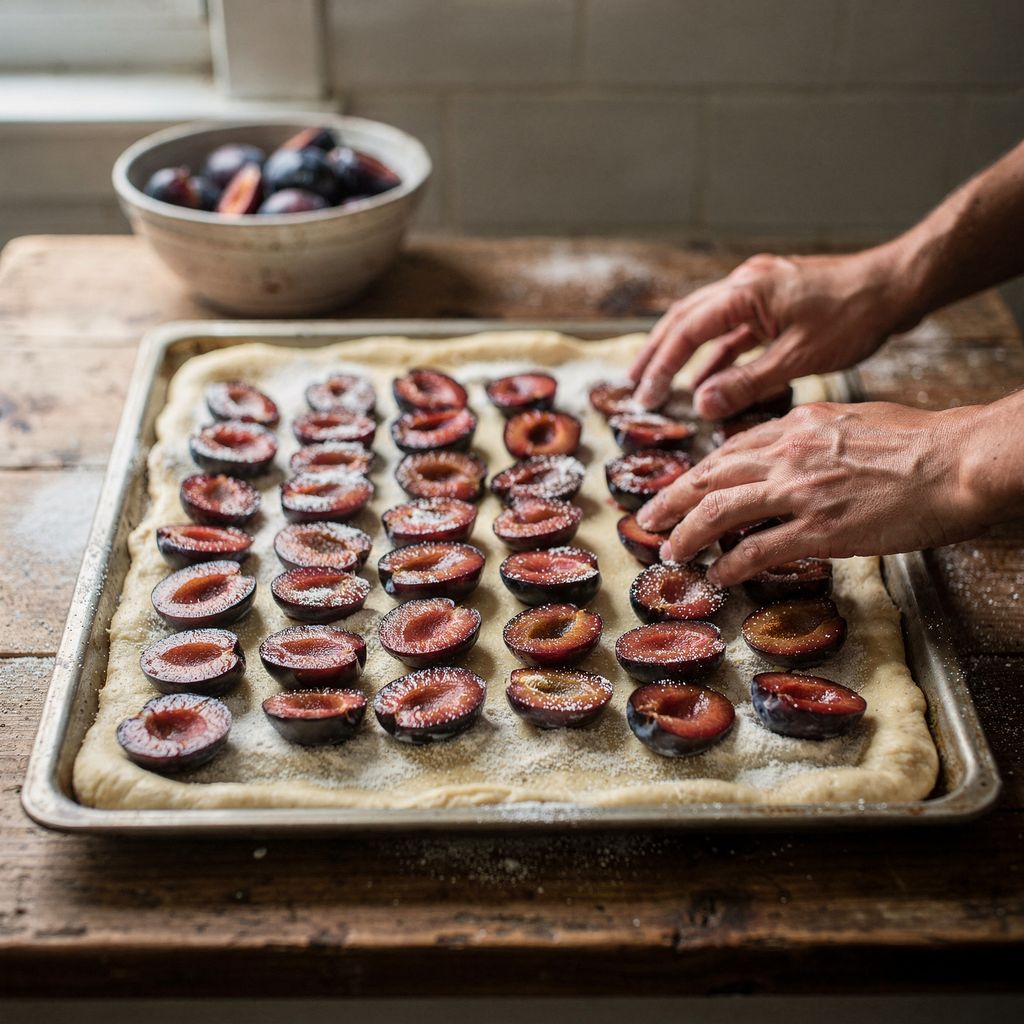
Freeze plums halved, stoned, and pre-frozen in a single layer on a tray — they'll keep well in the freezer for 6 to 12 months. Don't freeze them whole with the stone in — once thawed, the stone passes a bitter almond taste into the flesh, and by then the fruit's too mushy to dig it out.
A method that works:
Wash the fruit and dry it thoroughly. Any water left on the skin turns to ice in the freezer, and that tears up the flesh.
Halve and remove the stone. For true plums your thumb is enough; for semi-freestone ones use the tip of a knife.
Spread out in a single layer on a paper-lined tray, cut-side up, and freeze for an hour.
Transfer the pre-frozen halves into a bag or container and squeeze out the air. That way they won't freeze into one solid block, and next time you can just take out as much as you need.
Bake them straight from frozen, without thawing. This is the single most important point: a thawed plum releases all its juice at once and turns your dough to mush. Arrange the frozen halves straight onto the dough (over a double layer of semolina, since they'll release more juice than fresh fruit) and add 5 to 10 minutes to the baking time.
If you're putting up a bigger batch of fruit for winter, freezing is just one option — take a look at freezing, drying and fermenting summer fruit without sugar.
Overripe plums don't belong in a cake, but they definitely don't belong in the bin either — their higher sugar content actually makes them a better ingredient for plum butter, roasted fruit and meat sauces than perfectly ripe ones.
Depending on the state of the fruit:
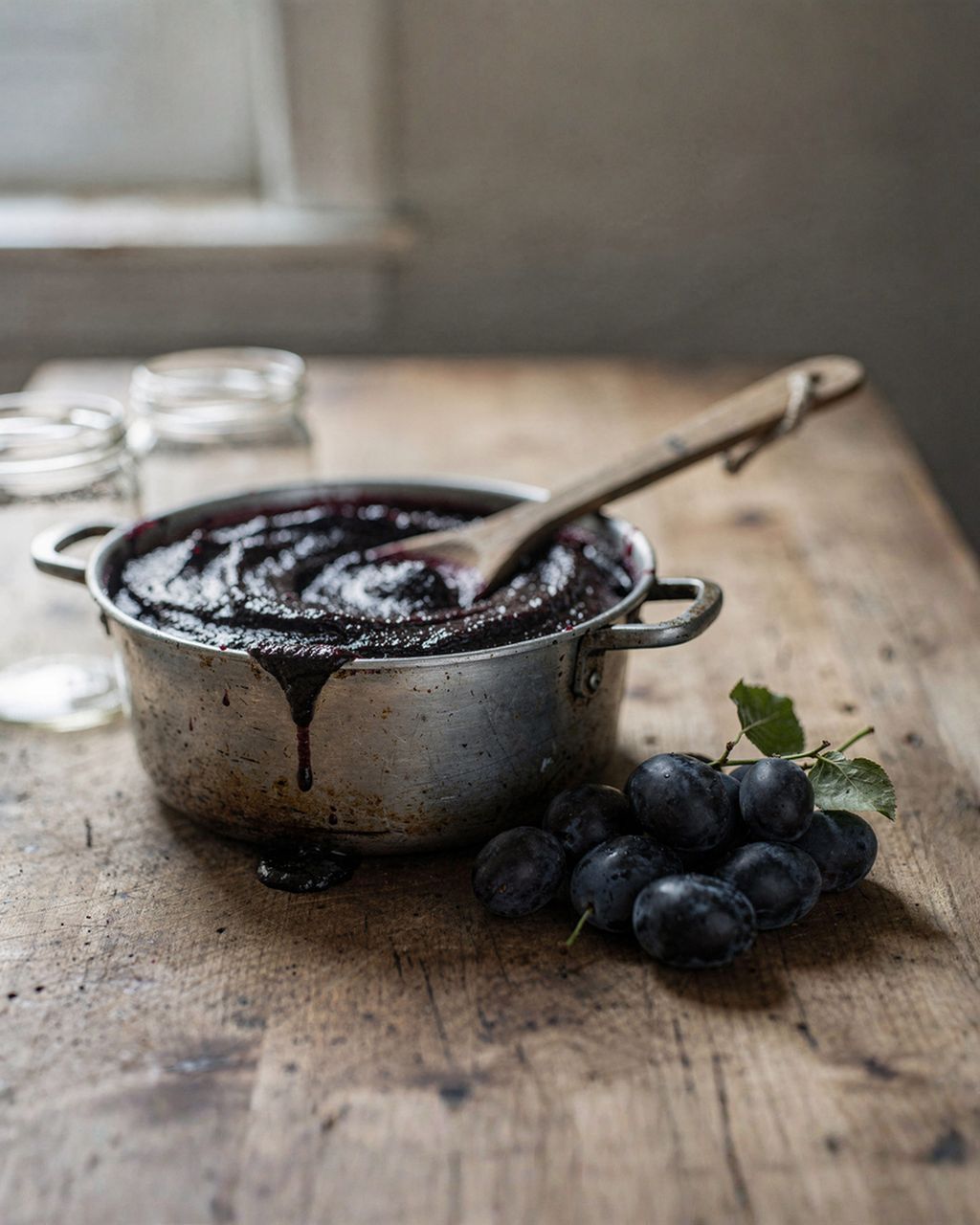
Soft but still whole — make plum butter. It breaks down faster and you'll need less sugar. Traditional plum butter is simmered slowly for several hours with no added pectin, until a spoon leaves a trail across the bottom of the pot.
Very soft and juicy — roast them. 200°C, 20 minutes, with cinnamon and a spoonful of honey. You'll get a thick, compote-like mass to serve with yoghurt, curd cheese or meat.
Falling apart — blend into a purée and freeze in portions. A winter base for sauces, smoothies or fillings.
For savoury dishes — overripe plums break down beautifully into a sauce for pork. Their acidity is exactly what rich, fatty meat needs.
When to stop: if a fruit has visible mould, throw the whole thing away, not just the affected spot. In soft fruit, mould filaments grow deep into the flesh where you can't see them. The same goes for fruit that smells sour or boozy, has brown, mushy flesh around any splits, or is leaking cloudy liquid — that's fermentation, not ripeness. One bad plum in a batch of plum butter will ruin the whole lot.
Plums work in both sweet and savoury dishes: ricotta and poppy seed cake, a quick mug cake, dumplings, sponge bake with crumble topping, and pork fillet. Pick a recipe based on how ripe your fruit is — the softer it is, the better suited it is to baking into dough or cooking into a sauce.
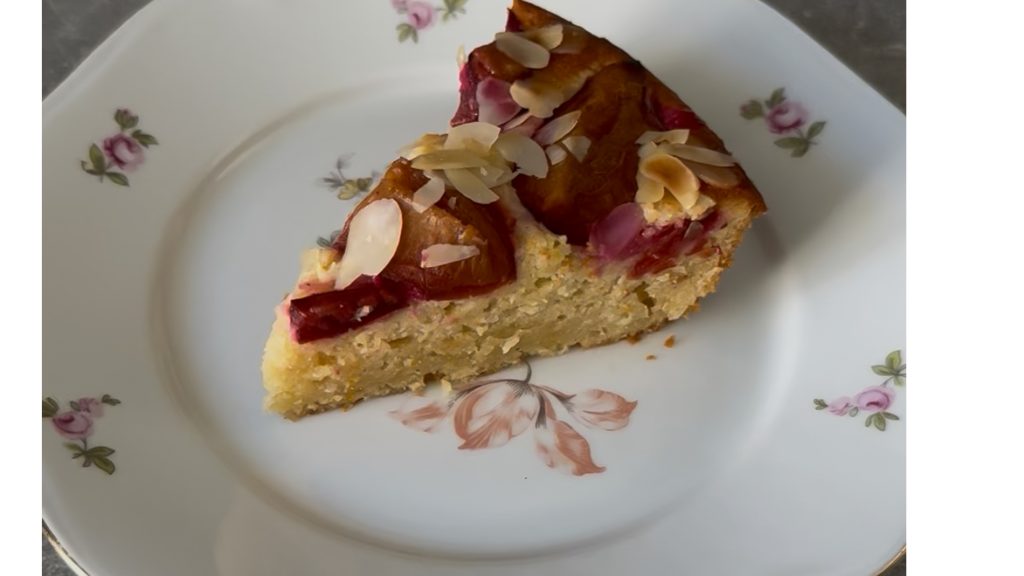
Plum ricotta cake with almonds
Plum and almond ricotta cake — ricotta and ground almonds soak up the juice for you
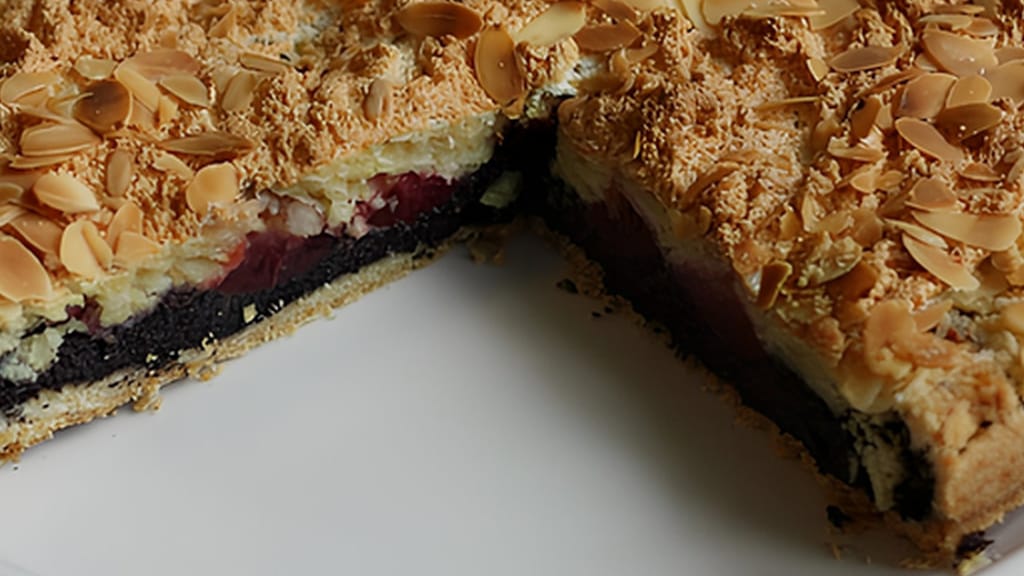
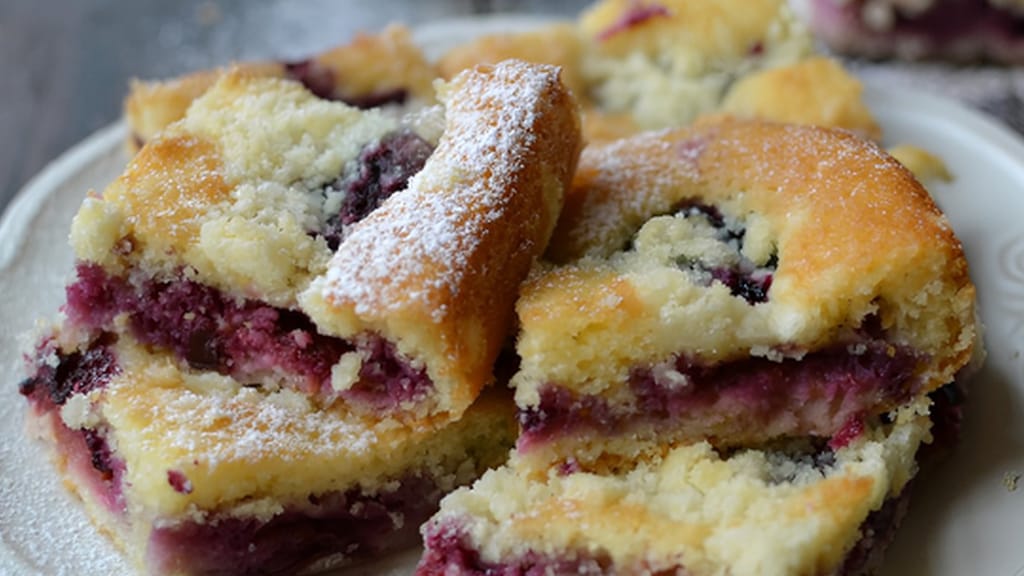
Divine poppy seed and plum cake
Amazing poppy seed cake with plums — poppy seed acts as an absorbent layer under the fruit
Plum mug cake
Plum mug cake — the fastest way to use up a crate of plums
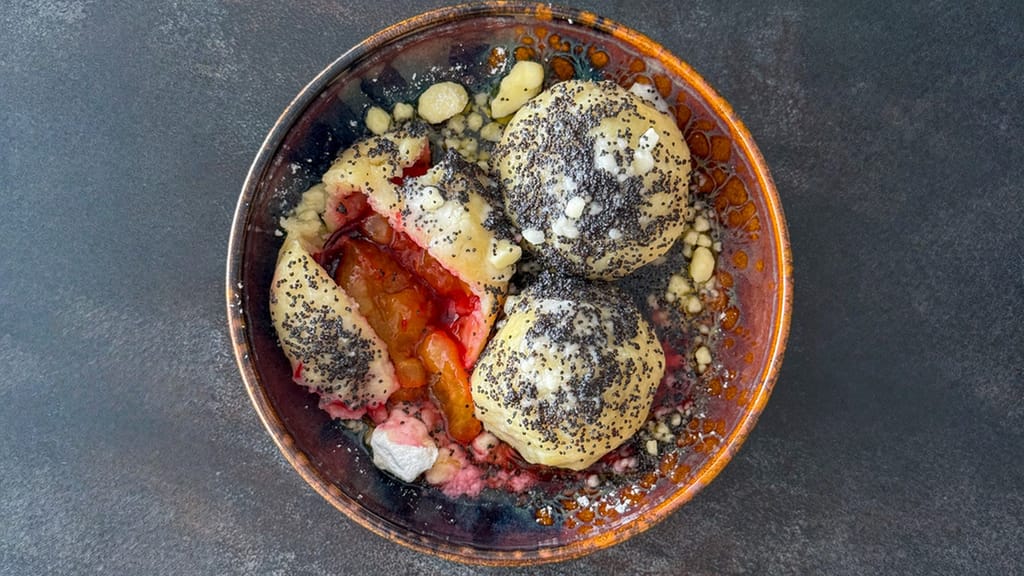
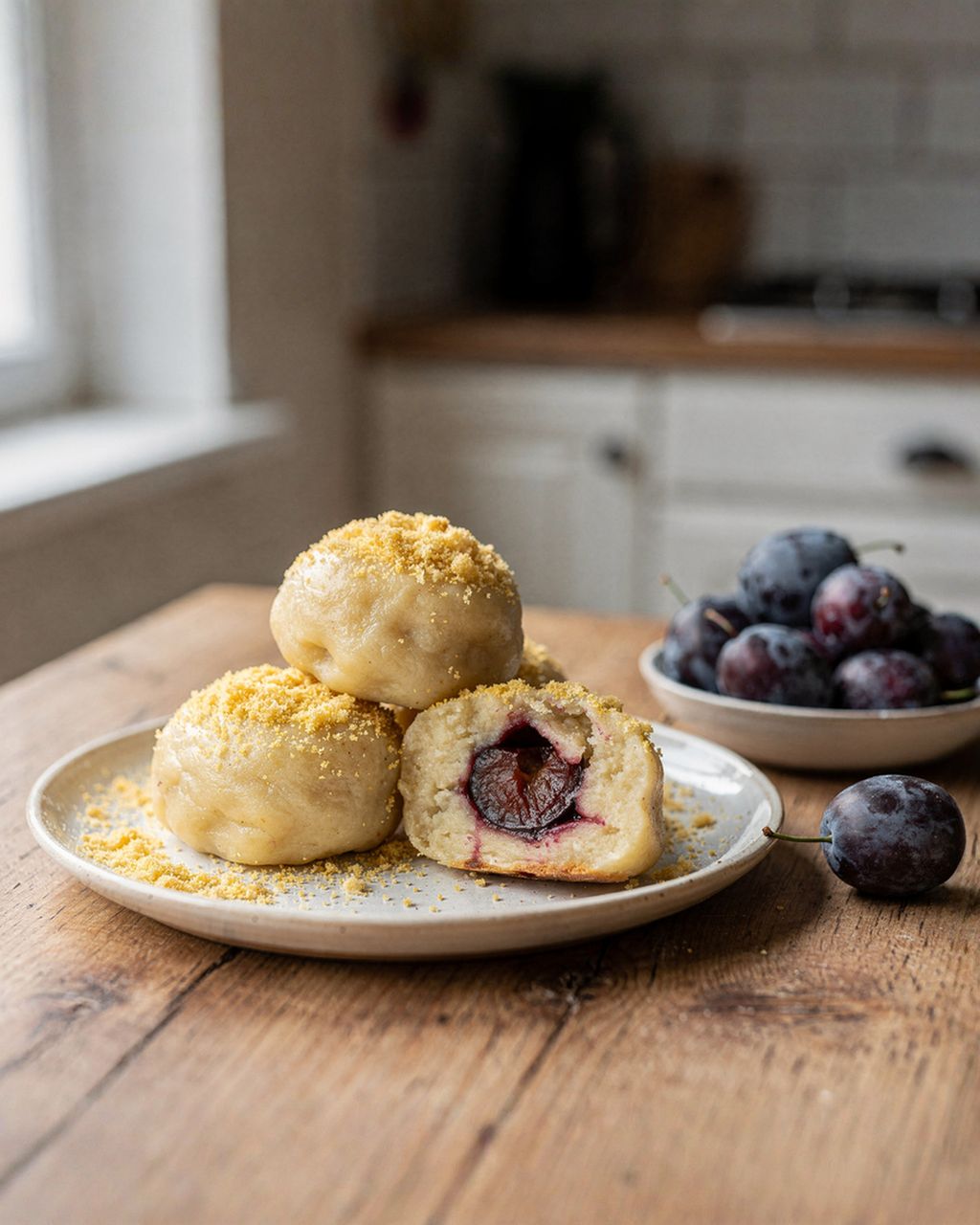
Plum dumplings with potato dough
Plum dumplings with potato dough — smaller, firm plums work best here, kept whole
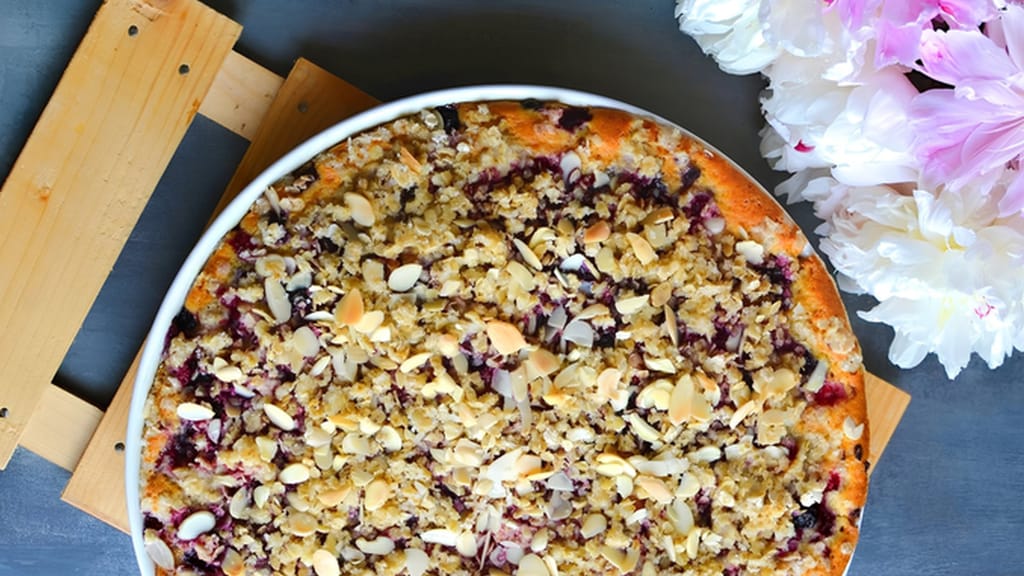
Bublanina with summer fruit and crunchy crumble
Sponge bake with a crunchy crumble — toss the plums in flour and fold them right into the batter
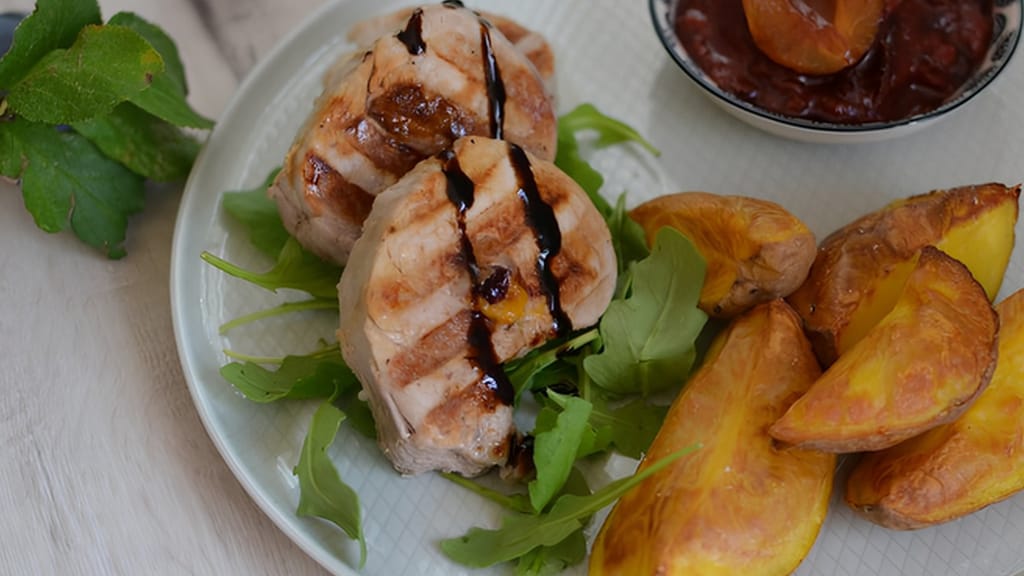
Pork tenderloin with plums and streaky bacon
Pork fillet with plums and streaky bacon — plums paired with savoury meat
A dark metal tray or a perforated one on the bottom rack of the oven works best — the base bakes through faster than the juice can soak it. Glass and ceramic dishes conduct heat more slowly, so the base stays damp; if that's all you've got, preheat it along with the oven and bake for 10 minutes longer. Baking paper under the dough is fine, but skip the silicone mat — it slows down evaporation from underneath even more.
Out of season, reach for your own frozen plums and place them straight from the freezer onto the dough. Among fresh fruit, firm apricots and halved small pears behave most like plums in the oven — but cut back the sugar with both, since they lack that plum tartness. Tinned plums in syrup work too, just drain them in a sieve for an hour first.
That dull white coating is called bloom, and it's a natural wax layer the fruit produces itself — it's not a spray residue. It protects the plum from drying out and from mould, so it's actually a sign of freshness, not dirt. Don't wash it off until you're actually about to use the fruit; it'll keep longer left on.
Yes, but you need to drain them properly first — leave them in a sieve for at least an hour, then pat them dry with paper towel. Tinned plums are already soft and slightly sweetened, so cut the sugar in the recipe by about a third and double the layer of semolina underneath. Bake for a slightly shorter time, as they hold their shape less well than fresh plums.
Ripe plums keep for about 5 to 7 days in the fridge in a single layer, or two to three days at room temperature. Don't store them in a plastic bag or piled on top of each other — they need airflow, otherwise the ones at the bottom get bruised and start to ferment. Let underripe plums finish ripening on the counter in a well-ventilated bowl, and only then move them to the fridge.
One recipe worth heating the oven for, one tip, and one deal from the shop. Nothing else.