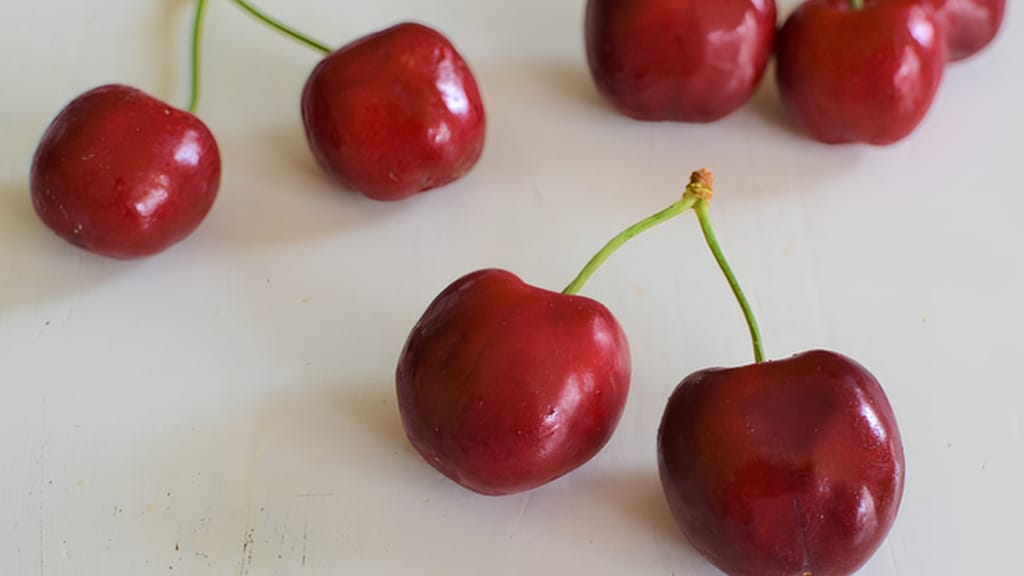
Cherry jam - basic recipe
Jam Sugar 1:1, 2:1 and 3:1: What the Ratios Mean and When to Use Each
Updated Oct 17, 2026
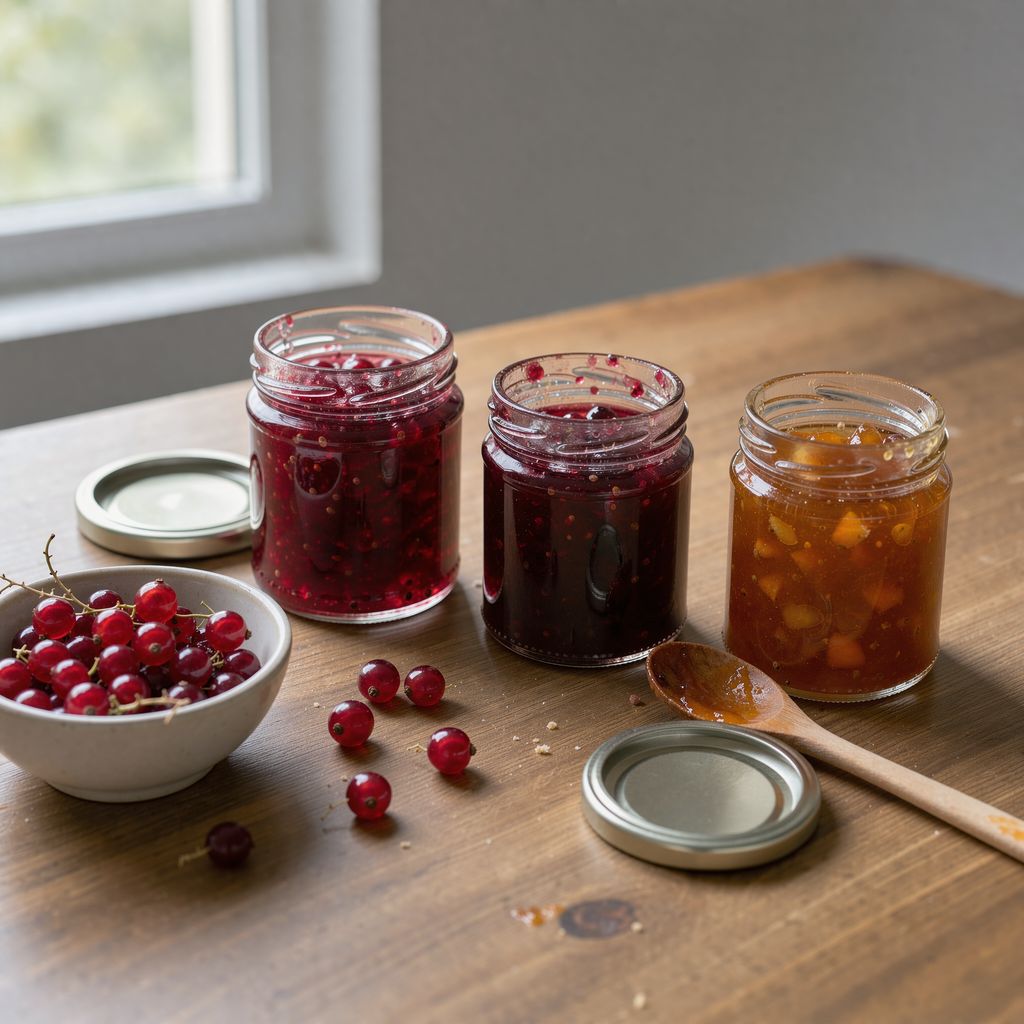
Jam sugar is ordinary crystal sugar mixed with pectin and citric acid, so your jam needs only a few minutes of boiling to set (3–5, depending on the manufacturer). The number on the pack (1:1, 2:1, 3:1) is the ratio of fruit to sugar: 1 kg of fruit to 1 kg of sugar, 1 kg of fruit to 500 g, or 1.5 kg of fruit to 500 g. The more fruit, the fruitier and less sweet the jam, but also the softer it is and the shorter its shelf life. Here's what that means in the pot, when pectin with your own sugar is the better choice, and how to cook a jam firm enough to stay put in a Linzer cookie.
The ratio tells you how many parts of fruit go with one part of jam sugar. The first number is always the fruit:
1:1 – 1 kg of fruit + 1 kg of jam sugar. The finished jam is roughly half fruit.
2:1 – 1 kg of fruit + 500 g of jam sugar. The jam is about two-thirds fruit.
3:1 – 1.5 kg of fruit + 500 g of jam sugar. The jam is around 75% fruit.
The pack sizes are usually designed to match: a 1 kg pack of 1:1 and a 500 g pack of 2:1 each cover 1 kg of fruit, and a 500 g pack of 3:1 covers 1.5 kg. Each type has its pectin and acid dose calculated for its own ratio, so don't mix ratios or eyeball them. If you add extra 2:1 jam sugar "just to be safe," you add more pectin and acid for the same amount of fruit, and the jam can set rubbery or turn sour. If you add more fruit instead, there won't be enough pectin and the jam will stay runny.
Weigh the fruit prepared, meaning without pits, stems and peels. A kilo of cherries with pits is really only about 850–900 g of flesh, and you'll notice the difference in the pot.
Jam sugar is crystal sugar or dextrose with added pectin, citric acid and, in the 2:1 and 3:1 types, a preservative (sorbic acid). The pectin forms the gel, the acid helps it along, and the preservative makes up for the fact that less sugar preserves less effectively.
The higher the second number's share of fruit, the more pectin the sugar has to contain, because there's less sugar per kilo of fruit to work with. For how pectin works, why it needs acid, and how it differs from agar and gelatin, see our article Gelling agents: pectin, agar and gelatin. Here we stick to ready-made mixes.
Two things follow in practice:
Sweetness and firmness go hand in hand. Classic pectin sets best with a high sugar content, which is why 1:1 jam is the firmest and most stable.
Less sugar means a shorter shelf life. Sugar preserves jam. In 2:1 and 3:1, a preservative partly takes over that job, and an opened jar belongs in the fridge.
For a firm, long-keeping jam, choose 1:1; for an everyday breakfast jam with a pronounced fruit flavor, 2:1; and for almost pure fruit with minimal sweetness, 3:1. Whichever you pick, boil for as many minutes as the instructions on the pack say. Depending on the manufacturer, that's usually 3–5 minutes at a rolling boil.
1:1 – firm, sweet, longest-keeping. Good for cookie and pastry fillings, for layering between cake tiers, and for tart fruit that can handle the sugar (redcurrants, gooseberries, cranberries, apricots).
2:1 – the compromise most people want. You taste the fruit more than the sugar, and the jam still holds on a spoon. Good for strawberries, raspberries, cherries and plums.
3:1 – the fruitiest and softest. The result is more of a fruit spread than a classic jam. It's great for sweet fruit (ripe apricots, peaches, blueberries) whose flavor would be overpowered by more sugar. It belongs in the fridge and should be eaten sooner.
Versions with stevia (typically 3:1) replace part of the sugar with a sweetener. They set much like 3:1, but you can taste the sweetener in delicate fruit.
With sweet, low-acid fruit (cherries, pears, peaches, blueberries), add 1–2 tablespoons of lemon juice per 1 kg of fruit, even though the mix already contains acid. Pectin needs an acidic environment, and the lemon brightens the flavor too. You'll find a tried-and-tested starting point in the cherry jam basic recipe.
Cherry jam - basic recipe
Cherry jam – basic recipe with jam sugar
Jam made with jam sugar is boiled for as many minutes as the instructions on the pack say. Depending on the manufacturer, that's usually 3–5 minutes at a rolling boil, counted from the moment the mixture is bubbling, not from when you switch on the hob. The whole method:
Weigh the prepared fruit and chop or mash it. For a smooth jam, blend it.
Mix it with the entire amount of jam sugar in a wide pot. Don't add the sugar bit by bit. If you leave the mixture to stand for 1–2 hours, the fruit releases its juice and the sugar won't scorch.
Bring to a rolling boil, stirring constantly. A rolling boil means the bubbling doesn't stop even when you stir.
Boil hard for as long as the pack says (at least 5 minutes for Dr. Oetker 2:1 and 3:1), stirring all the time.
Do a plate test. Drop a little jam onto a chilled saucer and leave it for a minute. If it wrinkles when you push it with a finger and doesn't run, it's done. If it runs, boil for another minute and try again.
Skim off the foam and pour the jam straight into hot, sterilized jars, right up to the rim. Close them and turn them upside down for 5 minutes.
Don't cook more than roughly 2 kg of fruit at once (one to two packs' worth). A bigger batch takes a long time to heat up, the fruit cooks to mush, and the pectin may not set properly. Two smaller batches turn out better than one big one.
Jam sugar wins when you want certainty: the pectin is evenly distributed, the acid is measured out, and there's nothing to miscalculate. Pectin with your own sugar (a sachet such as Gelfix, or pure pectin) wins when you want to make the decisions yourself: how much sugar, which sugar, and how big a batch.
Go for jam sugar when:
you're making a standard batch and want it to work the first time,
it's your first time making jam, or you're using fruit that's low in pectin (strawberries, cherries, peaches),
you want a firm 1:1 jam without measuring, since with 1:1 jam sugar there's nothing to recalculate.
Go for pectin and your own sugar when:
you want cane sugar, honey, or just a portion of the sugar,
you have an "odd" amount of fruit, say 1.3 kg from the garden, and don't want to buy another pack,
you make a lot of jam in a season. A sachet for 1 kg of fruit plus regular sugar usually works out cheaper.
The conversion is simple: a sachet of Gelfix Extra 2:1 (25 g) + 500 g of sugar does for 1 kg of fruit the same job as 500 g of 2:1 jam sugar. The method is different from jam sugar, though: first mix the Gelfix with 2 tablespoons of sugar, stir it into the fruit and boil for about 1 minute, then add the remaining sugar and boil for at least 5 minutes. Never add pectin to the fruit on its own; it clumps into slimy lumps you can't stir out again. You'll find pectins, sachet mixes and other setting helpers in the gelling agents and binders category.
For a Linzer cookie filling, use 1:1 jam sugar and a fruit rich in pectin, ideally redcurrants, and strain the jam to remove the seeds. A jam like this holds its shape, won't run out of the cutout, and won't soften the delicate dough even after a week.
Why this combination:
The 1:1 ratio gives the most dry matter and the firmest gel. 2:1 or 3:1 jam is too watery for a Linzer filling and softens the cookies before they've had time to rest.
Redcurrants, gooseberries, chokeberries, apples and quinces have plenty of their own pectin and acid, so the gel is even firmer. Strawberries and cherries set more weakly; feel free to blend them with redcurrants.
Straining gives a smooth, glossy filling without seeds. First simmer the fruit briefly until soft, then strain it. Weigh the jam sugar against the strained pulp, not the raw fruit, otherwise the ratio will be off.
Method for a firm filling:
Mix 1 kg of strained redcurrant pulp with 1 kg of 1:1 jam sugar.
Boil hard for as long as the pack says (usually 3–5 minutes) and do a plate test. Once cooled, the drop should set so firmly that it doesn't move when you tilt the plate.
Pour into smaller jars and leave to firm up for at least 24 hours. Pectin keeps setting for a day or two after cooking.
Before filling, put the amount you need in a bowl and warm it briefly (in the microwave or over steam) so it spreads thinly. As it cools, it sets again.
Spread it in a thin layer, about half a teaspoon per cookie. Too much filling will ooze into the cutout, however firm the jam is.
For the cookies themselves, follow our recipe for classic buttery Linzer cookies or the more modern Linzer cookies with pistachios.
You can also firm up store-bought or runny jam: for 500 g of jam, add about half a sachet of 2:1 pectin mix (12–13 g) combined with a spoonful of sugar, bring to a boil and boil for 2–3 minutes. Then do a plate test.
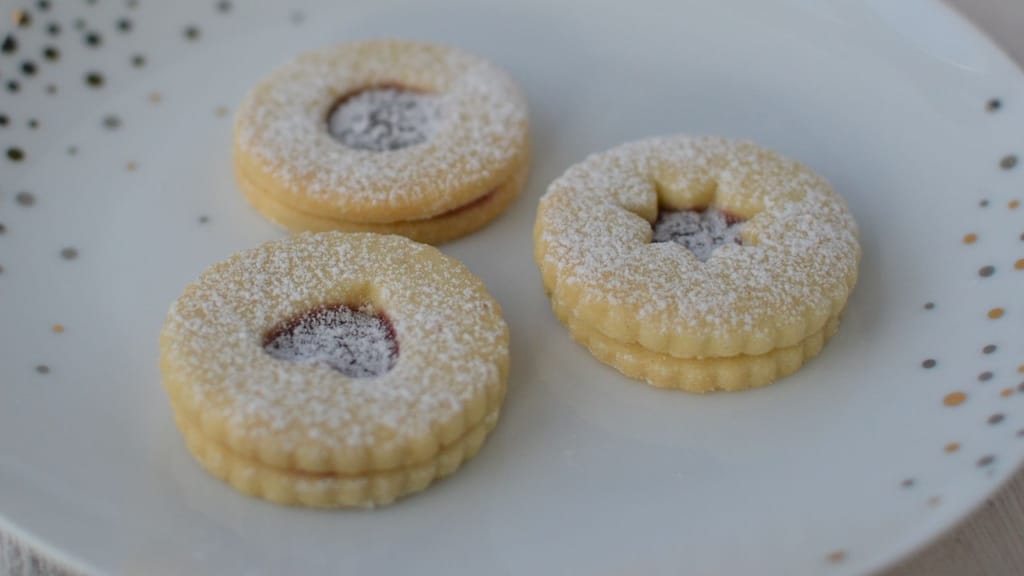
Classic christmas cookies: delicate linzer cookies
Classic Christmas cookies: buttery Linzer cookies with firm jam

Unconventional linzer cookies with pistachios
Unconventional Linzer cookies with pistachios
The most common cause is a wrong ratio: the fruit was weighed with its pits, or you added more fruit "by eye." Right behind that is a short or weak boil. Other causes:
The boil was timed from switching on the hob, not from the rolling boil. Pectin needs real bubbling for as long as the pack says (usually 3–5 minutes).
The batch was too big. Beyond roughly 2 kg of fruit, the mixture doesn't heat up fast enough.
Not enough acid in sweet fruit. 1–2 tablespoons of lemon juice per kilo will help.
Impatience. Jam keeps setting for another 24–48 hours. What looks like syrup in the evening may be fine by morning.
Old jam sugar. Pectin loses strength over time, especially if the sugar has absorbed moisture. Check the date on the pack.
If the jam still hasn't set after two days, open the jars, return the contents to the pot, add a pectin mix following the instructions above, and boil it again for 2–3 minutes. Pour it into hot, sterilized jars.
Yes, frozen fruit works with jam sugar just as well as fresh. Let it thaw, weigh it together with the juice it releases, and cook exactly by the ratio on the pack. Don't drain the juice off, as it counts toward the weight of the fruit.
2:1 and 3:1 jam keeps for a shorter time than 1:1 jam because it contains less sugar to act as a preservative. Store unopened jars in a cool, dark place and use them up sooner rather than later; once opened, they belong in the fridge and keep for only a few weeks. If mold appears on the surface, throw out the whole jar rather than just scooping off the top layer.
Yes, you can make jelly from juice with jam sugar just like jam: weigh the juice (redcurrant or apple, for example) instead of the fruit and mix it with sugar in the same ratio. For a clear, firm jelly, 1:1 is the safest ratio, and you should boil it for as long as the pack says.
For 1.3 kg of prepared fruit, use 650 g of 2:1 jam sugar, which is half the weight of the fruit. A pack usually holds 500 g, so you'll need two and can keep the rest dry for another batch. Weigh the fruit only after removing pits and stems, otherwise there will be too little sugar and pectin.
You usually don't need to sterilize jam made with jam sugar afterward, as long as you pour it hot into sterilized jars and turn them upside down for 5 minutes. The jars must be sterilized beforehand and still hot, and the jam should be poured in right up to the rim. Turning the jars works only with sterile jars, especially for 2:1 and 3:1, which contain less sugar. Consider processing 3:1 jams in a pot or the oven if you want to store them for longer than a few months.
One recipe worth heating the oven for, one tip, and one deal from the shop. Nothing else.